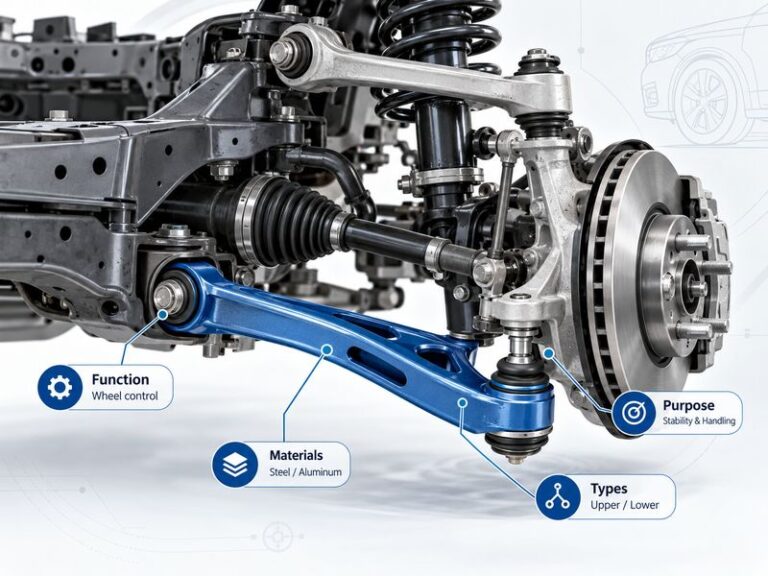
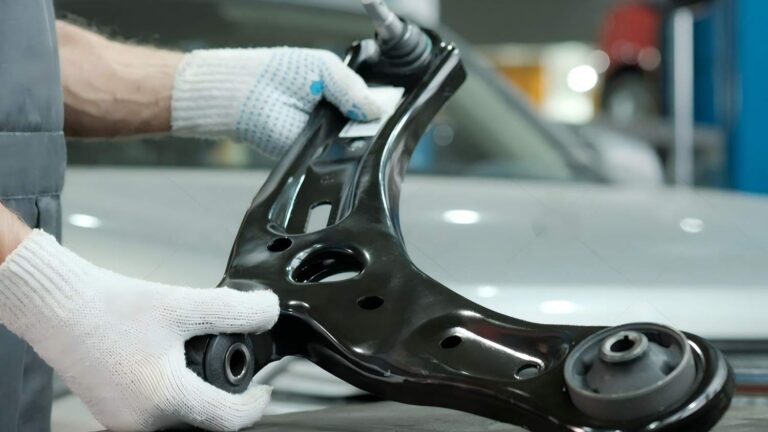
Do Upper Control Arms Come With Ball Joints? Complete Guide
If you are shopping for suspension parts, you may wonder: do upper control arms come with ball joints? The answer depends on the vehicle and the part you buy. Many complete replacement upper control arm assemblies sold in the United States include a new ball joint and new control arm bushings. Other arms are sold without the joint, so you must reuse or buy it separately.
This detail matters because the upper control arm and ball joint work together to guide the wheel while the suspension moves. A mistake during parts ordering can leave you with an incomplete repair. It can also mean extra labor if the old joint must be removed and pressed into the new arm.
In normal suspension repair work, complete assemblies are common because they simplify installation. You remove the old arm and install a new unit with fresh wear parts already fitted. Still, you should never assume that every control arm contains a ball joint just because the product photo looks complete.
This guide explains how upper control arms and ball joints connect, which designs include them, why some are sold separately, and what you should check before buying parts. It also covers replacement choices, symptoms of worn parts, alignment needs, and common questions about upper control arm assemblies.
Do Upper Control Arms Come With Ball Joints?
So, do upper control arms come with ball joints? Many complete replacement arms do. In these assemblies, the manufacturer installs the upper ball joint in the arm before the part reaches you.
However, an upper control arm can also be sold as a bare arm. A bare arm may include bushings but no ball joint. Some versions may include neither, depending on the design and manufacturer.
This is why two parts that appear to fit the same truck, SUV, or car can have different prices. One may be a complete assembly with a ball joint and bushings. Another may be only the metal control arm.
The original factory setup also affects the answer. Some vehicles have ball joints designed to be replaced on their own. Others use a design where replacing the whole control arm is the normal repair method.

- ✦ Complete assembly
Usually includes the control arm, bushings, and an installed ball joint.
- ✦ Partial assembly
May include the control arm and bushings but require a separate ball joint.
- ✦ Bare control arm
May contain only the arm itself and require other hardware or wear parts.
- ✦ Vehicle-specific design
The original suspension design determines whether the upper joint is separate, pressed in, bolted on, or integrated.
Why There Is No Single Answer for Every Vehicle
Suspension layouts differ greatly among vehicles. A pickup truck with a double-wishbone front suspension may use a serviceable upper ball joint. Another SUV may use a control arm where the joint is treated as part of the arm assembly.
Aftermarket manufacturers also package parts differently. Two brands may sell parts for the same vehicle, yet one includes the ball joint and the other does not.
- ✦ Check the exact fitment
Use the vehicle year, make, model, trim, drivetrain, and suspension option when possible.
- ✦ Read the included-parts list
Look for wording such as with ball joint, ball joint included, or complete control arm assembly.
What Is an Upper Control Arm and What Does It Do?
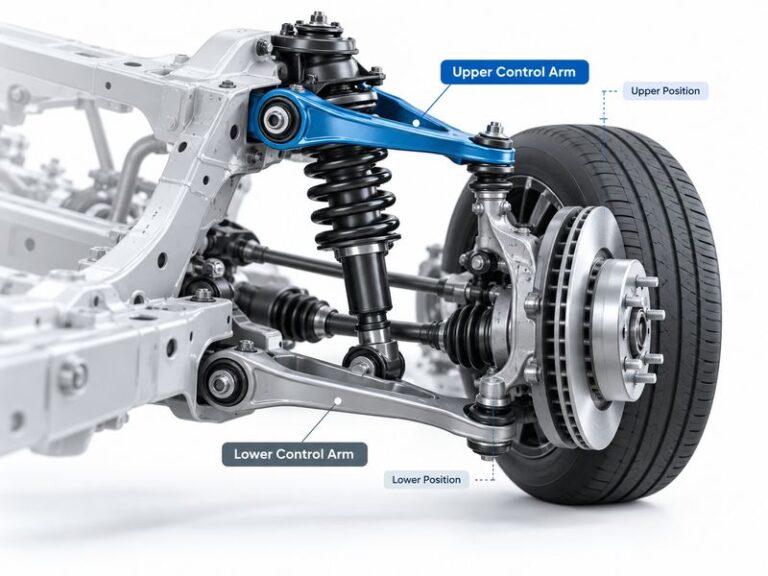
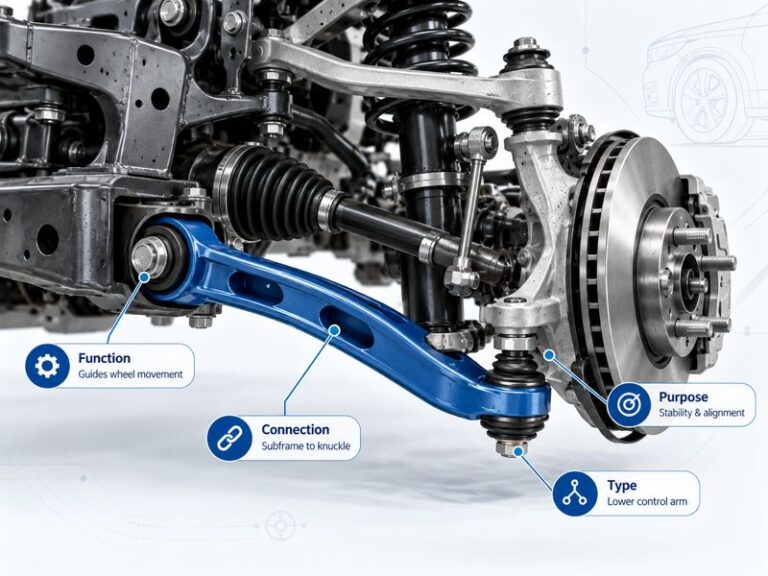
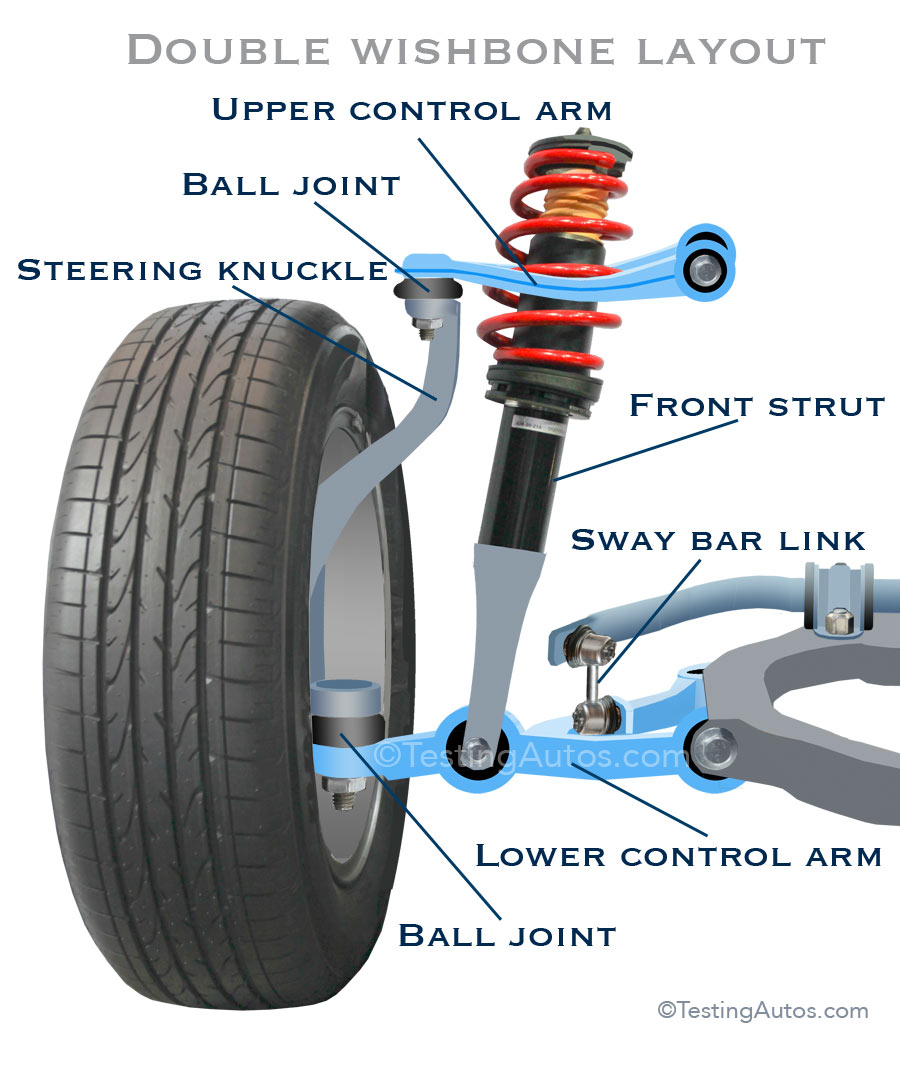
An upper control arm is part of the suspension system on vehicles that use an upper-and-lower control arm layout. The arm connects the vehicle frame or body structure to the steering knuckle area.
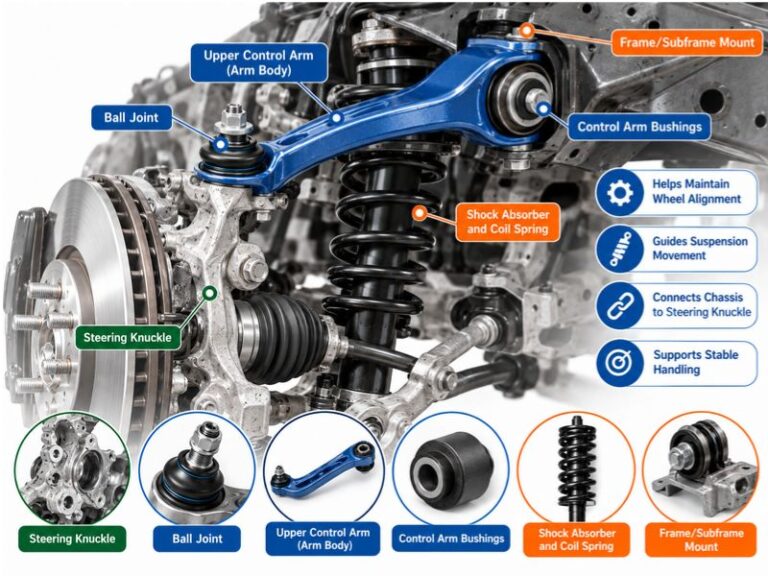
The inner end of the arm normally pivots through rubber or hydraulic bushings. The outer end connects to the steering knuckle through the upper ball joint. This setup lets the wheel move up and down while staying controlled.
The upper control arm also helps maintain wheel position. Its shape and mounting points affect suspension geometry, including camber and caster. These angles influence tire contact, steering feel, stability, and tire wear.
Not every vehicle has an upper control arm. Many cars with MacPherson strut front suspension use the strut as the upper locating member, so they may have only a lower control arm.

- ✦ Supports wheel movement
The arm guides the steering knuckle as the suspension moves over bumps and dips.
- ✦ Helps control alignment
The arm helps maintain the wheel angles intended by the suspension design.
- ✦ Creates a pivot point
Its bushings allow controlled movement where the arm attaches to the vehicle.
- ✦ Connects through the ball joint
The ball joint allows steering and suspension movement at the outer end of the arm.
Where Is the Upper Control Arm Located?
On vehicles that use one, the upper control arm sits above the lower control arm near the top of the steering knuckle. Trucks and SUVs often make this arrangement easy to see after the front wheel is removed.
The exact location changes with suspension design. Some arms are A-shaped or wishbone-shaped, while others have a more compact form.
What Is an Upper Ball Joint?
The upper ball joint is a flexible connection between the upper control arm and the steering knuckle. It works much like a human hip joint. A metal stud moves inside a socket while remaining securely connected.
This movement is important because the wheel must do two things at once. It must move vertically with the suspension, and it must turn when you steer. The ball joint allows both types of movement.
A protective rubber boot helps keep grease inside and dirt and water outside. If the boot tears, contamination can enter the socket. Wear may then speed up.
Ball joints are safety-related suspension parts. Excessive wear can cause looseness, poor alignment, noise, and unstable handling. Severe failure can allow the joint to separate, so a badly worn joint should not be ignored.
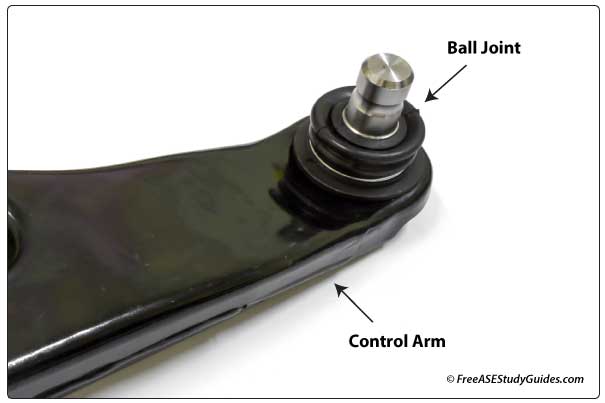
- ✦ Ball stud
The stud passes into the steering knuckle and provides the moving connection.
- ✦ Socket
The socket holds the rounded end of the stud while allowing controlled movement.
- ✦ Dust boot
The boot protects the internal surfaces from water, road salt, dirt, and debris.
- ✦ Grease
Grease reduces friction inside serviceable or pre-lubricated joint designs.
Why the Ball Joint Is Often Included With the Arm
The ball joint and upper control arm operate as one working unit. When both parts have high mileage, replacing them together can make sense. Manufacturers can also install the joint under controlled factory conditions.
A complete assembly reduces the amount of pressing, drilling, or bolting needed during installation. That is one reason many replacement upper control arms come with ball joints already fitted.
How Are Ball Joints Attached to Upper Control Arms?
Upper ball joints can attach to control arms in several ways. The design determines whether the joint is easy to replace separately or whether replacing the full arm is more practical.
A press-fit joint fits tightly into a machined opening in the control arm. Removal and installation may require a ball joint press or hydraulic press. Correct support is important so the arm is not bent during service.
A bolt-on joint uses bolts or studs to hold the joint to the arm. These joints can often be replaced without changing the entire control arm if the arm and bushings remain good.
Some older designs use rivets from the factory. A replacement job may require cutting or drilling the factory rivets, after which the new joint is normally installed with bolts.
Other control arms have a joint that manufacturers treat as integrated or non-serviceable. In that case, the complete arm assembly is usually replaced when the joint wears out.

- ✦ Press-fit
The joint is pressed tightly into a bore in the control arm.
- ✦ Bolt-on
Bolts attach the joint to the arm, making separate replacement more practical.
- ✦ Riveted
Factory rivets may need to be drilled or cut during the first joint replacement.
- ✦ Integrated
The joint is effectively part of the arm, so the complete assembly is usually replaced.
Can You Remove a Ball Joint From an Upper Control Arm?
Yes, if the vehicle uses a serviceable ball joint. Press-fit, bolt-on, and some riveted designs allow separate replacement.
However, removal is not always the best repair. If the control arm bushings are cracked, loose, or worn, a complete arm may solve several problems at once.
How to Tell if a New Upper Control Arm Includes a Ball Joint
The easiest way to answer do upper control arms come with ball joints for the part you plan to buy is to read the listing carefully. Do not rely only on the product title or a small thumbnail image.
Look for terms such as complete assembly, with ball joint, ball joint included, or pre-installed ball joint. If the description says control arm only or ball joint sold separately, you will need additional parts.
Inspect the product photos as well. A ball joint usually appears at the outer tip of the upper control arm. You may see the threaded stud, protective boot, mounting flange, or joint housing.
You should also confirm whether control arm bushings are included. A part described as complete often has both bushings and the ball joint already installed, but wording varies by seller.

- ✦ Read the product title
Look for clear wording that states whether a ball joint is included.
- ✦ Check the specifications
The included-components section is often more reliable than a photo.
- ✦ Inspect all photos
Confirm that the joint shown is actually included rather than pictured for reference.
- ✦ Verify both sides
Some listings contain one arm, while others include left and right arms as a pair.
- ✦ Confirm vehicle options
Suspension packages, two-wheel drive, four-wheel drive, and trim levels can change part fitment.
What Does a Complete Upper Control Arm Assembly Usually Include?
A complete assembly commonly includes the metal control arm, inner bushings, and upper ball joint. Some kits also include new nuts, cotter pins, grease fittings, or mounting hardware.
The contents are not standardized. Always compare the parts list with what you need before you begin the repair.
- ✦ Control arm
The main metal suspension link.
- ✦ Bushings
The flexible pivots at the inner mounting points.
- ✦ Ball joint
The movable outer connection between the arm and steering knuckle.
Should You Replace the Ball Joint or the Whole Upper Control Arm?
The right choice depends on the condition of the control arm, bushings, and ball joint. If the arm is solid and the bushings are healthy, replacing only a serviceable ball joint may cost less.
A complete control arm often makes more sense when the bushings are also worn. You get a new ball joint, new bushings, and a new arm in one repair. This can reduce repeated labor.
Complete assemblies can also make a home repair easier. A pre-installed ball joint removes the need for some pressing work. On certain vehicles, that can save a great deal of effort.
Price alone should not decide the repair. Compare the cost of the joint, tools, labor, bushings, and complete arm. A lower-priced ball joint can become less attractive if the old arm must be removed and taken to a shop for pressing.

- ✦ Replace only the joint
Consider this when the joint is serviceable and the arm and bushings remain in good condition.
- ✦ Replace the complete arm
Consider this when the bushings and joint are both worn or when the joint is integrated.
- ✦ Consider labor
A complete assembly can reduce press work and may shorten the repair.
- ✦ Consider vehicle age
On a high-mileage vehicle, other parts of the same control arm may already be near the end of their useful life.
When a Complete Assembly Is Often the Better Choice
If the bushings have visible cracks, separation, or excess movement, replacing only the ball joint leaves worn parts in place. A complete arm gives you fresh pivot points along with the joint.
This approach is also useful when corrosion is heavy or the original arm has damage. Any bent or cracked control arm should be replaced rather than reused.
- ✦ Worn bushings
Replacing the complete arm renews both the joint and inner pivots.
- ✦ Bent arm
Physical damage is a strong reason to replace the full arm.
- ✦ Severe corrosion
Heavy structural rust can make reusing the old arm a poor choice.
When a Ball Joint Alone May Be Enough
If inspection shows a worn joint but firm bushings and an undamaged arm, a separate ball joint can be a reasonable repair when the design allows it.
This is more attractive when the joint bolts onto the arm and does not require major pressing work. Follow the vehicle manufacturer’s service method and torque specifications.
Signs an Upper Control Arm or Ball Joint May Be Worn
Knowing do upper control arms come with ball joints is useful when diagnosing suspension problems because the arm, bushings, and joint can create similar symptoms. A noise near the upper suspension does not automatically prove that the ball joint is bad.
A worn upper ball joint may produce knocking or clunking over rough roads. You may also notice steering looseness, poor tracking, or uneven tire wear.
Worn upper control arm bushings can create similar noises. They may also allow the arm to shift under braking or acceleration. That movement can change wheel alignment as you drive.
A proper inspection is important before buying parts. A technician may raise the vehicle according to the correct service procedure, unload the joint when required, and check for movement at the ball joint and bushings.

- ✦ Clunking noise
A loose joint or bushing may knock when the suspension moves.
- ✦ Uneven tire wear
Excess suspension movement can prevent the wheel from holding correct alignment.
- ✦ Loose steering feel
Joint wear can make the front end feel less precise.
- ✦ Vehicle pulling
Suspension wear may contribute to changing wheel angles, though tires and alignment can cause similar symptoms.
- ✦ Visible boot damage
A torn ball joint boot can allow dirt and water to enter the joint.
- ✦ Bushing cracks
Severe cracking, separation, or excessive movement can indicate worn control arm bushings.
Can You Drive With a Bad Upper Ball Joint?
Driving with a confirmed badly worn ball joint is not a good idea. The joint is part of the connection that controls the wheel and steering knuckle.
Minor wear may progress over time, while severe looseness can become a safety issue. If a ball joint is loose, damaged, or making strong suspension noises, have the vehicle inspected promptly.
Do Aftermarket Upper Control Arms Usually Include Ball Joints?
Many aftermarket upper control arms come with ball joints, especially parts sold as complete replacement assemblies. This setup is common because buyers often want one part that is ready to install.
Still, aftermarket parts vary. A basic replacement arm may come fully assembled, while a performance arm may require a specific ball joint that is sold separately. Some adjustable arms also use replaceable joints chosen for a specific suspension setup.
Lifted trucks deserve extra attention. Some aftermarket upper control arms are designed to improve ball joint angle or suspension travel after a lift. The ball joint included with one of these arms may differ from the original factory joint.
If you are asking do upper control arms come with ball joints because you are upgrading a truck or SUV, check more than basic fitment. Confirm lift height, wheel travel, shock setup, ball joint design, and any alignment requirements listed by the control arm manufacturer.

- ✦ Stock replacement arms
These commonly use an installed ball joint designed to replace the original setup.
- ✦ Performance arms
These may use a special joint, uniball, or serviceable component depending on the design.
- ✦ Lift-specific arms
These can change geometry to improve clearance and joint angle on modified trucks.
- ✦ Adjustable arms
These may provide alignment adjustment and can use different joint designs from stock arms.
Factory-Style vs. Upgraded Control Arms
Factory-style replacement arms focus on restoring original suspension geometry and ride behavior. They are often sold with stock-style bushings and ball joints.
Upgraded control arms may use stronger tubing, different bushings, revised geometry, or higher-angle joints. These parts can be useful for modified vehicles, but compatibility must be checked carefully.
Do You Need an Alignment After Replacing an Upper Control Arm?
In most cases, getting the wheel alignment checked after upper control arm replacement is a good practice. The arm helps establish suspension geometry, and removing it can change wheel position.
Some vehicles use adjustment cams or slotted mounting points at the upper control arm. Moving these parts during replacement can change camber or caster.
Even when the arm has fixed mounting points, small differences in parts and bushing position can affect alignment. A check can help protect your tires and restore predictable handling.
Do not use a steering wheel that looks straight as proof that alignment is correct. Camber and caster problems may not be obvious from the driver’s seat.
- ✦ Check camber
Camber describes how much the wheel tilts inward or outward when viewed from the front.
- ✦ Check caster
Caster affects steering return, stability, and straight-line feel.
- ✦ Check toe
Toe should also be measured because suspension work can affect overall wheel alignment.
Can You Replace Only One Upper Control Arm?
Yes, an upper control arm can often be replaced on only one side if that is the only defective part. Suspension parts do not always have to be replaced in pairs.
However, both sides usually have similar age and mileage. Inspect the opposite arm, ball joint, and bushings carefully before deciding that only one side needs work.
What to Check Before Buying an Upper Control Arm
Before ordering, first confirm exactly what your vehicle uses. The question do upper control arms come with ball joints cannot be answered from the vehicle brand alone. Suspension designs can change between model years, trims, engines, and drive systems.
Enter the full vehicle information when shopping. For trucks, confirm whether the vehicle is two-wheel drive or four-wheel drive. Also check for factory or aftermarket suspension packages.
Next, verify which side you need. Some upper control arms are different for the driver’s and passenger’s sides. A listing for a pair should clearly state that both left and right arms are included.
Finally, check the included hardware. A control arm may have a ball joint installed but still require reuse of mounting bolts or separate purchase of certain nuts and fasteners.
- ✦ Vehicle year
Suspension designs can change from one model year to another.
- ✦ Make and model
Use the exact vehicle rather than choosing a part based only on visual similarity.
- ✦ Trim and drivetrain
Two-wheel-drive and four-wheel-drive versions can use different suspension components.
- ✦ Left or right side
Confirm whether the listing contains one arm or a pair.
- ✦ Ball joint inclusion
Look specifically for language stating that a ball joint comes installed.
- ✦ Bushings
Check whether the arm includes new inner bushings.
- ✦ Hardware
Confirm which nuts, bolts, grease fittings, or pins come with the part.
Do Not Buy by Appearance Alone
Two control arms can look almost identical but use different dimensions, joint tapers, mounting points, or bushing widths. A visual match is not enough to confirm fit.
Use the manufacturer’s fitment data and part number whenever possible. This is especially important when a model has several suspension options.
Common Mistakes When Replacing Upper Control Arms and Ball Joints
One common mistake is assuming that every new upper control arm comes with a ball joint. Opening the box after the vehicle is already apart is the wrong time to discover that the joint was sold separately.
Another mistake is replacing the joint without checking the control arm bushings. Freshening one worn component may not solve the problem if another part on the same arm has excessive movement.
Improper tightening is another concern. Suspension fasteners must be tightened to the correct specification. Some bonded rubber bushings also need final tightening near normal ride height so the rubber does not remain twisted at rest.
Ball joint stud fasteners also require the correct procedure. Depending on the design, this can involve a specified torque, a cotter pin, a prevailing-torque nut, or other locking hardware.
Finally, skipping alignment can lead to poor handling or fast tire wear. An alignment check should be part of the repair plan when the control arm affects wheel geometry.
- ✦ Assuming parts are included
Confirm the ball joint, bushings, and hardware before starting the job.
- ✦ Ignoring the bushings
Inspect the complete arm instead of focusing only on the joint.
- ✦ Using incorrect torque
Follow the correct repair information for all suspension fasteners.
- ✦ Tightening bushings incorrectly
Some rubber-bushed arms require final tightening at normal suspension position.
- ✦ Skipping alignment
Verify wheel alignment after repairs that affect suspension geometry.
Upper Control Arm With Ball Joint vs. Separate Ball Joint
Choosing between a full control arm assembly and a separate ball joint comes down to design, condition, cost, and labor. There is no rule that makes one choice best for every vehicle.
A complete arm costs more than a single joint in many cases, but it may include several new wear parts. It can also reduce installation time when the ball joint is already fitted.
A separate joint can make sense when the arm is in excellent condition and the joint is easy to service. The savings are most useful when no special pressing work or extra bushing replacement is required.
When comparing prices, consider the full job rather than the price of one component. Parts, tools, labor, alignment, and the condition of nearby suspension components all affect the real cost.
- ✦ Complete arm advantage
Replaces several wear parts at once and often simplifies installation.
- ✦ Separate joint advantage
Can reduce parts cost when the original arm and bushings remain good.
- ✦ Complete arm limitation
It may cost more when only the ball joint has failed.
- ✦ Separate joint limitation
It may require special tools and leaves the original bushings in service.