What Happens If You Don’t Replace Control Arms? Risks Explained
If you are wondering what happens if you don’t replace control arms, the answer depends on how badly the arm, bushings, or related ball joint has worn. A small amount of bushing wear may first cause noise or slight steering changes. As the wear gets worse, the wheel can move more than it should, and that can affect alignment, braking feel, tire wear, and vehicle stability.
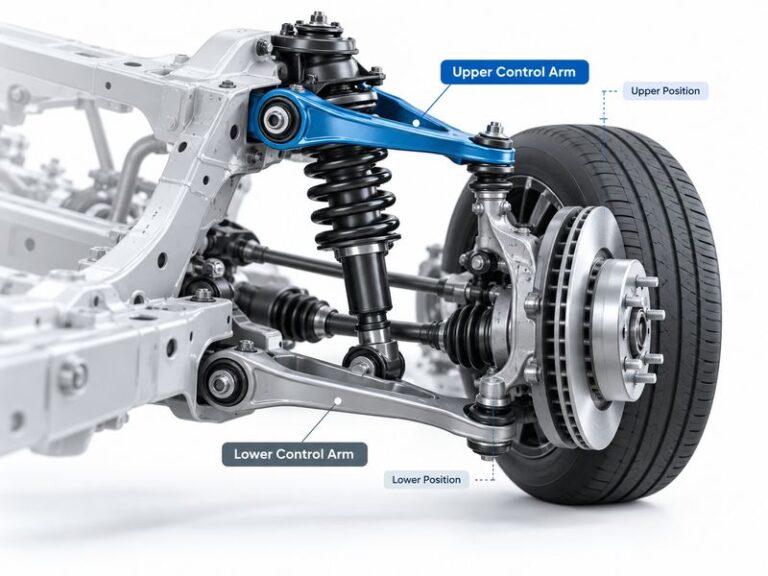
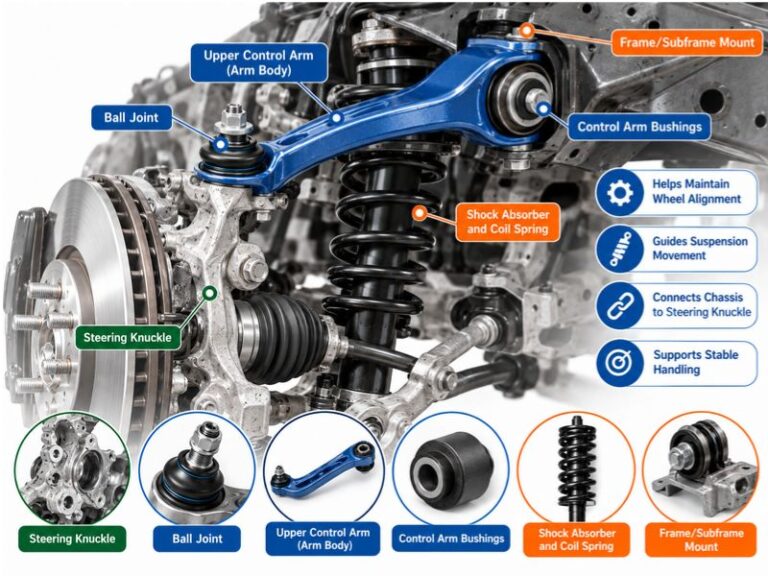
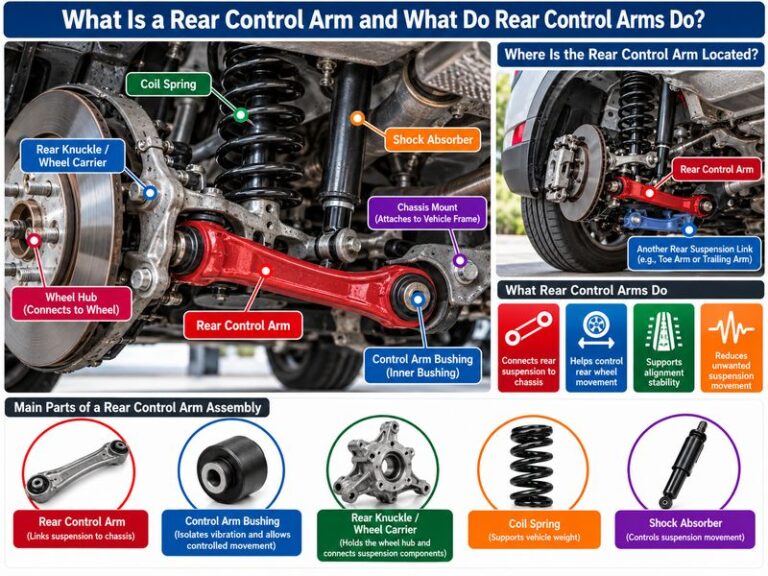
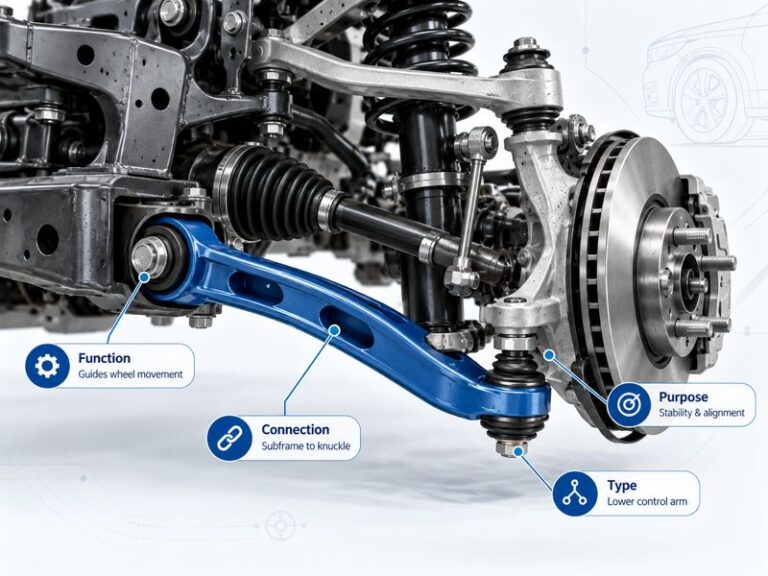
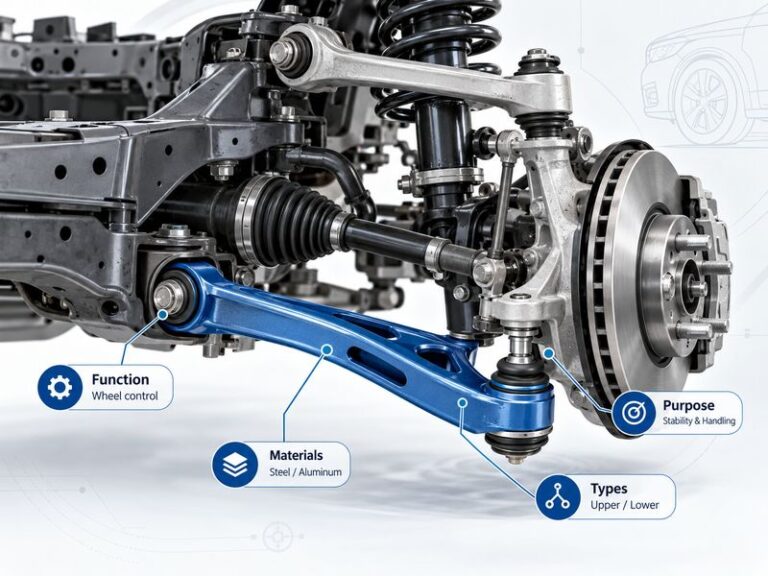
Control arms are a key part of the suspension on many cars, SUVs, and light trucks in the United States. They connect the wheel assembly to the vehicle frame or subframe while allowing the suspension to move up and down. Rubber bushings and, on many designs, ball joints let the arm move while keeping the wheel in a controlled path.
In practical repair work, control arm problems often begin with small signs that drivers learn to ignore. A clunk over a driveway entrance, a steering wheel that feels less steady, or one front tire wearing faster than the other may not seem urgent. Yet these signs can point to movement in the suspension that should not be there.
This guide explains what happens if you don’t replace control arms, how the problem tends to get worse, what other parts may suffer, and when driving the vehicle becomes a poor idea. It also covers common warning signs, inspection points, replacement timing, and what to expect after the repair.

What Happens If You Don’t Replace Control Arms?
What happens if you don’t replace control arms is usually a slow loss of suspension control. The control arm helps keep the wheel in the right position as the vehicle turns, brakes, accelerates, and travels over bumps. When the arm, bushings, or ball joint wears, the wheel can shift from its intended position.
At first, the change may feel minor. You may hear a clunk, notice light vibration, or need small steering corrections on the highway. As the worn parts develop more play, alignment can change while you drive instead of staying fixed.
That movement can affect several systems at once. Tires may wear faster. Steering may feel loose. Braking may feel less stable. Other suspension parts may also take loads they were not designed to handle.
The main concern is that control arm wear does not normally repair itself. Once a rubber bushing has torn or a joint has developed excessive play, normal driving tends to make the condition worse.

- ✦ Steering becomes less precise
Extra suspension movement can make the car wander or respond less cleanly to steering input.
- ✦ Wheel alignment can change
A worn control arm can let the wheel shift from its proper alignment angles.
- ✦ Tires can wear unevenly
Changing camber or toe can scrub the tire tread and shorten tire life.
- ✦ Noise and vibration may increase
Loose bushings or joints can cause clunks, knocks, shaking, or harsh movement.
- ✦ Safety risk can rise
Severe wear can reduce your ability to keep the wheel controlled during turns, braking, and rough-road driving.
Why the Problem Gets Worse Over Time
Each bump, pothole, turn, and braking event loads the suspension. If a bushing is already split or a joint is loose, these forces create more movement. That movement can speed up wear in the control arm and nearby parts.
- ✦ More play develops
Worn rubber and joints lose their ability to hold the wheel firmly.
- ✦ Impact loads increase
Loose parts can hit or shift instead of absorbing force smoothly.
- ✦ Other parts compensate
Tie rods, tires, struts, wheel bearings, and other components may receive added stress.
Your Steering May Become Loose or Unstable
One of the clearest answers to what happens if you don’t replace control arms is a change in steering feel. The control arm helps locate the wheel in relation to the vehicle body. If its bushings or joint allow too much movement, the wheel may change position when loads shift.
You may notice that the vehicle wanders on a straight road. It may feel like you need to make small steering corrections more often. The steering wheel may also feel less direct than it did before.
The problem can become more obvious during lane changes, highway driving, or hard braking. Uneven road surfaces can also make the vehicle pull or move more than expected.
Loose steering is not always caused by a control arm. Tie rods, wheel bearings, steering components, and alignment can cause similar symptoms. A proper suspension inspection is the best way to find the true source.

- ✦ Highway wandering
The vehicle may drift or need frequent steering corrections.
- ✦ Delayed steering response
The car may not react as sharply when you turn the steering wheel.
- ✦ Pulling under braking
Suspension movement can alter wheel position when braking forces increase.
Why Control Arms Affect Steering
The wheel must stay within a set range of angles for the car to steer well. Control arms help hold those angles while still letting the suspension move. Excess play can allow the tire to steer or tilt slightly without a matching input from the steering wheel.
- ✦ Toe can change
The tire may point slightly inward or outward as the suspension shifts.
- ✦ Camber can change
The top of the tire may tilt in or out more than it should.
Your Tires Can Wear Out Much Faster
Uneven tire wear is another common result of delaying control arm repair. When suspension geometry changes, the tire may no longer sit flat or point straight while rolling. This can wear one edge of the tread much faster than the rest.
You may pay for an alignment and still see the problem return if the control arm bushings or ball joint cannot hold the wheel in place. Alignment settings only help when the suspension parts are tight enough to maintain those settings.
This is one reason delaying a worn control arm can become more expensive. What begins as one suspension repair may later include one or more tires and another alignment.
Check the inner and outer tread edges if you suspect a control arm problem. Uneven wear that appears with clunking, pulling, or loose steering deserves prompt inspection.

- ✦ Inner-edge wear
The inside of the tire may become smooth while the outer tread still looks usable.
- ✦ Outer-edge wear
Suspension movement can also place extra load on the outside shoulder.
- ✦ Feathered tread
The tread blocks may feel smooth in one direction and sharp in the other.
- ✦ Shorter tire life
A tire with severe uneven wear may need replacement long before the rest of its tread is used.
Why an Alignment Alone May Not Fix It
An alignment adjusts wheel angles, but it cannot remove looseness from a worn bushing or joint. If the wheel changes position as soon as the vehicle moves, the alignment may not remain within specification.
- ✦ Repair first
Replace worn suspension parts before paying for the final alignment.
- ✦ Align after replacement
Many control arm repairs should be followed by an alignment check.
Clunking, Knocking, and Vibration Can Get Worse
A worn control arm often creates noise before it creates a major handling problem. You may hear a dull clunk when driving over potholes, speed bumps, driveway entrances, or broken pavement. The sound may come from worn bushings, a loose joint, or movement between suspension parts.
As wear increases, the noise may become easier to hear. You may also feel vibration through the floor, steering wheel, or front end of the vehicle.
Some drivers ignore these sounds because the vehicle still moves normally. That can be a mistake. Suspension noise is often a warning that parts are moving more than they should.
If you hear repeated knocking and also notice steering changes, tire wear, or braking instability, the vehicle should be inspected soon.
- ✦ Clunk over bumps
A worn bushing may let the arm shift when the wheel moves up and down.
- ✦ Knock during braking
The arm may move when braking force pushes the wheel rearward or forward.
- ✦ Vibration
Loose suspension parts can transmit movement into the steering wheel or vehicle body.
Control Arm Noise Versus Other Suspension Noise
Struts, sway bar links, tie rods, ball joints, and wheel bearings can also make noise. The location and type of sound can give clues, but a hands-on inspection is more reliable than sound alone.
- ✦ Check for play
A technician may lift the vehicle and test the wheel and suspension for unwanted movement.
- ✦ Inspect the bushings
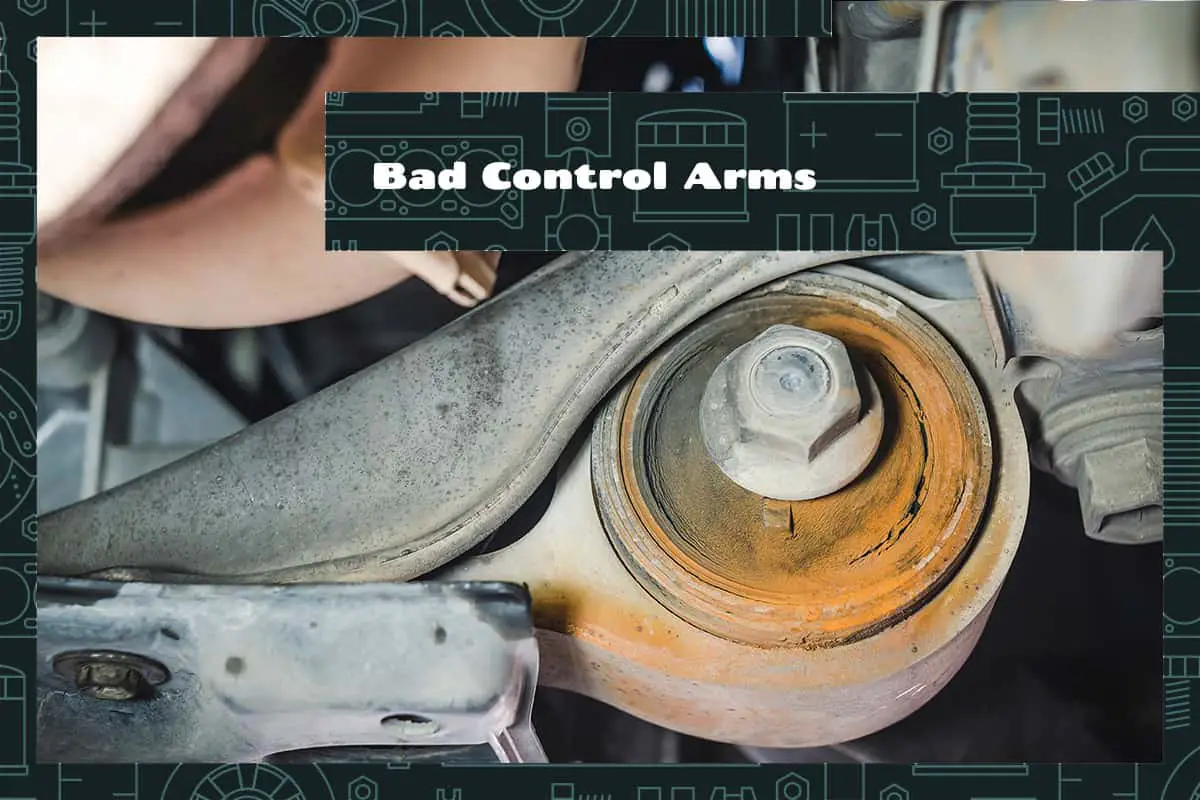
Cracked, torn, separated, or oil-soaked rubber can point to control arm bushing failure.
Braking Stability Can Suffer
A bad control arm does not usually stop the brakes from producing friction, but it can affect how stable the vehicle feels while slowing down. Braking transfers weight toward the front of the car. That extra load puts more force through the control arms and bushings.
If the suspension has too much play, a wheel may shift slightly when you press the brake pedal. The vehicle may pull, dart, or feel unsettled.
This can be more noticeable during hard stops. Wet roads, broken pavement, or emergency braking can make unstable suspension movement more concerning.
If your car pulls under braking, do not assume the brake caliper is the only possible cause. Brakes, tires, alignment, control arms, bushings, and other suspension parts may all need to be checked.
- ✦ Vehicle pulls
One wheel may move differently from the other when braking forces rise.
- ✦ Steering wheel movement
The steering wheel may tug or move during braking.
- ✦ Less confidence in emergency stops
Loose suspension can make the vehicle feel less predictable when fast corrections are needed.
Why Braking Places High Loads on Control Arms
The tire pushes against the road while the vehicle slows. Those forces travel through the steering knuckle and suspension links into the chassis. A sound control arm keeps that load controlled, while a worn one may shift under the force.
Bad Control Arms Can Damage Other Suspension Parts
If you want to know what happens if you don’t replace control arms from a repair-cost point of view, added wear on nearby parts is important. One loose suspension component can change the loads placed on several others.
A tire may wear unevenly. A ball joint may work at a poor angle. A tie rod may receive more shock. A wheel bearing may also experience loads that differ from normal.
This does not mean every worn control arm will destroy other components. The effect depends on suspension design, severity of wear, road conditions, vehicle weight, and driving habits.
Still, fixing a known worn part early often helps prevent a small repair from growing into a larger list of worn components.

- ✦ Ball joints
Extra movement can increase stress on a joint connected to the steering knuckle.
- ✦ Tie rods
Steering links may have to deal with more wheel movement and impact.
- ✦ Struts and shocks
Poor suspension control can place more harsh movement through damping components.
- ✦ Wheel bearings
Changes in wheel angle and impact loads may add stress in some cases.
- ✦ Tires
Tires are often the first costly item to show the effects of poor alignment.
Can a Bad Control Arm Damage the CV Axle?
On some front-wheel-drive and all-wheel-drive vehicles, severe suspension movement may change the working angle of a CV axle. A worn control arm does not automatically ruin a CV axle, but excessive movement can add stress to nearby driveline parts.
Can It Damage the Strut?
A bad control arm is not usually the direct cause of strut failure. Yet loose suspension geometry can create harsh impacts and unusual loading. That is why technicians often inspect the complete corner of the suspension instead of replacing only one part without checking the rest.
A Severely Worn Control Arm Can Become a Safety Issue
The most serious answer to what happens if you don’t replace control arms involves loss of wheel control. A mildly worn bushing is different from a control arm with severe corrosion, structural damage, or a dangerously loose joint.
If a related ball joint separates on a design where the joint is part of the control arm assembly, the wheel can move far out of its normal position. The vehicle may become very difficult to steer or may no longer be safely drivable.
Structural rust can also weaken a steel control arm. This is more relevant in parts of the United States where road salt is common during winter. Heavy corrosion deserves close inspection even if the vehicle has not yet developed strong driving symptoms.
Do not wait for a part to fail completely before taking action. Suspension parts often provide warning signs, and those signs are worth treating seriously.
- ✦ Severe ball joint play
Large joint movement can reduce control of the wheel.
- ✦ Cracked or bent arm
Impact damage can weaken the arm and alter suspension geometry.
- ✦ Heavy corrosion
Deep rust can reduce the strength of a metal control arm.
- ✦ Separated bushing
A badly torn bushing can allow large fore-and-aft or side-to-side movement.
When You Should Avoid Driving
Avoid normal driving if the wheel has obvious movement, the control arm is visibly damaged, steering suddenly becomes unstable, or a technician says a joint is close to separation. Towing the vehicle is the safer choice when suspension integrity is in doubt.
- ✦ Sudden severe clunk
A new loud impact followed by poor steering can signal a serious change.
- ✦ Wheel looks out of position
A wheel that sits unusually far forward, rearward, inward, or outward needs immediate attention.
- ✦ Steering becomes hard to control
Do not continue normal driving if the car cannot track safely.
How Long Can You Drive With a Bad Control Arm?
There is no safe mileage number that applies to every bad control arm. One car may have light bushing cracks and remain stable for some time. Another may have a loose joint or damaged arm that needs immediate repair.
The better question is how much movement, damage, or structural weakness is present. A mechanic can check the bushings, joint play, mounting points, corrosion, and wheel movement to judge the severity.
Driving conditions matter too. Potholes, rough city streets, gravel roads, highway speeds, heavy loads, and hard braking can place more stress on a worn suspension.
If you already know the control arm is bad, delaying the repair offers little benefit. The wear can continue, tire costs can rise, and the vehicle may become less predictable.
- ✦ Mild wear
Small bushing cracks with no excess movement may not require emergency towing, but inspection and repair planning are still wise.
- ✦ Moderate wear
Noise, alignment changes, or noticeable movement should be repaired soon.
- ✦ Severe wear
Large play, structural damage, joint looseness, or unstable steering can make continued driving unsafe.
Does Driving Slowly Make It Safe?
Lower speed can reduce some suspension loads, but it does not repair a damaged control arm. A deep pothole, sharp turn, or sudden stop can still place heavy force on a worn part.
Can You Drive to a Repair Shop?
That depends on the level of damage. If the vehicle only has mild wear and still drives normally, a short trip may be reasonable after professional advice. If there is severe looseness, visible damage, or unstable steering, towing is the safer option.
Signs You Should Replace a Control Arm Soon
Knowing the warning signs helps you act before the problem becomes severe. Some control arms fail because the arm itself bends or rusts, but many replacements are needed because the bushings or ball joint have worn.
You may notice only one symptom at first. As wear grows, several symptoms can appear together.
A visual inspection can help, but not every failed bushing looks dramatic from the outside. Some problems become clear only when the suspension is loaded or checked with the correct tools.
If you are asking what happens if you don’t replace control arms because your car already shows these signs, scheduling an inspection is a sensible next step.

- ✦ Clunking over bumps
A loose bushing or joint can make a dull knock as the suspension moves.
- ✦ Vehicle wandering
The car may not hold a straight path as well as before.
- ✦ Uneven tire wear
One edge of the tire may wear faster due to unstable alignment.
- ✦ Pulling to one side
The vehicle may drift during normal driving or braking.
- ✦ Steering vibration
Suspension looseness may be felt through the steering wheel.
- ✦ Visible bushing damage
Rubber may look cracked, torn, separated, or pushed out of position.
- ✦ Excessive wheel movement
A technician may find play when checking the suspension with the vehicle lifted.
What a Bad Control Arm Bushing Looks Like
A worn bushing may show deep cracks, torn rubber, separation from its metal sleeve, or obvious off-center movement. Minor surface cracks do not always mean immediate failure, so the amount of movement matters as much as appearance.
What a Damaged Control Arm Looks Like
Look for bending, impact marks, severe rust, cracks, or damaged mounting points. A bent arm can change alignment even when its bushings still look intact.
What Causes Control Arms to Wear Out?
Control arms are built to handle years of suspension movement, but the parts attached to them do not last forever. Rubber bushings flex every time the wheel moves, while ball joints rotate and pivot as you steer and travel over bumps.
Age is one factor, but road conditions can matter just as much. Potholes, curb impacts, rough roads, winter salt, and off-road driving can speed up wear or cause direct damage.
Fluid leaks can also shorten the life of some rubber bushings. Oil or other automotive fluids may soften certain rubber compounds and cause them to fail sooner.
There is no single replacement interval for all control arms. Inspection based on condition is more useful than replacing them at a fixed mileage.
- ✦ Normal aging
Rubber hardens, cracks, and loses flexibility over time.
- ✦ Pothole impacts
Sharp impacts can damage bushings, joints, or the arm itself.
- ✦ Road salt
Salt can speed corrosion on steel suspension parts.
- ✦ Heavy loads
Frequent high loads can place more stress on suspension parts.
- ✦ Off-road use
Large suspension movement and impacts can increase wear.
- ✦ Fluid contamination
Leaking oil or other fluids may damage some rubber bushings.
Do Control Arms Fail Suddenly?
Many control arm problems develop slowly, especially worn bushings. However, a hard impact can bend an arm quickly, and a severely worn joint can reach a point where failure becomes sudden.
Should You Replace the Whole Control Arm or Only the Bushings?
Some vehicles allow the bushings or ball joint to be serviced separately. Others are commonly repaired by installing a complete control arm assembly. The best choice depends on part design, labor time, part quality, and the condition of the arm.
Replacing only the bushing can make sense when the arm is straight and rust-free and the bushing is readily serviceable. However, pressing old bushings out and new bushings in can require special equipment.
A complete arm may come with new bushings and, on some designs, a new ball joint. This can reduce labor and refresh several wear points at the same time.
The cheapest part is not always the cheapest repair overall. Labor cost, alignment cost, part life, and the condition of nearby components should all be considered.

- ✦ Replace the bushing only
This may work well when the arm is undamaged and separate bushings are practical to install.
- ✦ Replace the complete arm
This can be efficient when the arm includes worn bushings and an integrated or preinstalled ball joint.
- ✦ Inspect both sides
The opposite control arm may have similar age and wear even if it does not need immediate replacement.
Do Both Control Arms Need to Be Replaced Together?
Control arms do not always have to be replaced in pairs. If only one arm is damaged by an impact, replacing that side alone may be reasonable. If both sides show similar age-related wear, doing both can provide more balanced suspension condition and avoid another repair soon.
What Happens During Control Arm Replacement?
The exact repair process varies by vehicle. In general, the technician raises and supports the vehicle, removes parts that block access, disconnects the control arm from the steering knuckle or ball joint, and removes its frame or subframe mounting bolts.
The replacement arm is then fitted in place. Bushing bolts may need to be tightened with the suspension at or near normal ride height, depending on the bushing design. This helps prevent the rubber from being twisted at rest.
After replacement, the technician checks the suspension and wheel position. An alignment is commonly recommended because changing a control arm can affect wheel angles.
A road test can confirm that the steering feels stable and that the previous clunking or pulling has improved.
- ✦ Remove the worn arm
The arm is separated from its chassis mounts and wheel-side connection.
- ✦ Install the replacement
The new control arm, bushings, and related hardware are installed correctly.
- ✦ Torque fasteners
Mounting bolts and joints must be tightened to the correct specification.
- ✦ Check alignment
Wheel alignment is checked or adjusted after the repair when required.
Why Proper Bushing Bolt Tightening Matters
Traditional bonded rubber bushings twist as the suspension moves. If their bolts are fully tightened while the suspension hangs at full droop, the rubber may sit under constant twist when the car returns to normal ride height. Correct service procedures help avoid that problem.
What Happens After You Replace Bad Control Arms?
A successful repair can make the front end feel tighter and more predictable. Steering may feel more direct, clunking may disappear, and the vehicle may hold alignment better.
If uneven tire wear was already severe, replacing the control arm will not restore the lost tread. You may still need new tires. Other worn suspension parts may also need attention before the car feels fully corrected.
An alignment after the repair is important on many vehicles. This allows the technician to set the wheel angles correctly and check whether another bent or worn part is preventing proper adjustment.
The biggest benefit is restoring controlled wheel movement. That is the basic job the control arm was designed to perform.
- ✦ More stable steering
The wheel can stay closer to its intended path during turns and braking.
- ✦ Less suspension noise
Clunks caused by loose bushings or joints may disappear.
- ✦ Better tire wear potential
Correct suspension geometry helps new or healthy tires wear more evenly.
- ✦ Improved alignment stability
Good bushings and joints help the vehicle maintain alignment settings.
How to Reduce the Chance of Future Control Arm Problems
You cannot stop every suspension part from aging, but good driving and maintenance habits can help. Avoiding large potholes and curb impacts reduces sudden loads on control arms, wheels, and bushings.
Pay attention to tire wear during normal maintenance. Uneven wear can be one of the earliest signs that alignment or suspension geometry has changed.
Have suspension parts checked when the vehicle is already on a lift for tires, brakes, or other service. Finding a cracked bushing early gives you more time to plan the repair.
For vehicles used in areas with winter road salt, corrosion checks are especially useful. Washing road salt from the underbody can also help reduce long-term rust.
- ✦ Avoid hard pothole hits
Slow down when safe instead of striking deep road damage at speed.
- ✦ Check tire wear
Look at both the inner and outer tread, not only the center.
- ✦ Inspect after a major impact
A curb or pothole hit can bend suspension parts even if the car still drives.
- ✦ Fix alignment issues
Do not keep driving for months with obvious pulling or uneven tire wear.
- ✦ Watch for rust
Inspect suspension parts more closely in regions where winter salt is common.