Do Lower Control Arms Come With Ball Joints? Complete Guide
If you are shopping for suspension parts, you may wonder: do lower control arms come with ball joints? There is no single answer for every car. Many replacement lower control arms sold in the U.S. include a new ball joint already installed. Others include only the control arm and bushings, so you must buy or reuse the ball joint separately.
The difference matters because the ball joint connects the control arm to the steering knuckle and lets the wheel move while you steer and drive over bumps. A worn joint can cause noise, loose steering, uneven tire wear, and unsafe suspension movement. When I compare replacement parts, I never assume a ball joint is included just because a listing says complete control arm. I check the photos, parts description, and fitment notes first.
This guide explains when lower control arms include ball joints, why some do not, how different ball joint designs affect replacement, and how to choose the right part. You will also learn whether replacing the complete control arm makes more sense than replacing only the ball joint.

Do Lower Control Arms Come With Ball Joints?
So, do lower control arms come with ball joints? Many do. A large number of aftermarket lower control arm assemblies include the ball joint, control arm bushings, and the arm itself as one ready-to-install unit.
However, this is not true for every vehicle or every replacement part. Some manufacturers design the ball joint as a separate service part. In that case, a new lower control arm may come without a ball joint.
You may even find two replacement choices for the same vehicle. One listing may offer a bare control arm with bushings, while another may offer a complete assembly with a new ball joint installed.
That is why you should never decide based only on the words lower control arm. Read the full description. Look for terms such as with ball joint, complete assembly, loaded control arm, or ball joint included.
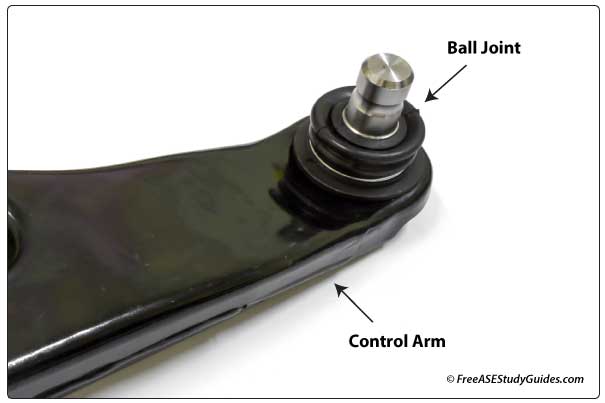
- ✦ Complete assembly
Usually includes the control arm, bushings, and a preinstalled ball joint.
- ✦ Control arm with bushings
May include the bushings but leave the ball joint out.
- ✦ Bare control arm
May require you to transfer or install both bushings and the ball joint.
- ✦ Vehicle-specific design
Some cars use a ball joint that is not permanently attached to the control arm.
Why the Answer Changes From One Vehicle to Another
Suspension systems are not all built the same way. One vehicle may use a pressed-in lower ball joint, while another uses a bolt-on joint. Some newer assemblies are designed so the ball joint and control arm are replaced together.
The vehicle maker also decides how the original parts are serviced. Aftermarket manufacturers may then offer more than one replacement option based on cost and ease of installation.
- ✦ Pressed-in design
The ball joint fits tightly into the control arm and often needs a press or special tool.
- ✦ Bolt-on design
The joint attaches with bolts and may be easy to replace separately.
- ✦ Integrated design
The joint is treated as part of the arm assembly and the complete arm is often replaced.
What Is a Lower Control Arm and What Does It Do?
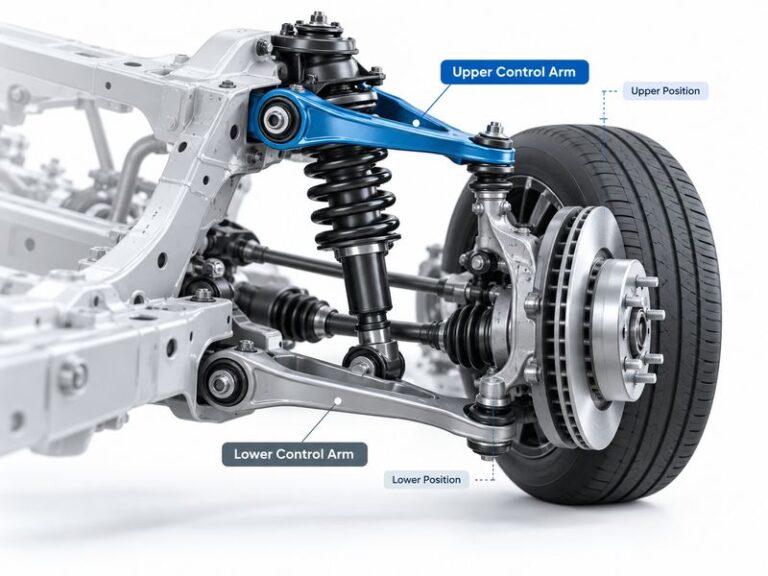
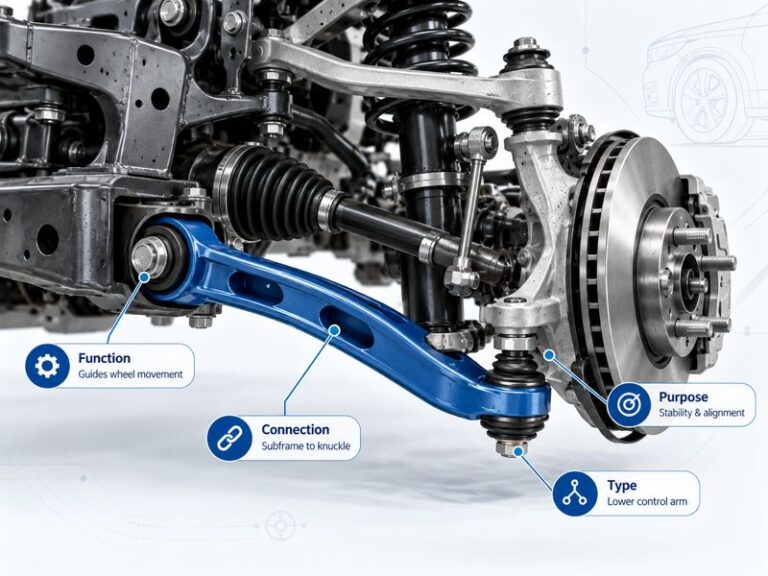
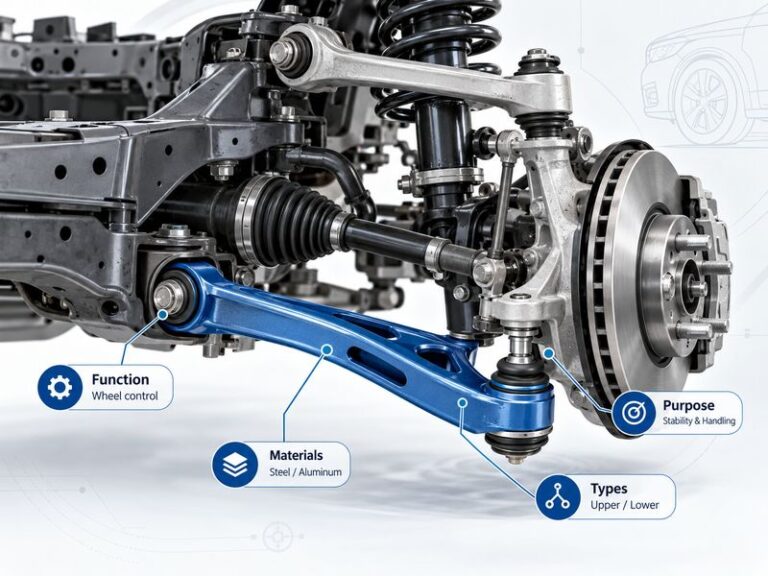
A lower control arm is a strong suspension link between the vehicle frame or subframe and the steering knuckle or wheel assembly. It helps hold the wheel in the correct position while still allowing suspension movement.
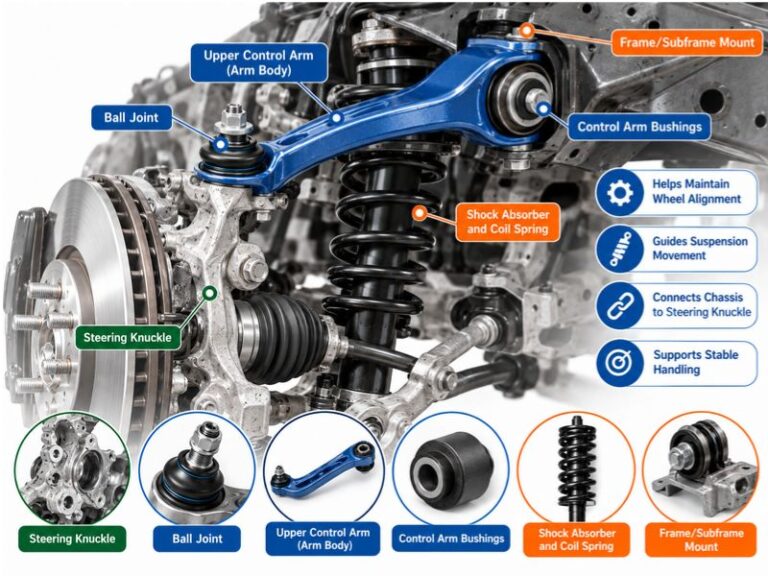
Most control arms pivot at the vehicle body through rubber or hydraulic bushings. At the outer end, the control arm usually connects to the steering knuckle through a ball joint.
As your vehicle goes over a bump, the control arm moves up and down. The ball joint changes angle as the suspension moves. On steering axles, it also allows the knuckle and wheel to turn.
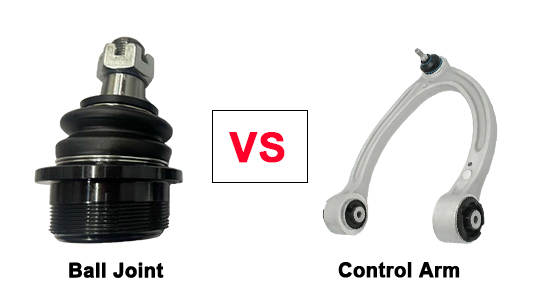
This relationship explains why people often ask do lower control arms come with ball joints. The parts work together closely, but they are not always sold as one piece.
- ✦ Supports wheel position
The control arm helps keep the wheel located correctly under the vehicle.
- ✦ Allows suspension travel
Its bushings let the arm move as the wheel rises and falls.
- ✦ Connects to the steering knuckle
The outer end normally meets the knuckle through a ball joint.
- ✦ Helps maintain alignment
A straight and secure control arm helps maintain proper suspension geometry.
Is the Ball Joint Part of the Control Arm?
The ball joint may be installed in the control arm, but it is still a separate suspension component in many designs. Think of the control arm as the link and the ball joint as the flexible pivot at its outer end.
In some assemblies, the manufacturer treats both parts as one service unit. In others, the joint can be removed and replaced without replacing the arm.
- ✦ Separate component
Many ball joints can be removed from the arm and replaced.
- ✦ Assembly component
Some designs make replacing the whole control arm the normal repair method.
Why Some Lower Control Arms Come With Ball Joints
There are several reasons replacement lower control arms often come with ball joints. The biggest is convenience. A complete assembly removes the need to press out the old joint and install a new one separately.
It can also reduce installation mistakes. The ball joint is already positioned in the control arm by the parts manufacturer. The technician normally needs only to install the complete arm and tighten the mounting hardware correctly.
Another benefit is that several wear items get replaced at the same time. If the control arm bushings and ball joint have similar mileage, installing a complete assembly can refresh several suspension points in one repair.
For many home mechanics, this is especially useful. A complete assembly may avoid the need for a hydraulic press or a special ball joint tool.

- ✦ Faster installation
A preinstalled joint can reduce the amount of work needed during replacement.
- ✦ Fewer special tools
You may not need to press a ball joint into the arm.
- ✦ New bushings
Many complete arms include fresh bushings along with the ball joint.
- ✦ Simpler DIY repair
A complete assembly can make the job more practical for a well-equipped home mechanic.
What Does a Complete Lower Control Arm Usually Include?
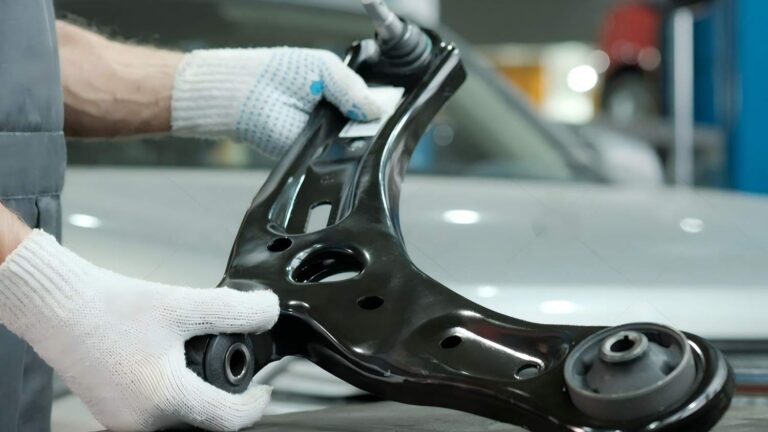
A complete lower control arm normally includes the metal or aluminum arm and the inner mounting bushings. If it is sold as an assembly with ball joint, the outer joint is also installed.
Do not assume mounting bolts, nuts, cotter pins, or other hardware are included. Those items vary by manufacturer and kit.
- ✦ Control arm
The main steel, cast iron, or aluminum suspension link.
- ✦ Bushings
Rubber or hydraulic mounts at the inner pivot points.
- ✦ Ball joint
Included only when the product description clearly says so.
- ✦ Hardware
Some kits include new hardware, while others require reuse or separate purchase.
Why Some Lower Control Arms Do Not Include Ball Joints
If you search do lower control arms come with ball joints and find a part without one, that does not mean anything is missing. The suspension may simply use a separately serviceable ball joint.
A bolt-on ball joint is a good example. The joint may attach to the control arm with several bolts. If the control arm is damaged but the ball joint is still good, the parts may be serviced separately.
Some replacement manufacturers also sell different levels of the same part. A lower-cost option may include only the arm and bushings. A more complete option may include the ball joint.
There are also vehicle designs in which the ball joint connects to another suspension component instead of being built directly into the replacement control arm. Fitment information matters more than general assumptions.

- ✦ Ball joint sold separately
Some vehicles allow the ball joint to be replaced as its own service part.
- ✦ Lower-cost replacement
A basic control arm may leave out parts that can be transferred or purchased separately.
- ✦ Different suspension design
The joint may bolt to the arm or connect in a way that makes separate replacement practical.
- ✦ Multiple aftermarket choices
The same vehicle may have both loaded and unloaded control arm options.
Can You Reuse the Old Ball Joint?
Sometimes you can reuse a ball joint if the design allows it and the joint is in excellent condition. However, removal may damage certain pressed-in joints or their retaining parts.
It also makes little sense to reuse a loose, torn, rusted, or high-mileage ball joint while installing a new control arm. Inspect the joint carefully before deciding.
- ✦ Check for play
Any excessive looseness can indicate wear.
- ✦ Inspect the boot
A torn boot can allow dirt and water into the joint.
- ✦ Check movement
Binding, rough motion, or unusual looseness can justify replacement.
How to Tell if a New Lower Control Arm Includes a Ball Joint
Before buying, check the listing instead of relying on the product title alone. When shoppers ask do lower control arms come with ball joints, the safest answer is to verify the exact part number.
Start with the written description. Look for clear terms such as ball joint included, with ball joint, preassembled ball joint, or complete control arm assembly.
Then study the product photo. A ball joint often appears at the outer tip of the control arm. It normally has a threaded stud and a rubber dust boot.
Photos are useful, but they are not enough by themselves. Some sellers use stock photos. Confirm the written contents and vehicle fitment before ordering.

- ✦ Read the product name
Look for the words with ball joint or complete assembly.
- ✦ Read the included-parts list
Check whether the manufacturer lists the ball joint as part of the package.
- ✦ Inspect product photos
Look for a joint with a dust boot and threaded stud at the outer end.
- ✦ Verify the part number
Use the exact manufacturer part number to confirm package contents.
- ✦ Confirm fitment
Match the year, make, model, engine, trim, drivetrain, and suspension option when required.
Terms You May See While Shopping
Parts listings use several terms that can cause confusion. Understanding them makes it easier to know what you are actually buying.
Loaded or complete often means more parts are installed, but these words are not perfectly standardized. Always read the details.
- ✦ Loaded control arm
Often means the arm includes bushings and a ball joint.
- ✦ Complete control arm
Usually means a more complete assembly, but you should still confirm the ball joint.
- ✦ Control arm assembly
Can mean the arm and bushings only or a unit with a ball joint.
- ✦ Bare arm
Usually means fewer preinstalled components.
Should You Replace the Ball Joint or the Whole Lower Control Arm?
The best repair depends on what is worn and how the suspension is built. If the control arm is straight and the bushings are still healthy, replacing only a serviceable ball joint may cost less in parts.
However, replacing the complete arm can make sense when both the ball joint and bushings are worn. It can also save labor when a pressed-in ball joint would require extra removal and installation work.
In many real repair situations, I would compare the condition of all parts before choosing. A cheap ball joint repair is less attractive if the old control arm bushings are cracked and likely to need replacement soon.
The price difference between a joint and a complete assembly can also be smaller than expected on some common U.S. vehicles. Compare total parts cost, tools, labor, and alignment needs rather than looking only at the first price you see.

- ✦ Replace only the ball joint
This may make sense when the arm and bushings are good and the joint is easy to service.
- ✦ Replace the complete arm
This may make sense when the ball joint and bushings are both worn.
- ✦ Consider labor
Pressing a joint in and out may add labor or require special tools.
- ✦ Check arm condition
A bent, cracked, damaged, or badly corroded arm should not be kept just to save money.
When Replacing the Whole Arm Often Makes More Sense
A complete assembly is attractive when the vehicle has high mileage and several parts on the arm show wear. Fresh bushings and a fresh joint can restore more of the connection at once.
It can also be a better DIY choice when removing a pressed joint would require tools you do not have.
- ✦ Bushings are cracked
Replacing the arm can renew the worn bushings at the same time.
- ✦ Ball joint is pressed in
A complete arm may avoid a difficult pressing job.
- ✦ Control arm is damaged
A bent or cracked arm should be replaced as an assembly.
- ✦ Vehicle has high mileage
Replacing related wear items together may reduce the chance of another repair soon.
When a Ball Joint-Only Repair May Make Sense
A ball joint-only repair can be sensible when the joint is easy to replace and the rest of the arm is in very good condition. This is common with some bolt-on designs.
The decision should be based on inspection rather than mileage alone. A technician can check bushing condition, arm damage, and ball joint play before recommending the repair.
- ✦ Healthy control arm
There is no bending, cracking, or serious corrosion.
- ✦ Good bushings
The rubber is not torn, separated, or excessively soft.
- ✦ Easy-to-service joint
The ball joint can be replaced without major extra labor.
What Are the Main Types of Lower Ball Joint Installation?
Understanding how the ball joint attaches helps explain why the answer to do lower control arms come with ball joints varies so much. There are several common designs.
Pressed-in joints fit tightly into a machined opening in the arm. Bolt-on joints use bolts or rivets. Integrated joints are supplied as part of the arm assembly and may not be intended for separate service.
None of these designs is automatically better for every vehicle. They simply change how the suspension is assembled and repaired.

- ✦ Pressed-in ball joint
The joint sits in a tight bore and often requires a press or ball joint tool.
- ✦ Bolt-on ball joint
The joint attaches with bolts and is commonly serviceable by itself.
- ✦ Riveted ball joint
Original joints on some vehicles use rivets that must be drilled or cut during replacement.
- ✦ Integrated ball joint
The joint and arm may be designed to be replaced as a complete unit.
Pressed-In Ball Joints
Pressed-in joints are common on many suspension systems. A special press can push the worn joint out and press the new joint into the arm.
The work can be difficult if corrosion is heavy or access is poor. For this reason, some owners choose a new complete arm even when the ball joint is technically replaceable.
- ✦ Tool requirement
A ball joint press or shop press may be needed.
- ✦ Fit is critical
The new joint must seat correctly and securely in the control arm.
Bolt-On Ball Joints
Bolt-on joints are often easier to service separately. The old joint is unbolted and a replacement is installed in its place.
You must still use the correct fasteners and torque values. Suspension hardware carries major loads, so proper installation matters.
- ✦ Separate replacement
The arm can often remain in service if it and its bushings are good.
- ✦ Hardware matters
Use correct replacement hardware and manufacturer torque procedures.
Signs the Lower Control Arm or Ball Joint May Be Worn
A control arm and ball joint work in the same area, so their symptoms can overlap. A clunk from the front suspension may come from a loose ball joint, damaged control arm bushing, sway bar link, tie rod, strut mount, or another part.
Steering looseness is another warning sign. A worn ball joint can allow unwanted movement between the control arm and steering knuckle. A failed bushing can also let the control arm shift under braking or acceleration.
Uneven tire wear can occur when worn suspension parts affect wheel alignment. However, tire wear alone does not prove that a control arm or ball joint is bad.
A proper inspection is important. Severe ball joint wear can become a safety issue because the joint is part of the connection that keeps the steering knuckle and suspension together.
- ✦ Clunking noise
You may hear a knock over bumps or during changes in vehicle load.
- ✦ Loose steering
Excess play may make the steering feel less precise.
- ✦ Uneven tire wear
Suspension movement can change alignment and affect the tire contact pattern.
- ✦ Vehicle wandering
Worn parts may make the car feel less stable in a straight line.
- ✦ Visible boot damage
A torn ball joint boot can let grease escape and contamination enter.
- ✦ Cracked control arm bushings
Split or separated rubber may allow excessive arm movement.
Can You Drive With a Bad Lower Ball Joint?
Driving with a severely worn ball joint is risky. If the joint separates, the wheel and steering knuckle can lose their normal position.
If you notice major looseness, strong clunking, unusual wheel movement, or unstable steering, have the suspension inspected as soon as practical. Do not rely on noise alone to judge how much wear is present.
- ✦ Minor symptoms still need inspection
A small noise may come from several parts and should be diagnosed.
- ✦ Severe play needs prompt attention
A badly worn joint can affect vehicle control and suspension integrity.
How Mechanics Check Lower Control Arms and Ball Joints
A visual inspection is usually the first step. The technician checks the arm for impact damage, cracks, heavy corrosion, and bent sections. The bushings are checked for tearing, separation, or excess movement.
The ball joint is then checked according to the vehicle’s suspension design. The technician may lift or support the suspension in a specific way and check the joint for vertical or side-to-side play.
Some ball joints have wear indicators. Others require measurement against a service limit. The correct test matters because normal movement on one design may be excessive on another.
This is another reason not to replace parts based only on a noise. A careful suspension inspection can tell you whether you need the ball joint, the lower control arm, or another component.
- ✦ Visual arm inspection
Check for cracks, bends, corrosion, and impact damage.
- ✦ Bushing inspection
Look for torn rubber, separation, or excessive movement.
- ✦ Ball joint play test
Check movement using the procedure specified for that suspension.
- ✦ Dust boot inspection
Look for tears, grease loss, dirt, and water entry.
Why Correct Support Position Matters
Some suspension designs place a load on the ball joint when the vehicle hangs in the air. Others unload the joint. The position can affect how much play you feel during inspection.
For that reason, follow the service procedure for the exact vehicle instead of using one test method for every car.
- ✦ Vehicle-specific test
Suspension geometry determines how the ball joint should be checked.
Do New Lower Control Arms Come With Bushings Too?
Most complete replacement lower control arms come with new bushings already installed. In fact, preinstalled bushings are one of the main reasons many people replace the entire arm.
Still, the same rule applies as with ball joints. Confirm what is included before buying. Some bare replacement arms may require separate bushings.
When people ask do lower control arms come with ball joints, they often assume the bushings are included as well. That is often true for complete assemblies, but it is not guaranteed for every product.
A product described as a complete lower control arm with bushings and ball joint is the clearest option when you want all three pieces together.
- ✦ Most loaded arms
Usually come with bushings already pressed into the arm.
- ✦ Bare replacement arms
May require separate bushings and possibly a separate ball joint.
- ✦ Check both sides
Do not assume left and right assemblies include identical hardware without checking.
Why Preinstalled Bushings Can Be Helpful
Removing old control arm bushings can require a press, cutting tools, or special adapters. Buying an arm with bushings already installed avoids much of that work.
It also gives you new pivot points at the same time as the new arm. This can be useful when the old bushings are cracked or loose.
- ✦ Less pressing work
The bushings arrive correctly located in the new arm.
- ✦ Multiple wear parts renewed
The repair can address old bushings and the control arm at the same time.
Do You Need an Alignment After Replacing a Lower Control Arm?
An alignment check is a smart step after lower control arm replacement. The arm helps locate the wheel, so replacing it can affect suspension geometry.
Even when there is no direct camber or caster adjustment at the control arm, small changes in bushing position, manufacturing tolerances, or mounting points can affect alignment.
If the old arm was bent or the bushings were badly worn, alignment may already have been incorrect before the repair. Installing a new arm can change the wheel position again.
For best tire life and predictable handling, have the alignment checked after major suspension work. This is especially important if the vehicle previously pulled, wandered, or wore tires unevenly.
- ✦ Protects tire life
Correct alignment helps prevent rapid or uneven tread wear.
- ✦ Checks suspension geometry
An alignment can show whether wheel angles are within specification.
- ✦ Confirms repair results
It helps verify that the suspension is positioned correctly after replacement.
What if Only the Ball Joint Was Replaced?
An alignment check can still be worthwhile after ball joint replacement. The joint directly connects the steering knuckle to the suspension arm.
Whether adjustment is actually needed depends on the vehicle and how the repair was performed. Checking alignment removes the guesswork.
- ✦ Check rather than assume
A measurement can confirm whether the repair changed alignment.
Should Lower Control Arms Be Replaced in Pairs?
Lower control arms do not always have to be replaced in pairs. If one arm is bent after hitting a pothole or curb and the other side is healthy, replacing only the damaged side may be reasonable.
However, age-related wear often affects both sides at a similar rate. If one high-mileage arm has badly worn bushings and a worn ball joint, the opposite side deserves a careful inspection.
Replacing both sides can also create more consistent suspension behavior when both assemblies are old. Yet you should not replace a good part only because a matching part failed on the other side.
The best approach is inspection. Check both lower control arms, bushings, ball joints, and related steering parts before deciding.
- ✦ Impact damage
One-side replacement may be enough when only one arm was physically damaged.
- ✦ Age-related wear
Inspect both sides because similar parts often have similar service history.
- ✦ High mileage
The opposite-side bushings and ball joint may also be near the end of their useful life.
- ✦ Budget and condition
Base the decision on actual wear, safety, and repair needs.
What Else Should Be Inspected During the Repair?
Suspension parts work together, so lower control arm replacement is a good time to inspect nearby components. This does not mean every nearby part needs replacement.
Look for actual wear before spending money. Replacing only failed or clearly worn components keeps the repair focused.
- ✦ Tie rod ends
Check for looseness and damaged dust boots.
- ✦ Sway bar links
Look for loose joints, torn boots, or worn bushings.
- ✦ Wheel bearings
Check for play, roughness, or abnormal noise.
- ✦ Struts and shocks
Inspect for leaks, damage, and weak damping.
How to Buy the Correct Lower Control Arm With Ball Joint
Buying the right suspension part requires more than matching the vehicle model name. Many vehicles have different control arms based on production date, drivetrain, suspension package, engine, or trim.
Start with the year, make, and model. Then confirm any additional fitment notes shown by the manufacturer. If a vehicle identification number lookup is available, it can help narrow the choice.
Next, confirm whether you need the driver side or passenger side. Some vehicles use very different left and right arms. Others may have front and rear lower arms on the same suspension.
Finally, answer the original question for the exact part: do lower control arms come with ball joints in this listing? Do not buy until the product details clearly show whether the joint and bushings are included.

- ✦ Match year, make, and model
Begin with basic vehicle fitment information.
- ✦ Check trim and drivetrain
AWD, 4WD, FWD, or performance packages can change suspension parts.
- ✦ Check production notes
Some models change suspension parts during the same model year.
- ✦ Confirm side
Make sure you order the correct driver-side or passenger-side arm.
- ✦ Confirm ball joint inclusion
Read the package contents instead of assuming the joint comes with the arm.
- ✦ Check hardware
Find out whether new nuts, bolts, cotter pins, or retaining clips are included.
Do Not Choose by Price Alone
Two control arms that look similar may not include the same parts. The cheaper one may exclude the ball joint or use different bushings.
Compare the actual package contents, warranty, construction, fitment, and manufacturer information. A slightly higher part price can still cost less overall if it reduces extra parts and labor.
- ✦ Compare complete contents
Check the arm, bushings, ball joint, and hardware.
- ✦ Compare total repair cost
Include labor and special tool needs, not only the purchase price.
Common Mistakes When Buying or Replacing Lower Control Arms
One of the most common mistakes is assuming every new control arm includes a ball joint. This can delay a repair when the package arrives without the joint you expected.
Another mistake is buying the wrong side or suspension version. Two parts may look almost identical online but use different dimensions, bushing sizes, or mounting points.
Installation mistakes matter too. Control arm bushing bolts often need to be tightened according to the vehicle maker’s procedure. Some rubber bushings can be damaged if they are locked in the wrong suspension position.
Ball joint hardware also needs correct installation. Use the proper torque specifications and required locking hardware for the exact vehicle.
- ✦ Assuming the ball joint is included
Always read the package contents before ordering.
- ✦ Ordering the wrong side
Driver and passenger control arms are often different.
- ✦ Ignoring suspension options
Different trims or drivetrains may use different parts.
- ✦ Skipping alignment
Suspension replacement can affect wheel geometry.
- ✦ Incorrect bushing bolt tightening
Follow the correct service procedure to avoid unwanted bushing preload.
- ✦ Reusing damaged hardware
Replace single-use or damaged suspension hardware when required.
Why Installation Quality Matters
Even a good control arm can perform poorly if installed incorrectly. Suspension fasteners hold major structural parts together and must be handled with care.
If you are not comfortable supporting the vehicle safely, separating a ball joint, or using torque specifications, professional installation is a sensible choice.
- ✦ Use safe support
Never rely only on a hydraulic jack while working under a vehicle.
- ✦ Follow torque values
Suspension bolts and ball joint hardware need correct tightening.
- ✦ Inspect after installation
Confirm boots, fasteners, brake hoses, and nearby components are correctly positioned.