Is a Suspension Arm the Same as a Control Arm? Explained
If you are asking **is a suspension arm the same as a control arm**, the simple answer is that they often refer to the same type of suspension part, but the terms are not always identical. A control arm is an arm in the suspension system that connects the wheel assembly to the vehicle structure while controlling wheel movement. The term suspension arm can describe a control arm as well as certain other links used in more complex suspension layouts.
This naming issue often causes confusion when U.S. vehicle owners compare repair estimates, shop for parts online, or read service information. One mechanic may call a component a lower control arm. A parts catalog may call the same item a suspension arm, wishbone, or A-arm. The important point is not just the name but **where the part mounts and what movement it controls**.
From a practical repair standpoint, I treat the terms as related rather than perfectly interchangeable. If a technician says your suspension arm is worn, I would still confirm whether that means an upper control arm, lower control arm, trailing arm, lateral link, or another suspension link before buying parts. That simple check can prevent an expensive ordering mistake.
This guide explains the difference between suspension arms and control arms, how they work, where they are located, the names you may see in parts catalogs, common suspension designs, failure symptoms, and what to check before replacement.
Is a Suspension Arm the Same as a Control Arm?
So, **is a suspension arm the same as a control arm**? In many common suspension systems, yes. A control arm is one of the main types of suspension arms, and manufacturers or parts sellers may use both names for the same component.
The difference is mainly about how broad each term is. **Suspension arm** can describe an arm or link that guides wheel movement. **Control arm** usually refers to a specific hinged arm that connects the steering knuckle or wheel carrier to the vehicle frame, subframe, or body.
For example, a typical front suspension may have a lower control arm. Some manufacturers may list that part as a lower suspension arm. Both names can point to the same physical component.
However, not every suspension arm is necessarily called a control arm. A multi-link rear suspension can contain lateral arms, toe links, tension arms, and trailing links. These parts all help control wheel position, but repair manuals may give each one a more specific name.

- ✦ Control arm
A specific suspension link that allows controlled wheel movement while holding the wheel assembly in position.
- ✦ Suspension arm
A broader term that can refer to a control arm or another arm-shaped suspension link.
- ✦ Common catalog use
Some parts catalogs use suspension arm and control arm as interchangeable names for the same component.
- ✦ Important distinction
Complex suspension systems may contain several arms or links with different functions and names.
Why the Two Terms Are Often Used Interchangeably
Automotive terminology is not completely standardized across every manufacturer. One automaker may use the term control arm, while another may describe a nearly identical part as a suspension arm. Aftermarket suppliers may use both terms so drivers can find the part regardless of which name they search.
That is why a search for **is a suspension arm the same as a control arm** can produce apparently conflicting answers. The names often overlap, but the exact meaning depends on the suspension design and the terminology used by the vehicle maker.
- ✦ Manufacturer terminology
Vehicle makers can use different names for parts that perform similar jobs.
- ✦ Aftermarket terminology
Parts suppliers often include several common names for the same component.
When the Terms May Mean Different Parts
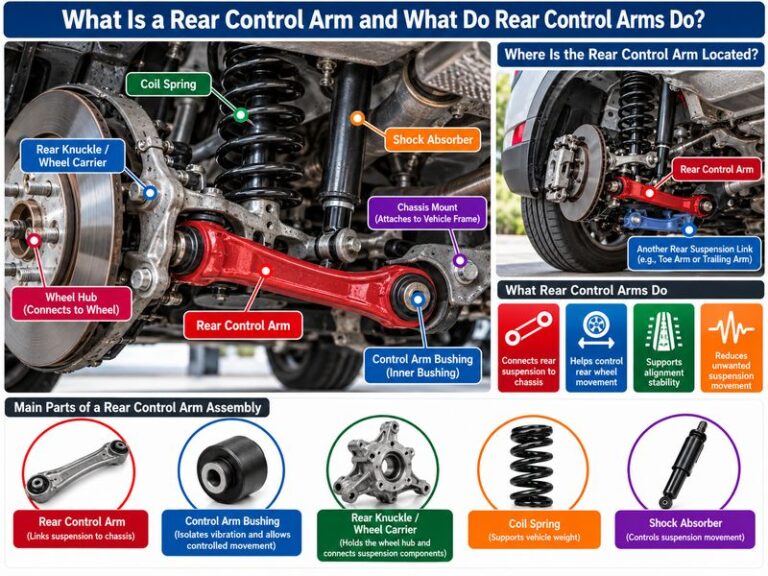
The terms become less interchangeable in a multi-link suspension. Instead of one large triangular arm, the wheel may be located by several smaller links. These can include a trailing arm, lateral link, camber link, toe link, or tension arm.
All of these belong to the suspension system, but calling every one a control arm can make identification harder. When dealing with these designs, use the exact part name shown in the factory service information or a vehicle-specific parts diagram.
- ✦ Multi-link systems
Several individual links can control different directions of wheel movement.
- ✦ Vehicle-specific naming
The most accurate name is usually the one used for your exact year, make, model, and suspension.
What Is a Control Arm?
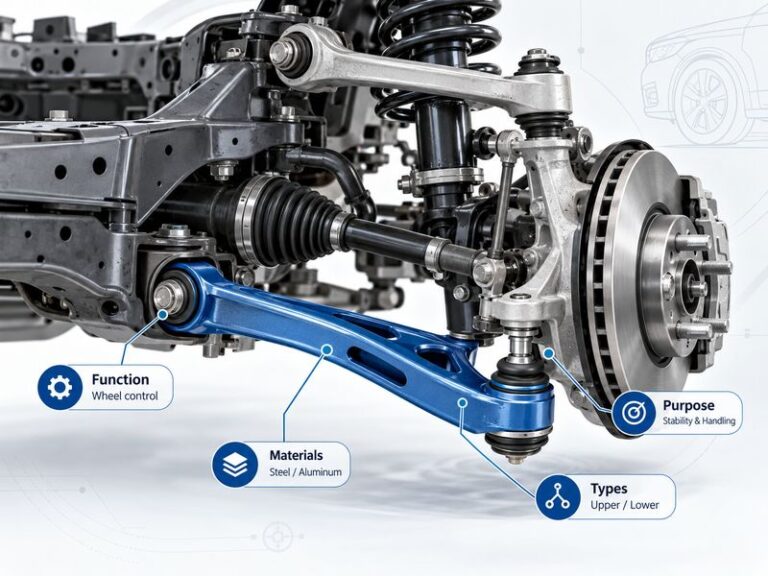
A **control arm** is a structural suspension component that connects the wheel assembly to the vehicle frame, body, or subframe. It lets the wheel move up and down as the vehicle travels over bumps while helping keep the wheel properly positioned.
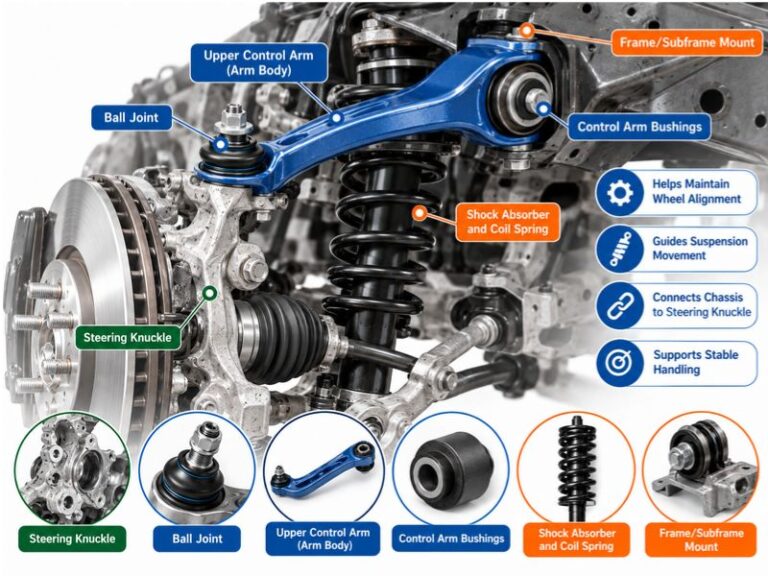
Most control arms pivot at the vehicle side through rubber or hydraulic bushings. The outer end commonly connects to the steering knuckle through a ball joint. This layout lets the suspension move while also allowing the steering system to turn the front wheels.
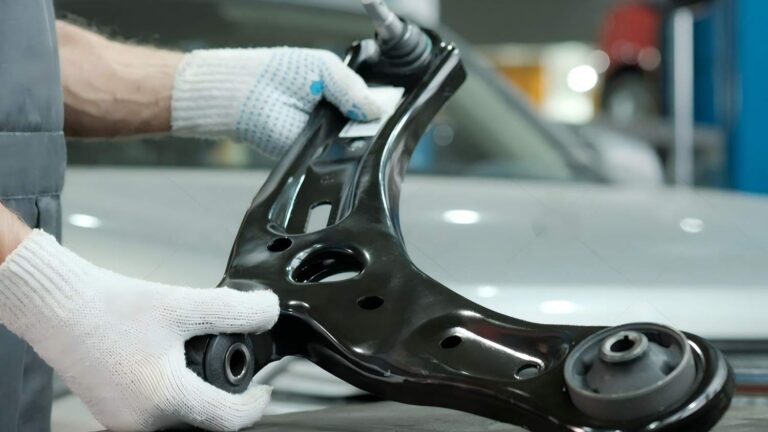
Control arms can be made from stamped steel, forged steel, cast aluminum, or other strong materials. Their exact shape varies widely. Some look like a straight arm, while others are curved, triangular, or shaped like the letter A.
When people ask **is a suspension arm the same as a control arm**, this is usually the component they are thinking about. It is one of the most common and important suspension arms found on passenger cars, SUVs, pickups, and crossovers.
- ✦ Inner mounting points
Bushings connect the control arm to the vehicle structure and allow limited movement.
- ✦ Outer connection
A ball joint or similar joint often connects the arm to the steering knuckle.
- ✦ Main purpose
The arm guides wheel travel and helps maintain proper wheel position.
- ✦ Common materials
Steel and aluminum are widely used because the arm must handle large suspension loads.
What Does a Control Arm Do?
A control arm does much more than hold the wheel in place. It helps control the path the wheel follows as the suspension compresses and extends. This directly affects alignment, steering feel, tire contact, and vehicle stability.
The arm also transfers forces between the wheel and vehicle structure during braking, cornering, and acceleration. Because of this, its bushings, ball joint, and mounting points must remain tight and in good condition.
- ✦ Guides wheel travel
Keeps wheel movement within the path designed by the suspension engineers.
- ✦ Supports alignment
Helps maintain camber, caster, and toe relationships as the suspension moves.
- ✦ Transfers loads
Carries forces created by bumps, braking, steering, and cornering.
What Is a Suspension Arm?
A **suspension arm** is any arm-like suspension member used to locate, support, or guide the movement of a wheel or wheel carrier. Depending on the vehicle, this could be a conventional control arm or one of several smaller links.
This broader meaning explains much of the confusion around **is a suspension arm the same as a control arm**. Every conventional control arm can reasonably be described as a suspension arm. Yet some suspension arms have specialized names and may not be listed as control arms.
The term is also more common in some regions and parts catalogs than in everyday American repair language. In the United States, technicians often say upper control arm or lower control arm when talking about a traditional independent suspension layout.
If you see a replacement part labeled suspension arm, do not assume it is different from the control arm already installed on your car. Compare the mounting points, dimensions, side of the vehicle, suspension location, and part number.

- ✦ Broad category
Suspension arm can describe several types of links used to guide the wheel.
- ✦ Possible synonym
In a simple suspension layout, suspension arm may be another name for a control arm.
- ✦ Catalog terminology
The label used by a seller may differ from the name used by a mechanic or vehicle maker.
Other Suspension Arms and Links
Modern suspension designs can divide wheel-control duties among several separate links. Each link may control movement in a specific direction. This allows engineers to tune ride comfort, handling, alignment change, and packaging more precisely.
These parts are related to control arms because they all influence wheel position. Still, they should not automatically be treated as identical when ordering parts.
- ✦ Trailing arm
Primarily helps control forward and backward wheel movement.
- ✦ Lateral link
Helps control side-to-side wheel position.
- ✦ Toe link
Helps set or control the wheel’s toe angle.
- ✦ Camber link
Helps manage the wheel’s inward or outward tilt.
- ✦ Tension arm
Helps resist fore-and-aft loads in certain suspension designs.
Control Arm vs Suspension Arm: Key Differences
The easiest way to understand the terms is to think of **control arm** as the more specific name. Suspension arm describes a wider group of parts. This distinction matters most when a vehicle uses several links rather than one large arm.
If someone asks **is a suspension arm the same as a control arm**, the correct practical answer depends on the part being discussed. On many vehicles, the answer is yes. On others, the suspension system includes arms that are not identified as control arms.
The design also matters. A traditional double-wishbone suspension can have clearly defined upper and lower control arms. A multi-link suspension may replace those large arms with several individual links that share the job.

- ✦ Meaning
Control arm is a specific suspension component, while suspension arm is a broader description.
- ✦ Typical use
Control arm is common terminology in U.S. repair shops and parts stores.
- ✦ Design differences
Simple systems use one or two major arms, while multi-link systems can use several separate links.
- ✦ Replacement accuracy
Part location and fitment matter more than whether a catalog calls it an arm, link, or control arm.
Quick Comparison
A traditional control arm normally has one or more inner pivots and an outer connection to the wheel carrier or steering knuckle. It controls wheel movement through a defined arc.
A suspension arm may work in the same way, but the name can also apply to a smaller link that handles only one part of wheel location. This is why the two names can be synonyms in one vehicle and different terms in another.
- ✦ Control arm
Usually a major hinged arm between the vehicle structure and wheel assembly.
- ✦ Suspension arm
Can mean a control arm or another suspension link depending on the design.
Upper and Lower Control Arms Explained
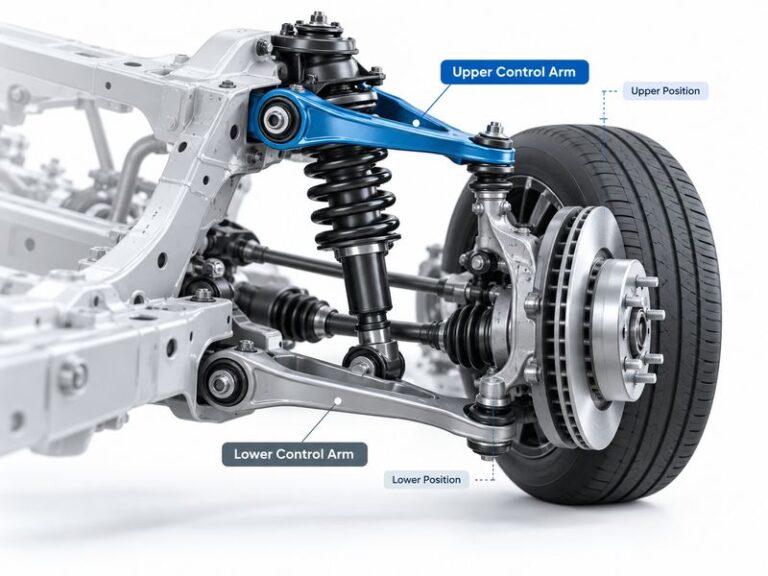
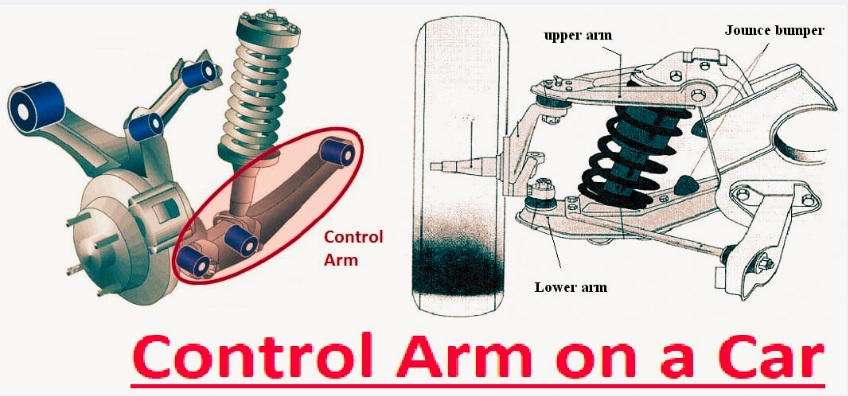
Some independent suspension systems use both **upper and lower control arms**. Together, these arms locate the steering knuckle while allowing the wheel to travel vertically. This design is often called double-wishbone or short-long-arm suspension.
The upper control arm sits above the wheel center and connects the upper part of the steering knuckle to the vehicle structure. The lower control arm sits below it and usually carries more of the suspension load.
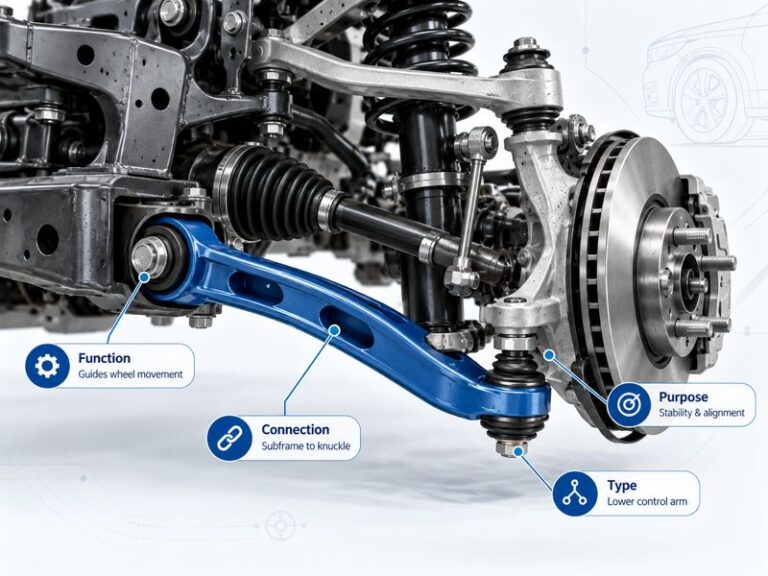
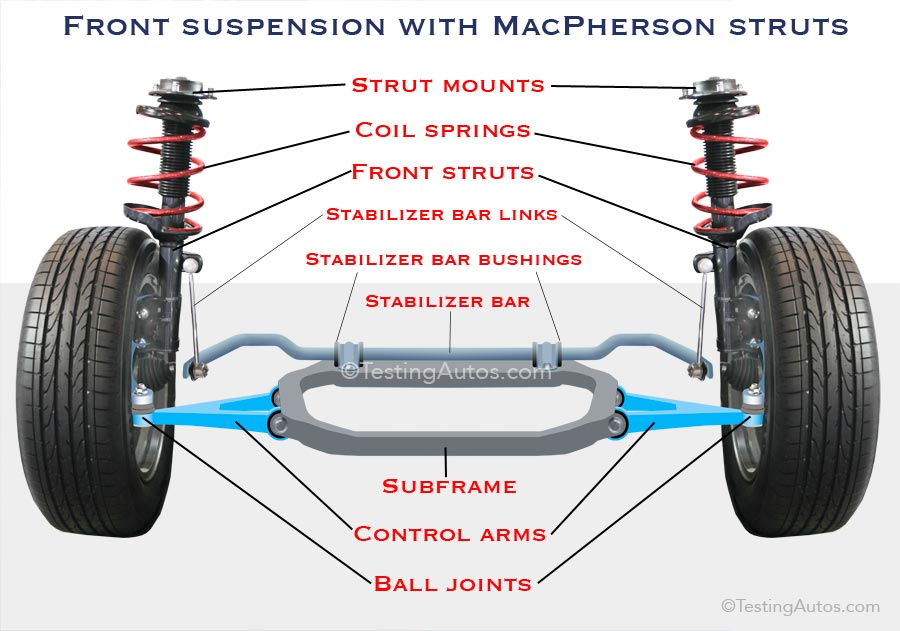
Other systems use only a lower control arm. A MacPherson strut suspension, for example, normally uses the strut itself as the upper locating member. The lower arm then handles much of the wheel’s lower positioning.
This is another reason the answer to **is a suspension arm the same as a control arm** changes with the suspension design. A part called a suspension arm on one car may perform a job handled by a lower control arm on another.
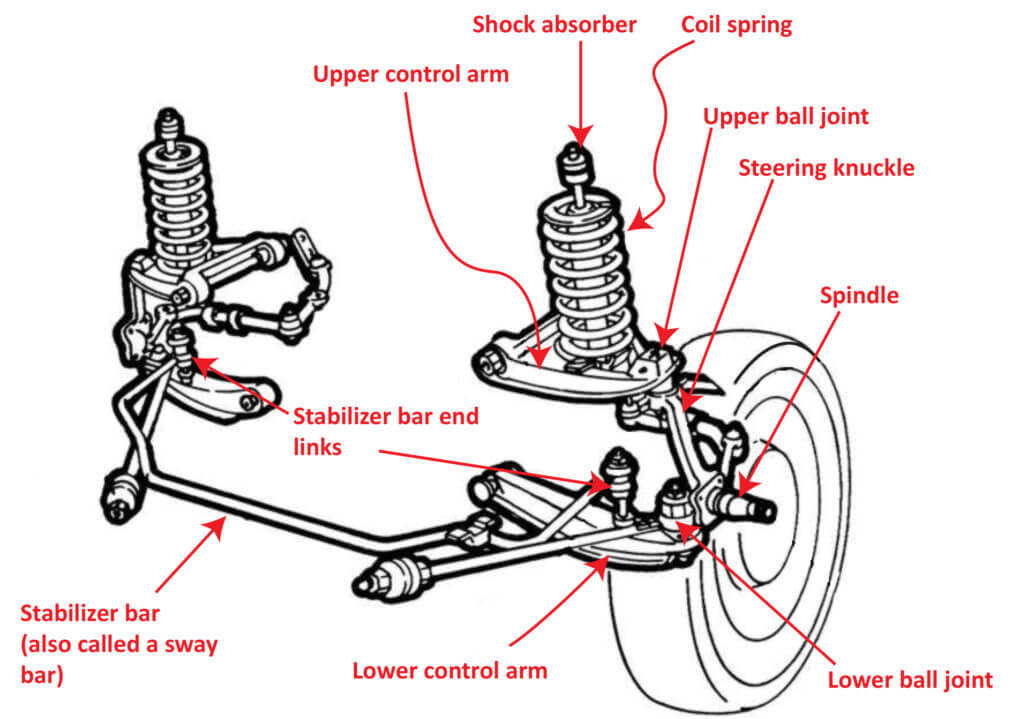
- ✦ Upper control arm
Connects the upper area of the wheel carrier to the body or frame in compatible suspension designs.
- ✦ Lower control arm
Connects the lower wheel carrier to the vehicle and often carries large suspension loads.
- ✦ Double wishbone
Uses upper and lower arms to control wheel position through suspension travel.
- ✦ MacPherson strut
Commonly uses a lower control arm while the strut provides the upper locating function.
Why Control Arms Are Sometimes Called Wishbones or A-Arms
A control arm with two inner mounting points and one outer joint often forms a triangle. This shape led to the names **A-arm** and **wishbone**. These terms usually describe the arm’s shape rather than an entirely different type of component.
A parts listing for an A-arm, wishbone, suspension arm, or control arm may therefore refer to the same basic part. Always verify fitment because terminology alone is not enough.
- ✦ A-arm
A triangular control arm that resembles the letter A.
- ✦ Wishbone
Another common name for a triangular suspension control arm.
How Suspension Design Changes the Terminology
Suspension design has a major effect on the names used for arms and links. Older and simpler independent systems often make the term control arm very clear. Newer systems may divide the same basic functions among several components.
When researching **is a suspension arm the same as a control arm**, it helps to know which suspension type your vehicle uses. MacPherson strut, double-wishbone, and multi-link layouts can all use arm-shaped parts, but they do not always name them the same way.
The front and rear suspension can also use different layouts on the same vehicle. A car may have front lower control arms but several rear lateral and trailing links. Calling every rear link a control arm could create confusion.
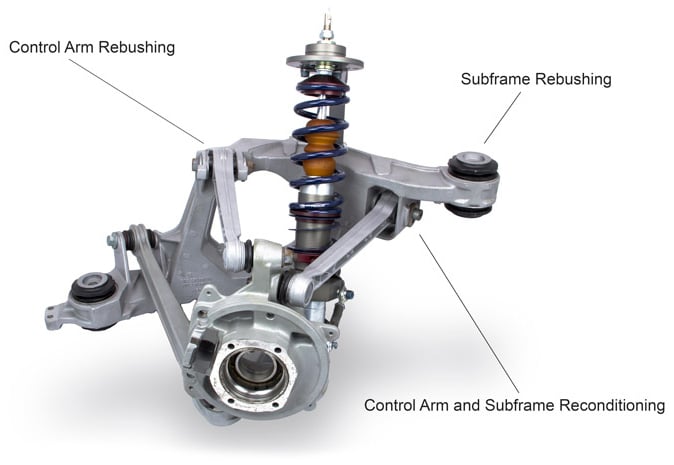
- ✦ MacPherson strut
Usually uses a lower control arm with the strut acting as a major upper locating member.
- ✦ Double wishbone
Normally uses upper and lower control arms.
- ✦ Multi-link
Uses several links that divide wheel-location duties.
- ✦ Solid axle
May use trailing arms, radius arms, control arms, or other links to position the axle.
MacPherson Strut Suspension
MacPherson strut suspension is common on U.S. passenger cars and crossovers. It combines the shock absorber and structural strut into one major assembly. A lower control arm usually connects the bottom of the steering knuckle to the subframe.
Because there may be no separate upper control arm, a replacement listing often focuses on the lower control arm or lower suspension arm.
- ✦ Typical arm count
Often one main lower control arm per wheel.
Double-Wishbone Suspension
Double-wishbone suspension normally uses an upper and a lower arm. The two arms help engineers control camber as the wheel moves. This layout is common on many performance vehicles, trucks, SUVs, and certain luxury models.
In this setup, suspension arm and control arm are often used interchangeably because both major arms directly control the steering knuckle.
- ✦ Typical arrangement
One upper arm and one lower arm locate each wheel assembly.
Multi-Link Suspension
Multi-link suspension uses several separate links instead of one or two large wishbones. Each link can be designed to manage a specific force or wheel-angle change.
This is where the broad term suspension arm becomes useful. The system can include several arms, yet only some may be called control arms in service information.
- ✦ Main benefit
Multiple links give engineers more control over wheel geometry and ride behavior.
How to Identify a Suspension Arm or Control Arm on Your Car
You do not need to rely only on part names when identifying an arm. Look at the component’s location and connection points. A traditional control arm usually runs from the chassis or subframe to the steering knuckle or wheel carrier.
The inner end normally uses one or more bushings. The outer connection may use a ball joint. Some modern designs use a separate ball joint, while others have the joint permanently installed in the arm.
If you are trying to answer **is a suspension arm the same as a control arm** for a specific vehicle, the best approach is to compare a factory-style diagram with the actual part. This is more reliable than relying on a general product name.
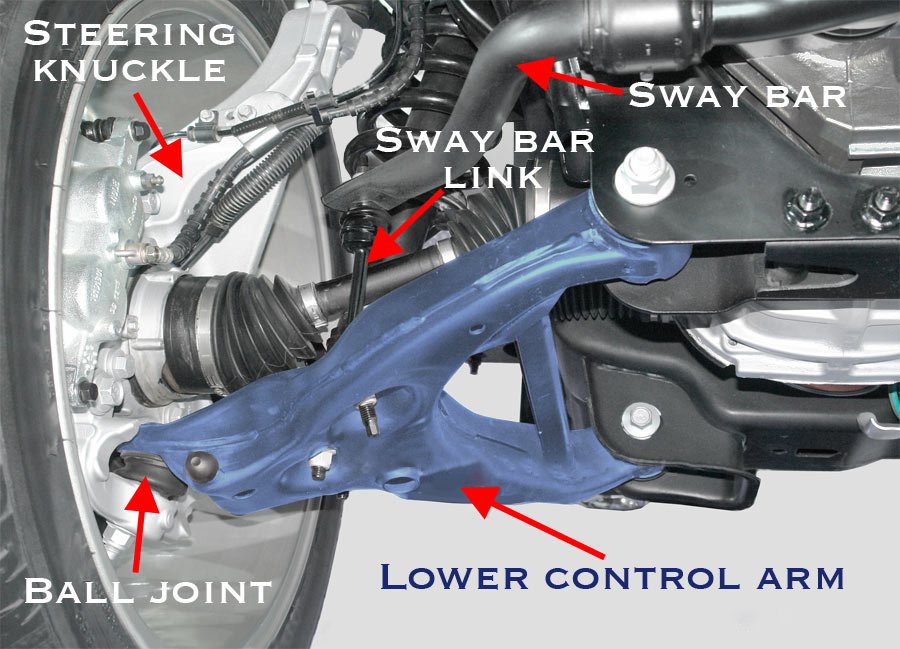
- ✦ Check the location
Confirm whether the arm is at the front or rear and on the left or right side.
- ✦ Count mounting points
Note how many bushings, bolts, and joints connect the arm.
- ✦ Find the wheel connection
See whether the arm connects directly to the steering knuckle or wheel carrier.
- ✦ Check the part number
Match OEM or aftermarket part numbers whenever possible.
- ✦ Verify fitment
Confirm year, make, model, trim, drivetrain, and suspension package.
Why Visual Identification Matters
Two arms on the same vehicle can look similar but have different dimensions or mounting angles. A left-side arm may also differ from the right-side version. Performance packages and different drivetrain layouts can add more variations.
Before ordering a part, compare the new component with a vehicle-specific diagram or the original arm. This simple step is especially useful when a seller uses suspension arm while another seller uses control arm.
- ✦ Avoid wrong parts
Matching shape and mounting points can reveal a catalog mismatch before installation.
What Parts Are Attached to a Control Arm?
A control arm does not work alone. Bushings, ball joints, fasteners, and nearby suspension components allow it to move while keeping the wheel stable. A problem with one of these parts can feel like a problem with the control arm itself.
When a shop says the control arm needs replacement, ask whether the metal arm is damaged or whether a bushing or ball joint is worn. On many vehicles, replacement arms come with new bushings and sometimes a preinstalled ball joint.
Replacing the full assembly can be practical when several attached wear parts have aged together. However, some designs allow the bushing or ball joint to be replaced separately.
- ✦ Control arm bushings
Flexible mounts that isolate noise and allow the arm to pivot.
- ✦ Ball joint
A flexible joint that permits steering and suspension movement.
- ✦ Mounting bolts
High-strength fasteners that secure the arm to the frame or subframe.
- ✦ Steering knuckle
The wheel-support structure that often connects to the outer end of the arm.
Control Arm Bushings
Bushings sit between the control arm and its mounting points. They allow controlled movement while reducing vibration and road noise. Rubber is common, though some vehicles use hydraulic bushings filled with fluid.
As bushings wear, the arm can move more than intended. This can cause clunks, unstable steering, changing alignment, or uneven tire wear.
- ✦ Normal role
Allows controlled arm movement while reducing harshness.
- ✦ Failure effect
Excess movement can reduce steering precision and alignment stability.
Ball Joints
A ball joint lets the steering knuckle move through several angles while staying connected to the control arm. Front ball joints must often handle both steering motion and suspension travel.
A badly worn ball joint can create a serious safety problem. Excessive play should be inspected and repaired promptly.
- ✦ Movement
Allows the knuckle to steer and move with suspension travel.
- ✦ Safety
Severe wear can compromise wheel control.
Common Signs of a Bad Suspension Arm or Control Arm
A metal control arm can bend after a collision, curb strike, or severe pothole impact. More often, the bushings or ball joint wear first. Since these parts affect wheel location, the symptoms can appear through steering, tire wear, vibration, or noise.
A single symptom does not prove that a control arm is bad. Similar signs can come from tie rods, wheel bearings, struts, sway bar links, damaged wheels, or incorrect alignment. A physical inspection is important before replacing parts.
If you have been researching **is a suspension arm the same as a control arm** because a shop found a bad suspension arm, ask which part has failed and why. That tells you whether the issue is the arm itself, a bushing, a joint, or another link.
- ✦ Clunking noise
Loose bushings or joints can knock when driving over bumps or changing direction.
- ✦ Uneven tire wear
Excess arm movement can change alignment and wear the tire unevenly.
- ✦ Vehicle pulling
A bent arm or worn bushing can affect wheel position and make the vehicle drift.
- ✦ Loose steering feel
Excess movement in the suspension can reduce steering precision.
- ✦ Steering wheel vibration
Movement in worn suspension joints can sometimes create vibration or shaking.
- ✦ Visible bushing damage
Cracked, separated, or badly distorted rubber can indicate a worn control arm bushing.
- ✦ Bent arm
Impact damage may visibly bend the arm and alter wheel alignment.
Can You Drive With a Bad Control Arm?
It depends on what has failed and how severe the damage is. Minor bushing wear may develop slowly, but a loose ball joint, cracked arm, or badly damaged mounting point can become a serious safety issue.
If the vehicle has strong clunking, wandering, sudden alignment change, unstable steering, or visible joint movement, have it inspected as soon as possible. Avoid assuming the vehicle is safe simply because it still moves.
- ✦ Mild wear
May cause noise or alignment issues but still needs diagnosis.
- ✦ Severe wear
Can reduce wheel control and may make continued driving unsafe.
Suspension Arm vs Control Arm vs Trailing Arm
A trailing arm is another suspension member that often causes naming confusion. It usually runs roughly forward and backward and helps locate the wheel or axle in the longitudinal direction.
A control arm often extends more sideways between the vehicle structure and the wheel carrier. However, suspension geometry varies enough that shape alone does not always identify the part.
Both can be described broadly as suspension arms. Yet repair manuals usually keep the names separate because they perform different jobs in the suspension geometry.
- ✦ Control arm
Commonly controls wheel position through an arc from the chassis toward the wheel carrier.
- ✦ Trailing arm
Commonly runs in the vehicle’s lengthwise direction and manages fore-and-aft wheel location.
- ✦ Suspension arm
Can serve as a broad category that includes different arm-style suspension components.
Is a Trailing Arm a Control Arm?
A trailing arm does control wheel or axle movement, but it is normally identified as a trailing arm rather than a conventional control arm. The distinction helps describe both its orientation and its role.
Parts terminology should therefore follow the exact vehicle design. Two parts can serve related purposes without being interchangeable.
- ✦ Do not order by function alone
A trailing arm and conventional control arm may control suspension movement but have different shapes and mounting points.
Suspension Arm vs Control Arm vs Sway Bar
A sway bar is not the same as a control arm. The sway bar, also called an anti-roll bar or stabilizer bar, connects the suspension on the left and right sides of the vehicle. Its main job is to reduce body roll during cornering.
A control arm directly helps locate the wheel assembly. A sway bar mainly transfers force between the left and right suspension to resist excessive body lean.
Sway bar links can attach near a control arm or strut, which sometimes creates confusion. Yet they are separate components with different jobs.
- ✦ Control arm
Locates and guides the wheel assembly.
- ✦ Sway bar
Reduces body roll by connecting suspension movement across the vehicle.
- ✦ Sway bar link
Connects the sway bar to a suspension component such as a control arm or strut.
Why the Parts Are Easy to Confuse
Both parts sit in the suspension area, and both can produce clunking sounds when their joints or bushings wear. That does not mean they should be diagnosed or replaced in the same way.
A suspension inspection should locate the exact source of movement before parts are ordered.
- ✦ Similar symptom
Worn sway bar links and control arm parts can both create suspension noise.
Should You Replace the Whole Control Arm or Just the Bushing?
Whether to replace the complete arm depends on the suspension design, part condition, labor involved, and whether the ball joint is integrated. Some control arm bushings can be pressed out and replaced separately.
In other cases, replacing the whole arm is more practical because the new assembly includes fresh bushings and a ball joint. This can reduce labor and replace several wear points at once.
A complete arm also makes sense if the original arm is bent, cracked, badly rusted, or damaged around a mounting point. A good metal arm with one serviceable worn bushing may not always need full replacement.
- ✦ Replace only the bushing
May make sense when the arm and ball joint remain in good condition and the bushing is separately serviceable.
- ✦ Replace the full arm
Often makes sense when multiple components are worn or the assembly includes a non-serviceable ball joint.
- ✦ Replace a damaged arm
A bent, cracked, or heavily corroded structural arm normally requires complete replacement.
Does a New Control Arm Require an Alignment?
An alignment check is wise after control arm replacement because the arm helps establish wheel position. Even if the replacement part matches the original, small changes in bushing position or mounting can affect alignment.
Some vehicles also use control arm mounting bolts or eccentric hardware as alignment adjustments. In those cases, checking alignment after the repair is especially important.
- ✦ Recommended step
Check wheel alignment after suspension arm or control arm replacement.
How to Buy the Correct Suspension Arm or Control Arm
Parts terminology can make shopping harder than the repair itself. A seller may call a component a wishbone, suspension arm, lower arm, control arm, or track control arm. Do not buy based on the title alone.
The most reliable approach is to use your full vehicle information. Check the model year, make, model, trim, engine, drivetrain, suspension package, axle type, and production date when required.
Also compare whether the arm includes bushings or a ball joint. Two listings may look identical while one is a bare arm and the other is a complete assembly.
If your main question is **is a suspension arm the same as a control arm** because you found two differently named replacement parts, compare their OEM reference numbers and mounting points. Matching fitment data is much stronger evidence than matching product names.
- ✦ Use exact vehicle data
Year and model alone may not be enough for vehicles with several suspension packages.
- ✦ Check left or right
Many arms are side-specific.
- ✦ Check front or rear
A vehicle may have several different arm designs.
- ✦ Compare OEM references
OEM part numbers can help confirm whether differently named listings refer to the same component.
- ✦ Check included hardware
Confirm whether bushings, ball joints, bolts, or brackets are included.
Why the Cheapest Part May Not Be the Best Match
Price alone does not show whether a replacement arm matches the original design. Bushing stiffness, ball joint quality, corrosion protection, and dimensions can affect durability and driving feel.
The first priority should be correct fitment and appropriate quality. A cheap part that does not fit correctly can cost more once extra labor and another alignment are added.
- ✦ Verify specifications
Choose a part that matches the original suspension configuration before comparing price.
Why Correct Terminology Matters During Suspension Repairs
Knowing the exact component name helps you communicate with repair shops and buy the correct part. It is especially useful when a vehicle has several rear suspension links or different front suspension options.
If a repair estimate says suspension arm, ask for the exact location. A useful description might be right front lower control arm, left rear trailing arm, or rear upper lateral link. That removes most ambiguity.
This also helps when comparing estimates. Two shops may appear to recommend different repairs when they are actually using different names for the same component.
For anyone still asking **is a suspension arm the same as a control arm**, the safest rule is simple: the terms often overlap, but the exact part must be identified from the vehicle’s suspension layout.
- ✦ Ask for location
Confirm front or rear, upper or lower, and left or right.
- ✦ Ask what failed
Find out whether the issue is the metal arm, bushing, ball joint, or another connection.
- ✦ Use diagrams
Vehicle-specific diagrams can remove uncertainty when names differ.
- ✦ Verify before ordering
Never assume two suspension parts are interchangeable based only on similar names.
A Practical Example
Imagine a repair shop tells you that the right front lower suspension arm needs replacement. An online parts store lists only a right front lower control arm for your vehicle. If the mounting points, OEM references, and fitment all match, those names likely describe the same part.
Now imagine your rear suspension has five separate links. A listing for a rear suspension arm may refer to only one of them. In that case, you need to identify whether it is the trailing, toe, camber, upper, or lower link before ordering.
- ✦ Simple suspension
Suspension arm and control arm are more likely to describe the same component.
- ✦ Complex suspension
The broad term suspension arm may not identify the exact link you need.