How Much Does It Cost to Replace Shock Absorbers? Guide
If you are asking how much does it cost to replace shock absorbers, the short answer is that there is no single price for every car. A current U.S. RepairPal estimate puts suspension shock or strut replacement at about $1,144 to $1,348. Its estimate includes about $332 to $487 for labor and $812 to $862 for parts, before taxes and fees.
The price can be much lower or higher for a specific vehicle. A simple rear shock job on an older car may cost less than a front strut repair on a newer SUV. Struts can also need mounts, bearings, springs, or other parts, which can raise the final bill.
One useful repair lesson is to look at the full job, not just the price of one part. A low quote may not include both sides of the axle, new mounting hardware, an alignment, shop fees, or related worn parts. Ask the shop to show you what failed and what the estimate includes before approving the work.
What Is the Average Cost to Replace Shock Absorbers?
When people search for how much does it cost to replace shock absorbers, they often want a simple number. For a U.S. suspension shock or strut replacement, a current RepairPal estimate lists about $1,144 to $1,348 as the average total cost. The estimate includes parts and labor but does not include taxes and fees.
That number is best used as a broad reference, not a fixed quote. Your vehicle may use simple shocks, complete strut assemblies, or special suspension parts. Labor time and local shop rates also vary by city and vehicle.
The biggest price difference often comes from what the mechanic finds after the suspension is inspected. A basic shock replacement is one job. A strut repair with worn mounts, bearings, springs, or damaged hardware is a larger job.

- ✦ Parts
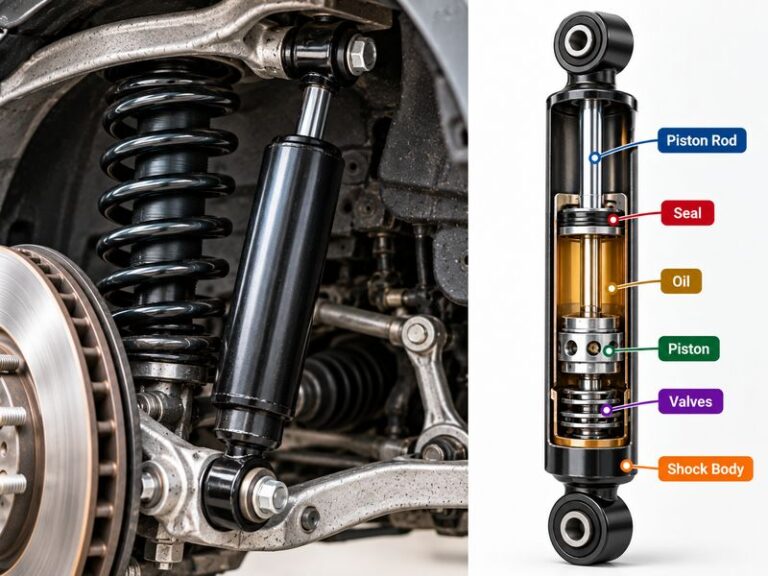
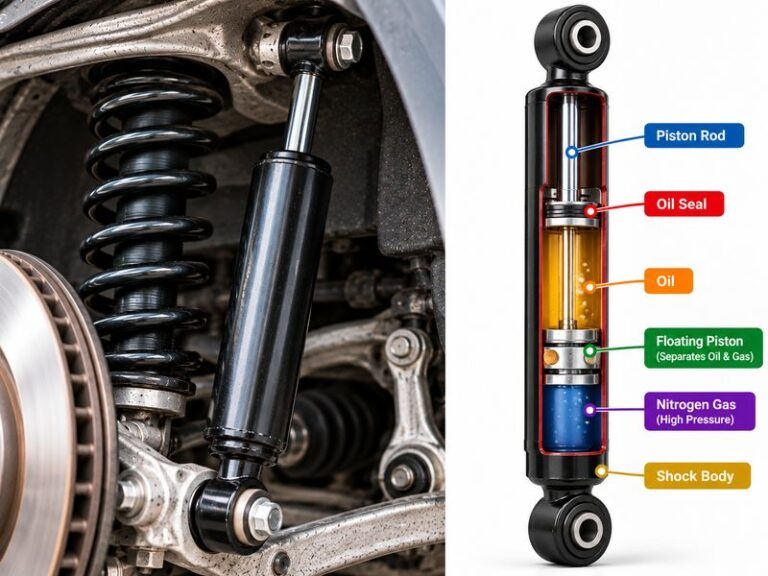
Parts can include shocks, struts, strut assemblies, mounts, bearings, bump stops, dust boots, and related hardware.
- ✦ Labor
Labor covers lifting the vehicle, removing old suspension parts, installing the new parts, checking the work, and completing any required follow-up service.
- ✦ Taxes and fees
Sales tax, shop fees, disposal fees, and other local charges may not appear in a basic online repair estimate.
- ✦ Related repairs
Worn suspension parts found during the inspection can increase the final cost.
Why Online Price Ranges Can Look Very Different
One website may quote a low price for a single shock, while another may quote the cost of replacing a complete pair or a full strut assembly. These are not the same repair. Always check whether the quote covers one corner, one axle, or all four corners.
Part quality also matters. Economy, aftermarket, premium, and original-equipment-style parts can have different prices. The right choice depends on the vehicle and how you use it.
- ✦ One shock
This is the price for one replacement unit. It may not be the recommended repair when the matching shock on the same axle has similar wear.
- ✦ A pair
This covers both shocks on the front or rear axle. Replacing them as a pair helps keep damping more even from side to side.
- ✦ Complete strut assembly
This may include the strut, spring, mount, and other parts in one assembly, depending on the vehicle and product.
How Much Does It Cost to Replace Shocks on a Car?
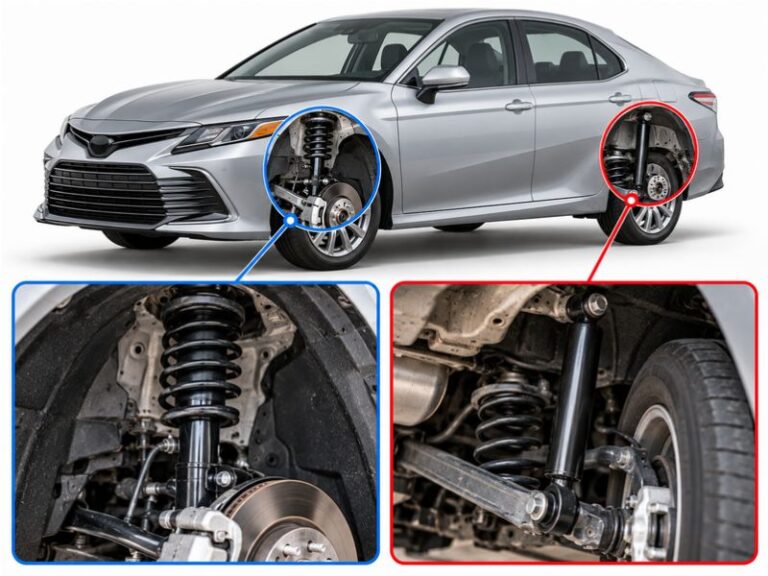
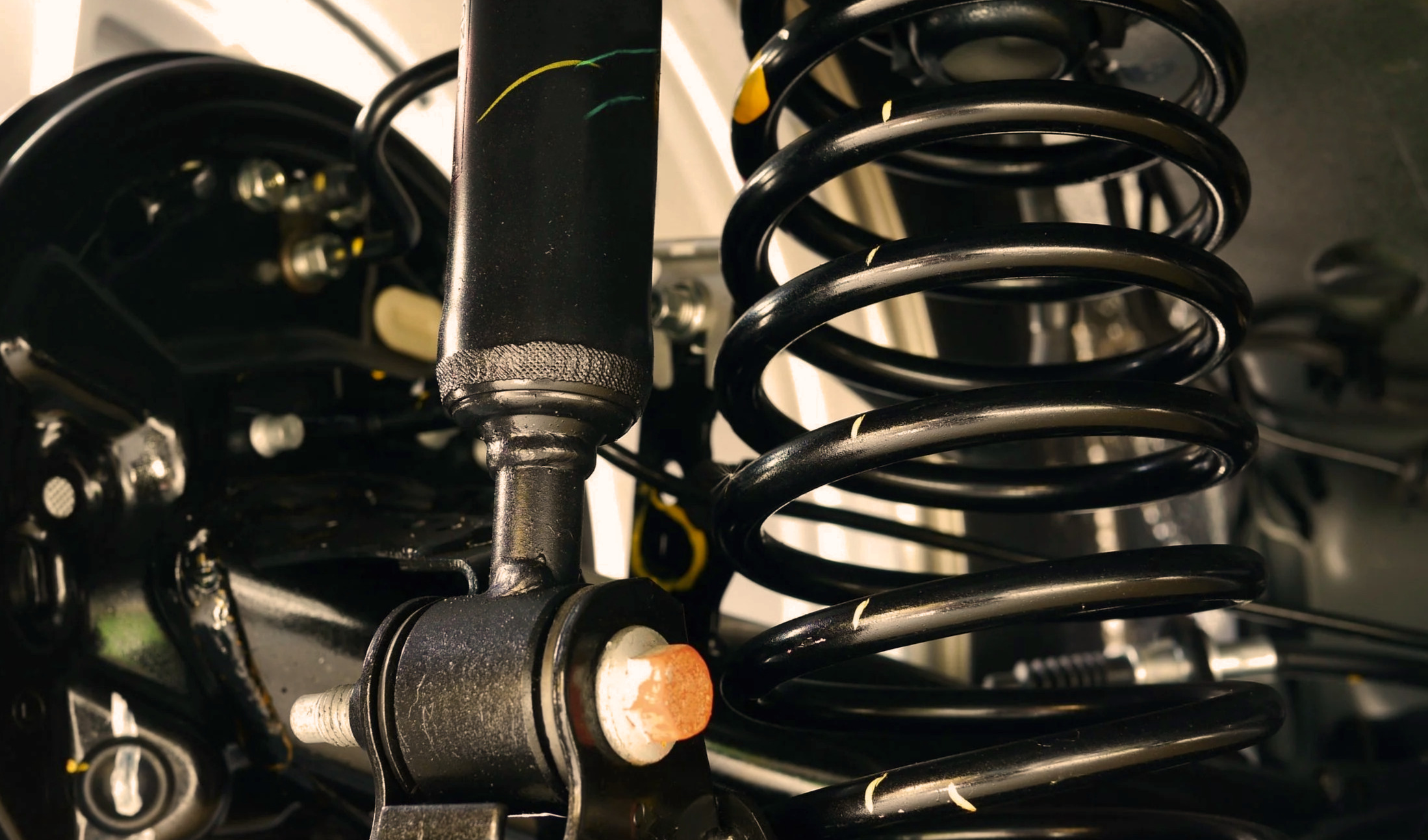
For a standard passenger car, the answer to how much does it cost to replace shock absorbers depends on the suspension design. Some cars use separate shocks at the rear and struts at the front. Others use shocks at all four corners.
Rear shocks can be fairly simple to replace on some vehicles. Front struts may take more work because the strut is part of the suspension structure and may contain a spring and upper mount. This can increase both parts and labor costs.
A shop should give you a vehicle-specific estimate after checking the suspension. The make, model, year, engine, trim, and suspension package can all affect the parts needed.
- ✦ Small cars
Compact cars may have simpler suspension parts and lower labor needs, but the exact price still depends on the model.
- ✦ SUVs and trucks
Larger vehicles can use larger or specialized suspension parts. Heavy loads, towing, and rough roads can also increase wear.
- ✦ Luxury vehicles
Premium vehicles may use costly electronic, adaptive, air, or electronically controlled suspension components.
- ✦ Performance vehicles
Special suspension systems and performance parts can make the repair more expensive than a basic replacement.
Front Struts Can Cost More Than Basic Shocks
A strut does more than control suspension movement. It can also serve as a structural part of the suspension. Because of this, replacing a front strut may involve more components and more labor than replacing a simple shock.
Ask whether the quote uses a complete strut assembly or replaces only the strut cartridge and reuses other parts. A complete assembly can cost more up front, but it may reduce the work needed to transfer old components.
- ✦ Strut mount
A worn mount can cause noise, poor suspension movement, or other problems and may need replacement during the repair.
- ✦ Strut bearing
Some strut designs use a bearing that helps the assembly turn with the steering.
- ✦ Spring
A damaged or weak spring may need attention if the inspection shows a separate problem.
What Affects the Cost of Shock Absorber Replacement?
Several factors answer the question of how much does it cost to replace shock absorbers. The part itself is only one part of the bill. Labor, vehicle design, repair location, and related suspension work can all change the total.
Local labor rates matter in the United States. A shop in a large metro area may charge a different hourly rate than a shop in a small town. Dealer labor rates can also differ from independent repair shops.
The condition of the surrounding suspension matters too. If a technician finds worn mounts, bushings, springs, links, or damaged hardware, fixing those parts may be needed for the suspension to work properly.

- ✦ Vehicle design
Some suspension layouts take more time to remove and install than others.
- ✦ Part choice
Economy, premium, original-equipment-style, and specialized parts can have different prices.
- ✦ Labor rate
Hourly shop rates vary by region and by the type of repair facility.
- ✦ Number of units
Replacing a pair costs more than replacing one unit, but many manufacturers and suspension experts recommend replacing shocks in pairs on the same axle.
- ✦ Related parts
Mounts, bearings, bump stops, boots, springs, bushings, and other parts can add to the estimate.
- ✦ Alignment needs
Some strut repairs can change suspension geometry. The shop may recommend an alignment after the repair.
Parts Versus Labor
A current RepairPal estimate puts labor for suspension shock or strut replacement at about $332 to $487 and parts at about $812 to $862. Those figures are national estimates and can vary by vehicle and location.
Labor can rise when parts are difficult to access or have become stuck from age, corrosion, or road exposure. A mechanic may also spend more time when related suspension components need removal or replacement.
- ✦ Ask for a parts breakdown
The estimate should show what parts the shop plans to install and how many are included.
- ✦ Ask for labor hours
Knowing the estimated labor time makes it easier to compare quotes from different shops.
- ✦ Ask about extra work
Confirm whether an alignment, mounting kit, hardware, or other service is included or priced separately.
Should You Replace One Shock or Both?
If you are trying to lower how much does it cost to replace shock absorbers, replacing only the failed side may seem tempting. However, shocks on the same axle usually experience similar use and wear. Monroe recommends replacing shocks and struts in pairs on the same axle so both sides have similar damping performance.
For example, if the right rear shock has failed, a technician may recommend replacing the left rear shock at the same time. This can make the repair more expensive today, but it avoids pairing a new shock with an older unit that may already have significant wear.
The exact repair should still follow the vehicle maker’s service information and a qualified inspection. A mechanic should explain why the pair needs replacement and what condition the other unit is in.

- ✦ Balanced damping
New shocks on both sides of the same axle help keep suspension response more consistent.
- ✦ Similar wear
The matching shock has usually experienced the same mileage and road conditions as the failed unit.
- ✦ Long-term value
Replacing a pair can reduce the chance of paying labor again soon if the older matching shock fails later.
Does Replacing All Four Make Sense?
Not every vehicle needs all four shocks or struts at once. If only one axle shows significant wear, a pair on that axle may be enough. If all four units are worn, replacing all four can restore more even suspension control.
A good estimate should identify which units are worn and why they need replacement. You do not need to approve extra parts simply because a shop offers them as an option.
- ✦ Inspect first
Have the entire suspension checked before deciding how many units to replace.
- ✦ Consider age and mileage
If all four units have similar age and wear, a complete replacement may be worth discussing.
- ✦ Follow the vehicle design
Use the manufacturer’s service guidance for the correct replacement method and parts.
Signs You May Need New Shock Absorbers
Knowing the signs of worn shocks can help you decide when to get an inspection. Shocks and struts can wear slowly, so drivers may get used to changes in ride and handling without noticing how much the suspension has degraded.
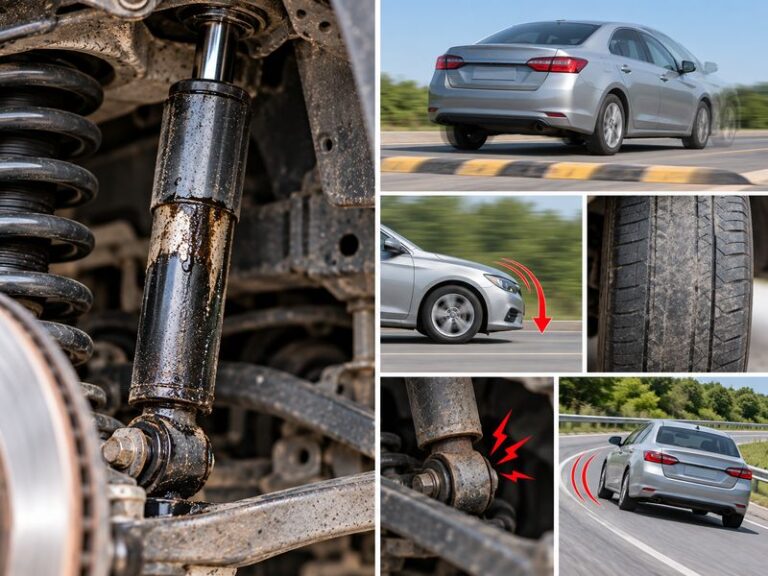
Common signs include excessive bouncing, nose diving under braking, body roll during turns, unusual noises, uneven tire wear, steering vibration, and visible fluid leakage. These signs can have other causes too, so they do not prove that a shock is bad by themselves.
If your car feels less stable at highway speed or takes more effort to control after bumps, have the suspension checked. A trained technician can inspect the shocks along with tires, steering parts, springs, mounts, and other suspension components.

- ✦ Excessive bouncing
The vehicle keeps bouncing after a bump instead of settling quickly.
- ✦ Nose diving
The front of the vehicle drops sharply when you brake.
- ✦ Body roll
The vehicle leans or sways more than normal when turning or changing lanes.
- ✦ Uneven tire wear
Worn ride-control parts can contribute to irregular or cupped tire wear.
- ✦ Fluid leakage
Visible fluid around a shock or strut can be a sign of a failed seal.
- ✦ Clunking or knocking
Suspension noise can occur with worn shocks, mounts, bushings, or other parts.
A Simple Road Test Is Not Enough
A car can still feel acceptable even when its shocks are worn. Wear happens gradually, so the driver may adjust to the change. A professional inspection is more useful than relying only on how the vehicle feels on one short drive.
A technician should also look for other causes of the same symptoms. Tire pressure, tire condition, wheel balance, alignment, steering parts, and other suspension components can create similar complaints.
- ✦ Look
Check for visible damage or fluid around the shock or strut.
- ✦ Listen
Pay attention to new clunks, knocks, or other suspension sounds.
- ✦ Feel
Notice unusual bouncing, steering changes, or excessive body movement.
How Much Does It Cost to Replace Shock Absorbers on an SUV or Truck?
SUV and truck owners often ask how much does it cost to replace shock absorbers because these vehicles can use larger or more specialized suspension components. The price can also change when the vehicle is used for towing, hauling, off-road driving, or frequent travel on rough roads.
Some trucks use conventional shocks that are fairly direct to replace. Others have special suspension systems, adjustable dampers, electronic controls, or air suspension. These systems can cost more than basic shocks.
Do not compare a basic sedan shock quote with a truck or SUV quote without checking the parts and labor included. The vehicles may use very different suspension designs.

- ✦ Towing use
Regular towing can place more demand on the suspension and may affect inspection and replacement needs.
- ✦ Heavy loads
Frequent heavy loads can increase suspension movement and wear.
- ✦ Off-road driving
Rough surfaces, impacts, dust, and mud can put extra stress on suspension components.
- ✦ Special suspension
Adaptive or air suspension can use more costly parts and may require specialized service.
Why Vehicle Use Matters
A vehicle that spends most of its time on smooth roads may experience different suspension wear from one that regularly travels over potholes or unpaved roads. Climate can matter too. Severe road conditions, heavy use, and corrosion can affect suspension life.
There is no universal mileage point at which every shock must be replaced. Inspection and symptoms matter more than a single mileage number.
- ✦ Normal commuting
Routine city and highway driving creates normal wear over time.
- ✦ Rough roads
Frequent potholes and rough surfaces can increase stress on shocks and related suspension parts.
- ✦ Heavy use
Towing, hauling, commercial use, and frequent loaded driving can increase suspension demands.
How to Get a Fair Shock Replacement Estimate
Once you know how much does it cost to replace shock absorbers, the next step is getting a clear quote for your exact vehicle. Ask at least two reputable repair shops for written estimates when practical. This helps you compare the actual work rather than comparing one headline price.
Give each shop the same vehicle details. Ask for the same type and quality of parts if you want a fair comparison. Also ask whether the quote covers one shock, a pair, or all four units.
A useful estimate should be easy to understand. It should list parts, labor, taxes or fees when known, and any recommended related work. If an alignment is recommended, ask whether it is included.
- ✦ Confirm the exact parts
Ask for the brand or part type and the number of units included.
- ✦ Confirm labor
Ask how many labor hours are estimated and what labor rate applies.
- ✦ Ask about the other side
If one shock is bad, ask whether the matching shock on the same axle should also be replaced.
- ✦ Ask about related parts
Check whether mounts, boots, bump stops, bearings, springs, or hardware are worn.
- ✦ Ask about alignment
Find out whether the repair changes alignment and whether an alignment check is recommended.
- ✦ Request a written estimate
A written estimate makes it easier to compare shops and understand changes before work begins.
Dealer or Independent Shop?
Both dealer and independent repair shops can be suitable choices. Dealers may have direct access to vehicle-specific parts and factory service information, while independent shops may offer different labor rates and part choices.
The important point is to compare the work being proposed. A lower quote is not truly lower if it leaves out a needed pair of shocks, required hardware, or another service.
- ✦ Compare the scope
Make sure each quote covers the same number of shocks or struts and the same related parts.
- ✦ Check the warranty
Ask how long the parts and labor are covered and what the warranty excludes.
- ✦ Review the inspection
A good shop should be able to explain the reason for the repair and identify the worn component.
Can You Save Money on Shock Absorber Replacement?
Yes, there are ways to manage how much does it cost to replace shock absorbers without cutting corners. Start by comparing written estimates from reputable shops. Ask about parts, labor, warranty, and any related work before choosing a quote.
You can also ask whether the shop offers more than one suitable part option. A reputable technician should explain the tradeoffs between different part grades rather than pushing the cheapest or most expensive choice without context.
Avoid choosing a repair based only on the lowest advertised price. Suspension parts affect steering, handling, braking, and tire contact with the road, so correct installation matters.
- ✦ Compare two or three quotes
Compare estimates that cover the same repair and similar part quality.
- ✦ Ask about complete assemblies
For some strut repairs, a complete assembly can simplify installation and reduce the need to reuse old components.
- ✦ Check warranties
A parts and labor warranty can add value when comparing repair estimates.
- ✦ Do not delay a known failure
Waiting can allow worn suspension parts to affect tires and other components, potentially increasing later repair costs.
- ✦ Maintain the suspension
Regular inspections can help identify wear before it becomes a larger suspension problem.
Is DIY Shock Replacement a Good Way to Save?
Some basic shock replacements are within the skill range of experienced home mechanics. Strut work can be more complex because the assembly may contain a compressed spring with significant stored energy. Incorrect handling can cause serious injury or damage.
If you do not have the correct tools, service information, lifting equipment, and experience, professional service is the safer choice. The labor cost can be worthwhile when the job involves complex suspension components.
- ✦ Simple rear shocks
Some vehicles use a simple rear shock layout that is easier to service than a complete front strut.
- ✦ Front struts
Strut removal and spring handling can require special tools and careful procedures.
- ✦ Proper torque
Suspension fasteners must be tightened to the vehicle maker’s specifications.
What Happens If You Keep Driving With Bad Shocks?
Putting off a needed shock repair can affect more than ride comfort. Worn shocks can allow extra suspension movement and may reduce steering control, stability, and braking performance. They can also contribute to irregular tire wear and added stress on other suspension parts.
The risk depends on the condition of the vehicle and the severity of the problem. A small leak and a severely damaged shock are not the same situation. If the vehicle has major handling changes, excessive bouncing, severe noise, visible damage, or other serious symptoms, have it inspected promptly.
If a mechanic recommends replacement, ask for the inspection findings. You should understand which part has failed, how it affects the vehicle, and whether related parts also need attention.
- ✦ Reduced control
Worn ride-control parts can allow more body movement during braking, cornering, and sudden maneuvers.
- ✦ Tire wear
Excess suspension movement can contribute to uneven or cupped tire wear.
- ✦ More suspension wear
Extra movement can place added stress on related suspension and steering components.
- ✦ Poor ride quality
The vehicle may bounce more and feel less stable over bumps.
How Often Should Shocks Be Inspected?
Regular inspection is useful because shocks can wear gradually without an obvious visual failure. Monroe recommends annual inspection and also suggests checking them when the vehicle receives tire, brake, or alignment work.
Driving conditions matter. Potholes, rough roads, heavy loads, towing, and other demanding use can increase suspension stress. Follow the maintenance information for your vehicle and have the suspension checked when symptoms appear.
- ✦ Annual inspection
A yearly suspension check can help find wear that is difficult to notice during normal driving.
- ✦ During tire service
Tire wear patterns can provide clues about suspension problems.
- ✦ After major impacts
A hard pothole or collision can damage suspension components even when the vehicle still drives.