How Much Do Shock Absorbers Cost? 2026 Replacement Price Guide
If you are asking, “how much do shock absorbers cost,” the short answer is that there is no single price for every car. A simple rear shock job on an older vehicle can cost far less than replacing a set of front struts on a newer SUV. Luxury cars and vehicles with advanced suspension systems can cost much more.
The price also depends on what the shop is replacing. A shock absorber is not the same part as a complete strut assembly. Labor can also change the bill. A repair that looks simple on one vehicle may take much longer on another. That is why a useful estimate should be tied to your exact year, make, model, and location.

How Much Do Shock Absorbers Cost on Average?
Current repair estimates show why prices vary so much. A nationwide RepairPal estimate updated in September 2026 puts suspension shock or strut replacement at about $1,144 to $1,348 on average. That figure includes both parts and labor and does not include taxes, fees, or every possible related repair.
That broad figure does not mean every shock repair costs more than $1,000. Vehicle-specific estimates can be much lower. For example, current estimates for some pickup trucks fall in the $400 to $800 range, while some passenger cars can approach or exceed $1,000 for the repair.
So, when asking how much do shock absorbers cost, think in terms of a range rather than one fixed number. Your vehicle and the exact suspension part matter more than a generic national average.

- ✦ Basic shock replacement
A basic shock replacement may cost several hundred dollars when the vehicle uses simple, easy-to-reach shocks.
- ✦ Strut replacement
A strut job can cost more because the strut is part of the suspension and steering structure and may require more labor.
- ✦ Complete axle repair
Replacing two shocks or struts on the same axle raises the parts and labor total but can provide more balanced suspension performance.
- ✦ Advanced suspension
Luxury vehicles and cars with electronic or adaptive suspension can cost much more because the parts and service process are more complex.
A Simple 2026 Cost Guide
For planning purposes, a few hundred dollars is a reasonable starting point for a simple shock repair. A complete shock or strut job on a mainstream vehicle may reach around $1,000 or more. Higher-end suspension systems can run well beyond that.
These are planning ranges, not guaranteed shop prices. A local quote can change with labor rates, part brands, vehicle trim, rust, damaged hardware, and related suspension work.
- ✦ Parts only
Basic aftermarket shocks can be relatively affordable, while premium, OEM, performance, or electronic units can cost much more.
- ✦ Labor
Labor depends on access, the number of parts being changed, and how much disassembly the vehicle needs.
- ✦ Extra work
Mounts, bushings, springs, hardware, or an alignment may add to the final bill when they are required.
What Is Included in the Cost of Replacing Shocks?
A repair quote should separate the main costs. In most cases, the bill includes the shock or strut, labor to remove the old part and install the new one, and any required hardware. Taxes and shop fees may appear as separate charges.
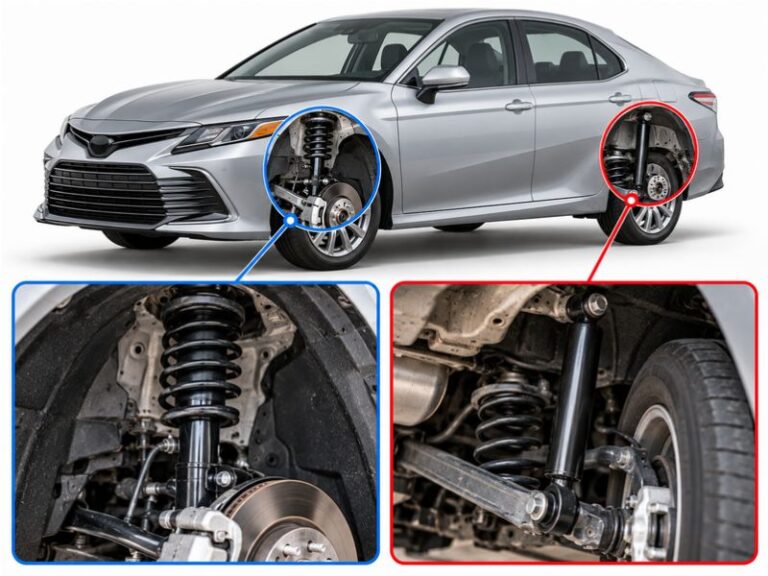
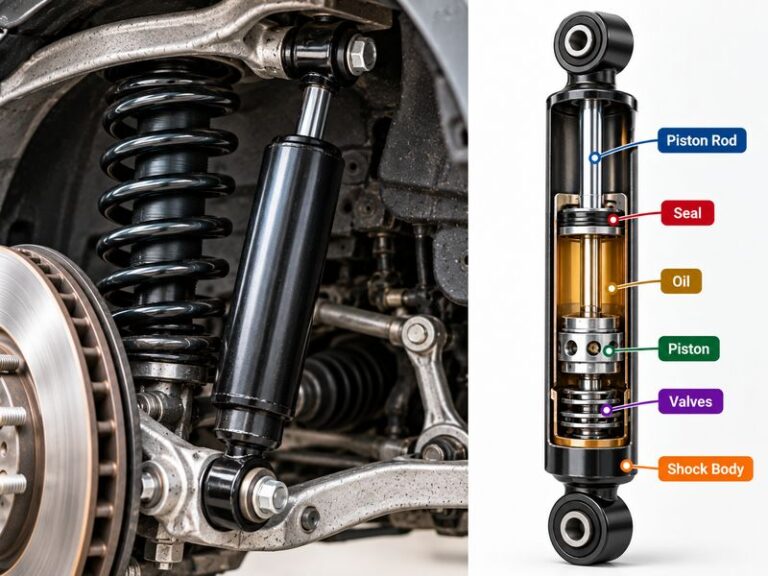
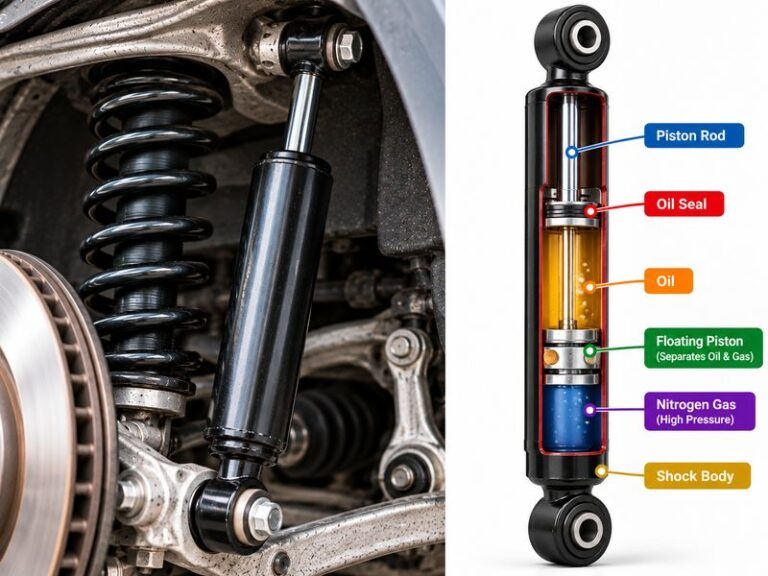
The word “shock” can also create confusion. A shock absorber mainly controls suspension movement. A strut can do that job while also forming a key part of the suspension and steering setup. Replacing a strut may therefore involve more steps than replacing a simple shock.
Ask the shop to explain each line on the estimate. This makes it easier to compare two quotes that may look very different at first.

- ✦ Shock or strut part
This is the main replacement component. Price depends on the brand, design, vehicle, and whether the part is OEM or aftermarket.
- ✦ Labor
The shop charges for the time needed to safely lift the vehicle, remove parts, install the new component, and check the repair.
- ✦ Mounts and hardware
Some repairs also require mounts, bushings, nuts, bolts, or other related parts.
- ✦ Wheel alignment
An alignment may be needed after some strut repairs because suspension changes can affect wheel alignment.
Why the Parts Price Can Be So Different
Two shocks that look similar can have very different prices. OEM parts are made for a specific vehicle application, while aftermarket choices range from low-cost replacements to premium products. Electronic and performance shocks can cost far more than basic units.
Do not choose a part based only on the lowest price. The part must match the vehicle and the suspension system. A shop can help you compare the warranty, brand, fit, and expected service life of the options.
- ✦ OEM
OEM parts are built for the vehicle maker’s specifications and can be a good fit for owners who want factory-style parts.
- ✦ Aftermarket
Aftermarket parts can offer more choices and may cost less, but quality and design vary by brand.
- ✦ Performance parts
Performance shocks may use different valving or construction and can cost more than standard replacement parts.
How Much Does It Cost to Replace Shocks on a Car?
On a normal passenger car, the cost can range from a few hundred dollars for a simple shock repair to around $1,000 or more when several suspension components are involved. Current estimates for specific models show a wide spread. A Honda Accord, for example, has a current shock or strut replacement estimate of about $1,049 to $1,385.
The exact price depends on whether your car uses shocks, struts, or both. Front struts often take more work than rear shocks. The shop may also find worn mounts or other suspension parts during the inspection.
This is why the best answer to how much do shock absorbers cost for your car starts with the vehicle identification details. Year, make, model, trim, engine, drive system, and suspension type can all matter.

- ✦ Compact cars
Compact cars often have simpler suspension designs, which can help keep repair costs lower.
- ✦ Midsize sedans
Midsize cars can fall into a broad middle range, with strut design and parts choice driving much of the cost.
- ✦ Luxury cars
Luxury models may use costly parts, electronic controls, or special suspension systems.
- ✦ Older vehicles
Older cars may have lower parts prices but can need extra labor if rusted bolts or worn hardware slow the repair.
Why One Car Can Cost More Than Another
A simple suspension layout can make access easy. Another car may require more parts to be removed before the technician can reach the shock or strut. This difference can add labor even when the replacement part itself is not expensive.
Rust can also change the job. A vehicle from a region where road salt is common may have seized fasteners or corroded hardware. The shop should explain any added work before replacing parts when possible.
- ✦ Vehicle design
Suspension layout affects how long the repair takes.
- ✦ Rust
Corrosion can make removal harder and may require extra hardware or labor.
- ✦ Trim level
Different trims can use different suspension parts, even within the same model family.
How Much Do Shock Absorbers Cost for an SUV or Truck?
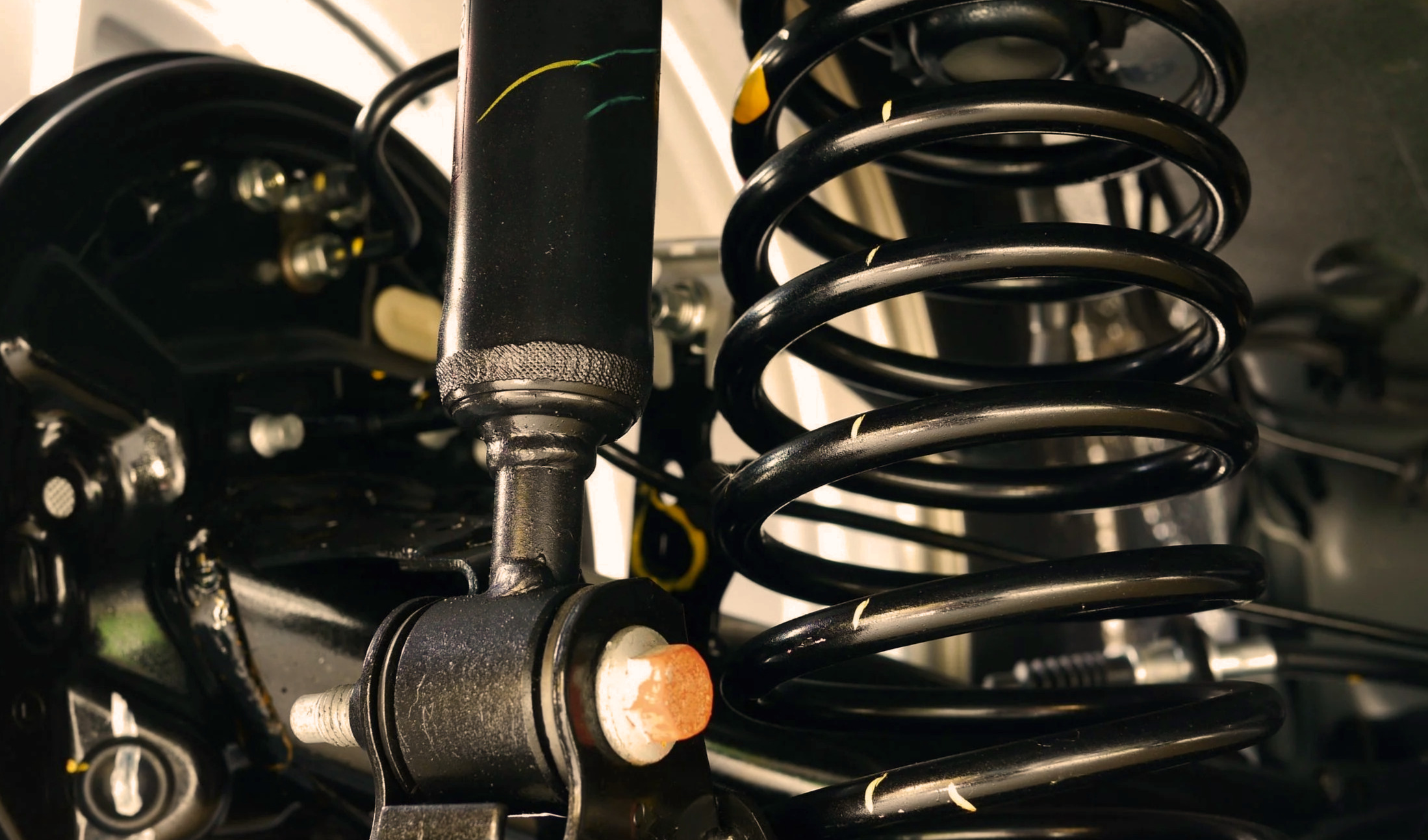
SUV and truck shock costs vary just as much as car costs. A basic pickup with conventional shocks may be fairly inexpensive to service, while a heavy-duty truck or premium SUV can need more costly parts. Vehicle weight, suspension design, load rating, and special features all affect the price.
Current vehicle-specific estimates show this clearly. A Dodge Ram 1500 suspension shock or strut replacement is currently estimated at about $411 to $583, while a Ram 3500 estimate is about $536 to $819. These figures show that even within one brand, vehicle size and suspension design can change the bill.
SUV owners should also check whether the vehicle uses a standard suspension or an adaptive system. Advanced systems can require special parts and, in some cases, calibration after installation.
- ✦ Light-duty pickup
Conventional shocks on a light-duty pickup can be among the more affordable suspension repairs.
- ✦ Heavy-duty truck
Heavy-duty models may use larger or specialized suspension parts, which can increase parts cost.
- ✦ SUV
SUV pricing varies widely because some models use simple shocks while others use complex strut or adaptive systems.
- ✦ Towing use
Frequent heavy loads or towing can place more demand on suspension parts, making proper inspection important.
Does Vehicle Size Always Mean Higher Cost?
No. A large vehicle does not always cost more to repair than a small one. A pickup with simple, easy-to-reach rear shocks can be less expensive than a smaller luxury vehicle with complex electronic suspension.
The key factors are part design, access, labor time, and the amount of suspension work required. Ask for a vehicle-specific estimate instead of judging the price by vehicle size alone.
- ✦ Simple design
A simple suspension can keep labor low even on a large vehicle.
- ✦ Advanced design
Electronic or adaptive suspension can raise the cost even on a smaller vehicle.
What Makes Shock Absorber Replacement More Expensive?
Several factors can push a shock repair above the basic estimate. The biggest are usually the vehicle’s suspension design, part price, labor rate, and extra parts found during inspection.
A good shop should not simply add parts without explaining why they are needed. Ask what failed, what the part does, and whether the repair is required now or can wait. This helps you separate necessary work from optional upgrades.
A careful inspection can also prevent repeat labor. If several related parts are already worn, doing suitable repairs during the same visit may avoid paying for overlapping labor later.

- ✦ High labor rates
Labor prices differ by city, shop type, technician skill, and local operating costs.
- ✦ Premium parts
OEM, performance, heavy-duty, and electronic suspension parts can cost much more than basic aftermarket units.
- ✦ Strut assemblies
A complete strut assembly can require more work than a simple shock absorber.
- ✦ Rust or damaged hardware
Corroded bolts and damaged mounting points can add time and parts.
- ✦ Alignment
Some strut repairs call for a wheel alignment, which adds another service charge.
- ✦ Related suspension parts
Worn mounts, bushings, springs, or other components may need attention at the same time.
OEM vs. Aftermarket Shock Cost
OEM does not always mean better for every driver, and aftermarket does not always mean cheap or poor quality. Aftermarket brands offer a wide range of designs and prices. The important point is to use a part that fits the vehicle and meets the needed specification.
When comparing estimates, ask whether both quotes use similar parts. A shop using premium shocks may appear more expensive than one using basic aftermarket parts even when the labor charge is similar.
- ✦ Compare the brand
Write down the brand and part type on each estimate so you compare similar products.
- ✦ Compare the warranty
A longer warranty can be useful, but also check what the warranty actually covers.
- ✦ Compare the complete job
Make sure both estimates include the same number of shocks, labor, hardware, alignment, taxes, and fees.
Signs That Your Shocks May Need Replacement
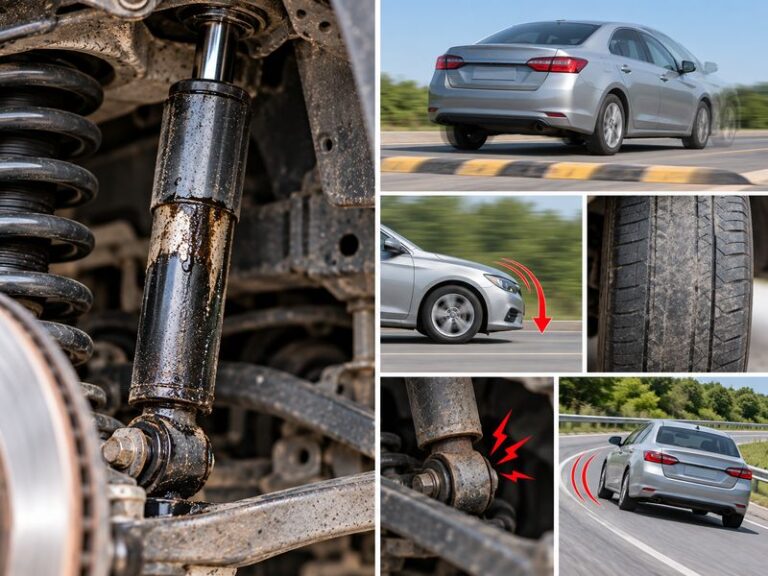
Knowing the signs of worn shocks can help you avoid waiting until the suspension becomes a larger problem. Common clues include excess bouncing, body sway, poor control over bumps, uneven tire wear, and visible fluid leakage. These symptoms can also come from other suspension problems, so a proper inspection matters.
A vehicle that keeps bouncing after a bump may have weak damping. Excessive body movement during turns or braking can also point to suspension trouble. If the vehicle feels less stable than it used to, have the suspension checked rather than assuming the tires are the only cause.
Visible fluid also needs context. A light film or mist on some shock bodies does not always mean the shock has failed. A clear fluid leak, physical damage, or poor damping is more concerning and should be assessed by a qualified technician.

- ✦ Excess bouncing
The vehicle continues to bounce after a bump instead of settling quickly.
- ✦ Nose dive
The front of the vehicle drops noticeably during hard braking.
- ✦ Body sway
The vehicle leans or sways more than expected during turns.
- ✦ Uneven tire wear
Cupping or irregular tread wear can be linked to suspension problems.
- ✦ Fluid leakage
A significant fluid leak from a shock can indicate a failed seal and should be inspected.
- ✦ Knocking or rattling
Noise near the suspension can come from shocks, mounts, bushings, or other loose or worn parts.
Can You Drive With Worn Shocks?
It depends on how badly the shocks are worn and how the vehicle behaves. Severely worn suspension can reduce stability, increase body movement, and contribute to uneven tire wear. That can make the vehicle harder to control, especially during sudden maneuvers or on rough roads.
If the vehicle has severe bouncing, major fluid leakage, damaged suspension parts, or a sudden change in handling, arrange an inspection promptly. A technician can determine whether the vehicle is safe to drive and what needs repair.
- ✦ Do not ignore handling changes
A new change in steering, braking, sway, or ride control deserves an inspection.
- ✦ Check the tires too
Suspension problems can contribute to irregular tire wear, so inspect the tires as part of the repair.
Should Shocks Be Replaced in Pairs?
Many repair professionals recommend replacing shocks or struts in pairs on the same axle. Replacing both sides can help keep damping more even from left to right. This is especially useful when one old unit has clearly worn while its matching unit has similar age and use.
However, the exact repair should follow the vehicle maker’s service information and the technician’s diagnosis. Some manufacturer guidance allows replacement of only the defective unit in certain cases. That means a blanket rule does not fit every vehicle.
If a shop recommends replacing two shocks, ask whether both are worn and why the pair is the better repair. A clear explanation should be part of a good estimate.

- ✦ Balanced damping
Matching new shocks on the same axle can help maintain more consistent suspension behavior.
- ✦ Similar age
If both shocks have the same mileage and age, replacing one may leave a much older unit on the other side.
- ✦ Follow vehicle guidance
Always consider the vehicle maker’s repair instructions and the technician’s inspection results.
Do You Need All Four Shocks at Once?
Not always. A vehicle may have different levels of wear at the front and rear. The repair plan should depend on the condition of each component and the vehicle’s service requirements.
Replacing all four can make sense when all four are worn, but it is not automatically required just because one shock has failed. A full inspection gives you a better basis for deciding what to replace.
- ✦ Front only
If the front suspension components are worn and the rear units remain in good condition, the repair may focus on the front.
- ✦ Rear only
Some vehicles have rear shocks that wear at a different rate from the front suspension.
- ✦ All four
A full replacement may be sensible when inspection shows significant wear across the entire suspension.
How Much Does It Cost to Replace Shocks Yourself?
DIY replacement can reduce the labor part of the bill, but it is not the same level of job for every vehicle. A simple shock that bolts between accessible mounting points can be manageable for an experienced home mechanic with the right tools. A complete strut that contains a compressed coil spring is a much more serious job.
The major safety issue is the spring. A compressed suspension spring stores a large amount of energy. If it is released incorrectly, it can cause severe injury. For that reason, many owners choose a shop for strut work even when they handle simpler maintenance at home.
If you do the work yourself, use the vehicle service manual and proper lifting and support equipment. Never rely on a jack alone to support a vehicle while you work underneath it.
- ✦ Possible savings
DIY work can remove much of the labor charge, leaving the parts and required supplies as the main costs.
- ✦ Required tools
You need suitable lifting equipment, hand tools, torque tools, and any vehicle-specific tools required by the repair.
- ✦ Spring safety
Do not attempt to disassemble a loaded strut spring without the correct equipment and experience.
- ✦ Torque matters
Suspension fasteners must be tightened to the correct specifications to avoid damage or unsafe operation.
When Professional Repair Makes More Sense
Professional repair is often the better choice when the vehicle uses a complete strut assembly, has severe rust, needs an alignment, or has electronic suspension. A qualified technician can also inspect related steering and suspension parts while the vehicle is apart.
The goal is not just to install a new part. The goal is to restore safe and predictable suspension operation. Paying for correct diagnosis and installation can be cheaper than fixing a mistake later.
- ✦ Strut spring work
Leave compressed-spring work to a properly equipped professional unless you have advanced suspension repair skills.
- ✦ Unknown suspension noise
Professional diagnosis can prevent replacing a shock when the real problem is a mount, bushing, spring, or another component.
How to Get a Fair Shock Replacement Price
The best way to judge a quote is to compare the complete repair, not just the final number. Two shops can quote different totals because they use different parts, labor rates, or included services. Ask each shop to list the parts, labor, and extra work separately.
A good estimate should also identify the exact vehicle and repair. If one quote says “replace shocks” and another says “replace front strut assemblies with mounts and alignment,” they are not necessarily quoting the same job.
You can also check the estimate against a reputable repair-pricing guide. Online estimates are useful for spotting an unusually high or low number, but local labor rates and your vehicle’s exact configuration still matter.
- ✦ Get the part numbers
Ask for the brand and part number when practical so you can compare equivalent parts.
- ✦ Check labor hours
Ask how many labor hours the shop expects and what hourly rate it uses.
- ✦ Ask about alignment
Find out whether an alignment is included, recommended, or not needed for your particular repair.
- ✦ Ask about the warranty
Check both the parts warranty and the shop’s labor warranty.
- ✦ Compare complete totals
Compare parts, labor, taxes, fees, and related work rather than comparing only the advertised part price.
Questions to Ask Before Approving the Repair
A few simple questions can make a repair estimate much easier to understand. Ask what failed, which parts need replacement, and whether the shop recommends replacing one side or both sides. You can also ask what the car will need after the repair.
If the estimate includes a large extra charge, ask for the reason. A professional shop should be able to explain the work in plain language.
- ✦ What failed?
Ask the technician to show or explain the worn or damaged component.
- ✦ What must be replaced?
Separate required repairs from optional upgrades.
- ✦ Is an alignment needed?
Ask why an alignment is included and whether the repair can change wheel alignment.
- ✦ What is covered?
Confirm the parts and labor warranty before approving the job.