What Causes a Control Arm to Break? 9 Common Causes Explained
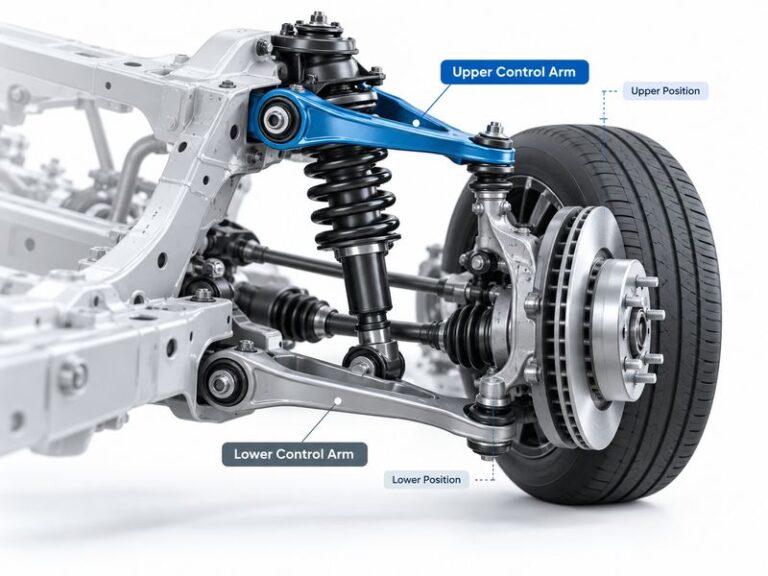
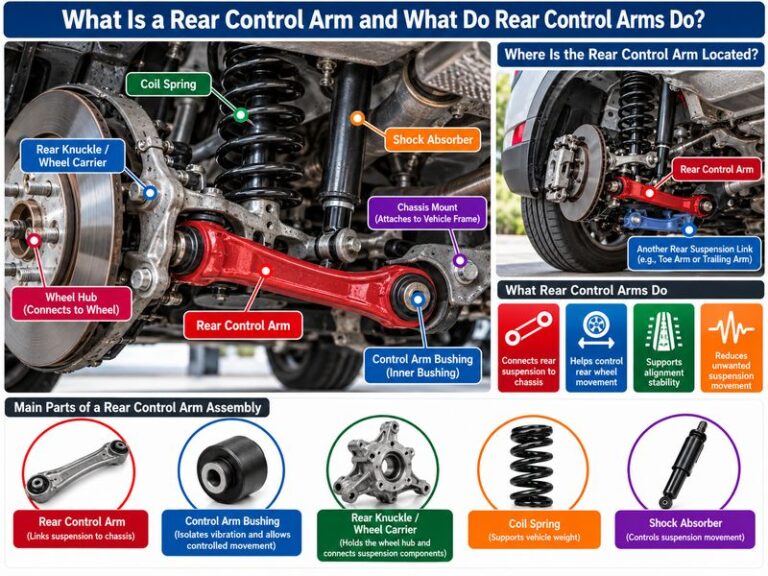
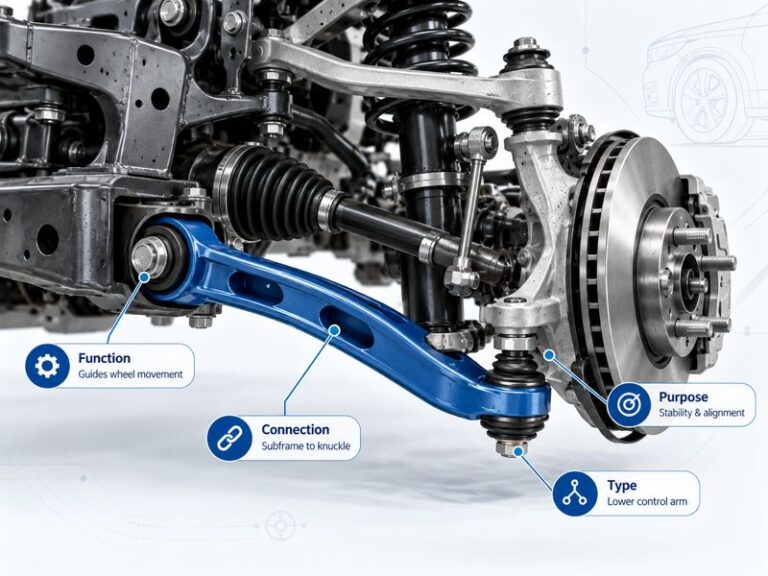
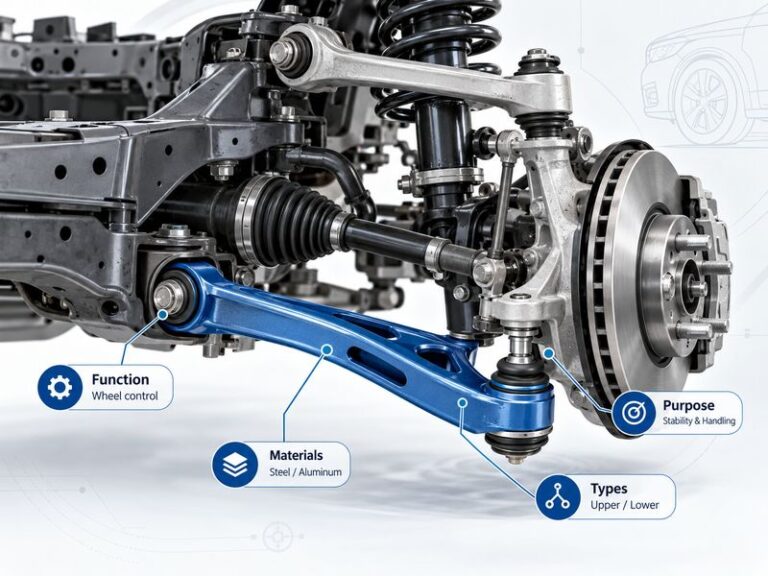
If you are wondering **what causes a control arm to break**, the answer is often a mix of sudden force and long-term wear. A control arm is a strong suspension part. It links the wheel area to the vehicle frame or subframe. Yet even a strong arm can fail when it gets bent, weakened, rusted, or repeatedly stressed.
In the United States, potholes are a major concern because road damage can put a sharp load into the suspension. A hard curb strike, deep pothole, collision, or off-road hit can bend the arm in seconds. In other cases, failure develops slowly as years of moisture, road salt, worn bushings, and normal driving weaken the part.
From a practical repair point of view, control arms rarely deserve attention only after they snap. Many damaged arms show clues first. Uneven tire wear, pulling, steering changes, clunks, visible rust, or a wheel that sits at an odd angle can all point to a suspension problem that needs inspection.
This guide explains what causes a control arm to break, how each cause damages the part, what warning signs may appear, what happens if the arm fails while driving, and how you can lower the chance of another failure.
What Causes a Control Arm to Break?
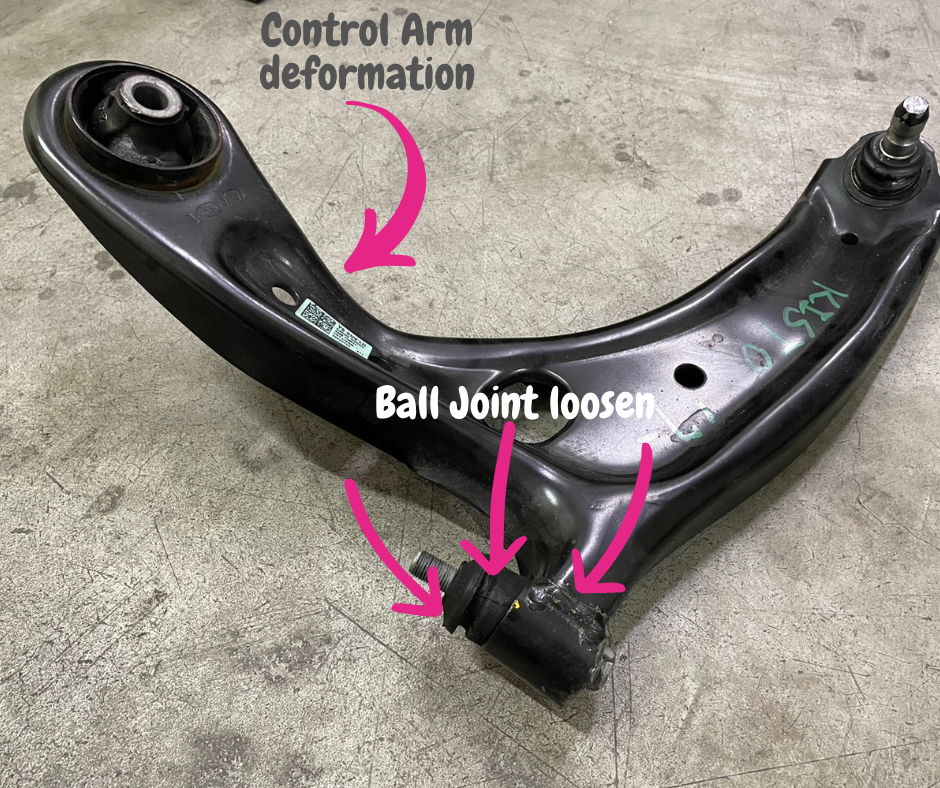
The main causes are hard impacts, corrosion, metal fatigue, worn suspension joints, vehicle overload, accident damage, and poor installation. The exact cause depends on how the vehicle is used and where it is driven. Sometimes one major impact causes the failure. Other times several small problems weaken the arm over many years.
The control arm moves with the suspension while also helping keep the wheel in the correct position. It must handle braking force, cornering force, bumps, and changes in road height. That creates repeated stress every time you drive.
A healthy control arm can handle these loads. Problems begin when the metal becomes bent, cracked, badly rusted, or subjected to forces beyond its design limit. Weak bushings and joints can also let the suspension move in ways that place extra stress on the arm.
When diagnosing what causes a control arm to break, it is important to inspect the whole area. A broken arm may be the final result of another suspension problem rather than the first part that failed.

- ✦ Pothole or curb impact
A strong hit can bend, crack, or deform the control arm.
- ✦ Rust and corrosion
Road salt and moisture can slowly remove metal and weaken the arm.
- ✦ Metal fatigue
Years of repeated suspension loads can create stress cracks in an older component.
- ✦ Worn bushings
Excess movement can place loads on the arm that it was not meant to handle.
- ✦ Failed ball joint
A loose or damaged joint can disturb wheel movement and increase suspension stress.
- ✦ Collision damage
A crash can bend the arm even when the damage is hard to see.
- ✦ Overloading
Excess vehicle weight can increase the force that suspension parts must carry.
- ✦ Poor repair work
Wrong parts, bad installation, or incorrect fastener torque can contribute to later failure.
Can a Control Arm Break Without Warning?
Yes, but a truly sudden failure is more likely after a severe impact or when hidden damage already exists. An arm with deep rust or an old crack may look usable until another bump places enough load on the weak area.
Many failures still give some warning. Noise, alignment changes, unstable steering, and unusual tire wear may appear before total separation. That is why an inspection matters when the vehicle starts behaving differently.
Is the Control Arm Itself Always the Failed Part?
No. The bushings or ball joint may fail while the metal arm remains intact. Some vehicles use control arm assemblies that include these components, so people may describe the entire unit as a bad control arm even when the arm itself has not cracked.
A technician should identify which part has failed before replacement. That helps avoid replacing the wrong component and makes it easier to find the root cause.
Potholes, Curbs, and Hard Road Impacts
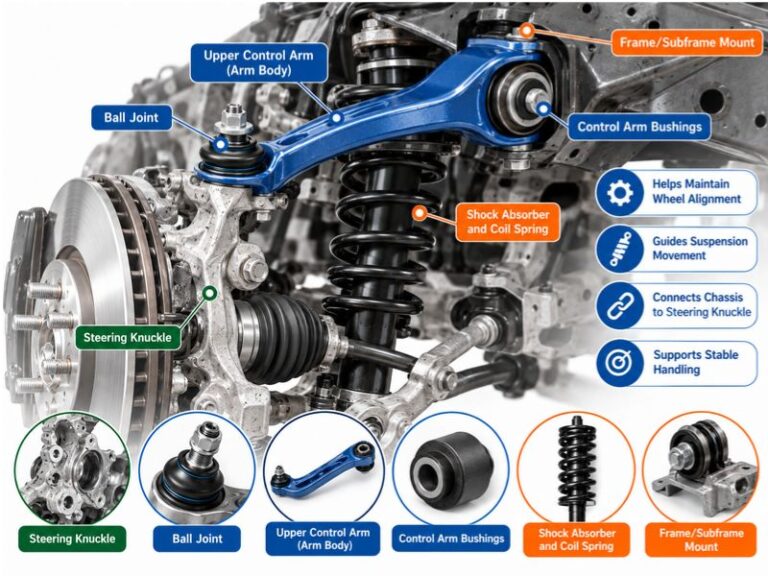
A hard road impact is one of the clearest answers to what causes a control arm to break. The wheel receives the impact first. That force then travels through the tire, wheel, steering knuckle, ball joint, control arm, and other suspension parts.
A deep pothole at highway speed can create a much larger load than a normal bump. The risk goes up when the tire drops into the hole and then strikes the sharp edge. Low-profile tires can leave less tire sidewall available to absorb some of that impact.
A curb strike can also bend a control arm. This often happens when a wheel hits the curb from the side during a slide, parking mistake, or collision. Side loads can alter the shape of the arm and shift wheel alignment.
The arm does not have to snap during the original impact. It may bend slightly or develop a small crack. Continued driving then places repeated stress on the damaged area until the crack grows.
- ✦ Deep potholes
Sharp impacts can bend the arm or start a crack.
- ✦ Curb strikes
Side impacts can distort the suspension and change wheel alignment.
- ✦ Road debris
Large objects can strike suspension parts directly.
- ✦ Off-road impacts
Rocks, holes, and hard landings can put extreme loads into the suspension.
What Should You Check After Hitting a Large Pothole?
Pay attention to any new steering pull, vibration, clunk, tire rubbing, or crooked steering wheel. Look at the wheel from a safe distance and compare its position with the wheel on the other side.
If the wheel looks pushed back, tilted, or out of place, avoid normal driving until the suspension is inspected. A bent control arm can make the vehicle hard to control and may damage the tire.
Rust and Corrosion Can Weaken a Control Arm
Corrosion is another major factor when looking at what causes a control arm to break. Steel suspension parts are made to handle large loads, but severe rust can eat away at the metal. As the arm gets thinner, it loses strength.
This problem is especially important in parts of the United States where road crews use salt or deicing chemicals during winter. Salt and moisture can stay on the underbody. Over time, they can attack exposed metal, seams, welds, and areas where protective coatings have been damaged.
Surface rust does not always mean the arm is unsafe. Light rust may affect only the outer surface. Heavy scaling, deep pitting, holes, swelling around seams, or metal that flakes away deserves much more attention.
Corrosion can also hide near mounting areas. These points carry large loads, so major rust around a bushing mount or ball joint area can become a serious structural concern.

- ✦ Road salt
Salt speeds up corrosion when it stays on exposed steel.
- ✦ Moisture
Repeated wet and dry cycles can promote rust.
- ✦ Damaged coating
Scratches and chips can expose bare metal to water and salt.
- ✦ Age
Older vehicles have had more time for corrosion to develop.
Can a Rusted Control Arm Suddenly Snap?
A badly rusted arm can break when a bump, braking event, or turn puts load on a thin section. The final event may seem sudden, but the loss of metal strength usually happened over a long period.
Heavy structural rust should not be judged only by appearance from one angle. Dirt and road buildup can hide weak areas, so a full inspection is safer.
How Can You Reduce Salt Damage?
Wash the underbody during and after winter when practical. This helps remove salt that collects around suspension parts and seams.
Regular inspections are also useful on older vehicles in the Rust Belt and other areas that use road salt. Finding severe corrosion early may prevent a much larger suspension problem later.
Metal Fatigue and Long-Term Stress
Metal fatigue can explain what causes a control arm to break on an older vehicle with no recent major crash. Every mile puts the suspension through repeated movement. Each bump, turn, and stop applies another load cycle to the arm.
Good suspension parts are designed for long service. Still, repeated stress can contribute to cracking when the component is very old, previously damaged, corroded, poorly made, or used in harsh conditions.
A small crack may begin near a weld, bend, mounting point, or other stressed area. At first, the crack may be too small to notice. Repeated movement can slowly make it longer.
The final break can happen during a normal drive because the arm has already lost much of its strength. In that case, the last bump did not create the whole problem. It simply placed the final load on an already weakened part.

- ✦ High mileage
More miles mean more suspension load cycles.
- ✦ Rough roads
Frequent bumps increase stress throughout the suspension.
- ✦ Previous bending
A once-bent arm may have weakened metal even if it was pushed back into shape.
- ✦ Corrosion
Rust reduces the amount of healthy metal available to carry loads.
Can Normal Driving Break a Control Arm?
Normal driving should not break a healthy control arm. If an arm breaks during ordinary use, it is reasonable to look for an existing cause such as rust, fatigue, old crash damage, a defect, or another suspension fault.
A careful inspection of the failed surface can sometimes help identify whether the damage came from a fresh overload or an older crack. That type of judgment may require an experienced technician.
Worn Control Arm Bushings Can Add Stress
Control arm bushings sit between the arm and its mounting points on many suspension designs. They allow controlled movement while reducing noise and vibration. The rubber or hydraulic material inside a bushing can crack, tear, separate, or wear out.
A worn bushing does not always make the metal control arm break. However, it can allow too much movement. That movement may change how loads travel through the suspension and can make handling less stable.
When a bushing is badly worn, the arm may shift during braking, acceleration, or cornering. You may hear a knock or clunk. The vehicle may also pull or feel less precise.
Ignoring severe bushing wear can also affect tires and nearby suspension parts. If you are investigating what causes a control arm to break, the condition of the bushings should be part of the inspection.

- ✦ Cracked rubber
Age and movement can cause rubber bushings to split.
- ✦ Bushing separation
The rubber can separate from its metal sleeve or housing.
- ✦ Excess movement
A worn bushing can let the control arm shift too far.
- ✦ Clunking
Loose movement may create noise over bumps or during braking.
Do Cracked Bushings Mean the Control Arm Is Broken?
Not always. Rubber can show surface cracks as it ages, while the metal arm remains strong. The key issue is how deep the damage is and whether the bushing allows too much movement.
Some vehicles allow separate bushing replacement. Others are commonly repaired by replacing the complete control arm assembly. The best choice depends on vehicle design, labor, and the condition of the rest of the arm.
Ball Joint Failure and Excess Suspension Movement
The ball joint connects moving suspension parts while allowing the wheel to steer and move up and down. Depending on the vehicle, the ball joint may be built into the control arm or installed as a separate part.
A worn ball joint can develop looseness. That can change wheel position and create knocking, poor steering feel, or abnormal tire wear. If the joint becomes severely worn, it may separate.
A failed joint does not always mean the control arm metal has broken. Yet the two problems are closely linked because they work together. Excess movement from a loose joint can add shock loads to nearby suspension components.
If a ball joint separates, wheel control can be lost. That is one reason clunks, wheel looseness, or major steering changes should be checked rather than ignored.

- ✦ Joint wear
Internal wear can create looseness between the ball and socket.
- ✦ Damaged boot
A torn boot can let dirt and water reach the joint.
- ✦ Loss of grease
Poor lubrication can speed up joint wear.
- ✦ Separation
A severely worn joint can disconnect and allow major wheel movement.
Can a Bad Ball Joint Damage the Control Arm?
It can contribute to abnormal suspension loads, although the result varies by design. A loose joint lets parts move beyond their intended range. This can increase stress on mounting points and other suspension components.
When a control arm problem is found, the ball joint should also be checked. On assemblies with an integrated ball joint, replacement of the complete arm may address both concerns.
Accidents and Previous Collision Damage
Collision damage is another direct answer to what causes a control arm to break. Even a crash that does not look severe from outside can send a large force through the wheel and suspension.
The arm may bend when the wheel hits another vehicle, curb, barrier, or object. A badly bent arm usually changes wheel alignment right away. Smaller changes may be less obvious.
A control arm damaged in an old accident may also fail later. If the metal was stretched, kinked, or cracked, normal road loads can keep working on the weak area.
This is one reason suspension geometry should be checked after a meaningful wheel impact. An alignment alone cannot repair a bent structural part.
- ✦ Direct wheel impact
Force entering through the wheel can bend suspension parts.
- ✦ Hidden cracks
A small crack may remain after the vehicle appears repaired.
- ✦ Bent mounting points
Damage to the frame or subframe can place the arm at the wrong angle.
- ✦ Poor prior repair
Reusing a weakened part can lead to later trouble.
Can a Bent Control Arm Be Straightened?
Straightening a structural suspension arm is generally not the same as restoring it to new condition. Bending can change the metal and may leave hidden weakness.
Replacement is often the safer repair when the control arm itself is bent. The surrounding suspension and mounting points should also be checked for damage.
Vehicle Overloading and Hard Use
Carrying too much weight can increase suspension loads. The added weight pushes harder on springs, shocks, bushings, joints, wheel bearings, tires, and control arms. It can also reduce the suspension travel available for bumps.
When a heavily loaded vehicle hits a pothole, the impact can be much harsher than it would be at normal weight. The control arm must handle both the vehicle load and the sudden road force.
One overloaded trip may not break a healthy control arm. The larger concern is repeated overload, hard driving, rough roads, towing beyond vehicle limits, or combining extra weight with old suspension parts.
Check the vehicle’s load limits before hauling heavy cargo. Staying within the manufacturer’s limits protects more than the control arms. It also helps protect tires, brakes, springs, and other chassis parts.
- ✦ Heavy cargo
Extra weight raises the load carried by suspension parts.
- ✦ Repeated overloading
Frequent excessive loads can add long-term stress.
- ✦ Rough-road use
Weight and hard impacts together increase suspension forces.
- ✦ Improper towing
Excess tongue or cargo weight can change vehicle loading and handling.
Poor Installation, Wrong Parts, and Repair Errors
Repair mistakes can also play a role in what causes a control arm to break. Suspension parts depend on correct fit, proper fastener torque, correct hardware, and the right installation process.
A loose mounting bolt can allow unwanted movement. An over-tightened or incorrect fastener may create other problems. Using the wrong control arm can also change how the suspension fits and moves.
Bushing installation matters as well. Some rubber bushings should be tightened with the suspension near normal ride height. If a design requires that procedure and it is ignored, the bushing may sit twisted at rest and wear faster.
Cheap construction alone does not prove that a part will fail. Still, suspension components should meet the correct vehicle specifications and come from a dependable source because they carry important loads.
- ✦ Wrong part
An incorrect control arm may not match the intended suspension geometry.
- ✦ Loose hardware
Movement at a mounting point can cause noise and abnormal stress.
- ✦ Incorrect torque
Suspension fasteners should be tightened to the proper specification.
- ✦ Improper bushing setup
Incorrect installation can shorten bushing life on designs that require ride-height tightening.
Why Alignment Matters After Control Arm Replacement
Replacing a control arm can affect wheel alignment because the arm helps establish wheel position. Even a small geometry change can affect tire wear and steering.
An alignment check after suspension repair can confirm that camber, caster, and toe are within the vehicle’s allowable range where those angles are adjustable or measurable.
Manufacturing Defects and Part Quality Problems
A manufacturing defect is a less common but possible reason a control arm can fail. Problems may involve material quality, welding, casting, forming, heat treatment, or other production steps.
A defect can create a weak spot that cracks under normal loads. However, it is difficult to determine the cause from appearance alone. Impact damage, corrosion, and prior repairs can create similar results.
If a relatively new control arm fails without a clear impact, keep the damaged part and repair records. Check whether the vehicle or replacement component has any relevant safety recall or manufacturer notice.
Do not assume every early failure is a factory defect. A complete inspection should consider the arm, mounting points, wheel, tire, ball joint, bushings, subframe, and recent driving events.
- ✦ Material flaw
Weak material can reduce the part’s ability to handle normal loads.
- ✦ Weld problem
A flawed weld may become a crack starting point on welded designs.
- ✦ Incorrect manufacturing process
Forming or treatment errors can affect strength.
- ✦ Premature cracking
An early crack without obvious damage deserves careful investigation.
Common Signs a Control Arm May Be Damaged
A control arm can develop problems before it breaks completely. The exact symptoms depend on whether the issue is a bent arm, worn bushing, loose ball joint, rust damage, or cracked metal.
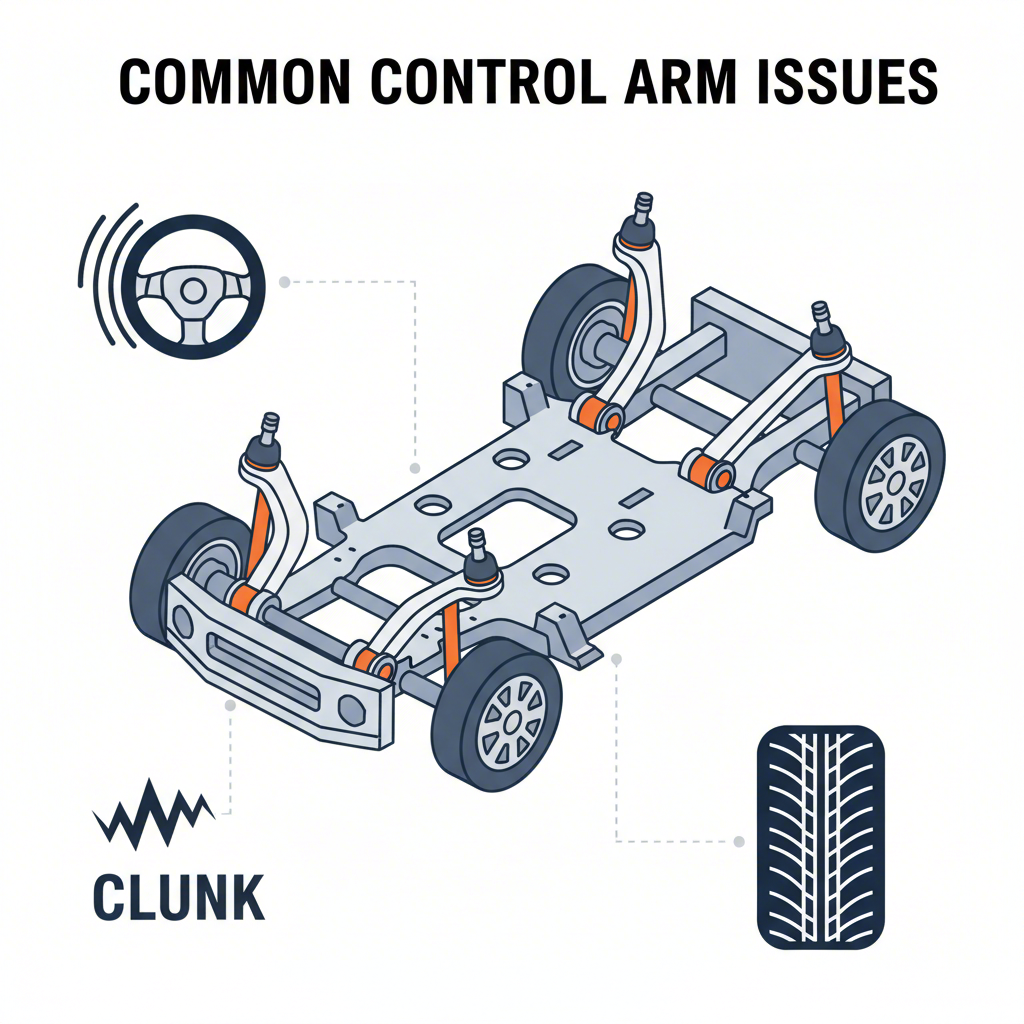
One common clue is a change in wheel alignment. The vehicle may pull, the steering wheel may no longer sit straight, or one tire may begin wearing faster than the others.
Clunking is another possible sign. Worn bushings or joints can let suspension parts move and strike under braking, acceleration, turning, or bumps. Noise alone does not prove the control arm is bad, since several suspension parts can make similar sounds.
A visible change in wheel position is more serious. If one wheel appears pushed backward, tilted, or no longer centered in the wheel opening, the vehicle should be inspected before normal driving continues.

- ✦ Clunking or knocking
Noise may occur when loose suspension parts move under load.
- ✦ Vehicle pulling
A bent arm or worn joint can change wheel alignment.
- ✦ Uneven tire wear
Incorrect wheel angles can wear one edge or section of the tire faster.
- ✦ Loose steering feel
Excess suspension movement can make steering less precise.
- ✦ Crooked steering wheel
A sudden change after an impact can point to an alignment or suspension problem.
- ✦ Wheel position change
A wheel that sits at an unusual angle can indicate major suspension damage.
- ✦ Visible cracks or heavy rust
Structural damage on the arm itself requires close attention.
Can a Bad Control Arm Cause Uneven Tire Wear?
Yes. A bent control arm or worn control arm joint can change wheel alignment. The tire may then contact the road at an incorrect angle.
Uneven wear can also have many other causes, such as incorrect toe, worn tie rods, bad wheel bearings, or tire pressure problems. The suspension should be inspected rather than diagnosing the control arm from tire wear alone.
What Happens If a Control Arm Breaks While Driving?
A complete control arm failure can become a serious safety problem because the arm helps locate the wheel. If the arm or one of its critical joints separates, the wheel can move far outside its intended position.
The vehicle may suddenly pull to one side. Steering can become difficult or unpredictable. The tire may rub against the body, suspension, or wheel well.
The exact result depends on which arm fails and how the suspension is designed. Some failures cause severe wheel movement at once. Others leave partial support but still make the vehicle unsafe to drive normally.
If you suspect a control arm has broken, slow down carefully if the vehicle still responds. Avoid sharp steering and hard braking. Stop in a safe location and arrange a tow rather than trying to continue the trip.

- ✦ Loss of alignment
The wheel can move away from its correct position.
- ✦ Sudden pulling
The vehicle may steer strongly toward one side.
- ✦ Tire contact
The tire may rub the body or suspension parts.
- ✦ Reduced steering control
A severe failure can make the vehicle difficult to control.
Can You Drive With a Broken Control Arm?
Driving with a structurally broken or separated control arm is not a reasonable risk. Wheel position may change without warning, which can affect steering and braking stability.
If the vehicle cannot maintain normal wheel position, have it towed. Even a short drive can turn suspension damage into tire, axle, brake, or body damage.
How a Mechanic Checks a Suspected Broken Control Arm
Diagnosis starts with a visual inspection. The technician looks for bends, cracks, rust, missing hardware, damaged bushings, ball joint problems, and marks that suggest the suspension recently hit something.
Wheel position also matters. A wheel that does not sit correctly can point to a bent arm, damaged knuckle, shifted subframe, bent strut, or another chassis problem.
The technician may safely raise the vehicle and check for movement in the wheel and suspension joints. The exact inspection method depends on the suspension design because different vehicles carry loads in different ways.
An alignment measurement can add useful information. If the wheel angles are far outside specification and cannot be corrected, a bent or shifted suspension component may be present.
- ✦ Visual check
Looks for cracks, bends, rust, impact marks, and damaged hardware.
- ✦ Bushing inspection
Checks for tearing, separation, and excessive movement.
- ✦ Ball joint inspection
Checks for wear, looseness, boot damage, or separation.
- ✦ Wheel alignment check
Helps identify geometry that may have changed after damage.
- ✦ Related-part inspection
Checks the knuckle, subframe, tie rods, strut, wheel, and tire when needed.
Can You Prevent a Control Arm From Breaking?
You cannot prevent every suspension failure, but you can reduce the risk. The biggest step is to address impacts and warning signs early. If a wheel hits a large pothole or curb and the vehicle feels different afterward, have the suspension checked.
Regular inspections become more important as a vehicle ages. This is especially true in areas with road salt, harsh winters, rough roads, or frequent off-road use.
Keep the vehicle within its rated load limits. Use the correct suspension parts when repairs are needed. Make sure important fasteners are installed and tightened according to the proper repair procedure.
Finally, do not treat alignment changes as only a tire issue. A sudden pull or major alignment shift can be a clue that a suspension part has moved, bent, or worn out.
- ✦ Avoid major road hazards
Slow down safely for potholes and rough road sections when possible.
- ✦ Inspect after impacts
Check the suspension after a hard curb strike, pothole hit, or crash.
- ✦ Watch for corrosion
Inspect older vehicles for deep rust and metal loss.
- ✦ Fix worn joints
Do not ignore loose ball joints or badly worn bushings.
- ✦ Stay within load limits
Avoid placing more weight on the vehicle than it is designed to carry.
- ✦ Use correct parts
Install suspension parts that match the exact vehicle application.
- ✦ Check alignment
An alignment inspection can reveal changes after suspension damage or repair.
Should You Replace One Control Arm or Both?
Whether you replace one control arm or both depends on why the first one failed. If one arm bent because that wheel hit a pothole, the control arm on the other side may still be fine.
If both arms have similar age, corrosion, or worn bushings, replacing both may make sense after inspection. This can also help keep suspension condition more consistent from side to side.
You should not replace a good control arm only because another one failed unless there is a clear reason. Inspect both sides and base the decision on actual condition, vehicle design, labor needs, and the repair plan.
After replacement, check related suspension components and wheel alignment. Fixing only the broken arm will not solve a bent wheel, damaged knuckle, loose joint, or shifted mounting point.
- ✦ Impact failure
One-side replacement may be enough if only one side was damaged.
- ✦ Age-related wear
Both sides may deserve attention if they show similar wear.
- ✦ Severe corrosion
Inspect the opposite arm closely because it experienced the same environment.
- ✦ Complete repair
Check alignment and nearby suspension parts after replacement.