Are There Rear Control Arms? Types, Function, and Signs of Wear
If you have looked under a car and wondered, **are there rear control arms**, the answer is often yes. Control arms are not limited to the front suspension. Many modern cars, SUVs, crossovers, and performance vehicles use one or more control arms at each rear wheel.
The exact setup depends on the suspension design. A multi-link rear suspension may use several arms or links for one wheel. A simpler suspension may use a trailing arm, torsion beam, or solid axle instead. This is why two vehicles can perform the same basic suspension job with parts that look very different.
In practical inspection work, the name of the part matters less than its job. If an arm connects the rear wheel carrier or axle to the body or subframe and controls its movement, it may function as a control arm even when the manufacturer calls it a lateral link, toe link, or trailing link.
This guide explains **are there rear control arms**, where they are located, how they work, which suspension systems use them, common types, failure symptoms, and what owners in the U.S. should know before repair or replacement.

Are There Rear Control Arms on Cars?
Yes, **there are rear control arms on many cars**. Their main job is to hold the rear wheel or axle in the correct position while still allowing the suspension to move up and down.
Rear control arms are common on vehicles with independent rear suspension. They are also used on some solid-axle vehicles. The number, shape, and location of the arms depend on how the suspension was designed.
When someone asks **are there rear control arms on every car**, the answer is no. Some vehicles use other suspension parts that perform a similar job. The presence of a rear control arm therefore depends on the specific vehicle rather than on a simple front-versus-rear rule.
- ✦ Independent rear suspension
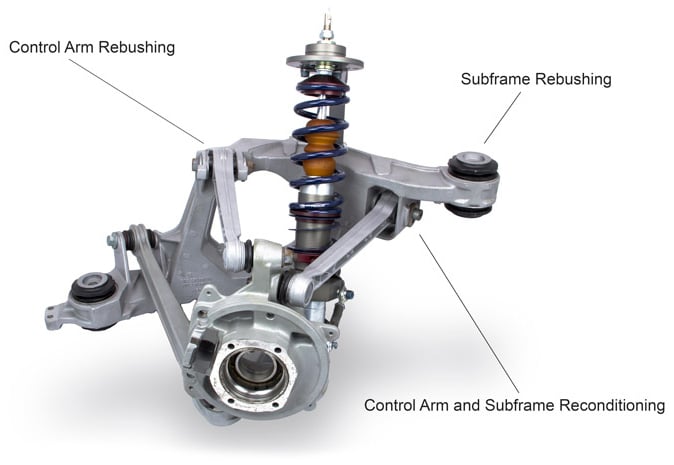
Often uses several links or control arms to guide each rear wheel separately.
- ✦ Multi-link suspension
May use three, four, or five links around each wheel, depending on the design.
- ✦ Solid rear axle
May use upper and lower control arms, trailing arms, or radius arms to locate the axle.
- ✦ Torsion beam suspension
Usually does not use separate conventional rear control arms in the same way as a multi-link system.
Why Some Cars Have Several Rear Control Arms
A wheel moves in more than one direction when a car corners, brakes, accelerates, or hits a bump. Engineers can use several separate links to control those forces with greater precision.
One link may manage toe movement. Another may help control camber. Other arms can resist forward, rearward, or side loads. This separation lets engineers tune ride comfort and handling more closely.
- ✦ Camber control
Helps manage how much the wheel tilts inward or outward.
- ✦ Toe control
Helps keep the wheel pointed at the intended angle.
- ✦ Load control
Helps manage forces from braking, acceleration, and road impacts.
What Is a Rear Control Arm?
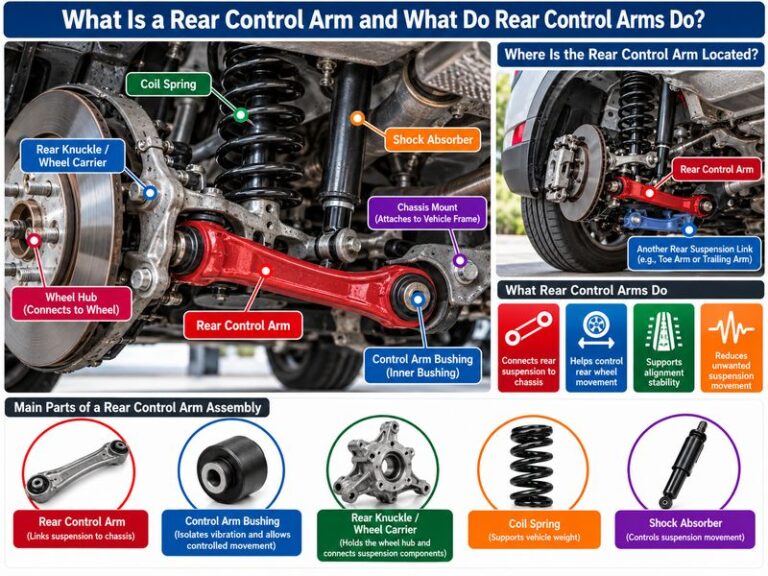
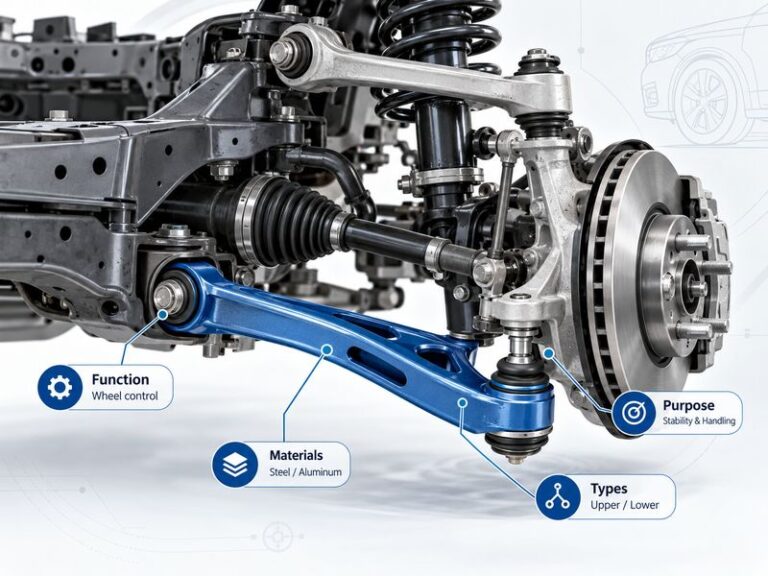
A rear control arm is a suspension link that connects part of the rear wheel assembly or axle to the vehicle body, frame, or subframe. It helps keep the wheel in its intended path while the suspension moves.
Most control arms pivot through rubber, hydraulic, or polyurethane bushings. Some designs also use ball joints or spherical joints. These joints allow movement without letting the wheel shift freely in unwanted directions.
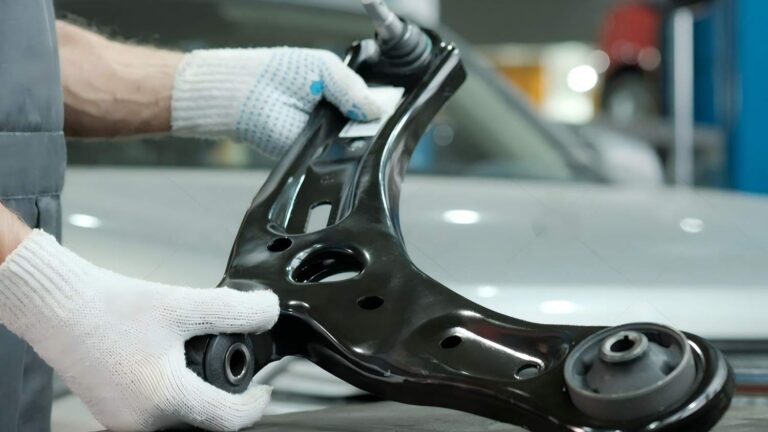
The term **rear control arm** can describe several shapes and designs. Some are large stamped-steel arms. Others are slim aluminum or steel links that look more like rods than traditional front control arms.
- ✦ Connects suspension parts
Links the wheel carrier, knuckle, or axle to the vehicle structure.
- ✦ Controls wheel path
Limits unwanted movement while letting the suspension travel.
- ✦ Supports alignment
Helps maintain proper wheel position, toe, and camber.
- ✦ Absorbs road forces
Transfers cornering, braking, and impact loads into the chassis.
Is a Rear Control Arm the Same as a Trailing Arm?
Not always. A trailing arm is normally positioned so it mainly runs forward and backward from the wheel or axle. A control arm is a broader term and may run in several directions.
Some manufacturers and parts catalogs use the names in overlapping ways. For that reason, it is best to identify the part by its mounting points and function rather than by name alone.
What Do Rear Control Arms Do?
Rear control arms keep the rear wheels from moving too far forward, backward, inward, or outward as the suspension works. At the same time, their joints let the wheel rise and fall when the tire passes over bumps or dips.
This controlled movement is important for tire contact and stability. If the wheel changes position too much, the tire may not stay at the correct angle to the road.
A healthy rear suspension should feel predictable. When control arms and their bushings work correctly, the vehicle can respond to steering, braking, and road changes without the rear end shifting in an uncontrolled way.

- ✦ Maintain wheel position
Keep the rear wheel located correctly relative to the body.
- ✦ Guide suspension travel
Allow the wheel to move through a designed path.
- ✦ Maintain tire contact
Help keep the tire aligned with the road during suspension movement.
- ✦ Improve stability
Reduce unwanted rear-wheel movement while braking or cornering.
Why Rear Wheel Alignment Depends on the Arms
Rear alignment is not fixed by the wheel alone. The suspension links determine the wheel’s position. If a rear control arm bends or its bushing becomes loose, toe or camber can move outside the correct range.
That can make a vehicle pull, feel nervous at highway speed, or wear one edge of a rear tire. An alignment may not remain correct until the worn or bent part is repaired.
Where Are Rear Control Arms Located?
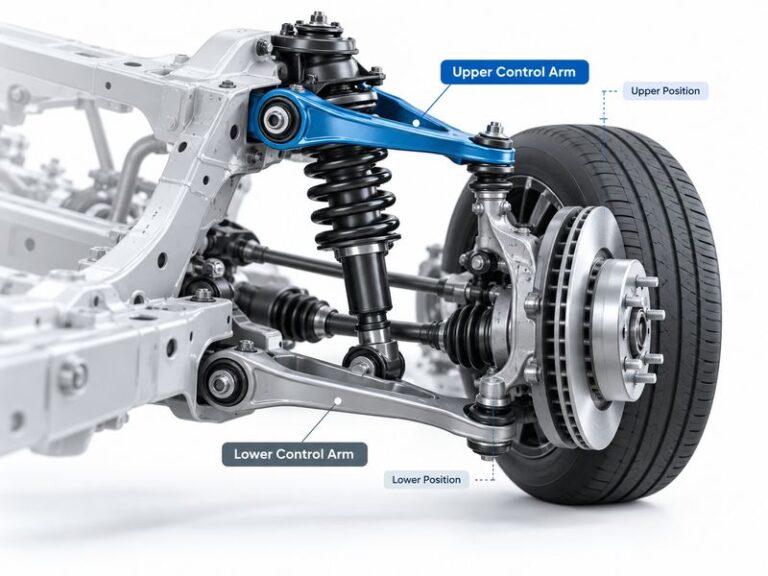
Rear control arms sit underneath the vehicle near the rear wheels. They normally connect the rear knuckle, hub carrier, or axle to the body or rear subframe.
On a multi-link suspension, you may see several separate arms around one rear wheel. Some run across the vehicle. Others run at an angle or toward the front of the car.
If you are trying to confirm **are there rear control arms on your vehicle**, look behind the rear wheel with the car safely raised. A repair manual, suspension diagram, or parts catalog for your exact year, make, and model can confirm what each link is called.
- ✦ Inner mounting point
Usually attaches to the body, frame, or rear subframe through a bushing.
- ✦ Outer mounting point
Usually attaches to the wheel carrier, knuckle, hub assembly, or axle.
- ✦ Adjustment point
Some arms use eccentric bolts or adjustable links for rear alignment.
Types of Rear Control Arms
There is no single rear control arm design. Different suspension layouts need different links to control wheel motion.
This is one reason the question **are there rear control arms** can become confusing when you look at a parts diagram. A vehicle may have parts labeled upper arm, lower arm, lateral link, toe arm, tension arm, or trailing arm.
These parts can all contribute to locating the rear wheel. Their names depend on their location, direction, and intended role.
- ✦ Rear upper control arm
Mounted higher in the suspension and often helps control camber and wheel position.
- ✦ Rear lower control arm
Mounted lower in the suspension and may support major wheel loads or spring forces.
- ✦ Lateral control arm
Runs mainly across the vehicle and controls side-to-side wheel movement.
- ✦ Toe arm
Helps set or maintain the rear wheel’s toe angle.
- ✦ Trailing arm
Runs mainly forward from the rear wheel and controls front-to-back movement.
Rear Upper Control Arms
Rear upper control arms sit above or toward the upper part of the wheel carrier. Their exact role varies by vehicle. They often help locate the top of the wheel and influence camber during suspension travel.
Upper arms may be short and curved or shaped like a simple link. A worn upper-arm bushing can let the wheel move enough to affect alignment.
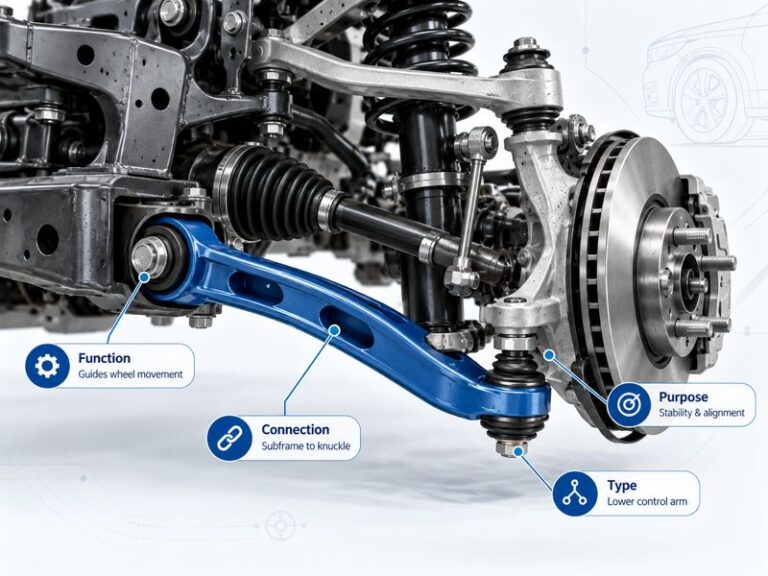
Rear Lower Control Arms
Rear lower control arms attach near the lower part of the wheel carrier. On some vehicles, the coil spring or shock load may act through a lower arm.
Because the lower arm can carry major loads, damage from a curb strike or deep pothole can bend it. Even a small bend may change rear alignment.
Adjustable Rear Control Arms
Some vehicles use adjustable factory links. Aftermarket adjustable rear arms are also common on lowered or modified vehicles because ride-height changes can alter camber and toe.
Adjustment should be followed by a proper four-wheel alignment. Changing arm length without measuring alignment can create poor handling and fast tire wear.
Do All Cars Have Rear Control Arms?
No. When asking **are there rear control arms on all cars**, suspension design is the deciding factor. Many cars have them, but others locate the rear wheels with different structures.
A modern independent rear suspension often uses separate links for each wheel. A torsion beam connects the two rear sides through a large cross member, so its layout is much simpler.
Some trucks and SUVs with solid rear axles use control arms to hold the whole axle in place. Others use leaf springs, which can locate the axle without conventional control arms.

- ✦ Multi-link independent suspension
Usually has several rear links or control arms.
- ✦ Double-wishbone suspension
Uses upper and lower arms or wishbones.
- ✦ Torsion beam
Often uses a large beam rather than multiple separate control arms.
- ✦ Solid axle with coil springs
Often uses control arms, trailing arms, or radius arms to locate the axle.
- ✦ Leaf-spring solid axle
May not need conventional rear control arms because the leaf springs help locate the axle.
Rear Control Arms on Cars Versus Trucks
Passenger cars commonly use rear control arms as part of an independent suspension. This helps engineers tune comfort, handling, and interior packaging.
Trucks can be very different. A pickup with leaf springs may have no conventional rear control arms, while a coil-sprung solid-axle truck or SUV may use several large arms to locate the rear axle.
Rear Control Arms vs. Front Control Arms
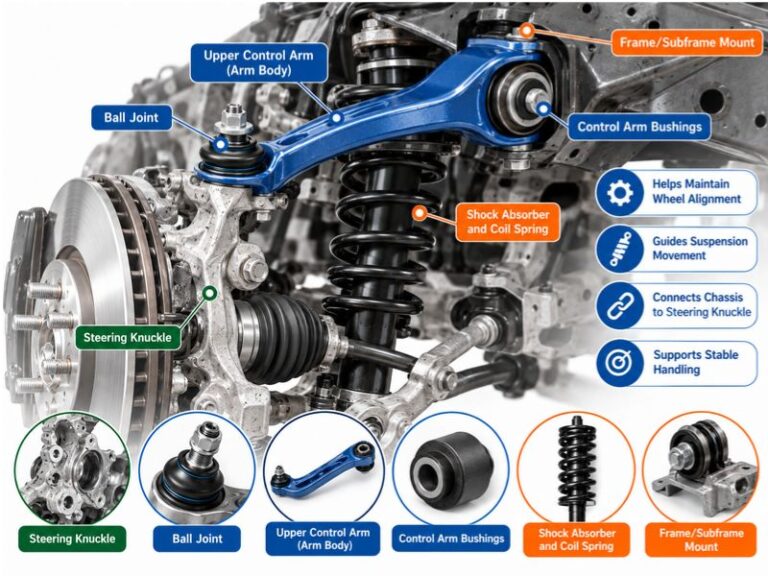
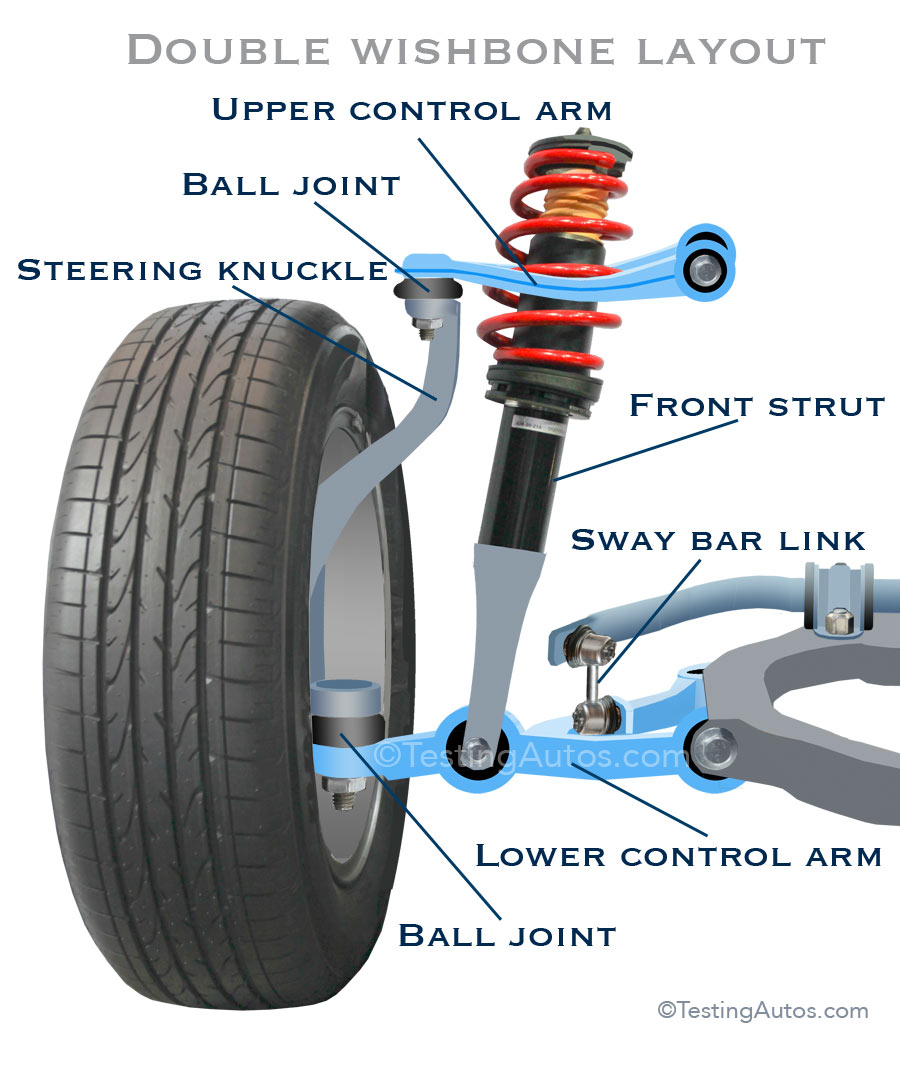
Front and rear control arms share the same basic purpose. Both locate wheels and allow controlled suspension movement. Their designs can differ because the front wheels usually have to steer.
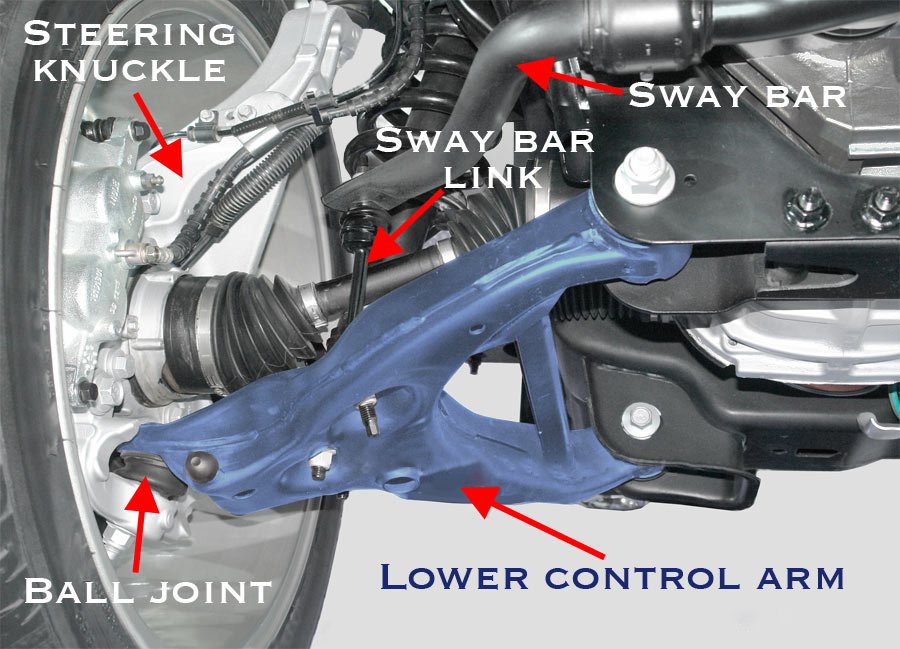
Many front lower control arms use a ball joint at the steering knuckle. Rear arms may use bushings, ball joints, or other joints depending on the design.
Rear multi-link systems can also use more individual arms than the front suspension. Each narrow link can handle one part of wheel movement rather than relying on one large arm.
- ✦ Front arms
Often work with a steering knuckle and must allow steering movement.
- ✦ Rear arms
Focus on locating the rear wheel and controlling alignment as the suspension moves.
- ✦ Shared purpose
Both help connect the wheel assembly to the chassis while allowing suspension travel.
Signs of a Bad Rear Control Arm
Rear control arms are strong parts, but the arm itself can bend or corrode. Their bushings and joints can also wear with age, mileage, road salt, heat, and repeated impacts.
One of the most useful clues is a change in how the rear of the car feels. A worn bushing may allow the wheel to shift slightly as loads change.
These symptoms do not prove the control arm is bad. Wheel bearings, shocks, tires, sway bar links, subframe bushings, and other suspension parts can cause similar problems. A physical inspection is needed before replacing parts.

- ✦ Clunking or knocking
Loose bushings or joints may knock over bumps or during braking and acceleration.
- ✦ Uneven rear tire wear
A bent arm or worn bushing can change toe or camber.
- ✦ Loose rear-end feel
The rear of the vehicle may feel as if it shifts during turns or lane changes.
- ✦ Poor alignment
Rear alignment may remain out of specification or change soon after adjustment.
- ✦ Visible bushing damage
Rubber may appear torn, separated, cracked, or pushed out of position.
- ✦ Bent or rusty arm
Impact damage or severe corrosion can weaken the arm or change its geometry.
Can a Bad Rear Control Arm Cause Tire Wear?
Yes. If a worn joint or bent arm changes rear toe or camber, the tire may scrub against the road instead of rolling straight.
Toe problems can destroy a tire quickly in severe cases. Camber problems often show as heavier wear on the inner or outer edge.
Can a Bad Rear Control Arm Make the Car Wander?
Yes. Excess movement at a rear control arm can let the wheel steer slightly as loads change. Drivers may describe this as wandering, rear steering, or an unstable feeling.
A car that suddenly feels unstable should be inspected soon. Do not assume an alignment alone will solve the problem if a suspension joint is loose.
What Causes Rear Control Arms to Fail?
Control arms do not usually wear in the same way as brake pads. In many cases, the bushings or joints fail first. The metal arm itself may last for a long time unless it bends, cracks, or develops serious corrosion.
Road conditions matter. U.S. drivers in areas with potholes, rough pavement, winter salt, or frequent curb impacts may place more stress on suspension parts.
Age also matters. Rubber bushings flex every time the suspension moves. Over time, heat, oil contamination, weather, and repeated movement can cause the rubber to split or separate.
- ✦ Pothole impacts
A hard impact can bend an arm or damage a bushing.
- ✦ Curb strikes
Side impacts can alter suspension geometry.
- ✦ Bushing age
Rubber can crack, soften, or separate after years of movement.
- ✦ Corrosion
Road salt and moisture can weaken steel arms and mounting hardware.
- ✦ Collision damage
Even a minor crash near a wheel can bend a suspension link.
- ✦ Modified ride height
Large changes in suspension height can place bushings at unusual angles and alter geometry.
How to Check Rear Control Arms
A basic visual inspection can reveal torn bushings, heavy rust, impact marks, or a visibly bent link. However, some wear only becomes clear when the suspension is unloaded or when a technician applies force to the joint.
Do not crawl under a vehicle supported only by a jack. Use proper lifting points and rated jack stands on a solid surface, or have the inspection done at a repair shop.
A technician may compare both sides, inspect bushings, check for joint play, and measure the wheel alignment. If one wheel cannot be adjusted into specification, a bent arm or damaged mounting point may be involved.
- ✦ Inspect the arm
Look for bends, cracks, deep rust, or fresh impact marks.
- ✦ Inspect bushings
Check for torn rubber, separation, or obvious movement.
- ✦ Compare both sides
A shape or wheel-position difference can help reveal collision or impact damage.
- ✦ Check tire wear
Inner-edge, outer-edge, or feathered wear may point to an alignment issue.
- ✦ Measure alignment
Rear toe and camber readings can expose geometry problems that are hard to see.
Do Not Judge a Bushing by Cracks Alone
Small surface cracks do not always mean a rubber bushing has failed. The key issue is whether the bushing has separated, shifted, torn deeply, or allows too much movement.
Bushings are also designed differently. Some have voids or openings from the factory, so a part that looks unusual may still be normal.
Can You Drive With a Bad Rear Control Arm?
It depends on the type and amount of damage. A small bushing crack is very different from a loose joint, badly bent arm, broken mount, or heavily corroded suspension link.
A badly worn rear control arm can affect wheel alignment and stability. That matters most during emergency braking, high-speed driving, wet conditions, and sudden lane changes.
If the wheel has visible movement, the vehicle feels unstable, a suspension part is cracked, or a tire is wearing rapidly, avoid unnecessary driving until the problem is inspected. Severe suspension damage can become a safety issue.
- ✦ Minor surface wear
May not require immediate replacement, but it should be monitored.
- ✦ Loose joint or torn bushing
Needs timely inspection because alignment and stability can change.
- ✦ Bent, cracked, or severely rusted arm
Should be treated as a serious problem and inspected before continued use.
Do Rear Control Arms Need to Be Replaced in Pairs?
Rear control arms do not always have to be replaced in pairs. If one arm is bent from a pothole or collision and the matching arm is still in good condition, replacing only the damaged part can be reasonable.
The decision is different when bushings have worn from age. If matching arms have the same mileage and one bushing has failed, the other side may also be worn or close to failure.
The best approach is to inspect both sides. Replace parts based on condition, suspension design, manufacturer procedures, and whether the bushings are available separately.
- ✦ Impact damage on one side
One-arm replacement may be enough if the other side checks out.
- ✦ Age-related bushing wear
Inspect the matching side closely because both parts have seen similar use.
- ✦ Complete arm assemblies
Many replacement arms come with new bushings already installed.
- ✦ Alignment afterward
A rear or four-wheel alignment is often wise after replacing a geometry-controlling arm.
Should You Get an Alignment After Replacing a Rear Control Arm?
In most cases, checking the alignment after replacing a rear control arm is a good practice. The arm helps determine wheel position, so replacing it can change toe, camber, or both.
Alignment is especially important if the arm is adjustable, if an eccentric alignment bolt was removed, or if the old arm was bent. It is also wise when the vehicle already had uneven tire wear.
Even a non-adjustable suspension can benefit from an alignment check. The readings can confirm that the new arm restored the wheel to the correct position and that no other component is bent.
- ✦ Check rear toe
Incorrect toe can cause fast tire wear and unstable tracking.
- ✦ Check rear camber
Too much inward or outward tilt can cause edge wear.
- ✦ Check thrust angle
This shows whether the rear wheels are pushing the vehicle straight ahead.
How Many Rear Control Arms Does a Car Have?
There is no fixed number. A simple rear suspension may have no separate part called a control arm. Another car may have several links for each rear wheel.
For example, a multi-link setup may use separate upper, lower, toe, and trailing links. A solid rear axle with coil springs may use two upper and two lower control arms, along with another part to control side-to-side axle movement.
So when researching **are there rear control arms** for a specific car, do not assume there will be only one per side. Use the vehicle’s suspension diagram or parts catalog to identify every link.
- ✦ Simple suspension
May use few separate links or no conventional control arm.
- ✦ Multi-link suspension
Can use several links around each rear wheel.
- ✦ Solid axle suspension
May use multiple arms to locate the entire axle rather than individual wheels.
How to Know Whether Your Vehicle Has Rear Control Arms
The easiest way to answer **are there rear control arms on my car** is to check information for the exact year, make, model, trim, and drivetrain. Suspension designs can change between generations and even between versions of the same vehicle.
A parts diagram is often more useful than looking only at generic photos. It can show whether the manufacturer calls a component a control arm, lateral link, toe link, tension link, or trailing arm.
You can also inspect the rear suspension safely. Look for solid metal links connecting the wheel carrier or rear axle to the chassis or subframe. Keep in mind that a link may serve the same function as a control arm even if its official name is different.
- ✦ Check the owner’s repair information
Service diagrams can identify the official suspension component names.
- ✦ Use the exact vehicle configuration
Drivetrain, trim, or suspension packages can change the rear suspension layout.
- ✦ Inspect mounting points
Rear links normally connect the wheel carrier or axle to the body or subframe.
- ✦ Do not rely on shape alone
A rear control arm can look very different from the large A-shaped arm seen at the front of some vehicles.