Is Sway Bar the Same as Control Arm? Key Differences Explained
If you are asking **is sway bar the same as control arm**, the simple answer is no. Both parts belong to the suspension system, and they may sit close to each other under a car, truck, or SUV. That is why the names can become confusing when you inspect suspension parts or read a repair estimate.
A **control arm** helps hold the wheel in the correct position while allowing it to move up and down. A **sway bar**, also called an anti-roll bar or stabilizer bar, connects suspension movement from one side of the vehicle to the other. Its main goal is to limit how much the body leans during a turn.
The difference matters when you diagnose a clunk, loose steering feel, uneven tire wear, or poor cornering. Replacing the wrong part will not solve the real problem. It can also waste money, which is important because suspension repairs in the U.S. can involve both parts and labor charges.
This guide explains what each component does, where it sits, how the two parts work together, and how their failure symptoms differ. It also covers sway bar links, bushings, ball joints, alignment concerns, and practical ways to tell which part may need attention.

Is Sway Bar the Same as Control Arm?
No, **is sway bar the same as control arm** has a clear answer: these are separate components. They can be connected indirectly through the suspension, but they have different shapes, mounting points, and functions.
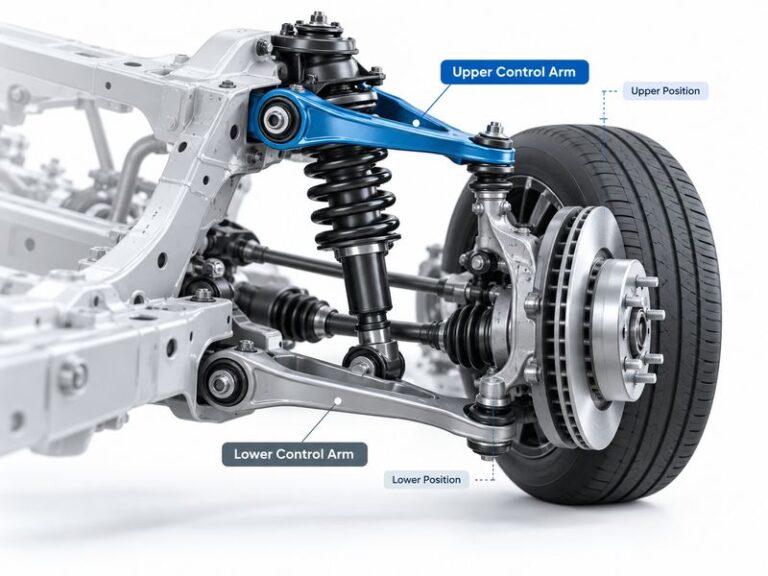
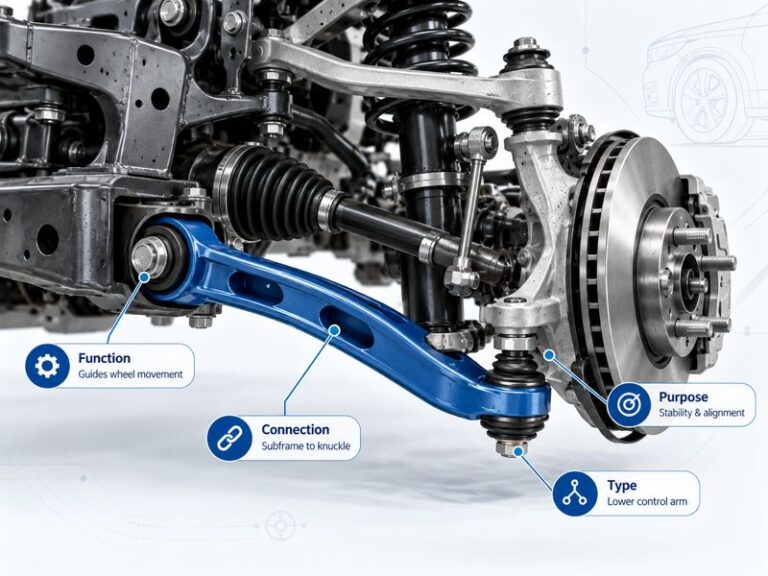
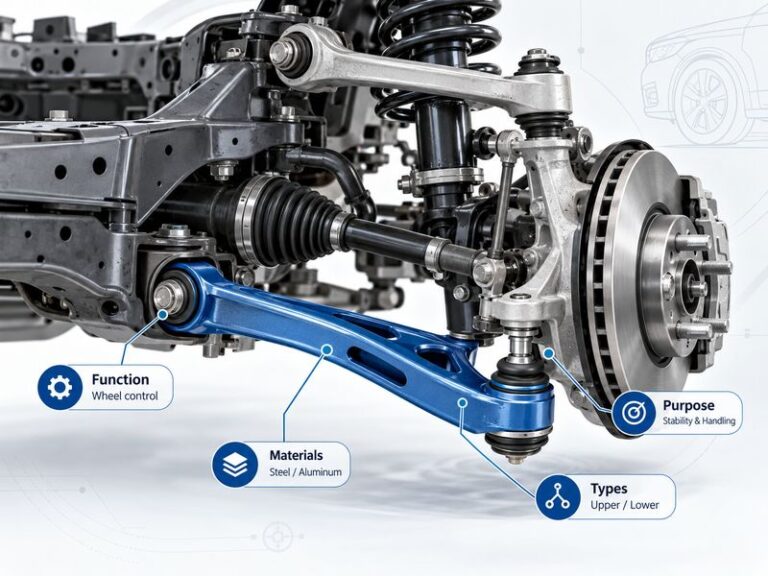
A control arm acts as a structural link between the wheel assembly and the vehicle. Depending on the suspension design, it may connect the steering knuckle to the frame, subframe, or body structure through bushings and a ball joint.
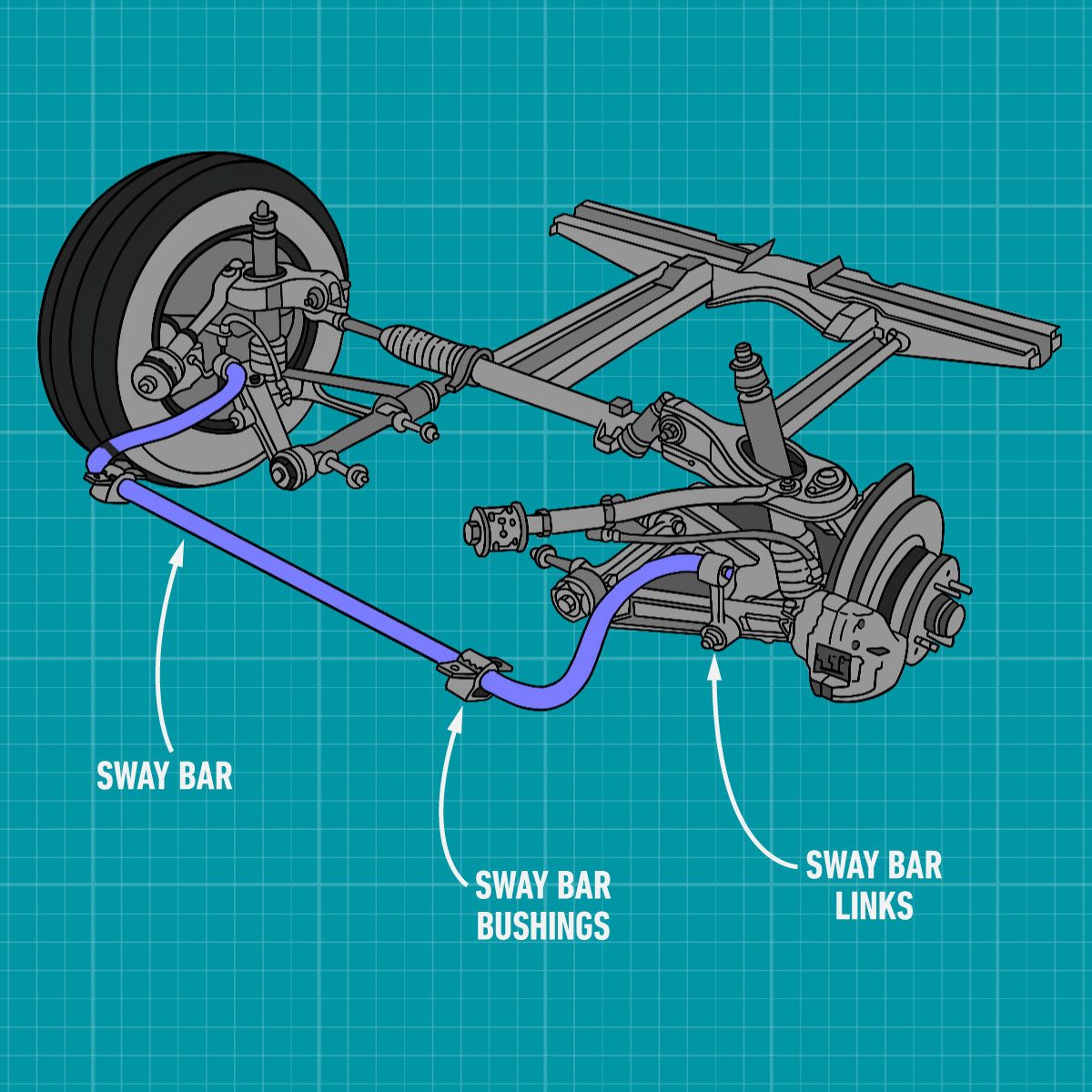
A sway bar usually runs across the vehicle from the left side to the right side. It uses bushings to mount to the body or subframe and often uses sway bar end links to connect to the control arms, struts, or another suspension point.
Think of the control arm as a part that **guides the wheel**, while the sway bar is a part that **controls side-to-side body roll**. They support the same suspension system, but one cannot simply replace the other.

- ✦ Control arm
Guides wheel movement and helps maintain the wheel’s position relative to the vehicle.
- ✦ Sway bar
Reduces excessive body lean by linking suspension movement across the vehicle.
- ✦ Connection
A sway bar link may attach the sway bar to a control arm, which can make the parts appear closely related.
- ✦ Interchangeability
A sway bar cannot serve as a control arm, and a control arm cannot perform the sway bar’s main anti-roll function.
Why People Confuse Sway Bars and Control Arms
The confusion is easy to understand. Both components are under the vehicle, both influence handling, and both can use rubber bushings. On some vehicles, the sway bar end link also attaches directly to the control arm.
Repair estimates can add to the confusion. A shop may mention control arm bushings, sway bar bushings, and sway bar links during the same suspension inspection. Those names sound similar, but they refer to separate parts.
- ✦ Similar location
Both parts are commonly found near the front or rear wheel suspension.
- ✦ Similar symptoms
Wear in either system can cause noises, poor handling, or a loose feeling.
- ✦ Shared mounting area
The sway bar link may connect to the control arm on some suspension layouts.
What Is a Control Arm?
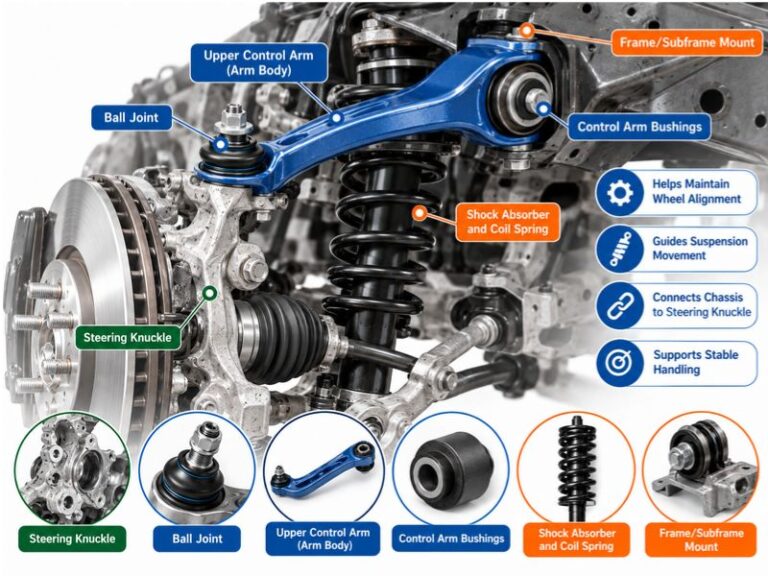
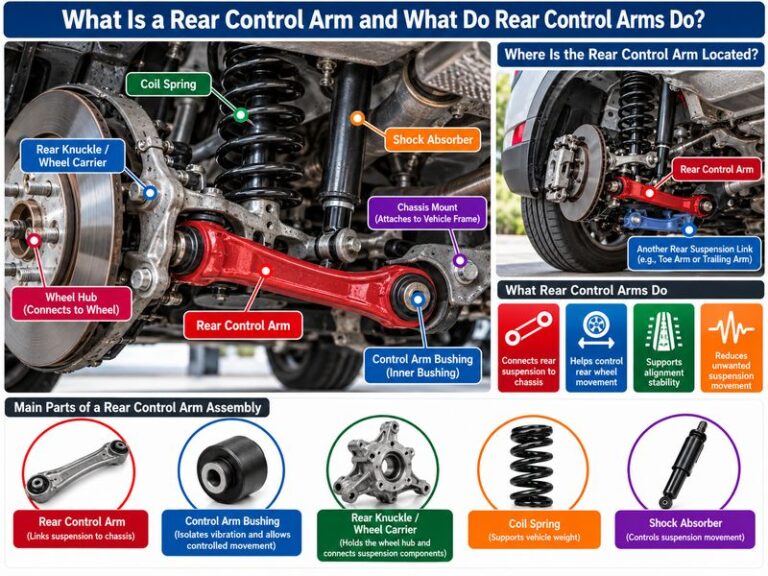
A control arm is a strong suspension link that connects part of the wheel assembly to the vehicle structure. Most designs use one or more bushings at the inner mounting points and a ball joint or similar pivot near the steering knuckle.
The control arm has to move as the wheel travels over bumps. At the same time, it must keep the wheel from moving freely in directions the suspension was not designed to allow.
Vehicles may use an **upper control arm**, a **lower control arm**, or both. MacPherson strut suspension often uses a lower control arm, while many double-wishbone systems use both upper and lower arms.
When someone asks **is sway bar the same as control arm**, this structural role is one of the biggest differences. A control arm directly locates and supports suspension geometry. A sway bar does not normally locate the wheel.

- ✦ Wheel guidance
The control arm helps determine the path the wheel follows as the suspension moves.
- ✦ Suspension geometry
It helps maintain important wheel angles as the vehicle travels over uneven roads.
- ✦ Pivot points
Bushings and ball joints allow controlled movement without letting the wheel assembly move freely.
- ✦ Load transfer
The arm transfers suspension forces between the wheel assembly and the vehicle structure.
Control Arm Bushings
Control arm bushings usually sit where the arm attaches to the frame or subframe. They allow limited movement while reducing noise and vibration.
As the rubber ages, it can crack, separate, or become soft. A worn bushing may allow the control arm to shift more than it should, which can affect steering feel and alignment.
- ✦ Common signs
Clunks, wandering steering, braking movement, vibration, or uneven tire wear may appear.
Control Arm Ball Joints
Many control arms connect to the steering knuckle through a ball joint. The joint allows steering movement while the suspension moves up and down.
A badly worn ball joint is more serious than a minor sway bar link noise because the joint can be important to wheel retention and suspension control. Any suspected severe ball joint looseness should be inspected promptly.
- ✦ Safety concern
Excessive ball joint wear can allow major unwanted wheel movement and should not be ignored.
What Is a Sway Bar?
A sway bar is a spring-like steel bar that usually runs across the width of an axle. It is also called an **anti-roll bar**, **stabilizer bar**, or anti-sway bar.
Its job becomes most noticeable when the left and right wheels move by different amounts. During a turn, the vehicle body tends to lean toward the outside of the corner. The sway bar resists that difference in suspension movement.
When both wheels move upward or downward together, such as over a smooth speed bump, the bar has less twisting work to do. When one side moves more than the other, the bar twists and applies force that resists body roll.
This is another reason the answer to **is sway bar the same as control arm** is no. The sway bar mainly manages the relationship between left and right suspension movement rather than controlling the basic position of each wheel.

- ✦ Reduces body roll
It helps keep the body flatter during cornering.
- ✦ Links both sides
It transfers force between the left and right suspension.
- ✦ Improves handling feel
A properly working sway bar can make steering transitions feel more controlled.
- ✦ Uses flexible mounting
Bushings and end links allow the bar to move and twist as the suspension works.
Sway Bar Bushings
Sway bar bushings hold the center section of the bar to the vehicle while still letting it rotate. Worn bushings can create knocking or squeaking sounds.
These bushings do not perform the same job as control arm bushings. They support the sway bar, while control arm bushings locate and cushion the control arm.
- ✦ Typical wear
Rubber can harden, crack, compress, or loosen around the sway bar.
Sway Bar End Links
End links connect the ends of the sway bar to another suspension component. Depending on the vehicle, that point may be the strut, control arm, or another suspension link.
Most end links have bushings or small ball-and-socket joints. When these joints wear, they often make a light clunk or rattle on rough roads.
- ✦ Important distinction
The sway bar link is not the sway bar itself and is not a control arm.
Sway Bar vs Control Arm: Key Differences
The easiest way to understand **is sway bar the same as control arm** is to compare their jobs directly. A control arm is part of the suspension’s wheel-locating structure. A sway bar is mainly a handling aid that controls body roll.
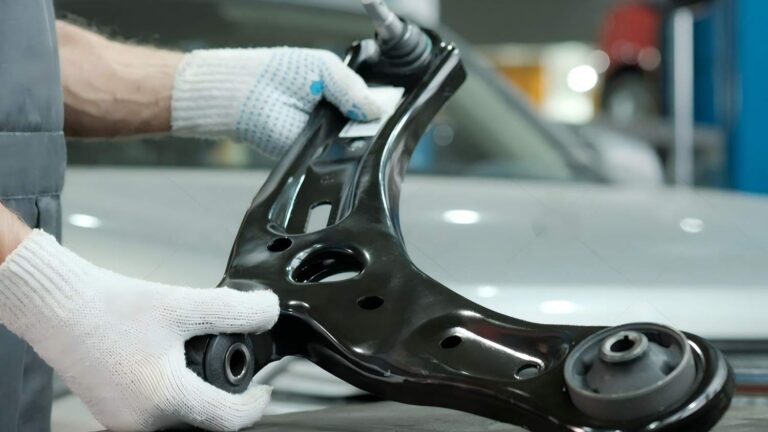
Their physical designs are also different. A control arm is usually a solid, stamped, cast, or forged arm with pivot points. A sway bar is normally a long bent steel bar that stretches from one side of the vehicle to the other.
Failure also affects the vehicle in different ways. A worn control arm bushing or ball joint can change wheel position and alignment. A failed sway bar link often causes noise and reduced roll control without changing basic wheel location.

- ✦ Main purpose
Control arm: guides and locates the wheel. Sway bar: limits body roll.
- ✦ Typical shape
Control arm: A-shaped, L-shaped, wishbone, or straight link. Sway bar: long bent bar spanning the vehicle.
- ✦ Common connections
Control arm: frame or subframe to steering knuckle. Sway bar: left suspension to right suspension through mounts and links.
- ✦ Common wear parts
Control arm: bushings and ball joints. Sway bar: frame bushings and end links.
- ✦ Effect on alignment
A worn control arm can directly affect alignment. Sway bar wear usually has far less direct effect on wheel alignment.
- ✦ Effect on cornering
Both can affect handling, but the sway bar is specifically designed to resist body roll.
Do They Carry the Same Loads?
No. The control arm deals with forces involved in locating the wheel and managing suspension movement. Those forces can come from braking, acceleration, bumps, and cornering.
The sway bar mainly reacts to differences between left and right suspension movement. It twists when the two sides move by different amounts.
- ✦ Control arm load
Helps manage forces that act directly on wheel position.
- ✦ Sway bar load
Primarily resists unequal suspension movement and body roll.
Can One Work Without the Other?
The answer depends on vehicle design, but they are not equal in structural importance. A vehicle suspension cannot simply substitute a sway bar for a control arm.
Some vehicles are designed without a sway bar on a certain axle. A suspension that requires a control arm, however, depends on that arm to keep its wheel geometry under control.
- ✦ Design matters
Always judge a component by the specific suspension design used on that vehicle.
How the Sway Bar and Control Arm Work Together
Although the answer to **is sway bar the same as control arm** is no, the two components often work closely together. Their interaction helps the suspension maintain tire contact while keeping the vehicle stable.
Imagine the front outside wheel compressing as you turn onto a highway ramp. The control arm moves through its designed arc as the wheel rises relative to the body. At the same time, the sway bar twists because the suspension on the two sides is moving by different amounts.
The sway bar then applies resistance through its end links. If an end link attaches to the control arm, some of that force passes directly through the arm.
This connection explains why a mechanic may inspect sway bar links and control arms during the same service. A problem in either area can create noise near the same wheel, even though the root causes are different.
- ✦ Wheel hits a bump
The control arm allows the wheel to follow its planned suspension path.
- ✦ Vehicle enters a turn
The body begins to lean as weight shifts toward the outside tires.
- ✦ Sway bar twists
The bar resists the difference between left and right suspension movement.
- ✦ End links transfer force
The links carry sway bar force to the suspension attachment points.
Why the Sway Bar May Attach to a Control Arm
A control arm provides a useful moving suspension point for an end link on many designs. This lets the sway bar respond when the wheel and control arm move.
That attachment does not make the control arm part of the sway bar. It only means the two systems share a connection point.
- ✦ Simple rule
Connected parts can still have separate functions.
Bad Sway Bar Symptoms vs Bad Control Arm Symptoms
Symptoms can overlap, so noise alone may not tell you which component has failed. You need to consider when the noise occurs, how the vehicle handles, and whether there is visible looseness or bushing damage.
A bad sway bar end link commonly makes a rapid clunk or rattle on small bumps. Worn sway bar bushings may knock or squeak as the bar moves in its mounts.
Control arm problems can create deeper clunks, unstable steering, braking movement, alignment changes, or unusual tire wear. A worn control arm ball joint may also create looseness at the wheel.
If you are researching **is sway bar the same as control arm** because a shop found suspension play, ask which exact joint or bushing is worn. The words sway bar, sway bar link, control arm, control arm bushing, and ball joint describe different parts.

- ✦ Sway bar link clunk
Often heard over small, sharp bumps or rough pavement.
- ✦ Excess body roll
A disconnected or ineffective sway bar can make the vehicle lean more during turns.
- ✦ Control arm bushing movement
May cause wandering, braking instability, vibration, or a dull clunk.
- ✦ Uneven tire wear
Can occur when worn control arm parts allow alignment angles to change.
- ✦ Loose wheel feel
A badly worn ball joint or control arm connection can allow unwanted wheel movement.
Signs That Point More Toward a Sway Bar Problem
A sway bar problem is more likely when the strongest symptoms are clunking over uneven roads and increased body lean. Steering alignment may still feel fairly normal.
A broken or disconnected link can reduce sway bar action on that axle. The change may feel most noticeable during fast lane changes, ramps, or curves.
- ✦ Common clues
Rattles, link looseness, damaged link boots, cracked sway bar bushings, or excess body roll.
Signs That Point More Toward a Control Arm Problem
A control arm issue becomes more likely when the wheel can shift, the alignment will not stay correct, or the vehicle pulls and wanders. Uneven tire wear can also provide a clue.
If a ball joint is loose, you may feel or see play when the suspension is inspected correctly. Because suspension designs and load conditions differ, the proper inspection method should come from reliable service information for the vehicle.
- ✦ Common clues
Cracked bushings, torn ball joint boots, excess joint play, unstable braking feel, wandering, or alignment changes.
Is a Sway Bar Link the Same as a Control Arm?
No. A **sway bar link** is also different from a control arm. This distinction matters because the names often appear together on repair quotes and parts diagrams.
The end link forms the connection between the end of the sway bar and the suspension. It can attach to a control arm, strut, knuckle area, or another point depending on design.
A control arm is normally much larger and plays a major role in controlling wheel geometry. An end link is mainly a force-transfer connection for the sway bar.
So if your original question is **is sway bar the same as control arm**, remember that there are actually three separate names you may encounter: sway bar, sway bar end link, and control arm.

- ✦ Sway bar
The long anti-roll bar that spans the vehicle.
- ✦ Sway bar end link
The short connector between the sway bar and suspension.
- ✦ Control arm
The suspension arm that helps locate and guide the wheel assembly.
Why End Links Often Cause Confusion
End links are often visible near control arms, so a person looking under the car may assume the two pieces form one part. Parts kits can also package several suspension pieces together.
The easiest visual clue is size and position. The end link is generally a relatively short connector, while the control arm extends from the chassis area toward the wheel assembly.
- ✦ Identification tip
Trace the component. A sway bar link connects to the long transverse sway bar, while the control arm leads toward the wheel or steering knuckle.
Can a Bad Sway Bar Affect the Control Arm?
A worn sway bar component does not normally cause a control arm to become the same type of part or perform a different function. However, the components share suspension forces, so damage or incorrect installation can affect how nearby parts move.
For example, a bent sway bar, seized end link joint, or incorrect aftermarket component could place unusual force on an attachment point. That does not mean normal sway bar wear automatically damages the control arm.
More often, several suspension parts wear at the same time because they have experienced similar mileage, road salt, potholes, heat, and age. This is common on older vehicles driven in areas with rough roads or winter corrosion.
A good inspection should check the whole suspension rather than assuming one worn component explains every symptom.
- ✦ Shared age
Bushings and joints throughout the suspension may deteriorate during the same period.
- ✦ Road impact
A hard pothole or curb impact can damage more than one suspension part.
- ✦ Corrosion
Rust can affect sway bar links, control arms, fasteners, and mounting points in salt-exposed areas.
Should Both Parts Be Replaced Together?
Not automatically. Replacement should depend on inspection results, the vehicle design, and the condition of each component.
If one control arm is worn but the sway bar and links remain tight and undamaged, there may be no reason to replace the bar. Likewise, a worn sway bar end link does not automatically mean the control arm needs replacement.
- ✦ Best practice
Replace parts because inspection shows they are worn or damaged, not simply because they sit near each other.
Which Is More Serious: a Bad Sway Bar or Control Arm?
The seriousness depends on the exact failed component. A noisy sway bar bushing is not the same type of concern as a severely loose control arm ball joint.
A failed sway bar link can reduce handling stability and increase body roll. That deserves repair, especially if vehicle behavior has changed.
Control arm failures can be more directly tied to wheel position. Severe bushing damage, a cracked arm, or dangerous ball joint play can affect steering and wheel control.
Do not use noise volume as the only measure of risk. A quiet joint can still have serious wear, while a loose sway bar link may make a loud clunk without causing the same degree of wheel instability.
- ✦ Low-level noise still needs diagnosis
A small clunk can be the first sign of developing suspension wear.
- ✦ Steering changes deserve attention
Wandering, pulling, looseness, or sudden alignment changes should be inspected promptly.
- ✦ Visible structural damage matters
A bent, cracked, heavily corroded, or separated suspension component should not be ignored.
When to Avoid Driving
If a wheel looks out of position, the steering becomes hard to control, a ball joint shows severe looseness, or a suspension part appears broken, continued driving may not be safe. Have the vehicle inspected before normal road use.
If the only symptom is a light rattle, the cause still needs diagnosis. Suspension noises can travel through the chassis, so the loudest location is not always the failed component.
- ✦ Urgent warning signs
Major steering looseness, visible wheel movement, severe pulling, broken parts, or sudden changes in vehicle control.
How to Tell a Sway Bar From a Control Arm
You can often identify the parts by following where they go. Do not crawl under a vehicle supported only by a jack. Use proper lifting points and approved support equipment if an inspection requires going underneath.
Look for a long steel bar that travels across the vehicle. If it connects the left and right suspension through bushings and end links, you are likely looking at the sway bar.
Next, look for an arm that extends from the chassis or subframe toward the wheel or steering knuckle. That is more likely to be a control arm.
This visual check makes **is sway bar the same as control arm** easier to understand. The sway bar crosses the vehicle, while the control arm generally reaches outward toward an individual wheel.
- ✦ Follow the sway bar
It normally continues across the vehicle toward the opposite wheel.
- ✦ Follow the control arm
It normally connects the chassis or subframe to the wheel-side suspension assembly.
- ✦ Find the end link
A short link near the wheel usually joins the sway bar to the suspension.
- ✦ Look for control arm pivots
Large rubber bushings commonly secure the inner end of a control arm.
Why Vehicle-Specific Diagrams Help
Suspension layouts vary widely. A compact sedan, full-size pickup, crossover, and performance car may place their links and arms in different locations.
A model-specific service diagram can prevent misidentification. It is especially useful on multi-link suspension, where several separate arms may replace a single large wishbone-style control arm.
- ✦ Multi-link suspensions
These systems may use several individual links that perform parts of the job associated with a traditional control arm.
Does Replacing a Sway Bar or Control Arm Require an Alignment?
Replacing a control arm often makes an alignment check important because the arm helps establish wheel position. Removing or replacing it can change suspension geometry, especially if worn bushings previously allowed movement.
Replacing a sway bar link or sway bar bushing usually does not directly change normal alignment settings. The bar mainly controls roll resistance rather than wheel position.
There are exceptions because vehicle designs differ. If other suspension parts are loosened, shifted, or removed during repair, an alignment may still be wise.
If you replace a control arm and notice a crooked steering wheel, pulling, or changed tire angles, do not ignore it. Correct alignment helps protect tire life and keeps the vehicle driving as intended.
- ✦ After control arm replacement
An alignment inspection is commonly a smart next step.
- ✦ After sway bar link replacement
Alignment is not normally required solely because of the link.
- ✦ After major suspension work
Check the repair procedure and verify alignment when wheel-locating components have been disturbed.
Why Bushing Bolt Tightening Position Matters
Many traditional rubber control arm bushings are designed to sit near a neutral position at normal ride height. Tightening certain pivot bolts while the suspension hangs can preload the rubber on some designs.
Correct service procedures vary by vehicle. Following manufacturer repair information helps prevent premature bushing stress and incorrect installation.
- ✦ Installation tip
Use the specified tightening procedure and torque values for the exact vehicle.
Can You Drive With a Bad Sway Bar or Control Arm?
Whether you can safely drive depends on which part failed and how badly it is worn. There is no single mileage or time limit that applies to every suspension problem.
A worn sway bar bushing may begin as a noise problem, while a disconnected link can noticeably reduce roll control. You should still repair the fault rather than treating the sway bar as unimportant.
A severely worn control arm joint can create greater concern because it may affect wheel location. If steering feels unstable or inspection shows major play, avoid assuming the vehicle is safe merely because it still moves.
When the cause is unclear, a professional suspension inspection is the safer approach. This is especially true after a hard curb strike, large pothole impact, collision, or sudden steering change.
- ✦ Stop and inspect
Do so when the vehicle has severe steering instability, obvious wheel movement, or visible suspension damage.
- ✦ Do not ignore clunks
A clunk can come from many suspension parts and should be identified before it becomes worse.
- ✦ Check after impacts
Potholes and curb hits can damage control arms, links, wheels, tires, and alignment.
What a Proper Inspection Should Include
A useful inspection looks beyond the part that seems noisy. It should consider control arm bushings, ball joints, sway bar bushings, end links, tie rods, struts or shocks, wheel bearings, tires, and mounting hardware as appropriate.
The technician should also compare the findings with the vehicle’s suspension design. This helps prevent replacing a sway bar link when the true problem is a control arm bushing, or vice versa.
- ✦ Inspect the system
Suspension symptoms often overlap, so diagnosis should confirm the failed component before parts are replaced.
Common Misunderstandings About Sway Bars and Control Arms
One common mistake is assuming that every suspension bar near a wheel is a control arm. Modern suspension systems use many links, rods, arms, and bars that can look similar at first.
Another mistake is assuming that every clunk means a control arm has failed. Loose sway bar links are a common source of suspension noise, but strut mounts, ball joints, tie rods, and other components can make similar sounds.
It is also incorrect to assume that a sway bar supports the full weight of the vehicle. Springs provide the main support for vehicle weight, while control arms guide suspension movement and the sway bar adds resistance to body roll.
Understanding these roles makes the search **is sway bar the same as control arm** much easier to resolve. Their jobs overlap only in the broad sense that both help the suspension behave correctly.
- ✦ Myth: They are two names for one part
They are separate components with different jobs.
- ✦ Myth: A sway bar locates the wheel
Its main role is controlling roll, not establishing normal wheel position.
- ✦ Myth: Every suspension clunk means a bad control arm
Many joints, mounts, bushings, and links can create similar noises.
- ✦ Myth: A bad sway bar always ruins alignment
Sway bar problems usually do not directly change basic wheel alignment angles.
Sway Bar vs Torsion Bar
A sway bar can work by twisting like a torsion spring, but that does not make it the same as every torsion bar. A suspension torsion bar can serve as the main spring for one wheel.
A sway bar instead links left and right suspension movement to resist body roll. The similar twisting action causes another common naming mix-up.
- ✦ Key distinction
A torsion-bar spring supports suspension load, while a sway bar mainly resists unequal movement between the two sides.
Practical Example of the Difference
Consider a common front suspension on a U.S. crossover. The lower control arm connects the subframe to the steering knuckle through bushings and a ball joint. As the wheel travels over a bump, that arm swings through a controlled arc.
The sway bar runs from the left side of the front suspension to the right. End links connect it to moving suspension points. When the crossover enters a turn, the outside suspension compresses more than the inside suspension, so the sway bar twists.
Now imagine one sway bar end link becomes loose. The driver may hear a light clunk over broken pavement and notice more body movement during turns. The wheel can still be located by the control arm.
If a control arm ball joint instead becomes badly worn, the wheel itself can gain unwanted movement. That example shows why the answer to **is sway bar the same as control arm** matters during diagnosis.
- ✦ Loose end link
Usually affects sway bar action and can create rattling or clunking.
- ✦ Worn control arm joint
Can affect wheel position, steering precision, and suspension geometry.
- ✦ Same area, different fault
Both problems may make noise near the same wheel but require different repairs.
The Best Diagnostic Lesson
Do not replace a suspension component from sound alone. Confirm where the play or damage exists.
This approach saves parts, labor, and repeated repair work. It also helps distinguish a minor worn bushing from a component that directly affects wheel control.
- ✦ Confirm before replacing
A hands-on inspection should identify the actual loose, torn, bent, or damaged component.