Are Struts and Control Arms the Same? Key Differences Explained
If you are looking under a car and asking, **are struts and control arms the same**, the confusion makes sense. Both parts belong to the suspension system. Both affect ride quality, wheel control, tire contact, and handling. Yet they do very different jobs.
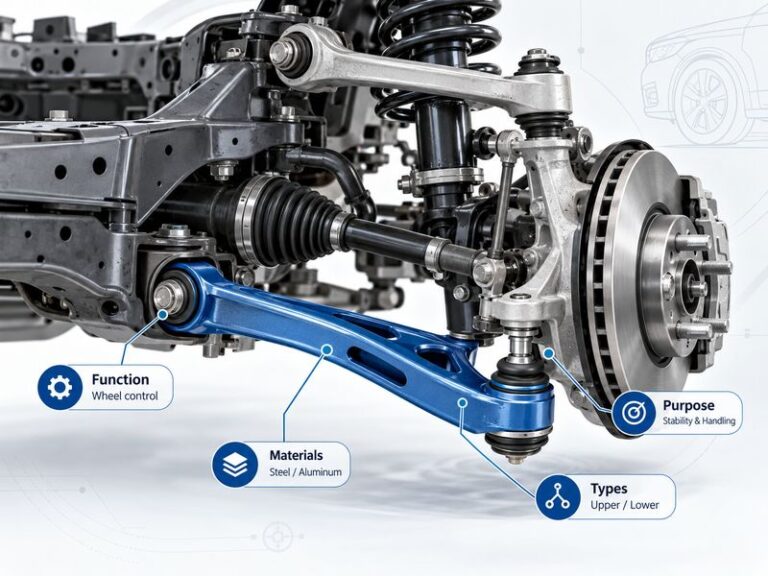
A **strut** is usually a tall suspension unit that combines damping with structural support. In many cars, it also works with a coil spring and helps locate the steering knuckle. A **control arm** is a hinged metal arm that connects the wheel assembly to the vehicle frame or subframe. Bushings and a ball joint let that arm move while keeping the wheel in the correct position.
This difference matters when a vehicle starts to clunk, wander, bounce, pull, or wear tires unevenly. Replacing a strut will not fix a worn control arm bushing. In the same way, replacing a control arm will not cure a weak strut that can no longer control spring movement.
For drivers in the United States, rough pavement, potholes, road salt, curb impacts, and normal mileage can wear both parts over time. This guide explains how struts and control arms work, how they interact, how their failure symptoms differ, and what to inspect before paying for suspension repairs.
Are Struts and Control Arms the Same?
No. If you want the simplest answer to **are struts and control arms the same**, they are two separate components. A strut mainly manages suspension movement and provides structural support. A control arm keeps the wheel connected to the chassis while allowing it to move through a controlled path.
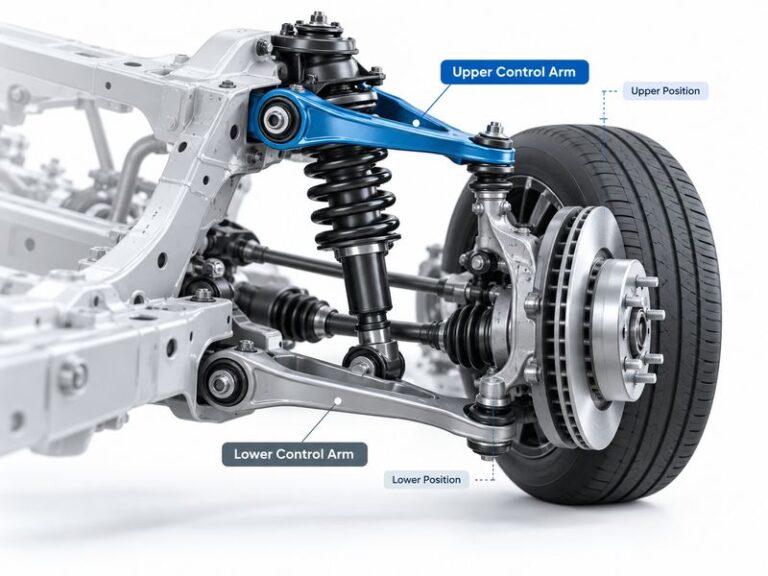
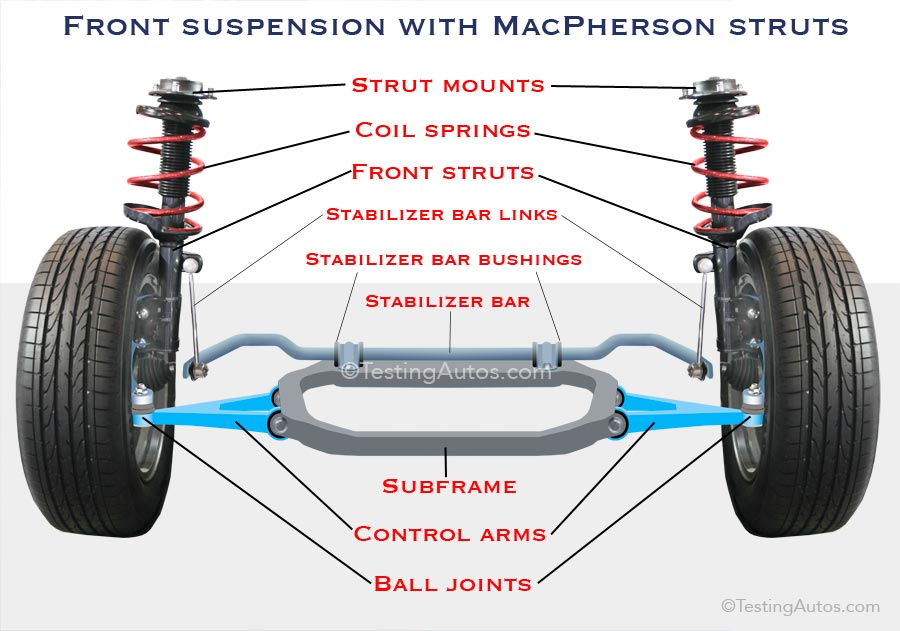
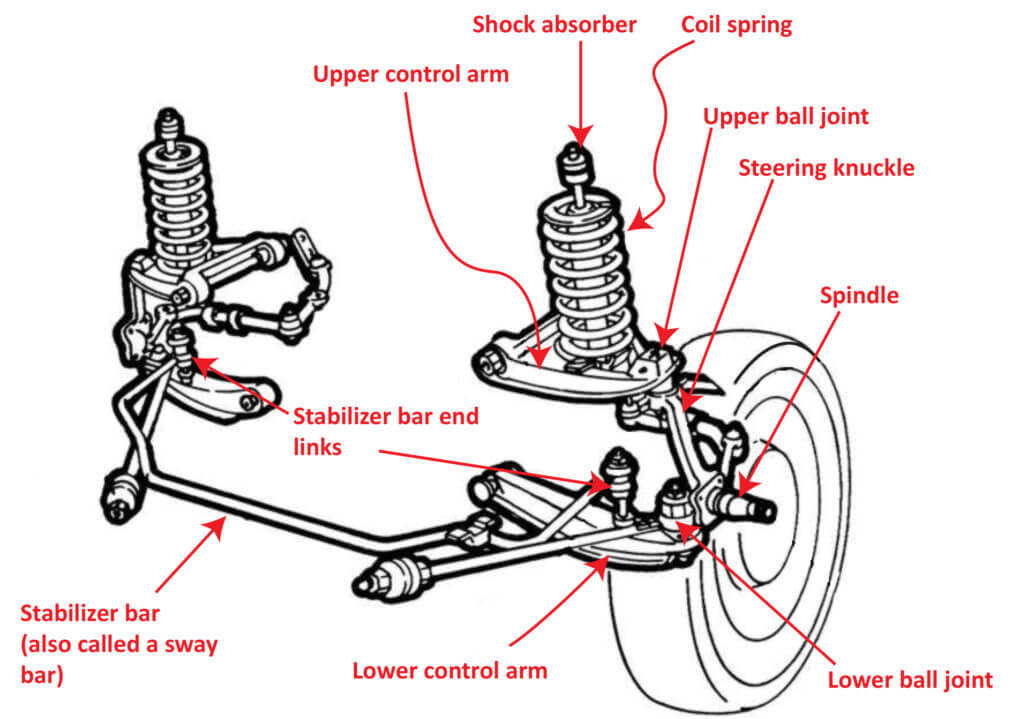
The two parts can work in the same suspension assembly. On a common MacPherson strut front suspension, the strut connects near the top of the steering knuckle. A lower control arm connects near the bottom. Together, they help keep the wheel stable as it moves over bumps and turns.
Think of the control arm as a guided hinge for the wheel assembly. Think of the strut as a support and motion-control unit. They depend on each other, but one does not replace the function of the other.
This is also why parts catalogs may sell struts and control arms in the same suspension kit. Being packaged together does not mean they are the same part. It only means both may be replaced during a larger suspension rebuild.
- ✦ Strut
Controls spring movement, supports the suspension structure, and may help position the steering knuckle.
- ✦ Control arm
Connects the wheel or steering knuckle to the frame or subframe and guides wheel movement.
- ✦ Shared purpose
Both help maintain tire contact, stable handling, and predictable suspension geometry.
- ✦ Main difference
A strut manages and supports vertical suspension movement, while a control arm guides the wheel through that movement.
Why People Often Confuse Them
Drivers often hear both parts mentioned during the same suspension inspection. They can also create overlapping symptoms, such as noise, poor steering feel, uneven tire wear, and unstable handling. That makes it easy to assume they are different names for the same component.
Their physical locations add to the confusion. A strut and lower control arm can attach to the same steering knuckle. From outside the wheel well, both appear to be part of one large assembly even though they perform separate tasks.
- ✦ Same system
Both are suspension components.
- ✦ Nearby mounting points
Both may connect to the steering knuckle.
- ✦ Similar failure effects
Wear in either part can reduce handling quality and tire control.
What Is a Strut and What Does It Do?
A strut is a major suspension component used on many passenger cars, crossovers, and some light trucks. It combines a damper with a strong structural housing. In a complete strut assembly, you may also find a coil spring, upper mount, bearing, spring seats, dust boot, and bump stop.
The damper inside the strut slows spring movement. When a tire hits a bump, the spring compresses and then tries to rebound. Without damping, the body could continue moving up and down. The strut turns much of that motion into controlled resistance.
A strut can also carry loads that a simple shock absorber does not. In a MacPherson layout, it helps hold the steering knuckle in position and forms one of the main structural links between the wheel assembly and vehicle body.
This explains an important part of the question **are struts and control arms the same**. A strut is not simply an arm or link. It is a structural damping unit that plays a major role in ride control and suspension support.

- ✦ Damps suspension movement
The strut reduces repeated bouncing after the wheel moves over a bump or dip.
- ✦ Supports the suspension
In a strut-type layout, the unit forms part of the structure that positions the wheel.
- ✦ Works with the spring
A complete strut assembly often surrounds or supports the coil spring.
- ✦ Helps steering geometry
The upper strut mount and lower knuckle connection help maintain the wheel’s position.
Strut vs Shock Absorber
A shock absorber and a strut both control suspension motion, but they are not always interchangeable. A conventional shock is mainly a damper. A strut is usually both a damper and a structural suspension member.
That structural role is why removing a strut can require supporting or separating major suspension parts. Replacing a standard shock is often less involved because the shock does not normally locate the wheel assembly.
- ✦ Shock
Primarily controls motion.
- ✦ Strut
Controls motion and commonly serves as a structural suspension member.
What Is Inside a Strut?
Inside the strut housing is a piston and hydraulic fluid, and some designs also use pressurized gas. The piston moves through the fluid as the suspension travels. Small internal passages restrict fluid flow, which creates the damping force needed to slow suspension movement.
- ✦ Piston and rod
Move as the suspension compresses and extends.
- ✦ Hydraulic fluid
Creates controlled resistance to movement.
- ✦ Valving
Regulates fluid flow and changes damping force.
What Is a Control Arm and What Does It Do?
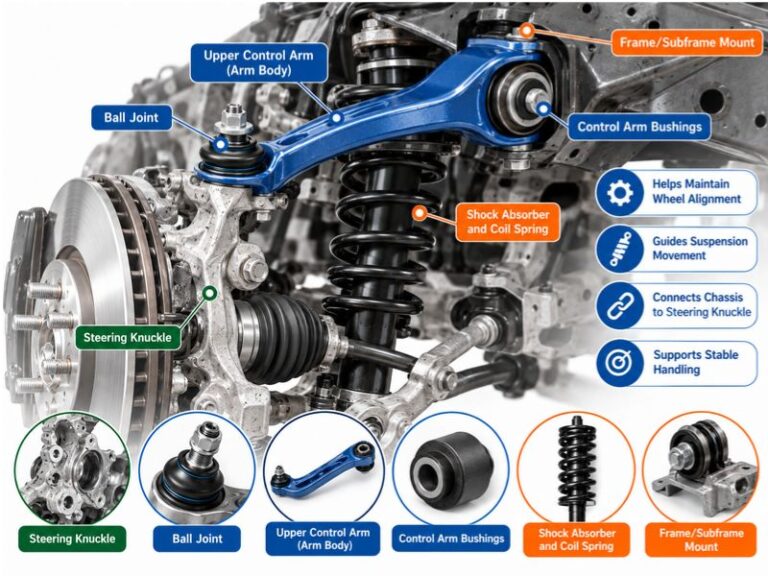
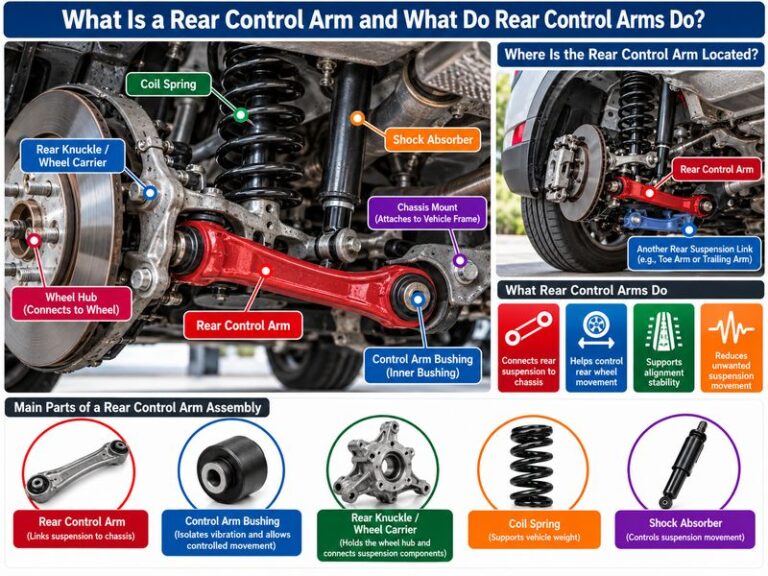
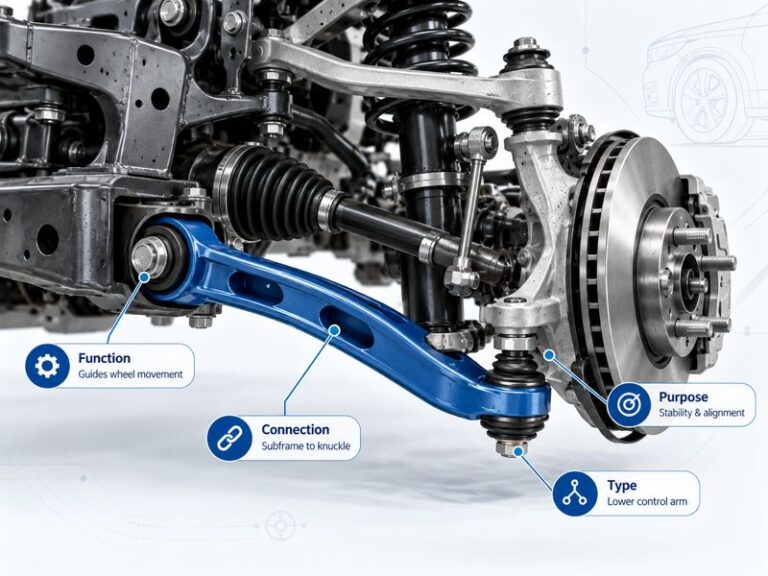
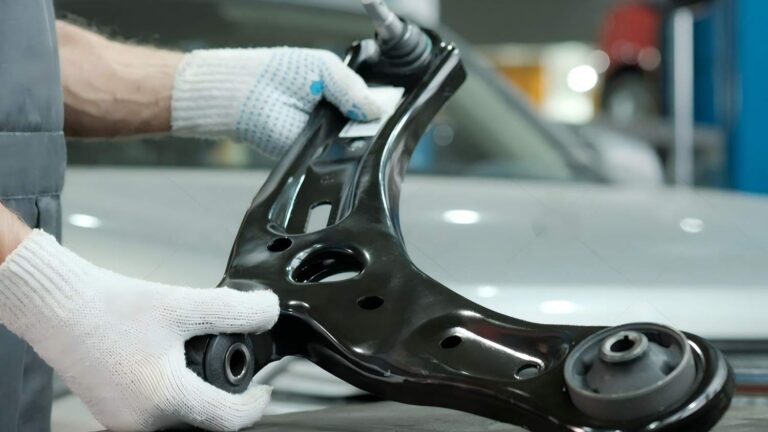
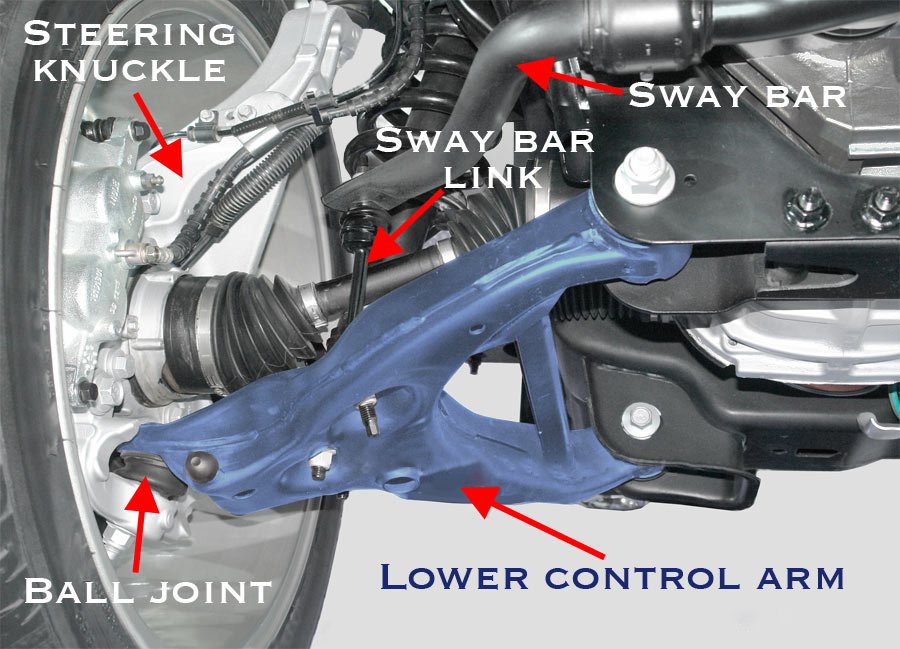
A control arm is a strong metal suspension link. It connects the steering knuckle or wheel hub area to the vehicle frame, body, or subframe. Its shape may look like an A, L, wishbone, or straight link depending on the suspension design.
The inner end of a control arm usually pivots on rubber or hydraulic bushings. The outer end often uses a ball joint. These connections allow the wheel to travel up and down while limiting unwanted front-to-back and side-to-side movement.
The arm also helps maintain alignment geometry. Its length, angle, and mounting points affect camber, caster, wheel position, and how those angles change during suspension travel.
So, **are struts and control arms the same** from a mechanical point of view? No. A control arm guides the path of the wheel. The strut manages suspension movement and, in many layouts, provides upper structural support.

- ✦ Connects wheel to chassis
The arm forms a physical link between the wheel assembly and vehicle structure.
- ✦ Allows vertical movement
Bushings let the arm pivot when the suspension moves.
- ✦ Controls wheel position
The arm limits unwanted movement and helps preserve alignment.
- ✦ Uses a ball joint
Many control arms connect to the steering knuckle through a movable ball joint.
Upper and Lower Control Arms
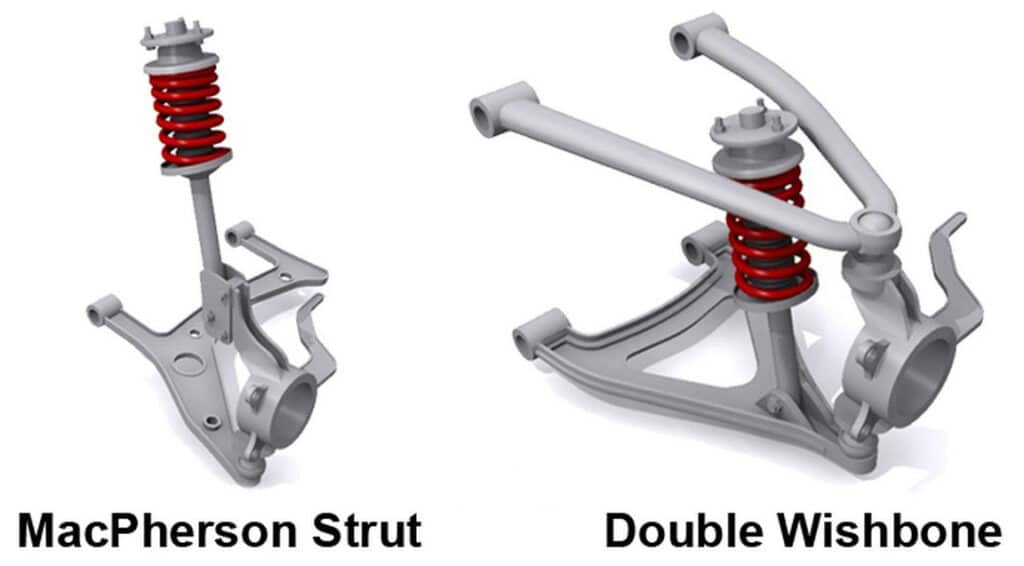
Some vehicles have both upper and lower control arms. This is common with double-wishbone suspension. The two arms work together to locate the steering knuckle while allowing controlled suspension travel.
Many MacPherson strut systems do not need a conventional upper control arm at the front. The strut performs part of the wheel-locating job that an upper arm would handle in a double-wishbone design.
- ✦ Upper control arm
Connects the upper section of the knuckle to the chassis in applicable designs.
- ✦ Lower control arm
Supports and guides the lower section of the wheel assembly.
Control Arm Bushings and Ball Joints
A control arm itself may remain straight and strong while its bushings or ball joint wear out. Cracked bushings can let the wheel shift under braking or acceleration. A worn ball joint can create looseness, clunks, steering play, and unsafe wheel movement.
Some vehicles allow the bushing or ball joint to be replaced alone. Others use complete control arm assemblies with these parts already installed. Labor cost, part design, and overall condition often decide which repair makes more sense.
- ✦ Bushings
Isolate vibration and allow controlled pivoting at the chassis end.
- ✦ Ball joint
Allows the steering knuckle to turn and move with suspension travel.
Struts vs Control Arms: Key Differences
The easiest way to understand **are struts and control arms the same** is to compare their jobs side by side. Both control the wheel in some way, but they do so through different mechanical functions.
The strut acts mainly in a vertical direction as the suspension compresses and rebounds. The control arm pivots through an arc. Its geometry guides where the wheel can move relative to the chassis.
Their construction is also very different. A strut contains moving internal damping parts and fluid. A control arm is usually a solid or stamped metal structure with pivot bushings and often a ball joint.
Their wear patterns differ as well. Struts often lose damping force or leak fluid. Control arms usually develop problems because bushings split, ball joints wear, or the arm bends after an impact.
- ✦ Primary job
Strut: damping and structural support. Control arm: wheel location and guided movement.
- ✦ Internal design
Strut: piston, fluid, seals, and valves. Control arm: metal arm, bushings, and often a ball joint.
- ✦ Movement
Strut: compresses and extends. Control arm: pivots around its inner mounting points.
- ✦ Common wear
Strut: weak damping, leakage, worn mount. Control arm: worn bushings, loose ball joint, or bent arm.
- ✦ Typical replacement
Struts are often replaced in axle pairs, while a control arm may be replaced individually when needed.
- ✦ Alignment impact
Replacement of either part can affect wheel alignment depending on the suspension design.
Simple Comparison Example
Picture the front suspension of a typical compact car. The lower control arm extends from the subframe toward the wheel. It pivots when the tire rises over a bump. Above it, the strut compresses and controls the speed of that movement.
The control arm decides much of the wheel’s path. The strut keeps that movement from becoming uncontrolled. That simple example shows why both parts are needed.
- ✦ Control arm guides
It determines how the lower wheel assembly moves.
- ✦ Strut controls
It slows and stabilizes suspension compression and rebound.
How Struts and Control Arms Work Together
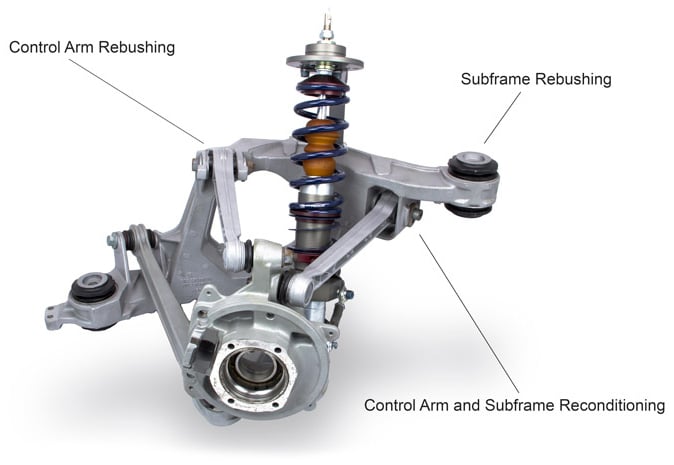
Struts and control arms may perform different jobs, but they must work together. When a tire hits a pothole, the wheel moves upward. The control arm pivots at its bushings, while the strut compresses and controls the motion.
As the wheel drops back toward the road, the spring pushes the suspension outward again. The strut slows that rebound. At the same time, the control arm keeps the wheel moving through its intended arc.
Steering adds another layer. On many front-wheel-drive cars, the steering knuckle sits between the strut connection and the lower control arm ball joint. The wheel can turn left or right while still moving vertically.
This relationship is why asking **are struts and control arms the same** can lead to a useful suspension lesson. They are not the same, but the handling of the car depends on both doing their own jobs correctly.
- ✦ During a bump
The control arm pivots while the strut compresses.
- ✦ During rebound
The strut slows spring extension while the arm guides wheel travel.
- ✦ During steering
The steering knuckle turns while the suspension links keep it securely located.
- ✦ During braking
Both parts help keep wheel geometry stable as vehicle weight moves forward.
MacPherson Strut Suspension
MacPherson strut suspension is common because it uses relatively few parts and takes up little space. The strut serves as a major upper locating member, while a lower control arm locates the bottom of the steering knuckle.
This layout is a clear example of how one suspension can need both a strut and a control arm. Each part completes a different side of the wheel-control structure.
- ✦ Upper location
The strut connects the upper wheel assembly to the vehicle body.
- ✦ Lower location
The lower control arm connects the lower wheel assembly to the subframe.
Double-Wishbone Suspension
A double-wishbone layout usually uses upper and lower control arms instead of relying on a MacPherson strut to locate the top of the knuckle. It may still use a shock absorber and coil spring or a coilover-style damper.
This is another reason suspension terminology can be confusing. Not every vehicle uses the same mix of arms, struts, springs, and shocks.
- ✦ Upper arm
Locates the upper part of the steering knuckle.
- ✦ Lower arm
Locates the lower part of the steering knuckle.
- ✦ Damper
Controls suspension movement but may not serve the same structural role as a MacPherson strut.
Signs of Bad Struts
A worn strut often loses its ability to control body and spring motion. The car may feel loose or floaty over waves in the road. It may also continue moving after a large bump instead of settling quickly.
Fluid around the strut body can suggest a failed internal seal, although a light film is not always proof that the unit is bad. The full diagnosis should include ride behavior, tire wear, mounts, springs, and other suspension parts.
A worn upper strut mount can also cause noise. You may hear a clunk, pop, or groan when turning or driving over rough roads. That sound can be mistaken for control arm trouble.
When drivers ask **are struts and control arms the same** because both can cause front-end noise, the symptom alone is not enough. The location and type of movement must be inspected.

- ✦ Excessive bouncing
The body keeps moving after bumps because damping has weakened.
- ✦ Nose dive
The front may dip more than normal during braking.
- ✦ Body roll
The vehicle may feel less controlled during quick turns.
- ✦ Fluid leakage
Visible oil around the strut may indicate a damaged seal.
- ✦ Uneven tire wear
Poor wheel control can contribute to irregular tread wear.
- ✦ Clunking or groaning
A worn mount, bearing, spring seat, or strut component may create noise.
Can You Drive With Bad Struts?
A mildly worn strut may not stop the car from moving, but it can reduce tire contact and body control. The problem becomes more important during emergency braking, quick lane changes, rain, or rough road conditions.
Severe strut, spring, or mount damage deserves prompt attention. A broken structural component can create a much greater risk than ordinary loss of damping.
- ✦ Mild wear
May cause poor ride quality and reduced control.
- ✦ Severe damage
Can affect wheel support, tire clearance, and safe vehicle operation.
Signs of a Bad Control Arm
Control arm problems often come from worn bushings or ball joints rather than the metal arm itself. Rubber bushings can crack, split, soften, or separate. Ball joints can develop play as their internal bearing surfaces wear.
A worn control arm bushing may allow the wheel to shift slightly under braking, acceleration, or cornering. The driver may feel wandering, vague steering, pulling, or a dull clunk when the vehicle changes direction.
A loose ball joint can make sharper knocking or clunking sounds. In severe cases, excessive joint wear can become a serious safety problem because the ball joint helps connect the wheel assembly to the suspension.
A bent control arm can also change alignment. This often happens after a hard curb strike, collision, or severe pothole impact. If the arm changes shape, normal alignment adjustment may not restore the correct wheel position.
- ✦ Clunking
Movement at worn bushings or a ball joint may make noise over bumps or during braking.
- ✦ Steering wander
The vehicle may need frequent steering correction.
- ✦ Pulling
A damaged arm or failed bushing can let alignment angles shift.
- ✦ Uneven tire wear
Poor wheel geometry can wear one side or section of the tread faster.
- ✦ Steering wheel movement
Loose suspension joints may cause unstable or vague steering feel.
- ✦ Visible bushing damage
Cracks, tears, or separation can indicate a failed control arm bushing.
Why a Bad Ball Joint Matters
The ball joint acts as a movable connection between the control arm and steering knuckle. It must support suspension loads while allowing steering and vertical movement. Excessive play changes wheel position and can become dangerous.
A severely worn joint should not be ignored. If separation occurs on a design where the joint carries major suspension loads, the wheel can move far outside its normal position.
- ✦ Early wear
May cause light clunks or looseness.
- ✦ Advanced wear
Can create major wheel movement and a serious loss of suspension control.
Bad Strut vs Bad Control Arm: How Symptoms Differ
Some symptoms overlap, but the pattern often gives useful clues. Weak struts tend to affect how the body responds to bumps. Worn control arm parts tend to create looseness or unwanted wheel movement.
For example, repeated bouncing after a bump points more toward a damping issue. A heavy clunk when braking and then accelerating may point more toward a worn control arm bushing.
Steering noise can come from either area. A damaged upper strut bearing may groan or pop when the steering wheel turns. A loose ball joint may knock when the suspension changes load.
Diagnosis matters more than guessing from one symptom. Suspension parts work together, and several worn components can exist at the same time on a high-mileage vehicle.
- ✦ Vehicle keeps bouncing
More commonly linked to weak strut damping.
- ✦ Clunk during brake and throttle changes
Often associated with worn control arm bushings.
- ✦ Fluid on suspension damper
Points toward a leaking strut.
- ✦ Visible torn bushing
Points toward control arm or bushing wear.
- ✦ Loose ball joint
Points toward the control arm connection rather than the strut damper.
- ✦ Irregular tire wear
Can result from either problem and needs a full inspection.
Why a Road Test Alone Is Not Enough
A road test can reveal bouncing, pulling, noises, and steering problems. It cannot always identify the exact failed joint or bushing. The vehicle usually needs a visual and hands-on inspection.
A technician may check for strut leakage, damaged mounts, loose ball joints, cracked bushings, broken springs, bearing play, and abnormal wheel movement. This prevents replacing good parts based only on a noise description.
- ✦ Road test
Shows how the vehicle behaves under real driving loads.
- ✦ Physical inspection
Helps locate looseness, damaged rubber, leakage, and bent parts.
Can Bad Struts Damage Control Arms?
A worn strut does not usually destroy a control arm directly. However, weak damping can allow greater suspension movement and more impact energy to reach other parts. Over time, that can add stress to bushings, ball joints, tires, springs, and mounts.
The reverse can also happen in a broader sense. A worn control arm bushing may let the wheel move in ways the suspension was not designed to handle. That movement can increase vibration and create extra loads elsewhere.
This does not mean every failed strut requires new control arms. It also does not mean every bad control arm requires new struts. Each component should be checked on its own condition.
On older vehicles, several suspension components often wear during the same general period simply because they have endured the same roads and mileage. That is one reason repair estimates sometimes include more than one part.
- ✦ Direct damage
A failed strut does not normally cause immediate control arm failure.
- ✦ Indirect stress
Poor motion control can increase loads on nearby suspension parts.
- ✦ Shared age
Multiple parts may be worn because they have experienced the same mileage and road impacts.
When Several Suspension Parts Wear Together
A vehicle with high mileage may have weak struts, cracked control arm bushings, worn sway bar links, and loose mounts at the same time. Fixing only the loudest part may improve one symptom while leaving others.
A complete front-end inspection is often useful before major suspension work. It can also prevent paying for repeated alignments as one worn part after another gets replaced.
- ✦ Inspect before repair
Check all major suspension joints, bushings, mounts, springs, and dampers.
- ✦ Plan related work
Replacing known worn parts together can reduce repeated labor in some vehicle designs.
Do Struts and Control Arms Need to Be Replaced Together?
No general rule says they must be replaced together. If the struts are worn but the control arms and their joints remain in good condition, the struts can be replaced without replacing the arms. The same principle applies in reverse.
The repair decision should follow inspection results. A technician should look for strut leakage, weak damping, damaged mounts, cracked control arm bushings, ball joint play, corrosion, and bent metal.
There are cases where replacing both makes practical sense. A high-mileage vehicle may have several worn front suspension parts. Doing related repairs during the same service can reduce repeated disassembly and alignment work.
So if you are asking **are struts and control arms the same** because a shop recommended both, remember that separate parts can still need replacement at the same time. The estimate should identify the specific defect in each component.

- ✦ Replace struts when needed
Do not replace control arms automatically if they remain sound.
- ✦ Replace control arms when needed
Do not replace struts automatically if they still function correctly.
- ✦ Consider related labor
Some combined repairs may save repeated disassembly depending on the vehicle.
- ✦ Check alignment needs
Suspension work can alter wheel alignment, so an alignment check is often wise after repair.
Should Struts Be Replaced in Pairs?
For many vehicles, replacing left and right struts on the same axle as a pair helps keep damping balanced. One new strut and one very worn strut can create uneven suspension response.
Control arms do not always follow the same rule. A single damaged control arm can often be replaced alone if the arm on the other side is still in good condition.
- ✦ Struts
Often replaced in axle pairs to maintain balanced damping.
- ✦ Control arms
May be replaced individually based on wear and damage.
Does Replacing Struts or Control Arms Require an Alignment?
An alignment check is a smart step after many strut or control arm repairs. These components help establish or influence wheel position. Removing and reinstalling them can change camber, caster, or toe.
A strut-to-knuckle connection can affect camber on some vehicles. Even small changes in bolt position can alter the wheel angle. Some cars also use camber bolts or adjustable mounting points in this area.
A new control arm can also change alignment if the old bushings were badly worn or the old arm was bent. Once the new arm places the wheel back in its intended position, toe or other settings may need correction.
Proper alignment helps protect the new parts and the tires. It also helps restore stable steering and straight tracking.
- ✦ After strut replacement
Check alignment because the strut can affect wheel position.
- ✦ After control arm replacement
Check alignment because the arm influences suspension geometry.
- ✦ After ball joint work
An alignment check is useful when suspension locating points have been disturbed.
- ✦ After impact damage
Alignment is especially important after pothole, curb, or collision repairs.
Why Alignment Matters After Suspension Work
A car can feel acceptable while still having incorrect alignment angles. The first obvious sign may be rapid tire wear. A proper alignment measurement gives actual values instead of relying only on steering feel.
If alignment cannot be brought into specification after repairs, another component may be bent, shifted, or worn. That can include a subframe, steering knuckle, tie rod, control arm, or mounting point.
- ✦ Protects tires
Correct alignment helps the tread wear evenly.
- ✦ Improves tracking
Proper settings help the car drive straight and respond predictably.
How Long Do Struts and Control Arms Last?
There is no single mileage at which every strut or control arm fails. Service life depends on vehicle design, load, road quality, climate, tire and wheel setup, and driving habits.
A vehicle that spends most of its life on smooth highways may put less impact stress on suspension parts than one driven daily on broken city pavement. Deep potholes and repeated curb impacts can shorten the life of both struts and control arm parts.
Climate matters too. Road salt and moisture can attack strut bodies, springs, fasteners, control arms, and mounting points. Heat and age can also harden or crack rubber bushings.
Instead of replacing parts only because the odometer reaches a certain number, inspect them based on condition and symptoms. A sound suspension component should not be replaced simply because another part nearby has failed.
- ✦ Road quality
Potholes and rough pavement increase suspension loads.
- ✦ Vehicle load
Frequent heavy loads can increase suspension stress.
- ✦ Climate
Salt, moisture, heat, and age affect metal, seals, and rubber.
- ✦ Driving style
Hard impacts and aggressive driving can speed up wear.
- ✦ Part quality
Original and replacement components can have different service lives.
What to Inspect During Routine Service
A suspension check can be useful during tire service, brake work, or an alignment. Look for obvious fluid leaks, broken springs, torn bushings, damaged dust boots, loose joints, bent arms, and unusual tire wear.
Early inspection can catch small problems before they become severe. It can also help separate normal aging from a part that truly needs replacement.
- ✦ Strut area
Check for leaks, damaged mounts, broken springs, and loose hardware.
- ✦ Control arm area
Check bushings, ball joints, corrosion, bends, and mounting bolts.
How a Technician Diagnoses Struts and Control Arms
A good diagnosis begins with the driver’s complaint. The technician may ask when the noise occurs, whether the vehicle pulls, whether the steering feels loose, and whether the problem changes during braking or turning.
Next comes a road test when safe and appropriate. This can reveal excessive bounce, steering wander, impact noise, brake dive, vibration, and other patterns.
With the vehicle lifted, the technician can inspect the struts, mounts, springs, control arms, bushings, and ball joints. Controlled force may be applied to suspension joints to check for abnormal movement.
This process is much more reliable than replacing parts based only on a sound. When dealing with the question **are struts and control arms the same**, diagnosis also confirms which separate component is actually responsible for the symptom.
- ✦ Visual inspection
Looks for leaks, cracks, tears, corrosion, bends, and broken parts.
- ✦ Movement check
Checks ball joints, bushings, wheel bearings, and other joints for looseness.
- ✦ Road test
Helps reproduce bounce, noise, pull, and steering problems.
- ✦ Alignment measurement
Can reveal wheel position changes caused by worn or bent suspension parts.
Why One Clunk Can Have Several Causes
A front-end clunk does not automatically mean the control arm is bad. Sway bar links, strut mounts, ball joints, tie rod ends, loose brake hardware, engine mounts, and other parts can make similar sounds.
The same applies to poor ride quality. Tire problems, broken springs, weak struts, worn bushings, and incorrect tire pressure can overlap. A physical inspection prevents unnecessary parts replacement.
- ✦ Do not diagnose by sound alone
Several suspension and steering parts can create similar noises.
- ✦ Confirm the failed part
Repair decisions should be based on visible damage, measurable play, or verified performance problems.
Can You Replace Struts or Control Arms Yourself?
Some experienced DIY owners replace control arms or complete strut assemblies at home. However, suspension work involves heavy parts, high vehicle loads, tight fasteners, and components that directly affect steering and wheel retention.
Strut work needs special care because coil springs can store a large amount of energy. A complete preassembled strut can reduce the need to transfer the old spring, but the rest of the job still requires correct lifting, support, torque, and installation steps.
Control arm replacement may also be more complex than it looks. Some bushing bolts must be tightened with the suspension at normal ride height. Tightening certain rubber bushings while the suspension hangs can preload the rubber and shorten its life.
A factory service procedure is the right reference for torque values, fastener replacement rules, lifting points, and alignment requirements. If the job involves spring compression or a critical ball joint connection and you lack the proper equipment, professional service is the safer choice.
- ✦ Use proper vehicle support
Never rely on a hydraulic jack alone while working under a vehicle.
- ✦ Treat coil springs with care
Compressed springs contain significant stored energy.
- ✦ Follow torque specifications
Suspension fasteners must be tightened to the vehicle maker’s procedure.
- ✦ Check bushing tightening position
Some bonded rubber bushings should receive final torque at normal ride height.
- ✦ Plan for alignment
Suspension repairs may require professional alignment afterward.
Complete Strut Assembly vs Bare Strut
A complete strut assembly normally includes the strut, coil spring, upper mount, bearing, and related hardware. A bare strut usually requires transferring reusable components from the old assembly.
The complete assembly can simplify installation and replace several wear parts at once. A bare unit may cost less in parts but can require a suitable spring compressor and more labor.
- ✦ Complete assembly
Arrives with several major strut components already assembled.
- ✦ Bare strut
Requires reuse or separate replacement of the spring and related hardware.
What to Ask Before Approving Suspension Repairs
If a repair estimate includes struts and control arms, ask which exact parts failed and why. A clear estimate should identify whether the problem is a leaking strut, weak damping, failed mount, torn control arm bushing, loose ball joint, bent arm, or another defect.
Ask whether the quoted control arm includes new bushings and a ball joint. Many replacement arms arrive as complete assemblies, but that varies by vehicle and brand.
Also ask whether the strut quote covers complete assemblies or only the dampers. The labor and included parts can be very different.
Finally, confirm whether an alignment is included or recommended. Understanding these details makes it much easier to compare repair quotes fairly.
- ✦ Which part failed?
Ask for the specific strut, bushing, joint, mount, or arm problem.
- ✦ What is included?
Confirm whether replacement assemblies include bushings, ball joints, springs, or mounts.
- ✦ Why replace both sides?
Ask whether paired replacement is for balanced damping, matched wear, or another reason.
- ✦ Is alignment included?
Know whether alignment is part of the quote or an added cost.
- ✦ Are other parts worn?
Ask whether tie rods, sway bar links, springs, bearings, or other suspension parts were inspected.
A Practical Way to Read the Estimate
Do not focus only on the words strut or control arm. Look at the exact assembly and included hardware. Two quotes can use similar names while covering very different parts and labor.
A detailed inspection report is especially useful on an older vehicle. It lets you separate parts that need attention now from parts that are merely aging but still serviceable.
- ✦ Immediate repair
Prioritize verified loose, broken, leaking, or unsafe components.
- ✦ Monitor
Some aging components may be watched if they have no excessive play, damage, or performance loss.