Do Control Arms Come With Ball Joints? What You Need to Know
If you are shopping for suspension parts, you may wonder, **do control arms come with ball joints**, or do you need to buy the joint on its own? The answer depends on your vehicle and the part you choose. Many replacement control arms sold in the U.S. are complete assemblies with a ball joint already installed. Others include only the arm and bushings.
This difference matters more than it may seem. Buying the wrong setup can leave you with extra parts, missing parts, or more labor than you expected. A complete assembly can make the job much easier because the ball joint may already be pressed, bolted, or permanently fitted into the arm.
In practical repair work, one of the first things worth checking is whether the original ball joint is serviceable on its own. Some vehicles let you replace it separately. On others, the manufacturer designs the ball joint and control arm as one assembly. Knowing which design your vehicle uses helps you choose the right repair and avoid paying twice for the same component.
This guide explains when control arms include ball joints, why some do not, how upper and lower arms differ, and what to check before buying replacement suspension parts.

Do Control Arms Come With Ball Joints From the Factory?
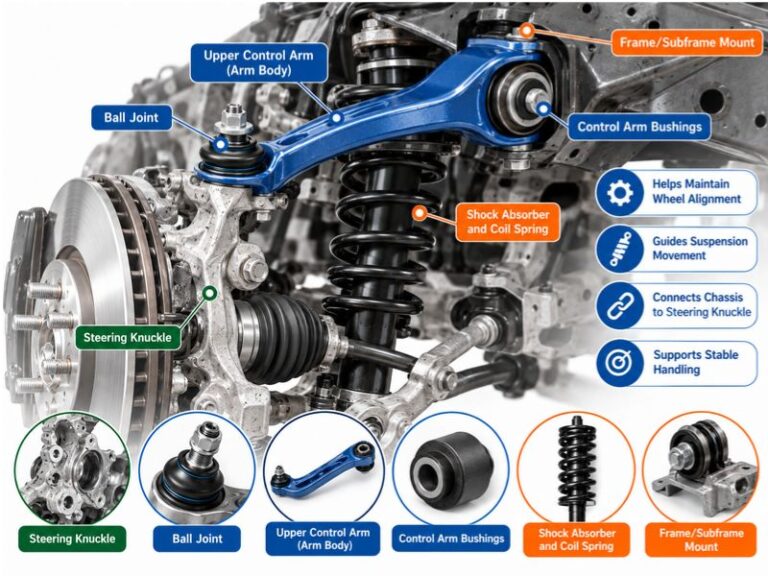
So, **do control arms come with ball joints** from the factory? In many vehicles, yes. A control arm may have a ball joint attached at its outer end where the arm connects to the steering knuckle. The inner end usually connects to the vehicle frame or subframe through rubber or hydraulic bushings.
However, vehicle makers use several suspension layouts. On one car, the ball joint may be pressed into the control arm. On another, it may bolt to the arm. Some designs place the ball joint in the steering knuckle instead.
This means there is no universal rule for every car, truck, or SUV. You must look at the suspension design for your exact year, make, model, drivetrain, and sometimes trim level.
The same is true when you buy replacement parts. One brand may sell a complete control arm with the joint installed, while another may offer the bare arm and ball joint separately.

- ✦ Complete control arm
Often includes the arm, bushings, and a preinstalled ball joint.
- ✦ Bare control arm
May include bushings but no ball joint.
- ✦ Serviceable ball joint design
Lets you remove and replace the joint without replacing the whole control arm.
- ✦ Integrated ball joint design
Uses a joint that is intended to remain part of the control arm assembly.
Why Vehicle Designs Differ
Automakers balance cost, weight, ride quality, strength, and ease of assembly when they design suspension parts. A replaceable joint may lower the cost of one repair. A complete integrated arm can simplify manufacturing and may make replacement more straightforward.
There is no single design that applies to every vehicle. That is why checking your exact application matters more than assuming all control arms are built the same way.
What Is a Control Arm and Where Does the Ball Joint Fit?
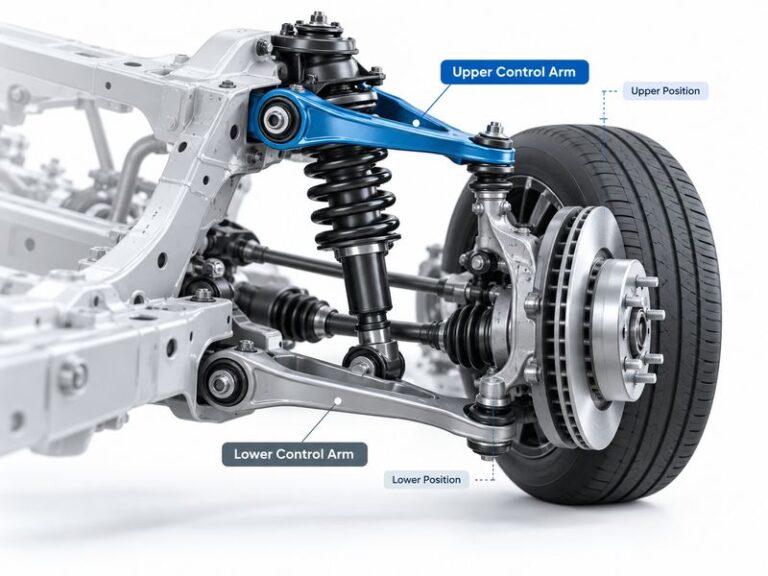
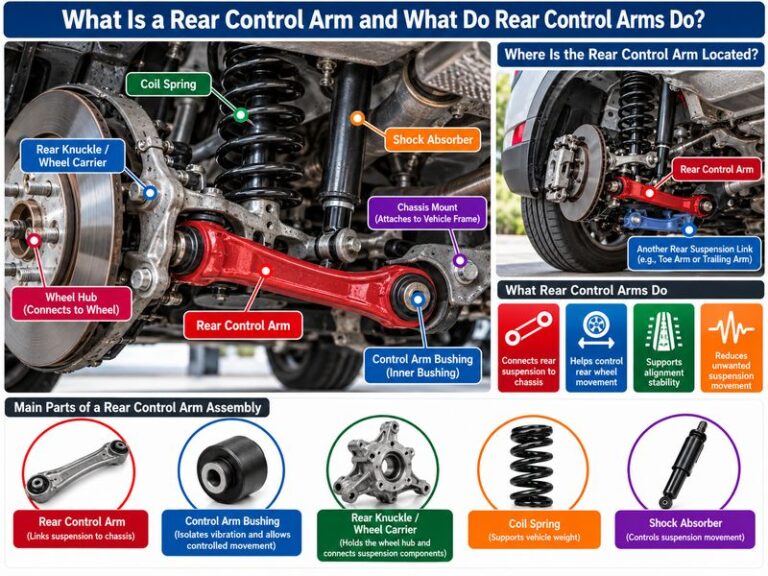
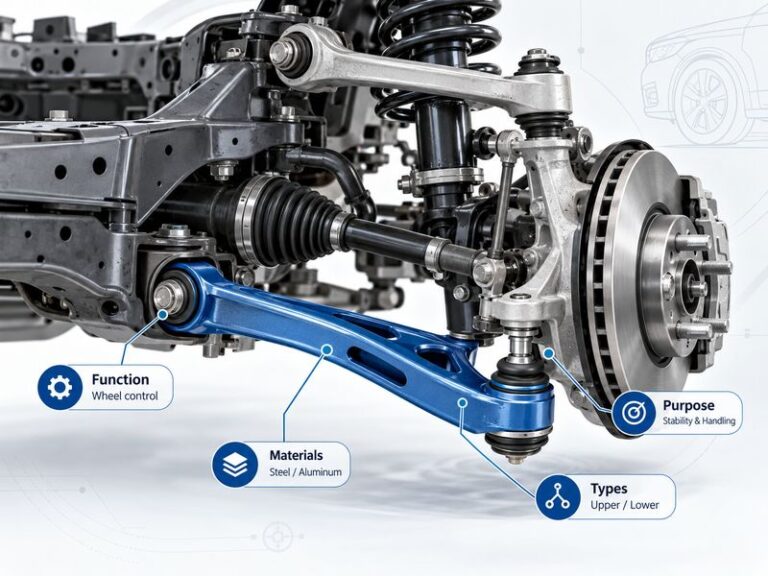
A control arm is a suspension link that helps hold the wheel in the correct position while allowing it to move up and down. Most control arms connect the chassis or subframe to the steering knuckle or wheel carrier.
The inner end of the arm normally uses one or more bushings. These bushings allow controlled movement and help isolate road noise and vibration.
The outer end may use a ball joint. The ball joint works like a flexible pivot. It lets the steering knuckle move with the suspension while also allowing the front wheels to turn.
This is why the control arm and ball joint often work as a closely related pair even when they are technically separate parts.

- ✦ Control arm
Guides wheel movement and helps maintain suspension geometry.
- ✦ Control arm bushings
Connect the inner arm to the frame or subframe while absorbing vibration.
- ✦ Ball joint
Creates a flexible pivot between the suspension arm and steering knuckle.
- ✦ Steering knuckle
Supports the wheel hub and connects several steering and suspension parts.
Why a Ball Joint Needs to Move in Several Directions
The wheel does more than move straight up and down. On a steering axle, it must also turn left and right. The ball joint allows these movements without letting the suspension connection separate.
A healthy ball joint should move smoothly while holding the wheel firmly. Too much looseness can affect steering feel, alignment, tire wear, and vehicle stability.
Why Some Control Arms Include Ball Joints and Others Do Not
When drivers ask **do control arms come with ball joints**, much of the confusion comes from the different ways suspension parts are sold. A replacement control arm can be a complete assembly or only one part of the assembly.
Complete assemblies are popular because they reduce the number of old wear parts that must be reused. A new arm may arrive with fresh bushings and a new ball joint already fitted.
Other control arms do not include the ball joint because the joint is designed as a separate service part. In that case, replacing the control arm does not always require replacing the ball joint.
There is also a third possibility. The ball joint may be mounted to the steering knuckle or another suspension link rather than being part of the control arm itself.

- ✦ Factory design
The suspension may use a separate or integrated ball joint.
- ✦ Aftermarket package
Parts companies may sell complete assemblies or individual components.
- ✦ Repair strategy
A complete assembly can make sense when the bushings and joint are both worn.
- ✦ Part availability
Some vehicles have more replacement options than others.
Press-In Ball Joints
Some ball joints are pressed into a control arm. A press or special service tool may be needed to remove the old joint and install the new one.
If the arm and bushings are still in good shape, replacing only the joint may be reasonable. If the arm has worn bushings too, replacing the whole assembly may avoid doing similar labor twice.
Bolt-On Ball Joints
A bolt-on joint uses bolts or other removable fasteners to attach to the control arm. These joints are often easier to replace separately than a pressed joint.
Even so, rust and age can make removal difficult. Always follow the repair procedure for the exact vehicle.
Integrated Ball Joints
Some newer control arms use ball joints that are treated as part of the assembly. In those cases, the normal repair is to replace the control arm rather than service the joint alone.
Parts catalogs often describe these products as a control arm and ball joint assembly. This wording is a strong clue that both pieces come together.
Do Upper Control Arms Come With Ball Joints?
Many replacement upper control arms do come with ball joints. This setup is especially common on trucks, SUVs, and vehicles with short-long-arm suspension designs.
An upper control arm assembly may include the arm, bushings, mounting hardware, and upper ball joint. However, the exact contents vary by manufacturer.
On some vehicles, the upper ball joint can be replaced on its own. On others, buying the full upper arm is the normal repair method.
If you are shopping online or at a U.S. auto parts store, read the listing carefully. Look for wording such as **with ball joint**, **ball joint included**, or **control arm and ball joint assembly**.

- ✦ Check the product photo
A visible ball joint at the outer end can help confirm what comes with the arm.
- ✦ Read the parts list
The listing should state whether the ball joint and bushings are included.
- ✦ Confirm vehicle fitment
Upper arm designs can change between model years or suspension packages.
Aftermarket Upper Control Arms
Aftermarket upper control arms are often sold as ready-to-install assemblies. This is convenient because the ball joint has already been fitted to the arm.
Lifted trucks and modified suspensions may use special upper control arms with different ball joint angles or geometry. In those cases, the replacement ball joint must match the specific arm design.
Do Lower Control Arms Come With Ball Joints?
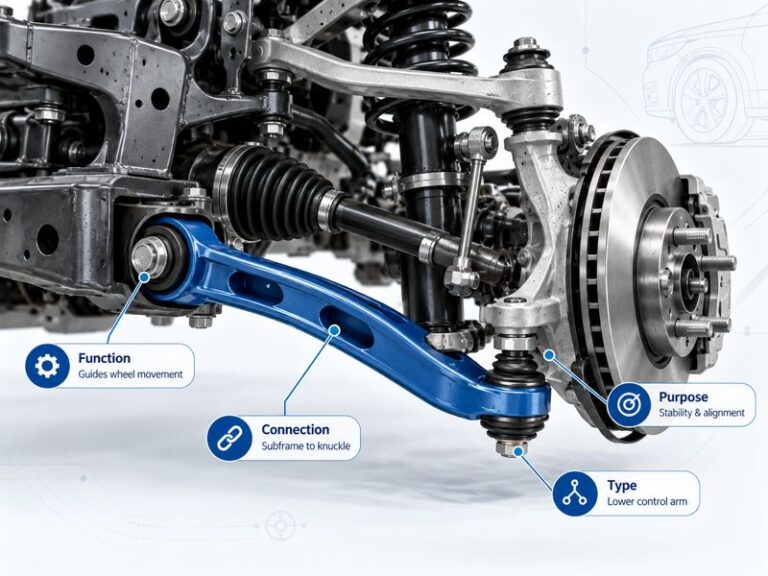
Many lower control arms also come with ball joints, but again, it depends on the vehicle and replacement part. A complete lower control arm assembly commonly includes the bushings and lower ball joint.
Lower ball joints handle important suspension loads on many vehicles. Because of their location close to the road, they also face water, dirt, salt, and constant suspension movement.
For vehicles driven in areas where winter road salt causes heavy corrosion, a complete replacement arm can sometimes be more practical than trying to separate old parts. This is common in many northern U.S. states where suspension fasteners and joints can become badly rusted.
If you are asking **do control arms come with ball joints** because you need a lower arm, do not assume the joint is included. Check the box contents before buying.

- ✦ Lower arm with joint
Often arrives as a complete assembly ready for installation.
- ✦ Lower arm without joint
May require you to reuse or separately purchase the ball joint.
- ✦ Separate lower joint
Can be available when the original suspension uses a serviceable design.
Why Complete Lower Arms Are Common
Lower control arm bushings and ball joints often wear during the same general period because they are exposed to many of the same miles and road conditions. Installing a complete assembly replaces several wear items at once.
It can also reduce pressing work. That benefit can make a complete arm attractive for a DIY repair or a shop job when labor time matters.
How to Tell If a New Control Arm Includes a Ball Joint
Never rely on the word **control arm** alone. Sellers use that term for several different packages. One listing may include a complete assembly while another may include only the arm and bushings.
The easiest method is to check the product description, photos, included-parts list, and manufacturer part number. If the listing says **with ball joint**, the joint should be part of the assembly.
Photos can help, but the written description should carry more weight. Some sellers use generic images that do not show the exact configuration for every application.
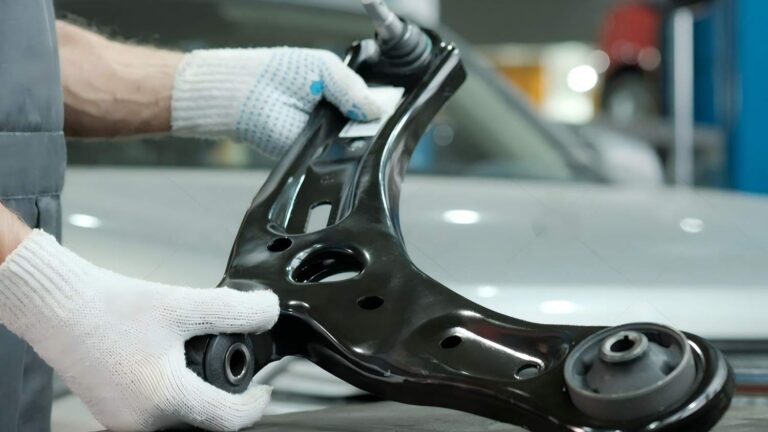
When buying locally, you can also inspect the part before leaving the store. The ball joint is normally located near the outer end of a control arm and has a stud that connects to the steering knuckle.

- ✦ Look for ‘with ball joint’
This is the clearest sign that the joint is included.
- ✦ Check the component list
Confirm whether the package includes bushings, ball joints, nuts, or other hardware.
- ✦ Match the part number
Use the manufacturer’s catalog to confirm the exact configuration.
- ✦ Verify left or right position
Some control arms are side-specific.
- ✦ Check upper or lower location
Upper and lower arms may use different joints and mounting designs.
- ✦ Confirm VIN-related options
Some models use different suspension parts based on engine, drivetrain, or suspension package.
What a Complete Control Arm Assembly Usually Includes
A typical complete assembly may include the metal or aluminum control arm, one or more inner bushings, and the outer ball joint. Some kits also include new nuts, bolts, cotter pins, or grease fittings.
Contents vary, so the word **complete** should still be checked against the actual parts list. Do not assume every mounting bolt or fastener is included.
Should You Buy a Control Arm With the Ball Joint Already Installed?
A control arm with a preinstalled ball joint can be a very practical choice. It reduces assembly work and gives you new components at both the inner and outer ends of the arm.
For many DIY repairs, this approach is easier because you may not need a ball joint press. You remove the old arm and install the new assembly after transferring or replacing any required hardware.
A complete assembly can also make sense when both the ball joint and control arm bushings show wear. Replacing only one worn item could mean taking the same suspension apart again later.
However, replacing the entire arm is not always necessary. If the arm and bushings are in excellent condition and the joint is easily serviceable, replacing only the ball joint can reduce parts cost.

- ✦ Less assembly work
The joint is already fitted to the control arm.
- ✦ New bushings
Complete assemblies often replace old control arm bushings at the same time.
- ✦ Fewer special tools
You may avoid pressing a new ball joint into the old arm.
- ✦ Higher parts cost
A complete control arm may cost more than a single replacement joint.
- ✦ More parts replaced
This can be useful when several components are worn but wasteful if the arm is still nearly new.
When a Complete Assembly Makes the Most Sense
A complete assembly often makes sense when the bushings are cracked, loose, oil-soaked, or separated and the ball joint is worn too. It may also be a better option when the old arm is bent or heavily corroded.
Another good reason is labor. If pressing the joint out takes significant time or special equipment, the price difference between a joint and complete arm may become less important.
When a Separate Ball Joint May Make More Sense
A separate ball joint may be reasonable when the control arm is sound and its bushings are still healthy. This is especially true if the vehicle was designed for easy ball joint service.
The decision should be based on the condition of the whole assembly rather than the failed joint alone.
Can You Replace the Ball Joint Without Replacing the Control Arm?
Sometimes you can. The answer depends on how the joint attaches to the arm. A bolted or serviceable press-in joint may be replaced separately.
An integrated joint may require replacement of the entire control arm. Trying to remove a joint from an arm that was not designed for separate service can damage the part and create a safety problem.
A factory repair manual or trusted vehicle-specific service guide can confirm the correct procedure. You can also check replacement catalogs to see whether a separate ball joint is listed for your vehicle.
If both a separate ball joint and a complete arm are available, inspect the bushings and arm condition before choosing the repair.
- ✦ Replace the joint only
Possible when the vehicle uses a serviceable ball joint and the arm is still sound.
- ✦ Replace the whole arm
Often required when the joint is integrated or the bushings are worn.
- ✦ Inspect before deciding
A joint-only repair makes less sense if other parts of the same arm are near the end of their life.
Can You Buy a Control Arm Without a Ball Joint?
Yes. Control arms without ball joints are widely available for vehicles that use separate joints or suspension designs where the joint is mounted elsewhere.
A bare replacement arm may still include the inner bushings. Other products may be closer to a true bare arm and require additional components before installation.
This is another reason the question **do control arms come with ball joints** cannot be answered only by looking at the name of the part. You need to know what the exact package includes.
If you already have a new ball joint or plan to use a specific premium joint, an arm without a joint may also give you more choice.
- ✦ Arm with bushings only
Common on designs where the joint is sold separately.
- ✦ Bare arm
May require both bushings and a ball joint before installation.
- ✦ Performance applications
Some specialty arms let the owner choose a particular joint or serviceable component.
How to Know Whether Your Ball Joint or Control Arm Is Bad
Control arm bushings and ball joints can create similar symptoms when they wear. Common signs include clunks, vague steering, uneven tire wear, and a vehicle that feels less stable over bumps.
A worn ball joint may develop play between its stud and socket. A bad control arm bushing may let the entire arm shift farther than it should.
Do not diagnose these parts from noise alone. Sway bar links, tie rod ends, strut mounts, wheel bearings, and other suspension parts can cause similar sounds.
Because a badly worn ball joint can become a serious safety concern, excessive looseness should be inspected promptly.
- ✦ Clunking over bumps
Movement in a joint or bushing can create a knock or clunk.
- ✦ Loose steering feel
Worn suspension joints may reduce steering precision.
- ✦ Uneven tire wear
Excess suspension movement can change wheel alignment while driving.
- ✦ Visible bushing damage
Cracks, separation, or excessive movement can point to a worn control arm bushing.
- ✦ Ball joint play
Movement beyond the vehicle maker’s allowed limit may mean the joint needs replacement.
Do Not Judge a Ball Joint by the Dust Boot Alone
A torn dust boot can let dirt and water enter the joint, but the boot itself does not tell you the full condition of the joint. The joint must be checked for wear using the correct procedure for that suspension.
Some suspension designs must be loaded during inspection, while others are checked with the wheel unloaded. Using the wrong method can lead to a poor diagnosis.
Do You Need an Alignment After Replacing a Control Arm or Ball Joint?
A wheel alignment is often a smart step after control arm replacement. The control arm plays a direct role in locating the wheel, so replacing it can affect alignment angles.
Some vehicles also use control arm mounting points for camber or caster adjustment. Moving those fasteners can change the wheel position.
Ball joint replacement may also affect geometry, especially if the joint position or control arm position changes during the repair. Even small changes can affect tire wear or steering feel.
After suspension work, watch for an off-center steering wheel, pulling, or unusual tire wear. A professional alignment can verify that the wheels meet the vehicle specifications.
- ✦ Protect tire life
Correct alignment helps prevent rapid or uneven tread wear.
- ✦ Restore steering feel
Proper wheel angles help the vehicle track and steer as designed.
- ✦ Confirm repair results
Alignment measurements can help reveal remaining suspension problems.
Should Control Arms and Ball Joints Be Replaced in Pairs?
Control arms do not always have to be replaced in pairs. If only one arm is damaged and the other side is in good condition, replacing the failed side may be enough.
Still, both sides usually have similar mileage and road exposure. If one side has severe bushing or ball joint wear, inspecting the opposite side is important.
Replacing both sides can make sense when both assemblies show similar wear. It may also help keep suspension response more consistent from left to right.
The best approach is based on inspection, not a blanket rule. Do not replace a good part only because another part on the opposite side failed.
- ✦ Inspect both sides
Similar mileage does not always mean identical wear, but both sides deserve inspection.
- ✦ Replace both when both are worn
This can prevent another suspension repair soon after the first.
- ✦ One-side replacement is possible
A damaged arm can often be replaced alone when the opposite side remains healthy.
What to Check Before Buying a Control Arm With a Ball Joint
Before you place an order, verify more than just the vehicle name. Suspension designs can vary within the same model line, especially between two-wheel drive, four-wheel drive, sport packages, and different production years.
Use the VIN when a parts catalog supports it. VIN-based lookup can reduce the chance of buying a component for the wrong suspension configuration.
Also compare the new part with the old one before installation. Mounting points, bushing sizes, arm shape, ball joint stud design, and sensor brackets should match.
Finally, pay attention to part quality. A control arm is a structural suspension component. Choose parts from a known supplier that clearly lists vehicle fitment and warranty information.
- ✦ Year, make, and model
Start with the basic vehicle identification.
- ✦ Engine and drivetrain
Suspension components may differ between drivetrain or powertrain options.
- ✦ Upper or lower position
Confirm which control arm you need.
- ✦ Driver or passenger side
Many arms are not interchangeable from side to side.
- ✦ Ball joint included
Confirm this in the written product description.
- ✦ Bushings included
A complete-looking arm may not always include every bushing.
- ✦ Hardware included
Check whether nuts, bolts, cotter pins, or grease fittings are supplied.
- ✦ Suspension option
Heavy-duty, sport, lifted, or off-road packages may use different parts.
A Practical Buying Example
Suppose two listings both say they fit your SUV. One is labeled **lower control arm**, while the other says **lower control arm with ball joint**. The first may require you to buy a joint separately, while the second may arrive ready to connect to the steering knuckle.
The cheaper listing is not automatically the better deal. Add the cost of the missing joint, possible pressing work, and any extra labor before comparing the true repair cost.
Common Mistakes When Buying Control Arms and Ball Joints
A common mistake is assuming every replacement control arm includes everything visible on the original part. That assumption can cause problems once the vehicle is already apart.
Another mistake is choosing parts only by price. A lower price may reflect a different package rather than a better deal.
It is also easy to order the correct type of arm for the wrong side or suspension option. Taking a few minutes to verify all details before ordering can prevent delays.
When people ask **do control arms come with ball joints**, the safest buying rule is simple: never assume. Confirm exactly what is included.
- ✦ Assuming the ball joint is included
Read the listing before ordering.
- ✦ Ignoring bushing condition
A new ball joint does not fix worn control arm bushings.
- ✦ Buying the wrong side
Driver and passenger arms may have different shapes.
- ✦ Skipping suspension option checks
The same model can use different arms depending on its factory equipment.
- ✦ Forgetting alignment
Suspension replacement can change wheel geometry.
Control Arm With Ball Joint vs Separate Ball Joint
Neither option is automatically better. The right choice depends on the vehicle design, condition of the old arm, labor involved, and parts available.
A complete control arm with a ball joint is often simpler to install. It also gives you fresh bushings when those are included in the assembly.
A separate ball joint may cost less when the rest of the arm is still in good shape. It can be an efficient repair on vehicles designed for easy joint replacement.
When comparing the two options, consider the total job rather than the price of one component.
- ✦ Complete assembly
Best suited to worn bushings, damaged arms, integrated joints, or repairs where installation time matters.
- ✦ Separate ball joint
Can make sense when the arm is healthy and the joint is designed for separate service.
- ✦ Total repair cost
Include parts, tools, labor, alignment, and the condition of related components.