How Many Shocks Does a Car Have? A Complete Guide
If you ask, “how many shocks does a car have,” the simple answer is usually four. Most passenger cars have one suspension damper at each wheel. These units help control the motion of the springs after the car hits a bump, dips into a pothole, or takes a turn.
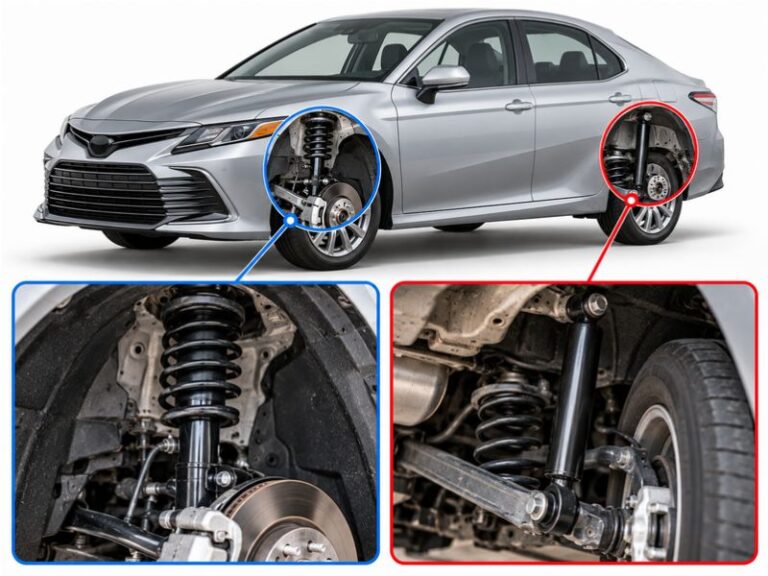
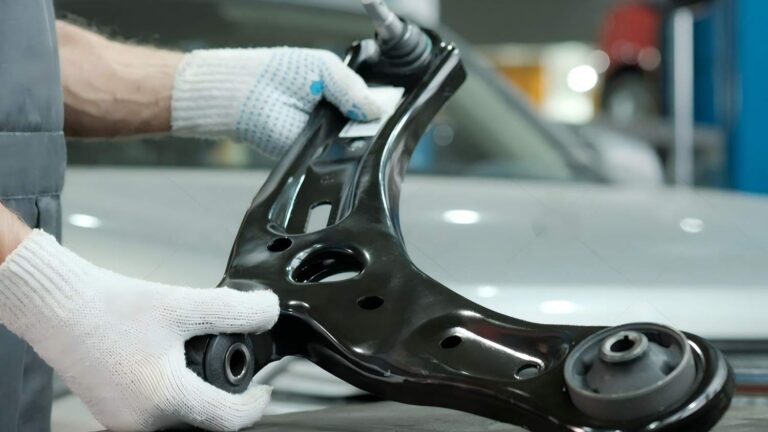
The term “shock” can cause some confusion. A car may use traditional shock absorbers, MacPherson struts, or a mix of both. A strut does more than a basic shock because it also forms part of the suspension structure. So, a car can have four shock-and-strut units without having four traditional shocks.
In real-world maintenance, I would never count shocks by looking at the body alone. The best way to answer how many shocks a car has is to check the suspension layout for that exact year, make, model, and trim. This matters when you order parts or plan a repair.

How Many Shocks Does a Car Have?
For most modern passenger cars, the answer to how many shocks does a car have is four suspension dampers. There is normally one at each corner of the vehicle. These four units help control the movement of the springs and keep the tires planted on the road.
However, not every vehicle uses four traditional shock absorbers. Some cars use four struts, while others use two front struts and two rear shocks. Trucks, SUVs, sports cars, and older vehicles can use different suspension layouts.
The key point is that each wheel position usually needs a way to control spring movement. That device may be called a shock absorber, strut, damper, or another suspension unit.
- ✦ Typical passenger car
Many passenger cars have four suspension dampers, one at each wheel.
- ✦ Front struts and rear shocks
A common layout uses two front struts and two rear shock absorbers.
- ✦ Four struts
Some vehicles use strut assemblies at all four corners.
- ✦ Special suspension
Performance cars, trucks, and vehicles with advanced suspension can use other designs.
Why Are There Usually Four?
A car has four wheel positions, and each wheel needs controlled suspension movement. A damper at each corner helps keep body motion under control. It also helps the tire maintain contact with the road.
Four dampers let the suspension react to bumps and dips at each corner. This helps the car stay more stable during braking, turning, and acceleration.
- ✦ Road contact
The suspension helps the tires stay in contact with the road surface.
- ✦ Body control
Dampers reduce excess bouncing, rocking, and pitching.
Can a Car Have More or Fewer Than Four?
Yes, depending on the vehicle and its suspension design. A standard four-wheel passenger vehicle will usually have four main damper units, but specialty vehicles can use more complex systems.
Some suspension systems also combine several functions into one assembly. This is why counting visible parts does not always give a reliable answer to how many shocks a car has.
- ✦ Four is common
Four suspension damper units are common on cars and light trucks.
- ✦ Design matters
The exact number and type depend on the vehicle’s suspension system.
Where Are the Shocks on a Car?
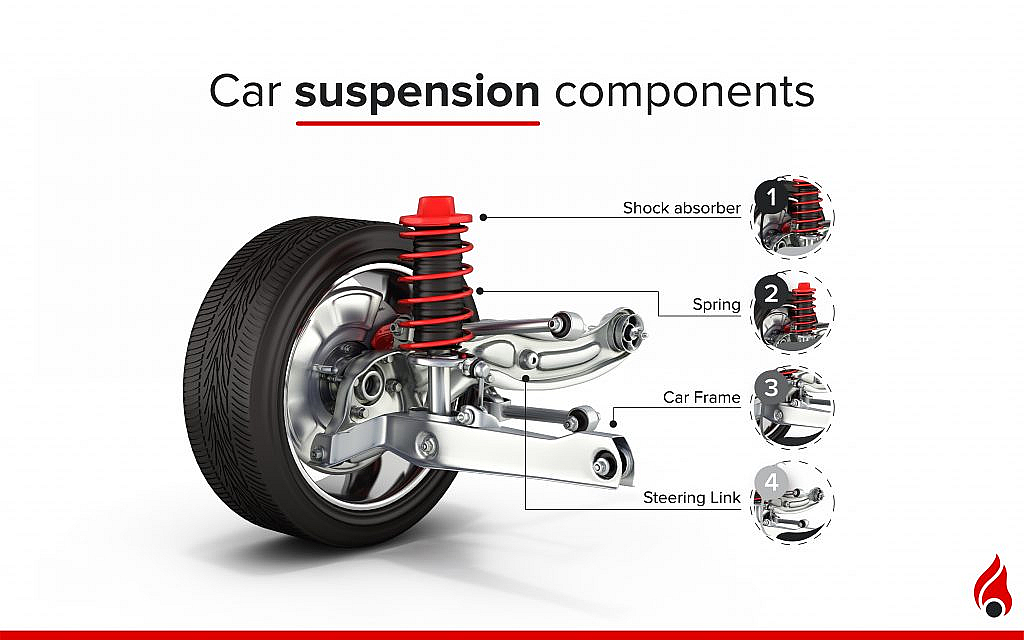
Shocks are mounted as part of the suspension near the wheels. Their exact position depends on the vehicle. On some cars, the shock sits inside a spring. On others, the shock is mounted beside the spring.
A traditional shock absorber mainly controls suspension movement. A strut can also support suspension parts and help locate the wheel assembly. This difference is important when you inspect or replace suspension parts.
- ✦ Front suspension
The front of the car may use shocks, struts, or another damper design.
- ✦ Rear suspension
The rear may use separate shocks and springs or a different combined assembly.
- ✦ One at each corner
Most conventional layouts use one main damper at each wheel position.
Front Shocks and Struts
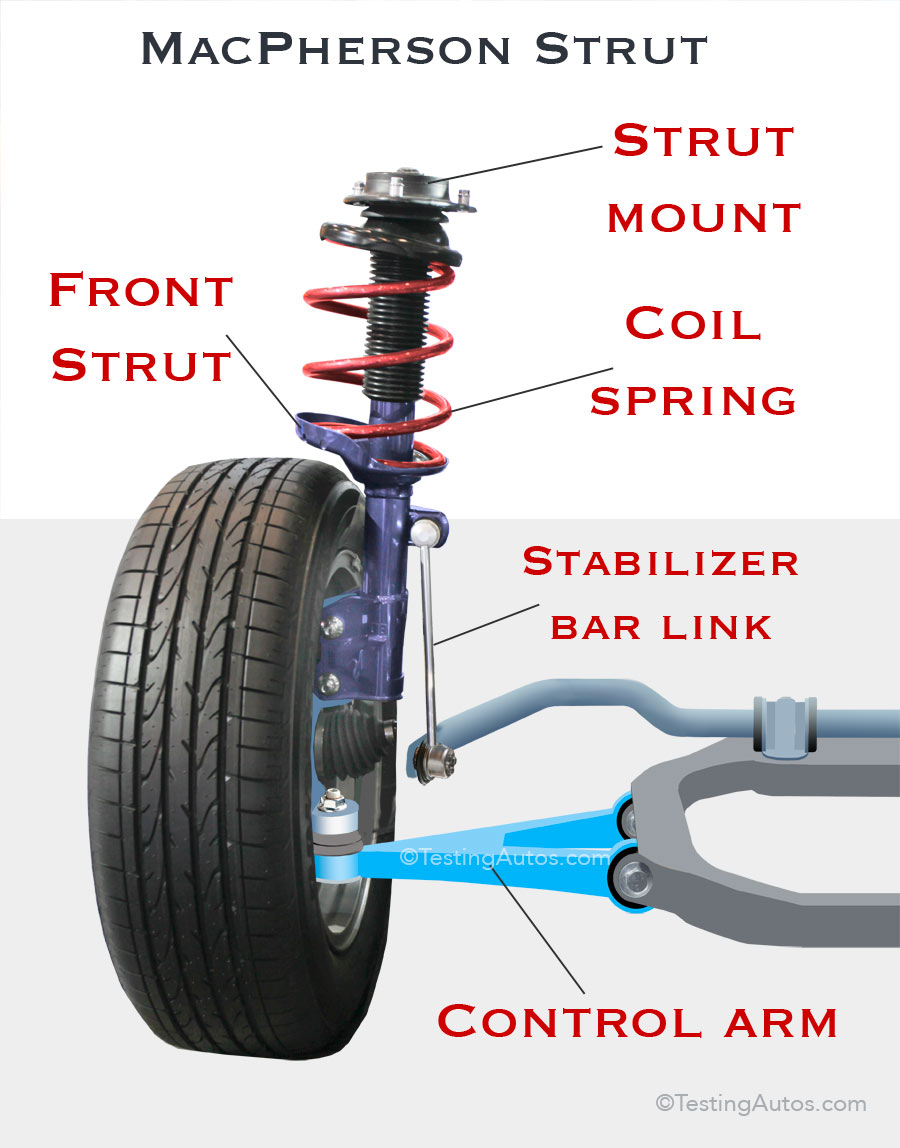
Many cars use MacPherson struts on the front axle. The strut works with the spring and other suspension parts. It also plays a structural role in the front suspension.
Because of this design, calling every front strut a simple shock can be misleading. The strut contains a damping unit, but the complete assembly does more work than a basic shock absorber.
- ✦ Strut role
A strut can provide damping and also support or locate suspension components.
- ✦ Inspection
A worn strut can affect ride quality, steering feel, and tire contact.
Rear Shocks
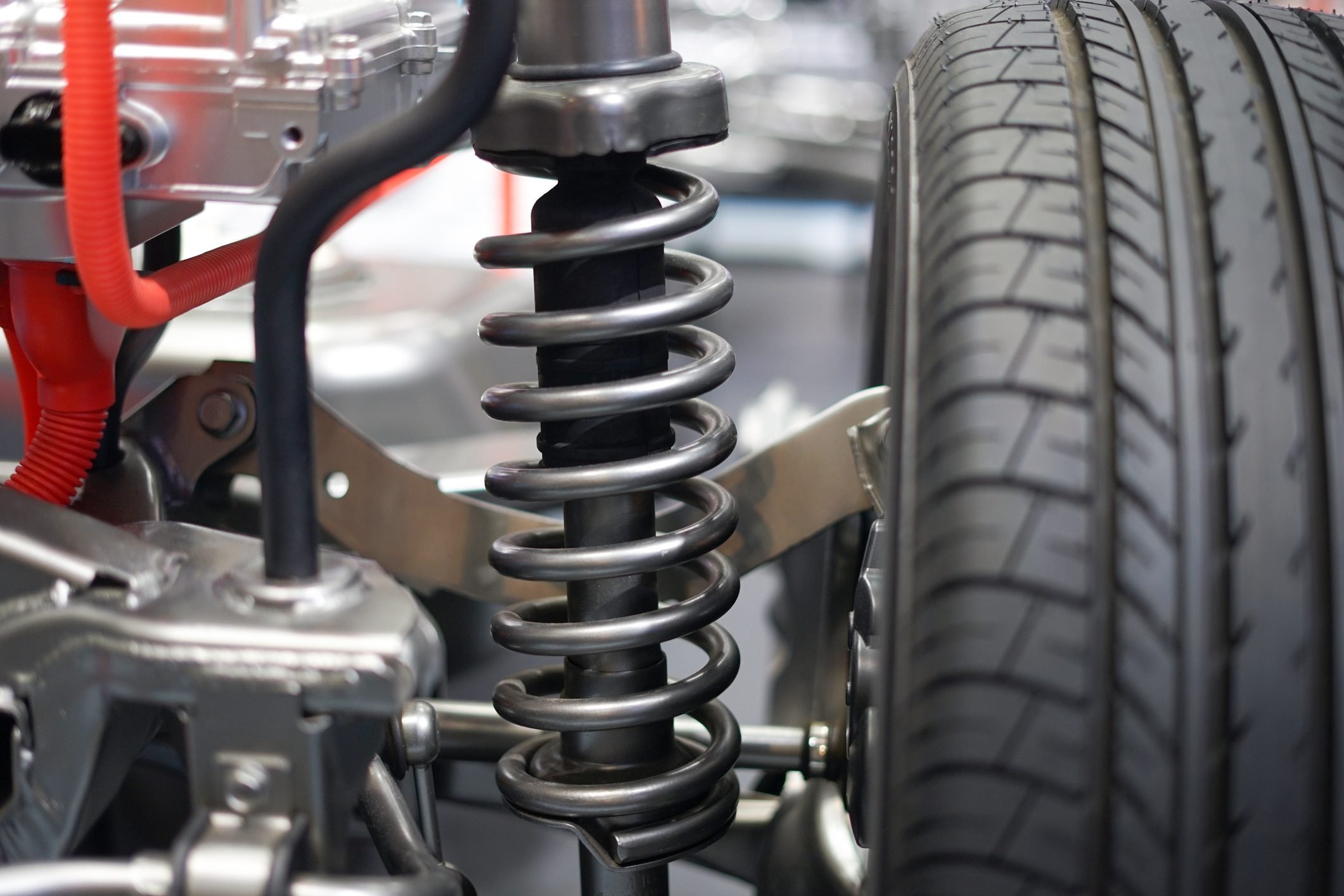
Rear suspension often uses a separate spring and shock. The spring supports the vehicle’s weight, while the shock controls spring movement.
The rear shock may look simpler than a front strut. It still plays an important role in keeping the vehicle stable and comfortable.
- ✦ Separate parts
Many rear systems have a coil or leaf spring separate from the shock absorber.
- ✦ Load control
The rear suspension must control movement as passengers, cargo, and road forces change.
Shocks vs. Struts: What Is the Difference?
A shock absorber and a strut both help control suspension movement, but they are not the same part. A basic shock is mainly a damping device. A strut combines damping with a larger structural role in the suspension.
This difference explains why the answer to how many shocks does a car have can be confusing. A car may have four suspension dampers but only two parts that are commonly called shocks.
When buying parts, use the exact vehicle information rather than assuming that every corner uses the same type of unit.
- ✦ Shock absorber
A shock mainly controls the speed and amount of suspension movement.
- ✦ Strut
A strut provides damping and can also serve as a key structural part of the suspension.
- ✦ Replacement parts
The correct replacement depends on the vehicle’s suspension design.
Why the Terms Get Mixed Up
People often use the word shocks to describe all suspension dampers. Shops and parts sellers may use the more exact terms shock absorber and strut. Both help control the motion of the vehicle, but their construction and role differ.
This is why a search for how many shocks does a car have may return answers that seem different. One source may count all dampers, while another may count only traditional shock absorbers.
- ✦ Everyday language
Drivers often call all dampers shocks.
- ✦ Technical language
Suspension professionals separate shocks, struts, and complete strut assemblies.
What Do Shock Absorbers Do?
A shock absorber does not mainly hold the car up. The springs support the vehicle’s weight. The shock controls how quickly those springs move after the suspension is compressed or extended.
Without enough damping, a car can keep bouncing after a bump. Too much damping can make the ride harsh and can limit the suspension’s ability to react smoothly to rough roads.
Good shocks help control body motion during braking, acceleration, and cornering. They also help the tires stay in useful contact with the road.

- ✦ Controls bouncing
The shock slows repeated spring movement after a bump.
- ✦ Improves stability
Controlled suspension movement helps the car feel more stable in turns and during lane changes.
- ✦ Supports tire contact
Proper damping helps the tires follow changes in the road surface.
- ✦ Helps ride comfort
A working suspension damper can reduce harsh and repeated body movement.
How a Shock Absorber Works
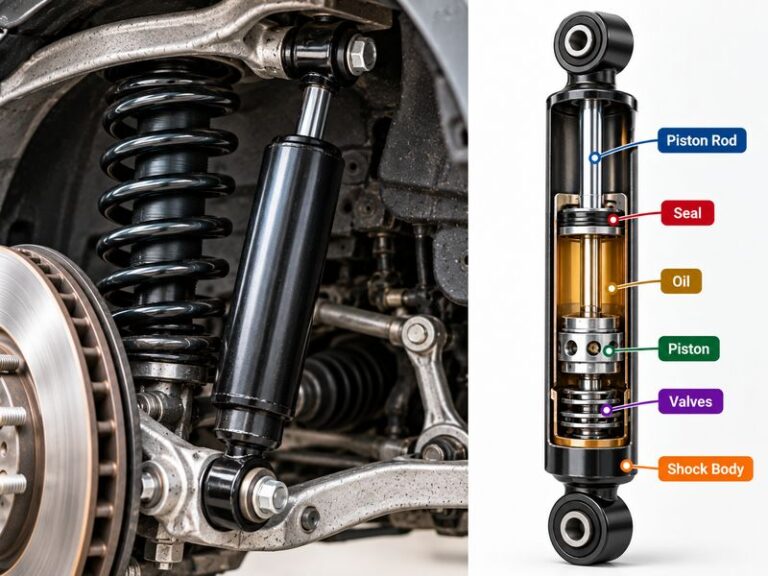
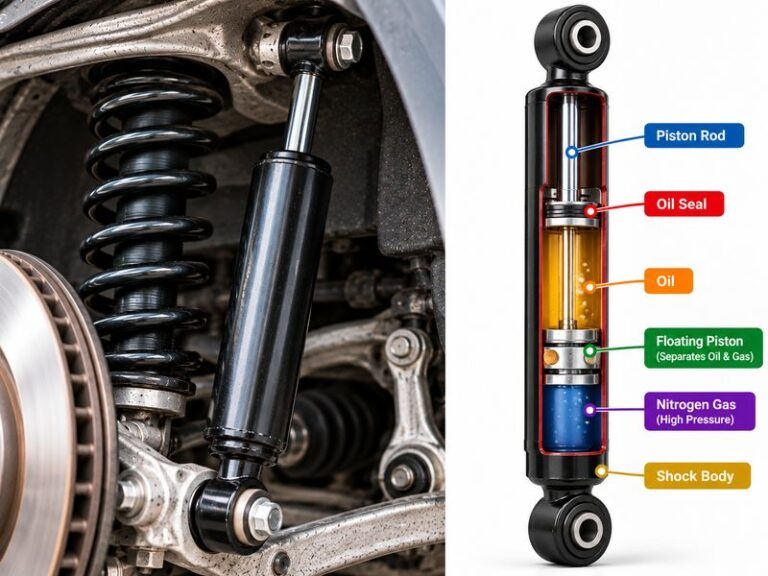
Inside a typical hydraulic shock is a piston that moves through fluid. Small passages and valves resist that movement. This turns some of the suspension’s motion into heat and slows the spring’s movement.
The shock works as the wheel moves up and down. It does not stop every bump. Instead, it helps prevent the spring from continuing to bounce after the initial movement.
- ✦ Piston movement
A piston moves through fluid as the suspension moves.
- ✦ Fluid resistance
Valves and fluid flow create resistance that controls suspension motion.
Signs Your Car’s Shocks May Be Worn
Knowing how many shocks does a car have is useful, but knowing when they need attention matters more. Shocks wear as the car travels over bumps, rough pavement, and uneven roads. Their condition can also change with vehicle age, mileage, load, and driving conditions.
A worn shock may not fail in one dramatic moment. Performance can decline slowly. Drivers often get used to a softer, bouncier ride and may not notice the change at first.
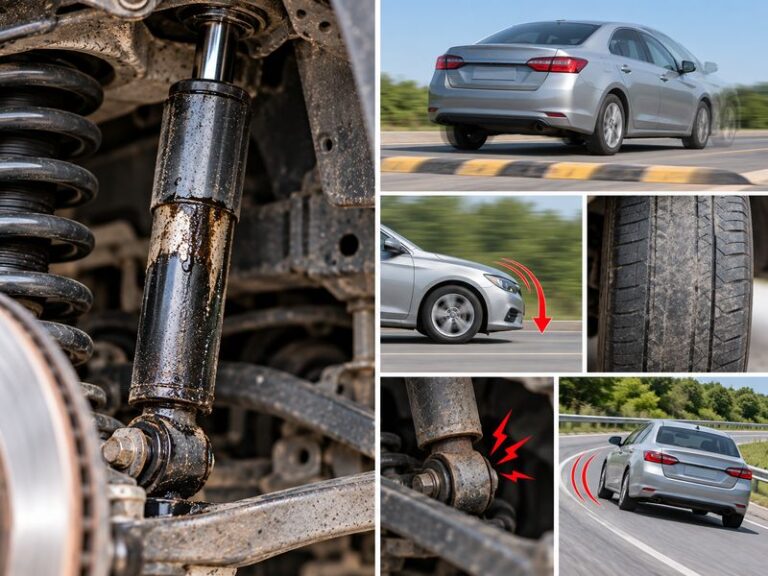
- ✦ Excess bouncing
The car keeps moving up and down after passing over a bump.
- ✦ Nose diving
The front of the vehicle drops more than normal during hard braking.
- ✦ Body roll
The vehicle leans more than expected during turns.
- ✦ Uneven tire wear
Poor suspension control can contribute to irregular tire wear.
- ✦ Fluid leaks
Visible fluid around a shock can indicate a damaged or leaking unit.
- ✦ Poor ride control
The vehicle may feel less settled after bumps or during quick direction changes.
When to Have the Suspension Checked
Have the suspension inspected if you notice repeated bouncing, unusual tire wear, fluid leakage, or a major change in handling. A check is also wise after a hard pothole hit or other strong impact.
There is no single replacement interval that fits every vehicle. Follow the maintenance guidance for your car and have the suspension checked when symptoms appear.
- ✦ After a hard impact
A deep pothole or crash can damage a shock, strut, mount, spring, or other suspension part.
- ✦ With tire problems
Uneven or unusual tire wear can be a reason to inspect the suspension.
Should You Replace One Shock or All Four?
If one shock is worn, the best repair plan depends on the vehicle and the condition of the other units. Shocks on the same axle often work as a pair, so many repair professionals recommend replacing both on that axle when one has failed or become badly worn.
Replacing only one unit can leave different damping performance from side to side. That does not mean every shock must always be replaced at the same time. A technician should consider the vehicle’s age, mileage, suspension condition, and service history.
When the vehicle has significant wear at several corners, replacing a complete set may provide more consistent suspension performance. Check the vehicle maker’s guidance before choosing parts.

- ✦ Same axle
Replacing shocks in pairs on the same axle can help keep damping more consistent from left to right.
- ✦ Complete set
Replacing all four can make sense when all units have similar age and wear.
- ✦ Inspect related parts
Mounts, bushings, springs, bump stops, and tires may also need inspection.
Why Matching Matters
Suspension parts work together. If one side has a new damper and the other side has a badly worn unit, the two sides may not respond in the same way.
A matched pair on an axle can provide more even damping. The correct approach still depends on the vehicle and the actual condition of its parts.
- ✦ Balanced response
Matching suspension dampers can help keep left and right suspension response more consistent.
- ✦ Vehicle-specific plan
Use the manufacturer’s repair guidance and a proper inspection to decide what to replace.
How Long Do Car Shocks Last?
There is no universal mileage number that tells you exactly when every shock must be replaced. Shock life depends on road quality, vehicle weight, driving style, climate, cargo use, and the design of the suspension.
A car driven mostly on smooth highways may put less stress on its suspension than one that travels daily on rough city streets. Heavy loads, towing, repeated pothole impacts, and severe road conditions can also increase wear.
Instead of relying only on mileage, pay attention to changes in ride and handling. Regular suspension inspections can help find wear before it becomes a larger problem.
- ✦ Road conditions
Potholes, broken pavement, and rough roads can increase suspension stress.
- ✦ Vehicle load
Frequent heavy loads or towing can place extra demands on suspension parts.
- ✦ Driving style
Hard impacts and aggressive driving can increase wear.
- ✦ Maintenance
Regular inspections can help spot leaks, damage, and related suspension problems.
Why Mileage Alone Is Not Enough
Two cars with the same mileage can have very different suspension conditions. One may have spent most of its life on smooth roads, while the other may have faced rough pavement every day.
For that reason, mileage should be treated as a maintenance clue rather than a guaranteed replacement point. Symptoms and inspection results give a better picture of actual condition.
- ✦ Same mileage, different wear
Driving conditions can cause two vehicles with the same mileage to have different shock life.
- ✦ Inspect first
A physical inspection can help confirm whether replacement is needed.
How to Check How Many Shocks Your Car Has
If you need an exact answer for your own vehicle, start with the owner’s manual or a vehicle-specific parts catalog. You can also ask a repair shop to identify the suspension layout. This avoids confusion between shocks, struts, and complete assemblies.
Look at the front and rear suspension only if you know how to do so safely. Do not crawl under a vehicle that is supported only by a jack. A proper lift and safe support equipment are required for under-car inspection.

- ✦ Check the manual
The owner’s manual can help identify the suspension system and service parts.
- ✦ Use exact vehicle details
Year, make, model, engine, drivetrain, and trim can affect suspension parts.
- ✦ Ask a technician
A qualified technician can identify the suspension layout and inspect its condition.
- ✦ Do not rely on appearance alone
A visible suspension part may be part of a larger strut or suspension assembly.
What Information Do You Need for Parts?
When ordering shocks or struts, use the full vehicle information. A parts catalog may separate vehicles by model year, engine, drivetrain, trim, or suspension package.
For some cars, optional suspension systems can change the correct part. Confirm the part number before ordering.
- ✦ Model year
The model year helps narrow the correct suspension design.
- ✦ Make and model
Different models use different suspension systems.
- ✦ Trim and options
Special suspension packages can change the correct replacement part.
What Happens If You Drive With Bad Shocks?
Worn shocks can make a car feel less controlled. The vehicle may bounce more after bumps, lean more in turns, or dip more during braking. These changes can make the car harder to control in some driving conditions.
Poor damping can also affect tire contact with the road. When the wheel moves too much, the tire may not follow uneven pavement as well as it should.
Bad shocks should not be ignored when symptoms are clear. A suspension inspection can determine whether the shock is the problem or whether another part, such as a spring, mount, bushing, or tire, is involved.
- ✦ More body movement
The vehicle may bounce, pitch, or roll more than it did when the suspension was healthy.
- ✦ Handling changes
The car can feel less settled during turns, braking, or quick lane changes.
- ✦ Tire wear
Suspension problems can contribute to irregular tire wear.
- ✦ Less comfort
The ride can become rough, floaty, or unsettled.