Can Control Arms Cause Vibration? Symptoms, Causes and Fixes
If you are asking **can control arms cause vibration**, the answer is yes, but the control arm itself is often not the only part involved. The vibration usually starts when a control arm bushing, ball joint, mounting point, or the arm itself becomes worn or damaged. That extra movement lets the wheel shift in ways the suspension was not designed to allow.
In real-world diagnosis, the key is to look at when the vibration happens. A shake during braking can point toward worn control arm bushings, while vibration at one highway speed may be more likely to come from a tire or wheel problem. A clunk over bumps, wandering steering, uneven tire wear, or movement during acceleration makes the control arm more suspicious.
For drivers in the United States, potholes, rough city streets, road salt, curb impacts, and high mileage can all speed up suspension wear. This guide explains how control arms create vibration, what the vibration may feel like, how to separate control arm problems from other common causes, and what to do if you find worn parts.
Can Control Arms Cause Vibration While Driving?
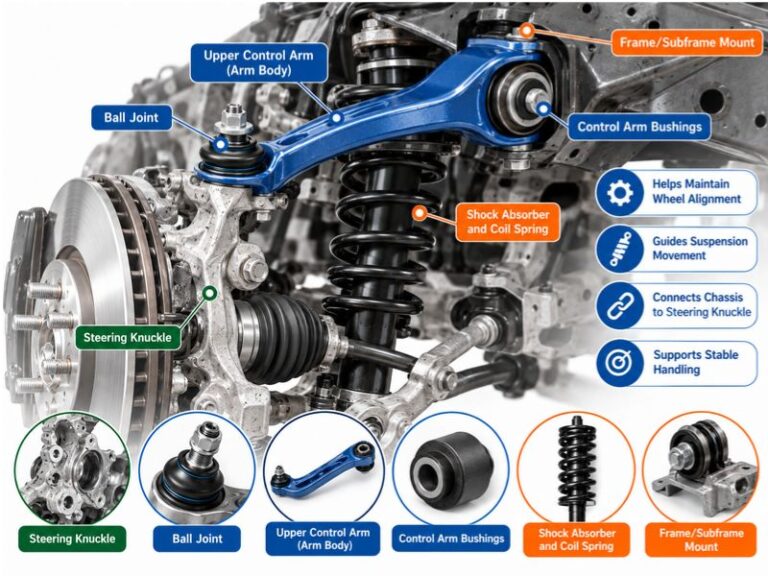
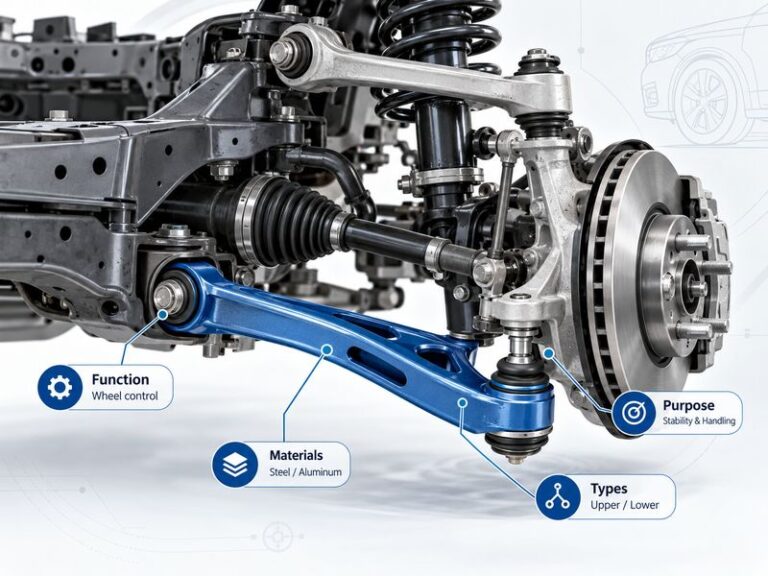
Yes, **control arms can cause vibration** if they no longer hold the wheel in a stable position. The control arm connects the wheel assembly to the vehicle frame or subframe. Bushings and ball joints at its mounting points allow normal suspension movement while limiting unwanted motion.
When those parts wear out, the wheel can shift forward, backward, inward, or outward under load. Even a small amount of movement can change wheel alignment while you drive. That change may create shaking, steering wheel vibration, or a loose feeling in the front end.
The vibration may not stay constant. It can appear only while braking, turning, accelerating, or driving over broken pavement. That changing pattern is one reason a bad control arm can be confused with tires, brakes, wheel bearings, or steering parts.
If someone asks **can control arms cause vibration at highway speeds**, the answer is also yes. However, a vibration that occurs only at a narrow speed range is more commonly linked to wheel balance, tire defects, or a bent wheel. Control arm wear becomes more likely when vibration appears with other suspension symptoms.

- ✦ Wheel movement
Worn bushings or joints can let the wheel move beyond its intended path.
- ✦ Changing alignment
A loose control arm can change toe, caster, or camber as suspension loads change.
- ✦ Road feedback
Excess suspension movement can send vibration through the steering wheel, floor, or seat.
- ✦ Intermittent symptoms
The vibration may appear only when braking, accelerating, turning, or hitting bumps.
Why Control Arms Matter to Vehicle Stability
A control arm does more than connect suspension parts. It helps keep the wheel located in a precise position while still allowing it to move up and down. That position must stay controlled during braking, cornering, and acceleration.
If the mounting points become loose, the tire can change direction slightly without a matching steering input. The driver may feel that movement as vibration, wandering, pulling, or an unstable front end.
- ✦ Keeps the wheel located
The arm limits unwanted front-to-back and side-to-side wheel movement.
- ✦ Supports alignment
Control arm geometry helps maintain proper wheel angles.
- ✦ Handles road forces
It carries loads created by bumps, braking, turning, and acceleration.
How a Bad Control Arm Causes Vibration
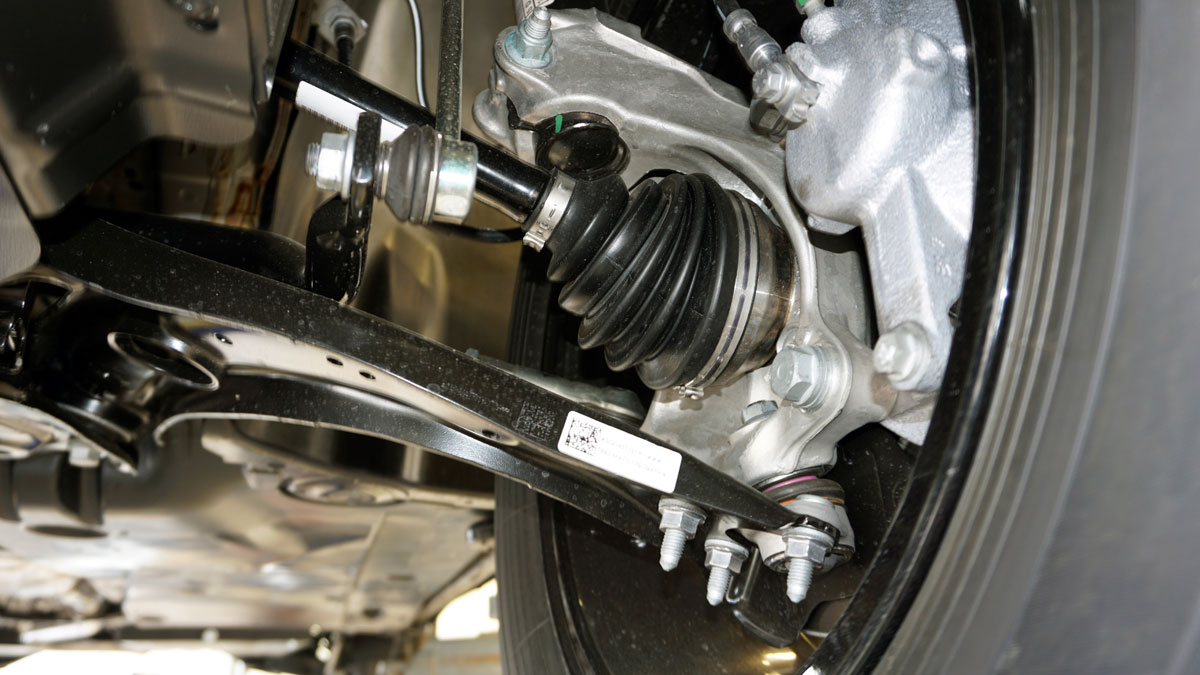
Understanding **can control arms cause vibration** starts with the way the suspension carries loads. The arm itself is usually solid. Most vibration comes from wear at the points where the arm attaches to the chassis or steering knuckle.
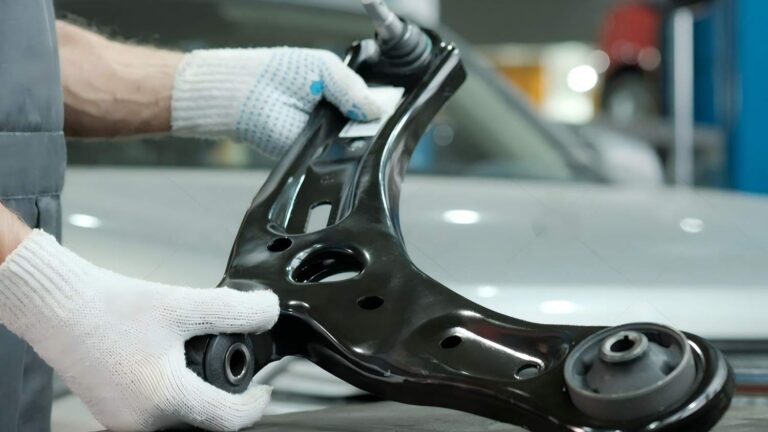
Control arm bushings use rubber or similar material to absorb noise and small impacts. As the rubber cracks, separates, or softens, the arm gains extra movement. The wheel can then shift when road or braking forces push against it.
Many control arms also use a ball joint at the outer end. A worn ball joint develops free play. This can allow the steering knuckle and wheel to move in ways that produce shaking, clunking, poor tracking, and uneven tire wear.
A bent arm can cause problems even if the bushings still look acceptable. A pothole, collision, curb strike, or severe impact can alter suspension geometry. That may cause misalignment and vibration that remains until the damaged component is corrected.
- ✦ Worn bushings
Soft, torn, or separated bushings allow the control arm to move under load.
- ✦ Loose ball joint
Ball joint play can let the wheel and steering knuckle move excessively.
- ✦ Bent control arm
A bent arm can change suspension geometry and create alignment problems.
- ✦ Loose mounting hardware
Loose bolts or damaged mounting points can create movement and vibration.
Can Control Arm Bushings Cause Vibration?
Yes. Worn control arm bushings are one of the main ways a control arm assembly can create vibration. A good bushing holds the arm firmly while still allowing controlled movement.
When the rubber tears or separates from its sleeve, the control arm may shift during braking and acceleration. The driver may feel a shake in the steering wheel, a thud through the floor, or a brief steering change.
- ✦ Cracked rubber
Surface cracking may be normal with age, but deep cracks and separation can allow excess movement.
- ✦ Bushing separation
The rubber may pull away from the inner or outer sleeve.
- ✦ Fluid leakage
Some vehicles use hydraulic bushings that can leak when they fail.
Can a Bad Ball Joint Cause Vibration?
A worn ball joint can also cause vibration because it connects the control arm to the steering knuckle on many suspension designs. Excess play lets the wheel move instead of staying tightly controlled.
Ball joint wear often causes more than vibration. You may also hear clunks, notice loose steering, see uneven tire wear, or feel the vehicle wander. Severe ball joint wear can become a safety issue because the joint is a key structural connection.
- ✦ Steering looseness
The vehicle may feel less precise or require frequent steering corrections.
- ✦ Clunking
A worn joint may make noise over bumps or during steering changes.
- ✦ Uneven tire wear
Wheel movement can alter alignment and wear the tire unevenly.
What Does Control Arm Vibration Feel Like?
Control arm vibration can feel different from one vehicle to another. Some drivers notice a light shake in the steering wheel. Others feel a heavy shudder through the floor, pedals, or front seat.
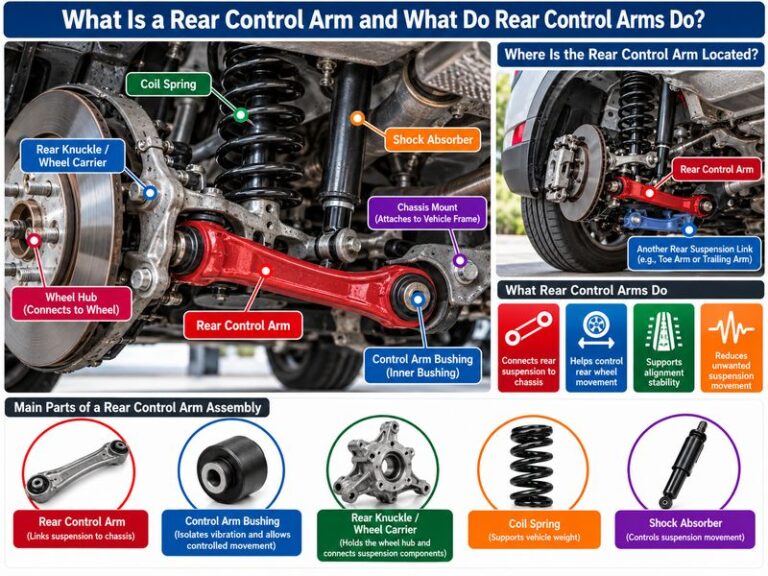
The location of the worn part matters. Front control arm problems often affect steering feel because they influence the front wheels directly. Rear control arm wear may feel more like body movement, rear-end wandering, or vibration through the seat.
A key clue is that control arm vibration often changes when vehicle load changes. The shake may get stronger when you brake, accelerate, enter a turn, or cross a rough section of pavement.
That behavior is important when deciding **can control arms cause vibration** in a specific case. A wheel balance problem often tracks closely with speed. A loose suspension part often reacts more strongly to changes in force.

- ✦ Steering wheel shake
The steering wheel may tremble as the affected wheel moves.
- ✦ Floor vibration
Suspension movement may travel through the subframe and vehicle body.
- ✦ Shudder while braking
A worn bushing can let the wheel move backward when braking force increases.
- ✦ Shake over bumps
A loose joint or bushing may react strongly when the suspension moves quickly.
- ✦ Wandering
The vehicle may drift or feel less stable even on a straight road.
Can Control Arms Cause Steering Wheel Vibration?
Yes. Front control arm wear can cause steering wheel vibration because the control arm helps locate the front wheel. If the wheel moves under load, that motion can travel through the steering knuckle and steering linkage.
Still, steering wheel vibration is not proof of a bad control arm. Tire imbalance, bent wheels, warped or uneven brake components, worn tie rods, and wheel bearing problems can produce a similar feeling.
- ✦ During braking
Inspect control arm bushings along with brakes and steering parts.
- ✦ At highway speed
Check tires and wheel balance as well as suspension looseness.
- ✦ Over rough roads
Inspect bushings, ball joints, tie rods, struts, and other suspension joints.
When Control Arm Vibration Is Most Noticeable
The timing of the vibration can provide useful clues. A damaged control arm may behave differently under braking than it does during steady cruising because the suspension loads change.
If the vibration appears during one driving condition and disappears during another, note exactly when it happens. That information can help a technician find the cause faster and may prevent replacing parts that are still good.

- ✦ While braking
Braking force can pull a wheel backward if the rear control arm bushing is worn.
- ✦ During acceleration
Loose bushings can let suspension geometry shift when engine torque and road force change.
- ✦ During turns
Cornering places side loads on bushings and joints, which can expose looseness.
- ✦ Over bumps
Rapid suspension travel may make worn parts clunk, shake, or move.
- ✦ At highway speed
High speed can make existing looseness more noticeable, though tire and wheel issues remain common causes.
Can Control Arms Cause Vibration When Braking?
Yes. Worn control arm bushings can allow a wheel to shift when the brakes apply force. This movement may create a shake, thump, or steering change during braking.
Brake rotor problems can also cause vibration while braking, so the symptom needs careful diagnosis. If the steering wheel shakes only when the brake pedal is pressed, both the brake system and front suspension should be checked.
- ✦ Bushing clue
The wheel may visibly move backward or forward when braking force is applied.
- ✦ Brake clue
A pulsating brake pedal can point more strongly toward a brake-related problem.
Can Control Arms Cause Vibration at High Speed?
They can, but high-speed vibration has several common causes. A worn control arm may let a wheel move or change alignment as road forces increase.
However, tire imbalance is often high on the list when vibration starts near a specific speed. Inspect the tires and wheels before assuming the control arm is the cause.
- ✦ Speed-specific shaking
Often points toward tire balance, wheel damage, or tire defects.
- ✦ Speed plus wandering
Makes suspension or steering looseness more important to investigate.
Other Symptoms of a Bad Control Arm
Vibration rarely gives the full story. A failing control arm often produces other signs at the same time. Looking at the complete group of symptoms makes diagnosis much more reliable.
For example, vibration combined with clunking over bumps and uneven tire wear points more strongly toward suspension looseness than vibration alone. If the vehicle also pulls or wanders, alignment may be changing as the control arm moves.
Pay attention to new sounds and changes in handling. A driver who knows how the vehicle normally feels can often notice early suspension wear before the problem becomes severe.

- ✦ Clunking or knocking
Loose bushings or ball joints may knock when changing direction or crossing bumps.
- ✦ Uneven tire wear
Changing wheel angles can wear one edge or create irregular tread patterns.
- ✦ Vehicle pulling
The car may drift left or right when the control arm no longer holds alignment.
- ✦ Loose steering
The steering may feel vague or require constant small corrections.
- ✦ Noise during braking
A thud or clunk may occur when the wheel shifts against a worn bushing.
- ✦ Unstable handling
The vehicle may feel nervous in turns or when changing lanes.
Uneven Tire Wear and Control Arm Problems
A worn control arm can affect tire wear because it helps hold wheel alignment. If the arm moves during driving, alignment can change even if a static alignment reading looked close to specification at one moment.
Look for rapid wear on one shoulder, feathered tread, or different wear between the left and right tires. Tire wear alone does not confirm control arm failure, but it is an important clue when combined with looseness or vibration.
- ✦ Inside-edge wear
Can occur when suspension geometry causes too much negative camber or toe error.
- ✦ Feathering
Can develop when the tire scrubs because toe is incorrect.
- ✦ Irregular wear
May appear when alignment changes while the vehicle is moving.
How to Tell if the Vibration Comes From a Control Arm
The best way to answer **can control arms cause vibration in your vehicle** is to inspect the entire front or rear suspension rather than guess from one symptom. Many different faults feel similar from the driver’s seat.
Start with the simple items. Check tire pressure, visible tire damage, missing wheel weights, loose lug nuts, and bent wheels. Then inspect steering and suspension parts for looseness or damaged rubber.
A technician may lift the vehicle and use controlled force to check the wheel, ball joints, bushings, and tie rods. The goal is to find movement that exceeds the vehicle manufacturer’s specification.
Visual inspection also matters. Torn rubber, separated bushings, leaking hydraulic bushings, a bent arm, rust damage, or a shifted sleeve can support the diagnosis.

- ✦ Check the tires
Look for bulges, uneven tread, separated belts, low pressure, or abnormal wear.
- ✦ Check the wheels
A bent rim or lost balance weight can cause strong vibration.
- ✦ Inspect bushings
Look for deep cracks, tears, separation, or excessive movement.
- ✦ Inspect ball joints
Check for looseness according to the vehicle’s suspension design and service procedure.
- ✦ Check steering parts
Tie rods and steering linkage can create similar symptoms.
- ✦ Check alignment
Unexpected alignment changes can point toward worn or bent suspension parts.
Visual Signs of a Worn Control Arm Bushing
A healthy rubber bushing may show light surface aging without being failed. More serious warning signs include large cracks, rubber separation, missing pieces, an off-center sleeve, or metal-to-metal contact.
Some modern bushings contain fluid. If fluid has leaked out, the bushing may no longer control movement as designed. Replacement may be needed even when the outer rubber still appears partly intact.
- ✦ Deep tearing
Large splits through the rubber can reduce support.
- ✦ Separated rubber
The rubber may detach from the metal sleeve.
- ✦ Excess movement
The arm may move farther than normal when loaded.
- ✦ Leaking fluid
Hydraulic bushings may show wet residue after internal failure.
Control Arm Vibration vs Other Common Causes
One of the biggest mistakes in vibration diagnosis is replacing the first part that seems possible. The fact that **control arms can cause vibration** does not mean they are the most likely cause in every vehicle.
Wheel and tire problems are very common. A tire with uneven wear, internal belt damage, or poor balance can shake the steering wheel or body even when the suspension is healthy.
Brake issues can cause vibration mainly during braking. Worn wheel bearings can create vibration, humming, or looseness. CV axles may produce vibration during acceleration, especially on front-wheel-drive or all-wheel-drive vehicles.
The driving condition that triggers the vibration is often the best starting clue. A complete inspection should still confirm the fault before parts are replaced.

- ✦ Tire imbalance
Often creates vibration that becomes noticeable within a certain speed range.
- ✦ Bent wheel
May create a repeated shake that increases with road speed.
- ✦ Tire damage
A separated belt or uneven tire can cause severe shaking.
- ✦ Brake problems
Often cause vibration mainly when the brake pedal is applied.
- ✦ Wheel bearing wear
May cause noise, looseness, or vibration that changes with speed or cornering.
- ✦ CV axle problems
Can produce vibration that becomes stronger during acceleration.
- ✦ Tie rod wear
Can create loose steering, shaking, and unstable wheel alignment.
Control Arm Vibration vs Tire Imbalance
Tire imbalance often creates a smooth, repeating shake that becomes strongest at a certain road speed. It may appear around highway speeds and become weaker above or below that range.
Control arm vibration tends to react more to braking, turning, road impacts, or load changes. Still, the two problems can exist at the same time, so a tire and suspension inspection is often worthwhile.
- ✦ Tire imbalance
Usually tied closely to vehicle speed.
- ✦ Control arm wear
Often changes with braking, acceleration, cornering, or bumps.
Control Arm Vibration vs Brake Vibration
Brake-related vibration usually appears when the brakes are applied. The brake pedal may pulse, and the steering wheel may shake if the problem affects the front brakes.
A worn control arm bushing can also shake during braking because the wheel shifts under braking force. This is why both systems should be inspected when vibration is limited to braking.
- ✦ Brake clue
Pedal pulsation may point toward a brake-related issue.
- ✦ Control arm clue
Clunks, wheel movement, torn bushings, or wandering support a suspension diagnosis.
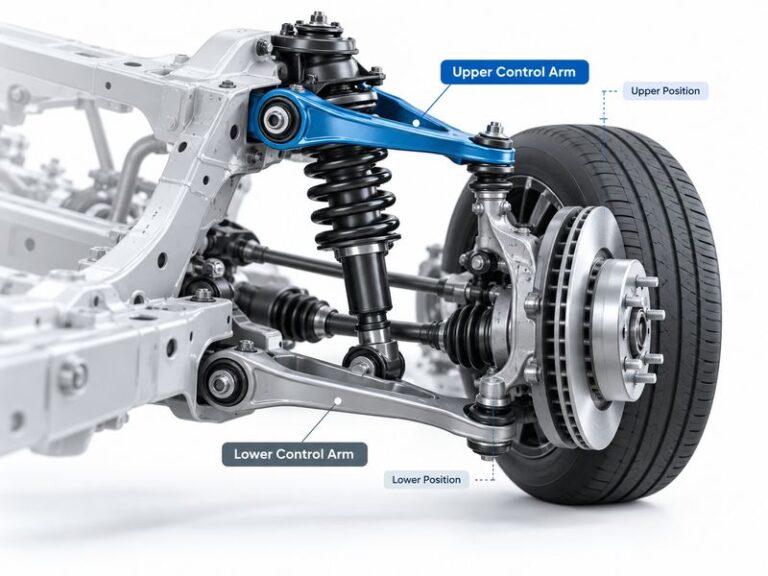
Can Upper and Lower Control Arms Both Cause Vibration?
Yes. Both upper and lower control arms can contribute to vibration when their bushings, ball joints, or mounting points wear. The exact design depends on the vehicle.
Many passenger cars use a lower control arm with a strut instead of an upper control arm. Other vehicles, especially trucks and some SUVs, may use upper and lower control arms in a double-wishbone or similar suspension design.
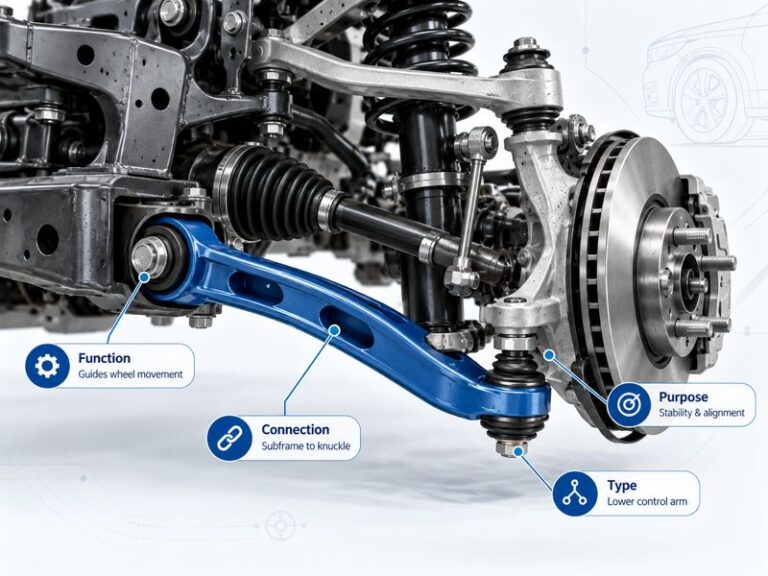
A lower control arm often carries major road and braking loads, so worn lower bushings can have a large effect on wheel movement. An upper arm can also affect camber and wheel stability when its bushings or ball joint develop play.
The correct approach is to inspect every load-bearing joint in the suspension. Replacing only the most visible worn part may not fix the vibration if another joint is loose.
- ✦ Lower control arm
Often carries major braking and road loads and may use large compliance bushings.
- ✦ Upper control arm
Helps guide wheel motion and maintain alignment on vehicles that use one.
- ✦ Integrated ball joints
Some control arms include a ball joint that is replaced with the complete arm.
Can a Lower Control Arm Cause Vibration?
Yes. A worn lower control arm bushing or ball joint can cause vibration because the lower arm usually handles large suspension loads. The problem may be especially noticeable during braking, acceleration, or bumps.
A damaged lower arm can also change alignment. That may create poor tracking and irregular tire wear that adds even more vibration.
- ✦ Braking movement
A worn rear bushing can let the wheel move under braking force.
- ✦ Impact damage
A hard pothole or curb strike can bend the arm.
Can an Upper Control Arm Cause Vibration?
An upper control arm can cause vibration if its bushings or ball joint are loose. This is more common on vehicles that use upper and lower arms to control the steering knuckle.
Other signs may include clunking, unstable steering, alignment problems, or unusual tire wear. Any visible or measurable joint play should be compared with the correct service specification.
- ✦ Upper ball joint wear
Can allow steering knuckle movement.
- ✦ Upper bushing wear
Can change wheel alignment as suspension load changes.
Is It Safe to Drive With a Vibrating Control Arm?
A mild vibration does not tell you how serious the failure is. A slightly worn bushing and a dangerously loose ball joint can both create suspension symptoms, but the risk is very different.
If the vehicle has strong shaking, loud clunks, major steering looseness, visible wheel movement, sudden pulling, or a badly damaged ball joint, continued driving may be unsafe. A suspension joint that separates can cause a major loss of wheel control.
If the symptom is new or getting worse, have the vehicle inspected as soon as practical. Avoid high speeds, hard braking, and long trips when steering or suspension stability feels abnormal.
Drivers should also remember that vibration can come from a damaged tire. A tire bulge or internal belt separation can worsen quickly, so severe vibration deserves prompt attention even before the exact cause is known.
- ✦ Stop driving if control is poor
Major steering looseness or sudden directional changes can indicate a serious suspension fault.
- ✦ Inspect severe clunks
Heavy metal-on-metal noise can signal advanced joint or bushing wear.
- ✦ Check the tires
A damaged tire can also create dangerous vibration and should not be ignored.
- ✦ Avoid delaying repairs
Loose suspension parts can increase tire wear and strain nearby components.
How to Fix Control Arm Vibration
If inspection confirms the control arm assembly is causing the vibration, the repair depends on which part has failed. Some vehicles allow separate replacement of bushings or ball joints. Others use a complete control arm assembly.
Replacing the full arm can make sense when several parts are worn or when the ball joint is built into the arm. It can also reduce labor compared with pressing old bushings out and installing new ones, depending on the suspension design.
Correct installation matters. Some rubber suspension bushings must be tightened at normal ride height rather than with the suspension hanging. Tightening certain bonded rubber bushings in the wrong position can place constant twist in the rubber and shorten bushing life.
After control arm replacement, wheel alignment is often a wise next step. The repair may affect suspension geometry, and worn parts may have allowed the alignment to drift before they were replaced.
- ✦ Replace worn bushings
Separate bushing replacement may be possible on some control arms.
- ✦ Replace a worn ball joint
The joint may be serviceable alone or supplied with the complete arm.
- ✦ Replace a bent arm
A structurally bent control arm should normally be replaced rather than straightened.
- ✦ Torque fasteners correctly
Suspension bolts should be tightened to the correct specification and procedure.
- ✦ Check alignment
Alignment helps restore proper wheel angles and protects new tires.
- ✦ Road-test the vehicle
Confirm that vibration, noise, and steering symptoms are gone after repair.
Should You Replace the Bushing or the Whole Control Arm?
The right choice depends on part design, labor cost, vehicle age, and the condition of the other joints. A separate bushing may cost less in parts but require more labor and special tools.
A complete control arm may include new bushings and a new ball joint. That can be practical when the whole assembly has high mileage or more than one component shows wear.
- ✦ Separate bushing
Makes sense when the arm and other joints are in good condition and the bushing is serviceable.
- ✦ Complete arm
Can be a better choice when several wear items are built into one assembly.
Will an Alignment Fix Control Arm Vibration?
An alignment cannot repair a loose bushing, worn ball joint, or bent control arm. Alignment adjusts wheel angles. It does not remove mechanical play from damaged suspension parts.
In fact, trying to align a vehicle before repairing worn suspension can produce poor results. The wheel may move after the alignment is set, which means the readings do not stay consistent on the road.
The correct order is usually to repair worn or damaged parts first and then check alignment. This gives the alignment technician a stable suspension to work with.
If the vibration remains after the control arm repair and alignment, inspect tires, wheels, brakes, bearings, axles, and other suspension components. More than one fault can exist at the same time.
- ✦ Alignment adjusts angles
It corrects settings such as toe and, where adjustable, camber or caster.
- ✦ Alignment does not remove looseness
A worn bushing or ball joint must be repaired mechanically.
- ✦ Repair first
Fix suspension play before final alignment whenever possible.
How to Prevent Control Arm Problems and Vibration
Control arms are wear items, but good driving and routine inspection can help catch problems early. You cannot prevent every failed bushing or ball joint, especially as a vehicle ages, but you can reduce avoidable damage.
Slow down for potholes and rough railroad crossings when it is safe to do so. Hard impacts can damage wheels, tires, control arms, bushings, and alignment at the same time.
If you live in a region that uses road salt, inspect the suspension for heavy corrosion. Rust can weaken metal parts and make fasteners difficult to service.
Finally, do not ignore uneven tire wear or new suspension noises. Early inspection is often cheaper than waiting until worn parts damage tires or nearby components.
- ✦ Avoid hard pothole impacts
Large impacts can bend suspension parts and damage bushings.
- ✦ Inspect suspension during tire service
Tire rotations and brake work are good times to check bushings and joints.
- ✦ Maintain proper tire pressure
Correct pressure reduces tire damage and makes abnormal vibration easier to detect.
- ✦ Repair alignment problems
Poor alignment can accelerate tire wear and hide the source of handling problems.
- ✦ Respond to new noises
Clunks and knocks can be early signs of developing suspension play.