Choose shock absorbers that match your vehicle’s exact year, make, model, suspension setup, and normal driving conditions. Then compare ride comfort, handling, load capacity, damping design, durability, warranty, and total cost. For most daily drivers, correctly matched replacement shocks are a better starting point than performance upgrades.
Drivers across the United States face many different road conditions. A car in a city may spend its time on paved streets and highways, while a pickup in a rural area may travel on gravel roads or carry heavy tools. Winter weather, potholes, long highway trips, and towing can also affect which suspension parts make sense. The right shock absorber should suit the vehicle and the work it does every day.
Shock absorbers control the movement of suspension springs. They help limit bouncing after a bump, support tire contact with the road, and improve vehicle stability. However, shocks do not carry the vehicle’s full weight or replace worn springs. Choosing the correct parts means understanding the difference between standard replacements, heavy-duty designs, adjustable units, and specialized off-road options.
Start with the original equipment specifications or a reliable vehicle-specific parts catalog. Confirm front and rear fitment, mounting points, suspension type, and any differences caused by trim level or factory options. After confirming compatibility, choose the damping and construction that fit your driving needs instead of relying on price or advertising claims alone.
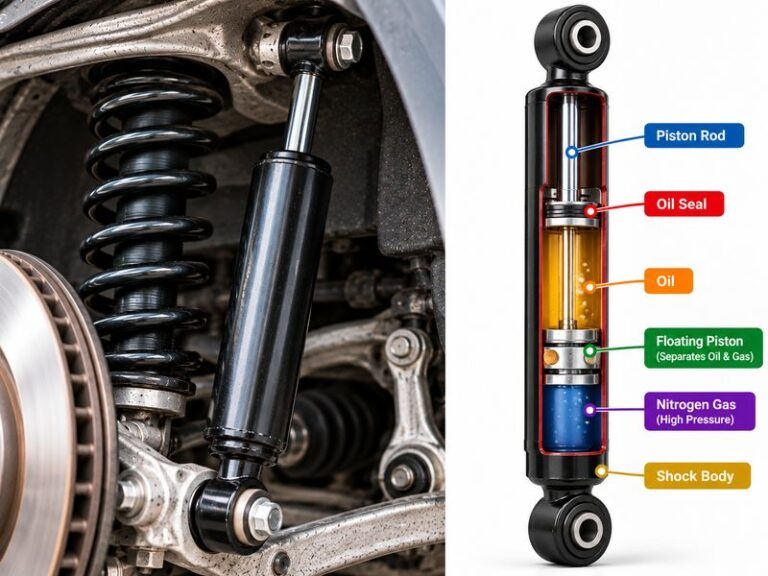
Shock absorbers control how quickly a vehicle’s suspension moves after a bump, dip, turn, or braking input. When a wheel moves upward, the spring compresses and stores energy. The spring then pushes back as it extends. Without effective damping, the vehicle can continue to bounce after the initial impact.
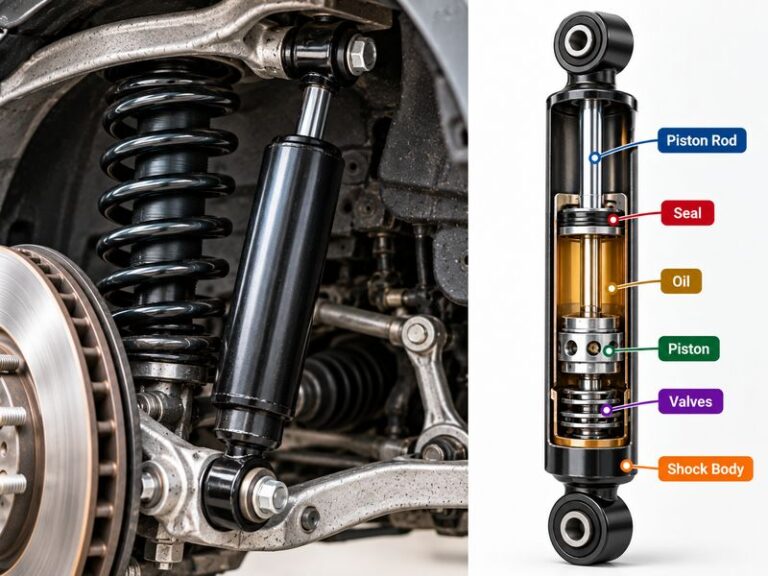
A shock absorber resists suspension movement by forcing fluid through internal passages and valves. Some designs also use pressurized gas to help control fluid behavior. The resulting resistance helps the suspension settle after a bump and allows the tires to follow changes in the road surface.
Springs and shocks perform different jobs. Springs support the vehicle’s weight and help set its ride height. Shocks control suspension motion. Replacing worn shocks may improve control, but it will not correct a broken spring, excessive vehicle sag, incorrect tire pressure, or every cause of poor handling.
Source: ebay.com
Ride comfort
The damping design affects how sharply bumps are felt and how quickly the body settles. A well-matched shock balances impact control with comfort.
Handling and stability
Effective damping helps limit excessive body movement during cornering, braking, and changes in road height.
Tire contact
The suspension must let the tires follow the road while controlling wheel movement. Worn or poorly matched shocks can reduce control on uneven surfaces.
Suspension protection
Suitable shocks help control repeated suspension movement, but they cannot prevent all damage from potholes, impacts, or overloading.
Signs You May Need New Shock Absorbers
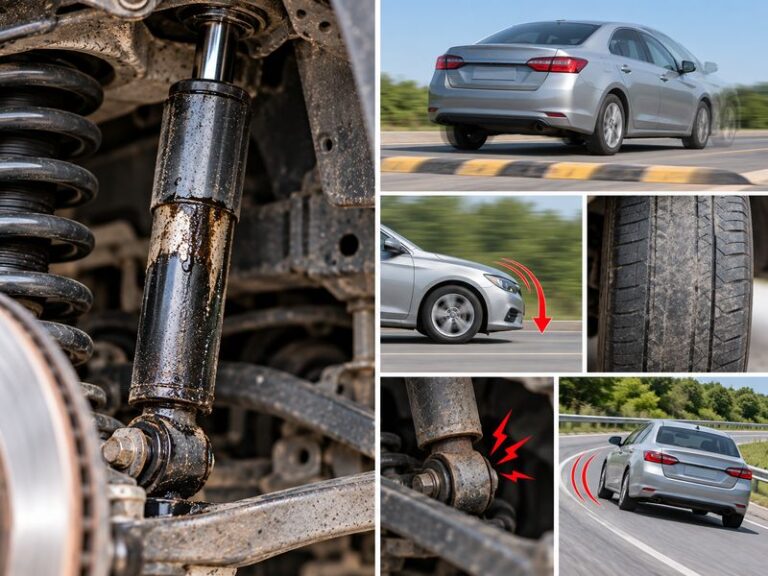
Common warning signs include repeated bouncing, excessive body movement, poor control over uneven roads, fluid leaking from a shock body, and unusual suspension noise. Some vehicles may also feel less stable when braking or changing lanes. These symptoms are clues rather than proof that a shock absorber has failed.
Inspect the tires and other suspension parts as well. Uneven tire wear, clunks, pulling, and vibration can come from alignment problems, worn ball joints, damaged bushings, wheel issues, or other faults. If the vehicle feels unstable or has a damaged suspension component, arrange an inspection before continuing normal driving.
Visible leakage
A wet film or substantial oil leakage from the shock body can indicate a seal problem. Dirt or a light surface film alone may not confirm failure.
Repeated bouncing
A vehicle that continues to oscillate after a bump may have weak damping, although spring and tire problems can also affect the ride.
Unusual noise
Knocking or clunking can result from worn mounts, loose hardware, bushings, or other suspension parts rather than the shock itself.
2. Confirm Your Vehicle’s Exact Fitment
Vehicle compatibility is the first and most important filter when choosing shock absorbers. A part that looks similar to the original may have different mounting points, dimensions, damping characteristics, or travel limits. Installing an incompatible shock can affect suspension movement and may create a safety problem.
Use the vehicle identification number, commonly called the VIN, with a reliable parts catalog or ask a qualified parts supplier to confirm the correct application. Check the model year, make, model, engine or trim where relevant, drivetrain, and factory suspension package. Some vehicles use different parts for standard, sport, off-road, or electronically controlled suspension systems.
Compare the front and rear applications separately. Left and right parts may be identical on some vehicles but different on others. Some vehicles use struts rather than separate conventional shock absorbers at one or more corners. A strut is a structural suspension component and may require different replacement procedures.
If the vehicle has been lowered, lifted, fitted with aftermarket springs, or modified for towing, do not assume that the original catalog alone will identify the right upgrade. The new shock must work with the modified suspension geometry and its available compression and extension travel.
Match the required upper and lower mounts, including eyelets, studs, bushings, brackets, and fasteners.
Dimensions and travel
Check compressed length, extended length, and usable stroke when specifications are available. A shock must not bottom out or top out during normal suspension movement.
Modified suspension
Confirm compatibility with lift kits, lowering springs, altered ride height, and nonfactory suspension arms before purchasing.
Should You Buy OEM or Aftermarket Shocks?
Original equipment manufacturer parts, often called OEM parts, are designed for a specific vehicle application. A direct replacement from the original supplier or a compatible aftermarket brand can be a sensible choice when you want to retain the factory ride and handling characteristics.
Aftermarket shocks cover a wide range of designs. Some focus on matching the original specification, while others offer firmer damping, adjustable settings, improved heat management, or greater travel for a specific use. Aftermarket does not automatically mean better, and OEM does not automatically mean the best value. Compare the actual specifications, warranty terms, and intended use.
Choose OEM-style replacements
Consider these when you want familiar ride quality, standard ride height, and a straightforward replacement without suspension modifications.
Consider performance aftermarket parts
Look for verified vehicle fitment and documented damping or adjustment features that match your actual handling goals.
Check electronic systems
Vehicles with adaptive or electronically controlled dampers may need specific replacement units, compatible electronics, or manufacturer-approved procedures.
3. Compare the Main Types of Shock Absorbers
Shock absorbers differ in their internal construction, pressure system, adjustment features, and intended use. These categories can overlap. For example, a monotube shock can be gas charged, and some twin-tube designs also use pressurized gas. Compare the complete design rather than treating each label as a separate performance ranking.
For most drivers, the practical questions are how the shock controls suspension movement, how it handles repeated use, whether its damping suits the springs and vehicle weight, and how well it fits the intended road conditions. A more complex design is useful only when its benefits match the job.
Source: mechbasic.com
Twin-tube shocks
These use an inner working cylinder and an outer reservoir space. They are common in everyday passenger vehicles and can provide a useful balance of cost and comfort.
Monotube shocks
These use a single main cylinder with a separating piston in many designs. Their layout can support heat control and consistent damping under demanding use, depending on the specific product.
Gas-charged shocks
These use pressurized gas to help reduce fluid aeration and support damping consistency. Gas charging alone does not establish that a shock rides better or lasts longer.
Hydraulic shocks
These use fluid resistance to control motion. The term describes the damping mechanism and does not mean that every hydraulic design lacks gas pressure.
Adjustable shocks
These allow one or more settings to be changed. Depending on the design, the adjustment may affect rebound damping, compression damping, or both.
Remote-reservoir shocks
These use an additional fluid volume connected to the shock body. They can be useful in demanding off-road applications, but they add cost, space requirements, and installation considerations.
Which Shock Design Is Best for Daily Driving?
A correctly matched twin-tube or monotube replacement can work well for ordinary commuting. The best choice depends on the vehicle’s original setup, the product’s damping tune, the road surfaces you use, and your comfort preferences. There is no universal rule that one construction is best for every car.
If you drive mostly on paved roads, begin with vehicle-specific standard replacements. Consider a different design only if it offers a documented benefit that matters to you, such as improved control under repeated heavy use or a suitable adjustment range.
For comfort
Choose a product intended to retain a compliant, controlled ride rather than one marketed mainly for maximum stiffness.
For demanding use
Compare heat management, damping specifications, service requirements, and suitability for your vehicle’s weight and suspension travel.
4. Choose Shocks Based on How You Drive
Your usual driving conditions should guide the next decision. A commuter who wants a quiet, comfortable ride has different needs from a driver who regularly tows a trailer, carries heavy equipment, or takes a four-wheel-drive truck onto rough trails. Start with your most common use rather than an occasional special trip.
Road conditions also matter. Potholes, broken pavement, washboard gravel, and repeated large bumps place different demands on a suspension. A shock designed for controlled road use may not offer the travel, heat capacity, or adjustment range needed for sustained off-road driving. On the other hand, a specialized off-road shock may cost more and provide little benefit to a vehicle that stays on paved streets.
Source: gdst4x4offroad.com
Daily commuting
Choose vehicle-specific replacement shocks that preserve predictable handling and a comfortable ride.
Highway driving
Look for a suitable balance of body control, stability, and impact comfort. Confirm that the product matches the original suspension design.
Rough rural roads
Consider durability and damping suitable for repeated uneven surfaces, while retaining enough suspension travel for the vehicle.
Off-road driving
Check extended and compressed lengths, heat management, travel, mounting strength, and compatibility with any lift kit.
Performance driving
Choose damping suited to the springs, tires, vehicle weight, and driving goals. Adjustable settings can help, but only when you know how to use them.
How to Choose Shock Absorbers for a Truck or SUV
Truck and SUV owners should consider both the vehicle’s curb weight and how it is used. A truck that normally carries light loads may need a different setup from one that frequently hauls tools, carries a camper, or tows a trailer. Check the shock manufacturer’s stated application and load-related limitations rather than assuming that a heavy-duty label guarantees a suitable match.
Shock absorbers can help control suspension movement under load, but they do not increase a vehicle’s legal or mechanical payload or towing rating. If the rear of a truck sags, inspect its springs and load setup instead of trying to solve the problem with firmer shocks alone. Follow the vehicle manufacturer’s payload, axle, and towing limits.
For off-road use, make sure the shocks match the suspension’s actual travel. A lift does not automatically mean that the longest available shock is correct. Incorrect length can cause topping out, bottoming out, damaged mounts, or interference with other suspension components.
Light-duty use
A standard replacement or suitable comfort-oriented upgrade is often enough for a truck used mainly for commuting and light cargo.
Frequent towing or hauling
Choose a shock approved for the vehicle and intended operating conditions. Inspect springs, tires, and suspension components as part of the same assessment.
Off-road use
Prioritize correct travel, appropriate damping, heat management, and compatibility with the suspension geometry.
How to Choose Shocks for a Lowered Car
Lowered vehicles need shocks that work with their springs and reduced ride height. A standard-length shock may have too little compression travel or may operate outside its intended range when paired with lowering springs. Check whether the spring manufacturer recommends a particular shock design or length.
Coilover systems combine a spring and damper in one assembly and may provide ride-height adjustment. Some also offer damping adjustment. They are not interchangeable with every conventional shock-and-spring arrangement, and installation can involve additional alignment and suspension setup work.
Confirm usable travel
Check the manufacturer’s fitment guidance and ensure the suspension retains suitable compression and extension movement.
Match spring rates
Use damping intended for the springs fitted to the vehicle rather than pairing stiff lowering springs with unsuitable standard dampers.
Plan for alignment
A ride-height change can affect suspension geometry and alignment. Follow the applicable setup instructions after installation.
5. Balance Ride Comfort, Handling, and Damping
Damping is the resistance a shock provides as the suspension moves. Too little damping can allow repeated bouncing and excessive body movement. Too much damping for the vehicle, springs, and road conditions can make impacts feel harsh and may prevent the suspension from responding well to rapid bumps.
Shock absorbers may have different compression and rebound characteristics. Compression damping controls resistance as the shock shortens, while rebound damping controls resistance as it extends. Some products provide separate adjustments for these functions, but many ordinary replacement shocks have fixed settings designed for a particular application.
Stiffer is not always better. A firm setup may reduce certain body movements on smooth roads, yet feel uncomfortable on rough pavement. The goal is controlled movement that suits the tires, springs, vehicle mass, and intended use.
Source: engineeringlearn.com
Comfort-oriented damping
Designed to manage suspension movement without making normal road imperfections unnecessarily harsh.
Sport-oriented damping
May provide firmer control for more responsive handling, depending on the complete suspension setup and road conditions.
Heavy-duty damping
Intended for specific demanding applications. It should be selected according to vehicle and load requirements rather than by label alone.
Do Adjustable Shocks Make Sense?
Adjustable shocks can be useful when driving conditions or preferences change. A driver may want one setting for daily roads and another for a particular performance or off-road use. However, an adjustment dial does not guarantee a wider useful range or better results than a well-matched fixed shock.
Follow the product’s instructions for changing settings. Record the starting position and make small changes, testing the vehicle in a safe and legal environment. If a change causes excessive harshness, poor tire contact, unusual noises, or less predictable handling, return to the recommended baseline and seek guidance.
Useful adjustment
A clear, documented range can help drivers fine-tune damping for a defined purpose.
Added complexity
Adjustable systems can cost more and may require setup knowledge, periodic checks, or specific maintenance.
6. Compare Shock Absorbers by Quality, Durability, and Cost
Price is useful only when the parts being compared have the same fitment and a similar purpose. A basic replacement shock and an adjustable off-road unit may differ in design, warranty, travel, and service requirements. Comparing their prices alone will not show which is the better value for your vehicle.
Review the manufacturer’s product information and warranty terms before buying. Check the stated application, construction, adjustment features, installation requirements, exclusions, and whether the warranty depends on professional installation. Confirm whether the warranty covers only the part or includes labor, shipping, and related costs.
Durability depends on product design, operating conditions, installation quality, and maintenance. Rough roads, repeated heavy use, corrosion, damaged mounts, and unsuitable suspension travel can all affect service life. Avoid choosing a shock based on an unsupported mileage guarantee or a claim that one material always lasts longer.
Source: blog.torqueusa.com
Fitment documentation
Prefer a supplier that clearly identifies the exact vehicle application and relevant suspension options.
Warranty terms
Read the duration, coverage, exclusions, proof-of-purchase rules, and installation conditions.
Construction and service
Check whether the design is sealed or serviceable and whether rebuilding or adjustment is supported by the manufacturer.
Replacement availability
For specialized setups, check whether compatible replacement parts and service support will remain practical to obtain.
How Much Should You Spend on Shock Absorbers?
There is no single price that applies to every vehicle or shock design. Costs vary with the vehicle, part construction, electronic features, brand, location, and whether you install the parts yourself or pay a shop. Premium shocks can make sense for a defined use, but they may be unnecessary for a standard commuter car.
Compare the total cost of replacing the required parts rather than looking at a single unit price. Ask whether the quote includes both sides of an axle, new mounting hardware where required, labor, inspection of related components, and any alignment work that the repair or suspension changes call for.
Budget replacement
Can suit a standard vehicle when the part is correctly specified and supported by clear warranty terms.
Midrange replacement
May offer a useful balance of fitment, ride characteristics, construction, and cost for regular driving.
Specialized performance or off-road parts
May justify higher costs when their adjustment, travel, heat management, or service features match a specific need.
7. Use a Simple Decision Table to Narrow Your Options
A decision table helps you narrow the choices before reviewing exact part numbers. Use it as a starting point, not as a substitute for vehicle-specific fitment information. If a product does not match the required dimensions, mounts, suspension type, or manufacturer application, eliminate it even if it appears suitable for your driving style.
Source: fitness-fellows.de
Standard daily driving
Start with a vehicle-specific OEM-style replacement or a documented equivalent designed to preserve normal ride and handling.
Frequent rough roads
Compare products intended for repeated uneven-surface use and verify that their damping remains suitable for the vehicle.
Towing or hauling
Confirm the shock’s approved application and assess the springs, tires, payload, and towing setup at the same time.
Sport driving
Choose a matched suspension package with appropriate damping rather than selecting the stiffest available shock.
Off-road or lifted vehicles
Verify suspension travel, shock lengths, mounting strength, geometry, and compatibility with the lift kit.
Lowered vehicles
Choose dampers designed to work with the fitted springs and altered ride height.
A Practical Comparison Checklist
Before placing an order, compare the same basic details for every candidate. This makes it easier to identify a part that fits your needs instead of paying for features that will not improve your normal driving.
Fitment
Does the part match the exact vehicle, suspension type, axle position, and any modifications?
Ride characteristics
Is the product intended for comfort, balanced road use, sport driving, towing-related use, or off-road operation?
Construction
Is it a twin-tube, monotube, gas-charged, adjustable, or specialized design, and what does that design offer in this application?
Total cost
What will the parts, labor, required hardware, and related repairs cost together?
Support
Are installation instructions, technical specifications, replacement parts, and clear warranty terms available?
8. Avoid Common Shock Absorber Buying Mistakes
The most common buying mistake is choosing a shock based on price, brand reputation, or a performance label before checking compatibility. A highly rated product in another vehicle application may not suit your suspension. Start with the required part specification and eliminate unsuitable options first.
Another mistake is assuming that new shocks will solve every ride or handling problem. Worn springs, damaged bushings, loose mounts, bad tires, incorrect tire pressure, and alignment faults can produce similar symptoms. Inspect the full suspension system before deciding which components need replacement.
Do not choose a shock simply because it is advertised as heavy-duty, racing, or off-road. Those labels describe a target use, not universal superiority. An unsuitable damping tune can make the ride harsh or reduce suspension control on the surfaces you use most often.
Source: offroading.com
Ignoring exact fitment
A similar-looking shock may have the wrong mount, length, travel, or damping characteristics. Confirm the application before purchase.
Replacing only one side without a reasoned assessment
Shocks on the same axle should generally be replaced in pairs so damping is more consistent from side to side. Follow vehicle and manufacturer guidance for special cases.
Mixing mismatched designs
Combining substantially different damping characteristics on one axle can affect predictable handling. Use compatible parts and follow the recommended replacement plan.
Overlooking related parts
Worn mounts, bushings, springs, or hardware can undermine the result of new shocks. Inspect related components during the repair.
Ignoring installation requirements
Incorrect fastener torque, unsafe lifting, or improper spring handling can cause damage or serious injury. Follow the service procedure for the exact vehicle.
When Should You Get Professional Help?
Seek a qualified mechanic if you cannot confirm the correct parts, the suspension has been modified, the vehicle has electronic dampers, or you find damaged mounting points or structural corrosion. A shop can check the suspension travel, inspect related parts, and identify whether the problem is actually caused by the shocks.
Some shock and strut assemblies contain springs under substantial stored force. A coil spring can cause severe injury if it releases unexpectedly. Do not loosen a spring-loaded assembly unless you have the correct tools, training, and service procedure. Use properly rated jack stands on a suitable surface and never rely on a hydraulic jack alone to support a vehicle.
Modified or electronic suspension
Use a technician familiar with the vehicle’s suspension design and any required electronic calibration or compatible components.
Damaged or corroded mounts
Have the affected parts assessed before fitting replacement shocks.
Uncertain diagnosis
Ask for an inspection if handling, noise, or tire wear has several possible causes.
9. Plan the Replacement and Check the Results
Once you have selected the correct shock absorbers, review the installation instructions before starting work. Check whether the replacement requires new nuts, bolts, washers, bushings, or mounts. Confirm the recommended tightening procedure and whether fasteners must be tightened with the suspension at a specified position.
Replace shocks in axle pairs when recommended so that both sides have compatible damping. If the vehicle has damaged springs, worn mounts, or other failed suspension parts, address those faults as part of the repair plan. Follow the service manual for any required alignment checks, electronic procedures, or calibration.
After installation, inspect the work for correct seating, secure fasteners, hose and wire clearance, and interference through the permitted range of suspension movement. Do not improvise a test that requires crawling under an unsupported vehicle or placing hands near moving suspension parts.
Source: engineeringlearn.com
Before installation
Confirm part numbers, inspect the new units for damage, and gather the specified tools and hardware.
During installation
Follow the vehicle service procedure, use the required torque values, and protect brake hoses, electrical wiring, and nearby components.
After installation
Check for loose hardware, abnormal noises, warning messages, and clearance problems. Arrange an alignment check when required by the repair or suspension changes.
During the first drive
Use a familiar, low-traffic route and drive cautiously. Stop if the vehicle pulls, makes new noises, feels unstable, or shows another sign of incorrect installation.
How Can You Tell Whether the New Shocks Are Right?
The vehicle should respond in a controlled and predictable way that matches the intended setup. Repeated bouncing may decrease if worn shocks were the cause, and body movement over ordinary road changes may feel better controlled. A comfort-oriented replacement should not need to make every road impact feel stiff to provide useful damping.
A new shock does not guarantee that every suspension symptom will disappear. If the ride remains poor, recheck tire pressure, tire condition, springs, mounts, bushings, alignment, and installation. Have a technician inspect the vehicle if handling is uncertain or a new noise appears after the repair.
Expected improvement
More controlled suspension movement and predictable handling when worn shocks were the main cause of the problem.
Possible unresolved issue
Persistent clunks, uneven ride height, pulling, or tire wear may indicate another fault that needs diagnosis.
10. Research Notes and Reader Question Gaps
The most useful way to improve a shock absorber buying guide is to help readers make a safe, compatible choice instead of simply listing product types. This article prioritizes exact fitment, the difference between shock and spring functions, vehicle use, damping trade-offs, and the limits of heavy-duty or performance labels.
The following gap map separates practical questions inferred from the buying task from questions verified in a live search. No live competitor-page review or search-question audit is claimed here. As a result, the map is an editorial planning aid rather than proof that other websites have omitted these subjects.
How do I confirm the correct shock for my exact vehicle?
Reader stage: before purchase. Basis: inferred next need from compatibility requirements. Competitor coverage: not checked. Benefit: reduces incorrect orders and unsafe fitment. Evidence needed: current vehicle-specific parts catalogs and service information. Priority: high. Placement: fitment section.
Do I need new springs when I replace shocks?
Reader stage: diagnosis and repair planning. Basis: inferred next need because springs and shocks have different functions. Competitor coverage: not checked. Benefit: prevents unnecessary parts replacement and incomplete repairs. Evidence needed: vehicle service guidance and inspection findings. Priority: high. Placement: definitions and troubleshooting sections.
Are heavy-duty shocks better for towing?
Reader stage: selecting a load-related upgrade. Basis: inferred next need from common truck use cases. Competitor coverage: not checked. Benefit: explains why shock selection cannot replace payload or towing limits. Evidence needed: vehicle manufacturer guidance and exact shock application specifications. Priority: high. Placement: truck and SUV section.
Will longer shocks work with a lift kit?
Reader stage: modified vehicle fitment. Basis: inferred next need from suspension travel requirements. Competitor coverage: not checked. Benefit: reduces the risk of bottoming out, topping out, and damaging mounts. Evidence needed: lift-kit instructions, shock dimensions, and suspension travel specifications. Priority: high. Placement: fitment and off-road sections.
Should shocks be replaced in pairs?
Reader stage: repair planning. Basis: inferred next need from axle-to-axle damping consistency. Competitor coverage: not checked. Benefit: supports predictable handling and a complete repair plan. Evidence needed: vehicle and shock manufacturer instructions. Priority: medium to high. Placement: replacement section.
How much will parts and installation cost together?
Reader stage: budgeting. Basis: inferred next need from the purchase decision. Competitor coverage: not checked. Benefit: helps readers compare full repair quotes instead of unit prices. Evidence needed: current local parts prices and labor estimates for the exact vehicle. Priority: medium. Placement: cost section.
Research Scope and Evidence Limits
The technical guidance in this article is general suspension information, not a claim of hands-on testing or a completed review of competing webpages. Vehicle-specific dimensions, torque values, compatibility, warranty terms, and current prices must be confirmed using the relevant manufacturer documentation or qualified parts and repair sources before a purchase or installation.
No product is ranked as universally best. The suitable choice depends on the exact vehicle, its condition, the springs and suspension components fitted, the intended road conditions, and the owner’s budget. A comparison based on those details is more useful than an unsupported brand ranking.
Documented general principles
Shock absorbers control suspension movement, while springs support vehicle weight. Construction, damping, fitment, and operating conditions affect suitability.
Requires vehicle-specific verification
Part numbers, dimensions, installation torque, electronic compatibility, service intervals, prices, and warranty conditions.
Not established here
Universal performance rankings, guaranteed service life, current market-leading products, and verified gaps across competing webpages.
Frequently Asked Questions
Q
How do I choose the right shock absorbers for my car?
Start by confirming the exact year, make, model, trim, drivetrain, and suspension type. Use a reliable parts catalog or the vehicle manufacturer’s specifications to identify compatible front and rear shocks. Then choose a damping design that matches your priorities, such as daily comfort, controlled handling, frequent rough-road driving, or a documented performance requirement.
Q
Are gas-charged shocks better than hydraulic shocks?
Not in every application. Gas-charged shocks use pressurized gas to help limit fluid aeration, while hydraulic damping relies on fluid moving through internal valves and passages. Many gas-charged units are also hydraulic dampers, so the terms are not always opposing categories. Compare the exact design, damping tune, fitment, and intended use rather than choosing by the label alone.
Q
Should I replace all four shock absorbers at once?
Replacing all four can make sense when the front and rear shocks are similarly worn and the budget allows it. At a minimum, shocks on the same axle are generally replaced in pairs to help maintain consistent damping from side to side. Follow the vehicle and parts manufacturer’s guidance, and inspect the other axle before deciding whether it also needs replacement.
Q
Do heavier-duty shocks make a car or truck ride better?
Not automatically. Heavy-duty shocks may be designed for particular loads or demanding operating conditions, but their damping can feel too firm for a lightly loaded vehicle or an unsuitable road surface. Choose a shock that matches the vehicle’s springs, weight, and normal use. If a truck sags under load, inspect the springs and loading arrangement rather than expecting shocks to carry the extra weight.
Q
Can I install shock absorbers myself?
Some conventional shock replacements are manageable for a person with suitable tools, mechanical skills, and vehicle-specific instructions. Safe lifting equipment, correct fastener torque, and proper support are essential. Struts, coilovers, electronic dampers, and spring-loaded assemblies can require specialized tools or procedures. If a compressed spring or modified suspension is involved, professional installation is the safer option unless you have the proper training and equipment.
Q
How long do shock absorbers last?
There is no single service life that applies to every vehicle and shock. Lifespan depends on road conditions, mileage, vehicle loads, corrosion, driving style, installation, and product design. Follow the vehicle manufacturer’s inspection guidance and have the suspension checked when you notice repeated bouncing, leakage, unusual noises, or reduced control.
Q
Do new shock absorbers require a wheel alignment?
Replacing a conventional shock alone does not always change alignment, but the answer depends on the suspension design and the work performed. Strut replacement, ride-height changes, altered suspension geometry, or disturbed alignment-related fasteners may require an alignment check. Follow the vehicle service procedure and the instructions for the replacement parts.
Q
Are adjustable shock absorbers worth the extra cost?
They can be worthwhile if you have a clear reason to change damping settings for different driving conditions. They are less useful if you want a simple, maintenance-friendly daily driver and do not plan to tune the suspension. Compare the adjustment range, instructions, service needs, warranty, and compatibility before paying extra.
✦ Wrapping Up
Conclusion
Choosing shock absorbers starts with the exact vehicle and suspension setup, not with a brand name or a performance label. Confirm compatibility first, then compare the damping design, ride comfort, handling, load-related application, construction, warranty, and total cost. A suitable standard replacement is often the sensible choice for a vehicle used mainly for ordinary commuting.
Drivers with specialized needs should verify that an upgrade offers a real benefit for their conditions. Towing, off-road driving, lowering, lifting, and electronic suspension systems can all change the requirements. Shocks also cannot compensate for damaged springs, overloaded vehicles, worn mounts, or incorrect alignment.
Before buying, inspect the current suspension, identify the correct front and rear part numbers, and review the installation requirements. If the vehicle has unusual symptoms or modified suspension, ask a qualified technician to confirm the diagnosis and fitment.
💡 Key Takeaway
Write down your vehicle’s year, make, model, trim, and suspension modifications. Confirm the correct part numbers in a reliable catalog, decide whether comfort, handling, towing-related use, or off-road performance is your main priority, and compare compatible shocks by specifications, warranty, and total installed cost.
Eric
Hi, I’m Eric Bennett, the person behind OffRoadTruckAccessories.com.
I created this blog to share my interest in trucks, off-road driving, automotive accessories, and DIY modifications. I enjoy learning how different truck accessories work, testing their usefulness, and understanding whether they are truly worth buying.
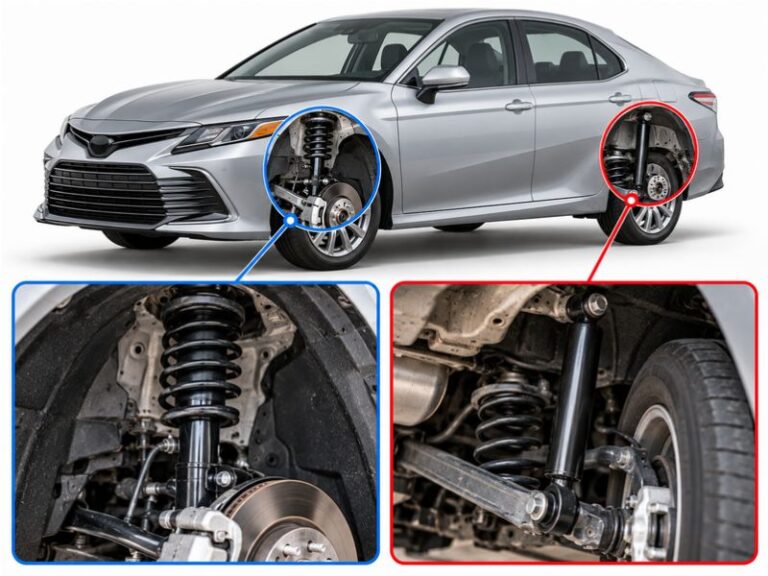
Shock absorbers are located near the wheels as part of the suspension system, usually between the vehicle’s body, frame, or subframe and a suspension component such as a control arm, axle, or wheel assembly. However, the exact answer to where are shock absorbers located on a car depends on the suspension design. Some vehicles have…
You should change shock absorbers when they are worn, leaking, damaged, or no longer controlling suspension movement properly. There is no single replacement interval that applies to every vehicle because shock absorber life depends on road conditions, vehicle weight, driving habits, suspension design, and component quality. If you are wondering when to change shock absorbers,…
A shock absorber is a suspension component that controls how quickly a vehicle’s suspension moves up and down after bumps, dips, braking, acceleration, and other road inputs. It works with the springs to prevent excessive bouncing and helps keep the tires in controlled contact with the road. So, what does a shock absorber do? It…
A gas shock absorber is a hydraulic shock absorber that uses pressurized gas, usually nitrogen, along with shock absorber oil to control suspension movement. The gas helps reduce oil foaming and keeps damping performance more consistent when the shock works repeatedly or under demanding conditions. If you are wondering what is a gas shock absorber,…