Are Upper or Lower Control Arms More Important for Your Car?
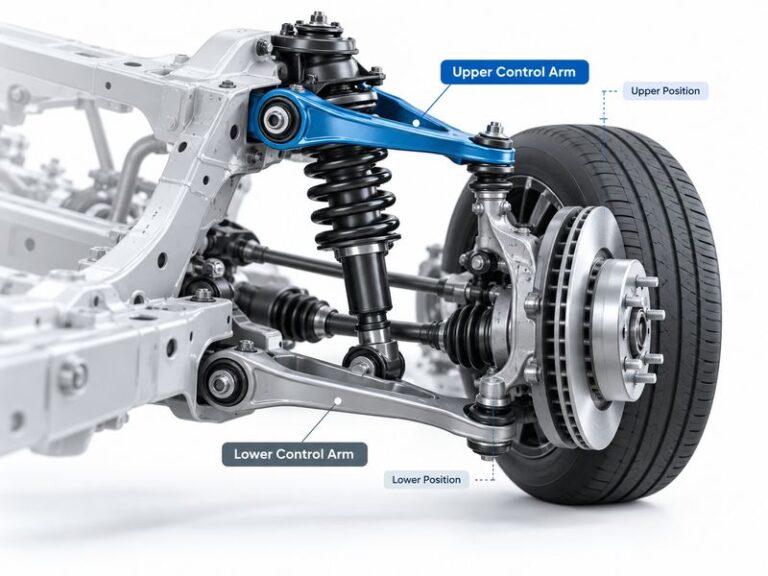
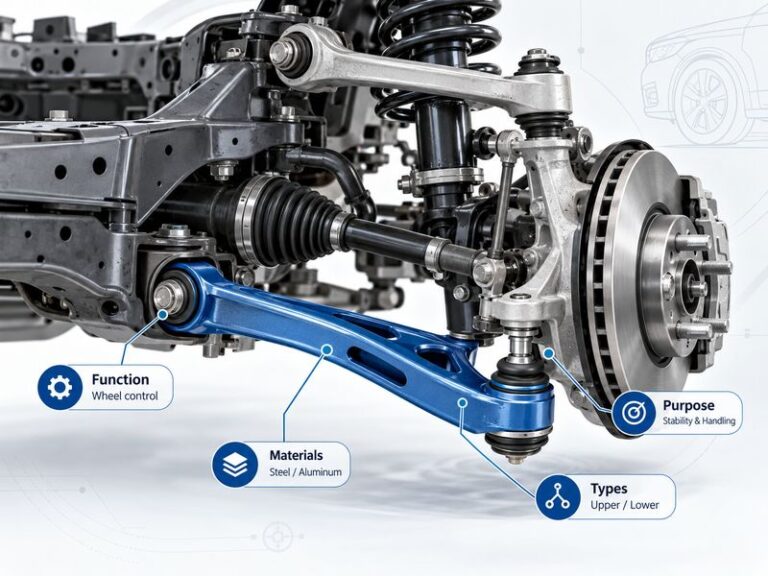
If you are asking are upper or lower control arms more important, the simple answer needs some context. On many cars, trucks, and SUVs, the lower control arm handles more direct load from the wheel and suspension. The upper arm often plays a larger role in keeping the wheel at the right angle as the suspension moves.
That does not make the upper arm unimportant. Both arms can help locate the steering knuckle, control wheel movement, and maintain suspension geometry. A failure in either one can cause poor handling, uneven tire wear, clunks, loose steering, or unsafe wheel movement.
The answer also changes with suspension design. Some vehicles use upper and lower control arms together. Others use a lower control arm with a MacPherson strut and have no traditional upper control arm at all.
This guide explains how each arm works, which one normally carries more load, why both matter, what happens when either one fails, and how to decide which part needs attention first.

Are Upper or Lower Control Arms More Important?
When drivers ask **are upper or lower control arms more important**, they are often trying to learn which part carries more weight or creates the biggest safety risk. In many common suspension layouts, the **lower control arm usually carries more direct load**. It often supports the steering knuckle from below and may also provide a mounting point for the spring, shock, or sway bar link.
The upper control arm usually handles less vertical load, but it has an important job. It helps guide the top of the steering knuckle and controls how the wheel changes angle as the suspension moves up and down.
So, the lower arm may be more heavily loaded, but that does not mean you can ignore the upper arm. Suspension systems work as a complete unit. A loose joint or failed bushing on either arm can change how the tire contacts the road.
A better way to answer **are upper or lower control arms more important** is this: the lower arm is often more important for supporting suspension loads, while both arms can be equally important for safe wheel control.

- ✦ Lower control arm
Often handles greater vertical and braking loads and may support the spring or shock.
- ✦ Upper control arm
Helps control wheel angle, steering knuckle position, camber, and suspension movement.
- ✦ Safety importance
A serious failure of either arm, bushing, or ball joint can make the vehicle unsafe.
Why the Lower Control Arm Often Carries More Load
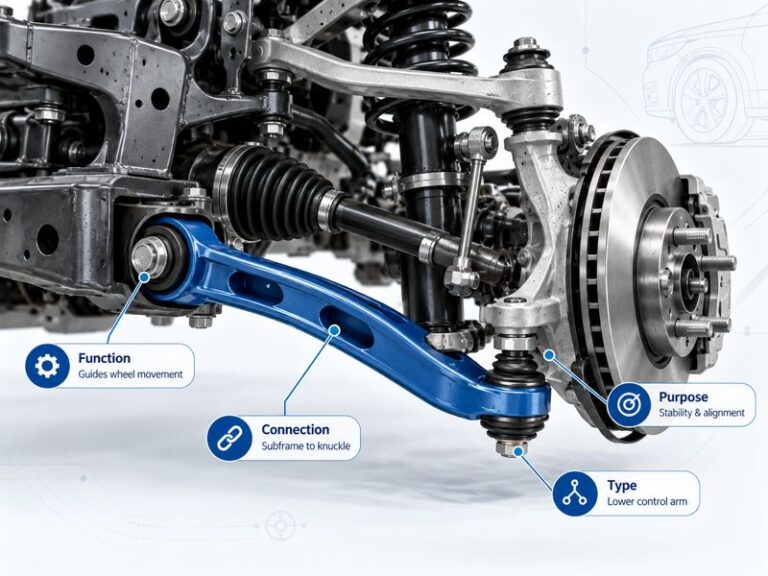
The lower control arm sits below the wheel hub area and normally connects the steering knuckle to the vehicle frame or subframe. Its position makes it well suited to handle forces from braking, bumps, cornering, and vehicle weight.
On some designs, the coil spring rests directly on the lower arm. That makes the arm part of the vehicle’s weight-supporting path. This is one reason lower arms and lower ball joints are often built larger than upper parts.
- ✦ Road impacts
Potholes and bumps can send large forces through the lower suspension.
- ✦ Braking forces
The lower arm helps keep the wheel positioned when braking loads push and pull on the suspension.
- ✦ Spring load
Some suspension designs place part of the vehicle’s spring load directly on the lower arm.
Why the Upper Control Arm Still Matters
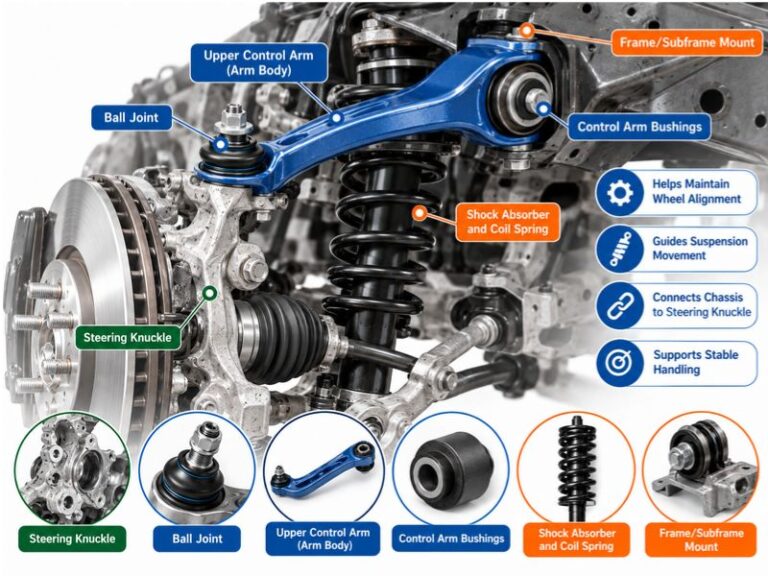
The upper control arm helps control the upper part of the steering knuckle. It limits unwanted movement and helps maintain the wheel’s intended angle through suspension travel.
If the upper arm or its ball joint becomes loose, the wheel may develop excess camber movement. You may notice unstable steering, abnormal tire wear, or a clunk over rough roads.
- ✦ Wheel angle
The upper arm helps control camber as the suspension moves.
- ✦ Steering stability
A firm upper joint keeps the top of the steering knuckle from moving out of place.
What Does a Lower Control Arm Do?
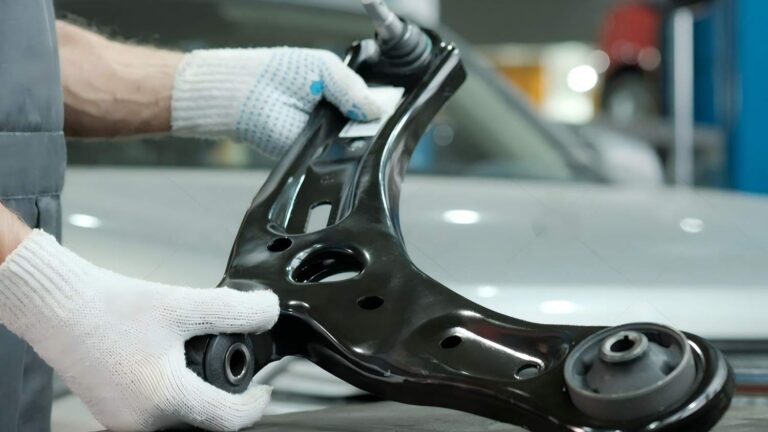
The lower control arm connects the lower part of the wheel assembly to the vehicle frame or subframe. It lets the wheel move up and down while limiting unwanted forward, rearward, and side-to-side movement.
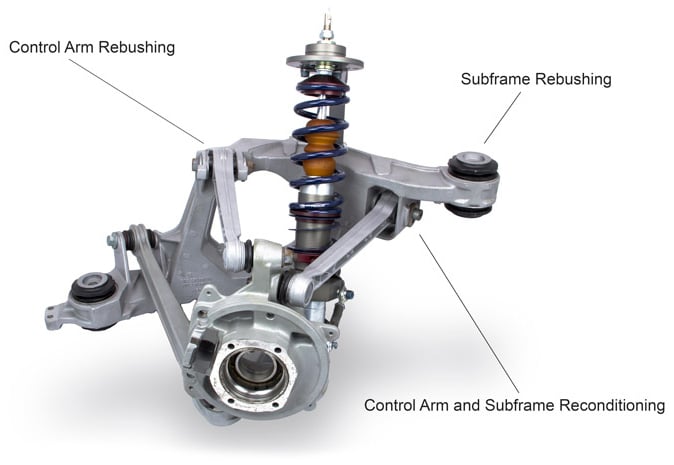
Most lower control arms use rubber or hydraulic bushings at the frame end. A ball joint often connects the outer end to the steering knuckle. These flexible joints allow controlled movement without letting the wheel wander.
On many U.S. passenger cars, crossovers, SUVs, and trucks, the lower arm takes heavy loads during braking and cornering. Its bushings absorb noise and vibration, while its shape keeps the wheel positioned correctly.
This is why some mechanics answer **are upper or lower control arms more important** by pointing to the lower arm. It often works harder under direct load, but that answer should never be taken to mean that upper suspension parts do not matter.
- ✦ Controls wheel position
Keeps the lower part of the steering knuckle in the intended location.
- ✦ Allows suspension travel
Moves through an arc as the wheel rises and falls.
- ✦ Handles driving forces
Resists forces created by braking, cornering, acceleration, and road impacts.
- ✦ Supports related parts
Depending on the vehicle, the arm may hold a spring, shock, sway bar link, or other suspension hardware.
Lower Control Arm Bushings
Bushings isolate the control arm from the chassis. They allow a small amount of planned movement while reducing harsh vibration.
When bushings crack or separate, the arm can shift more than it should. This can cause clunks, steering pull, poor alignment, or unstable braking.
- ✦ Common wear signs
Cracked rubber, torn material, fluid leakage from hydraulic bushings, or excess arm movement.
Lower Ball Joint
The lower ball joint acts like a pivot between the control arm and steering knuckle. It allows steering movement while the suspension moves through its travel.
A badly worn ball joint can create serious wheel movement. If a load-bearing ball joint separates, the wheel can fold or move out of position, which creates an immediate safety risk.
- ✦ Inspection priority
Any noticeable ball joint play should be checked against the vehicle manufacturer’s service limits.
What Does an Upper Control Arm Do?
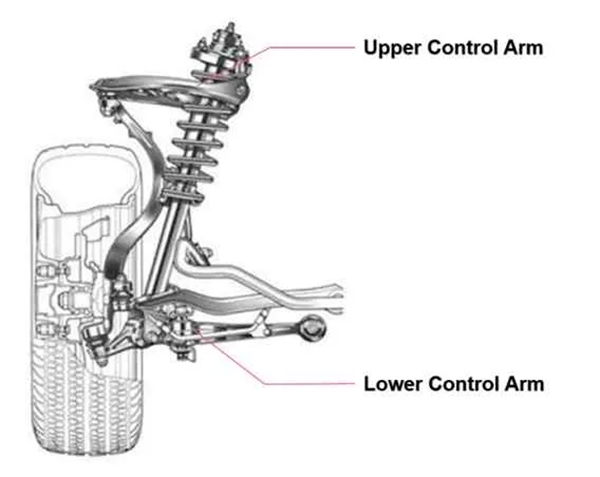
The upper control arm connects the upper part of the steering knuckle to the vehicle body, frame, or subframe. It is most common on double-wishbone and short-long-arm suspension systems.
Its main job is to guide the top of the wheel assembly as the suspension travels. This helps engineers control changes in camber and wheel position.
The upper arm may not carry as much direct vertical load as the lower arm. Even so, loose upper bushings or a worn upper ball joint can make the vehicle feel vague and unstable.
For that reason, asking **are upper or lower control arms more important** should not lead you to ignore an upper arm problem. The upper arm is part of the geometry that keeps the tire properly placed on the road.

- ✦ Controls upper knuckle movement
Prevents the top of the wheel assembly from moving freely in unwanted directions.
- ✦ Helps control camber
Keeps the tire angle within the suspension’s designed range.
- ✦ Supports stable steering
Reduces unwanted wheel movement during turns and over rough pavement.
- ✦ May provide alignment adjustment
Some vehicles use upper-arm mounting points or adjustable arms to set camber or caster.
Upper Control Arms on Trucks and SUVs
Upper control arms are especially familiar to owners of many body-on-frame trucks and SUVs. Their geometry can become more important after a suspension lift changes ride height.
If lift height moves the upper ball joint close to its travel limit, an aftermarket arm may sometimes restore better joint angle or alignment range. The correct solution depends on the vehicle and lift design.
- ✦ Lifted vehicles
Suspension lifts can change upper ball joint angles and alignment geometry.
- ✦ Stock vehicles
Original upper arms normally work well when bushings, joints, ride height, and alignment remain within specification.
Upper vs Lower Control Arms: Key Differences
Upper and lower control arms work toward the same basic goal. They connect the wheel assembly to the chassis while allowing planned suspension movement.
Their position changes the forces each arm sees. The lower arm usually deals with heavier vertical forces. The upper arm mainly controls the top of the steering knuckle and helps maintain suspension geometry.
The exact split varies by vehicle. A large pickup with an independent front suspension may place very different loads on its arms than a lightweight sports car or crossover.
So, **are upper or lower control arms more important** in every vehicle? No. Suspension design decides how much work each component does.

- ✦ Position
The upper arm attaches above the wheel center area, while the lower arm attaches below it.
- ✦ Typical load
Lower arms commonly carry more direct suspension and road load.
- ✦ Geometry role
Upper arms often play a strong role in controlling camber through suspension travel.
- ✦ Size
Lower arms are often larger and heavier, though design varies greatly.
- ✦ Availability
Some suspension layouts use no separate upper control arm.
Which One Takes More Stress?
In many systems, the lower arm takes more stress because road forces enter the suspension close to the lower ball joint and arm. Spring or shock loads may also pass through it.
However, stress is not the same as importance. A smaller upper arm can still be critical because the wheel cannot stay aligned correctly if its mounting points move.
- ✦ Normal driving
Both arms face repeated loads every time the suspension moves.
- ✦ Hard braking
Control arm bushings and joints can see strong fore-and-aft loads.
- ✦ Potholes
Sharp impacts can place very high short-term loads on arms, bushings, joints, and mounting points.
Does Every Car Have Upper and Lower Control Arms?
No. This point is important when discussing **are upper or lower control arms more important** because many vehicles do not have both types at every wheel.
A double-wishbone suspension normally has an upper and a lower arm. The two arms work together to locate the wheel and control its path.
A MacPherson strut front suspension often uses one lower control arm. The strut itself locates the upper part of the steering knuckle, so a traditional upper control arm is not needed.
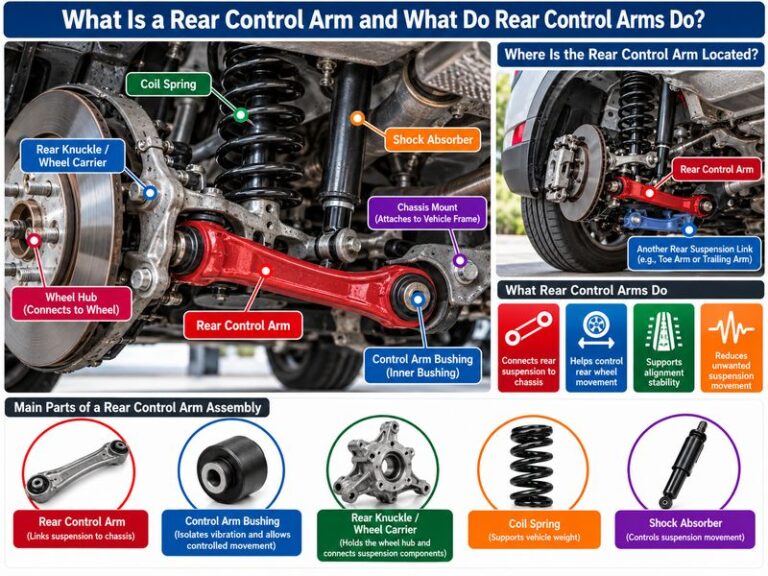
Rear suspension designs vary even more. Some use control arms that do not fit neatly into simple upper and lower labels. Multi-link layouts may have several links, each handling a specific direction of force.

- ✦ Double-wishbone
Usually uses both upper and lower control arms.
- ✦ MacPherson strut
Usually uses a lower control arm and relies on the strut for upper wheel location.
- ✦ Multi-link suspension
Uses several links or arms to control wheel movement in different directions.
- ✦ Solid axle
May use trailing arms, radius arms, control arms, or links instead of a conventional upper-and-lower wishbone layout.
Why Suspension Design Changes the Answer
Engineers choose suspension layouts based on cost, space, ride quality, handling goals, durability, and vehicle use. Each layout sends forces through different parts.
That means you should identify your vehicle’s suspension before deciding which control arm does the most work. A service manual or parts diagram can help show the exact layout.
What Happens When an Upper Control Arm Goes Bad?
A worn upper control arm usually causes problems at its bushings or ball joint. The metal arm itself can also bend after a crash, curb strike, or severe road impact.
As wear increases, the top of the steering knuckle can move more than intended. This can change wheel alignment and make the vehicle harder to control.
The symptoms may start small. You may hear an occasional clunk over a driveway entrance or notice that one front tire wears faster on one edge.
If wear becomes severe, steering precision can drop. This shows why **are upper or lower control arms more important** is not simply a question of which arm carries more vehicle weight.

- ✦ Clunking noises
Loose bushings or a worn ball joint may knock when driving over bumps.
- ✦ Uneven tire wear
Changes in camber or toe can wear one side of the tire faster.
- ✦ Loose steering feel
Extra joint movement can make steering response feel vague.
- ✦ Alignment problems
The vehicle may not hold alignment if the arm or bushings allow excess movement.
- ✦ Visible damage
A bent arm or damaged mounting point can alter wheel position.
Can You Drive With a Bad Upper Control Arm?
Driving with a badly worn upper arm or ball joint is not a good idea. The risk depends on what failed and how much movement exists.
Minor bushing wear may not cause an immediate failure, but a loose ball joint can become a serious safety concern. Have noticeable looseness, clunks, or unstable steering inspected promptly.
What Happens When a Lower Control Arm Goes Bad?
A bad lower control arm can affect several parts of vehicle behavior because the arm often handles major suspension forces. The most common failures involve bushings, ball joints, or physical arm damage.
A torn rear control arm bushing can let the wheel move backward or forward during braking. A worn lower ball joint can let the wheel move vertically or laterally beyond its normal range.
Drivers may feel a pull when braking, steering wander, vibration, or a heavy clunk. Tire wear may also increase because the wheel no longer stays at the intended alignment angles.
When considering **are upper or lower control arms more important**, the consequences of lower-arm failure explain why the lower arm often gets more attention during inspection. It commonly carries high loads and connects major suspension points.
- ✦ Steering pull
The car may move to one side as the control arm shifts under load.
- ✦ Clunking
Loose bushings or joints can create a dull knock during braking, turning, or bumps.
- ✦ Wheel movement
A worn ball joint can allow excess play at the wheel.
- ✦ Poor braking stability
A damaged bushing may let the wheel change position when the brakes are applied.
- ✦ Uneven tire wear
Suspension movement outside its intended range can change alignment while driving.
Why Lower Ball Joint Failure Can Be Serious
Some lower ball joints carry significant suspension load. If a load-bearing joint separates, the steering knuckle can move away from the control arm.
The wheel can then tilt sharply or lose its normal position. For this reason, serious ball joint looseness should be treated as a safety issue rather than only a comfort problem.
Which Control Arm Should You Replace First?
Do not choose a part based only on whether it is an upper or lower arm. Replace the component that fails inspection or no longer meets the vehicle maker’s service limits.
If the lower arm has a torn bushing but the upper arm is tight and undamaged, the lower arm is the priority. If the upper ball joint has dangerous play while the lower arm is healthy, the upper assembly deserves attention first.
This condition-based approach gives a better answer than simply asking **are upper or lower control arms more important**. The most important part at that moment is the one that cannot safely perform its job.
Many modern replacement control arms come with bushings and a ball joint already installed. A complete arm can reduce installation work and remove several worn parts at once.
- ✦ Inspect ball joints
Look for play, torn boots, grease loss, corrosion, or binding.
- ✦ Inspect bushings
Check for splits, separation, fluid leaks, or excess movement.
- ✦ Check the arm
Look for bends, cracks, heavy corrosion, or crash damage.
- ✦ Check mounting points
Loose bolts or damaged subframe mounts can mimic control arm problems.
Should Control Arms Be Replaced in Pairs?
Control arms do not always have to be replaced in pairs. If one arm is damaged and the matching arm on the other side is still in good condition, replacing only the failed side may be reasonable.
However, parts on both sides often have similar age and mileage. If one side is worn from normal use, the other side deserves a close inspection because it may not be far behind.
- ✦ Replace one side
Reasonable when damage is isolated and the opposite side tests good.
- ✦ Replace both sides
Often considered when both sides show age-related wear or when balanced condition is desired.
Do You Need an Alignment After Replacing a Control Arm?
A wheel alignment is normally a wise step after control arm replacement. Removing or changing a control arm can affect camber, caster, or toe.
Even if the replacement part matches the old one, new bushings and joints can hold the wheel in a slightly different position. Old worn parts may have allowed the alignment to drift before the repair.
An alignment also helps protect your tires. It can confirm that the suspension sits within specification after the repair.
If the vehicle has adjustable upper control arms, aftermarket suspension parts, or a lift kit, alignment becomes even more important. The technician may need to correct geometry that changed with ride height.
- ✦ Check camber
Confirms whether the top of the wheel leans inward or outward as intended.
- ✦ Check caster
Helps verify steering stability and return-to-center behavior.
- ✦ Check toe
Prevents rapid tire scrub caused by wheels pointing too far inward or outward.
How Long Do Upper and Lower Control Arms Last?
There is no fixed replacement interval that applies to every control arm. The metal arm can last for many years, while bushings and ball joints may wear much sooner.
Road conditions matter. Potholes, rough streets, road salt, heavy loads, off-road use, and frequent curb impacts can shorten suspension life.
Vehicle design also matters. Some bushings are very soft for ride comfort, while others use firmer rubber for better control. Ball joint size, sealing, suspension travel, and vehicle weight also affect wear.
Instead of replacing control arms by mileage alone, inspect them during routine suspension service. This gives a more useful answer to **are upper or lower control arms more important** because real condition matters more than the name of the arm.
- ✦ Road quality
Repeated pothole and rough-road impacts increase stress.
- ✦ Vehicle weight
Heavy trucks and SUVs can place large loads on suspension parts.
- ✦ Climate
Salt and moisture can speed corrosion around arms, joints, and mounting hardware.
- ✦ Driving style
Frequent hard braking, fast cornering, or off-road use can increase wear.
How to Tell Whether the Upper or Lower Control Arm Is Bad
Many upper and lower control arm problems create similar symptoms. A clunk alone cannot tell you which arm is bad.
A proper inspection checks each ball joint, bushing, arm, and mounting point. The wheel may need to be unloaded or supported in a specific way based on suspension design.
Technicians often compare movement on both sides and watch the bushings while force is applied to the wheel or arm. The goal is to find movement that exceeds the normal range.
Because suspension parts affect one another, diagnosis should also include tie rods, wheel bearings, sway bar links, struts, shocks, and related hardware when symptoms overlap.
- ✦ Noise over bumps
Inspect bushings, ball joints, sway bar links, and mounting hardware.
- ✦ Steering wander
Check control arm bushings, joints, tie rods, alignment, and tire condition.
- ✦ Uneven tire wear
Check for loose joints and bushings before performing an alignment.
- ✦ Movement while braking
Inspect control arm bushings for separation or excessive flex.
- ✦ Visible wheel lean
Stop driving if the wheel position looks abnormal and have the suspension inspected.
Why Guessing Can Cost More
Replacing a control arm based only on noise can waste money because several suspension parts can make similar sounds. A worn sway bar link, tie rod, strut mount, or ball joint can all create clunks.
A careful inspection before buying parts helps prevent repeat repairs. It also makes it easier to catch related wear while the suspension is already being serviced.
Upper or Lower Control Arm: Which Failure Is More Dangerous?
The most dangerous failure is the one that allows the wheel to lose controlled attachment to the suspension. That can happen at an upper or lower ball joint, depending on the vehicle’s design.
A load-bearing lower ball joint failure can be especially severe because the wheel assembly may collapse or move sharply out of position. This is one reason lower suspension joints often receive close attention during safety inspections.
An upper joint failure is also serious. The steering knuckle can tilt, steering control can fall, and the tire can move into an unsafe position.
So, **are upper or lower control arms more important** from a safety view? Neither should be considered expendable. Lower arms often carry greater loads, but a critical joint failure on either side of the knuckle can create a dangerous loss of wheel control.
- ✦ Severe ball joint play
Needs prompt attention because separation can affect wheel control.
- ✦ Cracked or bent arm
Can change wheel geometry and may indicate impact damage.
- ✦ Separated bushing
Can allow the wheel to shift during braking or acceleration.
- ✦ Loose mounting bolt
Can let the entire control arm move at the chassis connection.
When Should You Have Control Arms Inspected?
Have the suspension inspected if you hear new clunks, feel the steering wander, notice unusual tire wear, or experience a change in braking stability. These symptoms can point to control arm wear, but they can also come from other steering or suspension parts.
Inspection is also useful after a hard pothole hit, curb strike, minor collision, or off-road impact. A control arm can bend without breaking, and even a small change can affect alignment.
For used vehicles, suspension inspection is especially useful when service history is unknown. Trucks and SUVs that have been lifted, lowered, or used off-road deserve extra attention because modified geometry can change joint angles and travel.
If you are still asking **are upper or lower control arms more important** when planning maintenance, inspect both whenever the suspension is accessible. Finding wear early is more useful than focusing on only one arm.
- ✦ After a major pothole impact
Check for bent parts, damaged bushings, and alignment changes.
- ✦ When tires wear unevenly
Inspect suspension play before paying for repeated alignments.
- ✦ When steering changes
Wandering, pulling, or loose steering can indicate worn suspension joints.
- ✦ Before installing new tires
Correcting worn suspension parts first can help protect the new tires.