Do Control Arms Affect Steering? Signs, Causes, and Safety Guide
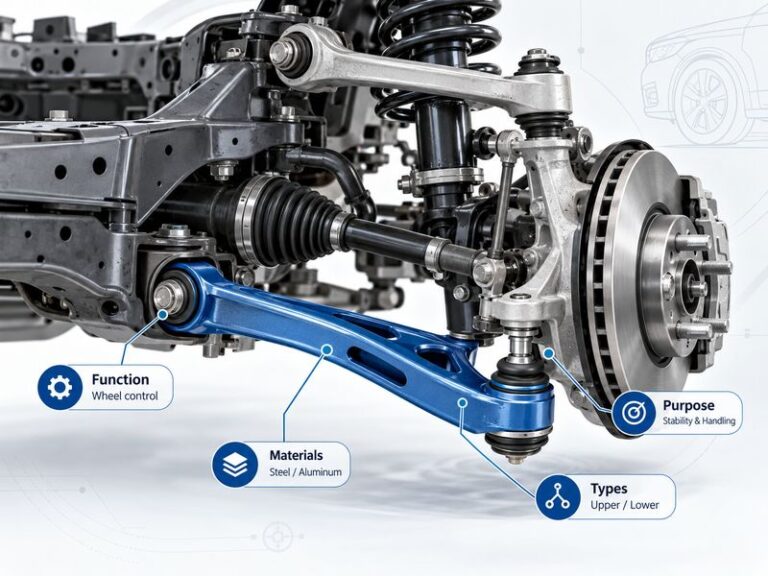
If you have ever wondered, **do control arms affect steering**, the answer is yes. A control arm is part of the suspension, but its condition has a direct effect on how the vehicle tracks and responds to steering input. It helps hold the wheel assembly in the correct position while still allowing the suspension to move up and down.
When a control arm, bushing, or ball joint wears out, the wheel may move more than it should. That movement can change alignment as you drive. The result may feel like loose steering, pulling, wandering, vibration, or a steering wheel that does not stay centered.
In normal repair work, steering complaints are not always caused by the steering rack or tie rods. Suspension parts often create similar symptoms. Control arm bushings and ball joints are two of the first areas worth checking when steering feel changes after hitting potholes, curbs, or rough roads.
This guide explains how control arms affect steering, what bad control arms feel like, how they affect alignment and handling, and when the problem may become unsafe. It also explains how to tell a control arm issue from other common steering faults.

How Do Control Arms Affect Steering?
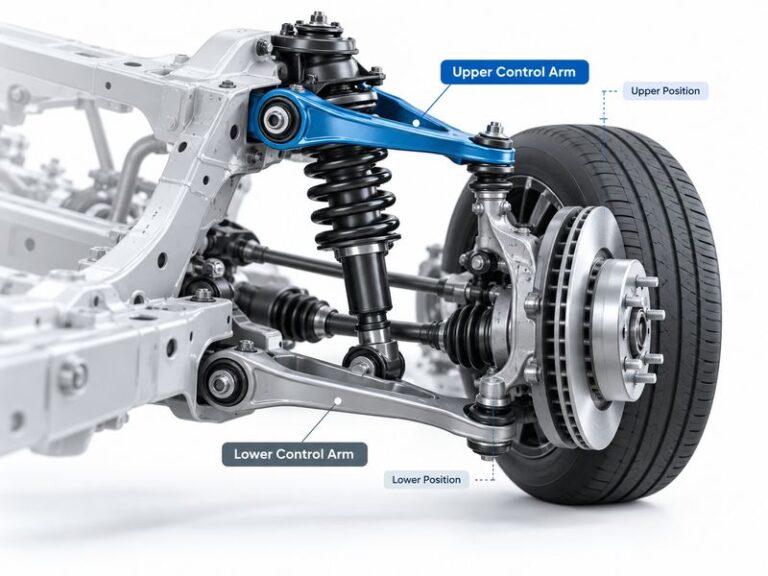
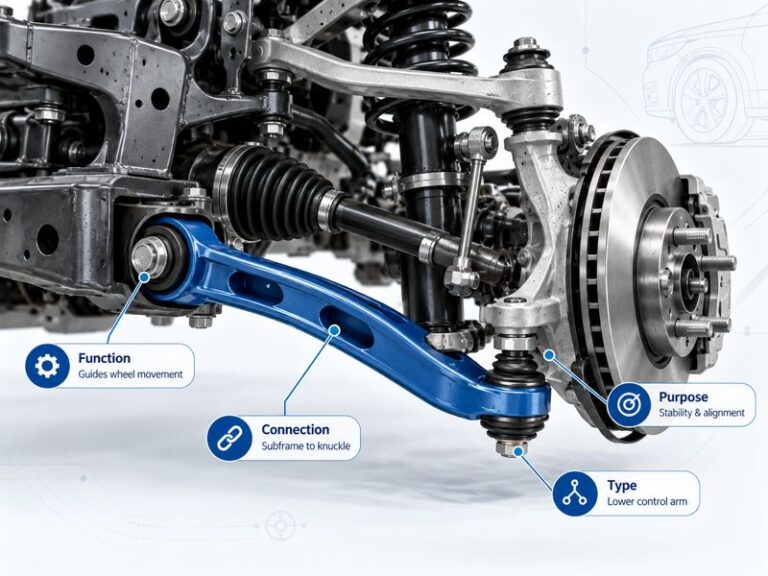
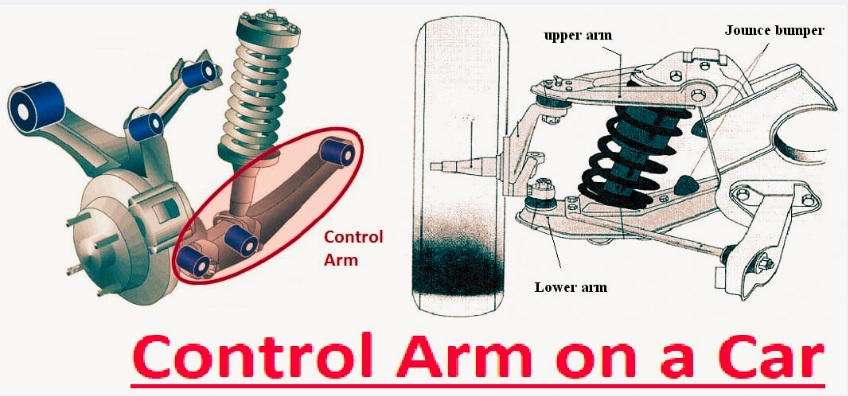
To understand **do control arms affect steering**, it helps to know what a control arm does. The control arm connects the vehicle frame or subframe to the steering knuckle or wheel assembly. It keeps the wheel located in a controlled path while the suspension moves.
The steering system turns the wheel through parts such as the steering rack, tie rods, and steering knuckle. The control arm does not usually turn the wheel by itself. Instead, it keeps the wheel in the position needed for accurate steering.
If the control arm mounting points become loose, the wheel can shift forward, backward, inward, or outward. Even a small amount of unwanted movement can change how the tire meets the road. That movement may make the vehicle feel unstable or slow to respond.
This is why the answer to **do control arms affect steering** is more than a simple yes. They affect steering indirectly by controlling wheel position, alignment, and suspension geometry.

- ✦ Wheel Position
Control arms help hold each wheel in the correct position relative to the body and road.
- ✦ Steering Response
Stable control arms help the vehicle respond more accurately when you turn the steering wheel.
- ✦ Alignment
Control arms help maintain important alignment angles as the suspension moves.
- ✦ Road Stability
Healthy bushings and joints reduce unwanted wheel movement during braking, turning, and acceleration.
Why a Suspension Part Can Change Steering Feel
Steering and suspension work together. The steering system decides where the wheel points, while the suspension keeps that wheel controlled against the road. If the suspension allows the wheel to shift, the direction of the tire can change even when you hold the steering wheel still.
This is often why a worn control arm feels like a steering problem. The driver may notice wandering or pulling even though the steering rack itself is working correctly.
What Parts of a Control Arm Affect Steering?
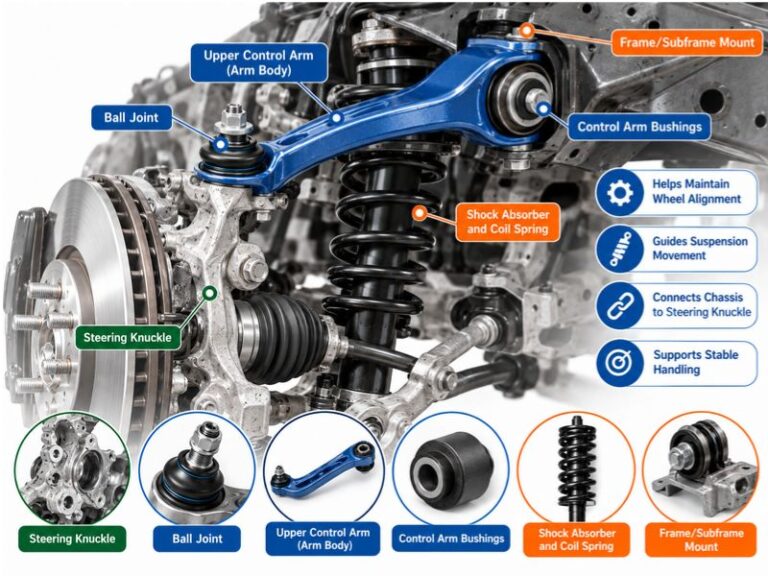
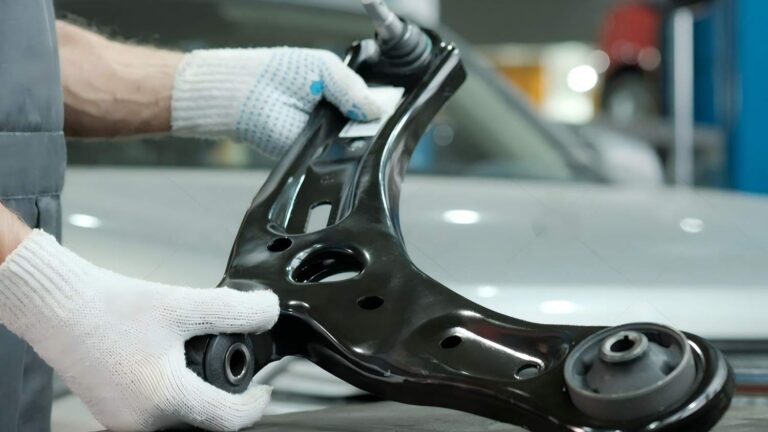
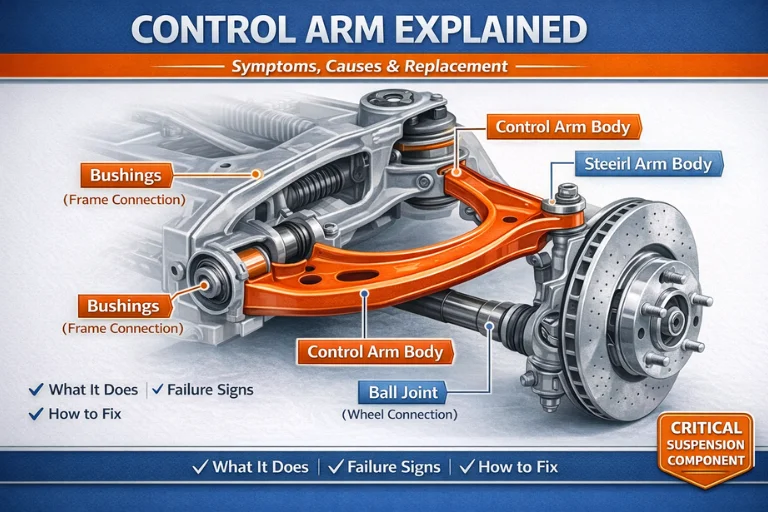
The metal control arm itself can affect steering if it bends, cracks, or becomes damaged. However, many steering-related control arm problems come from the parts attached to it. The two most important are the control arm bushings and the ball joint.
Bushings allow controlled movement between the control arm and the vehicle frame. The ball joint allows the steering knuckle to pivot while the suspension moves. Wear in either part can create free play at the wheel.
That free play is important because the tire should follow steering input with very little unwanted movement. If the wheel assembly shifts under load, steering can feel vague or inconsistent.

- ✦ Control Arm Bushings
Worn bushings can let the control arm move too far during braking, acceleration, and turns.
- ✦ Ball Joint
A loose ball joint can allow extra wheel movement and may cause steering looseness or clunking.
- ✦ Control Arm Body
A bent control arm can change wheel alignment and make the vehicle pull or handle poorly.
- ✦ Mounting Points
Loose or damaged mounting hardware can allow movement that affects steering accuracy.
How Control Arm Bushings Affect Steering
Bushings are made to flex slightly. They help absorb noise and vibration while keeping the control arm located. As rubber bushings age, they may crack, soften, split, or separate from their sleeves.
A worn bushing may let the wheel move when you brake or turn. The steering can then feel different depending on road load. You may need small steering corrections to keep the vehicle moving straight.
How Ball Joints Affect Steering
The ball joint connects the control arm to the steering knuckle on many suspension designs. It must move freely while staying tight enough to control wheel position.
Once a ball joint develops too much play, the wheel may no longer stay firmly located. This can cause loose steering, clunking, uneven tire wear, or unstable handling. Severe ball joint wear requires prompt attention because complete joint failure can cause major loss of wheel control.
Can Bad Control Arms Cause Loose Steering?
Yes. One common reason drivers ask **do control arms affect steering** is because the steering suddenly feels loose or vague. Worn bushings or ball joints can create extra movement between the wheel and the vehicle body.
You may turn the steering wheel slightly and feel that the vehicle does not react as quickly as it once did. You may also feel the car drift after road bumps. This can happen because the wheel changes position under load.
Loose steering does not always mean the control arms are bad. Tie rods, wheel bearings, steering rack mounts, tires, and other suspension joints can create similar symptoms. A proper inspection is important before replacing parts.
- ✦ Delayed Response
The vehicle may seem slow to react to small steering inputs.
- ✦ Frequent Corrections
You may need to move the steering wheel often to keep the vehicle centered.
- ✦ Loose Feel Over Bumps
Road impacts may make the vehicle shift sideways or feel less controlled.
- ✦ Changing Steering Feel
Steering may feel normal at one moment and vague during braking or cornering.
Can Bad Control Arms Cause a Car to Pull?
A worn or bent control arm can make a car pull to one side. It can change the position of the wheel and alter alignment angles such as camber or caster. Worn bushings may also allow alignment to change while the vehicle is moving.
The pulling may become more obvious while braking or accelerating. This happens because load transfers through the suspension. A loose control arm can shift as that load changes.
However, pulling has many possible causes. Uneven tire pressure, tire damage, brake drag, alignment errors, and road crown can also make a car move toward one side. The control arms should be inspected as part of a full diagnosis.

- ✦ Constant Pull
A bent arm or fixed alignment problem may make the vehicle pull most of the time.
- ✦ Pull During Braking
A worn bushing can allow the wheel to shift as braking force loads the suspension.
- ✦ Pull During Acceleration
Loose suspension parts may move as drive forces change the load at the wheel.
Do Control Arms Affect Wheel Alignment?
Yes. Control arms are closely tied to wheel alignment because they help establish where the wheel sits in relation to the chassis. A worn bushing, loose ball joint, or bent control arm may change that position.
This is another key reason the answer to **do control arms affect steering** is yes. Alignment angles have a strong effect on how a car tracks, turns, and returns toward center after a corner.
Camber describes how much the wheel leans inward or outward when viewed from the front. Caster relates to the steering pivot angle when viewed from the side. Toe describes whether the fronts of the tires point slightly toward or away from each other.
The exact alignment angles affected by a control arm depend on the suspension design. On some vehicles, control arms also have adjustment points. On others, worn or bent parts must be repaired before a proper alignment can hold.
- ✦ Camber Changes
A bent arm or worn joint may cause the top of the wheel to lean too far inward or outward.
- ✦ Caster Changes
Control arm position can affect straight-line stability and steering return on many designs.
- ✦ Toe Changes
Suspension movement can indirectly alter the direction the wheels point as the vehicle moves.
- ✦ Uneven Tire Wear
Incorrect alignment can wear one edge of a tire faster than the rest.
Why an Alignment Alone May Not Fix the Problem
An alignment adjusts wheel angles, but it cannot repair loose suspension parts. If a control arm bushing or ball joint moves under load, the alignment readings may change again after the vehicle leaves the shop.
For this reason, worn suspension parts should be repaired before the final alignment. Otherwise, the vehicle may still pull or wear tires unevenly.
Can Bad Control Arms Make the Steering Wheel Shake?
Bad control arms can contribute to steering wheel vibration, but they are not the only possible cause. A worn bushing or ball joint may allow the wheel to move in ways it should not. That motion can reach the steering wheel through the steering linkage.
The vibration may become worse on rough roads, during braking, or at certain speeds. You might also hear clunks at the same time. These clues can point toward suspension looseness rather than a simple tire balance issue.
Still, steering wheel vibration often comes from tires, wheels, brake rotors, wheel bearings, or steering parts. The speed and driving condition that trigger the vibration can help narrow the cause.
- ✦ Vibration Over Bumps
Loose control arm parts may move when the tire hits rough pavement.
- ✦ Shake During Braking
Worn bushings can allow the wheel to shift under braking load, though brake rotor issues can cause similar shaking.
- ✦ Highway-Speed Vibration
Wheel balance and tire problems are common causes, but suspension looseness can make the vibration feel worse.
What Does a Bad Control Arm Feel Like While Driving?
A bad control arm does not always create one clear symptom. The way it feels depends on whether the issue involves a bushing, ball joint, bent arm, or mounting point. Road conditions and suspension design also matter.
Many drivers first notice that the vehicle no longer feels settled. It may need more steering correction on the highway. It may also move slightly when braking or feel less stable through turns.
When people ask **do control arms affect steering**, these driving symptoms are often what they are experiencing. The change may start small and grow as the worn part develops more movement.
- ✦ Wandering
The vehicle may drift within the lane and require frequent steering correction.
- ✦ Pulling
The car may move toward one side even when you try to drive straight.
- ✦ Clunking
You may hear a knock when hitting bumps, turning, accelerating, or braking.
- ✦ Loose Steering
The steering may feel less direct than normal.
- ✦ Uneven Tire Wear
A change in suspension geometry may wear the inner or outer tire edge.
- ✦ Unstable Braking
The vehicle may shift slightly when the brakes load the front suspension.
Why Worn Control Arm Bushings Cause Steering Problems
Control arm bushings are designed to hold the arm securely while allowing limited movement. They also reduce vibration and harshness. When the rubber breaks down, that controlled movement can become excessive.
Imagine braking from highway speed. The tire pushes against the road while weight moves toward the front of the vehicle. A worn bushing may let the control arm shift as this force increases.
The wheel can then move slightly from its normal position. That change can affect the direction of the tire, even though you have not moved the steering wheel. The driver may feel a pull, twitch, or vague response.
This is one of the clearest ways to explain **do control arms affect steering**. The steering wheel may stay in one position, yet worn suspension parts can let the actual wheel position change underneath the car.
- ✦ Cracked Rubber
Small surface cracks may be normal with age, but deep splits or separation can reduce control.
- ✦ Excess Movement
The arm may move more than designed when force is applied.
- ✦ Metal Contact
A badly failed bushing may allow metal parts to contact each other and create knocking sounds.
Can a Bent Control Arm Affect Steering?
Yes. A bent control arm can change the location of the wheel even if the bushings and ball joint still feel tight. This often happens after a hard curb strike, deep pothole, crash, or strong impact to the wheel.
A small bend may be difficult to see without comparing the part with the opposite side or checking alignment measurements. The vehicle may pull, the steering wheel may sit off-center, or one tire may show unusual wear.
A bent arm should not normally be straightened and reused unless the vehicle maker provides an approved repair method. Replacement is usually the safer approach because the metal may have been weakened by the impact.
- ✦ After a Curb Impact
A hard side impact can bend a control arm and alter wheel position.
- ✦ After a Deep Pothole
Large suspension impacts may damage arms, wheels, tires, struts, or steering parts.
- ✦ After a Collision
Alignment that cannot be corrected may point to bent suspension or structural parts.
Upper vs. Lower Control Arms: Which Affect Steering More?
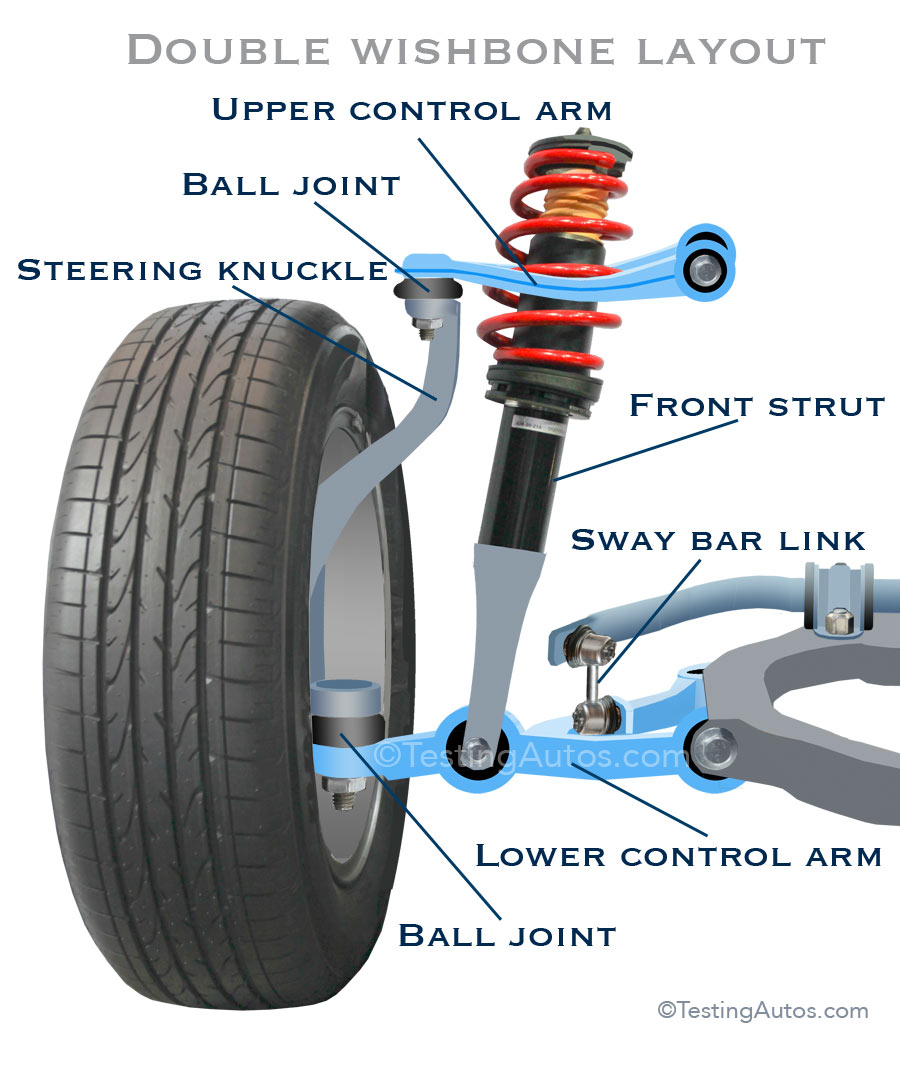
Both upper and lower control arms can affect steering if the vehicle uses both. Their exact jobs depend on the suspension design. Many double-wishbone systems use an upper and lower arm to locate the steering knuckle.
Other vehicles use a MacPherson strut design. In that setup, the lower control arm is often the main control arm at the bottom of the knuckle, while the strut acts as part of the upper locating structure.
There is no universal rule that one control arm always causes more steering trouble than the other. What matters most is which joint or bushing has developed play and how that movement changes the wheel position.
- ✦ Upper Control Arm
Common on double-wishbone and some truck or SUV suspensions, where it helps locate the upper part of the steering knuckle.
- ✦ Lower Control Arm
Common on many suspension types and often carries major cornering, braking, and road loads.
- ✦ Vehicle Design Matters
The steering effect of each arm depends on how the manufacturer designed the suspension.
How to Tell If Steering Problems Come From a Control Arm
Because several parts can cause the same steering symptoms, diagnosis should look at the whole front suspension and steering system. Replacing a control arm based only on a pulling symptom can waste money if the real problem is a tire or tie rod.
A technician will often start with a road test. The goal is to learn when the symptom appears. Pulling during braking, clunking on bumps, or a change in steering after a pothole can provide useful clues.
The vehicle is then raised safely so the suspension and steering joints can be checked. The technician may look for damaged rubber, loose ball joints, bent arms, movement at mounting points, or tire wear patterns.
Alignment readings can provide another clue. If one wheel has an unusual camber or caster value that cannot be adjusted into range, a bent or shifted suspension component may be involved.
- ✦ Inspect the Bushings
Look for deep cracks, separation, torn rubber, or unusual movement.
- ✦ Check Ball Joint Play
Excess looseness may affect wheel stability and steering accuracy.
- ✦ Inspect the Arm
Look for bends, cracks, impact marks, rust damage, or distorted mounting points.
- ✦ Check the Tires
Uneven wear can point toward alignment or suspension problems.
- ✦ Measure Alignment
Alignment readings can help show whether the wheel is sitting outside its designed position.
Control Arm Problem vs. Tie Rod Problem
Tie rods are direct steering parts. They transfer movement from the steering rack to the steering knuckles. Worn tie rods often create steering free play and can change toe.
Control arms locate the wheel through the suspension. Their wear may cause steering changes because the wheel shifts under load. Both problems can feel similar, so each joint needs to be checked.
Control Arm Problem vs. Wheel Bearing Problem
A bad wheel bearing may cause humming, growling, vibration, or wheel play. Some of these symptoms overlap with worn suspension parts.
Bearing noise often changes with vehicle speed or cornering load. A control arm problem is more likely to include clunks, alignment changes, or movement tied to braking and suspension travel.
Is It Safe to Drive With a Bad Control Arm?
Safety depends on how badly the part is worn. A small bushing crack may not create an immediate driving danger, while a loose ball joint or severely damaged control arm can be much more serious.
Do not ignore a sudden change in steering. Heavy clunking, severe pulling, obvious wheel movement, or a wheel that appears out of position should be inspected before normal driving continues.
A badly worn ball joint deserves special attention. If a load-bearing ball joint separates, the wheel can lose its normal connection to the suspension. That can cause a sudden loss of vehicle control.
If you are asking **do control arms affect steering** because your vehicle has become difficult to keep in its lane, treat the symptom as a real safety concern. Have the front suspension and steering checked rather than assuming the problem is only an alignment.
- ✦ Minor Wear
A small amount of bushing wear may only cause mild noise or alignment changes, but it should still be monitored.
- ✦ Noticeable Looseness
Loose steering, repeated clunks, or unstable braking call for prompt inspection.
- ✦ Severe Joint Play
Large ball joint movement or visible suspension damage can create a serious safety risk.
- ✦ Sudden Steering Change
A new or severe steering problem after an impact should be checked before regular driving.
Should You Get an Alignment After Replacing Control Arms?
In many cases, yes. Replacing a control arm can change the position of the wheel because the new part restores worn bushings or joints to their correct position. Some vehicles also use control arm mounting points as part of the alignment adjustment.
Even if the replacement part bolts into a fixed position, checking alignment is still wise when the old arm was bent or badly worn. The old part may have allowed the tire to run at the wrong angle for a long time.
An alignment is especially important if the steering wheel is no longer centered, the car pulls, or the tires show uneven wear. Alignment also helps confirm that no other suspension damage remains.
- ✦ Check Alignment After Replacement
This confirms that the wheels are positioned within the vehicle maker’s specifications.
- ✦ Inspect Tire Wear
Old alignment problems may already have damaged the tires.
- ✦ Center the Steering Wheel
Correct alignment can restore a steering wheel that sits off-center when driving straight.
How Control Arm Problems Change Handling at Different Speeds
Control arm wear may feel different at parking-lot speed than it does on the highway. At low speeds, you may mainly notice clunks or small steering movements. At higher speeds, looseness can become more obvious because tiny changes in wheel angle have a greater effect on vehicle direction.
Highway driving can expose wandering and poor straight-line stability. The car may seem to move around the lane more than usual. Crosswinds and road grooves can make this feeling stronger.
During cornering, worn control arm parts may let the wheel shift as load builds on the outside tire. The vehicle can then feel less precise or less settled through the turn.
During braking, worn bushings may allow the control arm to move backward or change angle. This can make the steering pull or twitch even if the brakes themselves are working evenly.
- ✦ Low Speed
Clunks and loose movement may be easier to hear during turns and parking maneuvers.
- ✦ Highway Speed
Wandering and repeated steering corrections may become more noticeable.
- ✦ Cornering
The vehicle may feel vague or less stable as suspension load increases.
- ✦ Braking
Worn bushings can allow unwanted wheel movement when weight transfers forward.
Can New Control Arms Improve Steering?
New control arms can improve steering when worn control arm parts are the actual cause of the problem. Replacing loose bushings or ball joints can restore more stable wheel positioning. The vehicle may track straighter and react more consistently to steering input.
Drivers often notice the biggest change when the old bushings had major movement. The front end may feel tighter, braking may feel more stable, and clunks may disappear.
However, control arm replacement will not fix every steering issue. A worn steering rack, tie rod, wheel bearing, damaged tire, or incorrect alignment can still cause poor handling.
This is why diagnosis matters. When asking **do control arms affect steering**, remember that they are one part of a system. Good steering depends on the control arms, joints, tires, alignment, and steering linkage working together.
- ✦ Better Stability
New parts can reduce unwanted wheel movement if worn bushings or joints caused the problem.
- ✦ More Predictable Steering
The vehicle may respond more consistently when wheel position stays stable.
- ✦ Reduced Noise
Replacing damaged bushings or joints may stop suspension clunks.
- ✦ Improved Alignment Control
Healthy suspension parts help alignment settings remain more stable during driving.
Common Mistakes When Diagnosing Steering Problems
One common mistake is assuming every steering issue comes from a steering part. Suspension, tires, brakes, and wheel bearings can all change the way a vehicle feels through the steering wheel.
Another mistake is paying for repeated alignments without checking for looseness first. If a control arm bushing or ball joint moves, the alignment may not remain stable.
It is also easy to replace parts because they look old. Visual wear matters, but the diagnosis should focus on whether the part has excessive movement, damage, or a clear connection to the symptom.
A complete inspection saves money and reduces guesswork. It also helps make sure a serious ball joint or suspension problem is not missed.
- ✦ Replacing Parts Without Testing
Similar symptoms can come from several suspension and steering components.
- ✦ Aligning Before Repair
Loose suspension parts should be corrected before the final wheel alignment.
- ✦ Ignoring Tires
Tire pressure, wear, and internal tire damage can create pulling or vibration.
- ✦ Ignoring Impact Damage
A pothole or curb strike can damage several parts at the same time.
When Should You Have the Control Arms Inspected?
There is no single mileage at which every control arm fails. Service life depends on vehicle design, road conditions, climate, driving habits, and the type of bushing or ball joint used.
Vehicles driven on rough roads, broken pavement, or roads with frequent potholes may place more stress on suspension parts. Salt and moisture can also damage metal parts and mounting hardware in areas that use road salt during winter.
You should have the suspension checked when you notice new steering or handling symptoms. Inspection is also wise after a hard impact with a pothole, curb, or road debris.
If you are still wondering **do control arms affect steering**, remember that the connection becomes most obvious when wear allows the wheel to move outside its normal path. Catching that wear early can help protect tires and other suspension parts.
- ✦ After a Hard Impact
Check the suspension if you hit a deep pothole or curb and the steering changes afterward.
- ✦ When Clunks Start
New knocking sounds from the front suspension deserve inspection.
- ✦ When Tires Wear Unevenly
Uneven wear may indicate alignment or suspension problems.
- ✦ When the Car Wanders
Repeated steering correction can point toward suspension, steering, tire, or alignment faults.
- ✦ Before an Alignment
A suspension check can prevent wasted alignment work if parts are loose.