Do Control Arms Affect Ride Quality? Signs, Causes, and Fixes
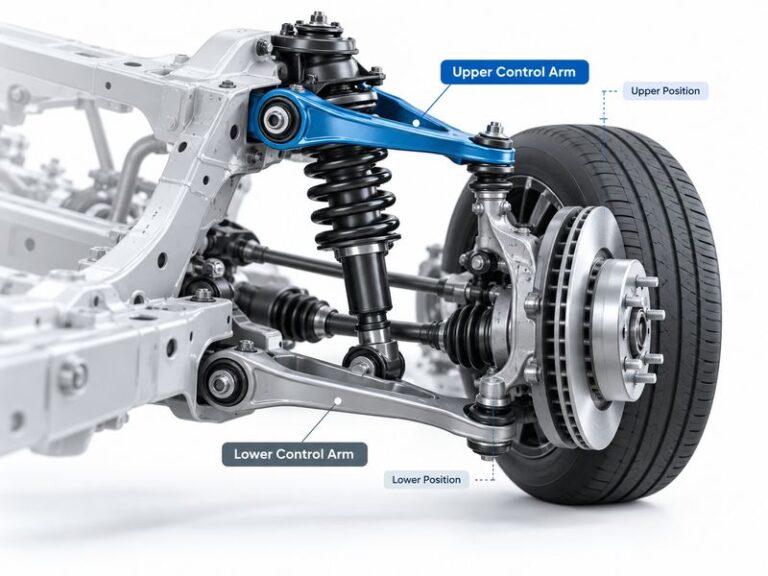
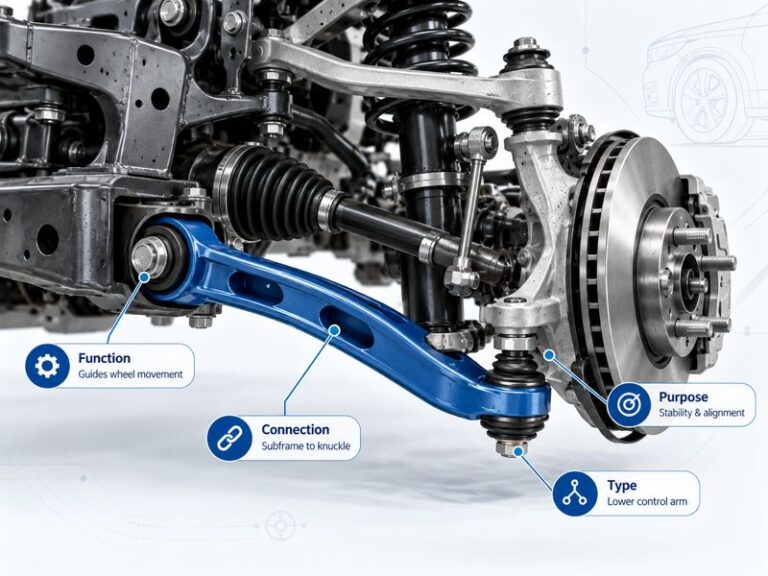
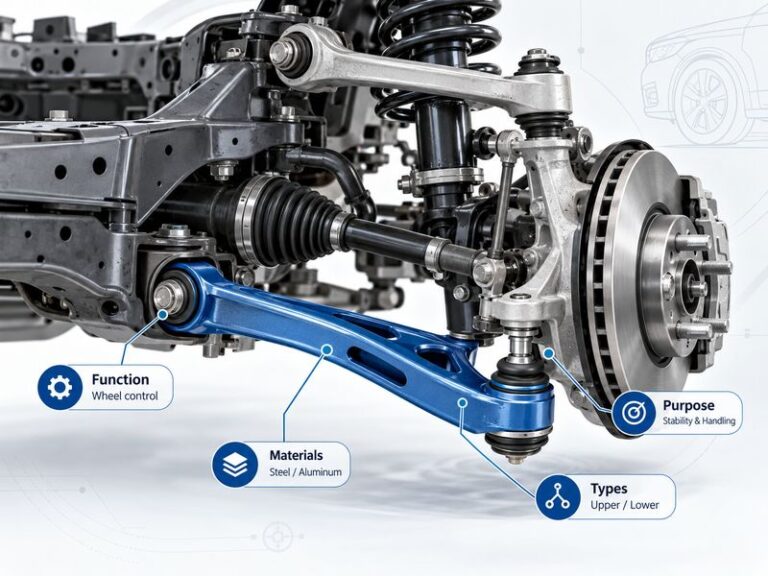
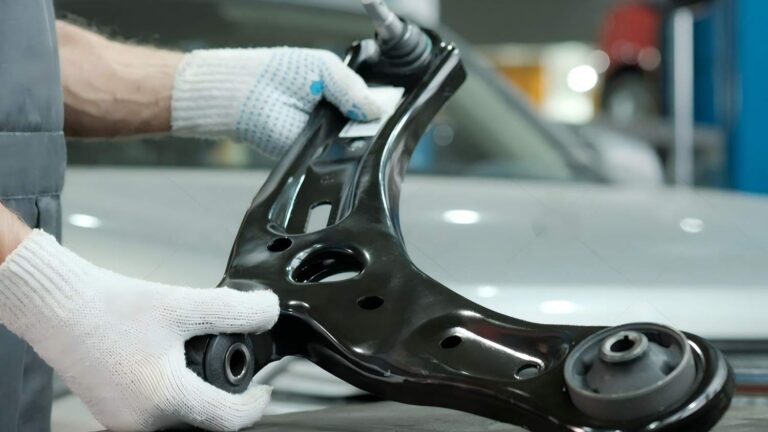
Do control arms affect ride quality? They certainly can. A control arm is a key link between the vehicle’s frame or subframe and the wheel assembly. It lets the wheel move up and down with the suspension while helping keep the tire in the correct position.
When the control arm itself is in good shape, you may never notice it working. Problems become much easier to feel when its bushings wear out, a ball joint develops play, or the arm bends after an impact. The vehicle may begin to clunk over bumps, shake at certain speeds, pull on the road, or feel less settled during turns.
In everyday U.S. driving, potholes, broken pavement, speed bumps, curbs, road salt, and high mileage can all take a toll on suspension parts. I have found that drivers often blame shocks or struts first when a vehicle starts riding poorly. Those parts are common causes, but control arm wear can create many of the same complaints and should not be overlooked.
This guide explains how control arms influence comfort, what a failing control arm feels like, how bushings and ball joints change the ride, and when replacement may make a noticeable difference.

Do Control Arms Affect Ride Quality?
Yes, and the effect can range from mild to severe. Control arms help guide wheel movement and hold the wheel assembly in a stable position. If an arm or one of its joints has too much movement, the suspension cannot control the wheel as precisely as it should.
Ride quality is not only about how soft the suspension feels. It also includes how stable the vehicle feels over bumps, how much vibration reaches the cabin, how well the tires stay in contact with the road, and how predictable the steering feels.
A healthy control arm allows the wheel to move through its intended path. The bushings absorb some vibration while the ball joint allows controlled movement. When these parts wear, unwanted motion enters the system.
That extra motion can make a smooth road feel less smooth. It can also make rough pavement feel much worse because the suspension may react with noise, movement, or vibration instead of controlling the impact.
- ✦ Wheel stability
Control arms help keep the wheel positioned correctly as the suspension moves.
- ✦ Impact control
Bushings help isolate some road vibration before it reaches the vehicle body.
- ✦ Steering feel
A worn control arm can allow unwanted wheel movement that makes steering feel loose or vague.
- ✦ Tire contact
Proper suspension geometry helps the tire maintain useful contact with the road.
Why Control Arms Matter Even Though They Are Not Springs or Shocks
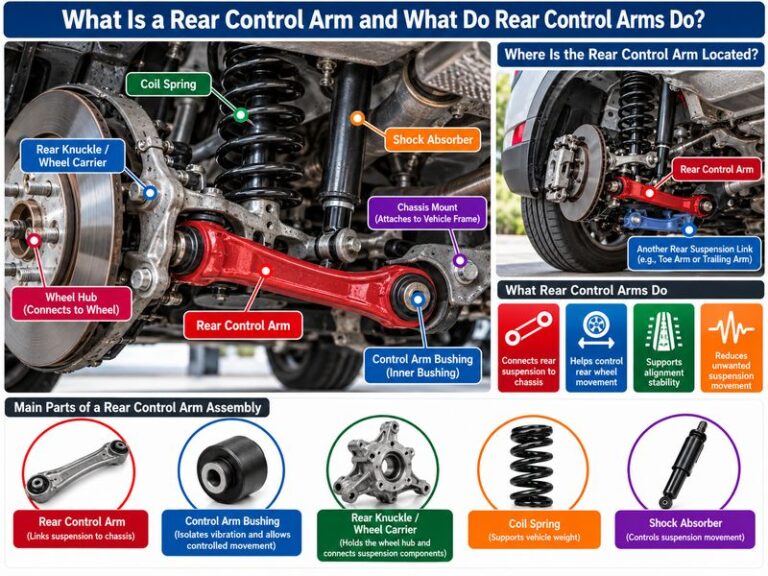
Control arms do not support the vehicle in the same way springs do, and they do not damp suspension movement like shocks or struts. Their job is mainly to locate and guide the wheel. That role still has a major effect on how controlled and comfortable the vehicle feels.
Think of the suspension as a group of parts that must work together. A good shock cannot fully compensate for a loose control arm bushing, just as a new tire cannot correct a badly worn ball joint.
- ✦ Springs
Support vehicle weight and absorb large road movements.
- ✦ Shocks or struts
Control spring movement and reduce bouncing.
- ✦ Control arms
Guide wheel travel and help maintain proper suspension geometry.
How Control Arms Influence Suspension Comfort
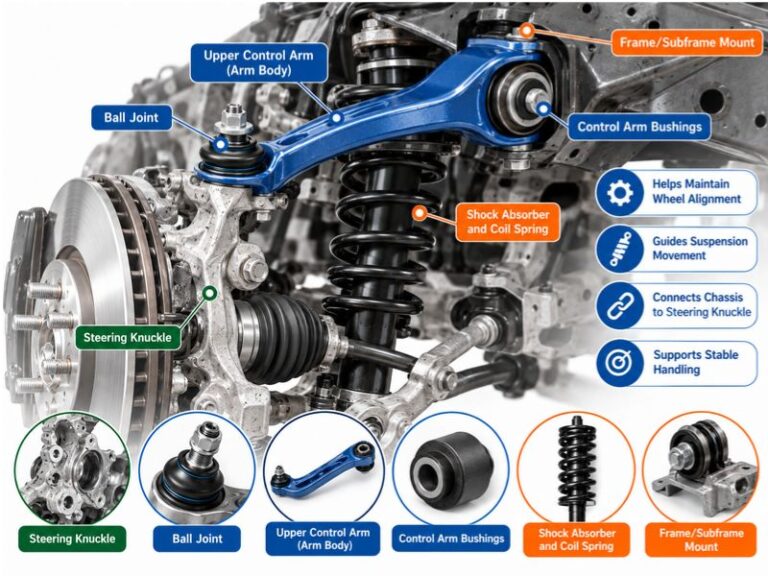
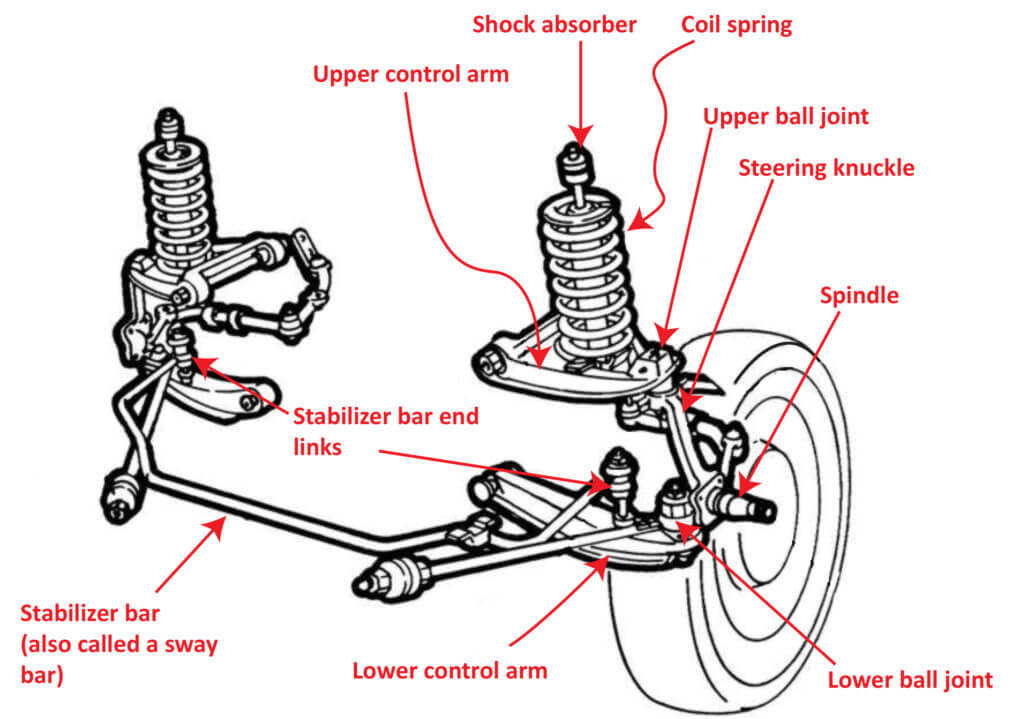
To understand why the answer to do control arms affect ride quality is yes, it helps to look at how the wheel moves. One end of a typical control arm attaches to the chassis through rubber or hydraulic bushings. The outer end usually connects to the steering knuckle through a ball joint.
The arm moves as the wheel travels over dips and bumps. The bushings allow controlled movement while reducing the amount of road vibration transferred into the body. At the same time, the ball joint lets the suspension and steering move through the needed angles.
When everything fits tightly, wheel movement feels controlled. When a bushing splits or softens, the arm can shift more than designed. That movement may be felt as a thump, shake, delayed steering response, or unstable sensation.
A bent control arm can create another problem. Even if it does not make noise, it may change camber, caster, or wheel position. That can affect alignment, steering behavior, tire wear, and how smoothly the vehicle tracks down the highway.

- ✦ Controlled wheel travel
The arm keeps the wheel following the path designed by the suspension.
- ✦ Vibration isolation
Bushings reduce direct transfer of some road harshness into the body.
- ✦ Alignment stability
A solid control arm helps keep wheel angles more consistent while driving.
Upper and Lower Control Arms
Some vehicles use both upper and lower control arms. Others, especially many vehicles with MacPherson strut front suspension, may use only a lower control arm at each front wheel.
Both designs can provide good ride quality when all parts are healthy. What matters most is that the arm, bushings, ball joints, and mounting points remain tight and within specification.
How Bad Control Arm Bushings Affect Ride Quality
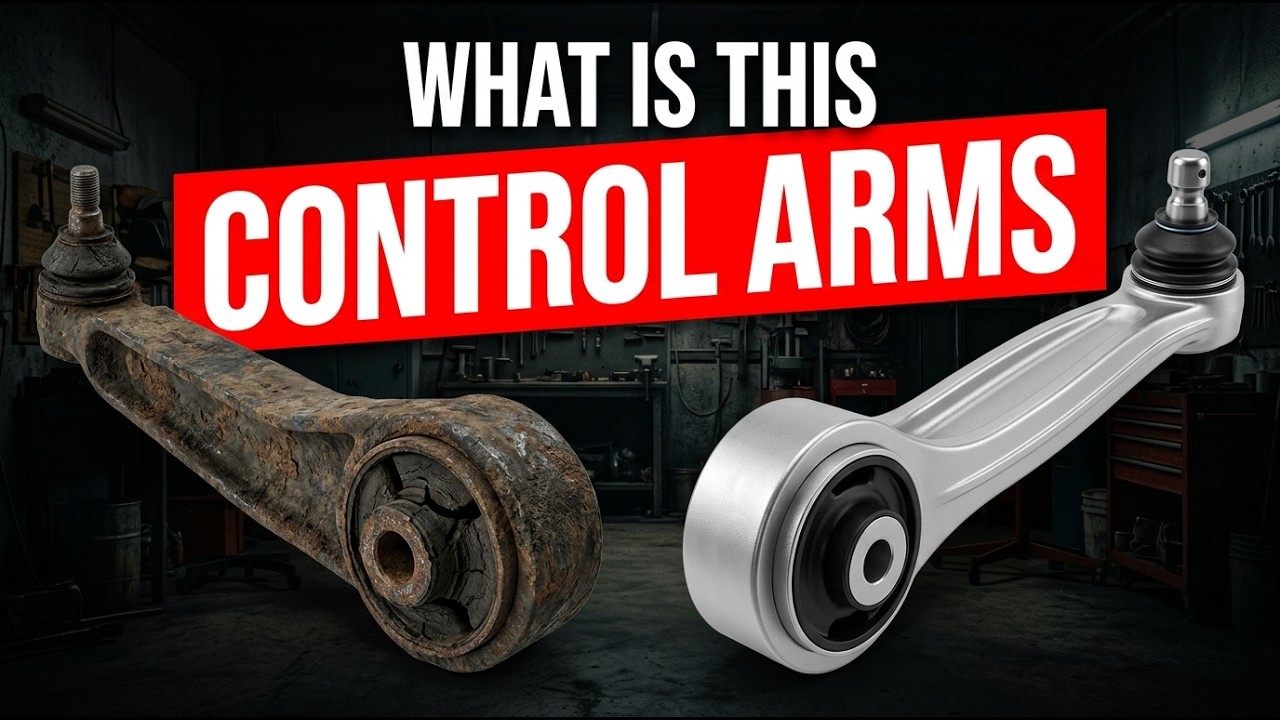
Control arm bushings are often the part that changes ride quality first. Most are made from rubber or a similar flexible material. Their job is to allow limited suspension movement while reducing noise and vibration.
As rubber ages, it may crack, split, harden, soften, or separate from its sleeve. The control arm can then move forward, backward, or sideways more than intended. That movement may become very noticeable over potholes or during braking.
A worn bushing can make the front of the vehicle feel loose even when the control arm itself is not bent. Drivers may describe the sensation as floating, wandering, shifting, or knocking.
Ride harshness can also increase. If a bushing has hardened or torn apart, it may no longer isolate road impacts well. More vibration and impact energy can reach the chassis and cabin.

- ✦ Clunking over bumps
Excess movement can cause the control arm or its hardware to shift under load.
- ✦ Harsh impacts
Damaged bushings may absorb less road vibration.
- ✦ Steering wander
The wheel can change position slightly as the arm moves inside worn bushings.
- ✦ Movement during braking
A failed bushing may let the wheel shift when braking force loads the suspension.
Can Stiffer Control Arm Bushings Make the Ride Harsher?
Yes. Stiffer polyurethane or performance bushings may reduce unwanted control arm movement, but they can also transfer more noise and vibration into the cabin. This is a common trade-off in modified street cars.
For a daily driver where comfort matters most, factory-style rubber bushings often give the best balance. Performance drivers may accept extra harshness in return for sharper suspension response.
- ✦ Rubber bushings
Usually offer better vibration isolation and everyday comfort.
- ✦ Stiffer bushings
Can improve response but may increase noise, vibration, and harshness.
Can Bad Ball Joints Make the Ride Feel Rough?
Yes. Many control arm assemblies use a ball joint at the outer end. The ball joint acts as a pivot between the control arm and steering knuckle. It must move freely while remaining tight enough to keep the wheel stable.
Wear inside the joint can create looseness. You may hear a clunk when the wheel hits a bump or feel extra vibration through the steering wheel. In some cases, the vehicle may feel less precise when changing lanes or driving over uneven pavement.
A dry or binding ball joint can create a different feeling. Instead of looseness, steering may feel stiff, notchy, or reluctant to return to center. The exact symptoms depend on the suspension design and how badly the joint has worn.
A severely worn ball joint is also a safety concern. If a load-bearing joint separates, control of the wheel can be lost. A joint with obvious play should be inspected and repaired rather than treated as only a comfort problem.
- ✦ Loose joint
May cause clunks, vibration, unstable wheel movement, or vague steering.
- ✦ Binding joint
May cause stiff steering or poor steering return.
- ✦ Severe wear
Can become a safety issue and should be repaired promptly.
Common Ride Symptoms of a Bad Control Arm
When drivers ask do control arms affect ride quality, they are often trying to connect a new driving symptom with a suspension problem. Several symptoms can point toward a worn control arm, bushing, or ball joint.
No single symptom proves that the control arm is bad. Tires, wheel bearings, tie rods, sway bar links, struts, shocks, engine mounts, and other suspension parts can create similar complaints. A proper inspection matters.
Pay attention to when the symptom occurs. A clunk during braking may suggest a different loading problem than a vibration that appears only at highway speed. These details can help narrow down the cause.

- ✦ Clunking or knocking
Noise may appear over bumps, during braking, or when changing direction.
- ✦ Steering vibration
Loose suspension parts can allow unwanted wheel movement that reaches the steering wheel.
- ✦ Wandering
The vehicle may need frequent steering corrections on a straight road.
- ✦ Pulling
Changed suspension geometry can make the vehicle drift toward one side.
- ✦ Uneven tire wear
A worn or bent arm may contribute to alignment changes that wear a tire unevenly.
- ✦ Harshness over bumps
Damaged bushings can transfer more road impact into the body.
- ✦ Loose or unsettled feel
The vehicle may feel less planted during turns, braking, or rough-road driving.
What Does a Bad Control Arm Feel Like at Highway Speed?
At highway speed, a worn control arm may make the vehicle feel less stable. You might notice wandering, steering corrections, vibration, or a slight shift when accelerating or braking.
These symptoms deserve attention because highway speed increases the forces acting on suspension parts. However, tire balance, wheel damage, alignment, and worn steering parts should also be checked.
What Does a Bad Control Arm Feel Like Over Bumps?
Over bumps, worn control arm parts may cause a dull clunk, knock, thud, or loose feeling. You may also feel more impact through the floor, seat, or steering wheel.
Large potholes can make the problem easier to notice because the suspension moves farther and loads the bushings and ball joint more heavily.
Can a Bent Control Arm Affect Ride Quality?
A bent control arm can affect both ride quality and handling. It may happen after hitting a deep pothole, curb, road debris, or another object. Collision damage can also bend an arm or shift its mounting points.
A bent arm changes where the wheel sits in relation to the vehicle. Even a small change can affect camber, caster, or wheelbase on that side. The vehicle may pull, the steering wheel may sit off-center, or the tire may wear unevenly.
Unlike a worn bushing, a bent control arm may not create a constant clunk. The main clue may be an alignment angle that cannot be brought back into specification. A technician may then inspect the arm and related suspension mounting points for damage.
If a vehicle suddenly begins driving differently after a hard impact, an inspection is wise. Continuing to drive with damaged suspension geometry can damage tires and place extra stress on other components.

- ✦ After a pothole impact
A sudden change in steering or alignment can indicate suspension damage.
- ✦ After hitting a curb
Check for a bent arm, damaged wheel, shifted alignment, and tire damage.
- ✦ After a collision
Control arms and their mounting points should be inspected as part of suspension damage assessment.
Do New Control Arms Improve Ride Quality?
New control arms can improve ride quality when worn control arm parts are causing the problem. Replacing a loose arm assembly can restore tighter wheel control and reduce noises, vibration, wandering, and unwanted movement.
The improvement can be easy to notice when the old bushings were badly torn or the ball joints had significant play. The vehicle may feel quieter and more settled over rough pavement. Steering can also feel more predictable.
However, replacing good control arms will not automatically make every vehicle ride better. If the rough ride comes from worn shocks, damaged tires, incorrect tire pressure, broken springs, or another problem, new control arms may make little difference.
This is why diagnosis should come before replacement. The goal is not simply to install new suspension parts. The goal is to identify which worn part is changing the way the vehicle rides.

- ✦ Possible improvement
Less clunking, vibration, wandering, and suspension looseness.
- ✦ Better wheel control
Fresh bushings and joints can reduce unwanted movement.
- ✦ Not a cure for every rough ride
Shocks, struts, springs, tires, and other parts still need to be checked.
Will the Vehicle Feel Different Right After Replacement?
It may. If the old parts were badly worn, the suspension can feel tighter right away. Clunks may disappear, steering response may improve, and the front end may feel more stable.
A new rubber bushing can also feel slightly firmer than a very soft worn bushing. That does not always mean the ride became worse. It may simply mean uncontrolled suspension movement has been removed.
Control Arms vs. Shocks and Struts: Which One Causes a Rough Ride?
Control arms and shocks can both affect ride quality, but they usually do so in different ways. Weak shocks or struts tend to reduce control of spring movement. The vehicle may bounce, float, nose-dive, or continue moving after a bump.
Worn control arm bushings are more likely to cause looseness, clunks, movement during braking, or harsh impacts. A worn ball joint may add knocking, steering play, or unstable wheel movement.
The symptoms can overlap. For example, both a bad strut and a worn control arm can make the front end feel unstable over rough pavement. That is why visual inspection and physical checks are important.
If you ask do control arms affect ride quality because your vehicle suddenly feels rough, avoid replacing parts based only on one symptom. Look at the suspension as a complete system.

- ✦ Bad shocks or struts
Often cause bouncing, floating, excessive body motion, or poor control after bumps.
- ✦ Bad control arm bushings
Often cause clunks, looseness, harsh impacts, or shifting during braking.
- ✦ Bad ball joints
Can cause knocking, steering looseness, vibration, or unstable wheel movement.
- ✦ Bad tires
Can cause vibration, harshness, pulling, noise, or a rough ride even when suspension parts are healthy.
How to Tell if Control Arms Are Causing Your Rough Ride
Start with the symptoms you can observe safely. Listen for clunks over small bumps. Notice whether the steering feels loose or whether the vehicle shifts when you brake. Check whether one tire shows unusual wear.
A visual inspection may reveal cracked or separated bushings, but not every defect is easy to see with the vehicle on the ground. Ball joint play and bushing movement often require the suspension to be unloaded or loaded in a specific way.
A repair shop can lift the vehicle and check control arm mounting points, bushings, and ball joints. The technician may use a pry bar or other approved method to look for movement beyond the vehicle maker’s limits.
Alignment measurements can also provide clues. If camber or caster is far out of range, or cannot be adjusted into specification, bent or shifted suspension parts may be involved.
- ✦ Inspect the bushings
Look for major cracks, separation, missing rubber, or obvious movement.
- ✦ Check the ball joint
A technician can measure or inspect play based on the vehicle maker’s procedure.
- ✦ Look at tire wear
Uneven wear may point to alignment or suspension problems.
- ✦ Check alignment
Unexpected camber or caster readings can help identify damaged suspension geometry.
- ✦ Inspect related parts
Tie rods, wheel bearings, sway bar links, struts, shocks, and tires may create similar symptoms.
Can You Check Control Arms at Home?
You can inspect visible bushings and look for obvious damage, but checking joint play correctly can be harder. Suspension designs differ, and lifting a vehicle incorrectly is dangerous.
If you are not experienced with suspension work, have a qualified technician perform the physical inspection. This is especially important when there is steering play, severe clunking, or visible ball joint damage.
Do Control Arms Affect Wheel Alignment?
Yes. Control arms are part of the structure that establishes wheel position. Their shape, length, mounting points, and joints all affect suspension geometry.
A worn bushing can let the arm shift while the vehicle is moving. A bent arm can place the wheel in the wrong position all the time. Either problem may contribute to alignment changes.
Poor alignment can then affect ride quality in its own way. The vehicle may pull, follow grooves in the road, feel nervous at speed, or wear tires unevenly. Worn tires can add even more noise and vibration.
This connection is another reason do control arms affect ride quality has more than a simple yes-or-no answer. A damaged arm can change the ride directly through loose joints and indirectly through poor alignment and tire wear.
- ✦ Camber
Describes how much the wheel tilts inward or outward when viewed from the front.
- ✦ Caster
Influences steering stability and return-to-center behavior.
- ✦ Toe
Describes whether the tires point slightly inward or outward when viewed from above.
Do You Need an Alignment After Replacing Control Arms?
An alignment is commonly recommended after control arm replacement. Removing the arm can affect suspension position, and the new part may place the wheel differently from the worn part it replaced.
The exact need depends on the vehicle and repair procedure. Still, checking alignment is a practical way to protect the tires and confirm that the suspension geometry is correct.
What Causes Control Arms and Bushings to Wear Out?
Control arms are built to handle large loads, but their bushings and joints move every time you drive. Age and mileage slowly wear these parts. Road conditions can speed up the process.
Potholes are a common concern in many parts of the United States. A hard impact sends a strong load through the tire, wheel, steering knuckle, control arm, and chassis. A severe hit may damage a bushing or bend an arm.
Rubber also changes with age. Heat, cold, oil contamination, road salt, and repeated flexing can cause it to crack or separate. Ball joints may wear as lubrication breaks down or contamination enters the joint.
There is no single mileage at which every control arm fails. Vehicle design, road conditions, driving habits, climate, part quality, and previous repairs all matter.
- ✦ Potholes
Hard impacts can stress bushings, ball joints, and the metal arm.
- ✦ Curbs
A strong side impact may bend suspension parts or change alignment.
- ✦ Age
Rubber bushings can crack, harden, or separate over time.
- ✦ Road salt and moisture
Corrosion can affect metal components and hardware in areas with harsh winters.
- ✦ Heavy use
Rough roads, frequent loads, and demanding driving can increase suspension wear.
Should You Replace the Whole Control Arm or Just the Bushings?
The best repair depends on the vehicle and how the control arm is built. On some cars, bushings and ball joints can be serviced separately. On others, replacing the complete arm is easier or recommended.
A complete control arm often arrives with new bushings already installed. Some assemblies also include a new ball joint. This can reduce labor because old bushings do not have to be pressed out and new ones pressed in.
Replacing only the bushing may make sense when the arm is straight, corrosion is limited, the ball joint is healthy, and quality replacement bushings are available. The total labor cost should still be compared with the price of a complete arm.
Part quality matters as well. A low-quality control arm with poor bushings may not give the same ride, fit, or service life as a good original-equipment-style part.
- ✦ Replace the whole arm
Often practical when the arm includes installed bushings and a ball joint.
- ✦ Replace bushings only
May be reasonable when the original arm remains straight and serviceable.
- ✦ Check both sides
The opposite side may have similar age and mileage even if it has not failed yet.
Should Control Arms Be Replaced in Pairs?
Control arms do not always have to be replaced in pairs. If one arm is damaged by an impact and the other is still in good condition, replacing only the damaged side may be appropriate.
For age-related bushing wear, both sides may be in similar condition. Inspecting the opposite side can help you decide whether replacing both makes sense.
Can You Drive With a Bad Control Arm?
How safe it is to drive depends on what has failed and how severe the wear is. A slightly cracked bushing is not the same as a ball joint with major looseness or a control arm that is visibly bent.
Do not ignore severe clunking, sudden steering changes, obvious wheel movement, or a ball joint that has significant play. Suspension failures can affect steering and wheel control.
If the vehicle suddenly pulls after a pothole or collision, avoid assuming it only needs an alignment. A bent wheel, tire damage, steering damage, or suspension damage may be present.
When in doubt, have the vehicle inspected before continuing normal driving. Ride quality can be the first warning that a suspension part is no longer working as designed.
- ✦ Minor bushing wear
Arrange an inspection and monitor symptoms rather than ignoring the issue.
- ✦ Severe steering looseness
Have the vehicle inspected promptly because steering stability may be affected.
- ✦ Major ball joint play
Avoid normal driving until the suspension has been evaluated.
- ✦ Visible damage after impact
Inspect the suspension, wheel, tire, and alignment before assuming the vehicle is safe.
How to Protect Ride Quality and Extend Control Arm Life
You cannot prevent every control arm problem, but basic habits can reduce unnecessary stress. Slow down before potholes and speed bumps when it is safe to do so. Avoid hitting curbs, especially with the front wheels turned.
Keep tires inflated to the pressure listed by the vehicle maker. Extremely low tire pressure can make impacts harsher on wheels and suspension parts. Tire condition also has a major effect on ride comfort.
Have unusual noises checked before they become severe. A small suspension issue can place extra stress on nearby parts. Early diagnosis can also prevent uneven tire wear.
After any major suspension repair, make sure all fasteners are tightened according to the correct procedure. Some rubber-bushed suspension parts must be torqued at normal ride height to avoid twisting the bushing at rest.
- ✦ Avoid hard impacts
Reduce speed for potholes and rough road sections when conditions allow.
- ✦ Maintain tire pressure
Correct pressure supports proper handling and helps the tire absorb normal road impacts.
- ✦ Inspect early
Check new clunks, steering changes, and unusual tire wear before they become worse.
- ✦ Use correct repair procedures
Proper installation and torque help replacement bushings work as designed.
- ✦ Check alignment
An alignment after suspension repairs can help preserve handling and tire life.