Can You Drive With a Bent Control Arm? Risks and Warning Signs
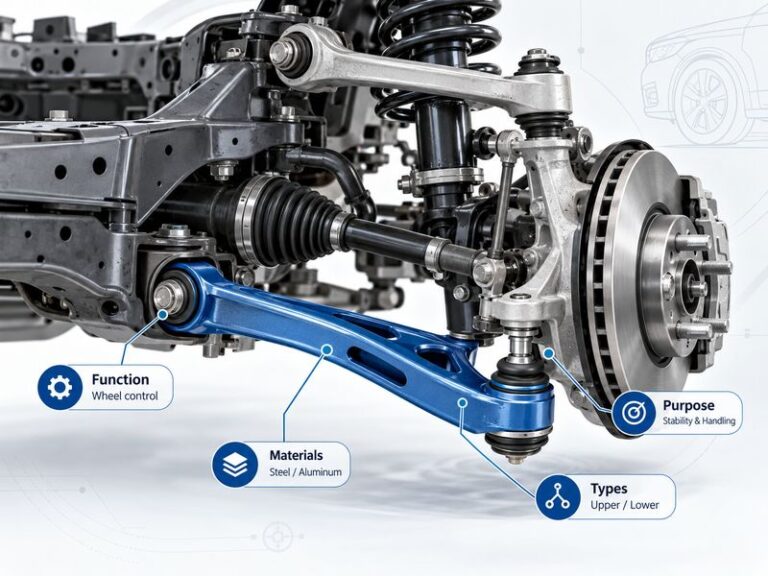
If you are asking **can you drive with a bent control arm**, the safest answer is that you should avoid normal road driving until the suspension is inspected. A control arm helps keep the wheel in the correct position as the suspension moves. Once that arm bends, the wheel may no longer sit at the angle the vehicle maker intended.
A small bend may not stop the car from moving. That can make the problem easy to underestimate. The vehicle may still start, steer, and travel down the road while the tire is wearing fast or the suspension is under added stress.
This type of damage often follows a curb hit, pothole impact, crash, or hard contact with road debris. On U.S. roads, a deep pothole or curb strike can deliver enough force to damage more than one suspension part. A bent control arm may come with a damaged ball joint, tie rod, wheel, strut, wheel bearing, or subframe.
In practical repair work, the key question is not just whether the vehicle can physically move. The better question is whether you can still control it during a hard stop, quick lane change, or sudden bump. This guide explains the risks, symptoms, inspection steps, repair process, and signs that mean the vehicle should be towed.
Can You Drive With a Bent Control Arm Safely?
So, **can you drive with a bent control arm** if the car still feels normal? In most cases, you should not treat the vehicle as safe for regular driving. The bend can change suspension geometry even when the steering wheel still feels fairly normal.
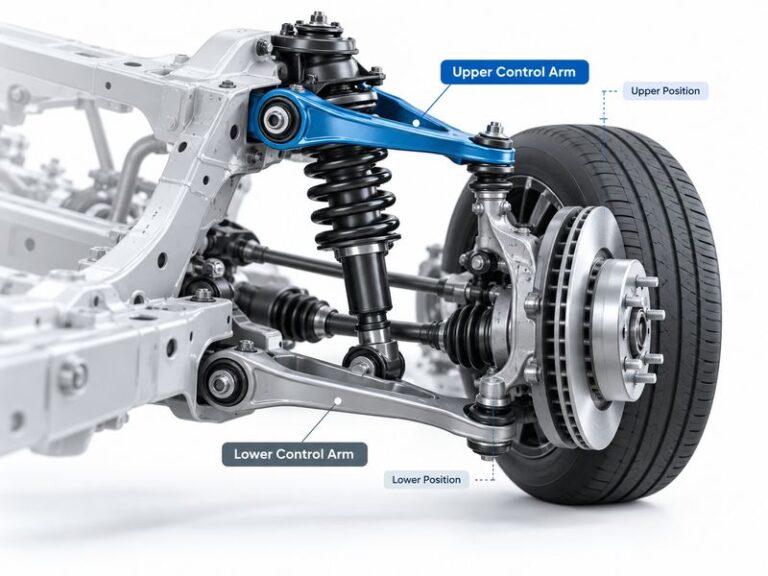
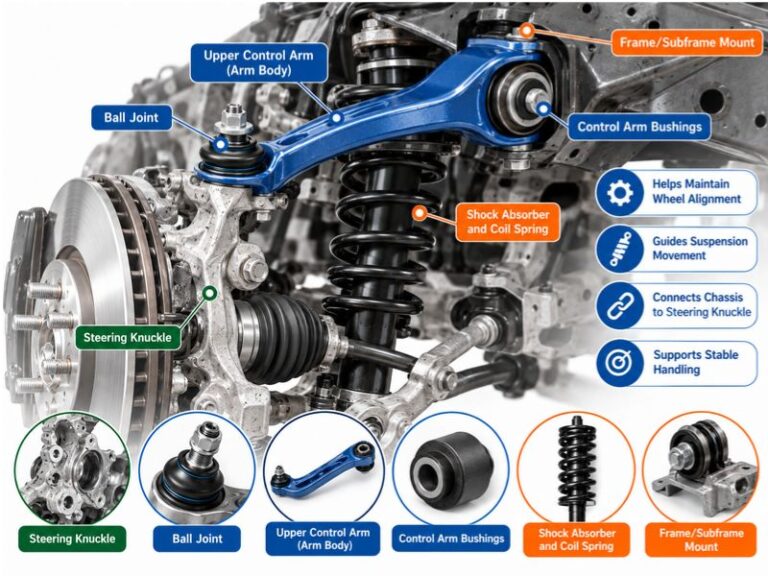
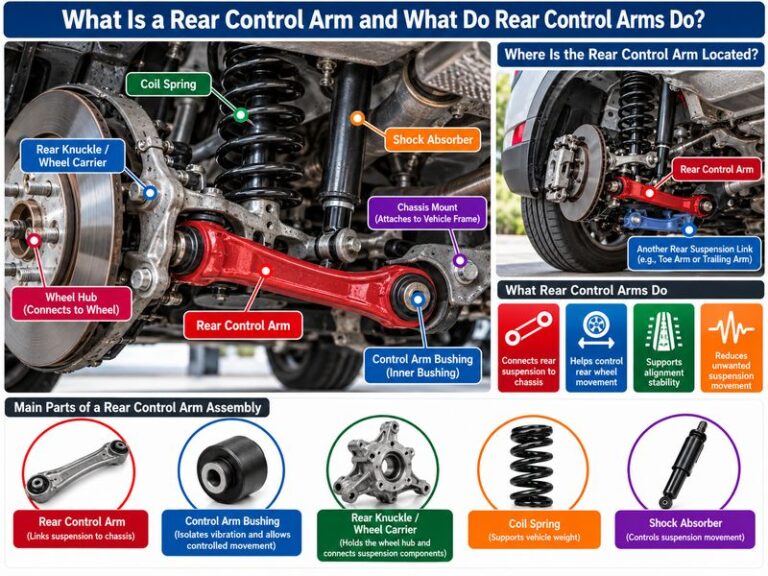
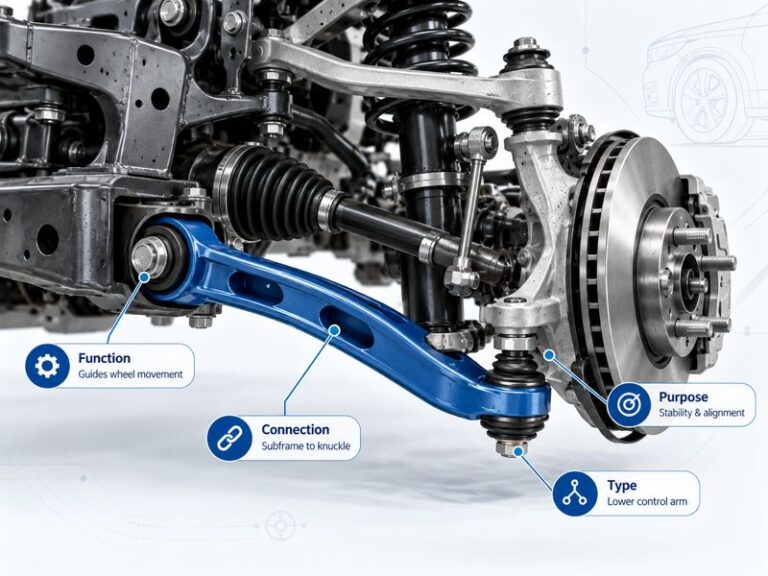
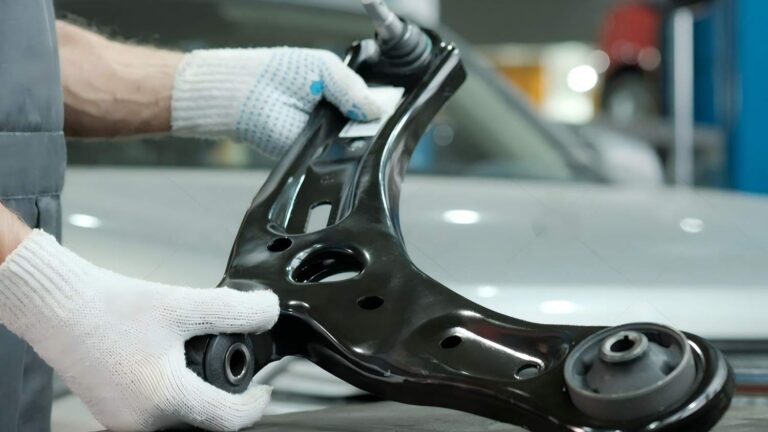
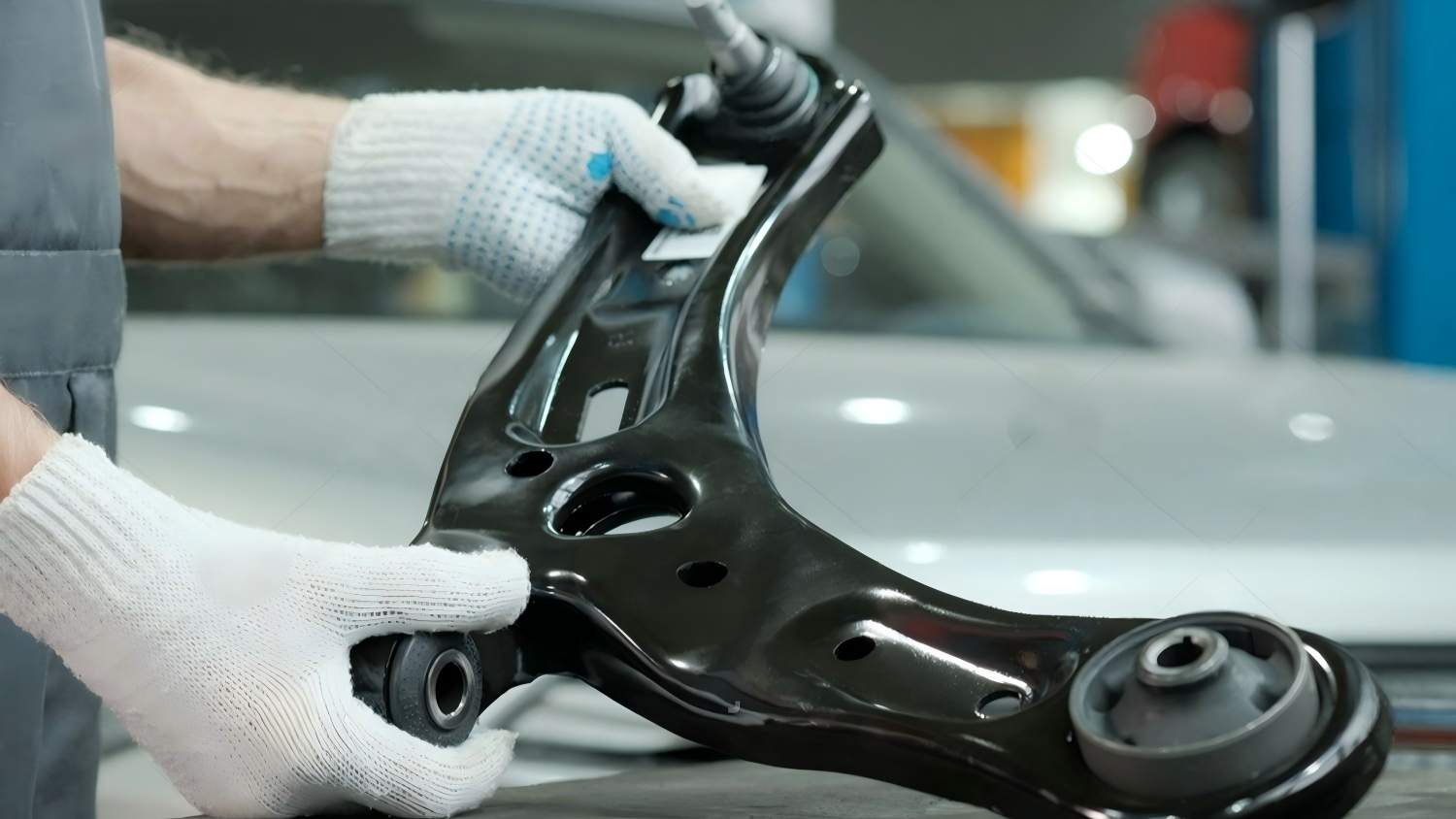
The control arm links the wheel assembly to the vehicle body or subframe. It allows controlled up-and-down movement while helping hold the wheel in the right place. When the arm bends, the wheel can move forward, backward, inward, or outward from its proper position.
That change can affect camber, caster, and toe. These are wheel alignment angles. They influence how straight the car tracks, how it responds to steering, and how the tire meets the road.
The risk also depends on how badly the arm is bent and what else was damaged during the impact. A car with a minor bend may behave very differently from one with a cracked arm or a ball joint that has shifted.

- ✦ Minor visible bend
The vehicle may still move, but alignment can be wrong and tire wear may increase quickly.
- ✦ Severe bend
The wheel may sit far out of position and steering can become unstable or unpredictable.
- ✦ Cracked or torn control arm
Do not drive. A structural failure can allow major wheel movement and loss of control.
- ✦ Tire or wheel rubbing
Stop driving because continued contact can damage the tire and may lead to sudden tire failure.
Can You Drive a Short Distance With a Bent Control Arm?
A very short move in a parking area is different from driving several miles on public roads. If the damage is mild and the wheel is not rubbing, the vehicle may physically move at very low speed. That does not make the suspension safe for road use.
If you must choose between driving to a repair shop and arranging a tow, towing is the lower-risk choice when you already know the control arm is bent. The cost of a tow can be far less than the cost of a ruined tire, damaged wheel, or additional suspension repair.
- ✦ Avoid highway speeds
Higher speed makes poor alignment and unstable steering much more dangerous.
- ✦ Avoid long trips
More miles can increase tire wear and place more load on damaged suspension parts.
- ✦ Avoid hard braking
A bent suspension may react poorly when weight shifts quickly toward the front of the car.
Why a Bent Control Arm Can Be Dangerous
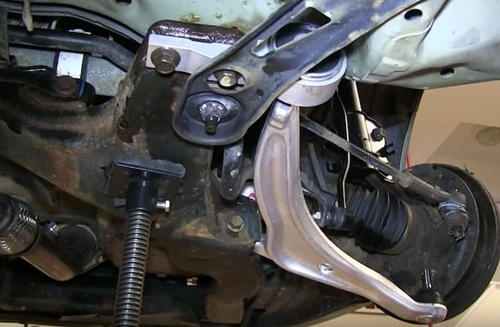
The biggest problem with a bent control arm is that it changes where the wheel sits. Your steering and suspension work best when each wheel stays within a narrow range of angles. A bent arm can move those angles outside that range.
The vehicle may start pulling left or right. It may wander on rough pavement. The steering wheel may also sit off-center even when you are traveling straight.
During an emergency move, the problem can become more serious. Hard braking, quick steering, and road bumps put high forces through the control arm. A weakened or badly bent part may not handle those forces as designed.
This is why the answer to **can you drive with a bent control arm** is based on safety, not simply on whether the engine runs or the wheels turn.
- ✦ Reduced steering accuracy
The car may not follow steering input as cleanly as it should.
- ✦ Poor tire contact
A bad wheel angle can reduce how evenly the tire contacts the road.
- ✦ Uneven braking behavior
Suspension geometry changes can make the vehicle feel less stable during hard braking.
- ✦ Added suspension stress
Ball joints, bushings, tie rods, struts, and wheel bearings may carry loads they were not meant to carry.
- ✦ Possible structural failure
A severely damaged, cracked, or weakened arm may fail further under road load.
Why the Problem Can Get Worse While Driving
Metal that has already bent has experienced a force strong enough to change its shape. Another pothole or curb hit can add more stress. Damaged bushings or joints may also move more than normal.
The tire can then begin wearing on one edge. In severe cases, the tire may contact the fender liner, suspension, or body. What begins as an alignment issue can turn into a much larger repair.
Common Signs of a Bent Control Arm
A bent control arm does not always produce one clear symptom. Some cars show obvious wheel movement. Others only show a steering change or abnormal tire wear.
If the symptoms appeared right after you hit a curb, pothole, road debris, or another vehicle, suspension damage should be high on the inspection list. Even a hard impact that leaves the body untouched can bend parts underneath the car.
The symptoms below can also come from other steering or suspension faults. A proper inspection is needed before replacing parts.

- ✦ Car pulls to one side
The vehicle may drift left or right because the damaged arm changed the wheel alignment.
- ✦ Steering wheel is off-center
You may need to hold the steering wheel at an angle to keep the vehicle moving straight.
- ✦ Wheel looks pushed back or forward
Compare the wheel position within the fender opening to the wheel on the opposite side.
- ✦ Uneven tire wear
Excess wear on the inner or outer edge can result from abnormal camber or toe.
- ✦ Clunking or knocking
Impact damage may affect the control arm, bushing, ball joint, or another nearby part.
- ✦ Vehicle feels unstable
The car may wander, react strangely over bumps, or require frequent steering corrections.
- ✦ Tire rubs nearby parts
A shifted wheel may contact the fender liner or another suspension component.
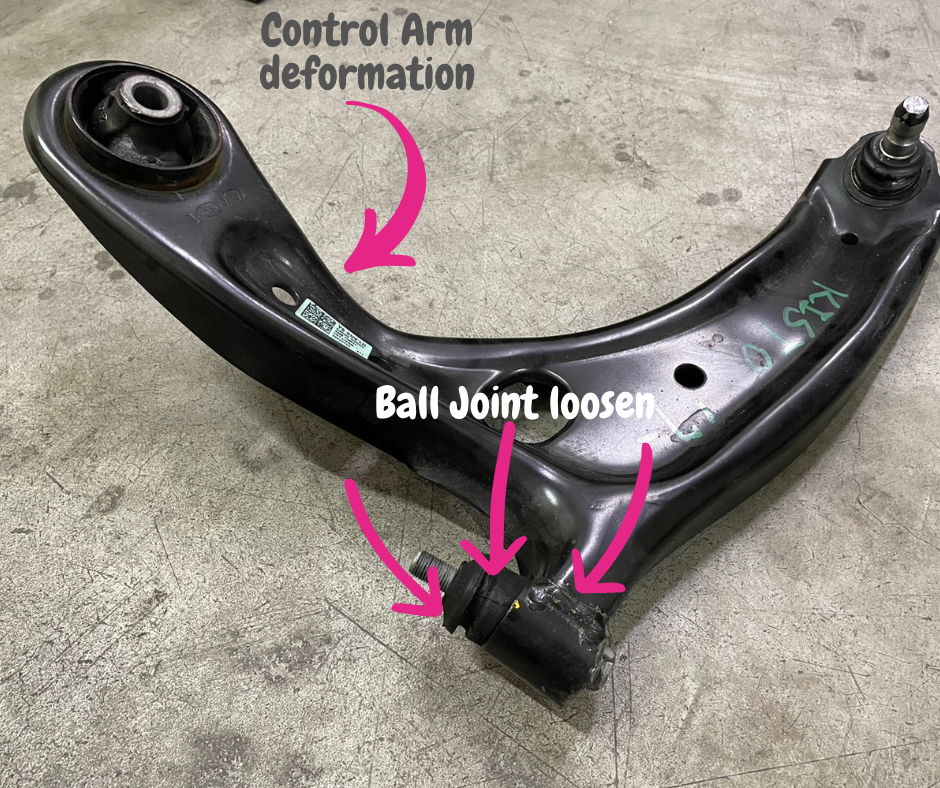
- ✦ Visible bend or crease
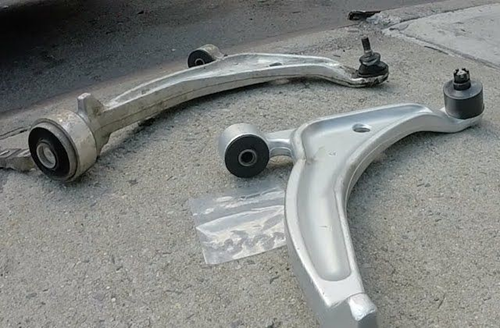
A comparison with the opposite control arm may reveal a clear change in shape.
What Does a Bent Control Arm Feel Like While Driving?
A mild bend may feel like a normal alignment problem. The car may pull, the steering wheel may no longer sit straight, or the front end may feel less precise. You might notice the change most clearly on a flat road.
A severe bend can make the car feel nervous or unstable. The steering may react differently when you brake or drive across bumps. If handling suddenly changed after an impact, do not assume a wheel alignment alone will solve it.
Can a Bent Control Arm Cause Vibration?
Yes, but vibration is not the most specific sign. The impact that bent the arm may also bend a wheel, damage a tire, or affect a wheel bearing. Any of these faults can cause shaking.
A vibration that appears after a hard impact deserves a full wheel and suspension inspection. Do not balance the tire and assume the problem is solved if the steering geometry is also damaged.
What Causes a Control Arm to Bend?
Control arms are built to handle normal road loads, but a sharp impact can exceed their strength. The exact force needed depends on the vehicle, control arm design, impact angle, and speed.
A curb strike is a common cause. If a tire hits a curb sideways, a large force can travel through the wheel hub and into the control arm. A deep pothole can cause a similar problem.
Rust can also make some suspension parts weaker over time. This is more important in parts of the United States where road salt is common during winter. A badly corroded arm may suffer serious damage from an impact that a healthy part could survive.
- ✦ Curb impact
Hitting a curb can push the wheel backward or sideways and bend the control arm.
- ✦ Deep pothole
A hard pothole strike can send a large load through the tire, wheel, hub, and suspension.
- ✦ Collision
Front, side, or wheel-area crash damage can deform suspension parts.
- ✦ Road debris
A large object under the car can strike the control arm directly.
- ✦ Off-road impact
Rocks, deep ruts, and hard landings can overload suspension parts.
- ✦ Severe corrosion
Rust can reduce metal strength and make structural suspension damage more likely.
Can Hitting a Pothole Bend a Control Arm?
Yes. A deep pothole hit can bend a control arm, especially if the tire drops into the hole and hits its edge hard. Low-profile tires may provide less cushioning between the road and wheel, though any vehicle can suffer suspension damage from a severe impact.
After a hard pothole hit, watch for pulling, a crooked steering wheel, tire damage, wheel damage, or new suspension noise. If any of these signs appear, have the vehicle checked.
How to Tell if a Control Arm Is Bent
A visual check can sometimes reveal a bent arm, but small changes are easy to miss. Many control arms have curves and stamped shapes from the factory. That means an unusual shape does not always prove the part is damaged.
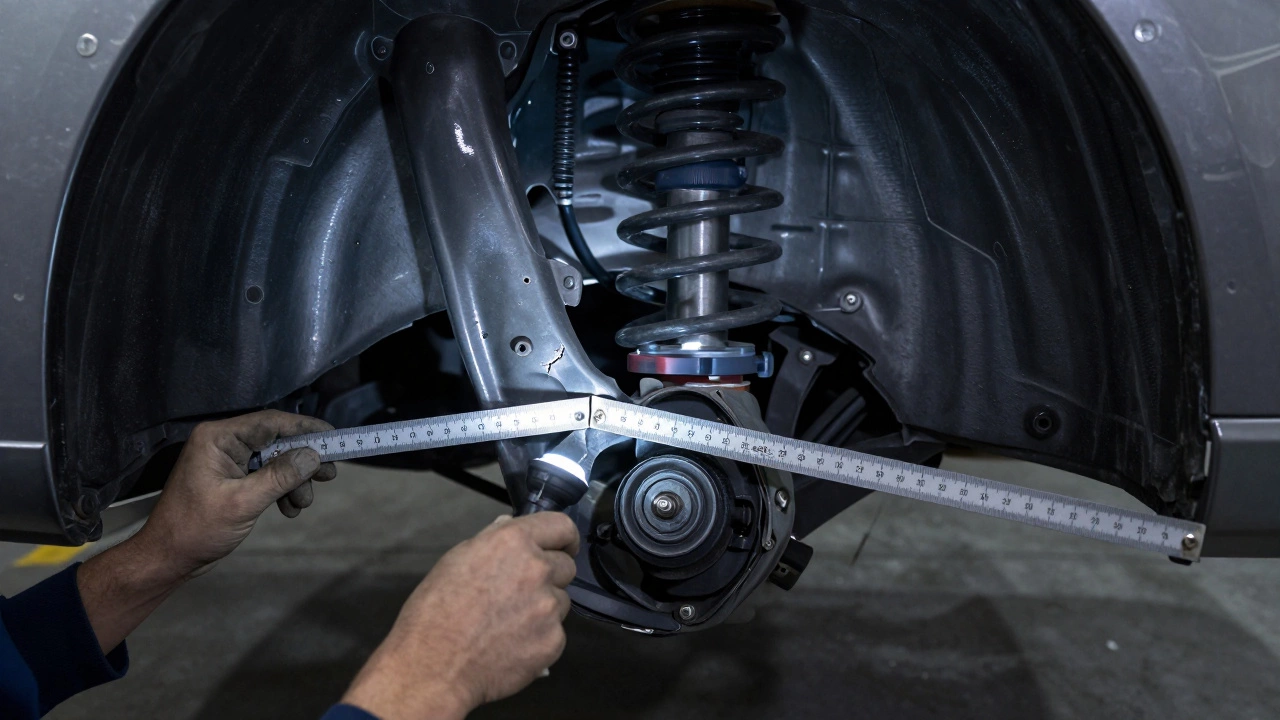
A technician will often compare the damaged side with the opposite side. Wheel position, control arm shape, bushing position, ball joint location, and alignment measurements can all help confirm the problem.
An alignment machine is especially useful because it shows whether wheel angles are outside specification. If an angle cannot be adjusted into range, a bent suspension part may be preventing proper alignment.
- ✦ Compare both sides
Look for a difference in wheel position or control arm shape between the left and right sides.
- ✦ Look for fresh marks
Scrapes, chipped coating, shiny metal, or impact marks can show where the suspension was hit.
- ✦ Check bushings
A hard impact can tear rubber bushings or shift them inside their mounts.
- ✦ Inspect the ball joint
Look for damage, abnormal movement, a torn boot, or a shifted joint.
- ✦ Measure wheel alignment
Camber, caster, and toe readings can show that suspension geometry has changed.
Can an Alignment Shop Detect a Bent Control Arm?
Often, yes. Alignment readings can show that one wheel sits far outside the expected range. A technician can then inspect the parts that control that wheel’s position.
An alignment machine does not directly prove that the control arm is the only damaged part. A bent strut, steering knuckle, tie rod, subframe, or other part can also change the readings. Physical inspection is still important.
Can You Check a Bent Control Arm at Home?
You can look for obvious damage while the vehicle is safely parked, but do not crawl under a vehicle supported only by a jack. If lifting is needed, proper jack stands and safe lifting points are essential.
Check whether one wheel sits differently in the wheel opening. You can also look for visible creases, impact marks, damaged bushings, and tire rubbing. A professional alignment check is still the better way to find small geometry changes.
What Other Damage Can a Bent Control Arm Cause?
A bent control arm rarely works in isolation. It connects to several parts, and the impact that bent it may have sent force through the whole corner of the suspension.
The first secondary problem is often tire wear. Incorrect toe or camber can scrub the tread each time the tire rolls. In a serious case, a tire can lose useful tread much faster than expected.
The stress can also reach the ball joint, control arm bushings, wheel bearing, tie rod, steering knuckle, strut, axle, wheel, or subframe. This is why replacing only the most obvious bent part without checking nearby components can leave the vehicle with a hidden problem.

- ✦ Tire damage
Bad alignment can wear one edge quickly or cause the tire to rub.
- ✦ Ball joint stress
A changed arm position may place the joint at an abnormal angle.
- ✦ Bushing damage
Rubber bushings may tear, split, or separate after a strong impact.
- ✦ Tie rod damage
A wheel impact can bend or stress steering linkage at the same time.
- ✦ Wheel or tire damage
The same pothole or curb strike may bend the wheel or damage the tire sidewall.
- ✦ Subframe movement
A severe collision may shift or damage the mounting structure itself.
Can a Bent Control Arm Ruin a Tire?
Yes. The control arm helps determine wheel alignment. If the bend changes toe or camber, the tire may drag across the road instead of rolling evenly.
The tire may wear heavily on the inner or outer shoulder. If the wheel is displaced enough to make the tire rub nearby parts, physical tire damage can occur as well.
Can a Bent Control Arm Damage the Ball Joint?
It can place added stress on the ball joint, and the same impact may damage both parts at once. A joint with looseness, a torn boot, binding, or impact damage should not be ignored.
Some replacement control arms come with a new ball joint already installed. On other vehicles, the joint is a separate service part.
When Should You Stop Driving and Tow the Car?
Some symptoms should end the debate over **can you drive with a bent control arm**. If the wheel has moved far from its normal position or the vehicle is hard to control, driving it is not worth the risk.
The same applies if the tire rubs the body or suspension. Continued rubbing can cut or overheat the tire. A tire failure at road speed adds another hazard to an already damaged suspension.
If the control arm is cracked, badly folded, partially separated, or pulling away from a mounting point, the vehicle should stay parked. Arrange a tow to a repair facility.
- ✦ Wheel is visibly out of position
A large change in wheel location suggests major suspension geometry damage.
- ✦ Car pulls hard
Strong pulling may make the vehicle difficult to control in traffic or during braking.
- ✦ Steering feels loose or unpredictable
Do not continue if you cannot confidently control the direction of the vehicle.
- ✦ Tire is rubbing
Contact with the body or suspension can quickly damage the tire.
- ✦ Control arm is cracked
A crack makes structural failure a serious concern.
- ✦ Loud clunk after impact
A new heavy knock can point to loose or damaged suspension hardware.
- ✦ Fluid or other major damage is visible
A severe impact may have damaged the strut, brake hose, axle, or other critical parts.
What Should You Do Right After Hitting a Curb?
Move to a safe location if the vehicle can be moved without obvious danger. Check the tire and wheel from outside the car. Look for a flat tire, a bent wheel, rubbing, or a wheel that sits at an unusual angle.
If anything looks badly damaged, arrange a tow. If everything looks normal but the car now pulls or the steering wheel has shifted, schedule a suspension and alignment inspection before continuing normal use.
Can a Bent Control Arm Be Straightened?
For most modern passenger vehicles, replacing a bent control arm is usually the practical repair. The part plays a key role in suspension geometry and carries significant road loads.
Trying to bend a damaged arm back into shape may not restore its original strength or exact dimensions. Heating or reshaping structural suspension metal can also change its properties.
Some specialized applications may have different repair procedures, but a standard road car should be repaired according to the vehicle maker’s service information. If the arm is bent from an impact, replacement also gives the technician a chance to inspect its bushings and joint connections.
- ✦ Replace rather than reshape
A new or approved replacement arm restores known dimensions and avoids uncertainty about weakened metal.
- ✦ Inspect mounting points
The new arm will not solve the problem if the subframe or body mounting area is also bent.
- ✦ Check related joints
Ball joints, bushings, tie rods, and nearby suspension parts should be inspected for impact damage.
- ✦ Align the vehicle afterward
Wheel alignment should be checked after suspension geometry has been restored.
Do You Need an Alignment After Replacing a Control Arm?
In most cases, an alignment check is a smart part of the repair. The control arm helps set wheel position, and replacing it can change alignment angles.
An alignment also helps confirm that the suspension is back within specification. If the shop cannot bring the wheel into range after the new arm is installed, another part may still be bent.
How a Mechanic Repairs a Bent Control Arm
A good repair starts with more than simply ordering a new arm. The technician should first confirm which parts were damaged and whether the vehicle has structural movement around the mounting points.
The wheel and tire are often checked first. The technician then inspects the control arm, bushings, ball joint, tie rod, steering knuckle, strut, and nearby hardware. A severe impact may also require checking the subframe or body structure.
Once the bent arm is replaced, all fasteners must be installed and tightened to the correct specification. Some suspension bushings must be tightened with the suspension at normal ride height so the rubber does not remain twisted.
The final step is usually an alignment check and road test. This confirms that the car tracks correctly and helps uncover any remaining damage.
- ✦ Inspect impact area
Find all damaged parts before beginning the repair.
- ✦ Replace damaged components
Install the correct control arm and any other parts that failed inspection.
- ✦ Use correct torque
Suspension fasteners must be tightened to the vehicle maker’s specification.
- ✦ Check wheel alignment
Confirm that camber, caster, and toe are within the correct range.
- ✦ Verify driving behavior
A final road test can confirm straight tracking, stable steering, and normal noise levels.
Should Both Control Arms Be Replaced?
Not always. If one control arm was bent by a curb or pothole impact and the other side is healthy, replacing only the damaged arm can be appropriate.
However, age matters. If both arms have badly worn bushings or ball joints, replacing the pair may make sense. The decision should be based on condition, vehicle design, and the parts included with the replacement arm.
Bent Control Arm vs Bad Control Arm Bushings
A bent control arm and worn control arm bushings can produce some similar symptoms, but they are different problems. A bent arm usually follows an impact and changes the physical position of the suspension.
Worn bushings usually develop over time. The rubber may crack, soften, separate, or allow more movement than intended. This can cause clunks, vague steering, uneven tire wear, or alignment changes.
A vehicle can also have both problems at once. A hard impact can bend the arm and tear its bushing. That is why a complete inspection is more useful than choosing a diagnosis based on one symptom.
- ✦ Bent control arm
Often linked to impact damage and a clear change in suspension geometry.
- ✦ Worn bushing
Often develops with age and allows too much control arm movement.
- ✦ Both at once
A hard strike can deform the arm while also damaging its rubber bushings.
Bent Control Arm vs Wheel Alignment Problem
It is easy to mistake a bent control arm for a simple alignment issue. Both can make a car pull and both can leave the steering wheel off-center.
The key difference is that alignment adjustment changes the position of adjustable suspension or steering points. It does not repair a physically bent part. If the control arm is deformed, an alignment alone may not bring all readings back into specification.
This is important after a curb or pothole impact. If the alignment changed suddenly, the shop should check why it changed before making adjustments. A bent part should be corrected first.
- ✦ Normal alignment issue
The suspension parts are intact, and adjustment can usually bring the angles back into specification.
- ✦ Bent suspension part
An alignment may remain outside specification until the damaged component is replaced.
- ✦ Best diagnosis
Combine physical inspection with alignment measurements rather than relying on either method alone.
How Long Can You Drive With a Bent Control Arm?
There is no safe mileage number for a bent control arm. One vehicle might move for many miles with mild damage, while another may become unstable almost at once. The severity and location of the bend matter more than the distance traveled.
That means asking **can you drive with a bent control arm for a week** or for another 100 miles has no reliable answer. Each extra trip exposes the damaged suspension to more bumps, braking loads, and steering forces.
It also gives a bad alignment more time to damage the tire. A tire that still looks usable today may develop severe edge wear faster than expected.
Treat a confirmed bent control arm as a repair that should be handled promptly. If the car shows major symptoms, tow it rather than trying to stretch the repair another few days.
- ✦ No safe distance exists
Damage levels vary too much to give a universal mileage limit.
- ✦ Damage can progress
Road impacts and normal suspension loads can place more stress on the bent part.
- ✦ Tire wear can accelerate
Incorrect toe or camber may remove tread quickly.
- ✦ Repair it promptly
Continuing to drive can turn one suspension repair into several repairs.
What to Check After a Control Arm Is Bent
When a control arm bends, do not focus on the arm alone. The force entered the suspension through the wheel, tire, or underside of the vehicle. Every part along that load path deserves attention.
Start with the tire and wheel. A sidewall bulge, cut, bent rim, or cracked wheel can be just as important as the suspension damage. Then inspect steering and suspension parts near the impact area.
After the repairs, alignment readings can help confirm that the wheel is back where it belongs. If one angle remains far outside specification, further inspection may be needed.
- ✦ Tire
Check for cuts, bulges, tread damage, and signs of rubbing.
- ✦ Wheel
Look for bends, cracks, or heavy impact marks.
- ✦ Ball joint
Check for looseness, boot damage, and impact stress.
- ✦ Tie rod
A bent tie rod can cause major toe and steering changes.
- ✦ Steering knuckle
A hard impact can deform this part and alter wheel geometry.
- ✦ Strut or shock area
Check for bending, leakage, damaged mounts, or unusual movement.
- ✦ Wheel bearing
Listen for noise and check for abnormal play after a strong wheel impact.
- ✦ Subframe
Inspect mounting points if the impact was severe or alignment remains far out of range.