Can You Drive With a Broken Control Arm? Safety Guide
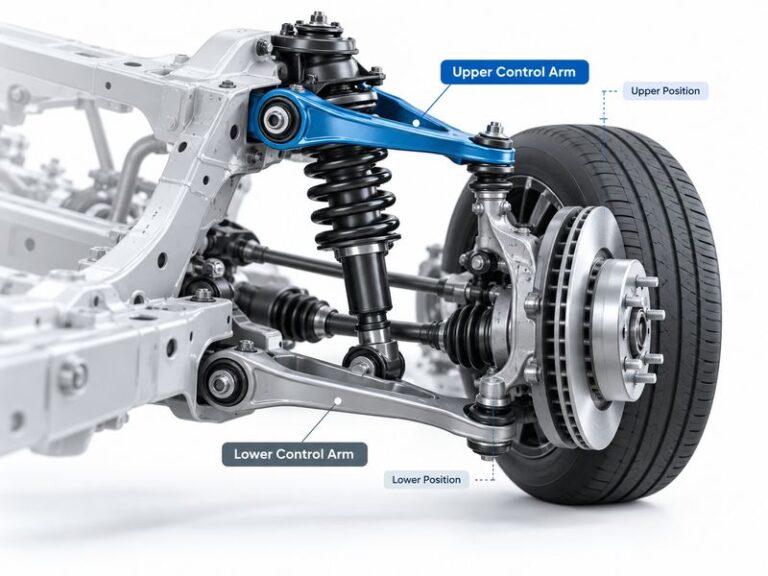
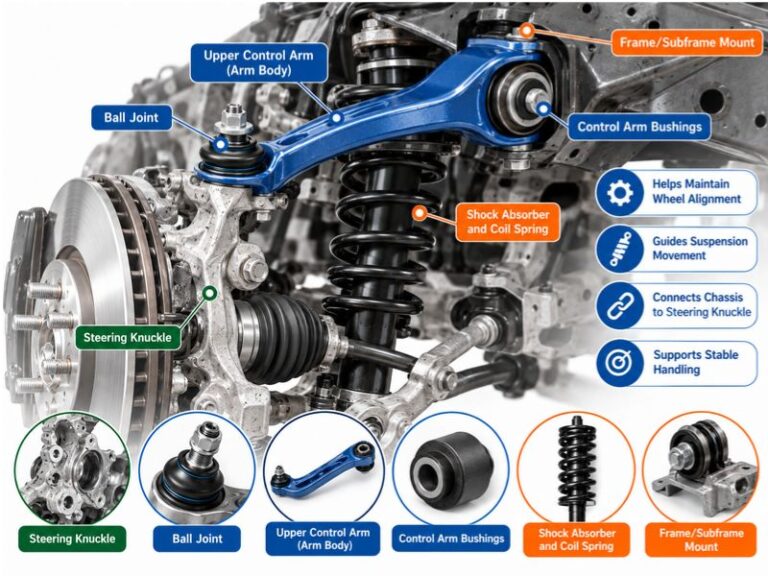
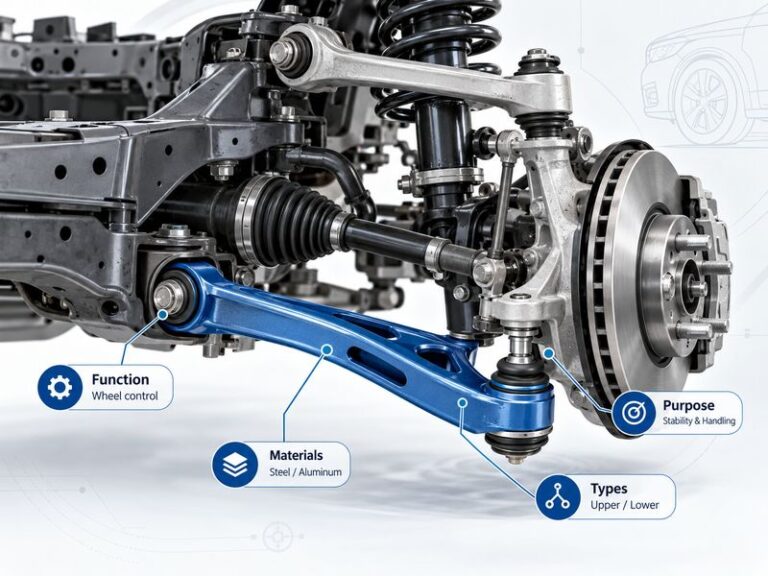
If you are asking, “can you drive with a broken control arm,” the safest answer is no. A control arm is a key part of the suspension. It helps hold the wheel in the correct position while still letting the suspension move over bumps. If the arm breaks, the wheel may no longer stay where the vehicle was designed to keep it.
This is very different from having a slightly worn control arm bushing. A worn bushing may cause noise, steering changes, or uneven tire wear over time. A cracked, bent, detached, or broken control arm can become an immediate safety risk because the wheel can shift during braking, turning, or normal road movement.
On U.S. roads, even a short trip can include potholes, highway ramps, sudden braking, railroad crossings, or sharp turns. Any of these loads can make damaged suspension parts move farther or fail completely. If you suspect a broken control arm, park the vehicle in a safe place and arrange an inspection or tow.
Can You Drive With a Broken Control Arm Safely?
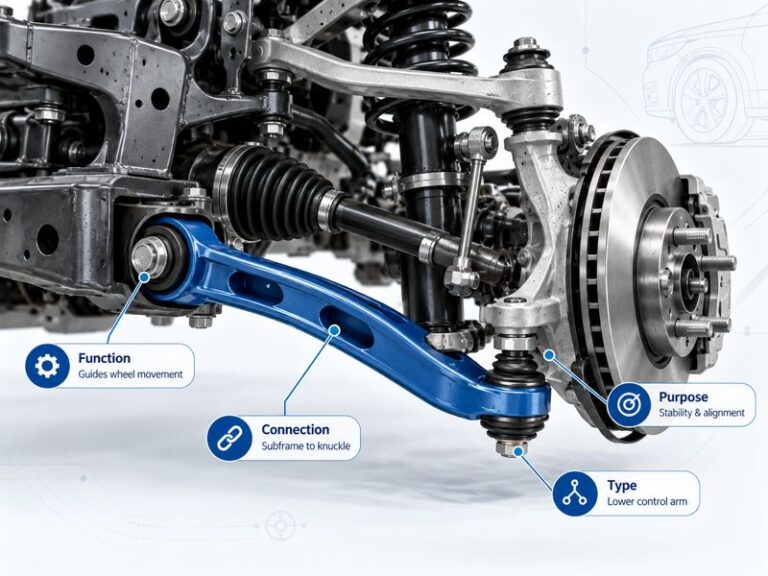
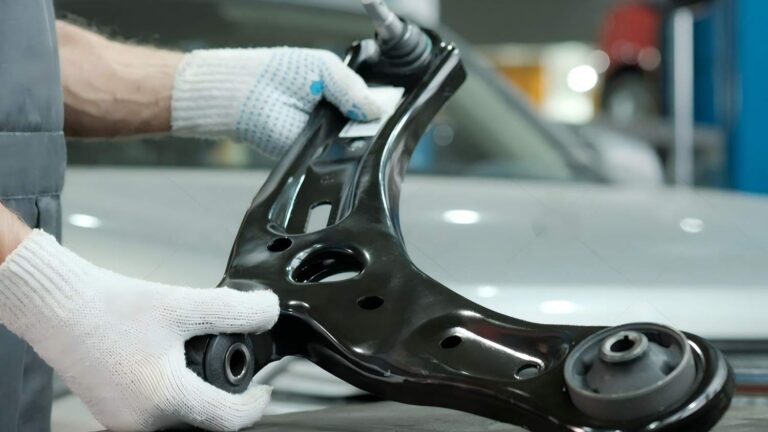
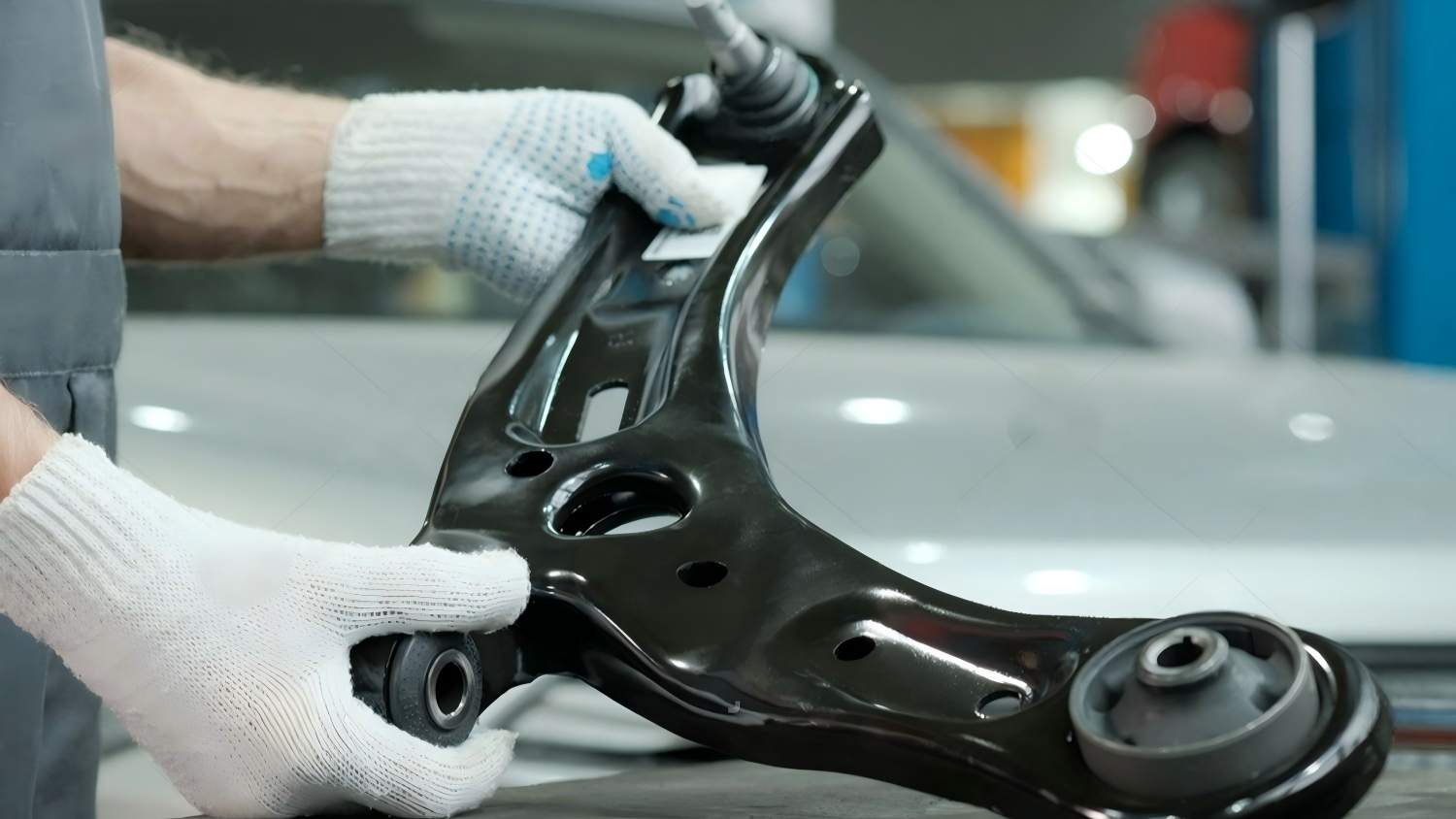
In practical terms, **you should not drive a car with a broken control arm**. The control arm helps locate the wheel and connects parts of the wheel assembly to the vehicle structure. Once that connection becomes unstable, steering and wheel alignment can change without warning.
The danger depends on how the arm failed. A small surface crack is not the same as an arm that has snapped in two. Still, a crack can spread under load, and it is hard to judge its remaining strength without a proper inspection.
A badly bent arm can also be unsafe even if the metal has not separated. The bend changes suspension geometry. That may cause the tire to sit at an unusual angle, pull the vehicle to one side, or place extra stress on the ball joint, bushings, tie rod, wheel bearing, axle, and other parts.
If the wheel looks displaced, the tire rubs, the steering feels unstable, or the control arm has separated, do not attempt to drive to a repair shop. A flatbed tow is usually the safest way to move the vehicle.

- ✦ Broken or separated arm
Do not drive. The wheel may no longer be held securely in its intended position.
- ✦ Severely bent arm
Treat it as a serious safety problem. Suspension geometry and steering behavior may be badly affected.
- ✦ Cracked arm
Avoid driving until the crack has been inspected. Suspension loads can cause the crack to grow.
- ✦ Only worn bushings
The urgency may be different, but the vehicle still needs inspection because worn bushings can affect handling and alignment.
Why a Broken Control Arm Is So Dangerous
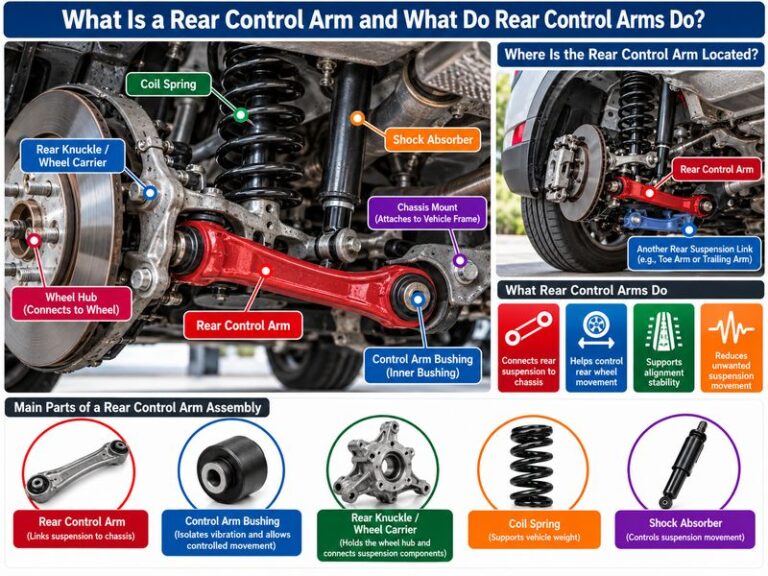
A control arm does more than support weight. It helps guide the wheel through a controlled path as the suspension moves. If the arm loses its shape or connection points, the wheel can move forward, backward, inward, or outward farther than it should.
That movement can become much worse during braking or turning. The vehicle may suddenly pull, the steering wheel may jerk, or the tire may contact the fender or wheel well.
- ✦ Steering control
The wheel may change position as forces act on the damaged suspension.
- ✦ Braking stability
Heavy braking can place major loads on the control arm and make an existing failure worse.
- ✦ Tire position
A failed arm may allow extreme wheel tilt or movement.
What Happens If a Control Arm Breaks While Driving?
A control arm failure while driving can range from severe wheel movement to a complete loss of normal suspension control. What happens depends on the suspension design, which arm breaks, vehicle speed, road conditions, and whether related parts stay attached.
The wheel may suddenly move out of alignment. The tire can lean, move backward in the wheel opening, or contact surrounding parts. In a severe failure, the driver may find it very difficult to keep the vehicle moving in a straight line.
A broken lower control arm can be especially serious because the lower arm often plays a major role in locating the bottom of the steering knuckle. If the connection fails, the wheel assembly may move far outside its normal range.
The failure can also damage nearby parts. A shifting wheel can pull on the brake hose, CV axle, ABS sensor wiring, tie rod, sway bar link, or other suspension components.

- ✦ Sudden pulling
The vehicle may pull hard toward one side.
- ✦ Wheel displacement
The affected wheel can move or tilt far from its normal position.
- ✦ Tire contact
The tire may rub against the wheel well, fender, suspension, or other components.
- ✦ Secondary damage
Brake, steering, axle, wheel bearing, and sensor parts may be damaged as the wheel moves.
- ✦ Loss of control
In a serious failure, normal steering control may become impossible.
What Should You Do If It Breaks While You Are Moving?
Keep a firm grip on the steering wheel and avoid sharp steering input. Reduce speed as smoothly as possible. If the vehicle is still controllable, guide it away from moving traffic and stop in the safest available location.
Avoid trying to continue the trip once you are stopped. Turn on the hazard lights when appropriate and arrange roadside assistance or towing.
- ✦ Do not make sharp turns
Sudden steering can make an unstable wheel move more.
- ✦ Brake smoothly
Hard braking can place more load on the damaged suspension.
- ✦ Stop as soon as practical
Continuing to drive can turn a damaged suspension into a complete failure.
How to Tell If a Control Arm Is Broken or Failing
A complete break is often obvious, but early control arm problems can look like other suspension issues. That is why diagnosis matters. Clunks, pulling, tire wear, and steering changes can also come from ball joints, tie rods, wheel bearings, struts, or alignment problems.
A visual inspection may reveal a bent arm, deep rust, cracks, torn bushings, or a ball joint that has moved from its normal position. However, many suspension problems are difficult to confirm with the vehicle sitting on the ground.
If your symptoms appeared after hitting a curb, pothole, road debris, or another vehicle, the chance of structural suspension damage is higher. A sudden change in steering or wheel position after an impact deserves immediate attention.

- ✦ Loud clunking
You may hear a heavy knock during braking, acceleration, turns, or when driving over bumps.
- ✦ Vehicle pulls
The car may drift or pull strongly to one side.
- ✦ Steering feels loose
The steering may feel vague, unstable, or slow to respond.
- ✦ Wheel looks crooked
A wheel that suddenly leans or sits farther forward or backward than the opposite wheel needs immediate inspection.
- ✦ Uneven tire wear
Changed suspension geometry can wear one edge of the tire faster.
- ✦ Vibration
Movement at the control arm or its joints can create shaking through the chassis or steering wheel.
Signs That Mean You Should Stop Driving
Some symptoms suggest more than normal wear. If the tire is contacting the body, the wheel has visibly shifted, the vehicle cannot track straight, or metal suspension parts appear separated, driving should stop.
Do not assume the problem is safe because the car can still move. A suspension component can remain partly attached while having very little strength left.
- ✦ Visible separation
Any control arm or joint that has detached is an immediate stop-driving condition.
- ✦ Major wheel angle change
A wheel leaning sharply inward or outward can indicate severe suspension damage.
- ✦ Grinding or dragging
Stop if the tire or suspension is dragging against another component.
Broken Control Arm vs. Bad Control Arm Bushing
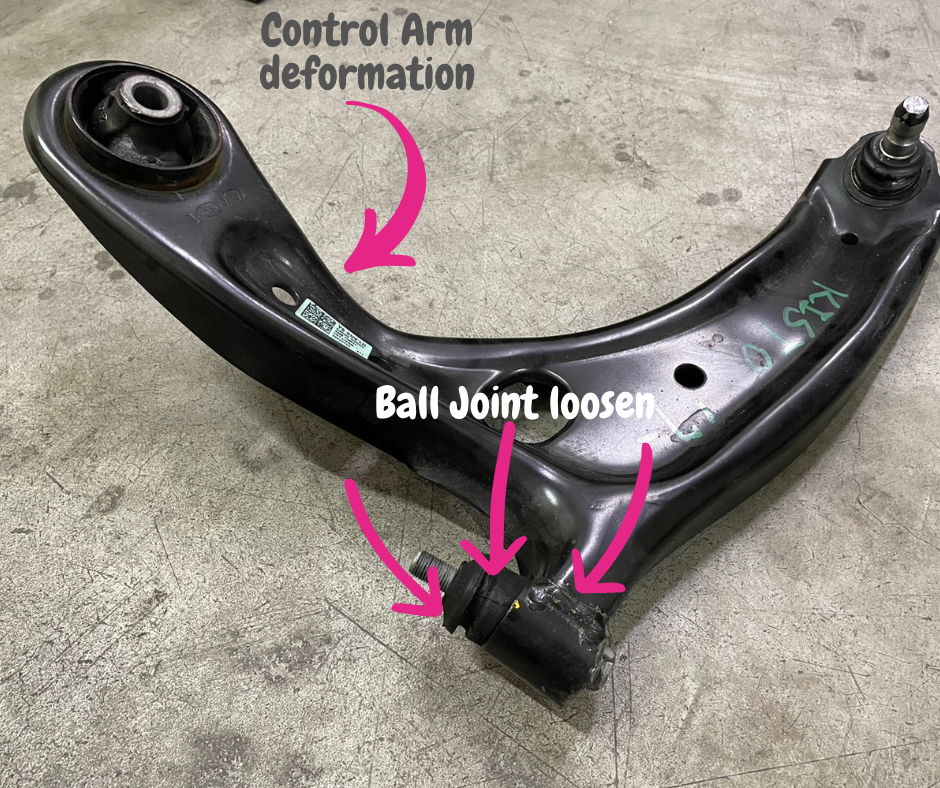
The phrase “bad control arm” can mean several things. The metal arm itself may be cracked or bent. The rubber bushings may be worn. The ball joint may also be loose if it is built into the control arm assembly.
This distinction matters when asking, “can you drive with a broken control arm?” A physically broken arm is generally far more urgent than a bushing that has started to wear. The arm provides structural location for the wheel, while the bushing cushions movement where the arm mounts to the vehicle.
A worn bushing may allow extra movement and cause clunks, poor alignment, or unstable handling. It still deserves repair, but it does not automatically mean the metal control arm has broken.

- ✦ Broken metal arm
Structural failure. Do not continue driving.
- ✦ Bent metal arm
Suspension geometry is altered and the vehicle should be inspected before further driving.
- ✦ Worn bushing
May cause excess movement, noise, pulling, and tire wear. Repair urgency depends on severity.
- ✦ Loose ball joint
Can become extremely dangerous if the joint separates, so significant looseness should be addressed promptly.
Can You Drive With Bad Control Arm Bushings?
Minor bushing wear may not cause immediate loss of wheel support, but it should not be ignored. As the rubber tears or separates, the control arm can move farther than intended.
Severely failed bushings can affect braking stability and steering. If there is strong clunking, large visible movement, poor control, or major alignment change, stop driving and have the suspension inspected.
What Causes a Control Arm to Break?
Control arms are designed to handle years of suspension loads, so they do not normally snap without a cause. Age, corrosion, impact damage, worn joints, and severe road conditions can all weaken the assembly.
In areas of the United States where road salt is common, corrosion deserves special attention. Rust can reduce the thickness and strength of steel suspension components. Heavy scaling or perforation is more serious than light surface rust.
A hard impact can also bend or crack a control arm instantly. Hitting a deep pothole, curb, large piece of road debris, or another vehicle can place far more force on the suspension than it sees in normal driving.
- ✦ Road impacts
Potholes, curbs, crashes, and large road debris can bend or crack a control arm.
- ✦ Severe corrosion
Rust can weaken metal until it cracks or tears around stressed areas.
- ✦ Long-term fatigue
Years of repeated suspension loads may contribute to metal fatigue, especially if the part is damaged or corroded.
- ✦ Failed bushings or joints
Excess movement can place abnormal loads on the arm and nearby mounting points.
- ✦ Previous collision damage
A control arm weakened in an earlier impact may fail later even if the damage was not obvious at first.
Can a Pothole Break a Control Arm?
Yes, a hard pothole strike can damage a control arm, especially if the impact is severe or the part already has rust, fatigue, or previous damage. The same impact can also bend a wheel, damage a tire, change alignment, or harm a ball joint.
If the steering changes right after a pothole impact, inspect the vehicle before continuing normal use. A new pull, clunk, crooked steering wheel, or visibly displaced tire is a reason to take the problem seriously.
How Far Can You Drive With a Broken Control Arm?
There is no safe mileage limit for a control arm that is actually broken. The answer is not five miles, one mile, or even a few blocks. A damaged arm can fail further the next time the vehicle brakes, turns, or hits a bump.
This is why trying to calculate how long you can drive misses the main issue. The remaining strength of a cracked or broken suspension component cannot be judged from mileage alone. Road speed, vehicle weight, impact forces, corrosion, and the exact location of the damage all matter.
If you discover the problem in your driveway, leave the vehicle parked. If you notice it while driving, stop at the nearest safe location you can reach without creating a greater danger in traffic.

- ✦ Do not plan a short trip
A nearby repair shop is still too far if the suspension can fail before you arrive.
- ✦ Avoid highway driving
Higher speeds increase the consequences of a sudden steering or suspension failure.
- ✦ Avoid testing the vehicle
Do not drive around the block to see whether the problem gets worse.
- ✦ Use a tow service
Towing avoids placing driving loads on the damaged control arm.
Can You Drive Slowly With a Broken Control Arm?
Driving slowly reduces speed, but it does not remove suspension loads. Turning, braking, driveway ramps, road dips, and small bumps can still place significant force on the damaged arm.
A low-speed failure can also allow the tire to fold or move into the body. For that reason, slow driving should not be treated as a safe workaround for a confirmed broken control arm.
What to Do If You Think Your Control Arm Is Broken
Start by treating the vehicle as unsafe until the suspension is inspected. Park on a stable surface, keep clear of traffic, and avoid crawling under a vehicle that is supported only by a jack.
Look at the affected wheel from a safe position. Compare its angle and location with the wheel on the opposite side. Major differences can point to suspension damage, though a normal-looking wheel does not prove the control arm is safe.
A professional inspection should check the control arm itself as well as its bushings, ball joint, mounting points, steering parts, wheel bearing, strut or shock, brake hose, axle, and tire. Impact damage often affects more than one part.

- ✦ Stop using the vehicle
Do not keep driving while you wait to see whether the symptoms improve.
- ✦ Check for visible damage
Look for a shifted wheel, cracked metal, hanging parts, or tire contact without placing yourself under the vehicle.
- ✦ Arrange towing
A flatbed is often preferred when a wheel or suspension component is badly damaged.
- ✦ Request a full suspension check
Ask the technician to inspect nearby steering, brake, axle, and suspension parts for secondary damage.
- ✦ Get an alignment after repair
Control arm replacement can affect suspension geometry, so alignment should be checked when appropriate.
Should You Tow a Car With a Broken Control Arm?
Yes, towing is the safer choice when a control arm is confirmed broken or severe damage is suspected. A flatbed keeps the damaged suspension from carrying normal road loads during transport.
Tell the towing operator that the vehicle has suspension or wheel damage. This helps the operator choose a loading method that reduces the chance of causing more damage.
Can a Broken Control Arm Damage Other Parts?
Yes. Continuing to drive can turn one suspension repair into several repairs. When the control arm no longer keeps the wheel in its designed position, other components may be forced to move beyond their normal range.
A CV axle can be pulled at an extreme angle on many front-wheel-drive and all-wheel-drive vehicles. Brake hoses and ABS sensor wires may be stretched. The tire can rub against the body or suspension and become damaged.
The wheel alignment can also move far outside specification. Even before complete failure, poor geometry may cause rapid tire wear and place extra stress on steering and suspension joints.
- ✦ Tires
A shifted wheel can cause rubbing, uneven wear, or sidewall damage.
- ✦ Ball joints
Abnormal angles and loads may damage or accelerate wear in the joint.
- ✦ Tie rods
Steering parts can be stressed when the wheel moves outside its normal path.
- ✦ CV axles
Extreme suspension movement may pull or bind the axle on driven wheels.
- ✦ Brake hoses
Unexpected wheel movement may stretch or damage flexible brake lines.
- ✦ Wheel bearings
Abnormal wheel loads can place additional stress on the hub and bearing.
Why Driving Longer Can Increase Repair Costs
A control arm repair may be limited to the arm, bushings, ball joint, related hardware, and alignment if the problem is caught early. Driving after major failure can damage several connected parts.
That is another reason the answer to “can you drive with a broken control arm” should focus on safety rather than distance. Avoiding a tow can create a much larger repair if the wheel shifts farther while the vehicle is moving.
How a Mechanic Diagnoses a Broken Control Arm
A technician will usually begin with a visual inspection and compare both sides of the suspension. The goal is to identify cracks, bends, rust damage, failed bushings, loose joints, shifted mounting points, and signs of recent impact.
The vehicle may then be raised safely so the suspension can be inspected from below. The technician can check joint play and look for movement that is difficult to see with the full vehicle weight on the tires.
Diagnosis should not stop at the control arm. A hard impact strong enough to bend an arm can also damage a wheel, tire, steering knuckle, strut, tie rod, subframe, or wheel bearing.
- ✦ Visual inspection
Checks for cracks, bending, rust, damaged bushings, and displaced parts.
- ✦ Joint inspection
Checks the ball joint and control arm bushings for excess movement.
- ✦ Mounting point inspection
Confirms that the chassis or subframe mounting areas have not shifted or torn.
- ✦ Tire and wheel inspection
Looks for impact damage and abnormal wear.
- ✦ Alignment check
Measures wheel angles after damaged parts are repaired or when geometry problems are suspected.
Can You Replace Only One Control Arm?
In many vehicles, one damaged control arm can be replaced by itself. There is no universal rule that control arms must always be replaced in pairs. The correct repair depends on the condition of the opposite side and the suspension design.
However, both sides have often experienced similar mileage, weather, and road conditions. If one side failed because of age or corrosion rather than a one-time impact, the other side deserves careful inspection.
Some replacement control arms include new bushings and a new ball joint as one assembly. Others use separate components. The repair approach depends on the vehicle and the parts available.
- ✦ Impact damage on one side
Replacing only the damaged arm may be reasonable if the opposite side is confirmed to be in good condition.
- ✦ Age-related wear
The opposite arm, bushings, and joints should be checked closely because they have seen similar service.
- ✦ Severe corrosion
Inspect both sides and nearby mounting points before deciding the repair scope.
How to Reduce the Risk of Control Arm Failure
You cannot prevent every control arm problem, but routine inspection can catch many issues before they become severe. Suspension checks are especially useful on older vehicles, cars driven on rough roads, and vehicles exposed to heavy winter road salt.
Pay attention when your vehicle suddenly starts pulling, clunking, wandering, or wearing tires unevenly. These symptoms do not always mean the control arm is bad, but they do show that the steering or suspension needs attention.
After a hard curb strike or pothole hit, do not judge the car only by whether it still moves. Check the wheel and tire, watch for steering changes, and have the suspension inspected if anything feels different.
- ✦ Inspect suspension parts
Periodic checks can reveal torn bushings, joint wear, rust, or physical damage.
- ✦ Respond to new noises
Clunks and knocks should be diagnosed rather than ignored.
- ✦ Check after major impacts
Have the suspension inspected after a hard pothole or curb strike if steering or wheel position changes.
- ✦ Watch tire wear
Uneven wear can be an early clue that suspension geometry has changed.
- ✦ Address severe rust
Structural corrosion on suspension parts should be inspected before the metal becomes too weak.