Should You Replace Lower Control Arms in Pairs? Full Guide
If you are asking **should you replace lower control arms in pairs**, the best answer depends on why one arm needs replacement. A lower control arm does not have a fixed rule that says both sides must always be replaced together. Still, the left and right arms often live through the same miles, potholes, winter salt, heat, braking loads, and road conditions.
That is why many U.S. repair shops inspect both sides before giving a quote. If one side has badly cracked bushings or a loose ball joint, the matching arm may already show early wear. Replacing both at once can give the front suspension a more even feel and may help you avoid paying for another repair and alignment a short time later.
There are also cases where replacing one arm is perfectly reasonable. One side may have been bent by a curb strike, damaged in a pothole, or replaced much earlier than the other. In those cases, replacing a healthy control arm simply because the opposite side failed may add cost without much benefit.
The practical choice comes down to **condition, age, mileage, design, and repair cost**. This guide explains when paired replacement is smart, when a single arm is enough, what signs to check, and what else should be inspected while the suspension is apart.

Should You Replace Lower Control Arms in Pairs?
In many cases, **replacing lower control arms in pairs is a good preventive choice**, but it is not an absolute requirement. The main reason is simple. The control arms on both sides usually have the same age and have been exposed to similar road conditions.
Suppose the driver’s side lower control arm has worn bushings after many years of daily driving. The passenger-side bushings may not be loose yet, but they may have similar cracking and rubber deterioration. Replacing both can restore the suspension more evenly and reduce the chance of another repair soon.
The answer changes when one arm fails because of isolated damage. If a pothole or curb bends one control arm while the other remains straight and tight, there may be little reason to replace the undamaged side.
So, **should you replace lower control arms in pairs?** Think of paired replacement as a condition-based recommendation rather than a strict rule. Ask the technician to show you the condition of both arms before approving extra parts.
- ✦ Replace both when wear is similar
If both sides have cracked bushings, loose joints, heavy corrosion, or similar mileage-related wear, paired replacement often makes sense.
- ✦ Replace one when damage is isolated
A single arm may be enough when one side was damaged by an impact and the opposite side remains in strong condition.
- ✦ Consider the vehicle’s history
If one control arm was replaced recently, there is usually less reason to replace it again just because the opposite side now needs work.
- ✦ Inspect before deciding
A physical inspection of the bushings, ball joints, arm, hardware, and mounting points gives a better answer than mileage alone.
Why Mechanics Often Recommend Pair Replacement
Both lower control arms normally experience thousands of the same suspension cycles. They move as the wheels rise and fall, and their bushings flex during braking, acceleration, steering, and bumps.
Because the parts age together, visible failure on one side can be a warning that the other side is not far behind. Replacing both can also make labor planning easier because the vehicle is already in the shop for suspension work.
- ✦ Similar service life
Matching factory control arms were usually installed at the same time and often wear at a similar rate.
- ✦ Balanced suspension condition
Fresh components on both sides can reduce differences in bushing movement and joint play.
What a Lower Control Arm Does
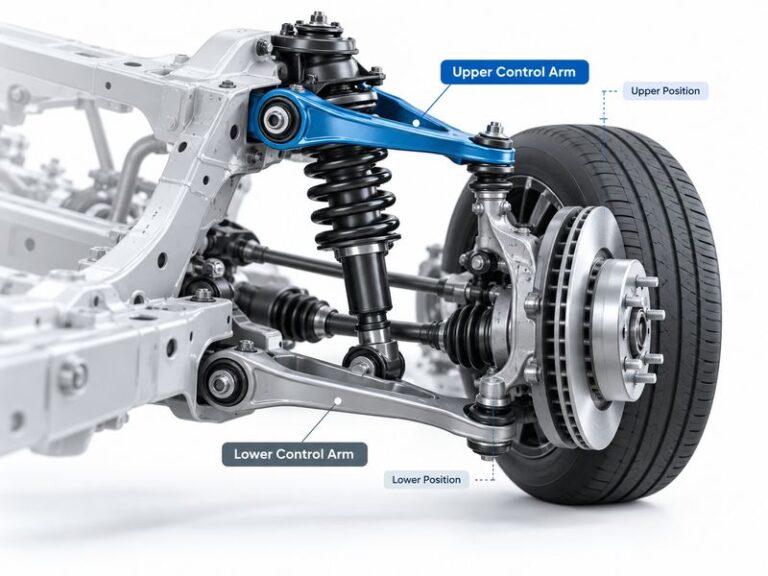
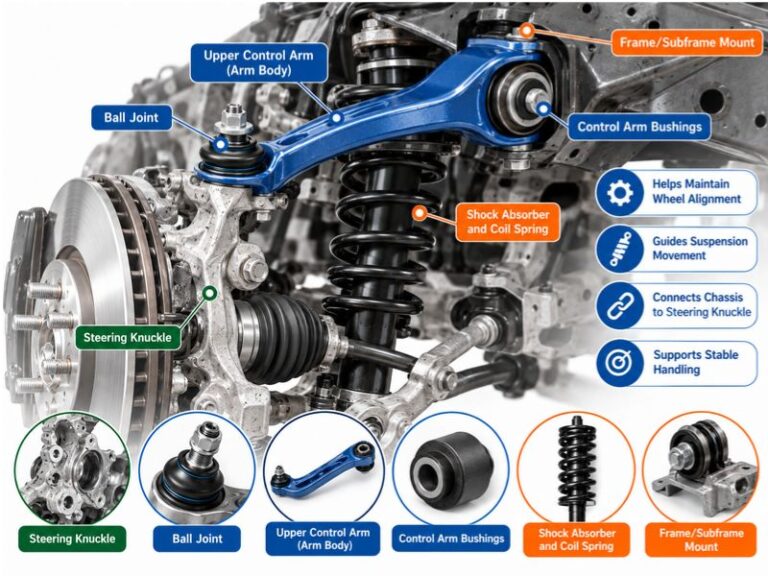
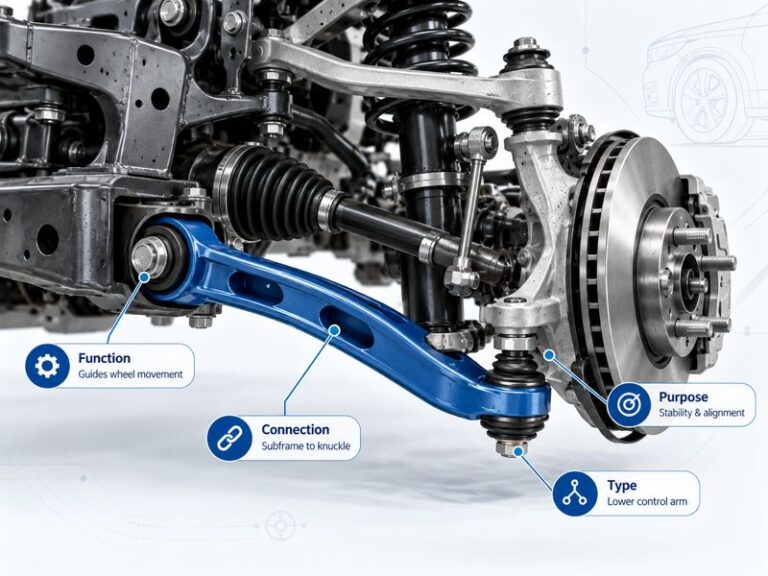
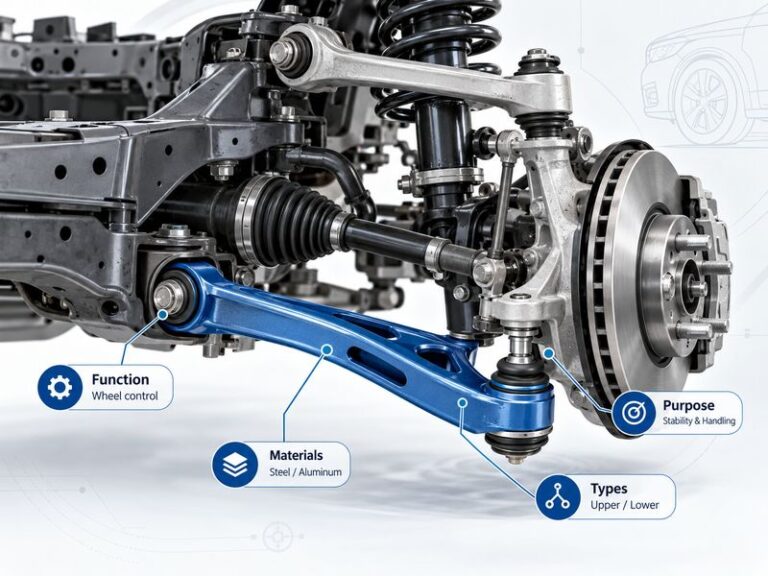
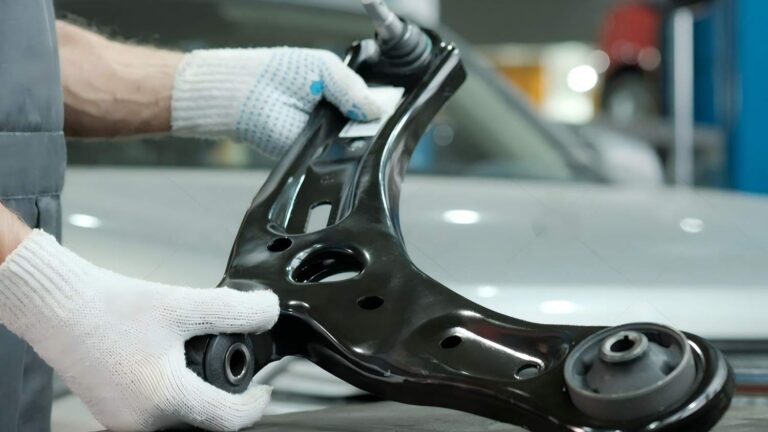
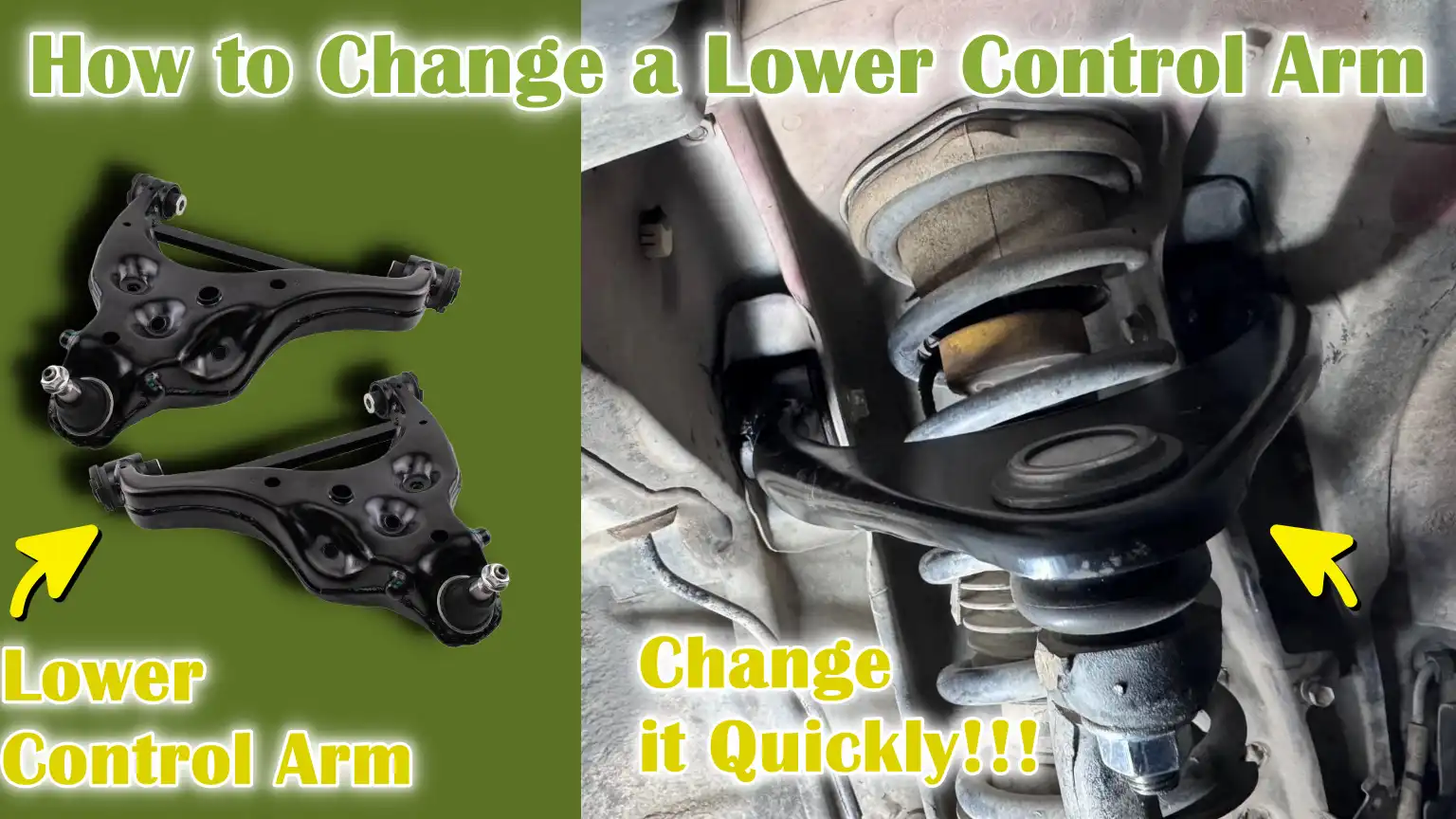
A lower control arm is a key part of the suspension. It links the wheel-side steering or suspension assembly to the vehicle’s frame or subframe while allowing controlled up-and-down movement.
Most lower control arms connect through rubber or hydraulic bushings at the body side. Many designs also use a ball joint near the wheel. The bushings reduce vibration while the ball joint lets the wheel move and steer.
This means the arm itself may be strong while the attached wear parts become weak. On many vehicles, shops replace the complete lower control arm because new bushings or a ball joint come installed in the assembly.
Understanding this design helps answer **should you replace lower control arms in pairs**. Often, the real issue is not a cracked metal arm. It is matching bushings or ball joints that have aged together.

- ✦ Controls wheel movement
The arm helps keep the wheel moving through its intended suspension path.
- ✦ Supports alignment geometry
Its mounting points help hold the wheel in the correct position relative to the vehicle.
- ✦ Uses flexible bushings
Bushings allow controlled movement while reducing vibration and harshness.
- ✦ May carry the ball joint
Depending on the vehicle, the lower ball joint may be built into or attached to the control arm.
Control Arm Versus Control Arm Bushings
The metal arm and its bushings are separate parts in function, even when sold as one assembly. The arm provides structure. The bushings provide flexible mounting points.
A technician may say you need a control arm when the main problem is actually a worn bushing. Installing a complete assembly can be faster and may also renew the ball joint if it is included.
- ✦ Metal arm
Usually replaced when bent, cracked, heavily corroded, or when complete assemblies are more practical.
- ✦ Bushings
Wear from age, heat, oil contamination, and repeated suspension movement.
When You Should Replace Both Lower Control Arms
There are several situations where the answer to **should you replace lower control arms in pairs** leans strongly toward yes. The clearest case is when both arms are original and both show meaningful wear.
For example, one side may already have movement at the bushing while the other has deep rubber cracks but has not started clunking. Replacing only the noisy side may solve today’s symptom, but the second arm could soon become the next repair.
Pair replacement also deserves consideration on an older vehicle that you plan to keep. Paying for both parts at once can be more convenient than returning for a second suspension repair later.
The goal is not to replace good parts without reason. The goal is to recognize when two matching parts are reaching the end of their useful life at roughly the same time.
- ✦ Both arms are original
Original left and right arms with high use have shared the same years of wear.
- ✦ Both bushings are cracked
Visible cracking, separation, or excessive movement on both sides supports paired replacement.
- ✦ Both ball joints have wear
If the joints are part of the arms and both show looseness or damaged boots, replacing both assemblies can be sensible.
- ✦ Heavy rust is present
Vehicles used in snow-belt states may develop corrosion on both sides from road salt and moisture.
- ✦ You want long-term reliability
Replacing both worn assemblies can reduce the chance of another control-arm repair in the near future.
High-Mileage Vehicles
Mileage alone does not condemn a control arm, but it adds useful context. Two original arms on a well-used vehicle have gone through a large number of steering, braking, and suspension cycles.
If one side fails from normal wear, inspect the other side carefully. A second worn part may be easier to justify replacing now than after it begins making noise.
- ✦ Check actual condition
Do not replace parts based only on the odometer. Look for physical wear and joint movement.
Vehicles Exposed to Rough Roads or Winter Salt
Potholes, broken pavement, gravel roads, and salted winter roads can be hard on suspension parts. These conditions affect both sides even if one side develops symptoms first.
Rust deserves special attention around control arm mounting areas. Severe corrosion can weaken hardware or the arm itself and can make future service harder.
- ✦ Inspect mounting hardware
Rusty bolts, brackets, and subframe mounting points should be checked along with the control arms.
When Replacing Only One Lower Control Arm Is Fine
You do not need to replace two parts simply because they share a name. If one lower control arm has a unique problem and the other is healthy, replacing only the damaged arm may be the better value.
A common example is impact damage. A driver may hit a deep pothole or curb and bend the control arm on one corner. If the other side has tight bushings, a solid ball joint, no corrosion, and no physical damage, there may be no mechanical reason to replace it.
Another case is a vehicle with uneven repair history. Perhaps the right arm was replaced two years ago after a torn ball joint boot. If the older left arm now fails, replacing the newer right side again would usually offer little benefit.
This is why **should you replace lower control arms in pairs** cannot be answered from the failed part alone. The condition and age of the opposite side matter.
- ✦ One arm was bent in an impact
Isolated collision or pothole damage can affect one side while leaving the other side healthy.
- ✦ The opposite arm is fairly new
A recently replaced control arm should not normally need replacement simply to create a matching pair.
- ✦ One part has a manufacturing defect
A defect on one side does not automatically mean the matching part is also defective.
- ✦ Inspection shows no wear
Tight bushings, a good ball joint, sound metal, and proper mounting can support single-side replacement.
Ask the Shop to Compare Both Sides
A useful inspection compares left and right parts directly. Ask whether the opposite bushings are cracked, whether the ball joint has play, and whether the arm is bent or rusty.
This approach gives you facts instead of relying on a blanket rule. A good recommendation should explain why the second arm does or does not need replacement.
- ✦ Request visible evidence
Ask to see torn rubber, looseness, corrosion, damage, or other signs that support replacing the second arm.
Signs Your Lower Control Arms May Need Replacement
Lower control arm problems can show up in several ways. Some symptoms come from worn bushings. Others come from a loose ball joint, bent arm, damaged mount, or another suspension part.
A clunk over bumps is common, but it is not proof that the control arm is bad. Sway bar links, struts, tie rods, ball joints, and other parts can make similar sounds. A proper inspection is important before buying parts.
If you are deciding **should you replace lower control arms in pairs**, compare symptoms with physical findings on both sides. Noise from one corner does not always mean only that corner has wear.

- ✦ Clunking or knocking
Loose bushings or joints may create a dull knock during bumps, braking, or changes in direction.
- ✦ Steering feels loose
Excess movement in suspension joints can make steering feel less precise.
- ✦ Vehicle pulls or wanders
Control arm movement can affect wheel position, though tires and alignment can cause similar symptoms.
- ✦ Uneven tire wear
Changing suspension geometry can contribute to irregular tire wear when alignment angles move out of specification.
- ✦ Visible bushing cracks
Large cracks, separation, or a bushing that has shifted from its normal position may indicate wear.
- ✦ Ball joint play
Movement beyond the vehicle maker’s limit can indicate a worn joint that needs attention.
- ✦ Bent or damaged arm
A hard curb or pothole impact can deform a control arm and change wheel alignment.
What Worn Control Arm Bushings Feel Like
Worn bushings may let the wheel move slightly forward, backward, or sideways under load. You may notice a clunk when braking or accelerating or a vague feel when the road changes direction.
Small surface cracks do not always mean immediate failure. The more important signs are torn rubber, separation, leaking fluid from hydraulic bushings, or excess movement.
- ✦ Movement under braking
A badly worn bushing can let the arm shift more than intended as braking force loads the suspension.
What a Worn Ball Joint Can Feel Like
A worn ball joint can create noise, looseness, and poor steering feel. Because the joint helps connect the wheel assembly to the suspension, severe wear should not be ignored.
Some ball joints can be replaced separately. Others are sold with the entire lower control arm, so the correct repair depends on the vehicle design.
- ✦ Do not diagnose by sound alone
Joint play should be checked with the correct inspection method for the specific suspension design.
Benefits of Replacing Lower Control Arms in Pairs
The biggest reason to replace both lower control arms is not that the vehicle demands a matched set. It is that two equally old wear parts may be near the same point in their service life.
Replacing both can make the suspension feel more consistent when both old arms have degraded bushings. It can also simplify repair planning because both sides are serviced during the same visit.
There may also be a cost benefit over time. If the second arm fails soon after the first repair, you could face another shop visit and possibly another alignment charge.
Still, these benefits matter only when the second arm has enough age or wear to justify replacement. A nearly new, undamaged arm does not become bad because the other side failed.

- ✦ More even component condition
Both sides receive fresh bushings and, when included, new ball joints at the same time.
- ✦ Fewer repeat visits
Replacing another aging arm now may reduce the chance of returning soon for the same type of repair.
- ✦ One repair cycle
Parts, labor, inspection, road testing, and alignment can often be handled during the same service visit.
- ✦ Better long-term planning
Owners who plan to keep a vehicle for years may prefer renewing both worn sides together.
Does Pair Replacement Improve Handling?
It can when both old arms have worn bushings or joints. Fresh components reduce unwanted movement and may make steering and braking feel more controlled.
Do not expect two new control arms to fix every handling issue. Tire condition, shocks or struts, steering parts, wheel bearings, and alignment also affect how the vehicle drives.
- ✦ Think of the suspension as a system
Control arms are only one part of the steering and suspension system, so other worn parts can affect the final result.
Possible Downsides of Replacing Both When Only One Is Bad
Replacing both lower control arms costs more in parts and labor than replacing one. If the opposite arm is healthy and relatively new, that extra spending may provide little practical value.
There is also a basic repair principle worth following: do not replace a sound part without a reason. Preventive replacement can be smart, but it should be based on age, wear, access, or expected service life.
Cheap parts can create another problem. Replacing a good factory arm with a poor-quality aftermarket assembly just to make both sides match may not be an upgrade.
When asking **should you replace lower control arms in pairs**, compare the condition and quality of what is on the vehicle with what will replace it. More new parts do not automatically mean a better repair.
- ✦ Higher immediate cost
Two assemblies require more parts and normally more labor than replacing one.
- ✦ Unneeded part replacement
A good arm with substantial service life left may not need preventive replacement.
- ✦ Part quality matters
A low-grade replacement arm may have weaker bushings or joints than a healthy original part.
OEM Versus Aftermarket Control Arms
OEM parts are made to the vehicle maker’s specifications, while aftermarket quality can range from excellent to poor. Price alone does not tell you how long a control arm will last.
Look for a reputable manufacturer, correct fit, proper bushing design, and a good ball joint when one is included. For a repair you expect to keep for years, component quality matters as much as whether you replace one side or both.
- ✦ Avoid choosing only by lowest price
Suspension parts affect steering, alignment, tire wear, and ride quality, so fit and durability are important.
Do You Need an Alignment After Replacing Lower Control Arms?
In most cases, planning for a wheel alignment after lower control arm replacement is a good idea. The control arm helps locate the wheel, and disturbing its mounting points can change alignment angles or reveal an existing alignment problem.
Some vehicles have adjustment points near the control arm. Others use fixed mounting positions. Even with a fixed design, small differences in bushings, joints, mounting position, or previous damage can affect wheel geometry.
An alignment also gives the shop a chance to confirm that the wheels sit within specification after the repair. This can help protect the tires and verify that the vehicle tracks correctly.
This matters when considering **should you replace lower control arms in pairs** because two separate repairs may mean two separate alignment checks. Doing both worn arms at the same time may avoid repeating that process.

- ✦ Check alignment after suspension work
An alignment measurement can confirm whether camber, caster, and toe are within the correct range.
- ✦ Protect tire life
Incorrect alignment can cause rapid or uneven tire wear.
- ✦ Find hidden problems
Alignment readings can sometimes reveal bent parts, shifted mounting points, or other suspension concerns.
Can You Drive Before Getting an Alignment?
A short trip to an alignment shop may be reasonable if the repair was completed correctly and the vehicle drives normally. However, you should not ignore obvious pulling, a badly off-center steering wheel, tire rubbing, or unstable handling.
If alignment looks seriously wrong after the repair, have the vehicle checked before normal driving. Severe misalignment can hurt tire life and vehicle control.
- ✦ Schedule alignment promptly
Do not drive for weeks on an unknown alignment after major suspension work.
What Else Should Be Inspected During Control Arm Replacement?
Lower control arm wear rarely exists in isolation on an older vehicle. The same miles and road impacts also affect other steering and suspension parts.
A good inspection can prevent you from installing control arms, paying for an alignment, and then discovering another loose component a week later. This does not mean every nearby part should be replaced. It means each part should be checked.
The most useful inspection covers the parts connected to or working near the control arm. Any loose or damaged component should be dealt with according to its actual condition.

- ✦ Ball joints
Check for play, damaged boots, loss of grease, or binding.
- ✦ Tie rod ends
Loose steering joints can cause wandering, noise, and poor alignment control.
- ✦ Sway bar links
Worn links often create clunks that can be confused with control arm noise.
- ✦ Struts or shocks
Check for leaks, damage, worn mounts, and weak damping.
- ✦ Wheel bearings
Inspect for looseness, roughness, or noise when symptoms suggest bearing wear.
- ✦ Tires
Look for uneven wear that may point to long-term alignment or suspension problems.
- ✦ Subframe and mounts
Check the control arm mounting areas for rust, cracks, loose hardware, or impact damage.
Why a Full Front-End Inspection Saves Trouble
Replacing the control arm can remove one source of looseness, but another worn joint can still leave the vehicle feeling unstable. Finding those problems before alignment can save time.
A complete inspection is especially useful on older vehicles, high-mileage vehicles, and cars used on rough roads. It helps you build a repair plan based on safety and urgency instead of replacing parts at random.
- ✦ Fix loose parts before final alignment
An alignment is most useful after worn steering and suspension components have been repaired.
How Much Does Lower Control Arm Replacement Cost?
Lower control arm replacement cost varies widely across the U.S. because vehicle design, labor rates, part quality, rust, and alignment needs all affect the final bill. A simple arm on a common car may be fairly quick to replace, while a complicated suspension can require much more work.
The price difference between replacing one and two arms is not always exactly double. Some inspection, setup, and alignment work overlaps when both sides are done during the same visit.
Rust can increase labor time. Bolts may seize inside bushings, hardware may need replacement, or access may be difficult. This is common on vehicles that have spent years in areas that use road salt.
Before deciding **should you replace lower control arms in pairs**, ask for a written estimate showing the price for one side and both sides. That makes it easier to compare today’s savings with the chance of another repair later.
- ✦ Vehicle design
Some lower control arms are easy to access, while others require removal of nearby parts.
- ✦ Part choice
OEM, premium aftermarket, and economy assemblies can differ greatly in price.
- ✦ Included components
A complete arm may include bushings and a ball joint, while another vehicle may use separately serviced parts.
- ✦ Labor rate
Shop labor rates vary by region, facility, and vehicle specialty.
- ✦ Rust and seized hardware
Corrosion can turn a simple repair into a longer job.
- ✦ Alignment
Include the cost of a post-repair wheel alignment or alignment check when comparing estimates.
Is Replacing Both Cheaper in the Long Run?
It can be if the second arm is already near the end of its life. One repair visit, one alignment, and one period of downtime may cost less than repeating the process several months later.
If the second arm is healthy, however, replacing it early may not save money. The best value comes from replacing parts based on real wear and expected service life.
- ✦ Compare total ownership cost
Consider future labor, alignment, downtime, and how long you plan to keep the vehicle.
Can You Replace Lower Control Arms Yourself?
Experienced DIY owners can replace lower control arms on some vehicles, but this is not always a beginner repair. The job involves lifting and supporting the vehicle safely, handling suspension loads, loosening high-torque fasteners, and dealing with ball joints.
Some control arm bolts must be tightened with the suspension at normal ride height or in a specified position. Tightening certain rubber bushings while the suspension hangs can twist the rubber when the vehicle is lowered and may shorten bushing life.
Torque specifications also matter. Guessing at suspension fastener tightness is not a good approach. Always use the service procedure for the exact year, make, model, and suspension design.
After replacement, the vehicle may also need alignment equipment that most home garages do not have. For many owners, professional installation and alignment provide the simplest path.
- ✦ Use proper support
Never rely only on a floor jack while working under a vehicle.
- ✦ Follow torque specifications
Control arm, ball joint, and mounting fasteners must be tightened correctly.
- ✦ Know bushing tightening position
Some bonded rubber bushings should receive final torque at specified suspension height.
- ✦ Plan for alignment
DIY installation may still require a professional alignment afterward.
Why Bushing Preload Matters
Many rubber suspension bushings are bonded to an inner and outer sleeve. Their movement comes from rubber twisting rather than the sleeve freely spinning.
If a bushing is locked down with the suspension hanging far below normal ride height, the rubber may remain twisted once the car is lowered. Following the correct tightening procedure helps the new bushing work through its intended range.
- ✦ Use the service manual procedure
Different suspension designs use different tightening methods, so vehicle-specific instructions are important.
How to Decide Whether to Replace One or Both
The easiest way to answer **should you replace lower control arms in pairs** is to compare the two sides using the same checklist. Do not base the decision only on which side currently makes noise.
Start with age and repair history. Then compare bushing condition, ball joint condition, corrosion, physical damage, and how long you expect to keep the vehicle.
If both original arms show similar aging, replacing the pair is often easy to justify. If one side is clearly healthy or much newer, replacing only the failed side can be a sensible choice.
For most owners, the best decision is the one supported by a clear inspection. A technician should be able to explain what is wrong with each side and why replacement is recommended.
- ✦ Step 1: Check repair history
Find out whether one arm has already been replaced.
- ✦ Step 2: Compare bushings
Look for tears, separation, major cracks, fluid leakage, or excess movement.
- ✦ Step 3: Check ball joints
Inspect for looseness, damaged boots, binding, or other wear.
- ✦ Step 4: Inspect the metal arms
Look for bending, cracks, impact marks, or serious corrosion.
- ✦ Step 5: Consider future ownership
Pair replacement may make more sense when you plan to keep an aging vehicle for several more years.
- ✦ Step 6: Compare repair estimates
Ask what one-side replacement costs versus doing both during the same appointment.
A Simple Real-World Example
Imagine an older daily driver with both original lower control arms. The left bushing has separated and causes a clunk. The right bushing is deeply cracked and beginning to move. Replacing both is reasonable because the parts have similar age and the second side already shows wear.
Now imagine the same vehicle had its right control arm replaced last year. The left arm is still original and finally wears out. In that case, replacing only the left side is usually more logical because the right side is already much newer.
- ✦ Condition matters more than symmetry
The goal is not simply to have two new parts. The goal is to have two safe and serviceable suspension assemblies.