A Arm vs Control Arm: Differences, Names, Types, and Uses
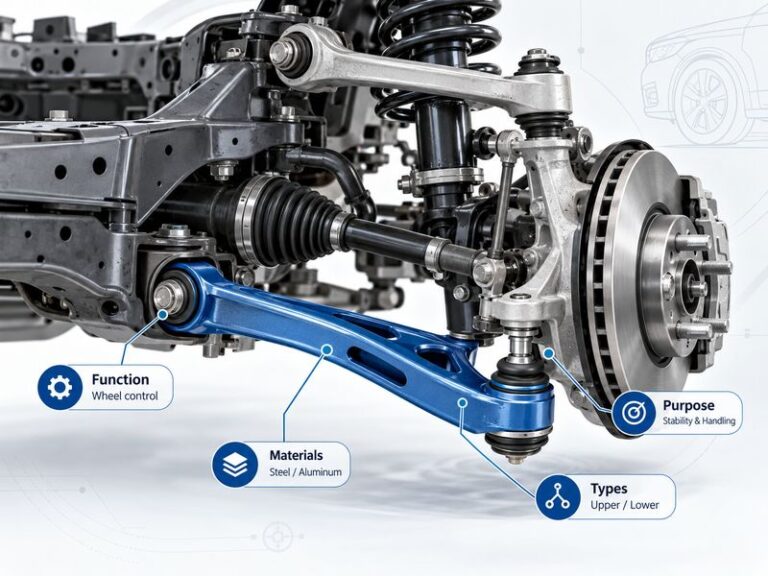
The **a arm vs control arm** question causes confusion because people often use the two names for the same suspension part. In many cars, trucks, SUVs, and off-road vehicles, that is acceptable. An A-arm performs the basic job of a control arm, which is to connect the wheel assembly to the vehicle structure while allowing controlled suspension movement.
The key difference is how the terms are used. **Control arm** is the broad technical name for a suspension link that helps guide wheel movement. **A-arm** usually refers to a control arm with two inboard mounting points that come together toward an outer ball joint, giving the part an A-like or wishbone shape.
In real repair work, the naming can vary by manufacturer, parts catalog, mechanic, and suspension design. A parts store may call the same component a lower control arm, lower A-arm, wishbone, or suspension arm. Knowing the design and mounting points is therefore more useful than relying on the name alone.
This guide explains the a arm vs control arm difference, how both parts work, why the terms overlap, common suspension layouts, upper and lower arms, failure symptoms, and what to check before buying replacement parts.
What Is a Control Arm?
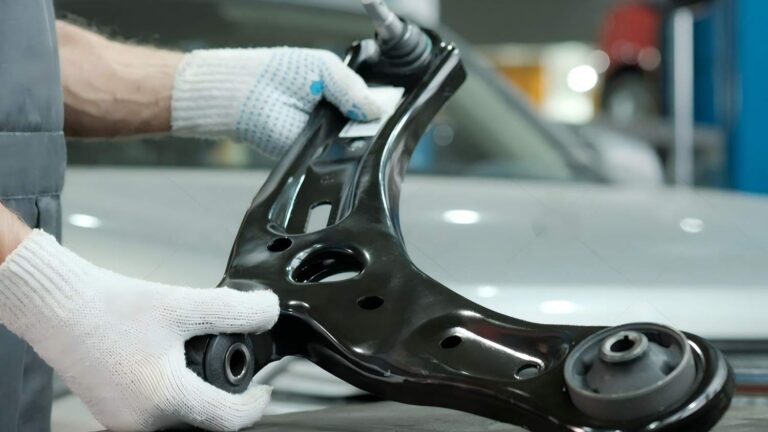
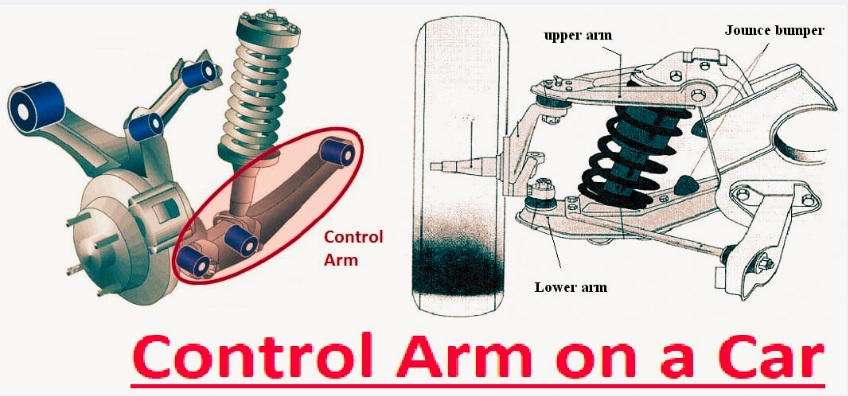
A **control arm** is a suspension link that connects part of the wheel or steering knuckle assembly to the vehicle frame, body, or subframe. Its main job is to guide the wheel as the suspension moves. It also helps keep the wheel in the position intended by the suspension design.
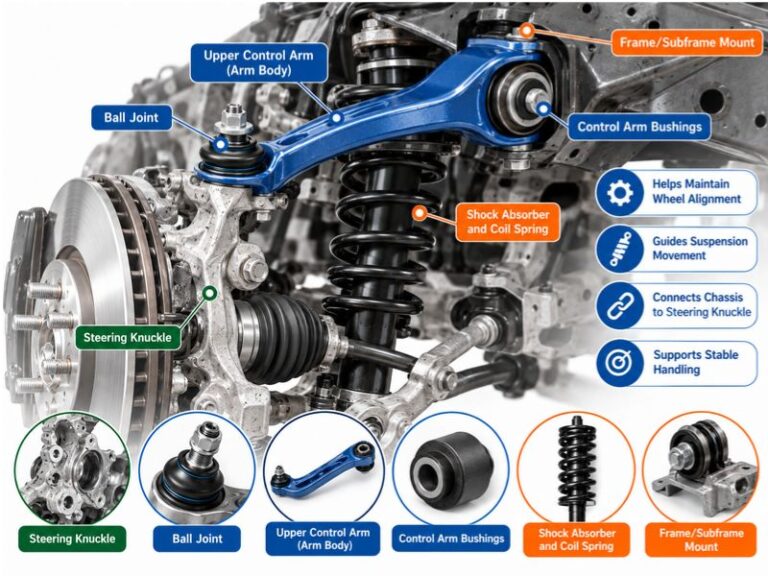
Most control arms pivot at one or more inner mounting points. Rubber or hydraulic bushings often sit at these mounts. The outer end usually connects to the steering knuckle through a ball joint, though some designs use other joints or separate links.
The shape of a control arm can vary a lot. It may look like an A, V, L, boomerang, straight link, or curved arm. That is why the term control arm covers more suspension parts than the term A-arm.
When discussing **a arm vs control arm**, it helps to think of control arm as the main category. An A-arm is one possible design within that category.

- ✦ Connects Suspension Parts
A control arm links the wheel or knuckle area to the vehicle frame, body, or subframe.
- ✦ Guides Wheel Motion
It helps control the path the wheel follows as the suspension moves up and down.
- ✦ Uses Pivot Points
Bushings, ball joints, or other joints let the arm move while keeping the wheel located.
- ✦ Comes in Many Shapes
A control arm does not need an A shape. Its form depends on the suspension layout.
What Does a Control Arm Connect To?
A typical control arm connects the vehicle structure to the steering knuckle or wheel carrier. The inner side usually bolts to the frame or subframe through bushings. The outer side often connects to the knuckle with a ball joint.
This setup lets the wheel move with the suspension without moving freely in every direction. The arm helps control fore-and-aft and side-to-side wheel position while still allowing vertical travel.
- ✦ Inner Connection
Usually mounts to the frame, body, or subframe.
- ✦ Outer Connection
Often attaches to the steering knuckle through a ball joint.
Why Control Arm Design Matters
The control arm affects more than wheel support. Its length, angle, mounting position, and pivot points help determine suspension geometry. These details can affect wheel alignment, tire contact, steering feel, and how the vehicle reacts during braking and cornering.
- ✦ Geometry
Control arm location helps define how wheel alignment changes as the suspension moves.
- ✦ Stability
A sound arm keeps suspension movement controlled and predictable.
What Is an A-Arm?
An **A-arm** is a control arm that has two inner mounting points and an outer section that narrows toward the wheel side. Viewed from above or below, it may resemble the letter A. The same basic design is also often called a wishbone.
The two inner mounting points create a wide base. This lets the arm control wheel movement in more than one direction. The outer point commonly carries a ball joint that connects the arm to the steering knuckle.
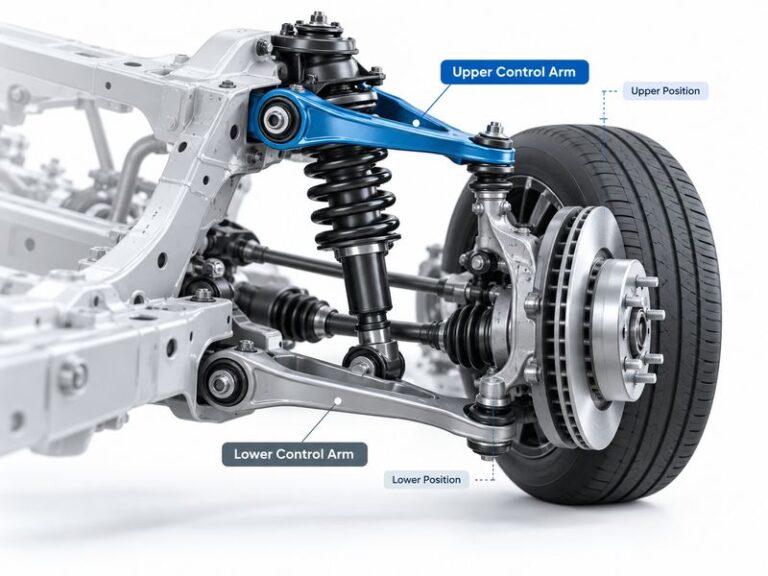
A-arms are common in double-wishbone suspension systems. In that layout, the wheel may use an upper A-arm and a lower A-arm. Each arm helps control the position and angle of the wheel through suspension travel.
However, not every part sold as an A-arm forms a perfect letter A. Vehicle packaging, strength needs, and suspension geometry can lead to curved or uneven shapes. The term often describes the general wishbone-style layout rather than the exact outline.

- ✦ Two Inner Mounts
A typical A-arm attaches to the vehicle at two spaced inner pivot points.
- ✦ One Outer Area
The two sides usually meet near the ball joint or outer knuckle connection.
- ✦ Wishbone Design
A-arm and wishbone are often used as names for the same general suspension design.
- ✦ Upper or Lower Position
A-arms can be used above or below the wheel center depending on the suspension.
Why Is It Called an A-Arm?
The name comes from the part’s general shape. Two branches begin at separate chassis mounting points and move toward a common outer area. This can look like a capital A when viewed from the right angle.
The name is descriptive rather than a strict engineering rule. Some arms called A-arms look more like a V or wishbone because they do not include a crossbar like a printed letter A.
- ✦ Shape-Based Name
The term A-arm mainly describes the two-branch shape of the part.
Is a Wishbone the Same as an A-Arm?
In normal automotive use, **wishbone** and **A-arm** often mean the same type of suspension member. Both usually have two chassis-side mounting points and one wheel-side connection.
A manufacturer may prefer one term over another. Parts catalogs can also use different names, so matching the actual part and mounting location is more important than matching the wording.
- ✦ Common Usage
A-arm and wishbone are often interchangeable terms.
A Arm vs Control Arm: What Is the Main Difference?
The simplest way to understand **a arm vs control arm** is by category and shape. A control arm is any suspension arm that helps locate and guide the wheel. An A-arm is a specific form of control arm that normally uses two inner pivots and one outer connection.
So, every traditional A-arm can be called a control arm. But every control arm cannot be called an A-arm. A straight lateral link, L-shaped lower arm, or single curved suspension link may perform control-arm duties without having the structure of an A-arm.
This distinction matters when looking up parts. Searching only for an A-arm may return the wrong component if the manufacturer calls the part a lower control arm, transverse link, tension arm, or wishbone.
For the average U.S. vehicle owner, the practical lesson is simple. When comparing **a arm vs control arm**, focus on where the part mounts, whether it is upper or lower, and which suspension design the vehicle uses.

- ✦ Control Arm Is the Broader Term
It describes the function of a suspension arm that controls wheel position and movement.
- ✦ A-Arm Describes a Specific Layout
It usually has two inner pivots and one outer joint in a wishbone-like shape.
- ✦ All A-Arms Are Control Arms
A traditional A-arm performs the function of a control arm.
- ✦ Not All Control Arms Are A-Arms
Many control arms use L-shaped, straight, curved, or multi-link designs.
A Arm vs Control Arm Comparison
The main differences come from terminology and physical design rather than basic purpose. Both help connect and control suspension parts. The table-like points below show how the terms differ in everyday use.
- ✦ Name
Control arm is a general suspension term, while A-arm usually describes a wishbone-style shape.
- ✦ Shape
A-arms normally use two branches. Control arms may use many different shapes.
- ✦ Inner Mounts
A-arms normally have two spaced inner pivots. Other control arms may have one or two.
- ✦ Suspension Type
A-arms are strongly linked with double-wishbone setups, while control arms appear in many suspension systems.
- ✦ Parts Catalog Terms
Manufacturers may list the same wishbone-style part as an A-arm, control arm, or wishbone.
Why the Names Are Often Used Interchangeably
Many older vehicles, trucks, performance cars, and off-road machines use obvious upper and lower wishbone-style arms. In those cases, saying A-arm or control arm points to the same part. This is why mechanics and owners often switch between the terms.
Modern suspension systems make the language less simple. A vehicle may use a single lower control arm, several separate links, or a mix of arms and tension links. Calling every suspension link an A-arm would therefore be inaccurate.
- ✦ Traditional Designs
A-arm and control arm often describe the same component in double-wishbone suspension.
- ✦ Modern Designs
More complex suspension layouts use control links that may not resemble an A.
How A-Arms and Control Arms Work
A suspension arm needs to do two jobs at the same time. It must hold the wheel in a controlled position, yet it must also let the wheel move when the tire passes over bumps and dips. Pivoting bushings and joints make this possible.
At the inner end, control arm bushings let the arm rotate through a limited range. At the outer end, a ball joint can pivot and rotate as the wheel moves and steers. Together, these joints let the suspension travel while keeping the wheel attached to a planned path.
In an A-arm design, the two inner mounting points give the arm a broad base. This structure helps manage forces from braking, acceleration, bumps, and cornering. A single-arm design may depend more on other suspension links to manage some of those forces.
This is another useful point in the **a arm vs control arm** comparison. Both control wheel motion, but their shape and number of mounting points can change how suspension loads are shared.

- ✦ Bushings Allow Pivoting
Inner bushings let the arm move without allowing uncontrolled metal-to-metal motion.
- ✦ Ball Joints Allow Angles
Ball joints let the knuckle move through steering and suspension travel.
- ✦ Arm Shape Controls Loads
The arm’s form and mounting points determine how suspension forces move into the chassis.
What Happens When the Wheel Hits a Bump?
When the tire rises over a bump, the control arm pivots at its inner mounts. The ball joint changes angle as the knuckle moves. The spring and shock or strut manage the vertical motion and help control how fast the suspension moves.
The arm keeps the wheel from simply moving backward, forward, or sideways without control. Its geometry guides the wheel through the motion designed by the vehicle engineers.
- ✦ Vertical Travel
The arm pivots as the wheel moves upward or downward.
- ✦ Wheel Location
The arm helps stop unwanted side-to-side and fore-and-aft movement.
How Suspension Geometry Changes Through Travel
Control arms are positioned so wheel angles can change in a controlled way as the suspension compresses and extends. In a double-wishbone system, different upper and lower arm lengths can help manage camber through a turn.
This does not mean one layout is always better for every vehicle. Engineers choose suspension designs based on ride, handling, cost, space, strength, weight, and intended use.
- ✦ Camber Control
Arm placement can influence how the tire leans as suspension travel changes.
A-Arms in Double-Wishbone Suspension
Double-wishbone suspension is the layout most closely linked with A-arms. It normally uses an upper arm and a lower arm to locate the wheel. These arms connect the chassis or subframe to the steering knuckle.
The upper and lower arms do not always have the same size or shape. Engineers can use different lengths and mounting angles to control how the wheel moves. This gives them flexibility when setting camber behavior, roll characteristics, and suspension travel.
Double-wishbone designs appear on many cars, trucks, SUVs, performance vehicles, race cars, and off-road machines. They are not limited to expensive vehicles. The exact form depends on the goals of the vehicle.
When people search **a arm vs control arm**, they are often looking at a double-wishbone setup. In that case, both the upper and lower A-arms are also control arms.

- ✦ Upper Arm
The upper arm connects the top area of the knuckle to the chassis or subframe.
- ✦ Lower Arm
The lower arm supports and locates the lower area of the wheel assembly.
- ✦ Two-Arm Geometry
Upper and lower arms work together to guide the wheel through suspension travel.
Upper A-Arm vs Lower A-Arm
The upper and lower A-arms have the same general purpose, but they work in different positions. The lower arm is often larger because of suspension packaging and the loads placed on it. In some designs, the spring or shock may also attach close to or directly to the lower arm.
The upper arm can play a major role in controlling the angle of the upper knuckle. Its position and length help shape wheel geometry as the suspension moves.
- ✦ Upper A-Arm
Controls the upper portion of the knuckle and helps define suspension geometry.
- ✦ Lower A-Arm
Controls the lower portion and may carry additional suspension loads.
Do All Vehicles Have Upper and Lower A-Arms?
No. Many vehicles do not use a full upper and lower A-arm arrangement. Some use a MacPherson strut with only a lower control arm, while others use multi-link suspension with several individual links.
This is why you should identify the suspension design before ordering parts. A vehicle can have control arms without having traditional A-arms.
- ✦ Double-Wishbone
Commonly uses upper and lower wishbone or A-arm structures.
- ✦ MacPherson Strut
Usually uses a lower control arm while the strut helps locate the upper part of the wheel.
Control Arms in MacPherson Strut Suspension
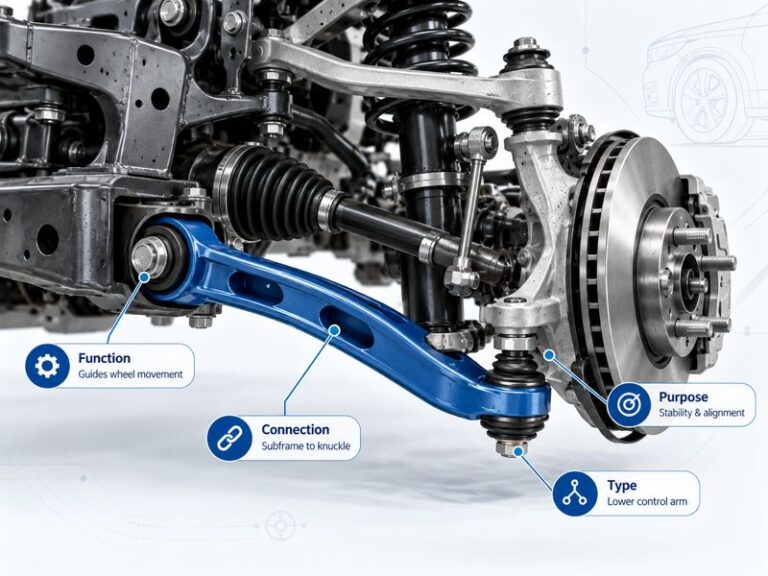
A MacPherson strut suspension normally does not use a traditional upper A-arm. The strut itself helps locate the top of the wheel assembly. A lower control arm connects the lower knuckle area to the subframe or body.
The lower arm may have an A-like shape, but many MacPherson control arms look more like an L, triangle, or curved link. Manufacturers may still call the part a lower control arm rather than an A-arm.
This example shows why the **a arm vs control arm** distinction matters. Calling every lower control arm an A-arm can create confusion when the part has a different layout.
If you own a common front-wheel-drive car in the U.S., there is a good chance the front suspension uses MacPherson struts or a related design. In that case, lower control arm is often the more accurate parts-search term.

- ✦ No Traditional Upper A-Arm
The strut assembly helps locate the upper section of the wheel and knuckle.
- ✦ Lower Control Arm
A lower arm manages the lower wheel location and connects to the knuckle.
- ✦ Shape Can Vary
MacPherson lower control arms may be triangular, L-shaped, curved, or formed from several pieces.
Is a Lower Control Arm Always an A-Arm?
No. A lower control arm only needs to perform its suspension-control job. It does not need to have two full branches arranged like an A.
Some lower arms use one large body with two bushings. Others work with a separate tension rod or additional link. These are still control arms even when A-arm is not an accurate name.
- ✦ Function Over Shape
The term lower control arm describes what the part does and where it sits.
A-Arms vs Multi-Link Suspension Arms
Multi-link suspension uses several separate links to control wheel movement. Instead of one broad A-arm managing several directions of force, different links can handle different parts of the wheel’s motion.
A multi-link setup may include lateral links, trailing links, toe links, tension arms, and other suspension members. Some manufacturers still call certain pieces control arms. Others use a more specific name based on the link’s function.
From an **a arm vs control arm** viewpoint, multi-link suspension shows why control arm is the broader term. A straight link can help control the wheel but clearly does not have an A-arm shape.
Multi-link systems also show why visual inspection matters when buying replacement parts. Two components may both be called control arms but have different positions and jobs.
- ✦ Several Separate Links
Multi-link systems divide suspension control between multiple arms and links.
- ✦ More Naming Variations
Parts may be called control arms, toe links, lateral links, tension arms, or trailing links.
- ✦ Not Usually A-Arms
Many multi-link members are straight or curved individual links rather than wishbones.
Why Manufacturers Use Several Links
Separate links give suspension engineers more freedom to control wheel movement. They can tune how the wheel changes angle during cornering, braking, acceleration, and suspension travel.
The tradeoff is more parts. More links mean more joints, bushings, and connection points that may need inspection as the vehicle ages.
- ✦ Design Flexibility
Separate links allow engineers to tune different parts of wheel motion.
- ✦ More Wear Points
Additional links can also mean additional bushings and joints that may wear.
Common Types of Control Arms
Control arms come in several forms because suspension systems have different goals and space limits. Some are large structural parts. Others are narrow links that work with several nearby suspension members.
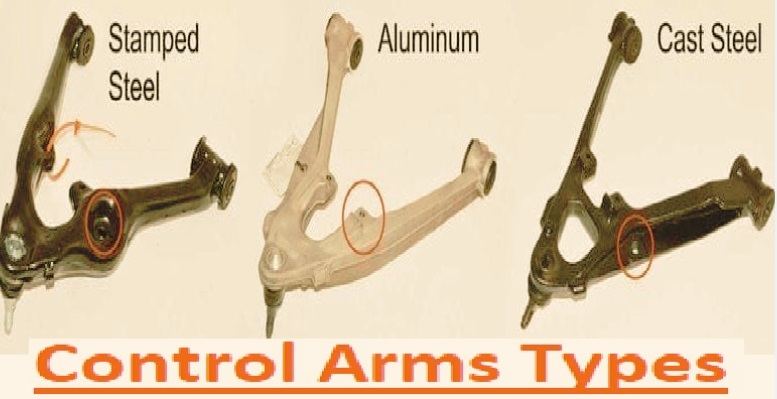
Material also varies. Manufacturers may use stamped steel, forged steel, cast iron, cast aluminum, forged aluminum, or other designs. Material alone does not tell you whether a part is an A-arm.
When comparing **a arm vs control arm**, shape is only one part of the picture. Mounting layout, suspension position, joint design, and vehicle application are just as important.
- ✦ A-Shaped or Wishbone Arm
Uses two inner pivots that lead toward an outer joint.
- ✦ L-Shaped Arm
Common in some front suspension systems and may use two inner mounting points.
- ✦ Straight Link
Often used in multi-link suspension to control one part of wheel movement.
- ✦ Curved Control Arm
Shaped to clear the body, axle, engine, brakes, or other suspension parts.
- ✦ Stamped Steel Arm
Made by forming steel sheet into a strong suspension component.
- ✦ Cast or Forged Arm
Made with processes that can create strong and complex suspension shapes.
Stamped Steel vs Cast or Forged Arms
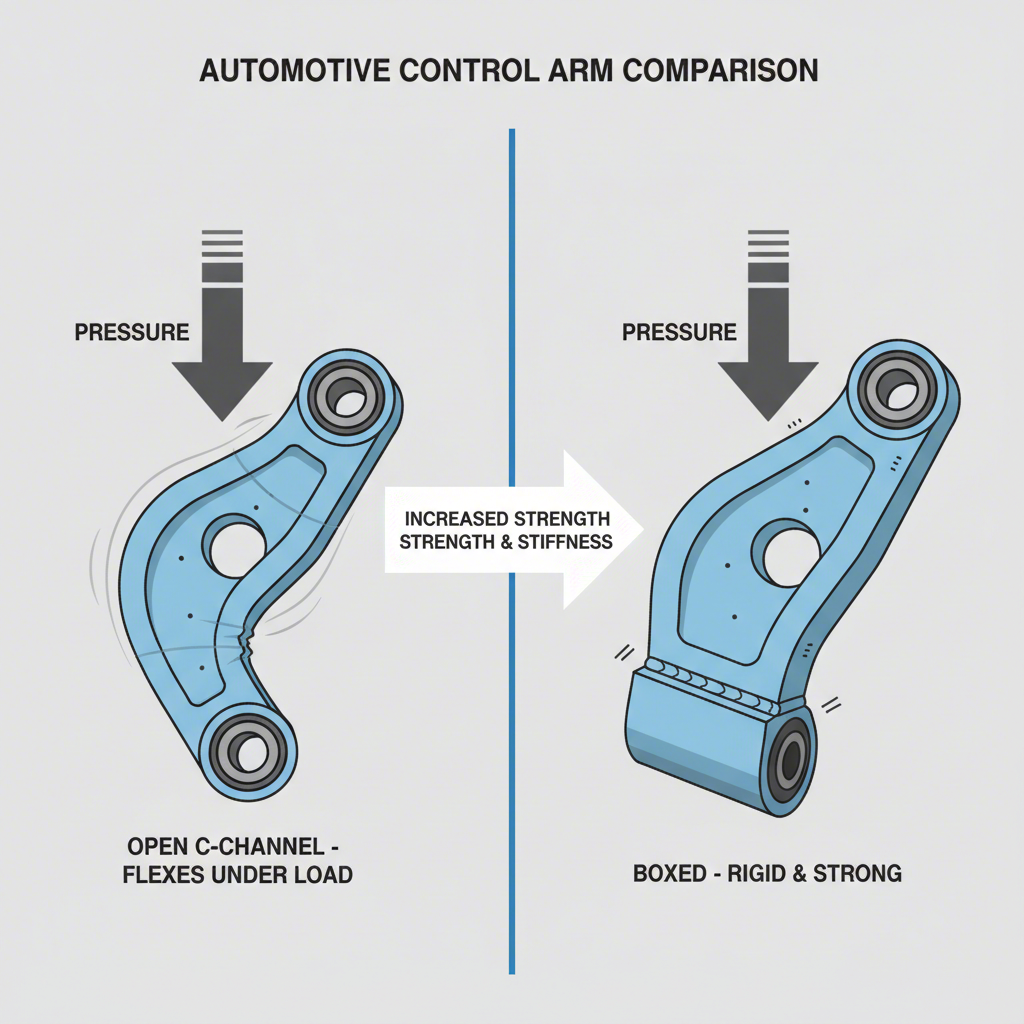
Stamped steel arms are common because they can be strong and cost-effective. Many use formed sections that are welded or shaped into a rigid structure.
Cast and forged arms can provide different strength, weight, and packaging benefits. Aluminum arms are also used when reducing unsprung weight or fitting a complex shape is important.
No material is automatically best in every case. The correct choice is the design specified for the vehicle and its intended use.
- ✦ Stamped Steel
Common, strong, and often economical.
- ✦ Forged or Cast Steel
Can provide high strength in demanding applications.
- ✦ Aluminum
Can reduce weight and allow complex shapes but must still match the correct vehicle design.
A-Arm and Control Arm Bushings
Bushings sit between many control arms and their chassis mounting points. They allow limited movement while reducing noise, harshness, and direct metal contact. Rubber is common, though some vehicles use hydraulic or other bushing designs.
A traditional A-arm often has a bushing or pivot at each inner mounting point. Other control arms may use one large bushing and one smaller bushing. The exact setup depends on how engineers want the arm to move.
Bushings can wear even when the metal arm itself remains sound. Cracked rubber, separation, excess movement, or fluid leakage from a hydraulic bushing can affect suspension control.
Some replacement control arms include new bushings. Others require the bushings to be purchased or pressed in separately. Always check what comes with the replacement part.
- ✦ Reduce Noise and Vibration
Bushings isolate some road shock before it reaches the body.
- ✦ Allow Controlled Movement
They let the control arm pivot through its designed range.
- ✦ Can Wear Separately
A worn bushing does not always mean the metal arm itself is damaged.
Can You Replace Only the Bushings?
On some vehicles, yes. If the arm is not bent, cracked, or badly corroded, replacing only worn bushings may be possible. The job often needs a press or special tools.
On other vehicles, replacing the complete control arm is easier or more practical because the new assembly may include installed bushings and a ball joint. Compare parts cost, labor, arm condition, and service information before deciding.
- ✦ Bushing-Only Repair
May make sense when the arm is sound and replacement bushings are serviceable.
- ✦ Complete Arm
May save labor when bushings and the ball joint come preinstalled.
Do A-Arms and Control Arms Include Ball Joints?
Many A-arms and control arms connect to the steering knuckle through a ball joint. The joint allows the knuckle to change angle as the suspension moves. On front steering wheels, it also allows steering movement.
A ball joint may be pressed, bolted, riveted, or built into the control arm. Some replacement arms come as complete assemblies with the joint already installed. Others are sold without it.
This matters when comparing replacement prices. A cheap arm without a ball joint may not be directly comparable with a complete arm that includes new bushings and a new ball joint.
For a correct **a arm vs control arm** parts comparison, always check the included hardware and joints instead of comparing names or prices alone.
- ✦ Integrated Ball Joint
Some arms are sold with a ball joint already installed.
- ✦ Separate Ball Joint
Other designs allow the ball joint to be serviced without replacing the arm.
- ✦ Check the Listing
Do not assume a replacement control arm includes bushings, ball joints, or mounting hardware.
Is the Ball Joint Part of the Control Arm?
It depends on the design. The ball joint may be treated as a separate service part even though it mounts to the control arm. On some modern assemblies, it is supplied as part of the arm and may not be intended for separate replacement.
The service manual or parts catalog for the exact vehicle gives the best answer. The design can differ even between trim levels or suspension packages.
- ✦ Vehicle-Specific Design
Ball joint service methods vary by year, make, model, and suspension system.
Signs of a Bad A-Arm or Control Arm
The metal control arm itself can bend, crack, rust, or suffer impact damage. More often, problems develop in the bushings or ball joint attached to the arm. Because these parts guide the wheel, excess play can affect handling and alignment.
A bad control arm may cause clunks over bumps, unstable steering, uneven tire wear, or a change in wheel alignment. The vehicle may also pull or feel less precise during braking and cornering.
These symptoms are not unique to control arms. Tie rods, wheel bearings, struts, shocks, sway bar links, ball joints, and other suspension parts can produce similar signs. A proper inspection is important before replacing parts.
If the vehicle has obvious wheel movement, a loose ball joint, severe impact damage, or a cracked suspension arm, driving can be unsafe. Have the suspension inspected before continuing normal road use.
- ✦ Clunking Noise
Worn bushings or joints may knock when driving over bumps or changing direction.
- ✦ Uneven Tire Wear
Excess suspension movement can disturb wheel alignment and tire contact.
- ✦ Steering Wander
Loose suspension joints can make the vehicle feel less stable or precise.
- ✦ Pulling
A bent arm or worn bushing may contribute to alignment changes that cause pulling.
- ✦ Visible Damage
Bent metal, cracks, severe corrosion, or torn bushings need closer inspection.
Can a Bent Control Arm Affect Alignment?
Yes. A bent control arm can change the position of the wheel relative to the vehicle. That can alter camber, caster, toe, or more than one alignment angle.
An alignment adjustment cannot always correct geometry caused by a bent suspension part. The damaged component may need replacement before a proper alignment can be completed.
- ✦ Geometry Change
A bent arm can physically move the wheel away from its designed position.
Can Worn Bushings Cause Similar Problems?
Yes. A worn bushing can let the arm shift under braking, acceleration, or cornering loads. The alignment may look acceptable while the vehicle is sitting still yet change when the suspension is loaded.
That is one reason technicians often inspect bushings while applying controlled force to the suspension. Movement that is hard to see at rest can become clear during a loaded inspection.
- ✦ Dynamic Movement
Worn bushings can let alignment change as driving forces load the suspension.
A-Arm vs Control Arm Replacement
Replacement procedures depend more on the vehicle than on whether the part is called an A-arm or control arm. The job can involve removing wheel components, separating a ball joint, supporting suspension parts, and removing tightly torqued mounting bolts.
Some control arm bolts also pass through alignment cams or eccentric washers. Their position can affect alignment. Installing them incorrectly may change suspension geometry.
Control arm bushings can also require special tightening procedures. Many rubber bushings should reach final torque near normal ride height rather than with the suspension hanging. This helps prevent the rubber from being twisted at its normal resting position.
After replacing a control arm or A-arm, an alignment check is often wise and may be required. This is especially true if the repair changes or disturbs alignment points.
- ✦ Match the Exact Part
Confirm side, axle, upper or lower position, and suspension package.
- ✦ Follow Torque Specs
Suspension fasteners need the correct torque from reliable service information.
- ✦ Mind Bushing Position
Some bonded rubber bushings need final tightening at normal ride height.
- ✦ Check Alignment
Suspension arm replacement can change or disturb alignment.
Should Control Arms Be Replaced in Pairs?
Control arms do not always need replacement in pairs. If one arm is bent from an impact and the opposite side is healthy, replacing only the damaged arm can be reasonable.
Pair replacement may make sense when both sides have similar mileage and both sets of bushings or joints show age-related wear. Inspect both sides before deciding rather than treating pair replacement as a universal rule.
- ✦ Single-Side Replacement
Can be appropriate when only one arm is damaged or worn.
- ✦ Pair Replacement
May be practical when both sides show similar wear.
Should Upper and Lower Control Arms Be Replaced Together?
Not automatically. Upper and lower control arms can wear at different rates. Replace parts based on their condition, service limits, and the repair needs of the vehicle.
If several joints and bushings are worn, replacing more than one arm during the same repair can reduce repeat labor. But a good upper arm does not need replacement simply because the lower arm is bad.
- ✦ Inspect Each Arm
Base replacement on actual wear, damage, and service requirements.
How to Identify Whether Your Vehicle Has an A-Arm
Start by looking at how the wheel or steering knuckle connects to the body or subframe. A traditional A-arm has two inner pivot points with two branches that meet near the outer joint. If you see that layout, the part can usually be described as an A-arm or wishbone.
If you see a strut running from the knuckle upward into the body and one lower suspension arm, the vehicle may use a MacPherson strut layout. The lower part is normally called a lower control arm even if its shape is somewhat triangular.
If several narrow links connect the wheel carrier to the body, you are likely looking at a multi-link system. Those parts may be control arms or suspension links, but most would not normally be called A-arms.
For exact identification, use the VIN, factory service information, or a vehicle-specific parts catalog. Visual shape alone can be misleading.
- ✦ Look for Two Inner Pivots
Two widely spaced inner mounts leading to one outer joint suggest an A-arm.
- ✦ Check for a Strut
A large strut attached to the knuckle may indicate MacPherson suspension.
- ✦ Count Separate Links
Several smaller arms often point to a multi-link design.
- ✦ Verify by VIN
Vehicle-specific catalog data is more reliable than guessing from appearance.
Why Visual Identification Can Be Tricky
Some modern control arms have large triangular bodies even though their construction differs from a classic wishbone. Other arms use two inner bushings but have an uneven or curved outline.
That is why the **a arm vs control arm** question cannot always be answered from shape alone. The suspension layout and actual connection points give a better answer.
- ✦ Modern Shapes Vary
Packaging needs can make an A-arm or control arm look very different from a textbook example.
How to Buy the Correct A-Arm or Control Arm
Do not buy a suspension arm based only on the words A-arm or control arm. Start with the vehicle year, make, model, engine if required, drivetrain, and exact suspension position. Some vehicles use different arms across trims or suspension packages.
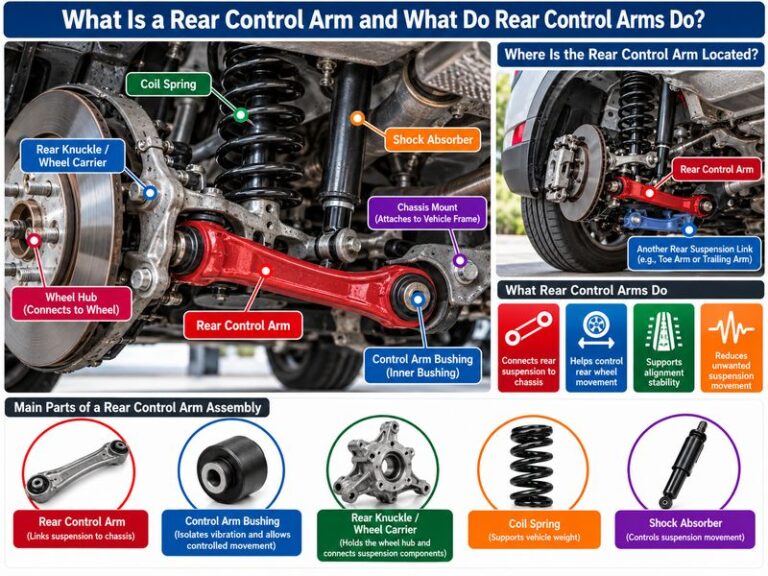
Next, confirm whether you need the front or rear, left or right, and upper or lower part. Check whether the replacement includes bushings, a ball joint, mounting hardware, or only the metal arm.
Compare the mounting points and overall shape with the original part. OEM numbers or trusted interchange data can help when several similar parts are listed.
For lifted, lowered, off-road, or modified vehicles, the stock arm may not be the correct replacement. Some modified suspensions use adjustable or corrected control arms to restore geometry.
- ✦ Confirm Vehicle Fitment
Use year, make, model, drivetrain, and suspension details.
- ✦ Confirm Position
Check front or rear, left or right, and upper or lower.
- ✦ Check Included Parts
Verify whether bushings, ball joints, and hardware come with the arm.
- ✦ Compare Mounting Points
The replacement should match the original mounting layout.
- ✦ Account for Modifications
Lifted or lowered vehicles may need control arms designed for altered suspension geometry.
OEM vs Aftermarket Control Arms
OEM parts are designed to match the vehicle’s original configuration. Aftermarket parts range from direct replacements to heavy-duty, adjustable, or performance designs.
A quality aftermarket arm can be a suitable replacement when it matches the required dimensions and specifications. For modified vehicles, aftermarket designs may also provide adjustment that the stock arm does not offer.
- ✦ OEM
Designed around the original factory suspension configuration.
- ✦ Aftermarket
May offer stock-style replacement, stronger construction, or added adjustment.
A Arm vs Control Arm: Which Term Should You Use?
Use **control arm** when you want the broadest and safest term. It works for many suspension layouts and is widely used in repair manuals, parts catalogs, and service discussions.
Use **A-arm** when the component clearly has the traditional two-inner-pivot wishbone design or when the manufacturer uses that name. It is especially common when discussing double-wishbone suspension, trucks, off-road vehicles, and performance applications.
For parts ordering, use the name listed for the exact vehicle rather than forcing one term. If a catalog calls the component a lower control arm, search with that wording even if a mechanic casually calls it an A-arm.
That is the practical answer to **a arm vs control arm**. The terms can describe the same part, but control arm is broader while A-arm identifies a more specific style.
- ✦ Use Control Arm for General Discussion
It is the broader term and covers more suspension designs.
- ✦ Use A-Arm for Wishbone Designs
It is most accurate when the part has two inner pivots leading toward one outer joint.
- ✦ Use Vehicle-Specific Terminology for Parts
Match the wording and part number used by the manufacturer or trusted catalog.