How Long Does It Take to Replace a Control Arm?
If you are asking how long does it take to replace a control arm, the short answer is often one to three hours. That is a useful planning range for many common cars and light trucks. Still, the real time can vary a lot from one vehicle to another.
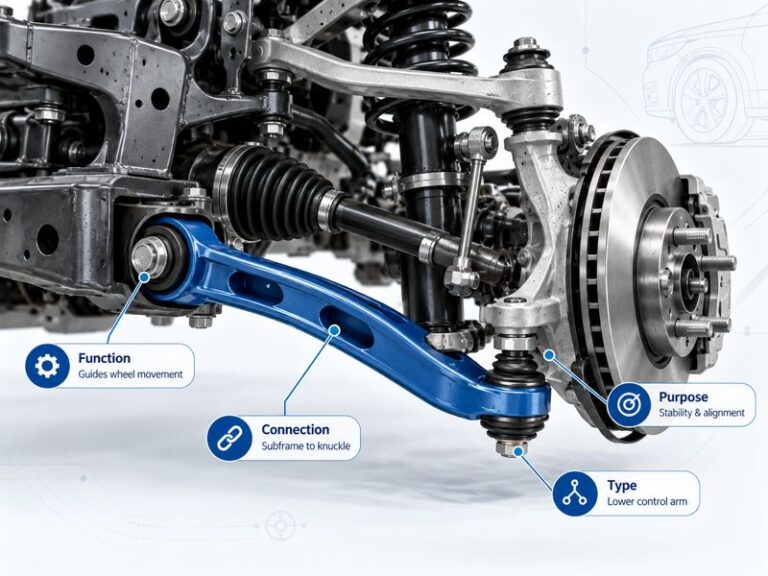
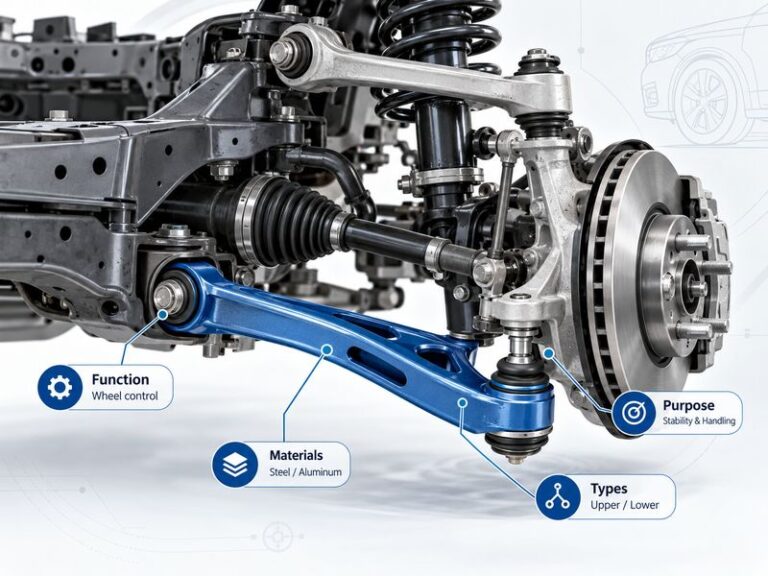
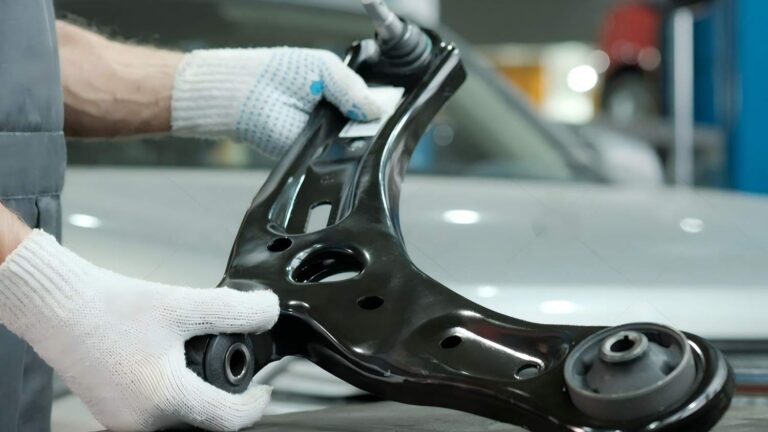
A control arm links the suspension to the vehicle body or frame. It helps the wheel move up and down while keeping the wheel in the right position. A worn bushing, damaged ball joint, bent arm, or rusted hardware can turn a simple repair into a longer job.
In practice, the hardest part is not always removing the control arm. Old bolts may be stuck. A ball joint may need special tools. Some vehicles also need extra suspension parts removed to reach the arm. That is why a shop may quote a wider time range than the actual book labor time.
For a U.S. driver, the best plan is to ask whether the estimate covers diagnosis, control arm replacement, hardware, and alignment. That gives you a clearer idea of how long your car will stay at the shop.

How Long Does It Take to Replace a Control Arm?
For many vehicles, one control arm can take about 1 to 3 hours to replace. This is a practical range, not a fixed rule. The time can be shorter on an easy-to-access vehicle and longer when rust or seized parts slow the work.
If both sides need replacement, the total time does not always double. The mechanic is already familiar with the layout after completing the first side. Shared setup work can also reduce the extra time needed for the second side.
The final shop visit may take longer than the hands-on repair. The vehicle may need an inspection, a road test, and a wheel alignment after the control arm is installed. Parts availability can also affect how long the car stays in the shop.

- ✦ One control arm
A common planning range is about 1 to 3 hours of repair work.
- ✦ Both control arms
Replacing both sides can take several hours, but the second side may require less setup time.
- ✦ Rusty suspension
Heavy rust or seized fasteners can add a large amount of labor time.
- ✦ Alignment
A separate alignment may add shop time after the mechanical repair.
Why the Time Can Vary
Vehicle design is one of the biggest factors. Some control arms are easy to reach from below. Others sit behind covers, subframes, steering parts, or other suspension components.
The condition of the old hardware also matters. A clean bolt may come out quickly. A rusted bolt can require penetrating oil, heat, cutting tools, or extra disassembly.
- ✦ Vehicle design
The layout of the suspension changes how easy the control arm is to reach.
- ✦ Rust
Rust can make bolts and nuts hard to remove.
- ✦ Part type
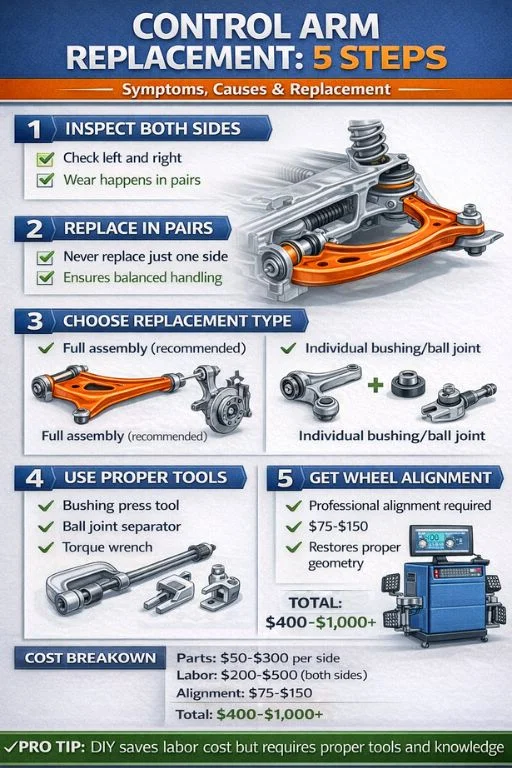
A complete control arm may be quicker to install than replacing individual pressed-in bushings.
What Does a Control Arm Do?
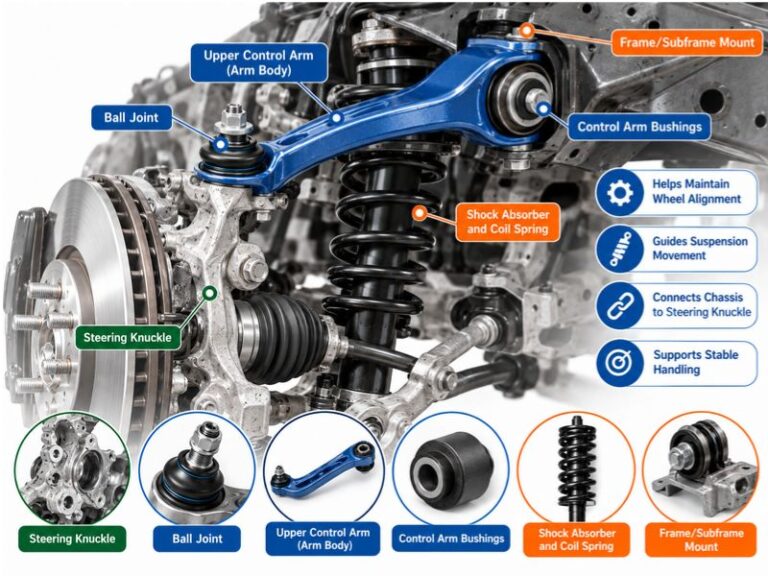
A control arm is a key suspension part. It connects the wheel assembly to the vehicle body or frame. Its bushings allow controlled movement, while the ball joint lets the wheel move with the steering and suspension.
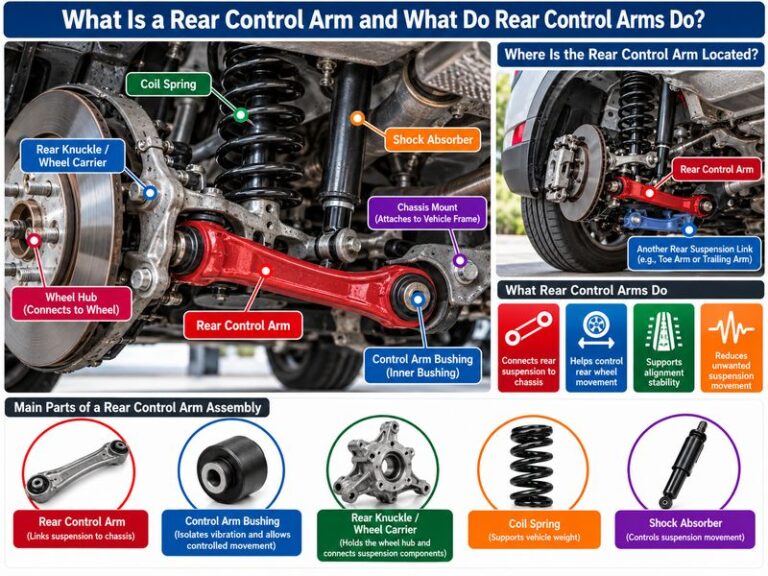
Most passenger vehicles have upper and lower control arms in some suspension designs. Many modern vehicles use a different layout, so the exact number and position of control arms can vary.
Because the control arm helps locate the wheel, damage can affect steering, tire wear, ride quality, and alignment. A bent arm or badly worn joint should not be treated as a cosmetic problem.
- ✦ Bushings
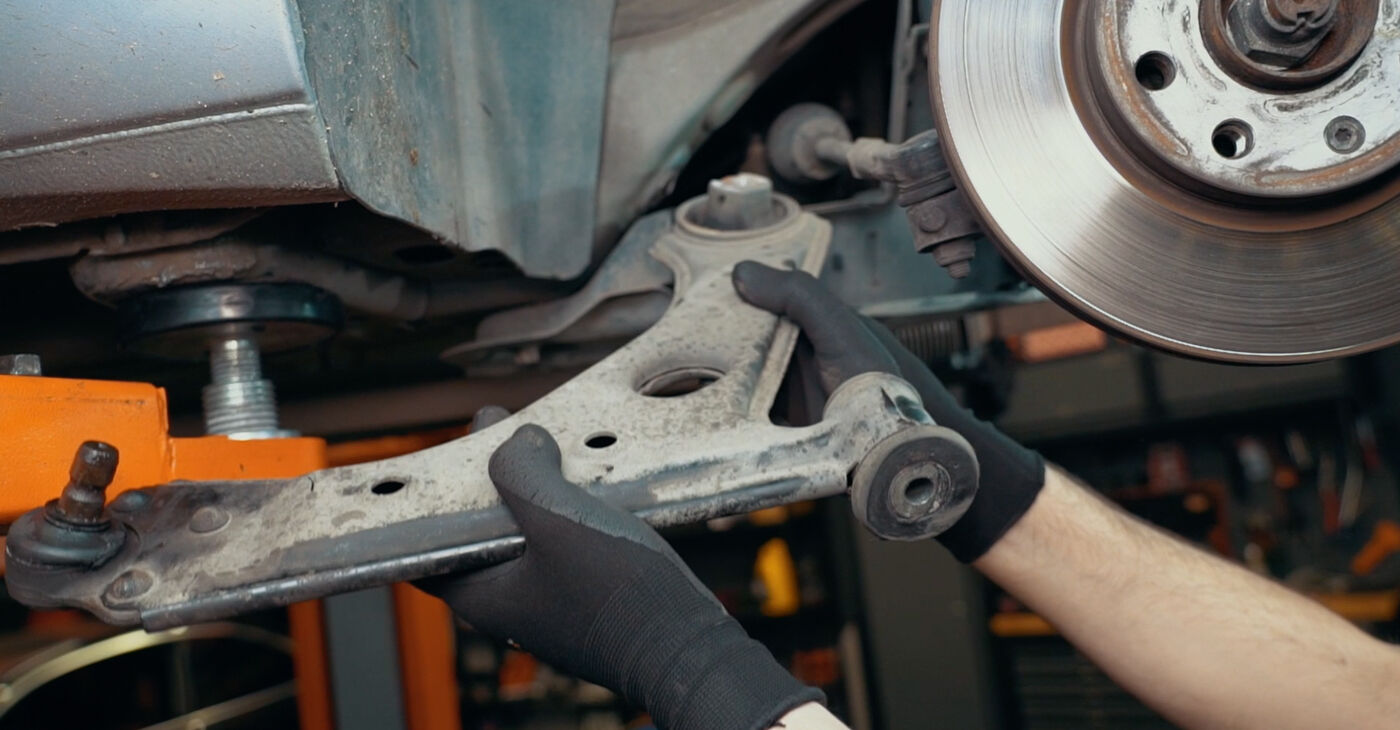
Rubber or similar mounts let the arm move while limiting unwanted movement.
- ✦ Ball joint
The ball joint provides a flexible connection between the control arm and wheel assembly.
- ✦ Wheel location
The control arm helps keep the wheel in its intended position as the suspension moves.
Upper vs. Lower Control Arms
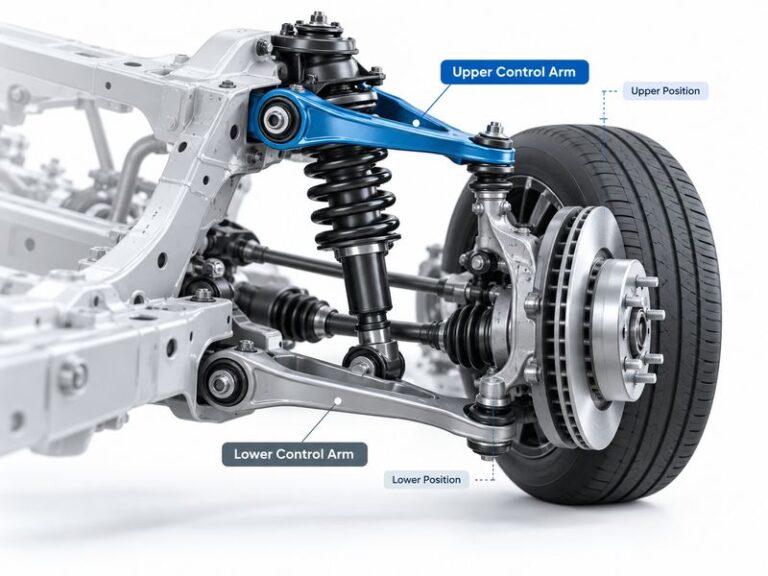
A lower control arm sits below the wheel assembly and is common in many front suspension systems. An upper control arm, where used, sits above it and works with the lower arm to control wheel movement.
Replacement time can differ between the two. The exact design, access, and type of ball joint or bushing used on the vehicle matter more than the name of the arm alone.
- ✦ Lower arm
Often carries major suspension loads and may connect directly to the steering knuckle through a ball joint.
- ✦ Upper arm
Used on some suspension designs and may have different access and alignment requirements.
What Happens During a Control Arm Replacement?
The mechanic normally starts by confirming the fault. This may include a visual inspection, checking suspension movement, and looking for worn bushings, loose ball joints, or a bent arm. A road test may also help confirm the source of a noise or handling problem.
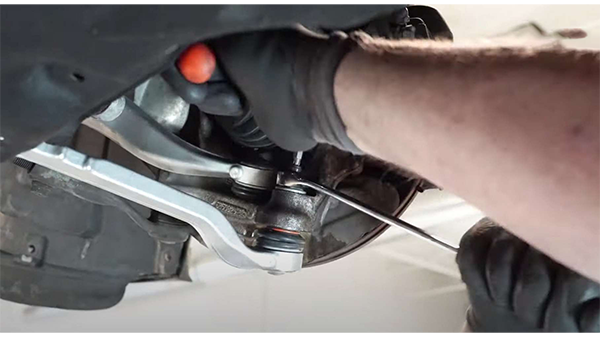
The vehicle is then lifted safely and the wheel is removed. Depending on the design, the mechanic may disconnect a ball joint, sway bar link, or other nearby components before removing the control arm mounting bolts.
The new arm is installed in the correct position. The mechanic follows the vehicle maker’s torque and installation procedure because suspension fasteners and joints need the correct fit and tightening method.
After installation, the suspension is checked again. If the repair changes wheel alignment, the vehicle should receive an alignment before normal driving.
- ✦ Inspect
Confirm that the control arm, bushings, ball joint, and nearby suspension parts are actually the source of the problem.
- ✦ Remove
Remove the wheel and any components that block access to the control arm.
- ✦ Install
Fit the new control arm and tighten the hardware using the required service procedure.
- ✦ Check
Inspect the suspension, verify the repair, and complete alignment when required.
Why Correct Torque Matters
Control arm bolts are not parts to tighten by feel. The correct torque and tightening procedure can depend on the vehicle and fastener. Some bushing designs also require tightening at a specific suspension position.
A professional repair should follow the service information for that exact vehicle. This helps prevent premature bushing wear and other suspension problems.
- ✦ Use the correct specification
Torque values differ by vehicle, part, and fastener.
- ✦ Check installation position
Some bushings need the suspension loaded or positioned correctly before final tightening.
What Can Make Control Arm Replacement Take Longer?
When people ask how long does it take to replace a control arm, they often assume the job has a fixed time. It does not. Rust, vehicle design, damaged hardware, and extra parts can all change the repair time.
Rust is a common issue on vehicles that spend years in areas where roads are treated with salt. A bolt that was easy to install at the factory may be difficult to remove many years later.
The condition of related parts also matters. A mechanic may find a worn ball joint, damaged sway bar link, or other suspension issue after the vehicle is apart. The shop should explain any additional work before proceeding when possible.
- ✦ Seized bolts
Corrosion can make removal slow and may require special tools or replacement hardware.
- ✦ Pressed-in bushings
Removing and installing individual bushings can require a press and may take longer than replacing the complete arm.
- ✦ Limited access
Some vehicles require nearby suspension or subframe parts to be moved before the arm can come out.
- ✦ Damaged hardware
A damaged stud, bolt, or nut may need extra work before the repair can continue.
- ✦ Additional faults
A worn ball joint or another damaged suspension part can add work to the repair.
How Rust Changes the Repair
Rust can turn a one-hour repair into a much longer job. The mechanic may need to free the fastener without damaging nearby parts, or replace hardware that cannot safely be reused.
This is one reason an estimate is not always an exact promise. A shop can give a labor estimate, but the condition of the vehicle becomes clear only after inspection.
- ✦ Light rust
The job may still follow the normal repair process.
- ✦ Heavy corrosion
Seized hardware can require extra tools, heat, cutting, or replacement parts.
Does a Control Arm Replacement Need an Alignment?
In many cases, yes. A control arm affects the position of the wheel, so removing and replacing it can change suspension geometry. The exact need depends on the vehicle and which alignment angles the repair can affect.
A wheel alignment checks angles such as camber, caster, and toe. If these angles are outside the vehicle maker’s limits, the car may pull, the steering wheel may sit off-center, or the tires may wear unevenly.
For this reason, it is wise to ask the shop whether an alignment is included in the repair estimate. Manufacturer service procedures and repair guidance can specifically call for an alignment after control arm replacement.

- ✦ Camber
This describes how much the wheel leans inward or outward when viewed from the front.
- ✦ Caster
This describes the steering axis angle and affects steering feel and wheel return.
- ✦ Toe
This describes whether the fronts of the tires point slightly toward or away from each other.
How Much Extra Time Does Alignment Add?
An alignment is a separate service from removing and installing the control arm. The added shop time depends on the alignment equipment, vehicle, and whether the angles can be adjusted easily.
If the alignment shows another damaged or bent suspension part, the shop may need to repair that issue before the alignment can be completed.
- ✦ Simple alignment
The vehicle may only need normal measurements and adjustments after the control arm repair.
- ✦ Alignment problem
A damaged suspension part may need repair before the alignment can be brought into specification.
Signs Your Control Arm May Need Replacement
A bad control arm can produce several symptoms, but none of them proves that the control arm is the cause by itself. Suspension noises can come from several parts, so proper inspection matters.
Common signs include clunks over bumps, loose steering feel, uneven tire wear, vibration, or the vehicle pulling to one side. A bent control arm can also change wheel alignment after a pothole or crash.

- ✦ Clunking or knocking
A worn bushing or ball joint can make noise when the suspension moves.
- ✦ Uneven tire wear
A damaged suspension part can change wheel alignment and increase tire wear.
- ✦ Loose steering feel
Excess movement in the suspension can affect how the vehicle responds to steering.
- ✦ Pulling
A change in suspension geometry can cause the vehicle to pull or track poorly.
- ✦ Visible damage
A bent arm, torn bushing, or damaged joint can be found during a physical inspection.
When a Noise Needs Prompt Attention
A mild suspension noise still deserves an inspection, but a sudden change in steering or a visibly damaged suspension part is more urgent. A severely worn or damaged ball joint can affect wheel control.
If the steering feels unstable, the wheel position looks wrong, or a suspension component has separated, do not keep driving just to see whether the noise goes away. Have the vehicle inspected and use towing when driving it would be unsafe.
- ✦ Sudden steering change
Stop and have the vehicle checked if steering control changes sharply.
- ✦ Visible suspension damage
Do not ignore a bent, cracked, or separated suspension component.
Can You Replace a Control Arm Yourself?
A skilled DIY mechanic may be able to replace a control arm with the right tools, service information, and safe lifting equipment. The job is not ideal for someone who has never worked on suspension parts.
The vehicle must be supported securely. A control arm can also be under suspension load, and the ball joint connection can be difficult to separate. A proper torque wrench and the correct tools are important.
If you do the work yourself, follow the service procedure for the exact year, make, model, and suspension design. Do not guess torque values or rely on a generic procedure when the manufacturer specifies a different method.

- ✦ Safe lifting equipment
Use a proper jack and correctly rated jack stands or a suitable vehicle lift.
- ✦ Torque wrench
Suspension fasteners should be tightened to the specified torque.
- ✦ Service information
Use the correct repair procedure for the exact vehicle.
- ✦ Alignment check
Plan for a professional alignment when the repair can affect wheel geometry.
Why Professional Repair Can Be Safer
A shop has a lift, suspension tools, alignment equipment, and experience with seized hardware. That can make a difficult repair much more predictable.
A professional can also inspect related components while the suspension is exposed. This can help prevent replacing one part while missing another worn or damaged part.
- ✦ Special tools
Professional shops may have ball joint tools, presses, lifts, and equipment for difficult fasteners.
- ✦ Inspection
The technician can check nearby suspension and steering parts during the repair.
How to Plan for Control Arm Replacement at a Repair Shop
If you are booking a repair, ask the shop how long the actual control arm replacement should take and whether that estimate includes alignment. This is more useful than asking only when the vehicle will be ready.
Ask whether the shop is replacing the complete control arm or only a bushing or ball joint. Some vehicles make complete arm replacement the simpler option, while others may use serviceable individual parts.
It is also smart to ask about rust or seized hardware before approving extra labor. A good estimate should explain what is known, what is included, and what could change after inspection.
- ✦ Ask for labor time
Find out the estimated hands-on repair time for your exact vehicle.
- ✦ Ask about alignment
Confirm whether a wheel alignment is included or recommended after the repair.
- ✦ Ask about related parts
Find out whether the estimate includes inspection of ball joints, bushings, sway bar links, and hardware.
- ✦ Ask about rust
If the vehicle is older or has heavy corrosion, ask whether seized hardware could add labor.
What a Good Repair Estimate Should Tell You
A useful estimate should identify the failed part and explain the planned repair. It should also separate labor, parts, and any extra services such as alignment when possible.
The estimate may change if the technician finds hidden damage after disassembly. That is normal for older vehicles, especially when corrosion is present.
- ✦ Parts
The estimate should identify the control arm or related component being replaced.
- ✦ Labor
The shop should provide an estimated labor charge or labor time.
- ✦ Additional service
Alignment or other required work should be explained separately when applicable.