Gas shock absorbers contain hydraulic oil and pressurized gas, usually nitrogen, to help reduce oil foaming and maintain consistent damping. Oil shock absorbers use hydraulic oil without an added pressurized gas charge. Both control suspension movement, but gas-charged designs can offer more consistent control under demanding driving conditions.
For drivers in the United States, the right shock absorber depends on the vehicle, road conditions, load, and intended use. A family sedan driven around town has different needs from a pickup towing a trailer or an SUV traveling on rough roads. Traffic, potholes, highway speeds, and repeated bumps can all affect how a suspension feels and performs.
The key difference is not that one shock contains oil while the other contains gas. Both types use hydraulic fluid to create damping. A gas-charged shock adds pressurized gas to help keep the fluid from foaming, which can improve consistency when the suspension works hard. The design, internal valves, and vehicle-specific tuning also play major roles in ride comfort and handling.
This guide explains how each type works, what drivers may notice, and how to choose a suitable replacement. It also covers common myths about ride stiffness, durability, price, and whether gas shocks are always better. The goal is to help you make a sound choice for your vehicle rather than pay for a feature you may not need.
What Is the Difference Between Gas and Oil Shock Absorbers?
The main difference between gas and oil shock absorbers is the use of pressurized gas inside the damper. An oil shock, often called a conventional hydraulic shock, relies on hydraulic fluid and internal valves to control movement. A gas-charged shock uses hydraulic fluid too, but it also contains a pressurized gas charge that helps reduce aeration.
Aeration happens when gas bubbles mix with the hydraulic fluid. Cavitation refers to the formation of vapor-filled cavities when local pressure drops enough. These processes are related but not identical. Both can interfere with consistent damping because a gas-filled mixture compresses more readily than liquid alone.
A gas-charged design helps keep the oil under pressure and limits the formation or growth of bubbles. This can make damping more predictable during repeated bumps, hard cornering, rough-road travel, or other demanding use. The size of the benefit depends on the shock’s design, condition, temperature, and operating demands.
An oil shock is not necessarily an outdated or poorly performing part. Its valves can be tuned for a particular vehicle and driving style, and some non-gas designs manage heat and fluid movement without an added gas charge. The important question is whether the unit delivers the damping the vehicle requires.
Uses hydraulic fluid and calibrated valves to resist suspension movement. Depending on its design, it may emphasize comfort, low-speed response, cost, or other application-specific needs.
Gas-charged shock absorber
Uses hydraulic fluid plus pressurized gas, commonly nitrogen, to help limit aeration and maintain more consistent damping during demanding operation.
The practical distinction
Gas charging affects how consistently the hydraulic system works. It does not replace the oil or determine every aspect of ride comfort and handling.
Does a Gas Shock Contain Oil?
Yes. A conventional gas-charged automotive shock still contains hydraulic oil. The oil moves through passages and valves as the piston travels inside the shock body. This controlled flow creates the resistance needed to manage spring and suspension movement.
The gas charge helps maintain pressure within the unit. Depending on the design, gas and oil may occupy separate spaces divided by a floating piston, or the gas may be arranged differently within the assembly. Therefore, the exact internal layout depends on the shock type.
Oil provides damping
The valves restrict fluid flow and turn suspension movement into heat.
Gas supports fluid stability
Pressurized gas helps reduce aeration and the loss of consistent damping that bubbles can cause.
How Gas and Oil Shock Absorbers Work
Both types control how quickly the suspension moves after a wheel hits a bump. A vehicle’s springs support its weight and store energy when compressed. The shock absorber controls the release of that energy so the vehicle does not continue bouncing after each disturbance.
Inside the shock, a piston moves through hydraulic fluid. Small passages and valve assemblies restrict the flow of oil as the suspension compresses and extends. The resistance created by this flow slows suspension movement and helps keep the tires in contact with the road.
The shock converts part of the suspension’s movement energy into heat. During repeated bumps or heavy use, the fluid can become hot and its behavior can change. If air or vapor bubbles interfere with the oil, the damping force may become less consistent.
A gas-charged unit uses pressurized gas to help control this problem. Nitrogen is commonly used because it is relatively inert and suitable for a sealed pressurized system. The gas does not do the main hydraulic damping work; it supports the conditions under which the oil and valves operate.
Source: gdst4x4offroad.com
Compression stroke
The shock shortens as the wheel moves upward relative to the vehicle. Hydraulic fluid passes through controlled valve paths, creating resistance.
Rebound stroke
The shock extends as the suspension returns toward its resting position. The valves regulate the oil flow to prevent the spring from releasing its energy too quickly.
Heat and fluid behavior
Repeated movement creates heat. Suitable fluid, valve design, oil capacity, and gas pressure can help maintain predictable operation.
Why Oil Foaming Matters
Hydraulic oil is far less compressible than gas. When bubbles build up in the working fluid, part of the piston movement can compress those bubbles instead of producing the intended resistance. The result may be a change in damping response, sometimes described as shock fade.
A gas charge helps limit this effect, particularly when a shock works repeatedly under high demand. However, gas charging cannot correct worn valves, damaged seals, unsuitable fluid, or a shock that is the wrong match for the vehicle. Correct design and maintenance still matter.
Possible effect of aeration
Damping may become less consistent, allowing more suspension movement than intended.
What gas charging changes
It helps keep the hydraulic fluid under pressure and reduce the impact of bubbles on shock response.
Gas vs Oil Shock Absorbers: Main Differences Compared
Gas-charged shocks can maintain more consistent damping during demanding use, while non-gas hydraulic shocks can suit applications where their particular damping characteristics meet the vehicle’s needs. Neither type wins every comparison because shock design, valving, construction, and application can matter as much as the gas charge itself.
The table below compares common characteristics. These are general design tendencies, not guarantees for every vehicle or product. A well-designed oil shock may outperform a poorly matched gas shock, and two gas-charged models may feel very different from one another.
Source: beringinmotor.com
Damping consistency
Gas charging can help reduce fluid aeration during repeated suspension movement. The result depends on operating conditions and the shock’s internal design.
Ride comfort
Either type can provide a comfortable ride when its valving and overall setup suit the vehicle.
Handling response
Gas charging may help maintain response during demanding use, but damping calibration and suspension geometry remain important.
Price and availability
Cost varies by vehicle, design, brand, and performance level. Some gas-charged replacements are inexpensive, while some specialized hydraulic units cost more.
Comparison Table: Gas Shocks vs Oil Shocks
Use this table as a starting point when comparing compatible replacement parts. It describes typical characteristics rather than fixed rules.
Internal contents
Oil shock: hydraulic fluid without an added pressurized gas charge. Gas shock: hydraulic fluid with a pressurized gas charge.
Resistance to aeration
Oil shock: depends on the design’s fluid management and operating conditions. Gas shock: pressurization helps limit aeration and cavitation.
Repeated rough-road use
Oil shock: performance depends on oil capacity, valves, heat control, and use. Gas shock: may maintain more consistent damping when fluid aeration would otherwise be a concern.
Comfort on ordinary roads
Oil shock: can provide a soft or balanced ride when correctly tuned. Gas shock: can also be comfortable, despite the common belief that gas always means stiff.
Service life
Oil shock: depends on seals, construction, heat, contamination, and operating load. Gas shock: depends on the same factors, plus the integrity of its gas charge and seals.
Best selection method
Both types: choose by vehicle application, manufacturer specifications, suspension requirements, and intended use rather than the label alone.
Is One Type More Durable?
There is no universal rule that gas shocks last longer than oil shocks. Gas charging can help control aeration, but durability also depends on seal quality, rod finish, internal materials, temperature, corrosion exposure, and how the vehicle is used.
Repeated heavy loads, rough roads, damaged mounts, and severe impacts can shorten shock life. A suitable replacement with sound construction and correct damping may last longer than a more expensive part that is poorly matched to the vehicle.
Look at the full design
Consider construction quality, application fit, warranty terms, and documented specifications rather than gas charging alone.
Inspect actual condition
Fluid leakage, damaged bodies, worn bushings, and poor damping are more useful signs of a problem than the shock’s marketing label.
Which Shock Absorber Is Better for Your Vehicle?
The better shock absorber is the one designed to deliver the right control and comfort for your vehicle and driving conditions. Gas-charged shocks can be useful for drivers who regularly encounter repeated bumps, winding roads, heavy loads, or demanding suspension work. A suitable non-gas hydraulic shock can also be a sound choice for ordinary driving when the manufacturer specifies that design.
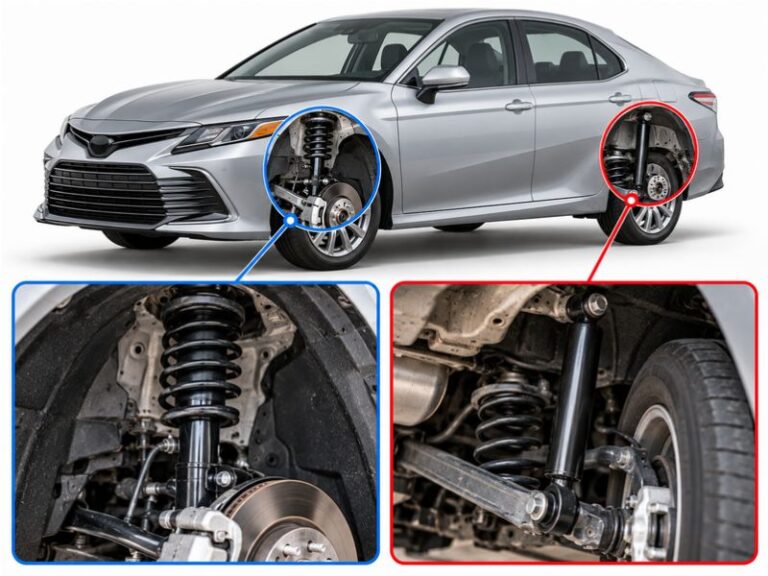
Before choosing, check the original equipment specifications and the replacement part catalog for your exact year, make, model, engine, and suspension configuration. Some vehicles use different shock designs across trim levels or between front and rear axles. A part that physically fits may still have unsuitable damping characteristics.
Think about how you use the vehicle rather than assuming that a more performance-oriented shock is always better. A firm setup may feel controlled on a smooth highway but less comfortable over broken pavement. A soft setup may feel pleasant in town but provide insufficient control under a particular load if it is not designed for that use.
Source: gdstauto.com
Daily commuting
Prioritize the vehicle’s intended ride quality, predictable handling, and correct fit. A suitable standard hydraulic or gas-charged replacement may work well.
Highway driving
Look for stable damping, proper tire contact, and the original vehicle’s handling characteristics. Gas charging alone does not guarantee better stability.
Rough roads
Consider a shock designed for the vehicle’s suspension travel, heat demands, and expected road conditions. Inspect mounts and other suspension parts as well.
Towing and carrying loads
Use shocks approved for the vehicle and its intended load. Shocks do not increase the vehicle’s rated payload or towing capacity.
Off-road driving
Look beyond the gas-versus-oil label. Shock travel, heat management, valving, mounting strength, and suitability for repeated impacts are all important.
Does a Gas Shock Make the Ride Stiffer?
Not necessarily. Ride stiffness depends on the spring rate, shock valving, gas pressure, suspension geometry, tires, bushings, and the vehicle’s overall setup. Gas pressure can add a force that affects suspension behavior in some designs, but it is not the only factor controlling how the vehicle feels.
A correctly matched gas-charged shock may deliver a comfortable ride while maintaining good control. A shock with unsuitable damping can feel harsh or allow excessive body motion, regardless of whether it contains a gas charge. Compare application-specific specifications instead of judging by the label.
If the ride feels too firm
Check whether the replacement matches the vehicle, whether the correct springs and tires are fitted, and whether suspension components move freely.
If the vehicle keeps bouncing
Have the shocks, springs, mounts, and related suspension parts inspected. Repeated bouncing is not proof that an oil shock must be replaced with a gas shock.
Do Gas Shocks Improve Handling?
They can help maintain consistent damping when the suspension is working hard, which may support predictable tire contact and body control. The actual improvement depends on the original shock, the replacement’s valving, the condition of the rest of the suspension, and the conditions in which the vehicle is driven.
A gas-charged shock is not a substitute for proper tires, wheel alignment, healthy suspension joints, or safe driving. It also cannot correct a worn spring or a damaged suspension mount. Choose a compatible part that addresses the vehicle’s actual needs.
For everyday handling
Match the shock to the original suspension design and intended ride quality.
For demanding use
Check the manufacturer’s specifications for the load, temperature range, suspension travel, and driving conditions the part is designed to handle.
How to Choose the Correct Replacement Shock Absorber
Start with the vehicle manufacturer’s requirements, not the gas or oil label. The correct part must match the suspension design, mounting points, travel range, and damping needs. If your vehicle originally uses a specific type of shock, changing to a different design should be based on verified compatibility rather than appearance or price alone.
You do not need to dismantle a shock absorber to identify its basic type. Start with the vehicle identification number, the owner’s manual, an original equipment part number, or a reputable parts catalog. If you are unsure about a modified suspension, ask a qualified technician to confirm the correct application.
Compare the parts on more than one measure. Check whether the replacement is intended for standard driving, heavy-duty service, towing-related use, or a modified suspension. Also review warranty terms and installation requirements. A longer warranty is useful information, but it does not independently prove that a shock will last longer in your conditions.
Source: shockabsorberpro.com
Confirm exact fitment
Verify the year, make, model, trim, engine, axle position, and any relevant suspension package. Use the VIN when the catalog supports it.
Match the intended use
Select a design suited to daily commuting, rough roads, towing, or other documented needs without exceeding the vehicle’s limits.
Compare technical details
Review construction type, damping application, dimensions, mounting hardware, and any stated load or duty requirements.
Inspect related parts
Check springs, mounts, bushings, tires, and suspension joints for wear that could affect the result of a shock replacement.
Gas-Charged Does Not Mean Monotube
Twin-tube and monotube describe the internal construction of a shock absorber. Gas-charged and non-gas-charged describe whether the design uses an added pressurized gas charge. These terms refer to different features, so they should not be treated as interchangeable.
A twin-tube shock has an inner working cylinder and an outer reservoir space. Many twin-tube designs are gas-charged, although designs differ. A monotube shock uses a single main cylinder and commonly separates its pressurized gas from the oil with a floating piston. Monotube designs can offer useful heat-management and response characteristics, but suitability depends on the complete design.
This distinction matters when comparing replacement parts. A gas-charged twin-tube shock may suit a vehicle originally designed for that arrangement. A monotube upgrade may be suitable for some vehicles but not others. Check application approval, dimensions, mounting requirements, and ride characteristics before changing construction type.
Twin-tube
Uses a working tube and an outer reserve tube. This layout is common in passenger cars and light trucks.
Monotube
Uses a single main cylinder, often with a floating separator piston between oil and pressurized gas.
Selection rule
Do not assume every gas shock is a monotube shock or that every monotube shock is the best choice for every vehicle.
Should You Replace Shocks in Pairs?
Replacing shocks in axle pairs is often recommended because matching damping on the left and right sides helps maintain balanced handling. If one shock has worn out, the other shock on the same axle may have experienced similar mileage and conditions.
Follow the vehicle and shock manufacturer’s instructions for the specific application. Some repair situations require a broader suspension assessment, and a technician should inspect the opposite-side shock before deciding whether a single replacement is appropriate. Never install incompatible shocks on the same axle merely because they share the same dimensions.
Check both sides
Inspect the opposite shock for leakage, damage, worn mounts, and poor damping.
Keep the setup matched
Use compatible parts with the intended damping characteristics and mounting specifications.
Signs Your Shock Absorbers Need Inspection
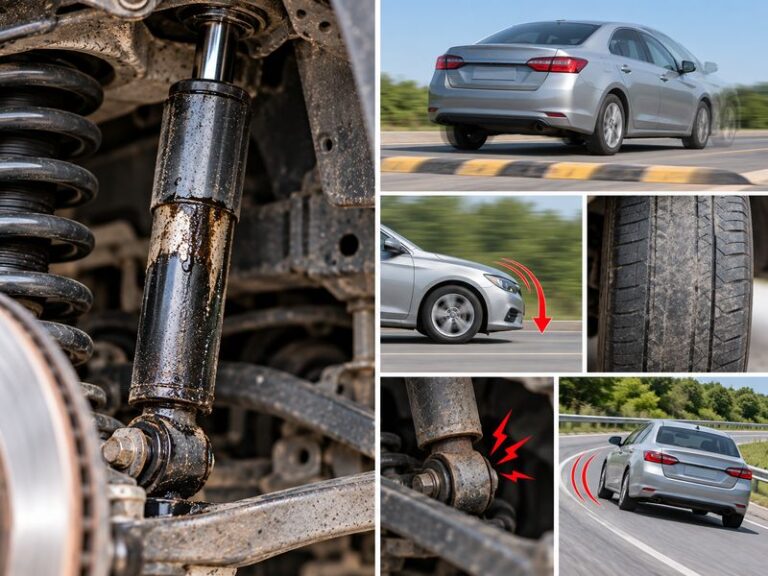
A change in handling, repeated bouncing, visible fluid leakage, or unusual suspension noise can indicate a shock absorber problem. These symptoms do not automatically mean the vehicle needs gas shocks instead of oil shocks. They show that the suspension should be checked to identify the actual cause.
Start with a visual inspection from a safe position. Look for a damaged shock body, a bent rod where visible, loose or worn mounts, and fluid running down the shock. Some light surface oil residue may not indicate a failed seal, so the amount and pattern of fluid matter. Follow the vehicle manufacturer’s inspection guidance or have a technician assess uncertain cases.
Pay attention to how the vehicle behaves on normal roads. Excessive bouncing after bumps, increased body motion, reduced control over uneven surfaces, and a change in braking stability can be signs of poor damping. Tire wear may also occur, but alignment, inflation, wheel balance, and worn suspension joints are other possible causes.
Do not rely only on the traditional bounce test. Pushing down on a corner of the car can reveal obvious excessive movement, but modern suspension designs and vehicle condition can make the result misleading. A shock can be weak without producing a clear result from that test.
Source: www.youtube.com, ME FIXING EVERYTHING
Visible fluid leakage
Check for a persistent wet trail or fluid running down the body. Ask a technician to distinguish a failed seal from minor residue or fluid coming from another source.
Excessive bouncing
Repeated movement after a bump can suggest weak damping, but spring and suspension problems can also contribute.
Poor body control
More sway, dive, or unsettled movement may point to worn shocks or other suspension faults.
Clunks or knocks
Inspect mounts, bushings, fasteners, and nearby suspension joints. A noise alone does not prove the shock itself has failed.
Uneven tire wear
Check tire pressure, alignment, wheel balance, and suspension condition before assigning the cause to the shocks.
When Is It Unsafe to Keep Driving?
Stop driving when a suspension fault causes severe instability, a loose or broken component, a tire that contacts the body, or a major loss of vehicle control. Arrange a tow or professional inspection if the vehicle cannot be driven safely. A badly damaged shock or mount may affect more than ride comfort.
If the symptoms are mild but persistent, arrange an inspection soon and avoid high speeds, heavy loads, and demanding maneuvers until the cause is known. A shock absorber is part of the system that helps maintain tire contact and predictable handling, so an unresolved fault should not be ignored.
Immediate concern
Severe instability, broken suspension parts, or tire interference calls for stopping in a safe place and arranging professional help.
Prompt inspection
Persistent leakage, repeated bouncing, or new handling changes should be checked before they worsen.
Common Myths About Gas and Oil Shocks
Several common claims make shock selection more confusing than it needs to be. The most useful approach is to separate what the design actually changes from what depends on the complete suspension setup. Gas charging has a clear technical purpose, but it does not settle every question about ride quality, price, or service life.
A gas shock can be comfortable, an oil shock can provide good handling, and either type can wear out. The right answer depends on the vehicle’s original specifications, the quality and condition of the component, and the demands placed on it.
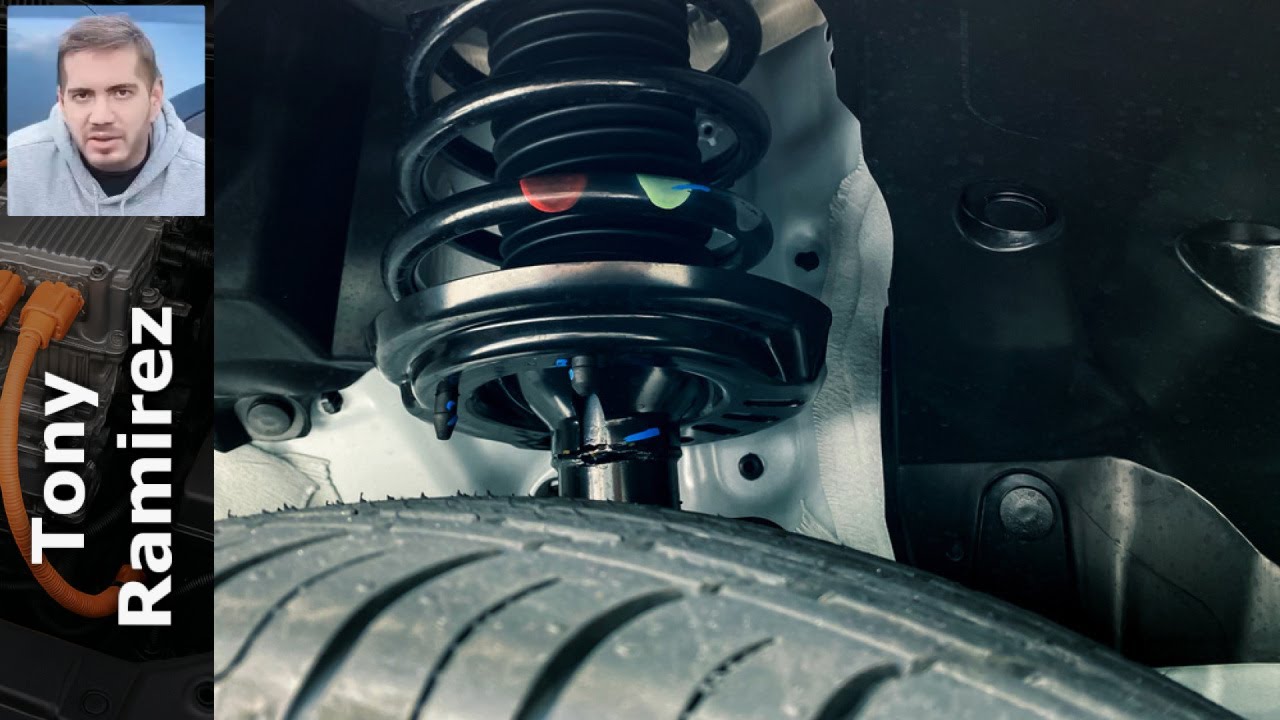
Source: www.youtube.com, Tony Ramirez
Myth: Gas shocks contain gas instead of oil
Most automotive gas-charged shocks still use hydraulic oil. The added gas helps maintain pressure and reduce aeration.
Myth: Gas shocks always produce a hard ride
Ride comfort depends on spring rate, valve tuning, gas pressure, tires, and suspension geometry. Gas charging alone does not determine firmness.
Myth: Oil shocks are always cheaper
Price varies by vehicle, brand, construction, and availability. Compare compatible parts rather than assuming one category always costs less.
Myth: Gas shocks never leak
Gas-charged shocks contain hydraulic fluid and seals that can wear or fail. Visible leakage should be assessed regardless of the shock type.
Myth: A gas shock always lasts longer
Service life depends on construction, operating conditions, heat, corrosion, mounting condition, and correct application. Gas charging alone does not guarantee a longer life.
Myth: A more expensive shock is always better
A higher price does not prove compatibility or superior real-world performance. The shock must suit the vehicle and its intended use.
Does Gas Charging Increase Ride Height?
A conventional gas-charged shock is not a replacement for a suspension spring and should not be chosen as a way to raise a vehicle. Some shock designs create an extension force, but that does not make every gas shock a reliable or approved ride-height upgrade.
Ride height is mainly determined by the springs and suspension geometry, along with the vehicle’s load and condition. Specialized suspension systems may combine damping with adjustable support, but these should not be confused with ordinary gas-charged shocks. Use components designed and approved for any intended height change.
For standard ride height
Use the correct replacement shock and retain the appropriate springs and suspension components.
For a lift or lowering setup
Check the complete suspension system, including travel, geometry, spring compatibility, alignment, and any relevant vehicle requirements.
Frequently Asked Questions
Q
Are gas shock absorbers better than oil shock absorbers?
Not in every situation. Gas-charged shocks can reduce oil aeration and help maintain consistent damping under demanding conditions. Non-gas hydraulic shocks can also deliver suitable comfort and control when correctly designed for the vehicle. Choose based on verified fitment, driving needs, and manufacturer specifications.
Q
Do gas shock absorbers contain hydraulic oil?
Yes. Most automotive gas-charged shocks use hydraulic oil to create damping. Pressurized gas, usually nitrogen, helps limit aeration and maintain more consistent fluid behavior. The oil and internal valves remain central to how the shock controls suspension movement.
Q
Can I replace oil shocks with gas shocks?
Sometimes, but compatibility must be confirmed for the exact vehicle and suspension configuration. Check the original equipment part number and the replacement manufacturer’s catalog. A gas-charged shock that fits the mounting points may still have unsuitable damping, dimensions, or operating characteristics.
Q
Are gas shock absorbers good for daily driving?
Yes, when the shocks are designed for the vehicle and intended ride quality. Many passenger cars and light trucks use gas-charged shocks for normal road use. The label alone does not determine comfort, so compare the application and damping design rather than assuming gas shocks are only for performance driving.
Q
Do gas shock absorbers improve fuel economy?
There is no reliable general rule that switching from oil shocks to gas-charged shocks will improve fuel economy. Shock absorbers primarily control suspension movement. A suitable, healthy suspension supports safe vehicle control, but fuel economy depends on many factors, including speed, tires, engine condition, load, and driving style.
Q
How can I tell whether my car has gas or oil shocks?
Check the original equipment part number, the owner’s manual, or a reliable vehicle-specific parts catalog. The markings on the installed shock may also help if they remain readable. Appearance alone is not a dependable way to identify the internal design, and a gas-charged shock can still leak hydraulic oil.
Q
Can I mix gas and oil shocks on the same axle?
Do not mix different shock types or damping characteristics on the same axle unless the vehicle or component manufacturer explicitly approves that combination. Unequal damping can affect handling balance. When replacing a failed shock, inspect both sides and follow the manufacturer’s recommendations for matched replacements.
✦ Wrapping Up
Conclusion
The difference between gas and oil shock absorbers comes down to the added pressurized gas charge. Both designs use hydraulic oil and internal valves to control suspension movement, while gas charging helps reduce aeration and maintain consistent damping during demanding use.
Gas-charged shocks can be useful for vehicles that face repeated bumps, heavy suspension demands, or conditions where consistent response matters. Oil-filled, non-gas shocks can also provide suitable comfort and control when their design matches the vehicle. Neither type is automatically better, softer, longer-lasting, or cheaper in every application.
For most drivers, the safest starting point is to identify the original shock specification and compare approved replacements for the exact vehicle. Consider ride comfort, handling needs, load requirements, construction, and warranty terms together. If the existing suspension leaks, bounces excessively, or feels unstable, diagnose the problem before selecting a replacement.
💡 Key Takeaway
Check your vehicle’s original shock absorber specification and compare compatible gas-charged and non-gas options. Choose the design that meets the manufacturer’s requirements and your driving needs, and have a qualified technician inspect any persistent leakage, excessive bouncing, or unsafe handling.
Eric
Hi, I’m Eric Bennett, the person behind OffRoadTruckAccessories.com.
I created this blog to share my interest in trucks, off-road driving, automotive accessories, and DIY modifications. I enjoy learning how different truck accessories work, testing their usefulness, and understanding whether they are truly worth buying.
Shock absorbers are located near the wheels as part of the suspension system, usually between the vehicle’s body, frame, or subframe and a suspension component such as a control arm, axle, or wheel assembly. However, the exact answer to where are shock absorbers located on a car depends on the suspension design. Some vehicles have…
You should change shock absorbers when they are worn, leaking, damaged, or no longer controlling suspension movement properly. There is no single replacement interval that applies to every vehicle because shock absorber life depends on road conditions, vehicle weight, driving habits, suspension design, and component quality. If you are wondering when to change shock absorbers,…