Can You Straighten a Bent Control Arm? Repair or Replace It?
If you are asking **can you straighten a bent control arm**, the important issue is not whether metal can be pushed back into shape. In many cases, it can. The real question is whether that arm will still have the correct shape, strength, and mounting geometry after the repair.
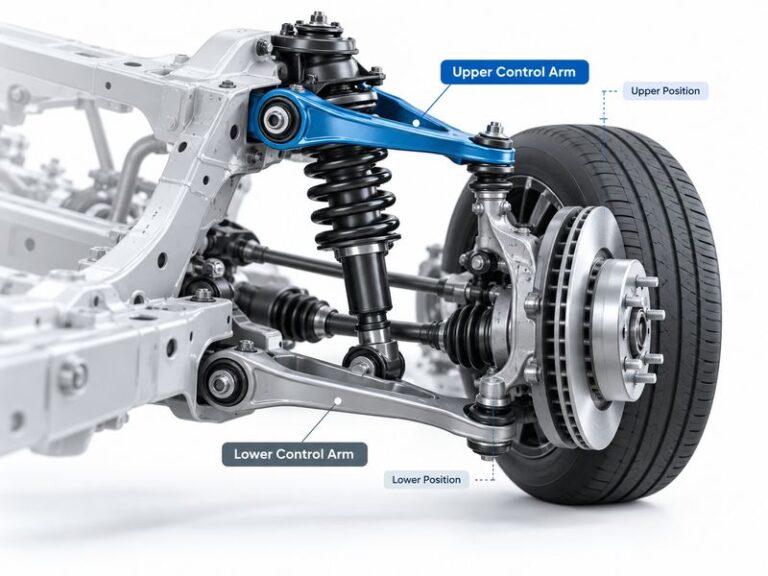
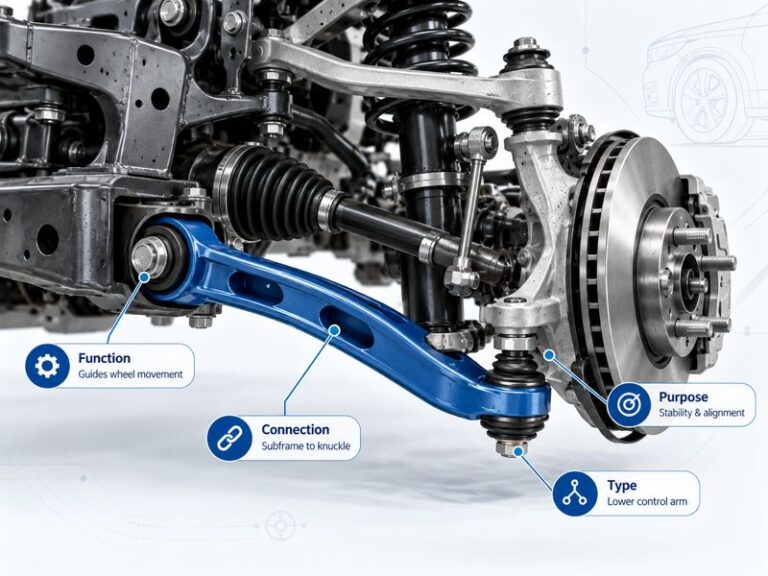
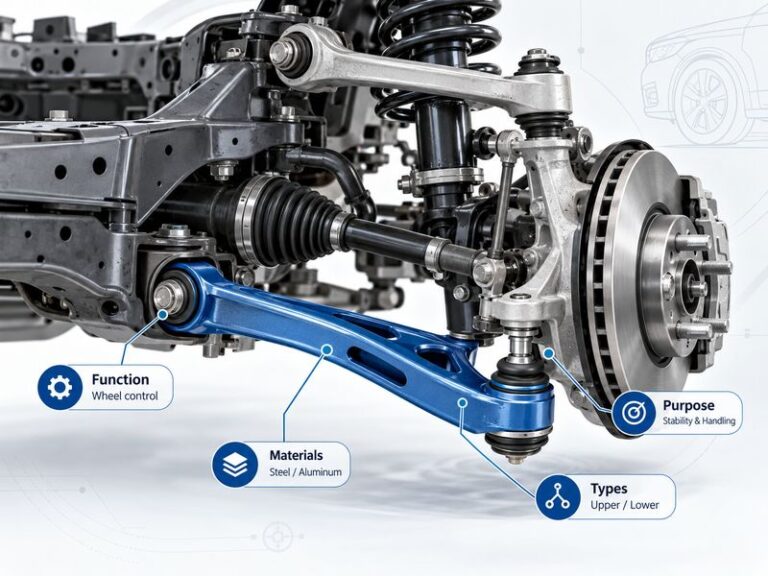
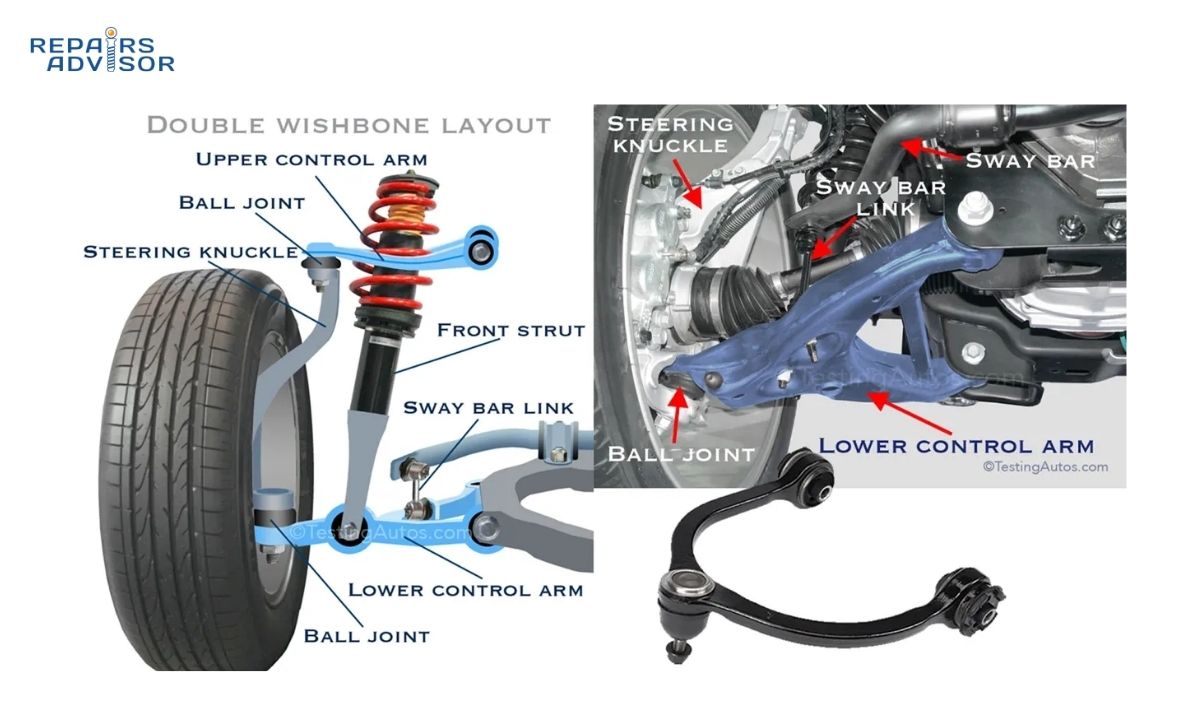
A control arm is a key part of the suspension. It helps hold the wheel in the right position as the suspension moves. Even a small bend can change camber, caster, wheel position, or alignment. That can lead to poor handling, uneven tire wear, steering pull, or added stress on nearby parts.
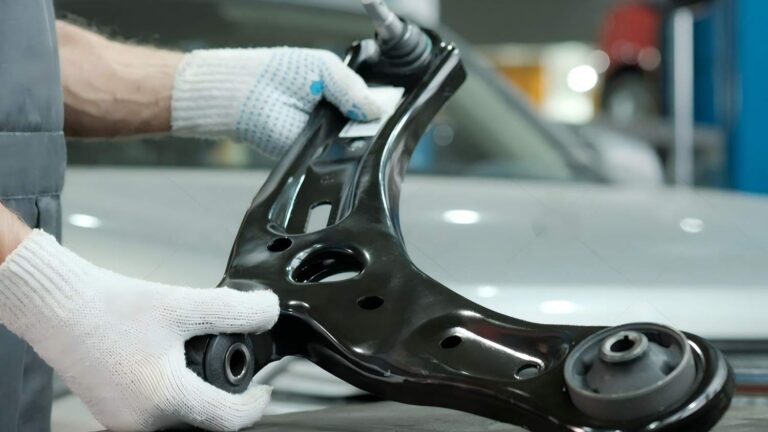
In professional repair work, a clearly bent control arm on a typical passenger car, SUV, or pickup is usually treated as a replacement part rather than a part to reshape. Modern arms may use stamped steel, forged steel, cast aluminum, or other designs. Heating, hammering, pressing, or pulling them back into shape can change their strength in ways that are hard to see.
This guide explains when a bent control arm might technically be straightened, why replacement is usually preferred, how to spot damage, what else should be inspected, and what to do before driving the vehicle again.

Can You Straighten a Bent Control Arm Safely?
So, **can you straighten a bent control arm**? From a purely mechanical point of view, some steel control arms can be forced back toward their original shape with a press or other equipment. That does not mean the finished part is safe to reuse.
A control arm must locate the wheel very precisely. A bend that moves a mounting point only a small amount can change alignment. The arm may also have stretched, cracked, buckled, or weakened when it bent.
Trying to make the arm look straight does not prove that it has returned to its original dimensions. It also does not prove that the metal still has its original strength. For that reason, replacement is usually the sensible choice on a street-driven vehicle.
Aluminum control arms deserve even more caution. Aluminum can crack or suffer internal damage during a strong impact. Attempting to bend it back can make the damage worse, and small fractures may not be easy to see.
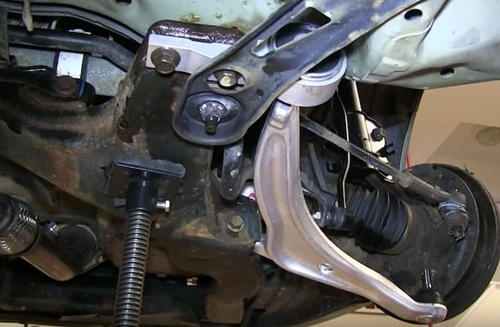
- ✦ Steel control arms
Some steel arms can be physically reshaped, but the repair may leave weakened metal or incorrect suspension geometry.
- ✦ Aluminum control arms
These should generally be replaced after bending because cracking and loss of strength can occur during both the impact and attempted straightening.
- ✦ Street vehicles
For a normal car, truck, or SUV used on public roads, replacing a visibly bent control arm is normally the safer repair.
Why Looking Straight Is Not Enough
A repaired arm can look normal while still being several millimeters out of position. Suspension mounting points are designed around specific measurements. A small error can change how the tire sits on the road.
The arm may also have damage around a weld, bushing sleeve, ball joint opening, or formed section. Those areas often carry high loads. A visual check alone cannot always confirm that the part remains structurally sound.
- ✦ Geometry matters
The arm must place the wheel and steering knuckle in the correct position, not simply look straight.
- ✦ Strength matters
Metal that has bent once may not handle another hard load in the same way it did when new.
Why a Bent Control Arm Should Usually Be Replaced
When drivers ask **can you straighten a bent control arm instead of replacing it**, cost is often the main reason. Straightening may seem cheaper if the arm has only a small bend. The problem is that control arms are safety-related suspension parts.
A control arm carries loads from braking, cornering, road bumps, and vehicle weight. It also keeps the wheel attached to the suspension through its bushings and ball joint connection. If its shape or strength changes, steering and tire contact can change too.
Replacement also gives the technician a known starting point. A correctly manufactured replacement arm should have the proper dimensions. That makes it easier to restore wheel alignment and verify that any remaining alignment problem comes from another damaged component.

- ✦ Hidden metal damage
A severe bend can create tiny cracks, stretched areas, or stress points that may not be obvious.
- ✦ Alignment problems
A slightly misshaped arm can prevent camber or caster from returning to specification.
- ✦ Weak mounting areas
Damage near bushings, ball joints, welds, or mounting holes is especially important because these areas carry major suspension loads.
- ✦ Repeat labor
If a straightened arm does not hold its shape or cannot be aligned, the vehicle may need to be taken apart again.
Heat Can Create Additional Risk
Using a torch to make a control arm easier to bend is particularly risky. High heat can change the properties of steel and aluminum. It can also damage nearby bushings, coatings, or other parts.
A repair that depends on heating a structural suspension arm should not be treated as the same thing as installing an undamaged replacement part.
What Causes a Control Arm to Bend?
Control arms are made to handle normal road forces, so they usually do not bend without a strong impact or serious overload. A direct hit to the wheel is one of the most common causes.
In the United States, curb strikes and deep potholes are common real-world causes. A wheel can absorb part of the hit while the force travels through the steering knuckle and control arm. The arm may bend before a stronger component such as the subframe moves.
Collision damage can also bend a control arm even when the outside of the vehicle looks fairly normal. If one wheel was hit from the front, side, or rear, the suspension should be checked closely.
- ✦ Hitting a curb
A hard sideways or front-wheel impact can push the control arm out of shape.
- ✦ Deep potholes
A sharp pothole hit can send a large load through the wheel and suspension.
- ✦ Vehicle collision
Even moderate crash damage around a wheel can bend suspension parts.
- ✦ Off-road impacts
Rocks, ruts, jumps, and hard landings can overload an arm.
- ✦ Improper towing or lifting
Using a suspension arm as a towing, jacking, or tie-down point can damage some designs.
Why the Control Arm May Bend Before the Frame
The control arm is part of the load path between the wheel and vehicle structure. During a hard impact, it may deform while absorbing some of the force.
That does not mean the rest of the vehicle escaped damage. The subframe, mounting brackets, steering knuckle, strut, wheel bearing, and body structure can also move or bend.
How to Tell If a Control Arm Is Bent
A badly bent arm may be easy to see. Small bends are harder to confirm. Often, the first clue is that one wheel no longer sits like the wheel on the opposite side.
Drivers may also notice that the steering wheel changed position after hitting a curb or pothole. The vehicle may pull to one side or feel less stable. New tire wear can appear if the alignment has changed.
If you are trying to decide **can you straighten a bent control arm**, first make sure the control arm is actually the damaged part. Several other suspension parts can create similar symptoms.
- ✦ Wheel position looks wrong
One wheel may sit farther forward, rearward, inward, or outward than the other.
- ✦ Steering pull
The car may drift or pull after an impact.
- ✦ Crooked steering wheel
The steering wheel may no longer sit centered while driving straight.
- ✦ Uneven tire wear
Changed camber or toe can wear one edge of the tire faster.
- ✦ Clunks or knocks
Impact damage can also harm the ball joint, bushings, sway bar link, or mounting hardware.
Compare the Left and Right Sides
When the suspension design is the same on both sides, comparing the damaged side with the opposite side can reveal a visible difference. Look at the arm’s curves, stamped sections, bushing locations, and wheel position.
Do not assume a curve means the arm is bent. Many control arms are intentionally shaped with bends and pressed sections from the factory.
- ✦ Factory shape
Control arms are often curved by design, so use the opposite side or service information as a reference.
- ✦ Fresh impact marks
Scrapes, buckled metal, chipped coating, or displaced bushings can support the diagnosis.
Can a Slightly Bent Control Arm Be Repaired?
People sometimes ask whether the answer changes when the bend is very small. **Can you straighten a bent control arm** if the arm is only slightly out of shape? A shop may be able to move some steel arms back toward their original position, but that still does not make straightening the preferred repair for most road cars.
The difficulty is proving that the arm is both dimensionally correct and structurally sound after the work. An alignment rack can help reveal geometry problems, but a good alignment result does not prove that the metal has not been weakened.
A control arm that is inexpensive and available is rarely worth taking an uncertain repair risk. Replacing it also gives you the chance to renew worn bushings or a ball joint if they are included in the assembly.

- ✦ Minor visible bend
Even a small change in shape can affect wheel position or alignment.
- ✦ No visible crack
The absence of an obvious crack does not confirm that the metal is undamaged.
- ✦ Successful alignment
Correct alignment readings are useful, but they do not measure the remaining strength of a previously bent arm.
When Straightening Might Be Considered
There are unusual cases involving vintage vehicles, race fabrication, custom suspension work, or parts that are no longer available. In those cases, a specialist may evaluate whether a component can be repaired or recreated.
That is different from bending a modern daily-driver control arm back with a hammer or press in a home garage. Specialized work may involve measurements, material knowledge, crack inspection, fixtures, and engineering judgment.
- ✦ Rare or obsolete parts
A restoration specialist may consider repair when no safe replacement is available.
- ✦ Custom motorsport parts
Fabricated suspension pieces may sometimes be repaired by the builder under controlled conditions.
- ✦ Standard road vehicles
Replacement remains the practical choice when a correct new or quality replacement arm is available.
What Else Should Be Checked After a Control Arm Bends?
A bent control arm is often evidence of a strong impact. Do not replace the arm and assume the repair is complete. The same force may have damaged several nearby parts.
This is especially important after a curb strike or collision. If the new control arm fits but the alignment still cannot be set correctly, another component may be bent.
A complete inspection can save you from replacing parts one at a time. It also helps prevent new tires from being ruined by an alignment problem that was missed.

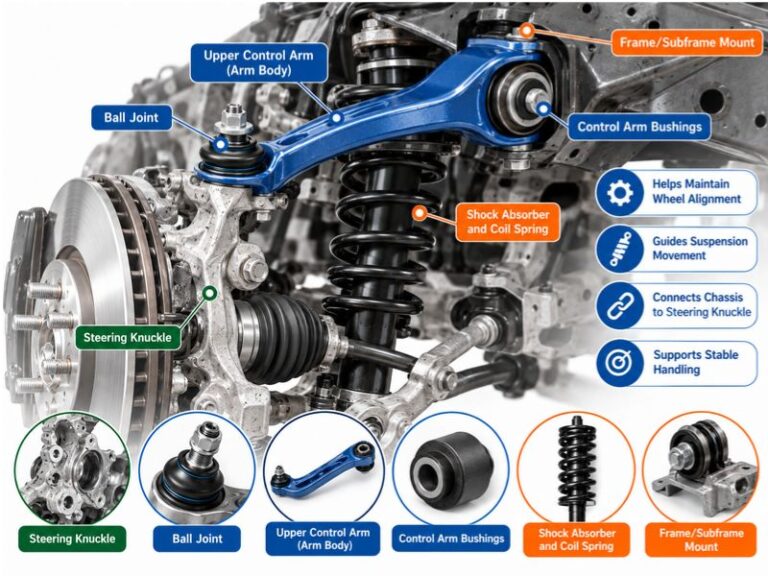
- ✦ Ball joint
Check for looseness, binding, torn boots, or impact damage.
- ✦ Control arm bushings
Inspect for tearing, separation, distortion, or shifted sleeves.
- ✦ Steering knuckle
A bent knuckle can create alignment problems even after the control arm is replaced.
- ✦ Tie rod
A strong wheel impact can bend an inner or outer tie rod and change toe.
- ✦ Strut or shock
Look for a bent shaft, damaged body, leaking fluid, or shifted mounting points.
- ✦ Wheel and tire
Check for a bent rim, sidewall damage, bubbles, cuts, or unusual runout.
- ✦ Wheel bearing
Impact loads can damage a bearing even when there is no immediate noise.
- ✦ Subframe
Inspect mounting points and measurements when alignment remains outside specification.
Inspect the Mounting Points Closely
The control arm bolts to the body, frame, or subframe through mounting brackets. A strong hit can stretch a bolt hole, bend a bracket, or shift the subframe.
If a replacement arm appears to sit at an odd angle, do not force it into place. The mounting structure may need further inspection.
How a Bent Control Arm Affects Wheel Alignment
Wheel alignment is one of the clearest reasons why a bent control arm matters. The arm helps determine where the steering knuckle and wheel sit relative to the vehicle.
A bend can change **camber**, which is the inward or outward tilt of the wheel when viewed from the front. It can also affect **caster**, which relates to the steering axis when viewed from the side. Toe can change as the wheel moves from its intended location.
This is another reason the question **can you straighten a bent control arm** cannot be answered by appearance alone. An arm may look close to normal but still place the wheel outside the intended geometry.
- ✦ Camber
Too much inward or outward wheel tilt can cause edge wear and reduce tire contact.
- ✦ Caster
Incorrect caster can affect steering return, straight-line stability, and steering feel.
- ✦ Toe
Incorrect toe can cause rapid tire wear and make the steering feel unstable.
- ✦ Wheelbase difference
A bent arm may move one wheel forward or backward compared with the opposite side.
Why an Alignment Should Follow Replacement
Any time a control arm is replaced because of impact damage, an alignment check is a smart next step. The new arm may restore the correct geometry, but the alignment still needs to be measured.
If the readings remain far outside specification, the technician can use that information to look for a bent knuckle, shifted subframe, damaged strut, tie rod, or other structural issue.
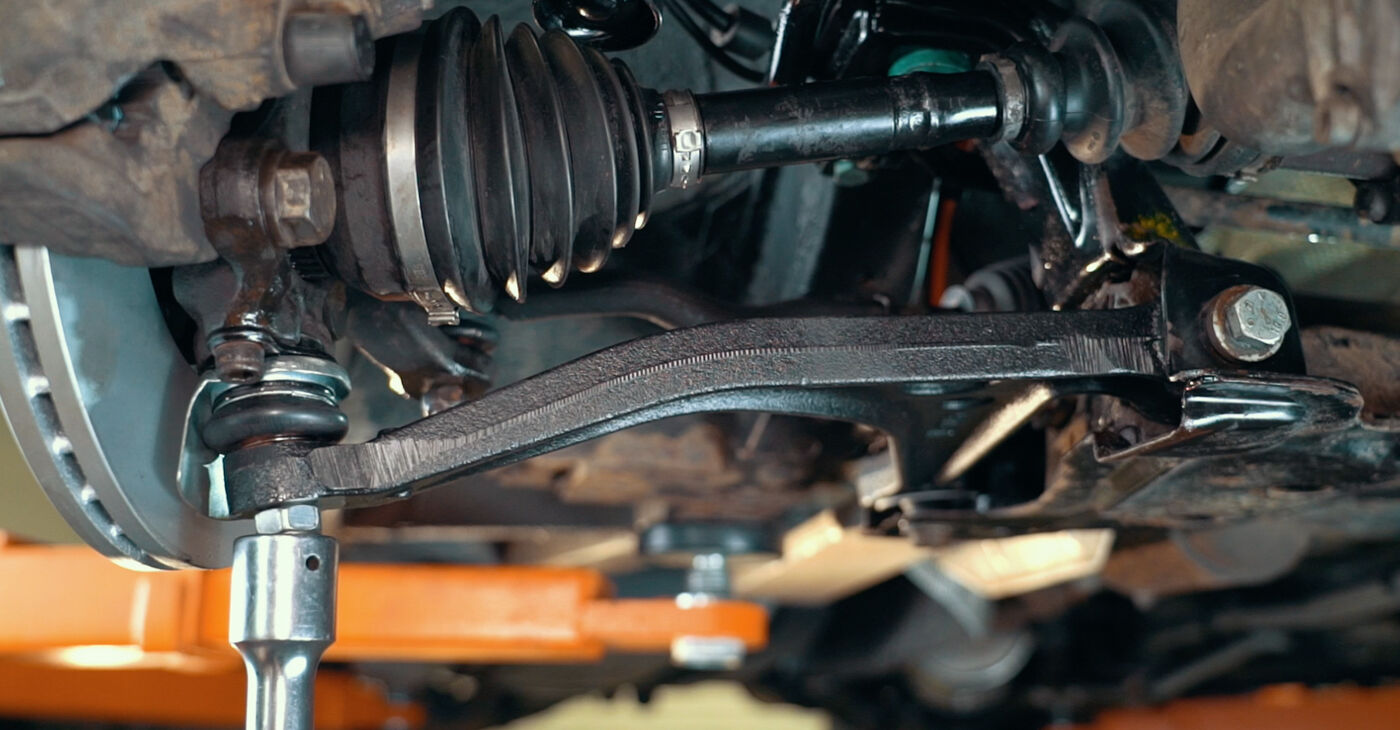
How to Replace a Bent Control Arm
Replacing a control arm can range from a straightforward repair to a difficult job. Access, rust, suspension design, and whether the ball joint is part of the arm all affect the work.
The vehicle must be supported safely before any suspension work starts. Suspension parts can move as bolts are removed, and some designs may place tension on nearby components.
For many owners, professional replacement makes sense because the repair may involve high-torque fasteners, seized bolts, a ball joint separator, and a final wheel alignment.
- ✦ Confirm the correct part
Verify whether the damaged part is an upper or lower control arm and whether it is left- or right-side specific.
- ✦ Inspect mounting hardware
Replace damaged bolts, nuts, or eccentric alignment hardware when required.
- ✦ Check the ball joint
Determine whether it is included with the replacement arm or must be transferred or replaced separately.
- ✦ Tighten bushings correctly
Many bonded rubber bushings should receive final tightening at normal ride height to avoid twisting the rubber at rest.
- ✦ Align the vehicle
Measure alignment after the repair and investigate any reading that cannot be brought into specification.
Why Bushing Bolt Position Matters
Many control arm bushings use rubber bonded between inner and outer sleeves. The rubber twists as the suspension moves.
If the bolts are fully tightened while the suspension hangs at full droop, the bushing may already be twisted when the vehicle returns to normal ride height. Following the vehicle manufacturer’s tightening procedure can help prevent early bushing failure.
Can You Drive With a Bent Control Arm?
Driving with a known bent control arm is not a good idea. The severity of the risk depends on how badly the arm is bent and whether other parts were damaged.
A small bend may first show up as a steering pull or alignment problem. A severe bend can move the wheel enough to cause tire rubbing, unstable handling, or added stress on the ball joint and bushings.
If the control arm bent after a hard collision, curb strike, or pothole impact, consider having the vehicle inspected before driving it normally. Towing may be the safer choice when the wheel position is visibly wrong, steering feels unstable, or there are loud suspension noises.
- ✦ Do not drive if the wheel is badly displaced
A wheel that sits at an unusual angle or position suggests serious suspension damage.
- ✦ Stop if steering feels unstable
Strong pulling, wandering, binding, or unpredictable steering requires immediate attention.
- ✦ Watch for tire contact
A shifted wheel may rub the fender, liner, strut, or other parts.
- ✦ Treat new clunks seriously
Noise after an impact may point to damage beyond the control arm itself.
When Towing Is the Better Option
Use extra caution when the vehicle has obvious collision damage, a severely tilted wheel, a loose wheel assembly, fluid leaks, broken suspension parts, or a tire that rubs heavily.
Continuing to drive can turn a repairable suspension problem into additional tire, wheel, steering, or body damage.
Bent Control Arm Repair Cost vs Replacement Cost
Cost varies widely by vehicle because control arm designs differ. Some cars use a simple stamped-steel arm. Others use aluminum multi-link suspension with several separate arms.
The price of the arm is only part of the repair. Labor, new hardware, ball joint work, seized fasteners, and wheel alignment can add to the total.
Straightening may look cheaper at first, but it becomes poor value if the arm remains out of specification or later needs replacement. That is one reason most owners asking **can you straighten a bent control arm** are better served by comparing the cost of a proper replacement.
- ✦ Vehicle design
Luxury, performance, trucks, and multi-link suspensions may use more costly components.
- ✦ Part type
OEM, aftermarket, steel, and aluminum arms can have very different prices.
- ✦ Ball joint design
Some replacement control arms include a new ball joint, while others do not.
- ✦ Rust
Corroded bolts and seized bushings can add significant labor in areas where road salt is common.
- ✦ Alignment
Plan for an alignment check after impact-related control arm replacement.
Why the Cheapest Repair Is Not Always the Lowest-Cost Repair
If a reshaped control arm causes poor alignment, you may spend more on tires, repeat labor, and another alignment later. Replacing the damaged arm once can avoid that cycle.
The better value is the repair that restores safe suspension geometry and lasts, not simply the option with the lowest first invoice.
How Professionals Decide Whether a Control Arm Is Damaged
A good diagnosis uses more than a quick visual check. The technician starts with the impact history and the driver’s symptoms. The suspension is then inspected for obvious deformation and looseness.
Measurements can reveal what the eye misses. Wheel alignment readings, side-to-side wheel position, ride height, and suspension mounting points can all provide clues.
When the question is **can you straighten a bent control arm**, a professional also considers the material, how the arm was made, where it bent, and whether a reliable replacement part is available.

- ✦ Visual inspection
Look for buckling, chipped coating, stretched metal, cracks, shifted bushings, or contact marks.
- ✦ Alignment measurements
Large camber, caster, or toe differences can point toward bent suspension parts.
- ✦ Side-to-side comparison
Comparing wheel and suspension positions can reveal impact-related movement.
- ✦ Mounting point inspection
A straight replacement arm will not solve the problem if the subframe or bracket is bent.
Do Not Confuse a Worn Control Arm With a Bent Control Arm
A control arm can cause trouble without being bent. Worn bushings or a worn ball joint may create clunks, loose steering, vibration, or tire wear.
Those problems require a different diagnosis. Replacing or straightening the metal arm will not correct a separate worn joint unless that component is also serviced.
- ✦ Bent arm
Usually linked to an impact and often changes suspension geometry.
- ✦ Worn bushing
Often causes excess movement, noise, or poor control without visible arm deformation.
- ✦ Worn ball joint
Can create play or noise and may become a serious safety issue even when the arm itself is straight.
DIY Straightening vs Professional Replacement
It can be tempting to put a bent steel control arm in a vise, hit it with a hammer, or use a hydraulic press. That approach may change the visible shape, but it gives you little information about the finished geometry or strength.
The same concern applies to heating and bending the arm. A repair that looks successful in the garage may still produce poor alignment or weakened metal once the vehicle is back on the road.
For most DIY owners wondering **can you straighten a bent control arm**, the better home repair is usually to replace the damaged arm if they have the tools, repair information, and skill to do the job safely. Otherwise, a qualified repair shop can handle both the suspension work and alignment checks.
- ✦ Avoid hammer-only repairs
They provide no reliable way to confirm factory geometry.
- ✦ Avoid uncontrolled heating
Heat can alter material properties and damage nearby parts.
- ✦ Use correct torque values
Suspension bolts and ball joint hardware must be tightened to the correct specifications.
- ✦ Check alignment afterward
A successful mechanical installation still needs geometry verification after impact damage.