Can Bad Struts Cause Steering Wheel Vibration? Fitment Checks
Bad struts can contribute to steering wheel vibration, but uneven tires, bent wheels, brake problems, and worn steering parts are more common causes.
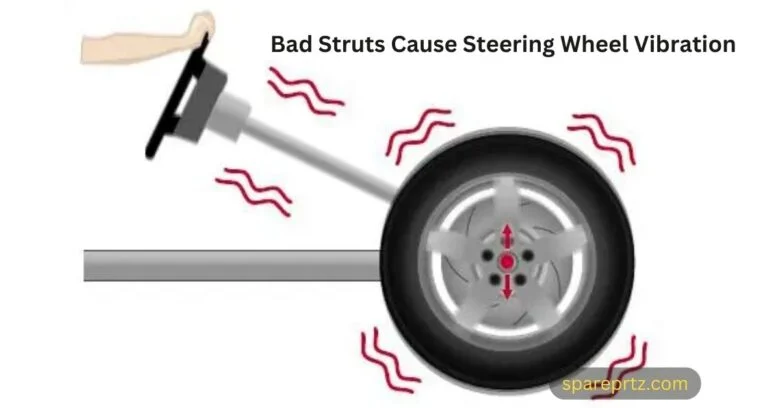
Struts support the vehicle, control spring movement, and help keep the tire planted against the road. When a strut loses damping or develops looseness, the suspension can react poorly to bumps and allow vibrations to reach the steering wheel.
However, a vibration that appears at a certain road speed often points first to tire balance, tread damage, wheel runout, or an alignment problem. A vibration that happens mainly during braking usually suggests a brake or hub issue instead of a strut.
The most useful diagnosis compares when the vibration occurs, checks the front tires and wheels, and inspects the strut assembly along with tie rods, ball joints, control arm bushings, and wheel bearings. That approach prevents unnecessary suspension replacement.
- ✓Worn struts can worsen vibration, but they are not the most common source of a shaking steering wheel.
- ✓Speed-related vibration usually deserves a tire, wheel, and wheel-balance inspection first.
- ✓Clunking, nose diving, fluid leakage, uneven tire wear, or poor bump control increase suspicion of strut wear.
- ✓A severe shake, loose steering, or damaged tire requires stopping the vehicle and arranging an inspection.
How Struts Can Transfer Vibration Into the Steering Wheel
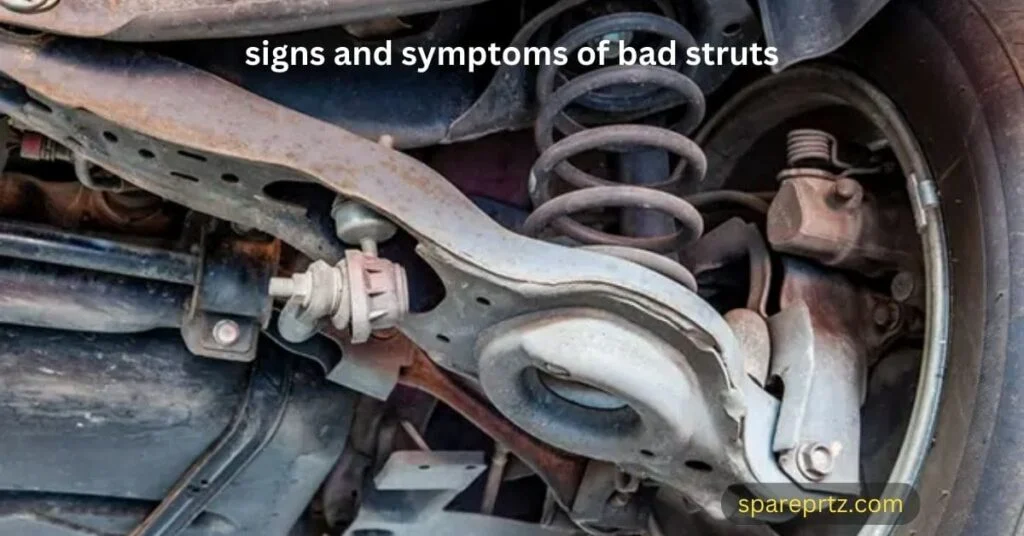
A front strut is part of the suspension and, on many vehicles, also acts as a steering pivot. The assembly commonly includes a shock absorber, coil spring, upper mount, bearing, spring seat, and related hardware. The shock absorber controls spring movement while the spring supports vehicle weight.
When a strut wears out, the suspension may allow repeated bouncing after a bump instead of settling quickly. A damaged upper mount or bearing can also make steering rough, produce a popping sound, or transmit road movement through the steering column.
Strut wear usually changes how the vehicle responds to road input rather than creating a steady, high-frequency shake by itself. A loose mount, bent strut, or damaged suspension joint can create a stronger steering disturbance, especially on rough pavement or while turning.
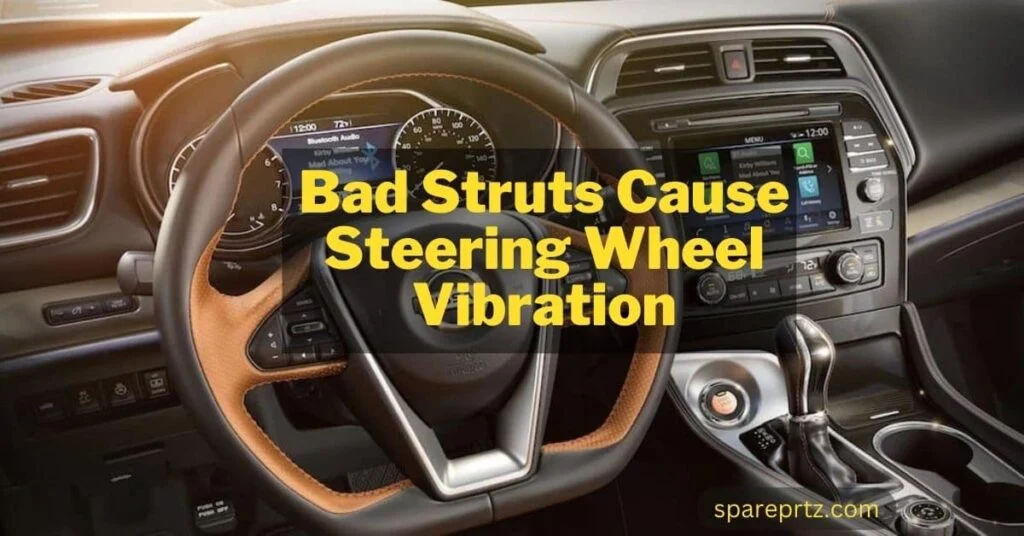
Strut symptoms that support the diagnosis
- Repeated bouncing: The front end continues moving after a dip or speed bump.
- Fluid leakage: Oil around the strut body can indicate a failed seal, although a light film does not always prove complete failure.
- Uneven tire wear: Cupped or scalloped tread can develop when the tire loses consistent contact with the road.
- Front-end clunks: Noise over bumps may come from a mount, spring seat, sway-bar link, or another nearby part.
- Excessive body movement: The vehicle may dive during braking, squat during acceleration, or lean more in turns.
Can Bad Struts Cause Steering Wheel Vibration?
Yes, bad struts can cause or contribute to steering wheel vibration, especially when the strut, upper mount, spring seat, or related suspension hardware is damaged. The connection is more likely when the vibration changes with bumps, rough pavement, cornering, or suspension movement.
Struts are less likely to be the primary cause when the steering wheel shakes at one predictable road speed on a smooth road. That pattern commonly comes from an out-of-balance tire and wheel, a bent rim, tire separation, or incorrect wheel installation.
A vehicle can have more than one fault. For example, a worn strut may create cupped tire tread, and the damaged tire can then produce the actual speed-related vibration. Replacing the strut without correcting the tire or wheel problem may leave the steering wheel shaking.
Vibration patterns and likely causes
| When the vibration occurs | More likely causes | What to inspect |
|---|---|---|
| At a narrow range of highway speeds | Wheel imbalance, bent wheel, tire damage, wheel runout | Front and rear tire condition, balance, wheel runout, lug seating |
| Mostly over bumps or broken pavement | Strut, mount, control arm bushing, tie rod, ball joint | Loose joints, leakage, mount movement, damaged bushings |
| During braking | Brake rotor thickness variation, sticking caliper, loose hub or suspension part | Brake operation, rotor condition, wheel bearing, steering joints |
| During acceleration | Driveline or axle issue, engine mount, tire problem | CV axle, mounts, tire condition, wheel alignment |
| While turning at low speed | Strut bearing, spring bind, tie rod, ball joint, power-steering issue | Upper mount, steering linkage, joint play, steering assist system |
Common Causes That Mimic Strut-Related Steering Shake
Front suspension parts share the same area as the steering and wheel, so several problems can feel similar from the driver’s seat. A tire or wheel fault often deserves attention before strut replacement because it can create a vibration without any suspension damage.
Tires with separated belts, flat spots, severe imbalance, or irregular tread wear can shake the steering wheel. A bent wheel can also produce vibration even after balancing, particularly if the wheel has noticeable radial or lateral runout.
Loose steering or suspension joints create a different level of concern. Tie rods, ball joints, wheel bearings, and control arm bushings affect wheel control, so looseness in these parts can make the vehicle wander, clunk, or respond unpredictably.
Tire and wheel checks
- Check tire pressure against the vehicle’s door-jamb label, not the maximum pressure molded into the tire sidewall.
- Look for bulges, cuts, exposed cords, missing tread sections, and irregular cupping.
- Confirm that all lug nuts are present and properly seated. Do not continue driving if a wheel appears loose.
- Ask for a balance check and a measurement of wheel and tire runout when balancing does not solve the vibration.
- Inspect the inside of the wheel, where impact damage may be less visible than on the outer face.
Brake, hub, and steering checks
A brake-related shake normally appears when the brake pedal is applied and may be felt through the pedal as well as the steering wheel. A sticking caliper can also create pulling, heat, or an unusual odor near one wheel.
A worn wheel bearing may produce a humming or growling sound that changes with vehicle speed or turning direction. Excessive bearing play can affect wheel stability, but bearing noise and looseness require an inspection rather than a guess based only on vibration.
Alignment problems often cause pulling, an off-center steering wheel, or uneven tread wear. Alignment alone will not repair a bent wheel, damaged tire, worn joint, or failed strut, so the underlying mechanical condition should be checked first.
How to Check Struts Before Replacing Them
A useful inspection starts with the symptom rather than the part name. Note the vehicle speed, road surface, braking input, steering direction, and whether the vibration is felt in the wheel, seat, brake pedal, or entire body.
Park on a level surface and compare the front suspension side to side. Look for obvious oil leakage, a broken spring, damaged dust boot, bent strut body, or a tire with irregular tread. Visual checks cannot prove that a strut is good, but they can reveal reasons to stop driving.
Further testing may require lifting the vehicle safely and checking for play in the wheel bearing, tie rods, ball joints, and control arms. A spring can store significant energy, so strut disassembly should be left to a technician using the correct spring-compression equipment.
Practical diagnostic sequence
- Record the pattern: Identify whether the vibration is speed-related, bump-related, braking-related, or present during turns.
- Inspect the tires: Check pressure, tread damage, cupping, sidewall bulges, and unusual wear.
- Check the wheels: Verify lug security and look for bent rims or damaged mounting surfaces.
- Test balance and runout: A standard balance check may find an imbalance, while runout testing can identify a wheel or tire that does not rotate evenly.
- Inspect suspension and steering: Check strut leakage, upper mounts, springs, tie rods, ball joints, bushings, and wheel bearings.
- Perform alignment after repairs: Alignment is often needed after replacing struts or correcting suspension parts, but it should follow the mechanical repair.
- Vibration location: Steering-wheel shake points toward the front axle more often than a seat-only vibration, but it does not identify a single failed part.
- Road response: Repeated bouncing and poor bump control support a strut diagnosis.
- Tire pattern: Cupped tread can be both a symptom of weak damping and a separate source of vibration.
When Strut Replacement Is Appropriate
Strut replacement makes sense when inspection shows leakage, poor damping, a damaged housing, a bent component, broken spring hardware, or a failed upper mount. If one front strut has clearly failed, replacing struts in axle pairs is commonly considered so damping remains more even from side to side.
The correct replacement part must match the vehicle’s year, model, body style, suspension package, and mounting arrangement. Some vehicles use complete replacement assemblies, while others use a separate cartridge and spring. Fitment should be confirmed by the vehicle identification number or a reliable parts catalog.
New struts can improve ride control, but they will not correct a damaged tire, bent wheel, worn ball joint, or loose tie rod. After suspension work, the vehicle should be checked for steering-center position, tire wear, fastener security, and alignment as applicable to the repair.
Pair replacement and related parts
Struts on the same axle experience similar mileage and road exposure. Replacing only one side may be reasonable when the other side is relatively new and passes inspection, but paired replacement can provide more consistent damping when both sides have substantial wear.
Upper mounts, bearings, spring seats, bump stops, and dust boots should be inspected during strut service. Reusing worn hardware can leave a new damper with a clunk, rough steering, or premature wear. The exact replacement approach depends on the vehicle design and the condition of each component.
Driving Safety When the Steering Wheel Shakes
A mild vibration should not be ignored, because continued driving can worsen tire damage or place stress on steering and suspension parts. Reduce speed and arrange an inspection promptly, especially if the vibration is new or becoming stronger.
Stop driving and seek assistance if a tire has a bulge, loses air, shows exposed cords, or appears damaged. The same applies to a loose-feeling steering wheel, severe pulling, repeated loud clunks, scraping, smoke, or a shake that suddenly becomes intense.
A vehicle with worn struts may still steer, but reduced tire contact and poor body control can increase stopping distance or make emergency maneuvers less stable. Wet roads, rough pavement, and heavy loads can make those weaknesses more noticeable.
FAQs About can bad struts cause steering wheel vibration
Can worn front struts make the steering wheel shake
They can contribute, especially if worn damping has caused cupped tire wear or if a strut mount is damaged. A shake that appears at a specific speed should still prompt a tire, wheel-balance, and runout check first.
How can a driver tell whether vibration comes from tires
Tire and wheel vibration is often strongest at a repeatable speed on a smooth road. Strut-related problems are more likely to include bouncing, clunking over bumps, fluid leakage, body movement, or uneven tire wear.
These patterns overlap, so a physical inspection is more reliable than trying to diagnose the part from steering-wheel feel alone.
Will replacing struts fix a vibrating steering wheel?
Strut replacement will fix the vibration only when a failed strut, mount, or related suspension part is the source. It will not repair an out-of-balance tire, bent wheel, damaged tire, brake problem, or worn steering joint.
Can a bad strut damage a tire and create vibration?
Yes. Poor damping can let the tire lose consistent contact with the road, producing cupped or scalloped tread. That irregular tread can then create noise and vibration even after the strut problem is repaired.
Conclusion
Can bad struts cause steering wheel vibration? Yes, but struts are only one possible cause. A damaged mount, weak damper, or worn suspension part can transmit movement through the steering, while tire imbalance, wheel damage, brake faults, and loose joints are often more likely.
Match the vibration to its driving condition, inspect the tires and wheels first, and have the complete front suspension and steering system checked before replacing parts. Repair any safety-related looseness or tire damage before normal driving.
Note exactly when the vibration occurs, then schedule a tire-and-wheel check followed by a suspension inspection if the cause is not found.