Can Bad Struts Cause Clunking Noise? Real Risks, Warning Signs
Yes, worn or damaged struts can cause a clunking noise, especially over bumps, but loose mounts, sway bar links, and other suspension parts can sound similar.
Struts help support the vehicle, control spring movement, and keep the tires in contact with the road. A clunk from the front or rear suspension may indicate a failing strut, but noise alone cannot identify the exact part.
Some strut problems also cause bouncing, uneven tire wear, nose-diving during braking, fluid leakage, or a loose steering feel. A quiet-looking strut can still have a worn internal valve, mount, or bearing.
The safest approach is to match the noise with other symptoms, inspect the suspension, and avoid replacing parts based only on a sound. The checks below can help separate strut trouble from common nearby causes and show when professional inspection is needed.
- ✓Bad struts can clunk when internal parts, mounts, or upper bearings become loose or worn.
- ✓Clunking can also come from sway bar links, control arm bushings, ball joints, tie rods, or loose hardware.
- ✓Fluid leakage, repeated bouncing, uneven tire wear, and unstable handling make suspension inspection more urgent.
- ✓Do not rely on a bounce test alone; a qualified inspection can find looseness that is not visible from outside.
How Struts Create a Clunking Noise
A strut combines a shock absorber with a structural suspension housing and, on many vehicles, the upper spring seat and steering mount. The shock absorber controls spring movement, while the spring supports the vehicle’s weight. The strut mount connects the assembly to the body and may include a bearing that allows the front wheel to turn.
A clunk usually means that a component has excess movement, has lost its cushioning, or is allowing metal parts to contact each other. A worn internal strut can make a dull knock when the piston moves through damaged valving, while a loose upper mount can produce a sharper rattle as the assembly shifts.
Noise often appears when a tire crosses a pothole, driveway entrance, speed bump, or uneven patch of pavement. The same sound may be more noticeable during steering because the upper strut bearing and mount are loaded as the wheel changes direction.
Common Strut-Related Noise Sources
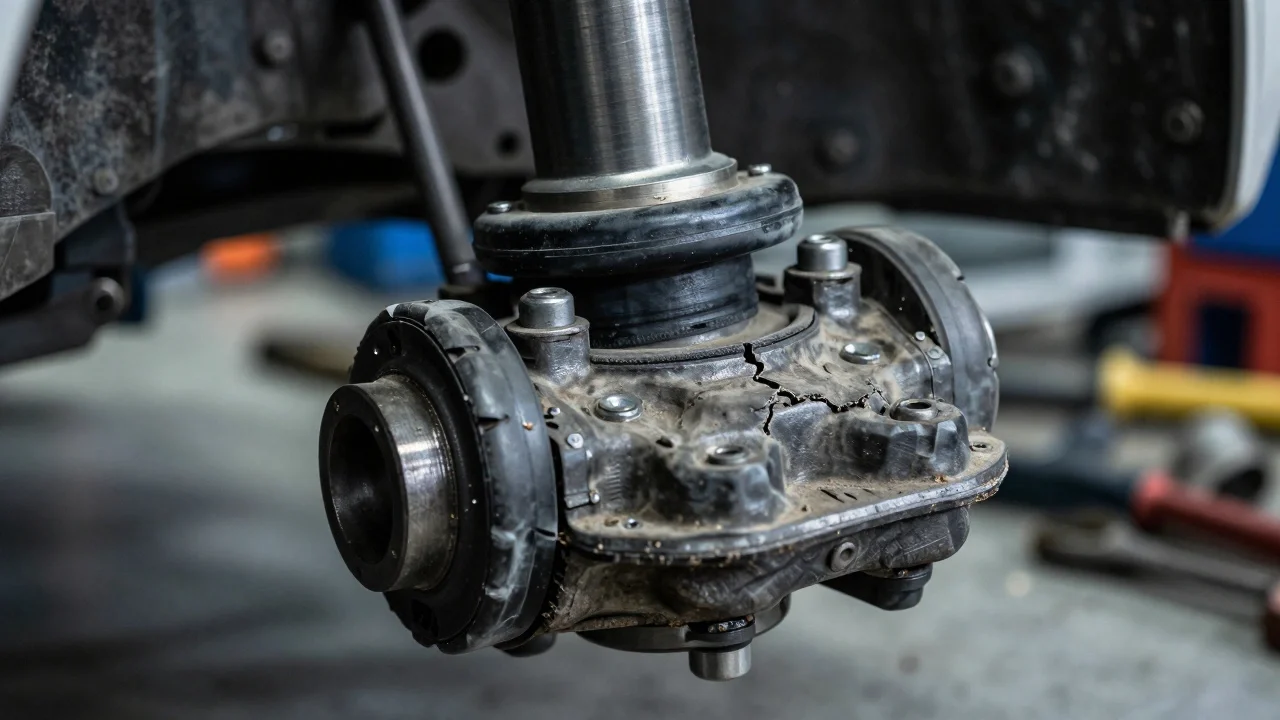
- Worn upper strut mount: The rubber isolator can crack, compress, or separate, allowing the strut assembly to move against the body.
- Damaged strut bearing: A front bearing that binds or develops play may cause a knock during steering or low-speed bumps.
- Loose mounting hardware: Nuts or bolts that are not properly secured can let the strut shift. This requires prompt attention because the mount carries suspension loads.
- Broken coil spring: A fractured spring end can move in its seat and create a clunk, often with a change in ride height.
- Worn internal shock components: Internal looseness may create a muted knock, although many worn struts produce poor control without making a clear noise.
Can Bad Struts Cause Clunking Noise in Every Driving Situation?
Bad struts do not make noise in every driving situation. A worn part may remain quiet on smooth pavement and clunk only when the suspension moves quickly, reaches the end of its travel, or is loaded from a particular direction.
The location and timing of the sound provide useful clues. A noise over small repeated bumps may point toward a strut mount, sway bar link, or loose hardware, while a clunk during braking, acceleration, or turning may involve control arms, ball joints, or steering components.
Temperature, vehicle load, and road surface can also change the sound. Rubber bushings may become stiffer in cold weather, and a heavily loaded vehicle may expose looseness that is difficult to notice with an empty cabin.
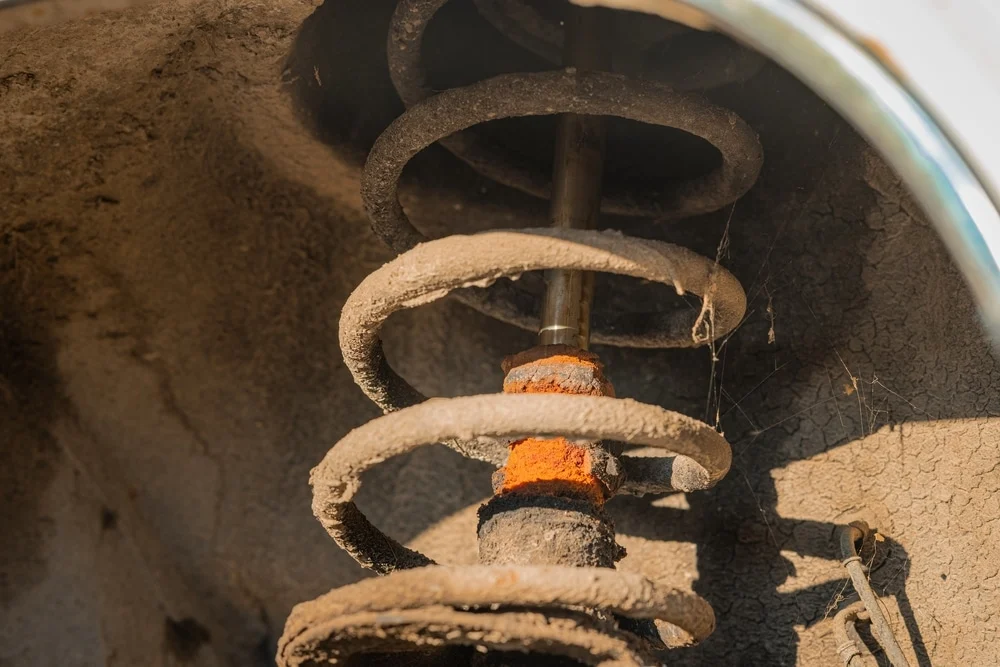
Noise Patterns That Help Narrow the Cause
| Noise or driving symptom | Possible sources | Why inspection matters |
|---|---|---|
| Single dull clunk over a pothole | Strut mount, loose strut hardware, control arm bushing, sway bar link | Several parts can move during one suspension impact, so the sound alone is not conclusive. |
| Rattle over repeated small bumps | Sway bar link, strut hardware, spring seat, brake hardware | A loose link or mount may worsen quickly and affect suspension control. |
| Knock while turning at low speed | Strut bearing, upper mount, tie rod, ball joint, steering component | Steering-related looseness can affect directional control. |
| Clunk with bouncing or floating | Worn strut, broken spring, damaged mount | Poor damping can increase stopping distance and reduce tire contact on rough roads. |
| Clunk during braking or acceleration | Control arm bushing, engine mount, subframe hardware, ball joint | Load changes can shift parts that do not move during ordinary bumps. |
Symptoms That Support a Bad Strut Diagnosis
A clunk becomes more suspicious when it appears with signs of poor damping or physical damage. Struts control how quickly the spring compresses and rebounds, so worn struts may let the body continue moving after the vehicle has passed over a bump.
Inspect the vehicle as a group of related symptoms rather than treating every noise as a failed strut. A suspension component can be worn without leaking, and a leaking strut can sometimes remain relatively quiet.
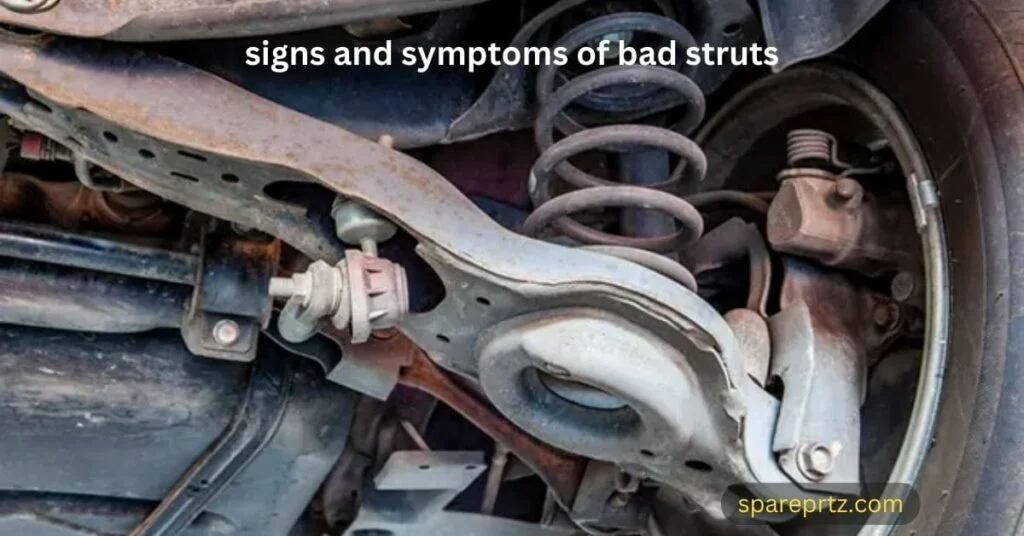
Visible and Handling Warning Signs
- Oil-like fluid on the strut body: A light film may be normal manufacturing residue, but wet fluid running down the housing suggests a failed seal. Dirt stuck to the wet area can make the leak easier to see.
- Repeated bouncing: After a bump, the body should settle rather than continue to oscillate several times. This simple observation is only a screening check, not a complete diagnosis.
- Nose-diving under braking: Excessive front-end drop can indicate weak damping, although brake problems, tire grip, and load also affect braking behavior.
- Body roll or vague handling: Worn damping can make turns feel less controlled, especially on uneven pavement or during quick lane changes.
- Uneven or cupped tire wear: A tire with repeating high and low patches may reflect poor suspension control, incorrect alignment, worn bushings, or improper tire pressure.
- Uneven ride height: A broken or sagging spring may be responsible rather than the strut itself. Ride height should be compared on level ground with similar vehicle loading.
- Steering vibration or binding: These symptoms can involve a strut bearing, wheel, tire, tie rod, ball joint, or alignment problem and should not be assigned to the strut without inspection.
- A strut can be worn even when no fluid is visible.
- A leaking strut does not automatically explain every clunk in the suspension.
- Uneven tire wear should be addressed promptly because it can reduce wet-road grip.
Suspension Parts That Commonly Mimic a Strut Clunk
Several parts attach near the strut or react to the same bumps. Because the sound travels through the body and subframe, a noise heard near the wheel does not prove that the strut is defective.
A complete diagnosis usually checks the wheel, tire, steering linkage, suspension arms, stabilizer system, spring, mount, and fasteners. The technician may inspect the parts while the suspension is loaded and unloaded because some looseness disappears when the vehicle is lifted.
Nearby Components Worth Checking
- Sway bar links and bushings: These parts often clunk over short, sharp bumps. A worn link may have looseness at its ball-and-socket joint, while worn bushings allow the stabilizer bar to shift.
- Control arm bushings: Cracked or separated rubber can let the wheel move backward or forward during braking and bumps. The result may be a heavy clunk and unstable alignment.
- Ball joints: A worn ball joint can create movement between the steering knuckle and control arm. Because ball joints are steering and suspension connections, significant looseness is a safety concern.
- Tie rods: Inner or outer tie rod wear can cause a knock during steering and may produce a loose or wandering steering feel.
- Coil springs: A broken spring end can knock against the spring seat. Corrosion can make spring breakage more likely, especially where road salt is common.
- Brake hardware: Loose caliper or pad hardware can rattle or clunk over bumps. Brake components require immediate attention if the noise is accompanied by pulling, grinding, or reduced braking.
- Wheel bearings: Bearing wear more often causes humming, growling, or play than a single suspension clunk, but looseness can create several symptoms.
- Loose subframe or strut fasteners: Damaged or improperly tightened hardware can create a serious knock and should be corrected before continued driving.
Safe Ways to Check a Clunking Suspension
Start with observations that do not place hands near moving suspension parts. Note whether the sound occurs over bumps, during steering, under braking, or when the vehicle changes direction. Record whether the noise comes from the front or rear and whether the vehicle pulls, bounces, or sits unevenly.
Look through the wheel opening for a visibly broken spring, damaged dust boot, bent component, or wet strut housing. Also check tire pressure and tread condition because a damaged tire or uneven pressure can alter handling and create unrelated noise.
Useful Preliminary Checks
- Compare both sides: Look for differences in ride height, spring position, fluid residue, torn rubber, or damaged boots. Side-to-side comparison can reveal a problem, but matching appearances do not rule out internal wear.
- Test the vehicle at low speed: On a quiet, safe road, drive over a small bump with the windows open. Avoid deliberately hitting potholes or repeating a maneuver that produces severe impact.
- Check the steering response: Notice whether the steering wheel feels loose, sticks during turning, or returns unevenly. Stop testing if the vehicle wanders or feels unstable.
- Use a professional lift inspection: A technician can check fasteners, joints, bushings, spring seats, and wheel play with suitable support equipment.
- Confirm the diagnosis before replacing parts: A strut assembly may include several replaceable components, and the repair plan depends on vehicle design, mileage, corrosion, and the condition of the spring and mount.
Why a Home Jack Check Can Be Misleading
Never work under a vehicle supported only by a jack. Suspension parts can change position when the wheel hangs, and some bushings or joints show different movement when the vehicle’s weight is on the tires.
A basic bounce test may reveal severely weak damping, but it cannot reliably identify a worn mount, bearing, bushing, or ball joint. Avoid striking suspension parts with tools or forcing components by hand unless the inspection method is appropriate for the vehicle.
When a Clunking Strut Needs Prompt Repair
A minor noise does not always mean immediate mechanical failure, but suspension and steering problems can progress. Schedule an inspection soon when a clunk repeats, grows louder, or appears with a fluid leak, uneven tire wear, poor control, or a change in ride height.
Limit driving and arrange a prompt professional assessment if the vehicle wanders, pulls sharply, has a visibly broken spring, shows major wheel movement, or produces a loud impact during steering or braking. A failed mount, ball joint, tie rod, or spring can create a loss-of-control risk.
Driving Decisions Before Inspection
| Condition | Practical response |
|---|---|
| Occasional light clunk with normal handling | Arrange a suspension inspection soon and avoid rough roads or heavy loads until the cause is known. |
| Repeated clunk with fluid leakage or bouncing | Drive only as needed and have the vehicle checked promptly. |
| Loose steering, pulling, or severe wandering | Stop normal driving and consider towing the vehicle for inspection. |
| Broken spring, loose wheel, major tire damage, or severe impact noise | Do not continue driving; arrange safe recovery and repair. |
Replacing Struts and Related Suspension Parts
Replacing a strut may solve the noise when the strut, mount, bearing, or spring is worn, but the correct repair depends on the failed component. Many vehicles use a complete front strut assembly, while others allow separate replacement of the shock absorber, spring, mount, and bearing.
Replacing struts in pairs on the same axle is commonly recommended when both sides have similar age and wear. Matching damping from side to side helps maintain predictable handling, but a technician should also inspect the springs, mounts, bump stops, dust boots, and nearby bushings.
Alignment and Post-Repair Checks
Strut removal can change wheel alignment on some vehicle designs. An alignment check after front suspension work is a sensible step, especially if the steering wheel is off-center or the vehicle pulls after the repair.
Correct fastener tightening matters because suspension bolts and nuts carry repeated loads. Torque specifications are vehicle-specific, so they should come from the service information for the exact year, model, and suspension design rather than a generic estimate.
FAQs About can bad struts cause clunking noise
Can a bad strut make a loud clunk over bumps?
Yes, a worn strut mount, loose strut hardware, broken spring, or damaged internal strut component can make a loud clunk over bumps. Sway bar links and control arm parts can produce a similar sound.
How can a strut be tested for clunking?
Listen for the noise over controlled, low-speed bumps and inspect for leakage, spring damage, repeated bouncing, and uneven ride height. A lift inspection is more reliable because a technician can check the entire suspension for looseness.
Can I drive with a clunking strut?
Short, careful driving may be possible when handling is normal and the noise is mild, but the vehicle should be inspected soon. Do not continue driving normally if the car wanders, pulls, bounces excessively, has a broken spring, or shows loose steering.
Does a leaking strut always cause a clunk?
No. A leaking strut may cause weak damping without making a noticeable noise, and a clunk may come from another suspension or steering part. Leakage still indicates that the strut may need replacement.
Conclusion
Can bad struts cause clunking noise? Yes, especially when a strut mount, bearing, spring seat, internal shock component, or mounting fastener has excessive movement. However, sway bar links, control arm bushings, ball joints, tie rods, brake hardware, and broken springs can create nearly identical sounds.
Use the noise pattern and related symptoms as clues, not as a final diagnosis. Inspect the suspension promptly when clunking is paired with poor handling, fluid leakage, uneven tire wear, bouncing, or a change in ride height.
Schedule a suspension inspection and ask for the struts, mounts, springs, sway bar links, control arms, steering joints, and mounting hardware to be checked together.