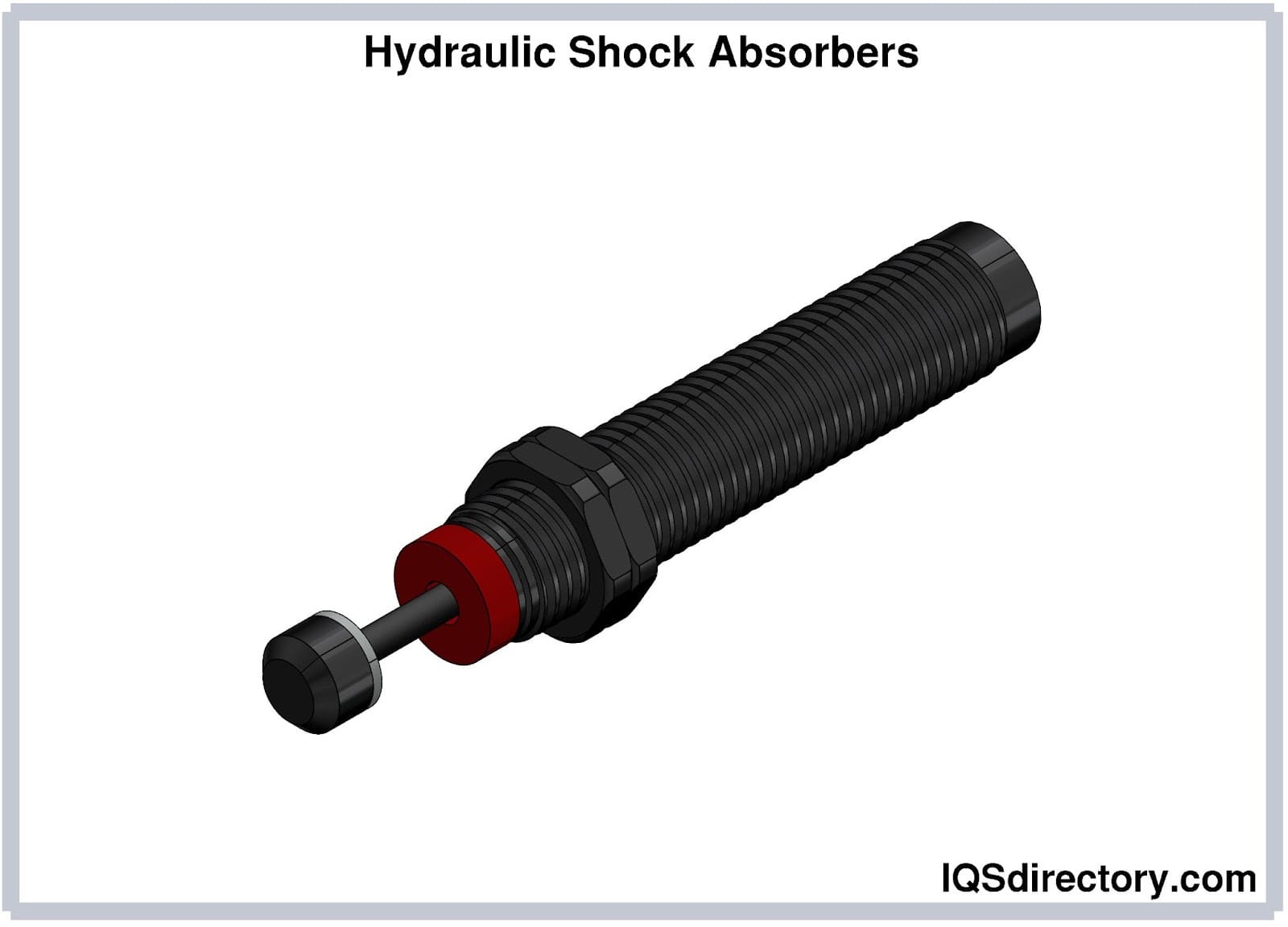
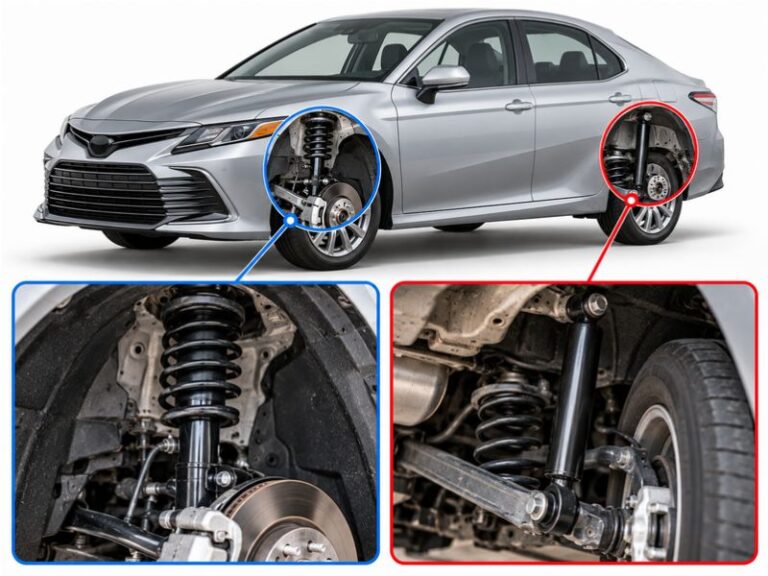
A hydraulic shock absorber is a suspension device that uses oil flowing through small passages or valves to control spring movement, reduce bouncing, and help keep a vehicle’s tires in contact with the road.
On roads across the United States, from smooth interstate highways to rough city streets and gravel roads, a vehicle’s suspension must handle bumps without letting the body bounce for too long. A hydraulic shock absorber helps control this movement. It works with the springs, tires, and other suspension parts to improve ride comfort, vehicle control, and tire contact with the road.
A hydraulic shock absorber does not support the vehicle’s full weight in the same way a suspension spring does. Instead, it resists movement by forcing hydraulic fluid through restricted openings. This resistance turns part of the suspension’s movement energy into heat. The result is less uncontrolled bouncing after a bump, although the exact effect depends on the shock design, condition, and vehicle setup.
Hydraulic shock absorbers are used in many passenger cars, pickup trucks, SUVs, trailers, and industrial systems. Some designs use oil alone as the working fluid, while others combine hydraulic oil with pressurized gas to help manage aeration and maintain damping performance. Understanding these differences can help drivers recognize suspension problems and choose the correct replacement when needed.
A hydraulic shock absorber is a mechanical device that controls movement by using the resistance of a liquid flowing through restricted passages. In a vehicle, it is usually mounted between the body or chassis and a moving part of the suspension. As the suspension moves over a bump or into a dip, the shock absorber resists that motion.
The term hydraulic refers to the use of fluid to transmit force. In most conventional automotive shock absorbers, the fluid is a specially formulated oil. A piston moves inside a cylinder filled with this oil, and valves regulate how quickly the oil can pass from one chamber to another.
Without enough damping, a suspension spring can continue to compress and extend after a road disturbance. The shock absorber reduces this repeated movement. It does not eliminate every bump or make the suspension rigid. Instead, it helps the vehicle settle in a controlled way.
Hydraulic shock absorbers are not limited to cars. Similar devices are used in motorcycles, heavy equipment, industrial machinery, and other systems that need controlled movement. Their construction and operating requirements vary with the load, speed, temperature, and environment.
Source: marathonbrake.com
Primary function
Resist suspension movement and dissipate the energy that would otherwise cause continued bouncing.
Working fluid
Usually hydraulic oil formulated to provide suitable flow, lubrication, and performance across the intended operating temperature range.
Typical result
Better control of body movement, more stable tire contact, and reduced suspension oscillation when the system is working properly.
Is a Hydraulic Shock Absorber the Same as a Damper?
In automotive use, shock absorber and damper generally refer to the same type of component. Damper is the broader technical term because the component dissipates energy from motion. Shock absorber is the familiar name used by drivers, repair shops, and parts suppliers.
The word hydraulic describes how the damping force is produced. It does not identify one exact body shape or mounting style. Two shock absorbers may look different yet both use hydraulic oil and internal valves to control movement.
Shock absorber
The common automotive term for a component that controls suspension movement.
Damper
The technical term for a device that dissipates energy and reduces unwanted motion.
What Does It Not Do?
A hydraulic shock absorber does not replace the suspension spring, repair worn ball joints, or correct every cause of poor handling. The spring supports the vehicle and stores energy as it compresses. The damper controls how that stored energy is released.
A shock absorber also cannot restore traction when a tire has inadequate tread, incorrect pressure, or a damaged structure. Good suspension control supports tire contact, but safe handling depends on the complete vehicle, including tires, brakes, steering, alignment, and road conditions.
It does not carry the main spring load
The suspension spring normally supports the vehicle’s weight, although some suspension designs combine spring and damper functions in one assembly.
It does not guarantee a smooth ride
Ride comfort also depends on spring rates, tires, bushings, suspension travel, and the road surface.
How Does a Hydraulic Shock Absorber Work?
A hydraulic shock absorber works by making oil pass through controlled openings as the suspension moves. These restrictions create resistance, which opposes the movement of the piston. The damping force depends on factors such as piston speed, valve design, oil properties, and internal pressure.
When a vehicle hits a bump, the wheel moves upward relative to the body. The suspension spring compresses and stores energy. The shock absorber resists the movement and then controls the spring’s return as the wheel and suspension move back toward their resting position.
The shock absorber usually produces damping in both compression and rebound. Compression occurs when the shock shortens, while rebound occurs when it extends. The forces do not have to be equal. Many designs use different valve arrangements to control each direction according to the intended ride and handling characteristics.
As oil passes through small valves, some mechanical energy becomes heat. This is how a shock absorber removes energy from the suspension’s motion rather than simply storing it and releasing it again. The heat must then pass through the shock body and surrounding air or other nearby parts.
Source: iqsdirectory.com
Compression stroke
The shock absorber shortens as the wheel moves upward or the suspension compresses. Internal valves regulate oil flow and resist this movement.
Rebound stroke
The shock absorber extends as the suspension returns. Rebound damping controls how quickly the spring releases stored energy.
Energy dissipation
Restricted fluid flow creates damping resistance and converts part of the suspension’s mechanical energy into heat.
What Happens When a Wheel Hits a Bump?
Imagine a car crossing a raised section of pavement. The wheel moves upward, the spring compresses, and the shock absorber’s piston moves inside its cylinder. Oil is forced through the compression-side valve system, which resists the motion and limits how quickly the suspension compresses.
After the wheel passes the bump, the spring pushes the suspension back toward its original position. The shock absorber now controls the rebound stroke. Without adequate rebound damping, the spring could extend too quickly and cause another period of unwanted movement.
The process happens repeatedly as the car travels over uneven pavement. Proper damping helps the body settle sooner, but the shock absorber must still allow enough suspension travel for the wheel to follow the road.
Controlled movement
The wheel can move in response to road changes without allowing excessive body oscillation.
Tire contact
Effective damping helps control wheel motion, supporting tire contact with the road when other suspension and tire components are in good condition.
Why Are Internal Valves Important?
Internal valves determine how easily oil can move through the shock absorber. Some designs use flexible discs, calibrated openings, or other valve arrangements to change resistance as fluid pressure and piston speed change.
The valve system allows the manufacturer to tune compression and rebound behavior. A design intended for a comfortable passenger car may have different damping characteristics from one designed for towing, performance driving, or heavy equipment.
A damaged valve, worn internal component, incorrect fluid, or aerated oil can change damping performance. These internal faults may not be visible from outside the shock absorber, so inspection sometimes requires professional testing or replacement based on established diagnostic procedures.
Flow control
Valves regulate the rate and direction of oil movement between internal chambers.
Damping calibration
Valve design helps determine the resistance produced at different suspension speeds.
Main Parts of a Hydraulic Shock Absorber
A conventional hydraulic shock absorber contains a cylinder, piston, piston rod, hydraulic oil, and a system of valves. Many automotive designs also include seals, a guide for the piston rod, mounting points, and either a reserve chamber or a pressurized gas chamber.
The exact parts depend on whether the shock uses a twin-tube, monotube, or another construction. The purpose of each component is to guide movement, control oil flow, contain pressure, and keep the assembly working through repeated cycles.
Source: mech4study.com
Cylinder
Provides the working space in which the piston moves. Twin-tube designs have an additional outer tube that serves as a reserve chamber.
Piston
Moves with the piston rod and forces hydraulic oil through internal passages or valves.
Piston rod
Connects the piston to the suspension mounting and transfers movement into the shock absorber.
Hydraulic oil
Transmits pressure, passes through the valve system, and helps lubricate internal moving parts.
Valves
Control oil flow and create the resistance needed for compression and rebound damping.
Seals and rod guide
Help retain the fluid, guide the piston rod, and limit contamination entering the working area.
Mounts and bushings
Connect the shock to the vehicle and help manage movement, vibration, and noise at the attachment points.
How the Reserve Chamber Works
Many twin-tube shock absorbers have an inner working cylinder and an outer reserve tube. Because the piston rod takes up space as it enters the inner cylinder, the displaced oil must move somewhere. A base valve allows fluid to pass between the working cylinder and the reserve chamber.
The reserve chamber provides space for the fluid displaced by the entering rod and accommodates changes in fluid volume. Its arrangement differs from the gas separation systems used in many monotube designs.
A twin-tube shock may be suitable for many standard vehicle applications, but suitability depends on the original suspension specification and the replacement design. Tube count alone does not establish comfort, durability, or performance.
Inner tube
Contains the moving piston and much of the active hydraulic damping process.
Outer tube
Provides a reserve space for oil and supports the twin-tube fluid arrangement.
Types of Hydraulic Shock Absorbers
Hydraulic shock absorbers come in several designs. The main differences involve the location of the working cylinder, how displaced oil is managed, whether gas pressure is used, and how the valves respond to movement.
For automotive use, twin-tube and monotube designs are common. Both can use hydraulic oil and internal valves to create damping. A gas-charged shock absorber is also hydraulic because the oil still produces the damping force.
Other terms describe how a damper is adjusted or used rather than a completely separate hydraulic principle. For example, an adjustable shock absorber may allow changes to damping settings, while a heavy-duty design may use different valves, dimensions, or construction to meet its intended load and operating conditions.
Source: gdstauto.com
Twin-tube hydraulic shock absorber
Uses an inner working cylinder and an outer reserve chamber. It is a common design in many passenger-vehicle applications.
Monotube hydraulic shock absorber
Uses one main cylinder, commonly with a floating separator piston that keeps the oil apart from a pressurized gas chamber.
Gas-charged hydraulic shock absorber
Uses hydraulic oil for damping and gas pressure to help limit foaming or aeration under suitable operating conditions.
Adjustable hydraulic shock absorber
Allows damping settings to be changed through a built-in adjuster or another approved adjustment system.
Twin-Tube vs. Monotube Shock Absorbers
A twin-tube shock has an inner cylinder surrounded by a reserve tube. Oil moves through a base valve between the working cylinder and reserve chamber as the piston rod moves. This design is widely used because it can meet many standard suspension requirements in a compact package.
A monotube shock uses a single main cylinder. Many monotube designs include a floating separator piston that divides the hydraulic oil from pressurized gas. The separator allows the oil volume to change as the piston rod enters and leaves the cylinder while keeping the gas and oil apart.
Monotube designs can offer effective heat transfer and consistent damping under demanding conditions, depending on their specific construction. Twin-tube designs can also perform well when correctly engineered for the application. Neither design is automatically better for every car, driving style, or budget.
Twin-tube advantage
The reserve chamber and common packaging approach can suit a broad range of conventional vehicle suspensions.
Monotube advantage
The single main cylinder can provide a direct heat-transfer path and a pressurized design that helps control oil aeration.
Selection rule
Use the vehicle manufacturer’s fitment requirements and the shock maker’s specifications rather than choosing by construction type alone.
Are Hydraulic and Gas Shocks Different?
The terms hydraulic shock and gas shock can be confusing because many so-called gas shocks also use hydraulic oil. In a gas-charged damper, the gas is not usually the primary source of damping. Oil flowing through the valves creates the resistance that controls suspension movement.
Pressurized gas helps keep the oil under pressure and can reduce the formation of foam or gas bubbles during demanding operation. Aerated oil can make damping less consistent, so controlling aeration is an important design goal.
A gas-charged shock may produce an extension force from its internal gas pressure, but that does not mean it replaces the vehicle’s suspension spring. Its effect on ride height is usually limited and depends on the particular design and suspension layout.
Hydraulic action
Oil flow through valves generates the damping force.
Gas pressure
Supports fluid management and helps reduce aeration in designs that use pressurized gas.
Why Do Vehicles Need Hydraulic Shock Absorbers?
Vehicles need shock absorbers because suspension springs can continue moving after they are compressed or extended. The damper controls that movement, helping the vehicle respond to bumps, dips, braking, and changes in direction in a more predictable way.
The benefit is not limited to comfort. Excessive wheel movement can affect how consistently a tire follows the road. Proper damping helps manage that movement and supports steering response, braking stability, and overall vehicle control.
A shock absorber cannot guarantee a shorter stopping distance or prevent every skid. Braking performance depends on the tires, brakes, road surface, vehicle speed, load, and other conditions. Sound suspension damping is one part of a complete system, not a substitute for proper tires and brakes.
Source: cdn.renderhub.com
Ride comfort
Controls repeated body movement after bumps, reducing prolonged bouncing and pitching.
Handling
Helps regulate suspension movement during cornering and quick changes in direction.
Tire contact
Helps the wheels follow changing road surfaces when the rest of the suspension is in sound condition.
Body control
Works with the springs to manage movement caused by braking, acceleration, and uneven surfaces.
Component protection
Correct damping can limit excessive suspension movement that may increase stress on other parts, although it cannot prevent all wear or damage.
Do Hydraulic Shock Absorbers Affect Ride Height?
A conventional hydraulic shock absorber is not designed to hold the vehicle at its normal ride height. The suspension springs generally determine that height. Worn springs, damaged spring seats, incorrect parts, or an unsuitable load can make a vehicle sit too low even if the shock absorbers are functional.
Some special dampers and suspension assemblies can apply an extension force or include additional load-supporting features. Air suspension and self-leveling systems also work differently from a basic hydraulic damper. These designs must be evaluated according to their own specifications.
If a vehicle sits lower on one side, inspect the springs, mounts, bushings, and other suspension components rather than assuming the shock absorber is the only cause.
Normal suspension
The springs usually establish ride height, while the dampers control motion.
Uneven height
May indicate a damaged or sagging spring, a failed mount, an unusual load, or another suspension issue.
Common Signs of a Failing Hydraulic Shock Absorber
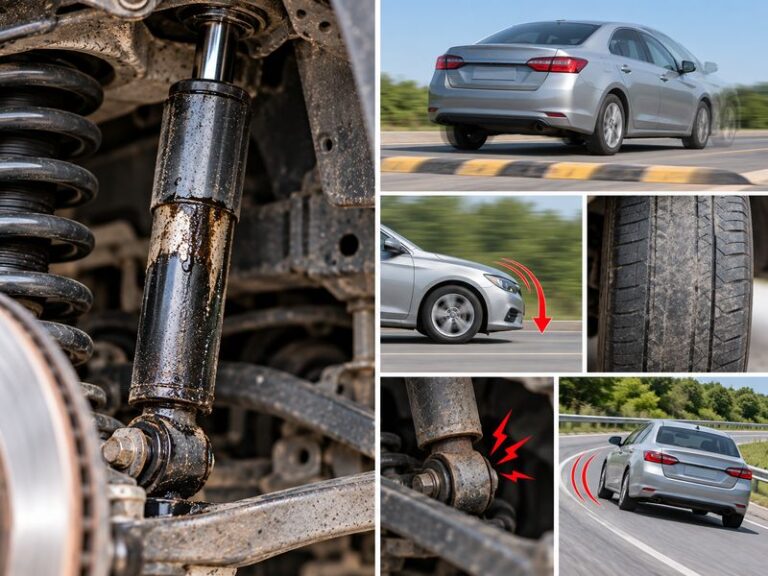
A worn hydraulic shock absorber may allow excessive bouncing, reduce body control, or show signs of fluid leakage. However, these symptoms are not proof that the damper itself has failed. Worn tires, damaged springs, loose mounts, and other suspension faults can cause similar problems.
Start with a visual inspection and pay attention to changes in handling. If the vehicle feels unstable, makes new suspension noises, or shows severe tire wear, arrange a qualified inspection. A serious loss of control, damaged suspension attachment, or major fluid leak calls for stopping in a safe place and avoiding further driving until the vehicle is assessed.
Source: m.media-amazon.com
Repeated bouncing
The vehicle continues to oscillate after a bump rather than settling in a controlled way. Weak damping is one possible cause.
Hydraulic fluid leakage
Wet oil running down the shock body can indicate a failed seal or another fault. A light film of residue alone may not prove failure, so the pattern and severity matter.
Poor stability
Excessive body motion, a floaty feel, or reduced control over uneven roads may indicate a damping problem or another suspension issue.
Uneven tire wear
Cupping or scalloped wear can be associated with wheel or suspension movement, but alignment, tire balance, and other faults should also be checked.
Knocking or clunking
Can result from loose mounts, worn bushings, damaged links, or internal damper faults. The noise alone does not identify the failed part.
Visible damage
A bent rod, badly corroded body, damaged mounting point, or substantial leak warrants prompt professional assessment.
How to Inspect a Hydraulic Shock Absorber
Park on firm, level ground, switch off the engine, apply the parking brake, and let the suspension settle. Look for obvious damage, fluid running down the body, damaged rubber bushings, loose mounting hardware, or signs that a tire is rubbing against another part.
Compare the left and right sides of the same axle when the design permits. A clear difference can help identify a problem, but one side may show dirt or residue that the other does not. A visual check cannot reliably measure the shock absorber’s internal damping force.
A bounce test may reveal severe loss of damping in some vehicles, but its results depend on the spring design, suspension geometry, vehicle weight, and test method. Some modern suspensions do not respond in a way that makes this test reliable. Do not treat one bounce test as a definitive diagnosis.
Never crawl beneath a vehicle supported only by a jack. If access under the vehicle is necessary, use suitable lifting equipment and rated support stands on a firm surface, following the vehicle manufacturer’s service instructions. Some inspections and repairs are best left to a qualified technician.
Check for leaks and damage
Look for active fluid trails, corrosion, bent components, torn boots where fitted, and damaged mounts.
Note handling changes
Record when the problem occurs, such as over bumps, during braking, or when changing lanes.
Confirm the cause
Ask for a suspension inspection that includes mounts, springs, tires, and related parts rather than replacing components based on one symptom.
Can You Drive With a Bad Hydraulic Shock Absorber?
Driving with a failing shock absorber can reduce vehicle control, especially on rough roads, during emergency maneuvers, or when the vehicle is heavily loaded. The risk depends on how severe the failure is and whether other suspension components have also been damaged.
A small amount of surface residue without other symptoms may require inspection rather than an immediate assumption of catastrophic failure. By contrast, substantial leakage, severe bouncing, a loose mount, a bent component, or a marked loss of control should be treated seriously.
If the vehicle feels unstable or the suspension appears structurally damaged, do not continue a normal trip. Pull over safely and arrange professional assistance or towing as appropriate. A technician can determine whether the vehicle is safe to drive and whether the damper must be replaced.
Mild suspected wear
Arrange an inspection soon and avoid aggressive driving until the condition is understood.
Severe symptoms
Stop driving when safe and seek professional assessment if handling is seriously impaired or the suspension is visibly damaged.
Hydraulic Shock Absorber Maintenance and Replacement
Hydraulic shock absorbers do not all have one fixed service life. Wear depends on the part design, road conditions, vehicle load, climate, contamination, driving habits, and maintenance history. Rough roads and repeated heavy loading can increase demands on the suspension, while corrosion can damage exposed parts and mounting points.
Follow the vehicle owner’s manual and the shock absorber manufacturer’s guidance for inspection and replacement. Some vehicles may call for inspection at scheduled service intervals, while a symptom or visible fault can justify an earlier check. Mileage alone cannot confirm that a shock absorber is healthy or worn out.
Many conventional shock absorbers are sealed assemblies and are replaced rather than opened for routine internal repair. Some specialized industrial or serviceable dampers may have different procedures, but opening a pressurized unit or working with springs without the correct tools can cause serious injury.
Source: m.media-amazon.com
Check the manufacturer’s schedule
Use the maintenance instructions for the exact vehicle and installed damper rather than a universal mileage rule.
Inspect related components
Check mounts, bushings, springs, protective boots where fitted, and nearby suspension parts.
Use correct replacement parts
Verify the vehicle application, axle position, mounting style, dimensions, and any electronic or adjustable suspension requirements.
Follow installation specifications
Use the required torque values and installation procedures. Incorrect mounting or tightening can cause noise, damage, or unsafe operation.
Should Hydraulic Shock Absorbers Be Replaced in Pairs?
When one shock absorber on an axle has failed, replacing both sides is often recommended if the other unit has similar age and wear. Matching components help maintain more consistent damping from side to side. The exact requirement depends on the vehicle manufacturer’s instructions and the condition of the existing part.
Replacing only one shock may be reasonable in some circumstances, such as when the other unit is relatively new and the manufacturer permits it. However, a large difference in damping between the two sides can affect handling and ride behavior.
Inspect the opposite side and related suspension parts before deciding. If the vehicle uses special electronic dampers, load-leveling equipment, or a matched suspension package, confirm compatibility before ordering replacements.
Matched axle performance
Replacing worn units as a pair can help keep damping behavior consistent across the axle.
Check manufacturer guidance
Some systems have specific pairing, calibration, or replacement requirements.
What to Check After Replacement
After installation, confirm that all mounts and fasteners are secure and that any required suspension procedures have been completed. Check for interference with brake hoses, wiring, tires, and other moving parts throughout the suspension’s permitted travel.
A controlled road test should follow only when the vehicle has been confirmed safe to operate. Listen for new noises and note any pulling, instability, or unusual body movement. If symptoms remain, have the installation and the full suspension system checked rather than assuming the new dampers are defective.
Some vehicles require electronic fault checks, ride-height procedures, or calibration when certain suspension parts are changed. Follow the service information for the exact model rather than applying a generic procedure.
Secure installation
Verify correct hardware, mounting orientation, and specified fastener torque.
System compatibility
Confirm that any electronic controls, sensors, or special suspension features work as intended.
Follow-up inspection
Investigate persistent noise, instability, or leakage promptly.
Choosing the Right Hydraulic Shock Absorber
The right hydraulic shock absorber is the one designed for the vehicle or machine and its intended operating conditions. Similar-looking parts can have different damping forces, stroke lengths, mounting dimensions, load limits, and internal valve settings. A part that physically fits may still provide unsuitable control.
For a passenger vehicle, begin with the year, make, model, engine or trim where relevant, axle position, and suspension package. Check whether the vehicle has standard, sport, off-road, adaptive, or load-leveling suspension. Those details can affect part compatibility.
For industrial equipment, the required stroke, mounting type, moving mass, impact energy, operating speed, cycle rate, temperature, and duty cycle may be essential. A shock absorber selected for a light application may overheat or fail when used with a heavier or faster-moving load.
Source: ikrorwxhqnnjlk5p-static.micyjz.com
Fitment
Verify part numbers, mounting points, extended and compressed lengths, and permitted travel.
Damping specification
Match the intended compression and rebound behavior to the original design or an approved upgrade.
Operating conditions
Consider road quality, payload, temperature, corrosion exposure, and repeated heavy use.
Vehicle systems
Check for electronic damping, adaptive suspension, and other features that may require a specific component.
Can You Use a Universal Hydraulic Shock Absorber?
There is no single hydraulic shock absorber that is suitable for every vehicle or machine. A universal-looking part may share a mounting style with another component, but that does not prove that its stroke, damping, strength, or operating limits are correct.
Using the wrong shock can limit suspension travel, cause mounting stress, produce poor ride control, or interfere with nearby parts. The danger is not limited to comfort; a badly matched damper may compromise handling or fail under loads it was not designed to withstand.
Choose a part by verified application and technical specifications. For a custom build, have the suspension or mechanical design assessed by a qualified specialist before using a damper with different dimensions or force characteristics.
Avoid visual matching alone
Similar external dimensions do not establish compatible damping or safe load capacity.
Check approved applications
Use the vehicle or equipment manufacturer’s specifications and the damper supplier’s fitment data.
Common Misconceptions About Hydraulic Shock Absorbers
Hydraulic shock absorbers are simple in principle, but several common assumptions can lead to incorrect diagnosis or part selection. Understanding the difference between spring support, damping force, and gas pressure helps avoid unnecessary repairs.
The most useful approach is to connect a symptom with possible causes, then verify the fault. No single visual sign, road impression, or component label proves that a shock absorber is suitable or defective in every case.
Source: engineeringlearn.com
Misconception: All hydraulic shocks contain oil only
Many automotive dampers use hydraulic oil together with pressurized gas. The oil still provides the main damping action.
Misconception: A shock absorber carries the vehicle’s weight
The springs usually support the vehicle’s static weight. The damper controls movement, although some special suspension systems combine additional functions.
Misconception: Every oil mark means the shock has failed
A substantial leak is concerning, but light surface residue may need closer assessment before the unit is declared defective.
Misconception: A bounce test proves the shock is good
A bounce test can reveal some severe faults but cannot reliably measure damping or rule out internal damage in every suspension design.
Misconception: Monotube shocks are always superior
Construction affects heat transfer, packaging, and pressure management, but suitability depends on the complete design and application.
Misconception: A new shock always fixes poor handling
Tires, alignment, springs, steering parts, bushings, brakes, and vehicle loading can also contribute to handling problems.
When Is Professional Diagnosis Necessary?
Professional diagnosis is appropriate when the vehicle has severe bouncing, repeated fluid loss, a bent damper, damaged mounting points, unusual tire wear, or a major change in handling. These symptoms may point to more than one fault, and an incomplete repair can leave the original problem unresolved.
A qualified technician can inspect the suspension under safe lifting conditions, compare related components, verify part compatibility, and use the service procedure required for the vehicle. Special suspension systems may require electronic diagnosis or calibration tools.
Do not dismantle a pressurized shock absorber or remove a coil spring without the correct equipment and training. Stored spring energy and internal pressure can cause serious injury. Replace or service the assembly only according to its design and manufacturer instructions.
Seek prompt help
Arrange an inspection when leakage, handling changes, or repeated suspension noise appears.
Avoid unsafe repairs
Do not work under a vehicle supported only by a jack or open a pressurized damper without an approved procedure.
A Practical Decision Guide for Hydraulic Shock Absorbers
The next step depends on whether the goal is to understand a working component, diagnose a symptom, or select a replacement. A useful decision starts with the observed condition and then checks the relevant specifications or evidence.
The table below connects common observations with reasonable next steps. It is a diagnostic guide, not a substitute for vehicle-specific service information or a physical inspection.
Source: iqsdirectory.com
If the suspension bounces repeatedly
Inspect the dampers and springs, then check related mounts and suspension components.
If oil is visible on the shock body
Assess whether the fluid is an active leak or minor residue and follow the manufacturer’s inspection guidance.
If the vehicle sits low
Check the springs, load, and suspension geometry instead of assuming the hydraulic shock is the cause.
If a replacement is needed
Confirm the exact application, damping design, mounting dimensions, and pairing requirements before ordering.
Symptom, Possible Cause, and Next Action
Repeated bouncing is consistent with weak damping, but spring or mounting faults may also contribute. Fluid leakage suggests a seal or body problem, while clunks can come from loose hardware or worn bushings. These symptoms should guide inspection, not serve as a final diagnosis.
A vehicle that wanders or feels unstable may have worn dampers, but tire pressure, alignment, steering joints, and tire condition can produce similar complaints. Check safety-critical components before assuming that replacing the shock absorbers will solve the problem.
Repeated bouncing after bumps
Possible cause: reduced damping or another suspension fault. Next action: inspect the shocks, springs, mounts, and related parts.
Wet shock body or dripping oil
Possible cause: fluid leakage. Next action: arrange an inspection and replace the unit if the manufacturer’s criteria indicate failure.
Clunking over rough roads
Possible cause: worn mounts, bushings, fasteners, links, or an internal damper fault. Next action: inspect the full mounting and suspension system.
Uneven tire wear
Possible cause: damping, alignment, tire balance, or other suspension issues. Next action: check tire condition and obtain a full suspension and alignment assessment.
Vehicle sits lower than normal
Possible cause: sagging spring, broken spring, damaged seat, or unusual load. Next action: inspect the spring and suspension structure.
Frequently Asked Questions
Q
What is the main purpose of a hydraulic shock absorber?
The main purpose of a hydraulic shock absorber is to control suspension movement. It forces oil through restricted passages or valves to create resistance, reduce repeated bouncing, and help the wheels follow the road in a controlled manner.
Q
Does a hydraulic shock absorber use oil?
Yes. Most conventional hydraulic shock absorbers use specially formulated oil as the working fluid. The piston forces the oil through internal valves, producing the resistance needed to control movement. Some designs also use pressurized gas to help limit oil aeration.
Q
What is the difference between a hydraulic shock and a gas shock?
A conventional hydraulic shock relies on oil flow through valves to produce damping. A gas-charged shock also uses hydraulic oil but adds pressurized gas to help manage fluid behavior and reduce aeration. Gas pressure can affect the damper’s behavior, but it does not replace the suspension spring in a conventional setup.
Q
How long does a hydraulic shock absorber last?
There is no single service life that applies to every hydraulic shock absorber. Longevity depends on the design, road conditions, vehicle load, temperature, corrosion, driving habits, and maintenance. Follow the vehicle manufacturer’s inspection guidance and investigate leaks, excessive bouncing, or handling changes when they occur.
Q
Can a hydraulic shock absorber leak without being completely worn out?
A small amount of residue may not prove that the shock absorber has failed, but an active leak can indicate a damaged seal or other fault. The severity, location, and pattern of the fluid matter. Have a technician assess the unit using the manufacturer’s criteria rather than relying on appearance alone.
Q
Are hydraulic shock absorbers used only in cars?
No. Hydraulic shock absorbers and related dampers are also used in motorcycles, trucks, trailers, industrial machinery, and other equipment. The construction, damping requirements, mounting arrangements, and service procedures depend on the application.
Q
Can I replace a hydraulic shock absorber myself?
Some conventional shock absorber replacements are suitable for a skilled home mechanic with the correct tools, safe lifting equipment, and vehicle-specific service instructions. Other jobs involve compressed coil springs, pressurized units, special suspension controls, or difficult mounting points and should be handled by a qualified technician. Never work under a vehicle supported only by a jack.
✦ Wrapping Up
Conclusion
A hydraulic shock absorber controls suspension movement by forcing oil through valves or restricted passages. This process creates damping force and converts part of the vehicle’s motion energy into heat. By limiting repeated spring movement, the shock absorber helps improve ride control and supports consistent tire contact with the road.
Twin-tube, monotube, and gas-charged designs use different methods to manage oil, pressure, and heat, but their suitability depends on the vehicle or equipment. No design is automatically best for every application. Correct fitment, sound mounting hardware, and compliance with manufacturer specifications matter more than appearance or a broad product label.
If a vehicle bounces repeatedly, leaks fluid, develops new suspension noises, or feels unstable, inspect the complete suspension system. Confirm the cause before replacing parts, and seek professional help when the fault affects handling or safe operation.
💡 Key Takeaway
Start by identifying the vehicle’s exact suspension type and checking for visible leakage, damage, and changes in handling. Use the manufacturer’s inspection and fitment specifications to decide whether the hydraulic shock absorber needs further testing or replacement.
Eric
Hi, I’m Eric Bennett, the person behind OffRoadTruckAccessories.com.
I created this blog to share my interest in trucks, off-road driving, automotive accessories, and DIY modifications. I enjoy learning how different truck accessories work, testing their usefulness, and understanding whether they are truly worth buying.
Shock absorbers are located near the wheels as part of the suspension system, usually between the vehicle’s body, frame, or subframe and a suspension component such as a control arm, axle, or wheel assembly. However, the exact answer to where are shock absorbers located on a car depends on the suspension design. Some vehicles have…
You should change shock absorbers when they are worn, leaking, damaged, or no longer controlling suspension movement properly. There is no single replacement interval that applies to every vehicle because shock absorber life depends on road conditions, vehicle weight, driving habits, suspension design, and component quality. If you are wondering when to change shock absorbers,…