Yes, shock absorbers wear out over time. Their seals, valves, and internal parts gradually lose their ability to control suspension movement. The rate of wear depends on mileage, road conditions, vehicle load, driving habits, and the shock absorber design. Replace worn units when inspection confirms that they no longer work properly.
For drivers across the United States, shock absorber wear is a normal part of vehicle ownership. Daily commutes on rough city streets, long highway trips, potholes, gravel roads, and repeated trips with heavy cargo can all affect suspension life. A vehicle may still run well with worn shocks, but it may bounce more, feel less stable, and take longer to settle after bumps.
There is no single mileage figure that applies to every car, truck, or SUV. Some shocks last for many years, while others lose performance much sooner under severe use. A mileage estimate can help you plan an inspection, but it cannot confirm whether a shock absorber is still working correctly.
The best approach is to watch for changes in ride and handling, inspect the suspension for leaks or damage, and follow the vehicle manufacturer’s service guidance. If the vehicle bounces repeatedly, feels unstable, or shows signs of suspension damage, arrange an inspection rather than relying on age or mileage alone.
Shock absorbers wear out because they must control suspension movement every time a wheel travels over a bump, dips into a hole, or moves during braking and cornering. Each movement forces internal components to work under changing pressure and temperature. Over many miles, this repeated activity can reduce the shock’s ability to control the spring and keep the vehicle stable.
Most conventional shock absorbers use hydraulic fluid, internal valves, a piston, a rod, and seals. The piston moves through the fluid as the suspension travels. The valves restrict fluid flow to create damping, which slows unwanted spring movement. Wear, leakage, damaged parts, or changes in internal performance can weaken that control.
Not every shock absorber has the same design. Gas-charged hydraulic shocks, adjustable units, and electronically controlled dampers may have different construction and failure modes. The basic principle remains the same: when a damper can no longer control suspension motion as intended, it may need service or replacement.
Source: classicautoadvisors.com
Seal wear
The rod seal keeps hydraulic fluid inside the shock. Age, contamination, heat, and rod damage can cause the seal to leak.
Internal valve wear
Valves regulate fluid flow as the shock compresses and extends. Damage or deterioration can reduce damping performance.
Heat and fluid stress
Repeated suspension movement generates heat. Severe or prolonged use can place extra stress on the fluid and internal parts.
Rod and body damage
Corrosion, impact damage, or a bent rod can affect movement and sealing. Serious damage usually calls for replacement.
Do Shock Absorbers Wear Out Even If They Do Not Leak?
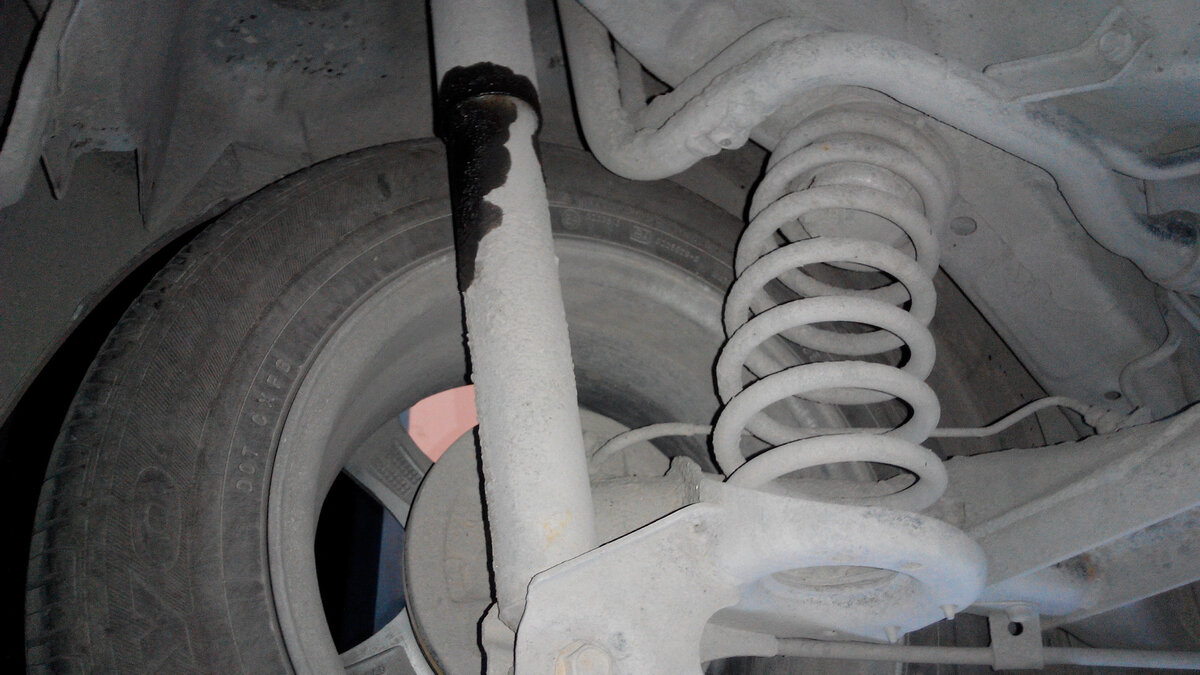
Yes. A shock absorber can lose damping performance without showing visible fluid leakage. Internal valve wear, loss of gas pressure in certain designs, or other internal faults may reduce its ability to control suspension movement while the outer body remains dry.
A leak is useful evidence of a possible problem, but the absence of a leak is not proof of good condition. A technician may need to evaluate suspension behavior, mounting points, tire wear, and damper performance to determine whether replacement is justified.
Dry but weak
The shock looks clean but no longer controls bouncing and body movement effectively.
Leaking and weak
Fluid loss may reduce damping, particularly when leakage is substantial or continues to develop.
How Long Do Shock Absorbers Last?
Shock absorber lifespan varies widely by vehicle, component design, driving conditions, and maintenance. A broad planning range often discussed for conventional shocks is approximately 50,000 to 100,000 miles. This range is not a guaranteed lifespan, a requirement to replace every shock at a particular mileage, or a substitute for the service schedule in the owner’s manual.
Some shocks remain serviceable beyond 100,000 miles under favorable conditions. Others can develop faults well before 50,000 miles after repeated impacts, severe road use, overloading, corrosion, or damage. Mileage is best treated as a reason to pay closer attention, not as a diagnosis.
For US drivers, a vehicle used mainly on smooth interstate highways may experience different suspension demands from a pickup that regularly carries heavy loads on rough rural roads. Even vehicles with similar mileage can have very different shock conditions because the number and severity of suspension movements matter as well as distance traveled.
Source: i.ytimg.com
Mostly smooth highway driving
Milder road impacts may reduce some sources of stress, although heat, age, corrosion, and normal movement still affect the parts.
Potholes and rough roads
Frequent sharp impacts can place greater loads on shock absorbers, mounts, and related suspension components.
Heavy loads or towing
Repeated operation near or above the vehicle’s permitted load limits can increase suspension stress. Shocks do not increase the vehicle’s rated carrying capacity.
Older vehicles
Age can contribute to seal deterioration, corrosion, and mount problems, even when annual mileage is low.
Should You Replace Shock Absorbers at 50,000 Miles?
Not automatically. At 50,000 miles, consider the vehicle’s maintenance schedule, road history, symptoms, and inspection results. If the manufacturer specifies an inspection interval, follow it. If the vehicle feels stable and the shocks pass an appropriate inspection, mileage alone may not justify replacement.
The same principle applies at 80,000 or 100,000 miles. Higher mileage can increase the chance that the parts have deteriorated, but the actual condition determines whether they should be replaced. Do not ignore warning signs just because the vehicle has not reached a particular mileage.
Use mileage as a prompt
Schedule an inspection when the shocks have covered substantial mileage or the vehicle has been used under severe conditions.
Use evidence to decide
Look for functional problems, fluid leakage, physical damage, and findings from a qualified suspension inspection.
What Are the Signs of Worn Shock Absorbers?
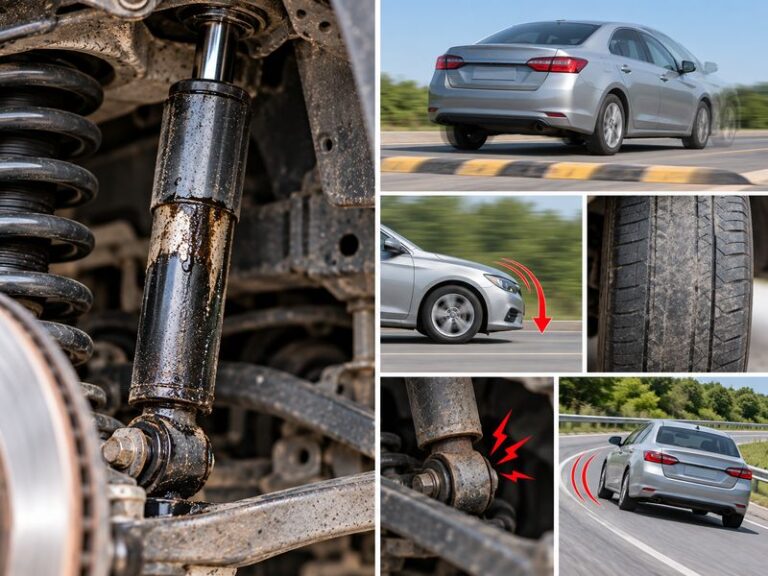
The most useful warning signs are changes in how the vehicle moves and responds to the road. Worn shocks may allow the body to bounce repeatedly, lean more than usual, or feel unsettled after hitting a bump. These symptoms deserve attention, but none proves by itself that the shock absorbers are the cause.
Springs, tires, alignment, bushings, ball joints, steering parts, and other suspension components can create similar problems. A careful diagnosis should distinguish a worn damper from a broken spring, loose mount, tire fault, or alignment issue before parts are replaced.
Pay attention to changes rather than waiting for the vehicle to become difficult to control. A gradual decline in ride quality can be easy to overlook because drivers adapt to it over time.
Source: s1.cdn.autoevolution.com
Repeated bouncing
The vehicle continues to move up and down after crossing a bump instead of settling promptly.
Excessive body movement
The body may pitch during braking, squat during acceleration, or lean more in turns than it used to.
Unsettled handling
The vehicle may feel less composed over uneven pavement, with repeated movement after bumps.
Fluid leakage
Fresh oil-like fluid running down the shock body may indicate a failed seal or damaged unit.
Uneven tire wear
Scalloped or cupped tread wear can be associated with poor wheel control, but tire balance, alignment, and other faults must also be checked.
Clunks or rattles
Damaged shock mounts or loose fasteners may make noise. The source could also be another suspension component.
Can Worn Shocks Affect Braking?
Yes. Worn shock absorbers can make it harder for the suspension to control wheel movement and maintain consistent tire contact with uneven road surfaces. This can affect stability during braking and may increase stopping distance under some conditions.
There is no single stopping-distance increase that applies to every vehicle with worn shocks. Tires, road surface, speed, brake condition, vehicle load, and suspension design all affect braking performance. If the vehicle dives excessively, feels unstable under braking, or reacts unpredictably, have it inspected promptly.
Watch for changes
Compare the vehicle’s current behavior with its usual response, especially over rough roads and during controlled braking.
Do not test at high speed
Never attempt emergency stops or aggressive maneuvers on public roads to test whether shocks are worn.
What Causes Shock Absorbers to Wear Out Faster?
Shock absorbers tend to wear faster when they face repeated hard impacts, heavy loads, contamination, corrosion, or damaged mounting parts. Driving conditions often matter more than the age of the vehicle alone. Correct maintenance cannot prevent all wear, but it can help identify problems before they cause further damage.
A shock absorber is designed to move repeatedly within its operating range. Hitting deep potholes at speed, driving on badly damaged roads, or operating with excessive cargo can place unusual forces on the suspension. Damage may also occur when a tire or wheel strikes a curb or another object.
Environmental conditions matter too. Road salt and moisture can promote corrosion, especially around exposed metal parts and mounting hardware. Dust, dirt, and damage to protective components can also contribute to wear, depending on the shock design and the conditions in which the vehicle operates.
Source: t4.ftcdn.net
Repeated pothole impacts
Sharp impacts can damage the shock body, rod, mounts, or other suspension parts.
Overloading
Carrying loads beyond the vehicle’s rated capacity can place excessive stress on the suspension and tires.
Corrosion
Rust can weaken exposed parts or damage a polished shock rod, potentially affecting the seal.
Damaged mounts and bushings
Loose, cracked, or deteriorated mounting parts can cause noise and unwanted movement, and may place extra stress on connected components.
Existing suspension faults
Broken springs, damaged control arms, or other faults may alter suspension travel and contribute to further damage.
Can Bad Roads Shorten Shock Absorber Life?
Yes. Frequent potholes, broken pavement, rough gravel, and repeated severe bumps can increase suspension loads and the chance of damage. The effect depends on impact severity, vehicle speed, tire condition, suspension travel, and the design of the shock absorber.
Reduce speed on rough surfaces when it is safe to do so, avoid obstacles where practical, and keep tires at the pressure specified by the vehicle manufacturer. These steps can reduce unnecessary stress, but they cannot guarantee a particular shock absorber lifespan.
Slow down for hazards
Approach potholes and uneven road sections at a safe speed rather than striking them at highway speed.
Keep loads within limits
Follow the vehicle’s payload, axle, and towing limits listed in its documentation.
How to Check Whether Your Shock Absorbers Are Worn
You can look for several warning signs without removing any suspension parts, but a visual check cannot measure every aspect of damper performance. Begin with the vehicle parked on level ground, the engine off, and the parking brake applied. Never crawl under a vehicle supported only by a jack.
Inspect only parts you can reach safely without placing yourself under an unsupported vehicle or reaching near hot or moving components. If you see severe leakage, bent parts, loose mounts, or other obvious damage, arrange a professional inspection rather than trying to repair the shock on the road.
The goal is to collect useful clues, not to make a final diagnosis from one sign. Combine what you see with the way the vehicle handles, tire condition, service history, and any inspection findings.
Source: newkidscar.com
Step 1: Review vehicle behavior
Notice repeated bouncing, unusual body movement, new clunks, or reduced stability over familiar roads.
Step 2: Look for visible leaks
Check the accessible shock body for fresh fluid trails, heavy wetness, or physical damage. A light film of residue alone may not establish a failed seal.
Step 3: Inspect tires
Look for uneven tread wear, cupping, cuts, bulges, and abnormal wear patterns. Tire problems need their own diagnosis.
Step 4: Compare both sides
Look for differences in visible condition between the left and right shocks on the same axle, without assuming that appearance alone proves a performance difference.
Step 5: Arrange a full inspection
Ask a qualified technician to check the dampers, mounts, bushings, springs, steering parts, and tires if symptoms persist or the cause is uncertain.
Is the Bounce Test Reliable?
A traditional bounce test involves pressing down on a corner of the vehicle and watching how the body responds after release. Excessive continued movement can suggest weak damping, but the result is only a rough screening clue and is not a dependable test for every modern vehicle.
Suspension design, spring rate, vehicle height, electronic damping, and the condition of other parts can affect the response. Some worn dampers may not produce an obvious result, and a vehicle that settles quickly can still have other suspension faults. Follow the manufacturer’s inspection procedure where available.
Do not perform the test if the vehicle is unstable, has visible damage, or cannot be approached safely. Never place your body under a vehicle to carry it out.
Useful finding
Repeated body movement after release may support the need for further inspection.
Important limitation
A quick return to rest does not prove that the shocks meet the manufacturer’s performance requirements.
When Should You Replace Worn Shock Absorbers?
Replace a shock absorber when inspection confirms a failure, significant damage, unacceptable leakage, or damping performance below the applicable service standard. The decision should reflect the vehicle manufacturer’s instructions and the condition of the part, not a mileage estimate alone.
A visibly bent shock, a damaged mounting point, or substantial fluid leakage needs prompt attention. If the vehicle is unstable, repeatedly loses tire contact on rough roads, or behaves unpredictably, avoid normal driving and arrange professional assessment. A tow may be the safer choice when control is compromised.
Some shocks are replaceable as separate parts, while others are integrated into strut assemblies or specialized suspension systems. The correct procedure depends on the vehicle. A strut may also support a coil spring, which can store substantial energy and cause severe injury if released improperly.
Source: msg.equipment
Replace when a fault is confirmed
A failed seal, bent rod, damaged body, broken attachment, or verified loss of damping may require replacement.
Investigate repeated symptoms
Persistent bouncing, unstable handling, or abnormal tire wear calls for diagnosis before deciding which parts to replace.
Follow vehicle-specific guidance
Use the manufacturer’s service information for inspection standards, replacement procedures, torque values, and required calibration.
Consider axle-pair replacement
If one shock has failed, compare the other side and consider replacing both on the same axle to help maintain balanced damping.
Should Shock Absorbers Be Replaced in Pairs?
Replacing shocks in pairs on the same axle is often recommended because two dampers with substantially different wear can produce uneven suspension responses. For example, replacing both rear shocks may help keep rear damping more consistent when one has failed and the other has similar age and mileage.
Pair replacement is not an absolute rule for every design or situation. The manufacturer’s guidance, the condition of the remaining shock, the type of suspension, and the repair requirements matter. If the opposite shock is relatively new and has been confirmed serviceable, a technician may recommend a different approach.
Do not assume that a worn front shock always requires replacing every shock on the vehicle. Inspect the other axle and follow the applicable service guidance.
Compare both sides
Ask for an assessment of the left and right dampers on the affected axle.
Check related components
Inspect mounts, bushings, springs, tires, and any hardware specified for replacement during the repair.
What Happens If You Keep Driving With Worn Shocks?
Driving with worn shock absorbers can allow more body movement and reduce the suspension’s ability to control wheel motion. The vehicle may feel less stable on rough roads, during cornering, or when braking. The extent of the risk depends on how badly the dampers have deteriorated and whether other parts are also damaged.
Worn shocks may contribute to irregular tire wear because the tire can move less consistently against the road. If tire wear becomes severe, the tires themselves may need replacement even after the suspension fault is repaired. Poor damping can also make the ride less comfortable and increase the impact loads experienced by other suspension components.
A mildly worn shock does not automatically mean the vehicle will fail immediately. However, it is not wise to ignore confirmed damage or worsening symptoms. If the car sways excessively, feels difficult to control, has a broken suspension component, or shows severe leakage with handling problems, stop driving when safe and arrange assistance.
Source: shockabsorberpro.com
Reduced stability
Excessive suspension movement may make the vehicle harder to control on uneven pavement or in sudden maneuvers.
Possible tire damage
Poor wheel control may contribute to irregular tread wear, although alignment, balance, and tire defects can also be responsible.
More stress on related parts
Uncontrolled movement and repeated impacts may place additional stress on mounts, bushings, and other suspension components.
Less comfortable driving
The vehicle may feel bouncy, unsettled, or harsh when traveling over uneven roads.
Can Worn Shocks Cause a Vehicle to Fail Inspection?
They can, depending on the inspection program and the nature of the defect. A vehicle inspection may identify leaking or damaged dampers, loose suspension components, or other conditions that violate the applicable requirements. There is no single nationwide rule that makes every worn shock an automatic failure in every US inspection program.
Inspection requirements vary by state and by the type of inspection. Some programs focus on safety-related equipment, while emissions inspections have a different purpose. Check the rules that apply to the vehicle’s registration location and have any identified safety defect corrected.
Check local requirements
Use the relevant state inspection authority’s current guidance rather than assuming every state applies the same rules.
Repair confirmed defects
Correct leaking, broken, loose, or otherwise unserviceable suspension components as required.
How to Help Shock Absorbers Last Longer
You cannot stop normal shock absorber wear, but you can reduce avoidable stress and find problems early. Smooth driving, correct tire pressure, sensible loading, and timely suspension inspections all help protect the system. These steps reduce risk rather than guarantee a specific service life.
Start by following the owner’s manual for tire pressure, permitted cargo, towing limits, and maintenance checks. Tire pressure should be set according to the vehicle manufacturer’s recommendation, not the maximum pressure printed on the tire sidewall. Correct pressure supports predictable handling and helps avoid unnecessary stress caused by underinflation or overinflation.
After a hard impact, such as striking a deep pothole or curb, watch for new noises, steering changes, visible tire damage, or a new vibration. A sudden change may indicate damage beyond the shock absorber itself. Prompt inspection can help identify a problem before it affects more components.
Source: s1.cdn.autoevolution.com
Drive to road conditions
Slow down for potholes, uneven pavement, and rough roads when it is safe to do so.
Stay within vehicle limits
Follow the rated payload, axle load, and towing limits to avoid excessive suspension stress.
Maintain tire pressure
Use the cold tire pressure listed on the vehicle placard or in the owner’s manual.
Inspect after a hard impact
Arrange an inspection if a collision with a road hazard is followed by unusual handling, noise, leakage, or tire damage.
Keep service records
Record suspension inspections and replacements so future decisions can account for part age, mileage, and prior repairs.
Does Regular Maintenance Prevent Shock Absorber Wear?
Maintenance can help identify damage and reduce avoidable stress, but it cannot prevent the internal wear that occurs during normal operation. Shock absorbers generally do not have a routine fluid-change service comparable to an engine oil change. Many conventional units are sealed assemblies that are replaced when they fail or no longer meet the required performance standard.
Some specialized dampers may have manufacturer-specific service procedures. Do not open a sealed shock, add fluid, or attempt an improvised repair unless the design and official service instructions specifically support that work.
Inspect rather than guess
Use symptoms, physical condition, and manufacturer guidance to determine whether service or replacement is needed.
Avoid unsupported repairs
Use parts and procedures approved for the particular suspension system.
Frequently Asked Questions
Q
Do shock absorbers wear out with age even if a car is rarely driven?
Yes. Low mileage reduces the number of suspension cycles, but age can still affect seals, protective coatings, mounting bushings, and exposed metal parts. Storage conditions, moisture, temperature changes, and corrosion also matter. A rarely driven vehicle should still receive a suspension inspection when age, visible damage, or handling symptoms raise concerns.
Q
Can you tell if shock absorbers are bad just by looking at them?
Not always. Heavy fluid leakage, a bent rod, a damaged body, or a broken mount can provide strong evidence of a fault. However, an internally worn shock may look normal. Combine visual checks with vehicle behavior and a suitable professional inspection when the condition is uncertain.
Q
Do all four shock absorbers need to be replaced at once?
No. Replacement depends on which dampers are worn, the vehicle’s suspension design, and the manufacturer’s guidance. Replacing both shocks on the same axle is often advisable when one has failed and the other has similar wear, but all four do not automatically need replacement at the same time.
Q
Do worn shock absorbers affect ride height?
Usually, worn conventional shocks do not directly support the vehicle’s static weight, so they are not normally the main cause of a car sitting too low. Broken or sagging springs, damaged suspension parts, or certain specialized load-supporting shock systems are more likely explanations. Some air or self-leveling systems combine damping with ride-height control, so the design matters.
Q
Can new shock absorbers improve ride quality?
They can if the old shocks have lost damping performance and the replacement parts match the vehicle’s intended suspension setup. New shocks may reduce excessive bouncing and help the vehicle feel more controlled. However, they will not correct every rough-ride complaint; tire pressure, tires, springs, bushings, alignment, and road conditions also affect comfort.
Q
Is it safe to drive with a leaking shock absorber?
It depends on the amount of leakage, the shock’s remaining performance, and the vehicle’s handling. A small amount of residue may require assessment rather than an immediate assumption of failure, but fresh or heavy leakage can indicate a damaged seal or loss of damping. If handling is unstable, suspension parts are damaged, or control is compromised, stop driving when safe and arrange professional help.
Q
Are shock absorbers and struts the same thing?
Both control suspension movement, but they are not interchangeable terms in every suspension design. A conventional shock absorber primarily provides damping, while a structural strut also forms part of the suspension structure and helps locate the wheel. Some vehicles use shocks, some use struts, and some use both at different corners. Replacement and spring-handling procedures depend on the specific design.
✦ Wrapping Up
Conclusion
Shock absorbers do wear out, but their lifespan depends on more than age or mileage. Repeated suspension movement, road impacts, heat, corrosion, fluid leakage, and internal wear can reduce their ability to control the vehicle. A broad mileage range can help you plan inspections, but it cannot tell you whether a particular shock has failed.
Watch for repeated bouncing, unusual body movement, fresh fluid leakage, tire wear, and changes in handling. These signs should prompt a closer look, although other suspension and tire problems can cause similar symptoms. A qualified inspection is the best way to confirm the fault and choose the right repair.
Replacing failed dampers promptly can help restore the vehicle’s intended suspension control. Check both sides of the affected axle, follow the manufacturer’s service information, and avoid driving when severe suspension damage or unstable handling makes the vehicle unsafe.
💡 Key Takeaway
If your vehicle has substantial mileage, shows repeated bouncing, leaks fluid from a shock, or feels less stable than usual, schedule a suspension inspection. Base the replacement decision on the actual condition of the parts and the vehicle manufacturer’s guidance, not on mileage alone.
Eric
Hi, I’m Eric Bennett, the person behind OffRoadTruckAccessories.com.
I created this blog to share my interest in trucks, off-road driving, automotive accessories, and DIY modifications. I enjoy learning how different truck accessories work, testing their usefulness, and understanding whether they are truly worth buying.
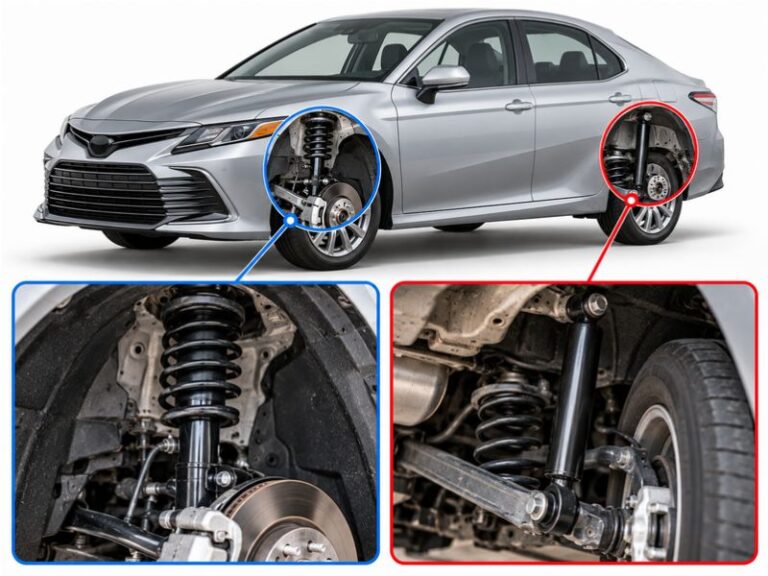
Shock absorbers are located near the wheels as part of the suspension system, usually between the vehicle’s body, frame, or subframe and a suspension component such as a control arm, axle, or wheel assembly. However, the exact answer to where are shock absorbers located on a car depends on the suspension design. Some vehicles have…
You should change shock absorbers when they are worn, leaking, damaged, or no longer controlling suspension movement properly. There is no single replacement interval that applies to every vehicle because shock absorber life depends on road conditions, vehicle weight, driving habits, suspension design, and component quality. If you are wondering when to change shock absorbers,…