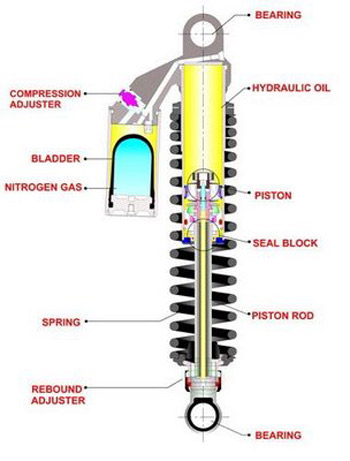
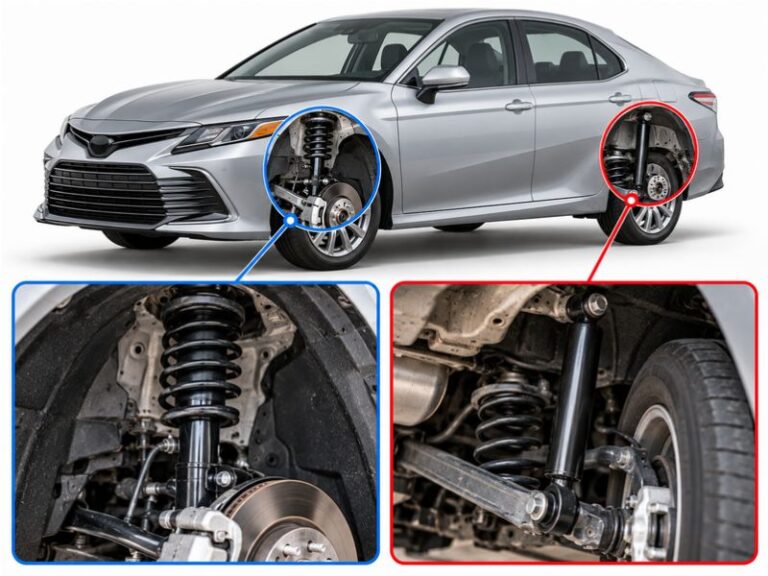
A gas charged shock absorber is a suspension part that uses hydraulic oil and pressurized gas to help control wheel movement, reduce bouncing, and maintain tire contact with the road.
On American roads, a vehicle may face potholes, uneven pavement, highway joints, gravel, and sudden changes in road height. A gas charged shock absorber helps control how the suspension responds to these bumps. It slows unwanted spring movement, which can improve vehicle stability, ride control, and tire contact with the road.
Despite its name, a gas charged shock absorber is not usually filled with gas alone. Most designs use hydraulic oil to create damping force and pressurized nitrogen gas to help limit foaming inside the oil. The exact design varies by vehicle and shock type, so the term does not describe one single construction.
Gas charged shocks are common in cars, SUVs, pickups, and some off-road vehicles. However, a gas charged design is not automatically better for every driver. The correct choice depends on the vehicle, suspension setup, load, road conditions, and the ride quality intended by the manufacturer.
A gas charged shock absorber is a hydraulic damping device that contains pressurized gas as part of its internal design. It controls the speed at which a vehicle’s suspension compresses and extends after a wheel hits a bump. This helps prevent the body from continuing to bounce after the initial movement.
A vehicle’s springs support its weight and absorb much of the energy from road impacts. However, springs can keep moving after a bump unless that motion is controlled. The shock absorber resists suspension movement and turns some of that motion energy into heat.
In a gas charged design, pressurized nitrogen is commonly used to help keep the hydraulic oil from forming excessive foam as the piston moves. This matters because the shock needs a relatively stable column of oil to create predictable damping force.
Gas pressure does not replace the hydraulic action. The oil moving through carefully designed valves creates most of the damping force. Gas pressure supports the system by helping manage the oil and, in some designs, by creating a small extension force on the shock shaft.
Source: mechanicscout.com
Hydraulic oil
Flows through internal passages and valves as the shock moves, producing resistance that controls suspension motion.
Pressurized nitrogen gas
Helps reduce oil foaming and supports consistent damping under changing operating conditions.
Piston and valves
Control oil flow during compression and rebound, allowing engineers to tune the shock for a particular vehicle and use.
Cylinder and shaft
House and guide the moving parts that respond to suspension travel.
Is a Gas Charged Shock Absorber Filled With Gas Only?
No. Most automotive gas charged shock absorbers use both hydraulic oil and pressurized gas. The gas is usually nitrogen, selected for its suitability in a sealed suspension component. The oil provides the main hydraulic damping action, while the gas helps control conditions inside the shock.
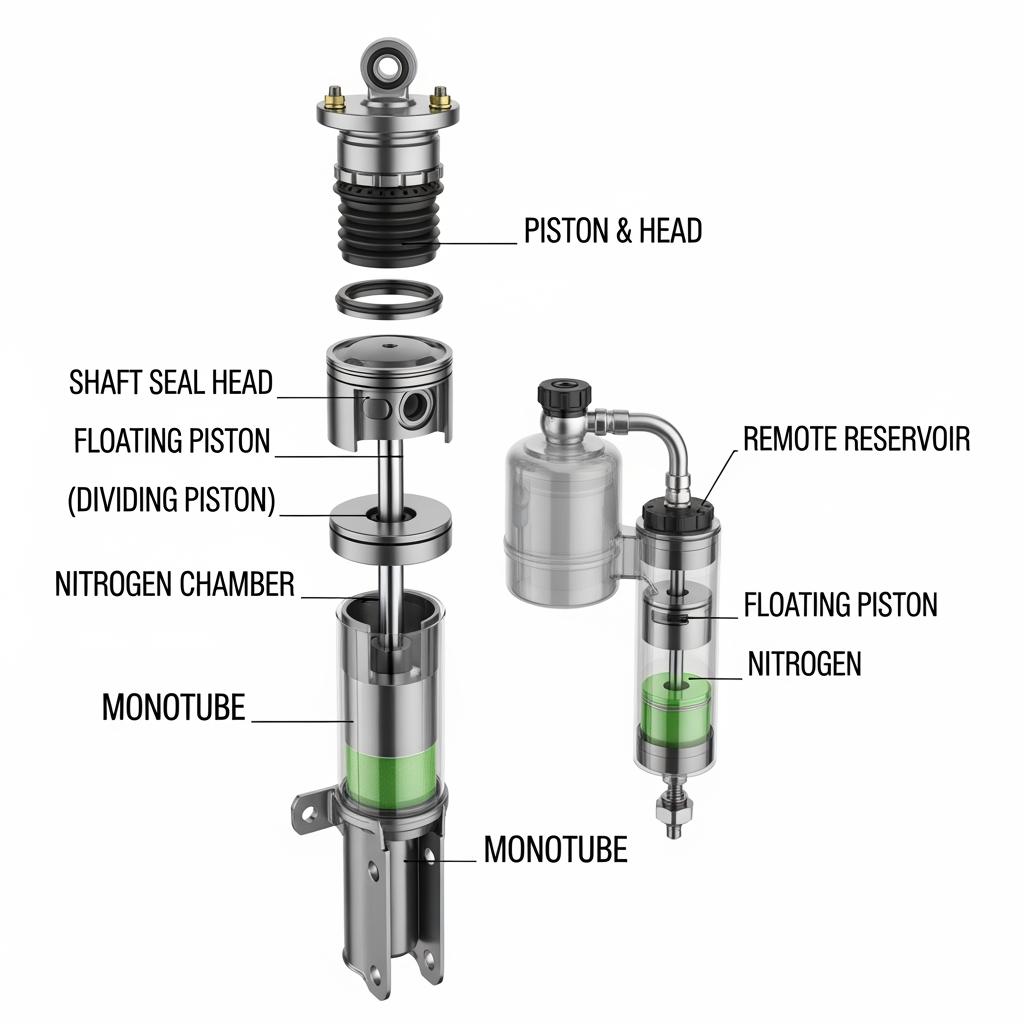
Some designs separate the gas and oil with a floating piston. Others use a pressurized gas chamber that shares a different arrangement with the oil reservoir. The layout depends on whether the shock uses a monotube, twin-tube, or another design.
Oil creates damping
The resistance to oil flow through the shock’s valves controls suspension speed.
Gas supports oil stability
Pressure helps limit the formation of foam and air pockets that can weaken damping.
What Does Gas Charged Mean on a Replacement Shock?
The term generally means that the shock contains pressurized gas in addition to its hydraulic fluid. It does not tell you the exact gas pressure, damping rate, valve arrangement, or expected ride firmness. Two shocks described as gas charged can behave quite differently.
Check the application information rather than relying on the label alone. A shock designed for a light passenger car may not have the same damping characteristics or load capacity as one intended for a heavy pickup or an off-road vehicle.
How Does a Gas Charged Shock Absorber Work?
A gas charged shock absorber works by forcing hydraulic oil through internal valves as the suspension moves. The valves restrict oil flow and create resistance. This resistance slows the suspension’s movement and helps keep the vehicle from continuing to bounce after a road impact.
When a wheel hits a pothole, the suspension may compress quickly. The shock controls that compression, then resists the spring’s return movement as the suspension extends. These two phases are called compression damping and rebound damping.
As the piston moves, oil passes through small openings and valve assemblies. The size and design of these passages determine how much resistance the shock creates at different shaft speeds. Gas pressure helps reduce the risk of oil aeration, which can otherwise make damping less consistent.
The process also produces heat. The shock converts part of the suspension’s movement energy into heat within the oil and metal body. During repeated hard impacts, such as on rough roads or a washboard trail, temperature and internal oil behavior can affect performance.
Source: YourMechanic
What Happens During Compression?
Compression occurs when the suspension moves inward as the wheel travels upward relative to the vehicle body. The shock shaft moves into the body, forcing oil through the compression valve system. The resulting resistance controls how quickly the suspension absorbs the impact.
If compression damping is too low for the vehicle and conditions, the suspension may move too quickly or use too much travel. If it is too high, sharp bumps may feel harsh because the suspension cannot respond as freely. Correct tuning balances impact control with comfort and available suspension travel.
Controlled compression
Helps limit excessive suspension movement when a wheel encounters a bump.
Excessive compression resistance
Can transmit more impact force into the body and reduce comfort on sharp bumps.
What Happens During Rebound?
Rebound occurs when the spring pushes the suspension back toward its normal position after compression. The shock controls this return movement by forcing oil through its rebound valve system.
Too little rebound damping can allow repeated bouncing or rapid suspension extension. Too much rebound damping can prevent the suspension from extending quickly enough between closely spaced bumps. This can reduce available wheel travel and affect tire contact with uneven pavement.
Controlled rebound
Helps the suspension return without repeated body oscillation.
Excessive rebound resistance
Can cause the suspension to recover too slowly over a series of bumps.
Why Nitrogen Pressure Matters
Hydraulic oil can contain dissolved gas, and rapid movement or heat can contribute to foaming and aeration. When gas bubbles form in the working oil, the fluid may become more compressible. That can make the shock’s damping force less predictable.
Pressurized nitrogen helps suppress this problem. The benefit depends on the shock’s design, working temperature, oil condition, and operating demands. Gas pressure does not prevent all heat-related performance changes, and it cannot correct worn valves, damaged seals, or incorrect shock fitment.
What Are the Main Types of Gas Charged Shock Absorbers?
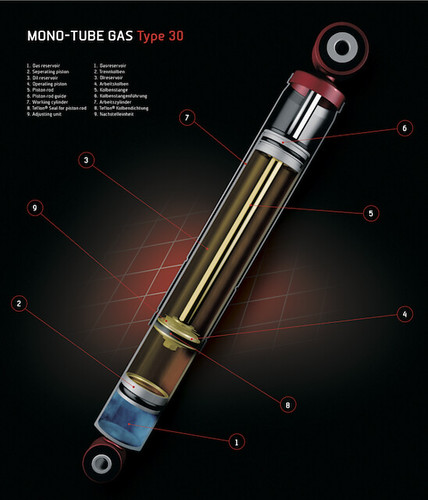
Gas charged shock absorbers come in several designs, but monotube and twin-tube constructions are two common types. Both can use pressurized gas, yet they arrange the oil, gas, piston, and working cylinder differently. These differences affect packaging, heat management, and the way a shock can be tuned.
The design name alone does not prove that a shock will ride better or last longer. Internal dimensions, valve settings, materials, seal quality, installation, and operating conditions also affect performance.
Source: deepdeucegrill.com
Monotube Gas Charged Shocks
A monotube shock uses one main working cylinder. A piston moves through the hydraulic oil, while a floating separator piston keeps the oil apart from the pressurized gas chamber. As the shaft enters the cylinder, the separator piston moves to make room for the displaced shaft volume.
The design can provide useful heat transfer because the working cylinder has direct contact with the outer body. Monotube shocks can also accommodate relatively large pistons for a given external size. Their actual damping behavior still depends on valve design and application-specific tuning.
Monotube construction is common in performance, heavy-duty, and some original-equipment suspension systems. It is not limited to sports cars, and it is not automatically the right replacement for every vehicle.
Potential advantage
The single-cylinder layout can support effective heat transfer and a large working piston.
Practical limitation
The package may have different fitment requirements and can cost more than some basic replacement designs.
Twin-Tube Gas Charged Shocks
A twin-tube shock has an inner working cylinder and an outer reservoir tube. Oil moves through the piston valves and between the working cylinder and reservoir as the shock compresses and extends. A low-pressure gas charge may occupy part of the reservoir space in gas charged versions.
This arrangement is widely used in passenger vehicle suspension systems because it can offer practical packaging and a comfortable ride when correctly tuned. Twin-tube shocks vary considerably, so one model may be aimed at daily driving while another is designed for a more demanding application.
Some twin-tube designs are not gas charged in the same way as pressurized replacements. For this reason, buyers should check the manufacturer’s specification instead of assuming that every twin-tube shock contains the same gas arrangement.
Potential advantage
The two-cylinder layout allows flexible packaging and can support comfortable everyday suspension tuning.
Practical limitation
Heat dissipation and resistance to aeration depend on the particular design, pressure, and operating conditions.
Gas Charged Shocks vs. Oil Filled Shocks
The main difference between gas charged shocks and designs commonly called oil shocks is the use of pressurized gas, not the presence or absence of hydraulic oil. Most conventional automotive shock absorbers rely on oil for damping. A gas charged version adds a pressurized gas chamber or charge to help manage the fluid during operation.
An oil shock may feel comfortable when correctly designed for a vehicle, while a gas charged shock may provide more consistent damping under some demanding conditions. Neither label guarantees a soft ride, firm ride, longer service life, or better performance in every situation.
For a fair comparison, look at the actual shock models and their intended applications. Valve tuning, internal construction, travel, temperature, vehicle weight, and spring characteristics can matter more than a broad marketing label.
Source: exploringoverland.com
Damping consistency
Gas pressure can help reduce oil aeration during repeated suspension movement, but it does not eliminate every source of damping change.
Ride comfort
Comfort depends on the whole suspension setup and shock calibration rather than gas pressure alone.
Price
Cost varies by brand, construction, vehicle application, adjustability, and expected operating demands.
Suitability
The correct shock must match the vehicle’s suspension design, mounting points, travel, and load requirements.
Are Gas Charged Shocks Always Stiffer?
No. Gas pressure can create an extension force in some shock designs, but ride firmness is largely influenced by the shock’s damping calibration and the suspension springs. Two gas charged shocks can feel very different because their valves and intended uses differ.
A well-matched gas charged shock can provide a comfortable ride while controlling body movement. A poorly matched shock may feel harsh, allow too much movement, or respond badly to a particular road surface. Choosing the correct application is more useful than choosing a shock based on the word gas alone.
Are Gas Shocks Better for Highway Driving?
Gas charged shocks can be suitable for highway driving because they help control body motion and may maintain more consistent damping during repeated movement. However, highway stability also depends on tires, alignment, springs, steering components, vehicle loading, and the condition of the road.
A vehicle that wanders, sways, or feels unstable at speed needs a full inspection. Installing a different shock type without checking the other systems may not solve the problem.
What Are the Benefits of a Gas Charged Shock Absorber?
A gas charged shock absorber can help maintain stable damping, reduce unwanted suspension movement, and improve control during repeated bumps. These benefits are most useful when the shock is correctly matched to the vehicle and used within its intended operating range.
The improvement a driver notices depends on the condition of the original shocks and the design of the replacements. Replacing worn shocks with suitable new units may restore lost control, while switching between two properly functioning designs may produce a smaller or less noticeable difference.
Source: gsaishockabsorber.com
More Consistent Damping Under Demanding Use
Repeated suspension movement can heat the oil and increase the risk of aeration. Gas pressure helps limit foaming, which can support more predictable damping during demanding driving. This can matter on rough roads, long trips over uneven surfaces, or repeated high-energy suspension movements.
It does not mean every gas charged shock will maintain the same performance under all temperatures or loads. Heat management depends on the complete design, and prolonged severe use can still change damping behavior.
Better Control of Body Movement
A correctly tuned shock helps control repeated pitching, bouncing, and other body movements. This can make a vehicle feel more settled after a bump and help its suspension recover before the next road disturbance.
Shocks do not replace anti-roll bars, springs, or other suspension components. They contribute to vehicle control as part of a larger system, so the overall result depends on the condition and design of the other parts.
Potential Benefits for Loaded Vehicles
A suitable heavy-duty gas charged shock may help control suspension movement when a vehicle carries equipment or travels on rough surfaces. The key word is suitable: a shock designed for the vehicle’s load and suspension geometry is more useful than one selected only because it is marketed as heavy duty.
A shock absorber does not increase the vehicle’s legal payload rating or replace the need for correct springs. If a pickup regularly carries heavy cargo, the owner should check the vehicle manufacturer’s load limits and the suspension specifications before choosing replacement parts.
What Are the Limitations of Gas Charged Shock Absorbers?
Gas charged shocks are not a universal upgrade. A model that works well on a performance car may not deliver the desired ride on a family sedan, and an off-road shock may be unsuitable for a vehicle with limited suspension travel or different mounting points.
The pressure inside the shock also does not repair worn suspension parts or correct an unsuitable spring rate. If the vehicle sits too low, bottoms out under normal loads, or leans excessively, the problem may involve springs, bushings, mounts, or other components rather than the shock alone.
Source: Garage 54 via YouTube
Ride can feel firm
Some gas charged shocks use firmer damping or have a stronger extension force, which may change how the suspension feels.
Compatibility matters
Incorrect length, mounting style, travel, or damping can cause poor performance or mechanical interference.
Wear still occurs
Seals, oil, valves, bushings, and mounting hardware can wear or fail over time.
Gas pressure is not a load rating
A pressurized shock does not automatically support extra vehicle weight or increase the permitted payload.
Not every shock is serviceable
Many automotive shocks are sealed replacement units. Internal servicing should only be attempted when the manufacturer provides a suitable service procedure.
Can Gas Charged Shocks Improve Ride Height?
Usually, gas charged shocks are not intended to raise a vehicle’s static ride height. The springs carry the vehicle’s weight and establish most of its normal ride height. A shock may exert some extension force, but that force should not be treated as a reliable lift system.
If a vehicle sits lower than specified, inspect the springs, spring seats, suspension mounts, and loading conditions. Use approved springs or a properly engineered suspension kit when a ride-height change is required.
Can a Gas Charged Shock Absorber Fail?
Yes. Gas charged shocks can develop oil leaks, damaged seals, worn internal valves, bent shafts, corrosion, or damaged mounting points. Gas pressure may also be lost if the unit’s sealing system fails.
A shock can lose damping performance without showing an obvious external leak. If the vehicle continues to bounce, handles poorly, or shows signs of suspension damage, a qualified inspection is more reliable than judging the shock by appearance alone.
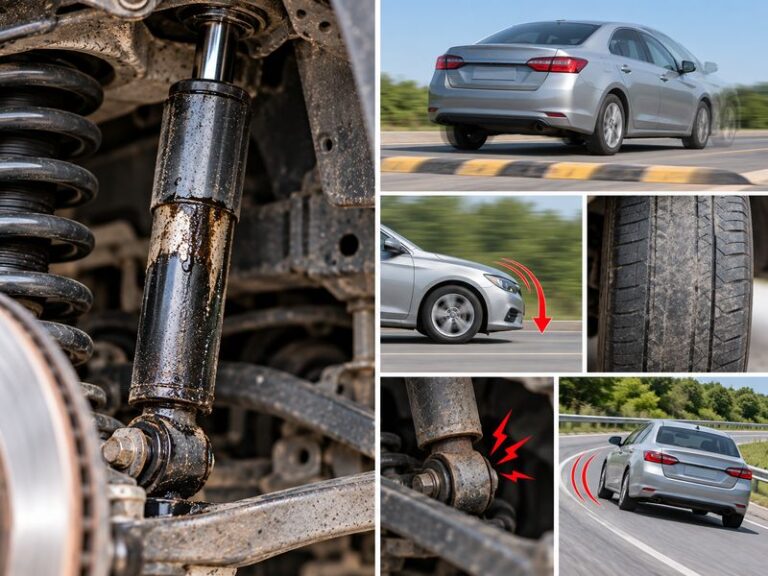
Signs That a Gas Charged Shock Absorber May Be Worn
A worn shock may cause repeated bouncing, poor control over bumps, unusual tire wear, or visible fluid leakage. These signs are useful clues, but none proves by itself that the shock has failed. Tires, springs, wheel alignment, steering parts, and suspension bushings can produce similar symptoms.
Start with a visual inspection from a safe position, then compare the symptoms with the vehicle manufacturer’s inspection procedure. Do not crawl under a vehicle supported only by a jack, and do not touch a shock that may be hot after driving.
Source: shopee.ph
Repeated bouncing
The body continues to oscillate after a bump rather than settling promptly.
Oil leakage
Wet oil trails or substantial fluid accumulation around the shock body may indicate a failed seal. A light film can require closer inspection before a fault is confirmed.
Poor road control
The vehicle may feel unsettled on uneven pavement or show more body movement than expected.
Uneven tire wear
Cupping or scalloped wear can be associated with poor wheel control, but alignment, tire balance, and other suspension faults must also be checked.
Knocking or clunking
Worn mounts, loose fasteners, damaged bushings, or other suspension parts may make noise as the suspension moves.
Visible damage
A bent shaft, damaged housing, severe corrosion, or loose mounting hardware requires prompt assessment.
How Can You Check a Gas Charged Shock Absorber?
Begin by parking on a level surface, switching off the engine, applying the parking brake, and allowing hot components to cool. Inspect the visible shock body and mounting areas for oil, damage, corrosion, or loose hardware. Use the vehicle service manual to identify the correct inspection points.
A controlled road test may help identify repeated bouncing, excessive body movement, or unusual suspension noise, but do not conduct aggressive maneuvers to test the suspension. If steering control is poor, a tire is damaged, or a mounting point appears loose, stop driving and arrange professional inspection.
A push-down bounce test is not a reliable stand-alone test for every modern suspension. Some vehicles have stiff springs, short travel, or damping characteristics that make the result difficult to interpret. A professional can assess the shocks alongside tires, alignment, springs, and suspension joints.
Inspect for leaks and damage
Look for substantial oil loss, a bent body or shaft, corrosion, and damaged mounts.
Observe the symptoms
Note when bouncing, noise, or poor control occurs and whether it affects one corner or the whole vehicle.
Check related components
Have the tires, springs, bushings, ball joints, and alignment checked when symptoms overlap.
Follow the service procedure
Use the manufacturer’s test and replacement guidance for the exact vehicle and suspension.
When Should You Stop Driving?
Stop driving and seek assistance if the vehicle has severe loss of control, a visibly detached or broken suspension component, a bent shock that interferes with wheel movement, or a tire that is damaged or rubbing against another part. These conditions may make continued driving unsafe.
If a shock is leaking or worn but the vehicle still appears controllable, arrange an inspection promptly. The safe choice depends on the severity of the fault and the vehicle’s behavior, not simply on whether the shock contains gas.
How to Choose the Right Gas Charged Shock Absorber
Choose a gas charged shock based on the vehicle’s exact application and intended use, not on the gas charge alone. The right replacement should fit the original mounting points, provide the required suspension travel, and deliver damping suited to the vehicle’s springs and weight.
For an everyday passenger car, a replacement that matches the original suspension specification is a sensible starting point. Drivers who regularly carry approved loads, tow within the vehicle’s limits, or travel on rough roads may need a different specification, but that choice should be supported by manufacturer fitment and load guidance.
Source: monroe.com.au
Check Vehicle Fitment First
Use the vehicle’s year, make, model, trim, engine, and suspension package when checking fitment. Some models use different shocks based on body style, towing equipment, electronic suspension, sport packages, or factory ride height.
Compare the replacement part’s mounting type, compressed length, extended length, travel, and any special installation requirements. A shock that bolts into place is not necessarily correct if its travel or damping does not suit the suspension.
Vehicle details
Confirm the exact year, make, model, trim, and any suspension package that changes the required part.
Mounting and travel
Check the mounting design and specified operating range to avoid interference or bottoming out.
Electronic systems
Determine whether the vehicle requires electronically controlled dampers or compatible replacement components.
Match the Shock to Your Driving Conditions
Daily highway driving generally calls for predictable damping and a ride that matches the vehicle’s original design. Rough roads may place greater demands on suspension travel, heat control, and durability. Performance driving may require a more specific balance of body control, comfort, and tire contact.
An off-road shock should be selected for the vehicle’s suspension geometry, available travel, expected terrain, and load. A heavy-duty label does not guarantee better results on every road, and an overly firm shock can make a lightly loaded vehicle uncomfortable.
Daily driving
Prioritize correct fitment, predictable damping, and the intended comfort level.
Frequent rough roads
Check the shock’s intended duty, operating travel, and suitability for repeated impacts.
Towing or carrying cargo
Stay within vehicle load limits and choose suspension components approved for the application.
Performance or off-road use
Consider the full suspension setup rather than changing shock absorbers in isolation.
Should You Replace Shocks in Pairs?
Replacing shocks in pairs on the same axle is often advisable because matching units help maintain similar damping behavior on both sides. Replacing only one worn shock while leaving a substantially different unit on the other side may create uneven suspension response.
The correct repair depends on the vehicle manufacturer’s guidance, the condition of the remaining shocks, and the type of failure. Inspect the opposite shock and related suspension components before deciding what to replace. Follow the vehicle-specific service instructions.
Gas Charged Shock Absorber Installation and Safety
Installing a gas charged shock absorber requires the correct replacement part, safe vehicle support, and the specified tightening procedure. Although some shock replacements are straightforward, others involve struts, coil springs, electronic suspension, or components that store substantial mechanical energy.
Before beginning, consult the vehicle service manual and the replacement manufacturer’s instructions. Gather the correct tools, replacement hardware where specified, and a torque wrench. If the repair involves removing a loaded coil spring or dismantling a strut assembly, use the proper spring-compression equipment and training or have a qualified technician perform the work.
Never open, drill, heat, cut, or attempt to depressurize a sealed gas charged shock. Internal pressure can cause parts or fluid to escape with force. Disposal and recycling should follow local requirements and the manufacturer’s guidance.
Source: bikesmedia.in
Basic Replacement Checks
The exact installation steps vary by vehicle, but the same checks apply to most replacement jobs. Confirm the part number and orientation, inspect the mounts and bushings, and compare the new part with the original before fitting it.
Support the vehicle at approved lift points on suitable stands or a vehicle lift. Never rely on a hydraulic jack alone while working beneath the vehicle. Do not place any part of your body where a suspended or moving suspension component could trap it.
Confirm the part
Match the replacement to the vehicle and compare the mounting layout and dimensions.
Inspect related hardware
Check mounts, bushings, fasteners, and surrounding suspension parts for damage or wear.
Use specified torque
Tighten mounting fasteners to the vehicle manufacturer’s values and use any specified replacement hardware.
Check the completed repair
Verify secure mounting, adequate clearance, and the absence of abnormal noise or interference before normal use.
How Do You Know the New Shock Is Working Correctly?
A correctly fitted shock should operate without abnormal knocking, binding, or contact with nearby parts. After installation, the suspension should respond in a way consistent with the intended vehicle setup. A firmer or softer feel than before may reflect the new design, but it should not be assumed normal if handling becomes unstable or the suspension makes new noises.
Follow the manufacturer’s break-in instructions if any are provided. Not all shock absorbers require a special settling period. If the vehicle sits unevenly, the suspension binds, or steering and braking behavior change unexpectedly, stop and have the installation checked.
Common Misconceptions About Gas Charged Shocks
Several common assumptions can lead to the wrong replacement choice. Gas charged describes part of a shock’s internal design; it does not provide a complete rating of ride quality, load capacity, durability, or performance.
Source: mechanicscout.com
All gas charged shocks are stiff
False. Ride firmness depends on damping calibration, spring rate, suspension geometry, tire pressure, and the vehicle’s setup.
Gas shocks contain no oil
False. Most automotive gas charged shocks use hydraulic oil for damping.
Gas pressure lifts the vehicle
Usually false as a general rule. Conventional shocks control movement, while springs primarily determine static ride height.
Every gas charged shock is better than an oil shock
Unsupported. The right comparison depends on the actual models, construction, tuning, and intended application.
A shock is bad only when it leaks
False. A shock can lose damping performance without a clear external oil leak.
Replacing shocks fixes every suspension problem
False. Springs, bushings, mounts, steering parts, tires, and alignment may also need attention.
What Does the Evidence Tell Drivers?
The established mechanical principle is that hydraulic valves create damping resistance and pressurized gas can help reduce oil aeration. The practical effect depends on the complete shock design and the conditions in which it operates. A gas charge alone does not establish a universal improvement in ride comfort, braking distance, or vehicle safety.
Manufacturer specifications are useful for identifying fitment, design type, service requirements, and intended applications. They should not be treated as independent proof that one design always performs better than another. A fair comparison would need to evaluate the exact shock models under comparable conditions on the same vehicle.
This guide explains established suspension principles and practical selection considerations. It does not report hands-on testing, laboratory measurements, or a controlled comparison of specific shock absorbers. Drivers should use vehicle-specific service information and inspection findings when making a repair decision.
Source: gsaishockabsorber.com
Documented engineering principle
Hydraulic oil passing through valves produces damping force, while gas pressure can help limit foaming in suitable designs.
Application-dependent result
Ride comfort, heat behavior, handling, and durability depend on the shock’s design, tuning, and operating conditions.
Not established by the label alone
The words gas charged do not prove a specific improvement in braking, fuel economy, service life, or overall safety.
Reader Question Gap Map
The following editorial map identifies practical next questions inferred from the main topic. These are not verified search-demand findings. No live search results, People Also Ask records, Search Console data, or competing-page inspections are claimed here, so competitor coverage is marked not checked.
Source: deepdeucegrill.com
Are gas charged shocks better than oil shocks?
Reader stage: comparison. Basis: inferred next need after learning the definition. Competitor coverage: not checked. Benefit: explains why the label alone does not determine ride quality. Evidence: hydraulic damping principles and application specifications. Priority: high. Placement: comparison section.
How do you know if a gas shock is bad?
Reader stage: troubleshooting. Basis: inferred next need before buying replacements. Competitor coverage: not checked. Benefit: separates warning signs from confirmed causes and provides safe inspection steps. Evidence: standard suspension inspection principles and vehicle service guidance. Priority: high. Placement: symptom and inspection sections.
Do gas charged shocks raise ride height?
Reader stage: part selection. Basis: inferred next need arising from confusion between shocks and springs. Competitor coverage: not checked. Benefit: helps prevent buying the wrong part for a lift or sagging suspension. Evidence: suspension component functions and application specifications. Priority: high. Placement: limitations section.
Should shocks be replaced in pairs?
Reader stage: repair planning. Basis: inferred next need after identifying a failed shock. Competitor coverage: not checked. Benefit: supports consistent damping and a more complete repair decision. Evidence: vehicle-specific repair instructions and inspection of the opposite shock. Priority: medium. Placement: buying and replacement section.
Can you install a gas charged shock yourself?
Reader stage: installation. Basis: inferred next need after choosing a replacement. Competitor coverage: not checked. Benefit: clarifies safe lifting, spring hazards, and when professional help is needed. Evidence: service procedures and basic mechanical safety. Priority: medium. Placement: installation section.
Frequently Asked Questions
Q
What Is the Main Purpose of a Gas Charged Shock Absorber?
Its main purpose is to control suspension movement and reduce unwanted bouncing after the wheels encounter bumps. Hydraulic oil creates the damping resistance, while pressurized gas helps limit oil aeration and supports more consistent operation under suitable conditions.
Q
Are Gas Charged Shock Absorbers Better Than Regular Shocks?
Not in every case. Gas charged shocks can help maintain more consistent damping under demanding conditions, but performance depends on the exact design and application. A correctly matched conventional shock may provide the intended comfort and control for a particular vehicle just as effectively for its normal use.
Q
Do Gas Charged Shocks Contain Nitrogen?
Many automotive gas charged shocks use pressurized nitrogen. The gas helps reduce foaming and aeration in the hydraulic oil. The amount of pressure and the arrangement of the gas chamber vary by design, so consult the manufacturer’s specifications for a particular unit.
Q
Do Gas Charged Shock Absorbers Improve Fuel Economy?
A gas charged shock absorber should not be purchased on the assumption that it will improve fuel economy. Its primary function is suspension damping. Fuel use depends on many factors, and there is no universal fuel-economy benefit established by the gas charged label alone.
Q
How Long Does a Gas Charged Shock Absorber Last?
There is no single service life that applies to every gas charged shock. Mileage, road conditions, vehicle loading, temperature, installation quality, and component design all affect wear. Inspect the suspension when symptoms appear and follow the vehicle manufacturer’s maintenance guidance rather than relying on a fixed replacement interval.
Q
Can a Gas Charged Shock Absorber Leak Oil?
Yes. Gas charged shocks also use seals to contain hydraulic oil, and those seals can wear or fail. Substantial oil leakage may indicate a problem, but a light film needs proper assessment. A shock can also lose damping performance without obvious leakage.
Q
Can You Replace Just One Gas Charged Shock?
A single shock can sometimes be replaced, but replacing both shocks on the same axle is often recommended when one has failed or worn significantly. Matching damping behavior can help maintain consistent suspension response. Follow the vehicle manufacturer’s guidance and inspect the remaining shock before deciding.
Q
Do Gas Charged Shocks Need to Settle After Installation?
Not every gas charged shock requires a special settling period. Some manufacturers provide specific handling, priming, or installation instructions, which should be followed. If the suspension makes abnormal noises, binds, sits unevenly, or handles poorly after installation, have the fitment and related parts checked instead of assuming the symptoms will disappear.
✦ Wrapping Up
Conclusion
A gas charged shock absorber is a hydraulic suspension component that uses pressurized gas, commonly nitrogen, to help manage oil aeration while controlling wheel and body movement. Its main job is to reduce unwanted bouncing and help the suspension respond in a controlled way when a vehicle travels over uneven roads.
The benefits depend on the shock’s construction, valve tuning, operating conditions, and fit with the vehicle. Monotube and twin-tube shocks can both use gas pressure, and neither design is automatically the best choice for every car, SUV, or pickup. A gas charged label also does not guarantee a softer ride, greater load capacity, a higher ride height, or longer service life.
For a replacement, confirm the exact vehicle fitment and intended use. If the vehicle bounces repeatedly, leaks substantial shock fluid, develops unusual suspension noise, or becomes difficult to control, arrange an inspection that considers the shocks and related suspension parts together.
💡 Key Takeaway
Before buying a gas charged shock absorber, confirm the part number and vehicle application, compare the specified mounting dimensions and suspension requirements, and inspect the complete suspension if symptoms are present. Choose a correctly matched replacement rather than relying on the gas charged label alone.
Eric
Hi, I’m Eric Bennett, the person behind OffRoadTruckAccessories.com.
I created this blog to share my interest in trucks, off-road driving, automotive accessories, and DIY modifications. I enjoy learning how different truck accessories work, testing their usefulness, and understanding whether they are truly worth buying.
Shock absorbers are located near the wheels as part of the suspension system, usually between the vehicle’s body, frame, or subframe and a suspension component such as a control arm, axle, or wheel assembly. However, the exact answer to where are shock absorbers located on a car depends on the suspension design. Some vehicles have…
You should change shock absorbers when they are worn, leaking, damaged, or no longer controlling suspension movement properly. There is no single replacement interval that applies to every vehicle because shock absorber life depends on road conditions, vehicle weight, driving habits, suspension design, and component quality. If you are wondering when to change shock absorbers,…