How Much Is a Leveling Kit for F150: Practical Guide and Tips
A one-inch height difference can change an F-150 purchase decision much like a small line item changes a repair estimate: the detail looks minor until it affects fitment, alignment, and labor. A basic spacer may seem inexpensive on the shelf, but the final bill depends on the truck’s model year, drivetrain, suspension design, kit quality, and whether an alignment is included.
This guide breaks down how much a leveling kit for an F-150 typically costs, what installation adds, which kit types are worth considering, and where low prices can create problems. You will also learn how much lift is practical, when larger tires fit, and when professional installation is the safer choice.
Typical Cost of an F-150 Leveling Kit
For the kit alone, most F-150 owners should expect to spend about $100 to $500. Simple front spacer kits are usually at the lower end, while adjustable coilovers, high-quality strut assemblies, and systems designed for newer trucks can cost considerably more.
After installation and alignment, a realistic total commonly falls between $400 and $1,200. A basic kit on a straightforward truck may stay near the lower end, while a premium suspension system installed by a specialist can exceed that range.
- Basic spacer kit: approximately $100–$250
- Premium spacer or preload kit: approximately $250–$500
- Adjustable coilovers or complete strut assemblies: approximately $700–$1,500 or more
- Professional installation: approximately $200–$600
- Four-wheel alignment: approximately $80–$180
- Possible extra hardware or repairs: $50–$500 or more
These are planning ranges rather than fixed prices. Local labor rates, suspension condition, trim level, and the exact lift height can move the estimate substantially.
What a Leveling Kit Does to an F-150
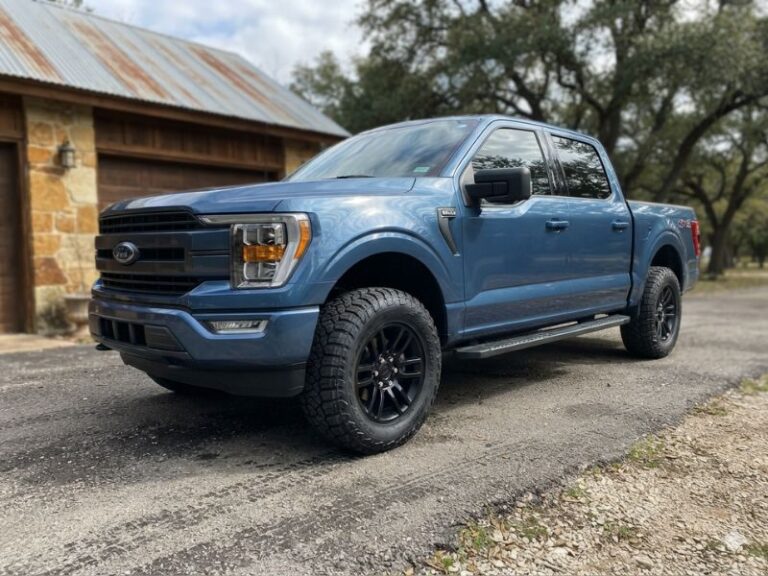
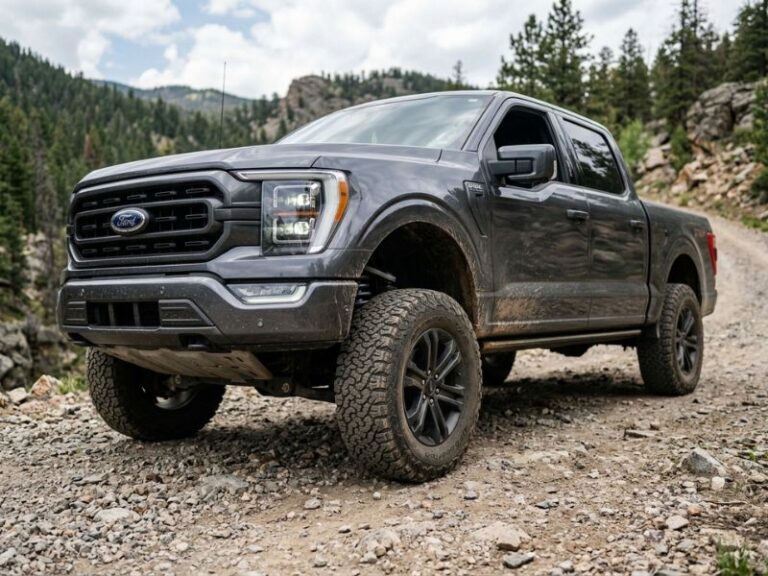
An F-150 typically sits slightly lower in front than in the rear from the factory. That stance helps account for payload and towing loads, but some owners prefer a more even appearance or need additional clearance for larger front tires.
A leveling kit raises the front suspension, usually by about one to three inches, rather than lifting every corner of the truck equally. The goal is generally cosmetic balance and added clearance, not a major increase in off-road suspension travel.
The amount of lift depends on the truck’s factory rake, engine, cab configuration, and how much weight is carried on the front axle. A kit advertised as two inches does not always create the same final stance on every F-150.
How Kit Type Changes the Price
Front spacer leveling kits
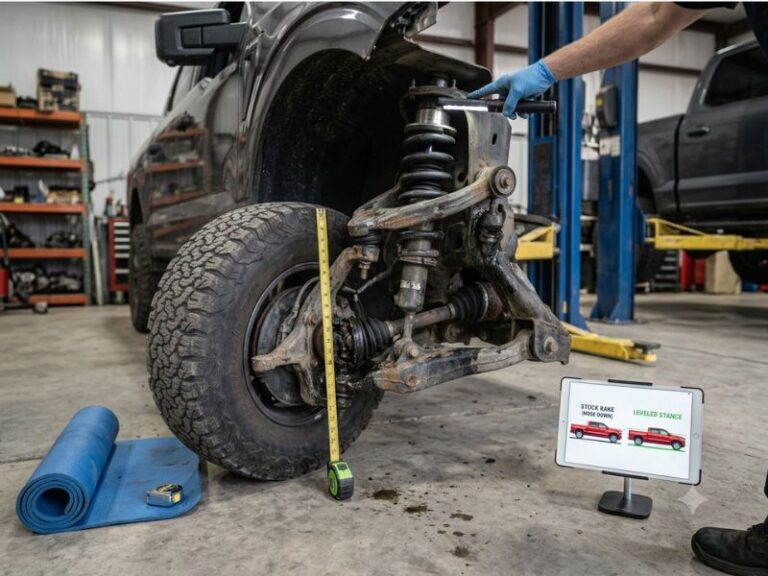
Spacer kits are usually the least expensive option. A spacer fits above or below the factory strut or coil spring and changes the front ride height without replacing the entire suspension assembly.
Prices often range from $100 to $250 for the parts. They are attractive because they are simple and affordable, but they may provide less ride-quality improvement than a complete replacement system.
Some spacer designs add preload to the factory spring. That can make the front suspension feel firmer and may reduce available compression travel if the design or lift height is poorly matched to the truck.
Strut spacers and preload spacers
These products are related but not identical. A strut-top spacer changes the position of the assembled strut, while a preload spacer changes spring compression and can affect suspension geometry and ride behavior more noticeably.
A quality kit should specify the compatible F-150 generation, drivetrain, suspension configuration, and maximum lift. Avoid assuming that a kit for a 2015 truck fits a 2021 truck simply because both are F-150s.
Adjustable coilovers
Adjustable coilovers combine the spring and shock into a replacement assembly with adjustable ride height. They cost more because they can offer better control over height, damping, and suspension setup.
Parts prices commonly begin around $700 and may reach $1,500 or more. Coilovers make the most sense for owners who want adjustable height, improved handling, frequent off-road use, or a suspension setup matched to additional front-end weight.
Complete replacement struts
Complete strut assemblies replace more of the factory unit and may include a new spring, shock, mount, and leveling configuration. They can reduce the need to disassemble an old strut, which may save labor in some installations.
The higher parts cost can be justified when the original shocks are worn or the truck has significant mileage. Replacing a tired suspension while installing a leveling system is often more practical than paying labor twice.
Installation and Alignment Costs
Professional installation commonly costs $200 to $600, depending on the kit and local shop rate. A simple spacer installation may take less time than a coilover conversion, but rusted fasteners, seized components, and difficult access can raise the labor bill.
The truck should normally receive an alignment after changing front ride height. Raising the front suspension changes camber, caster, and toe relationships, and even a small geometry change can affect steering feel and tire wear.
Alignment often adds $80 to $180. Some shops include it in a suspension package, but many quote it separately, so confirm before approving the work.
Installation may also reveal worn parts that should not be reused. Possible additions include:
- Upper control arms for improved alignment range
- Ball joints, tie rods, or control-arm bushings
- New strut mounts or hardware
- Longer shocks, depending on lift height and suspension travel
- Replacement wheel bearings or damaged mounting components
- Temporary removal or adjustment of aftermarket accessories
A very low labor quote may not include an alignment, rust-related delays, replacement hardware, or post-installation adjustments. Ask for a written estimate that separates parts, labor, alignment, and any optional repairs.
F-150 Model Year and Drivetrain Considerations
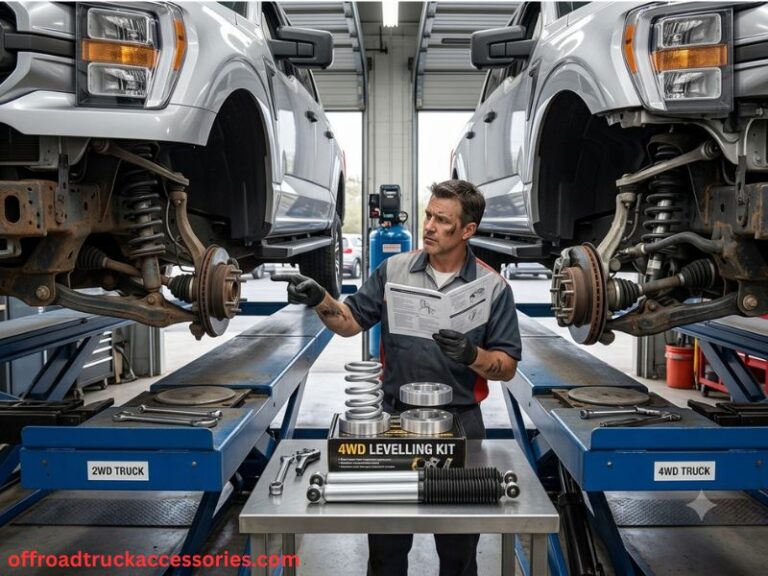
F-150 suspension designs vary across generations, trims, and drivetrain configurations. A 2WD truck, 4WD truck, Raptor, Tremor, and standard model may require different parts or have different installation limits.
Before buying, verify the truck’s model year, cab style, engine, drivetrain, trim, factory suspension package, and current modifications. The product description should specifically list the application rather than relying on a general statement such as “fits F-150.”
Specialty models deserve extra caution. A performance-oriented F-150 may already use different shocks, control arms, springs, or ride-height settings, making a standard spacer kit unsuitable or less effective.
Newer F-150 models can also use suspension layouts and electronic systems that differ from older generations. The presence of adaptive dampers, factory height sensors, or other equipment may affect compatibility and installation procedures.
How Much Lift Is Practical?
For most daily-driven F-150s, a one-and-a-half- to two-and-a-half-inch front lift is a practical range. It usually provides a more level appearance without pushing factory suspension geometry as far as a larger lift.
A three-inch front lift may create a more aggressive stance, but it can require additional parts and careful attention to control-arm angles, shock travel, alignment range, and tire clearance. More height does not automatically mean better performance.
Excessive front lift can reduce droop travel, increase stress on suspension joints, and create harshness or unpredictable handling. The correct height is the smallest amount that achieves the intended appearance and tire clearance.
Tire Fitment and Additional Costs
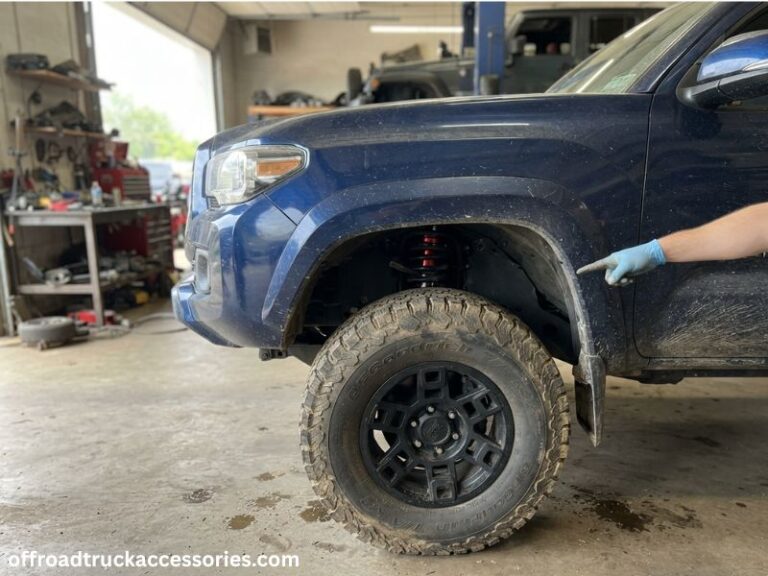
Many owners install a leveling kit to fit larger tires, but the kit does not guarantee clearance. Wheel offset, tire width, tread design, suspension compression, steering angle, and mud flap or liner shape all affect whether a tire rubs.
A slightly larger tire may fit with only minor liner adjustment, while a wider or more aggressive tire can rub against the fender, upper control arm, or suspension components. Wheel spacers may create additional clearance in one area but can introduce other fitment and load concerns.
Possible tire-related expenses include:
- New tires, often $800–$1,800 or more for a set
- Different wheels, often $600–$2,000 or more for a set
- Fender liner or mud flap adjustment
- Alignment or steering-angle correction
- Recalibration concerns if tire diameter changes significantly
Check clearance with the steering fully left and right, and inspect it at normal ride height and under compression. A tire that clears while parked can still contact the truck during braking, cornering, articulation, or when the suspension reaches the bump stops.
DIY Installation Versus Professional Installation
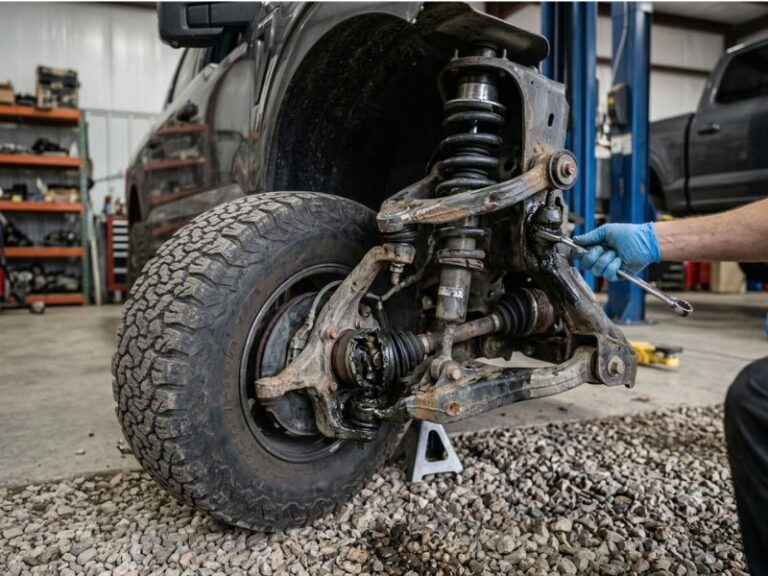
A mechanically experienced owner with a suitable jack, jack stands, torque wrench, spring-compression equipment when required, and accurate instructions may be able to install a basic kit. The work still requires careful attention to fastener torque, component orientation, brake-line routing, and post-installation alignment.
Suspension springs store substantial energy. Improperly disassembling a strut or coil assembly can cause serious injury, so do not improvise with unsafe spring compressors or unsupported lifting equipment.
Professional installation is usually the better choice when the truck has rust, high mileage, a complex coilover system, electronic suspension components, or aftermarket control arms. It is also sensible when you cannot verify that the truck will be aligned correctly after the height change.
If doing the work yourself, use the manufacturer’s instructions and follow the vehicle’s service procedures. After installation, inspect for loose hardware, brake-line tension, unusual angles, tire contact, and changes in steering behavior before driving normally.
Ways to Keep the Total Cost Under Control
The cheapest kit is not always the lowest-cost solution. A poorly matched spacer can lead to premature wear, repeated adjustments, tire damage, or a second installation when the owner later upgrades the shocks and control arms.
Start by deciding whether the goal is appearance, tire clearance, ride improvement, or off-road performance. A simple spacer may meet a cosmetic goal, while coilovers or a more complete suspension system may be more appropriate for demanding use.
- Confirm exact truck compatibility before ordering.
- Choose the minimum lift needed for the intended tire size.
- Ask whether the quote includes alignment and installation hardware.
- Inspect the current suspension before selecting new parts.
- Compare the complete installed price, not just the kit price.
- Use a shop familiar with F-150 suspension work.
- Plan for possible control-arm or shock upgrades if the lift requires them.
Be cautious with kits that promise a dramatic stance at an unusually low price. Verify the included components, warranty terms, alignment recommendations, and whether the listed lift applies to your exact F-150 configuration.
Signs the Installation Needs Attention
A new leveling kit should not cause persistent pulling, steering-wheel misalignment, clunking, vibration, or severe ride harshness. These symptoms can indicate an alignment problem, loose hardware, damaged suspension parts, incorrect assembly, or insufficient clearance.
Stop driving and inspect the truck if a tire contacts the suspension or body, a brake hose appears stretched, or the steering feels unstable. Continued use can turn a correctable installation issue into expensive tire or suspension damage.
Uneven tire wear may not appear immediately, so check the tread regularly after the installation. If the truck cannot be aligned within the manufacturer’s specified range, the leveling system may need different components rather than repeated alignment adjustments.
FAQ: F-150 Leveling Kit Costs
How much is a leveling kit for an F-150 installed?
Most installed F-150 leveling kits cost about $400 to $1,200. The total usually includes a $100–$500 kit, $200–$600 in labor, and an $80–$180 alignment, although premium coilovers, worn suspension parts, and regional labor rates can raise the price.
Is a $100 F-150 leveling kit worth buying?
A low-cost kit can be suitable for a modest cosmetic change if it is correctly matched to the truck. Check the materials, compatibility, included hardware, lift height, warranty, and alignment requirements before choosing it solely because of the price.
Does a leveling kit hurt an F-150?
A properly selected and installed kit does not automatically damage an F-150. Problems are more likely when the lift is excessive, suspension geometry is ignored, worn components are reused, or the truck is driven with poor alignment and tire rubbing.
Will an F-150 need an alignment after a leveling kit?
Yes, an alignment is normally recommended after changing front ride height. The adjustment helps correct toe, camber, and caster changes and provides an opportunity to identify geometry problems before they cause uneven tire wear or poor handling.
How much does a two-inch leveling kit cost
A two-inch kit generally costs about $150–$500 for parts and $400–$1,000 installed. The final amount depends on whether it uses spacers, replacement struts, or adjustable coilovers, as well as the truck’s generation and the shop’s labor rate.
Can a leveling kit fit larger tires on an F-150?
It can create additional clearance, but tire fitment is not guaranteed. Wheel width, offset, tire construction, steering angle, suspension compression, and trim-specific fender design must be checked together before purchasing tires.
Should I install a leveling kit myself?
DIY installation is reasonable only when you have the tools, experience, and safe procedure for the specific kit. Spring and strut work can be hazardous, and every installation should be followed by a professional alignment and a careful clearance inspection.
Final Cost and Safety Takeaway
Budget roughly $400 to $1,200 for a professionally installed F-150 leveling kit, with basic spacer systems costing less and adjustable coilovers costing much more. The major limitation is that leveling changes suspension geometry and does not guarantee tire clearance or factory-like ride quality.
Choose the smallest compatible lift that meets your goal, confirm the complete installed estimate, and schedule an alignment after installation. If the truck has rust, worn suspension parts, specialty equipment, or requires spring disassembly, have a qualified suspension shop handle the work.