Will 33 Inch Tires Fit F150 with Leveling Kit: Explained Clearly
Will 33 inch tires fit F150 with leveling kit? Yes, in most cases, 33-inch tires will fit an F-150 with a leveling kit. A 2 to 2.5-inch leveling kit is often enough to provide the extra clearance needed, although the exact fit depends on your truck’s model year, wheel offset, tire width, and suspension setup.
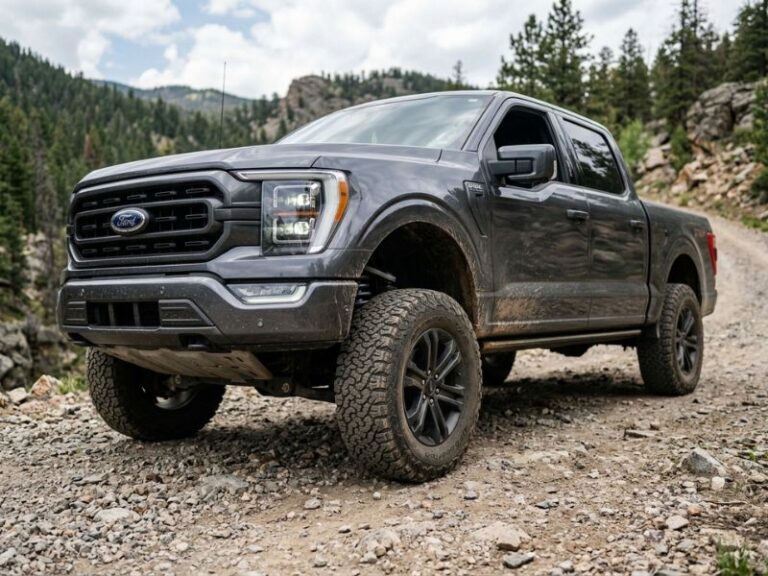
Many F-150 owners upgrade to 33-inch tires because they improve ground clearance, give the truck a more aggressive stance, and enhance off-road capability. Compared to stock tires, they also fill the wheel wells better and create a more balanced appearance after installing a leveling kit.
However, fitting 33-inch tires isn’t always as simple as adding a leveling kit. Some trucks may require minor trimming, different wheel offsets, or slight adjustments to prevent rubbing during sharp turns or full suspension travel. Tire width can also make a significant difference, even if the overall diameter remains 33 inches.
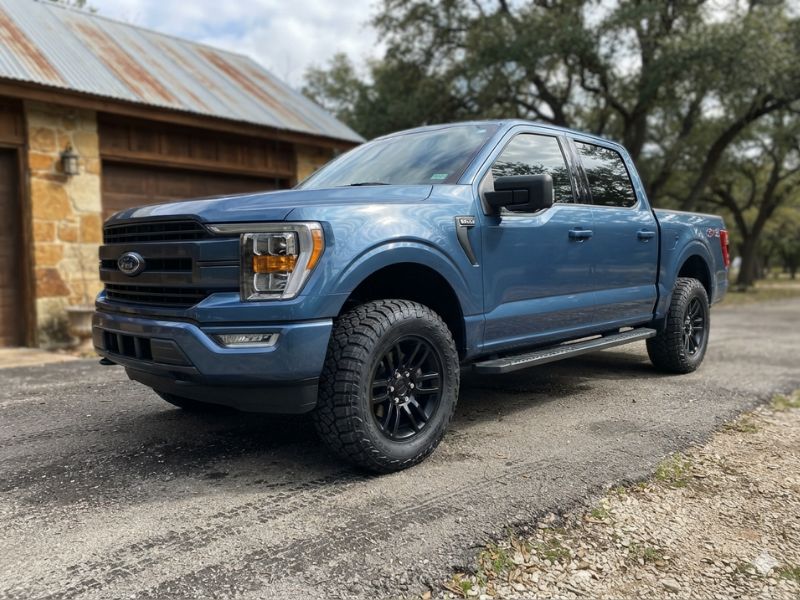
In this guide, you’ll learn everything you need to know about will 33 inch tires fit F150 with leveling kit.
I’ll cover the ideal leveling kit height, recommended tire sizes, wheel offset considerations, possible rubbing issues, required modifications, and the best setup for both daily driving and off-road use. By the end, you’ll know whether 33-inch tires are the right upgrade for your F-150.
Will 33 Inch Tires Fit F150 with Leveling Kit: What a Leveling Kit Does for Your F-150
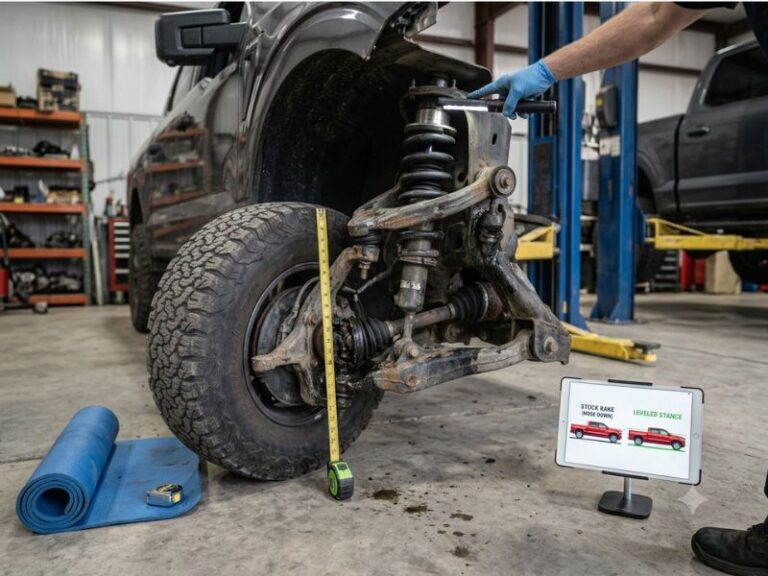
Before diving into tire sizes, it’s crucial to understand the role of a leveling kit. From the factory, most F-150s, like many trucks, have a slight rake. This means the rear of the truck sits a bit higher than the front. This design is intentional, primarily to accommodate heavy loads in the bed or when towing, preventing the rear from sagging excessively and maintaining proper headlight aim.
How Leveling Kits Work
A leveling kit is designed to raise the front end of your F-150, typically by 1.5 to 2.5 inches, to match the height of the rear. This achieves a “level” stance, which many owners prefer for aesthetic reasons. There are generally two main types of leveling kits:
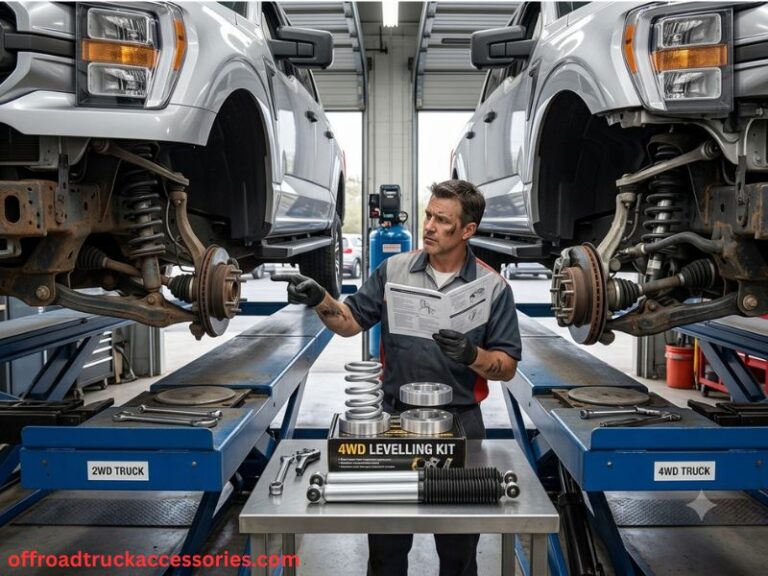
- Spacer Kits: These are the most common and often the most affordable. They consist of spacers that are installed on top of or below your front coil springs or struts. By adding this extra height, the front suspension is effectively lifted.
- Strut Replacement Kits: Some kits involve replacing the entire front strut assembly with a longer one, or one that has an adjustable spring seat. These can offer improved ride quality over basic spacer kits but are generally more expensive.
Benefits Beyond Aesthetics
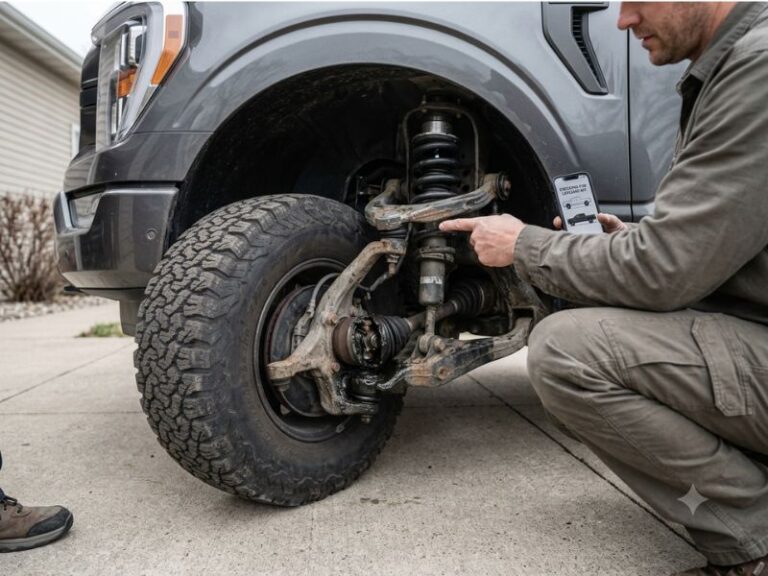
While the primary motivation for many is the improved look, a leveling kit also provides increased fender clearance in the front. This additional space is precisely what allows for the installation of larger tires, such as the 33-inch variety, without rubbing issues that would otherwise occur with the stock suspension.
Will 33 Inch Tires Fit F150 with Leveling Kit: The Core Answer
The straightforward answer to whether 33-inch tires will fit an F-150 with a leveling kit is: yes, in most cases, they will fit without significant issues. This combination is one of the most popular and widely accepted modifications for F-150 owners seeking a more aggressive stance and improved ground clearance.
General Fitment Guidelines
For most F-150 generations, particularly from 2004 onwards, a 2-inch or 2.5-inch leveling kit typically provides sufficient clearance for 33-inch diameter tires. This includes common tire sizes like 275/60R20, 285/55R20, 295/55R20, and even some 305/55R20 options, all of which fall into the 33-inch diameter range.
However, “most cases” isn’t “all cases,” and understanding the variables is key to a problem-free installation. The specific year of your F-150, the exact tire dimensions (width being a major factor), and your wheel’s offset and backspacing all play critical roles.
Key Factors Influencing 33-Inch Tire Fitment
While a leveling kit is a crucial enabler, several other factors determine whether your 33-inch tires will fit perfectly or require minor adjustments.
1. Tire Dimensions (Width is Critical)
When I say “33-inch tire,” I’m referring to the overall diameter. However, tires also have a width measurement, and this is often where rubbing issues arise. A 33×10.50R17 tire (approximately 33 inches tall and 10.5 inches wide) will almost certainly fit with ease. A 33×12.50R17 (33 inches tall and 12.5 inches wide) is where you might start encountering minor rubbing, especially at full steering lock or when the suspension is compressed.
- Narrower 33s (e.g., 275/60R20, 285/55R20): These generally fit very well with a 2-inch or 2.5-inch leveling kit.
- Wider 33s (e.g., 295/55R20, 305/55R20, 33×12.50Rxx): These are more likely to cause rubbing on the upper control arm, sway bar, or inner fender liner, particularly with stock wheels or wheels with a positive offset.
2. Wheel Offset and Backspacing
This is arguably the most critical factor after tire diameter and width. Wheel offset determines how far your wheel (and thus your tire) sits inward or outward relative to the hub mounting surface.
- Positive Offset: The mounting surface is closer to the outside of the wheel. This pulls the wheel and tire further inward, closer to the suspension components (upper control arm, sway bar) and the inner fender liner. Stock F-150 wheels typically have a positive offset (+30mm to +44mm). With wider 33-inch tires, a positive offset can lead to rubbing on suspension components.
- Zero Offset: The mounting surface is centered.
- Negative Offset: The mounting surface is closer to the inside of the wheel. This pushes the wheel and tire further outward, away from suspension components but closer to the outer fender and bumper. A slight negative offset (e.g., -12mm to +18mm) is often preferred for wider tires to avoid inner rubbing, but too much negative offset can cause rubbing on the front valance or crash bars.
Backspacing is closely related to offset and refers to the distance from the mounting surface to the back edge of the wheel. Less backspacing (or a more negative offset) pushes the wheel out, while more backspacing (or a more positive offset) pulls it in.
For 33-inch tires with a leveling kit, a wheel with an offset between +18mm and +0mm (or even a slight negative offset like -12mm) often provides the best balance, pushing the tire out enough to clear inner suspension components without pushing it so far out that it rubs the outer fender or crash bars excessively.
3. F-150 Generation and Trim Level
While generally consistent, there can be minor variations between F-150 generations (e.g., 12th gen 2009-2014, 13th gen 2015-2020, 14th gen 2021-present). Some generations might have slightly different fender well designs or crash bar placements that influence fitment. For instance, the 2015+ F-150s introduced crash bars (also known as “frame horns” or “tire deflectors”) in the front wheel wells for safety, which can become a rubbing point with aggressive wheel offsets and wide tires.
4. Specific Leveling Kit Height
A 2.5-inch leveling kit will provide more clearance than a 1.5-inch kit. While both might technically allow 33-inch tires, the taller kit offers a greater margin for error, especially with wider tires or more aggressive offsets.
Potential Rubbing Points and Solutions
Even when 33-inch tires generally fit, certain conditions or specific setups can lead to minor rubbing. Knowing where these issues might occur helps you anticipate and address them.
Common Rubbing Locations
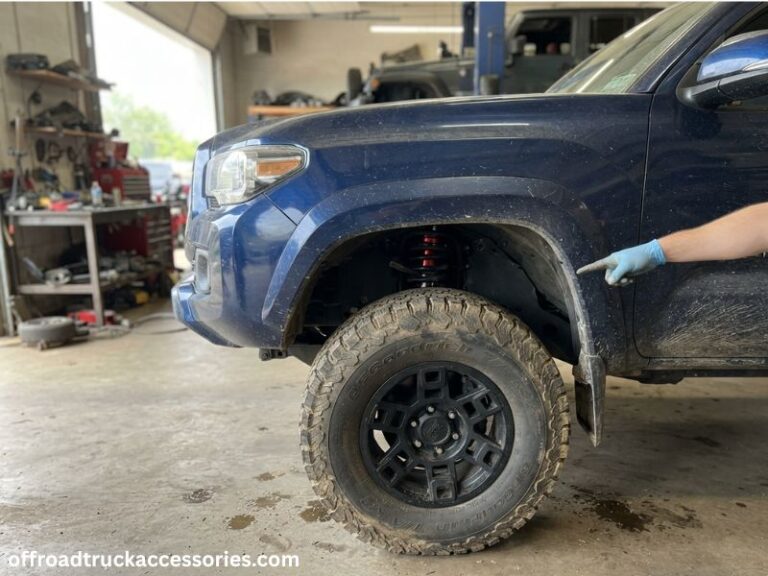
- Upper Control Arm (UCA): This is common with wider tires (e.g., 12.5 inches wide) and wheels with a high positive offset (stock wheels). The inner sidewall of the tire can contact the UCA at full steering lock.
- Sway Bar: Similar to the UCA, the sway bar can be a contact point for wider tires, especially at full lock.
- Front Crash Bars (2015+ F-150s): These are steel bars located in the front wheel wells. With aggressive negative offsets that push the tire far out, the tire can rub on these bars, particularly when turning or under suspension compression.
- Front Valance/Bumper: If the tire is pushed too far forward or out, it can rub on the lower plastic valance or the corner of the front bumper, especially when turning into an incline or during suspension articulation.
- Inner Fender Liner: The plastic inner fender liner can sometimes be a minor rubbing point, usually at full lock or during articulation.
Solutions for Rubbing
If you encounter minor rubbing, here are some common solutions:
- Trim the Inner Fender Liner: For light rubbing on the plastic liner, a heat gun can be used to reshape it, or a utility knife can trim away small sections. This is a very common and usually unnoticeable modification.
- Trim the Front Valance/Bumper: Similar to the fender liner, minor trimming of the plastic lower valance or the corner of the bumper can resolve rubbing issues.
- Spacers (Wheel Spacers): If rubbing on the UCA or sway bar is the issue and you’re using stock wheels, wheel spacers can push the wheels out slightly, providing more clearance. However, be cautious with wheel spacers; always use hub-centric, high-quality spacers and ensure proper installation. They also effectively create a more negative offset, which could shift rubbing to the crash bars or outer fender.
- Crash Bar Modification (for 2015+ F-150s): For rubbing on the crash bars, some owners choose to “spread” the crash bars slightly using a hydraulic spreader or a porta-power. Others opt to remove them entirely, though this is a safety consideration and not recommended by manufacturers. A more aggressive approach involves cutting and welding the crash bars, which should only be done by a professional.
- Adjust Alignment: Sometimes, a proper alignment after the lift can slightly adjust the wheel’s position within the fender well, though this is usually a minor factor for rubbing.
Choosing the Right 33-Inch Tire and Wheel Combination
Making an informed choice about your specific 33-inch tire and wheel combination is key to a hassle-free installation.
Tire Size Examples (Approximate 33-inch Diameter)
Here are common tire sizes that result in approximately a 33-inch diameter:
- 275/60R20: ~33.0 inches diameter, ~10.8 inches wide. Excellent fitment with minimal to no rubbing.
- 285/55R20: ~32.3 inches diameter, ~11.2 inches wide. Slightly shorter than a true 33, but a popular choice for width.
- 295/55R20: ~32.8 inches diameter, ~11.6 inches wide. A good balance, but watch offset.
- 305/55R20: ~33.2 inches diameter, ~12.0 inches wide. More prone to rubbing with higher positive offsets.
- 275/65R18: ~32.1 inches diameter, ~10.8 inches wide. Another good option for 18-inch wheels.
- 285/65R18: ~32.6 inches diameter, ~11.2 inches wide.
- 295/60R18: ~31.9 inches diameter, ~11.6 inches wide.
- 33×12.50R17/18/20: True 33-inch diameter, 12.5 inches wide. Most likely to require careful offset selection and potential minor trimming.
Always check the manufacturer’s specific tire specifications, as actual dimensions can vary slightly.
Wheel Offset Recommendations
For 33-inch tires on an F-150 with a 2-2.5 inch leveling kit:
- For stock wheels or wheels with a high positive offset (+25mm to +44mm): Stick to narrower 33-inch tires (e.g., 275/60R20, 285/55R20). Wider tires will almost certainly rub the UCA.
- For aftermarket wheels with a moderate offset (+0mm to +20mm): This range often provides the best balance for most 33-inch tires, including wider options like 295/55R20 or 305/55R20, minimizing inner rubbing. You might still encounter minor rubbing on crash bars or the valance with wider tires, but it’s usually manageable.
- For aftermarket wheels with a negative offset (-12mm to -25mm): These will push the tires out further, giving a more aggressive stance. While they help clear inner suspension components, they significantly increase the likelihood of rubbing on the crash bars and outer fender/valance, especially with wider 33-inch tires. This often requires trimming or crash bar modification.
My personal recommendation for a good balance of looks and minimal rubbing with a 2-2.5 inch leveling kit and 33-inch tires is an aftermarket wheel with an offset between +18mm and +0mm.
Installation Considerations and Post-Installation Steps
Once you’ve decided on your leveling kit and tire/wheel combination, the installation process and subsequent steps are important.
Professional Installation vs. DIY
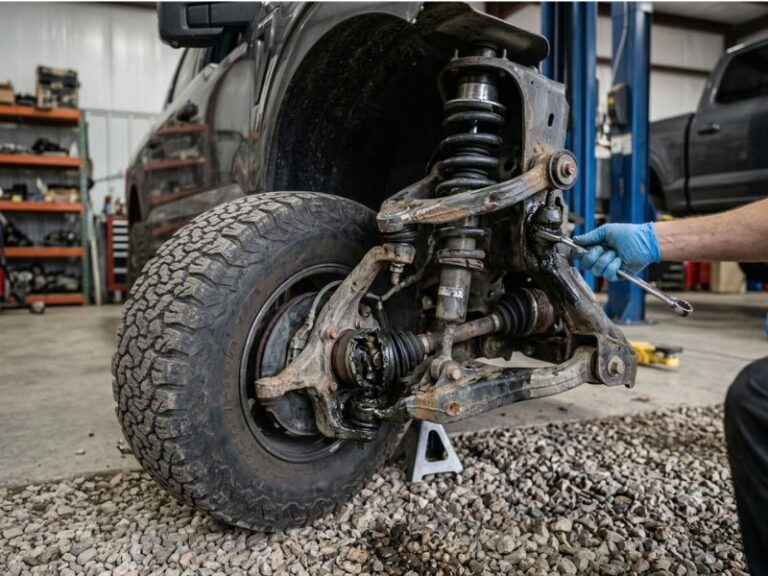
Installing a leveling kit involves working with suspension components, which can be dangerous if not done correctly. While many experienced DIYers tackle spacer kits, I generally recommend professional installation, especially if you’re not comfortable with automotive suspension work. A professional shop will have the right tools, experience, and can ensure everything is torqued correctly and safely.
Alignment is Mandatory
After installing a leveling kit, an alignment is absolutely essential. Raising the front end of your F-150 changes the suspension geometry, specifically the camber and toe angles. Driving without an alignment will lead to:
- Premature Tire Wear: Misaligned wheels will cause uneven and rapid wear on your new tires.
- Poor Handling: The truck might pull to one side, feel unstable, or have loose steering.
- Safety Issues: Compromised handling can be a safety hazard.
Ensure you get a proper four-wheel alignment from a reputable shop immediately after the leveling kit and new tires are installed.
Test Driving and Inspection
After installation, take your F-150 for a thorough test drive. Pay attention to:
- Full Steering Lock: Turn the wheel fully to the left and right, both while stationary and slowly moving, listening and feeling for any rubbing.
- Suspension Compression: Drive over speed bumps or uneven terrain to articulate the suspension and check for rubbing under compression.
- Ride Quality: Note any changes in how the truck feels. While a leveling kit can slightly stiffen the front, it shouldn’t drastically degrade ride quality.
Visually inspect the wheel wells after driving to look for any shiny spots or marks on the tires or truck components that indicate rubbing.
Impact on Driving Dynamics and Performance
While primarily an aesthetic and clearance upgrade, fitting 33-inch tires with a leveling kit can have some minor impacts on your F-150’s driving dynamics and performance.
Speedometer Recalibration
Larger diameter tires will cause your speedometer to read inaccurately. If your stock tires were, for example, 31 inches, and you go to 33 inches, your speedometer will read slower than your actual speed. For every 10 MPH it reads, you might actually be going closer to 10.6 MPH. This can also affect your odometer readings.
Many shops can recalibrate your speedometer using specialized tools, or you can purchase an aftermarket calibrator (like a Hypertech Speedometer Calibrator) to do it yourself. This is highly recommended for accuracy and to avoid speeding tickets.
Fuel Economy
Larger and heavier tires require more energy to get rolling and keep spinning. You can expect a slight decrease in fuel economy, typically 1-3 MPG, depending on the specific tire (all-terrain vs. mud-terrain) and your driving habits.
Braking and Acceleration
The increased rotating mass of larger tires can slightly impact acceleration (making it feel a bit slower) and braking performance (requiring slightly more distance to stop). For most daily driving, this change is minor and often unnoticeable, but it’s worth being aware of.
Ride Quality
A leveling kit itself can slightly stiffen the front suspension, especially with spacer kits. The type of 33-inch tire you choose also plays a role. All-terrain tires generally maintain a good ride, while aggressive mud-terrain tires can be noisier and feel harsher.
Towing and Hauling
While a leveling kit makes the truck sit level, it doesn’t change the load-carrying capacity of the suspension. When towing heavy loads or hauling significant weight in the bed, the rear of the truck will still squat. If you frequently tow or haul heavy loads, you might consider air helper springs or a “rear add-a-leaf” to maintain a level stance under load, rather than just a front leveling kit.
Conclusion
Ultimately, the question of “will 33 inch tires fit F150 with leveling kit” can be confidently answered with a resounding yes for the vast majority of F-150 owners. This combination is a well-trodden path for those looking to enhance their truck’s appearance and capability without delving into the complexities and costs of a full lift kit. However, successful fitment isn’t just about the leveling kit; it’s a careful dance between tire width, wheel offset, and the specific generation of your F-150.
By understanding these critical factors, making informed choices about your wheel and tire specifications, and being prepared for potential minor trimming, you can achieve a fantastic, aggressive look with minimal hassle. Always prioritize a professional alignment after installation and enjoy the enhanced stance and presence your F-150 will command with its new 33-inch tires. When I evaluate will 33 inch tires fit f150 with leveling kit, I apply these points to the specific situation instead of relying on a one-size-fits-all assumption.