Does a Leveling Kit Affect Gas Mileage: Complete Guide and Facts
A pickup that sits higher in front can look like a small change, much like carrying a full cooler in a car: the effect depends on what else changes around it. A leveling kit may have little measurable impact by itself, yet the larger tires, altered alignment, added wind resistance, or aggressive tread commonly installed at the same time can make fuel consumption noticeably worse.
That distinction matters when estimating ownership costs. This guide explains how a leveling kit affects aerodynamics, weight, rolling resistance, gearing, and alignment; when the mileage change is likely to be minor or significant; how to check for related problems; and what to do before and after installation.
Does a Leveling Kit Affect Gas Mileage?
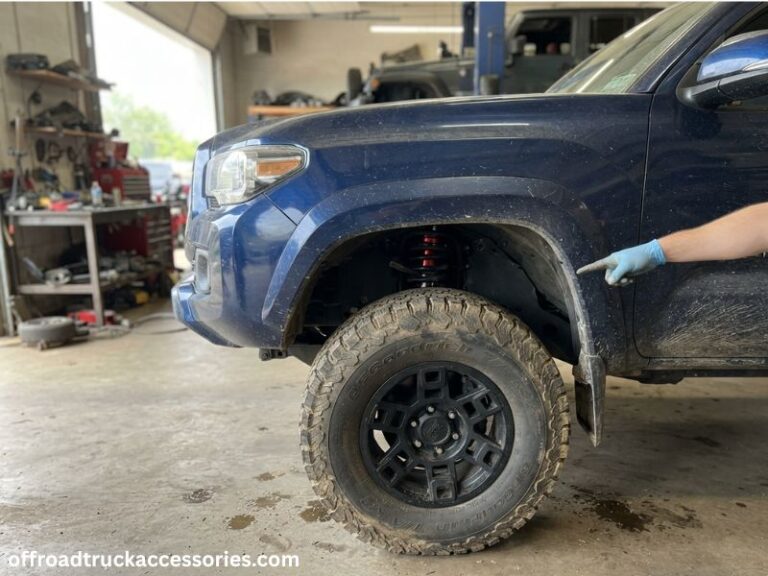
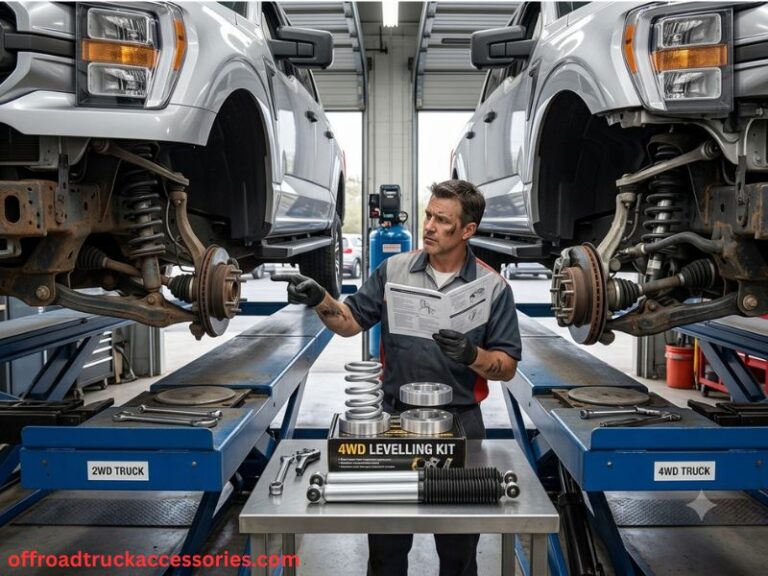
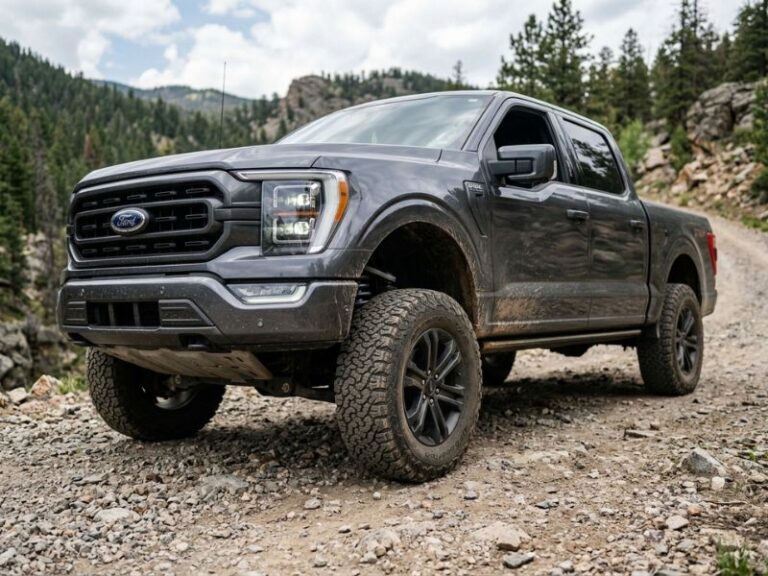
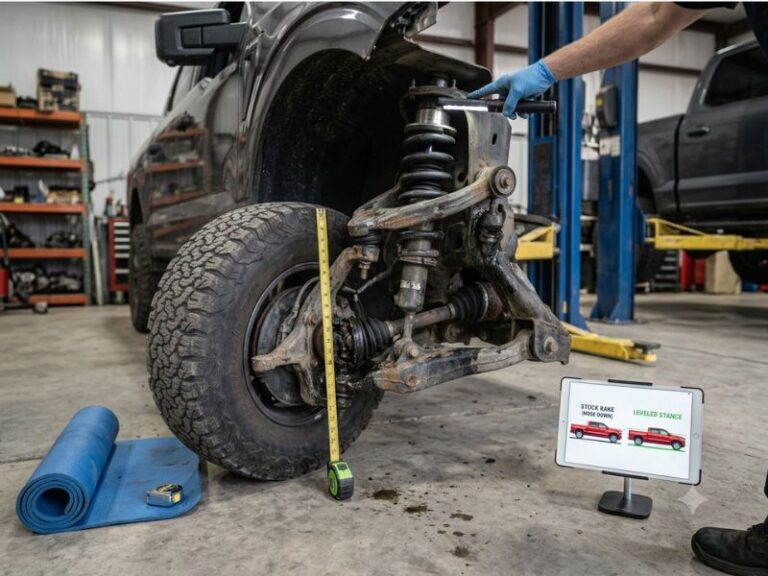
A leveling kit can affect gas mileage, but the kit alone usually is not the largest factor. Most leveling kits raise the front of a truck by roughly one to three inches using spacers, torsion-bar adjustments, strut assemblies, or replacement springs. That small increase in ride height may create a modest aerodynamic penalty, especially at highway speeds.
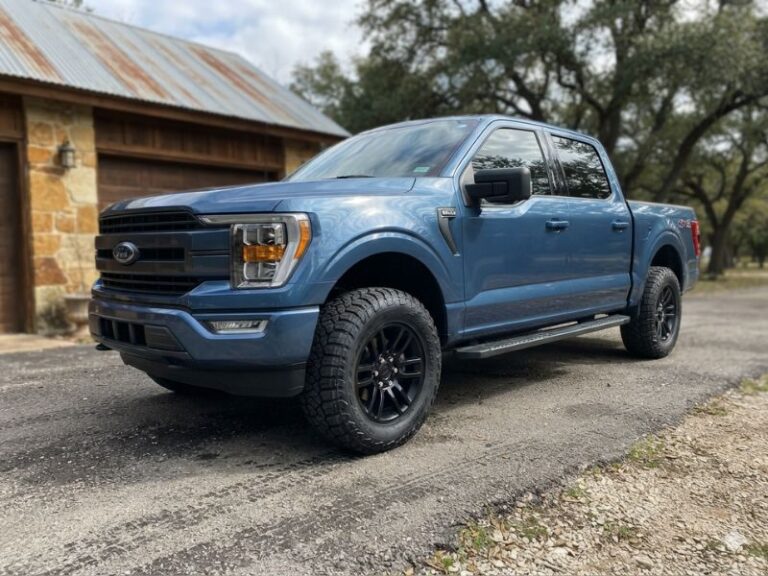
The more substantial fuel-economy change often comes from the modifications that accompany leveling. Larger or heavier tires, aftermarket wheels, a wider tread, a lift spacer that changes suspension geometry, and frequent use of four-wheel drive can each add demand to the engine.
Some owners see no meaningful change in miles per gallon after a basic installation. Others notice a drop, particularly when a leveling kit is combined with oversized all-terrain tires or wheels with an aggressive offset. The result depends on the truck, the kit, the tire package, driving conditions, and whether the vehicle remains properly aligned.
Why a Leveling Kit Can Reduce Fuel Economy
Fuel economy reflects how much energy the powertrain needs to move the vehicle. Raising the front end changes several conditions that can increase that energy requirement, even if the change is not dramatic.
Higher ride height increases aerodynamic drag
A truck uses more fuel when it must push air out of the way. A leveling kit can raise the body and expose more of the suspension, tires, and underbody to airflow, increasing turbulence beneath the vehicle.
The effect is usually more noticeable at highway speed than in stop-and-go traffic because aerodynamic drag rises rapidly as speed increases. A small change that is hard to notice around town may show up during long interstate trips, where the truck spends more time pushing through air.
Heavier tires and wheels require more energy
Many leveling-kit installations include larger tires and aftermarket wheels. A heavier tire adds rotational mass, meaning the engine must provide extra energy to accelerate the tire from a stop and keep it turning.
Wheel weight matters because it is located away from the center of rotation. A tire that is only modestly heavier can feel more costly to accelerate than an equal amount of weight placed inside the truck bed. Heavier assemblies can also increase braking demand and suspension workload.
More aggressive tread increases rolling resistance
All-terrain and mud-terrain tires often have deeper tread, stiffer construction, and larger gaps between tread blocks than the original equipment tires. Those features improve traction in dirt, gravel, snow, or mud, but they generally create more rolling resistance on pavement.
Rolling resistance is the energy lost as the tire flexes and contacts the road. Tire compound, inflation pressure, load rating, width, tread design, and road surface all affect it. A leveled truck with the same tire size and similar wheel weight may experience little change, while the same truck with heavy off-road tires may lose more efficiency.
Suspension geometry can create tire scrub
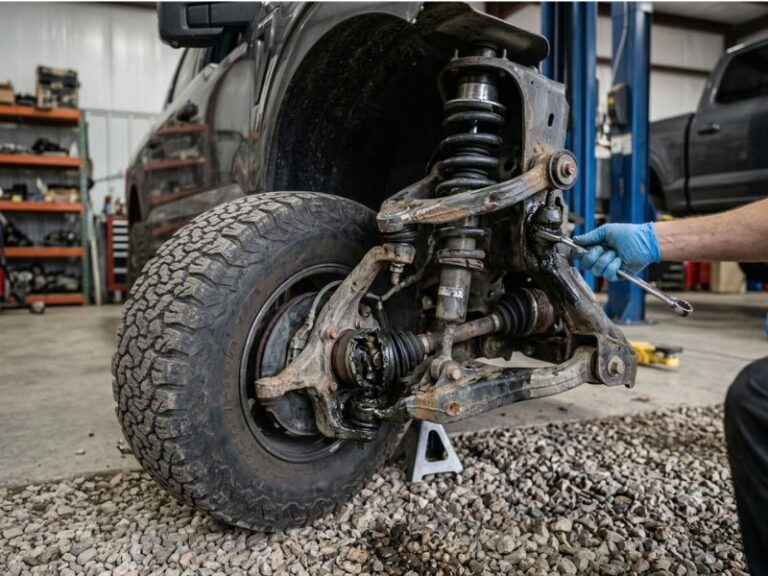
A leveling kit changes the position and operating angle of suspension components. If the installation causes incorrect camber, toe, or caster, the tires may not roll straight and evenly. Even slight toe misalignment can create tire scrub, which wastes energy and accelerates tread wear.
This is why a professional alignment is important after installation. A truck that feels slightly heavier to steer, pulls to one side, or develops uneven shoulder wear may be losing efficiency because of an installation or alignment issue rather than the added ride height alone.
Drivetrain changes can add another penalty
Some owners choose a larger tire diameter after leveling a truck. If the new tires are substantially taller, the effective gear ratio becomes numerically lower. The engine turns fewer revolutions at a given road speed, but it also has less mechanical leverage, which can lead to more frequent downshifts and harder acceleration.
Large tires may also affect the accuracy of the speedometer and odometer. If the odometer records fewer miles than the truck actually travels, a calculated miles-per-gallon figure can appear worse than it really is unless the distance is corrected.
When the Mileage Difference Is Usually Small
A basic front-end leveling setup is less likely to cause a major fuel-economy loss when the original tire size, wheel weight, and tire pressure remain unchanged. The truck’s engine, transmission, and driveline still operate under nearly the same load, and the aerodynamic change is limited.
Driving style can easily outweigh the effect of a mild leveling kit. Hard acceleration, high cruising speeds, idling, cold weather, payload, roof-mounted equipment, and frequent short trips may produce larger swings in fuel consumption than a one- or two-inch height change.
Different trucks also respond differently. A full-size truck with a powerful engine may hide a small increase in aerodynamic or rolling resistance, while a midsize truck with a smaller engine may show the change more clearly during towing, hill climbing, or highway driving.
When a Drop in MPG Is More Likely
Fuel economy is more likely to decline when several modifications stack together. The common combination is a leveling kit, larger-than-stock all-terrain or mud-terrain tires, heavier wheels, lower tire pressure, and a wider stance.
- Oversized tires: Taller and heavier tires can increase rolling resistance and alter effective gearing.
- Wide wheels or negative offset: These can increase tire scrub and may expose more tread to airflow.
- Low tire pressure: Underinflation increases sidewall flex and rolling resistance.
- Suspension or alignment problems: Incorrect toe or camber can make the truck work harder and wear tires unevenly.
- Added accessories: Grille guards, winches, roof racks, bed racks, and larger spare tires add weight and aerodynamic drag.
- Frequent four-wheel-drive use: Engaging 4WD on surfaces where it is not needed can increase drivetrain drag and tire scrub, depending on the system and conditions.
A significant sudden loss in fuel economy should not automatically be blamed on the leveling kit. A dragging brake, faulty oxygen sensor, dirty air filter, worn wheel bearing, underinflated tire, or engine problem can produce a larger change and deserves diagnosis.
How Much Gas Mileage Can a Leveling Kit Cost?
There is no universal mileage number because a leveling kit is not a single standardized modification. A modest change may be difficult to separate from normal tank-to-tank variation, while a complete package with heavier tires and accessories can produce a clearly measurable decline.
Manufacturer fuel-economy ratings cannot predict the exact result for a modified truck. Ratings are based on a particular vehicle configuration, tire specification, gearing, and test procedure. Changing those components means the original rating is no longer a precise baseline.
Short-term comparisons can also be misleading. Wind, temperature, fuel blend, traffic, payload, tire pressure, and idle time all affect MPG. A reliable comparison requires several tanks before and after the modification under reasonably similar conditions.
How to Measure the Real Effect
Use the same method before and after installation rather than relying on one dashboard reading. The onboard fuel-economy display is useful for trends, but hand calculations can reveal whether the odometer or tire-size change is affecting the result.
- Record the current tire size, tire pressure, wheel type, odometer reading, and average fuel economy.
- Fill the tank using the same fuel grade and, when practical, the same fuel station and pump position.
- Reset the trip odometer and avoid changing several unrelated driving habits during the comparison.
- After installation, have the truck aligned and set tire pressures according to the vehicle or tire manufacturer’s guidance.
- Track fuel used and miles driven over at least several tanks rather than judging the first fill-up.
- Compare average results across similar types of driving, such as highway commuting with highway commuting.
The basic calculation is miles driven divided by gallons added. If taller tires make the odometer underreport distance, the recorded mileage needs to be adjusted using the actual tire circumference or a verified speed-and-distance measurement.
Alignment, Tire Pressure, and Safety Checks
A leveling kit changes suspension angles, so an alignment should be treated as part of the installation rather than an optional finishing touch. The shop should check toe, camber, caster, steering-wheel position, and whether the truck remains within appropriate adjustment ranges.
Clearance also matters. Turn the steering from lock to lock and inspect for contact between the tire and the control arm, sway bar, fender liner, bumper, or other components. Suspension compression can create contact that is not visible while the truck is parked at normal ride height.
- Verify that the tire size and load rating suit the truck’s intended use.
- Check torque on wheel fasteners and suspension hardware according to the kit maker’s instructions.
- Inspect for uneven tread wear after the first few hundred miles.
- Confirm that brake hoses, ABS wiring, and other lines are not stretched or rubbing.
- Use tire pressure appropriate for the actual tire and vehicle load, not a random pressure copied from another truck.
- Recheck the suspension if the truck develops pulling, vibration, clunks, steering instability, or unusual tire wear.
A leveling kit should not be used to compensate for a worn suspension, sagging spring, damaged steering component, or excessive load. If the front end is already damaged or the truck is used for heavy towing, an inspection by a qualified suspension professional is the safer starting point.
Can Better Maintenance Offset the Mileage Loss?
Maintenance cannot erase the physical drag of a heavier tire or higher ride height, but it can prevent avoidable losses. Correct tire pressure, a clean air filter where applicable, properly lubricated components, and a healthy engine help the truck operate as efficiently as its modified setup allows.
Driving habits are also important. Smooth acceleration, moderate highway speeds, reduced idling, and removing unnecessary cargo can recover some fuel economy without undoing the suspension change. Towing, payload, and strong headwinds will still reduce MPG regardless of the kit.
If fuel economy drops sharply immediately after installation, inspect the tires and alignment first. If the truck has a new vibration, pulling, rubbing, or steering issue, address that condition before continuing to drive normally or attempting to improve MPG through driving technique.
Frequently Asked Questions
Does a leveling kit affect gas mileage without changing tire
Yes, but the change is often modest. Raising the front end can slightly increase aerodynamic drag and alter suspension angles. With the original tires and wheels retained, the effect is usually smaller than the loss associated with oversized, heavy, or aggressive-tread tires.
Do larger tires cause more MPG loss than a leveling
In many installations, larger tires have the greater effect. Their extra weight, rolling resistance, width, and altered diameter can increase the energy required to accelerate and move the truck. The result becomes more noticeable when heavier wheels and low tire pressure are added.
Will a leveling kit affect highway fuel economy more than
It can affect highway economy more through aerodynamic drag. Air resistance becomes increasingly important as speed rises. City MPG may be influenced more by tire weight, repeated acceleration, idling, traffic, and the truck’s driving style.
Can an alignment problem after leveling reduce gas mileage?
Yes. Incorrect toe or camber can force the tires to scrub across the pavement instead of rolling cleanly. That wastes energy and can cause uneven tread wear, pulling, or a steering wheel that no longer sits straight.
Should tire pressure be increased after installing a leveling kit?
Do not raise pressure arbitrarily just because the truck was leveled. Follow the vehicle placard, tire manufacturer guidance, and load requirements, while accounting for the new tire’s specifications. Underinflation increases rolling resistance, but excessive pressure can reduce traction, ride quality, and even tread contact.
How can I tell whether the kit or the tires
Change one major variable at a time when possible. Compare several tanks with the original tires and a properly aligned leveling kit, then compare the result after installing the new tires. Keep fuel, routes, payload, tire pressure, and driving habits as consistent as practical.
Does a leveling kit affect gas mileage when towing?
It may be more noticeable while towing because the engine is already working harder. Additional tire weight, aerodynamic drag, and a less favorable effective gear ratio can increase throttle demand and downshifting. Confirm suspension capacity, tire load rating, hitch setup, and trailer balance before towing.
Conclusion: Weigh the Kit Against the Complete Setup
A leveling kit by itself usually causes a small fuel-economy change, but the complete modification package can reduce MPG through added height, heavier tires, aggressive tread, altered gearing, and alignment-related tire scrub. The major limitation is that no universal MPG estimate applies to every truck or kit.
Before installation, record a multi-tank baseline and decide whether the appearance or clearance benefit justifies possible fuel costs. Afterward, obtain a professional alignment, verify tire pressure and clearance, and investigate any sudden mileage loss, vibration, pulling, or uneven wear rather than assuming it is normal.