Do I Need Longer Shocks With a Leveling Kit? Full Owner Guide
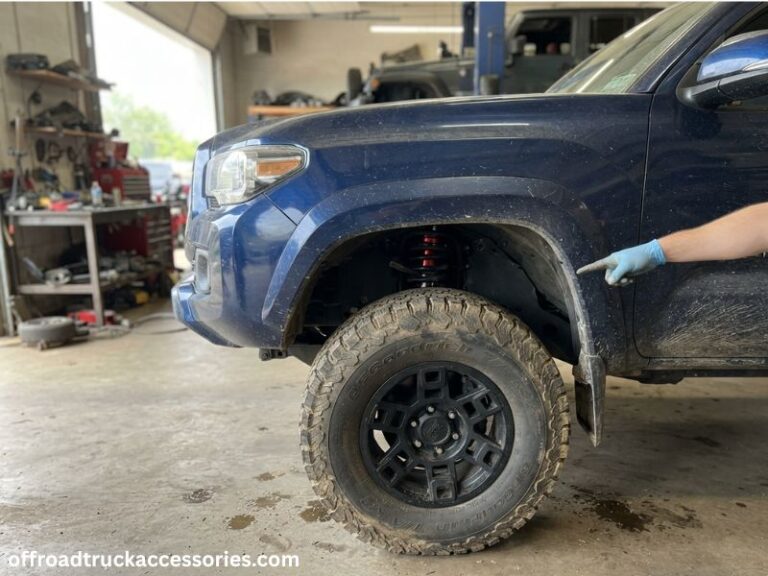
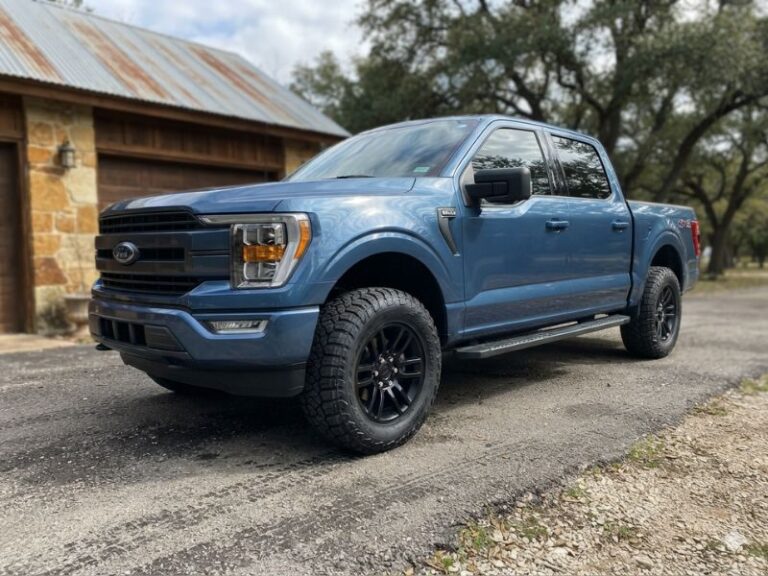
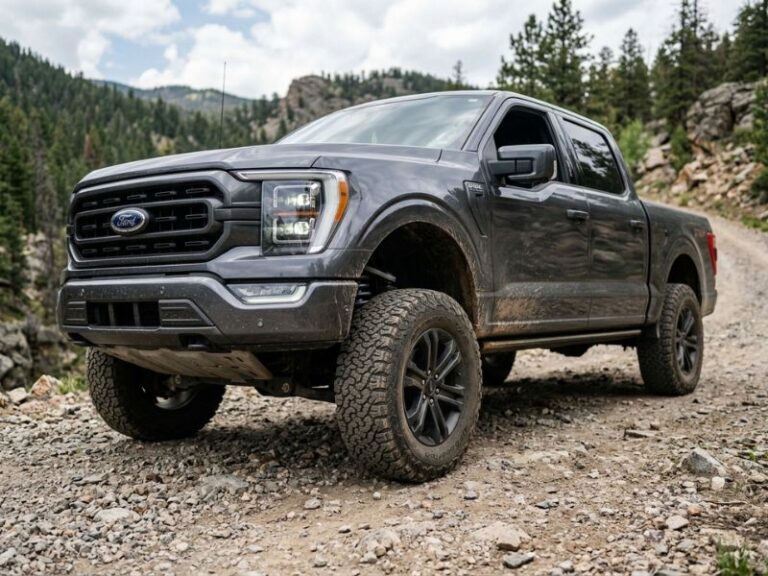
Installing a leveling kit is a popular way to raise the front of a truck, remove the factory nose-down stance, and create additional space for larger tires. However, increasing the front suspension height can change how the factory shocks or struts operate.
This leads many truck owners to ask, do i need longer shocks with a leveling kit? The answer depends on the type and height of the leveling kit, the vehicle’s suspension design, the condition of the original shocks, and how the truck will be used.
For many mild 1-inch to 2-inch spacer leveling kits, longer shocks are not always required because the kit is designed to retain the factory shocks or struts. However, taller leveling kits, coil-spring spacers, torsion-bar adjustments, and off-road-focused setups may require extended-length shocks to preserve proper suspension travel and prevent the shocks from topping out.
Using the wrong shock length can result in a harsh ride, clunking noises, limited wheel movement, damaged shock mounts, or premature shock failure. The best decision should be based on the leveling-kit manufacturer’s instructions and the suspension measurements of your specific truck.
Do I Need Longer Shocks With a Leveling Kit?
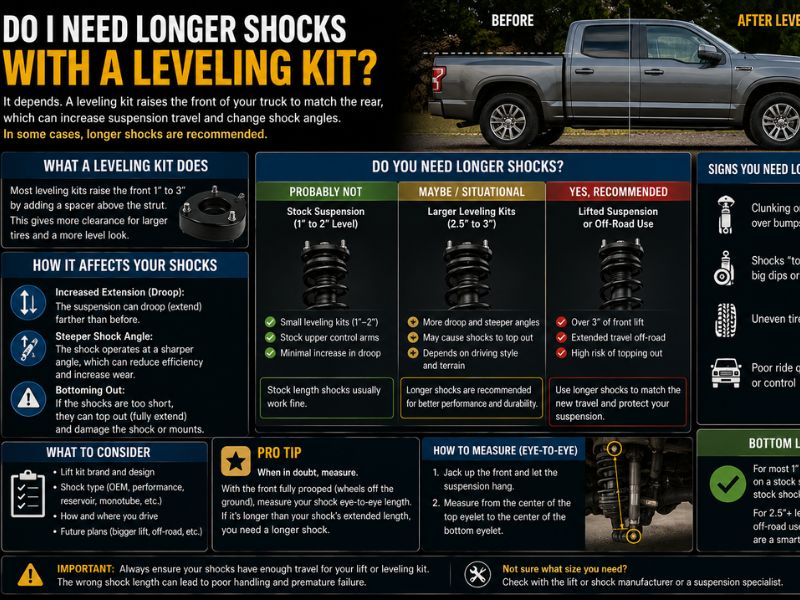
You may not need longer shocks with a mild leveling kit, especially when the kit is specifically designed to work with the factory suspension.
Many front strut-spacer kits raise the truck by repositioning the complete factory strut assembly. Because the original strut remains installed, the kit manufacturer may allow the factory unit to be reused.
However, this does not mean stock shocks are suitable for every leveling setup. A leveling kit changes the truck’s resting ride height and may move the shocks closer to the end of their available extension.
If the shock reaches full extension before the suspension reaches its natural limit, it can top out when the wheel drops into a pothole, rut, or uneven section of road. Repeated topping out may damage the internal shock components or mounting points.
Longer shocks are more likely to be needed when the leveling kit raises the front by approximately 2.5 to 3 inches, uses coil-spring spacers, adjusts torsion bars aggressively, or is designed for regular off-road use.
The correct answer depends more on the suspension design and available travel than on the advertised leveling height alone.
How Shocks Work With a Truck Suspension
A shock absorber controls the movement of the suspension springs. Without shocks, the springs would continue bouncing after the truck passes over a bump.
The shock compresses when the wheel moves upward and extends when the wheel moves downward. Its job is to control both movements so the tires remain in contact with the road and the vehicle stays stable.
Every shock has a specific compressed length, extended length, and total stroke. These measurements determine how far the suspension can move before the shock reaches its physical limit.
At factory ride height, the shock normally sits somewhere between full compression and full extension. This position provides enough room for the suspension to move in both directions.
A leveling kit changes that resting position. If the front suspension is raised without changing shock length, the factory shock may sit more extended than before. This can reduce the amount of available droop travel, which is the distance the wheel can move downward.
A small change may remain within the shock’s acceptable range. A larger change can cause the shock to reach full extension too early.
When Factory Shocks Usually Work
Factory shocks or struts are often suitable for a modest leveling kit when the manufacturer specifically states that no replacement is required.
A 1-inch to 2-inch top-mounted strut spacer commonly retains the complete factory strut assembly. The spacer changes where the assembly connects to the truck, allowing the vehicle to sit higher without replacing the internal shock.
This type of system is commonly chosen by owners who want a leveled appearance while maintaining a ride that feels close to stock.
Factory shocks may remain appropriate when the truck is primarily used for:
- Normal street driving
- Highway travel
- Light hauling
- Occasional driving on maintained dirt roads
The original shocks should still be inspected before installation. Reusing worn, leaking, or weak shocks simply because they technically fit can lead to poor ride quality and reduced suspension control.
If the truck already has high mileage, replacing the shocks during installation may be practical because much of the suspension is already disassembled.
When Longer Shocks Are Required
Longer shocks are usually required when the leveling method increases the distance between the factory shock mounts beyond the operating range of the original units.
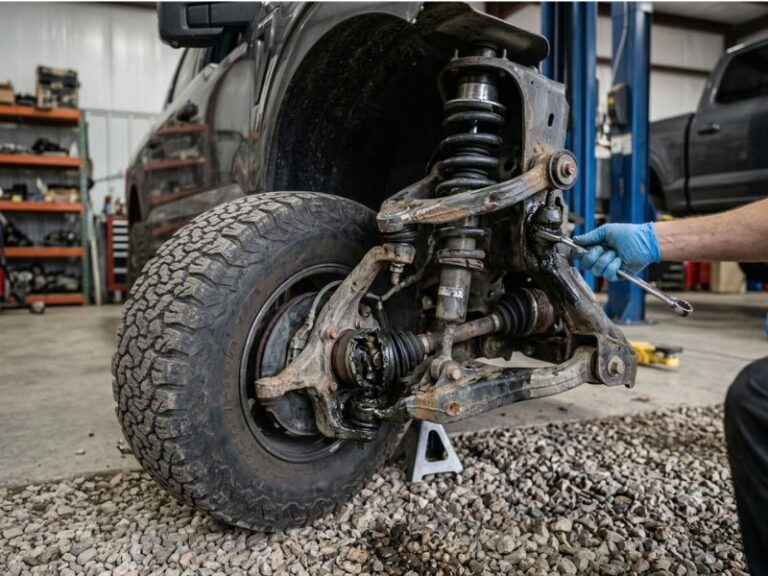
This commonly occurs with coil-spring spacer systems on trucks with separate springs and shocks. The spacer raises the frame relative to the axle or lower control arm, but the original shock length remains unchanged.
At the new ride height, the factory shock may be close to full extension. When the suspension moves downward, the shock can reach its limit and stop the wheel from traveling naturally.
A taller leveling kit may therefore need a shock designed for the new suspension height. Manufacturers often label these products for a specific lift range, such as shocks designed for 0 to 2 inches or 2 to 3 inches of lift.
Longer shocks may also be necessary when the truck is used on rough trails. Off-road driving requires greater wheel movement because the suspension must extend into holes and compress over rocks or uneven terrain.
Even if factory shocks appear acceptable during normal street driving, they may not provide enough travel during aggressive off-road use.
How Kit Type Affects Shock Requirements
Different leveling-kit designs affect shocks in different ways.
Top Strut Spacer Kits
A top strut spacer installs above the factory strut assembly. Many of these kits are designed to retain stock struts.
Although the original strut is reused, the suspension geometry and resting position still change. Some designs may allow the suspension to extend farther than the factory strut was intended to handle.
Vehicle-specific fitment is important because a spacer thickness does not always equal the final lift height. Suspension geometry can multiply the visible height increase.
Preload Spacer Kits
A preload spacer is installed within the strut assembly and increases spring preload. It can raise the truck without physically extending the complete assembly by the same amount.
These systems may retain factory struts, but increased preload can make the ride feel firmer and affect available suspension movement.
Installation may also require disassembling the strut and compressing the spring, which should be handled carefully because compressed coil springs store significant energy.
Adjustable Struts
Adjustable leveling struts provide multiple ride-height settings. They replace the factory front struts and raise the truck through changes in the spring-seat position.
Because the strut is designed for leveling, it may provide better control than combining worn factory units with basic spacers. However, raising the spring seat can still reduce available droop at the highest setting.
The manufacturer’s recommended height range should not be exceeded.
Coil-Spring Spacer Kits
Some trucks use a separate front coil spring and shock. Adding a coil spacer increases the spring height, which may require a longer shock to match the new suspension position.
Using the factory shock with a tall coil spacer can restrict extension and create topping-out problems.
Torsion-Key Leveling Kits
Torsion-key systems raise the front by increasing torsion-bar preload or changing the key position.
The factory shocks may still physically fit, but aggressive adjustment can reduce droop travel and create a firmer ride. Extended shocks designed for the new height may help restore movement, although they cannot correct every geometry issue caused by excessive torsion adjustment.
What Happens If Your Shocks Are Too Short?
Shocks that are too short can limit suspension extension and act like suspension stops.
When the wheel moves downward, the shock may reach full extension before the control arms or other suspension components reach their natural limit. This is known as topping out.
Topping out may create a noticeable clunk or sharp impact when driving over dips, potholes, speed bumps, or uneven roads. The ride may feel harsh because the suspension cannot extend smoothly.
Repeated impacts can place stress on the shock shaft, internal piston, upper mount, lower mount, bushings, and surrounding suspension hardware.
Short shocks can also reduce tire contact on uneven terrain. If a wheel cannot move downward far enough, it may lose contact with the ground sooner, reducing traction and stability.
In severe situations, restricted extension can damage shock mounts or contribute to premature failure.
Can Shocks Be Too Long?
Yes, installing shocks that are too long can also create problems.
A shock must be short enough when fully compressed to avoid bottoming out before the suspension reaches its bump stops. If the shock bottoms internally while the suspension is compressing, the shock may receive the full force of the impact.
This can bend the shaft, damage internal valves, break mounting hardware, or destroy the shock.
A longer shock must therefore be selected according to both extended and compressed measurements. It should provide sufficient droop without becoming the suspension’s compression stop.
This is why choosing shocks only by advertised lift height can be risky. Two trucks with the same leveling height may require different shock dimensions because their suspension geometry and mounting locations are different.
Vehicle-specific shocks are safer than choosing a universal extended shock based only on overall length.
Will Longer Shocks Improve Ride Quality?
Longer shocks do not automatically create a softer or more comfortable ride. Shock length and shock tuning are separate characteristics.
The correct length allows the suspension to move through its intended range. The internal valving controls how quickly that movement occurs.
A shock designed for a heavy-duty truck or aggressive off-road use may feel firmer than the factory shock, even when its length is correct. A comfort-focused shock may provide a smoother ride but offer less control during high-speed off-road driving.
Ride quality also depends on spring rate, torsion-bar preload, tire pressure, tire construction, wheel weight, control-arm angles, and available suspension travel.
Longer shocks can improve comfort when the original shocks are topping out or restricting movement. However, they cannot fix a harsh ride caused by excessive spring preload, poor suspension geometry, or overly stiff tires.
Do Rear Shocks Need to Be Longer?
A standard front-only leveling kit normally does not raise the rear, so the rear shocks usually do not need to be replaced with longer units.
The rear remains at its factory ride height unless the kit includes rear blocks, coil spacers, springs, shackles, or another lifting component.
If the rear is also raised, the shock requirement must be evaluated separately. A 1-inch rear spacer may remain within the range of some factory shocks, while a taller rear lift may require extended units.
Check the complete kit contents carefully. Some products are called leveling kits even though they include both front and rear components.
Replacing rear shocks may also be worthwhile when the originals are worn, but it should not be assumed necessary merely because the front has been leveled.
Shock Extensions vs Longer Shocks
Some leveling kits include shock extensions instead of complete longer shocks.
A shock extension changes the mounting position so the factory shock can operate closer to its original range. This can be a cost-effective solution when the original shocks are still in good condition.
However, extensions do not improve the internal performance or condition of the shock. They also need to be engineered for the exact vehicle and installed with strong hardware.
A complete longer shock may provide better durability and more appropriate damping, particularly for off-road use or high-mileage vehicles.
The right option depends on the kit design, truck use, existing shock condition, and manufacturer instructions.
Signs That You Need Longer or Replacement Shocks
A truck may show several warning signs when the stock shocks are not suitable for the new leveling height.
A clunk or sharp impact when the wheels drop into dips can indicate topping out. The truck may also feel unstable on rough roads because the suspension lacks enough extension.
Other symptoms include shock leaks, excessive bouncing, reduced traction, unusual vibration, broken mounts, or a harsh ride that began immediately after installation.
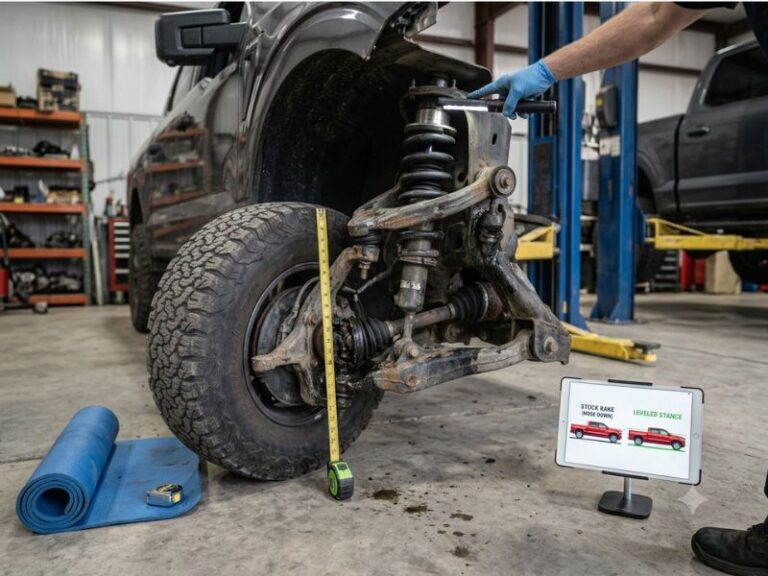
Visible suspension measurements can also reveal a problem. If the shock is almost fully extended while the truck is parked at normal ride height, it may not have enough droop remaining.
A qualified suspension technician can disconnect the shock and cycle the suspension carefully to compare the required movement with the shock’s compressed and extended lengths.
Should You Replace Old Shocks During Installation?
Replacing old shocks during a leveling-kit installation can be a smart decision, even when longer units are not strictly required.
Shocks gradually lose damping ability with mileage and use. They may not leak visibly even when their internal performance has weakened.
Installing a leveling kit increases the demand placed on the front suspension. Reusing worn factory shocks can leave the truck bouncing, diving during braking, or feeling poorly controlled.
Replacing them at the same time can also reduce future labor costs because the suspension is already disassembled.
Choose shocks designed for the truck’s actual leveling height and intended use. A daily-driven vehicle may benefit from comfort-oriented shocks, while a trail truck may need stronger damping and greater heat capacity.
How to Choose the Correct Shock Length
Start with the leveling-kit manufacturer’s instructions. Reputable companies normally specify whether stock shocks can be retained and identify compatible replacement options.
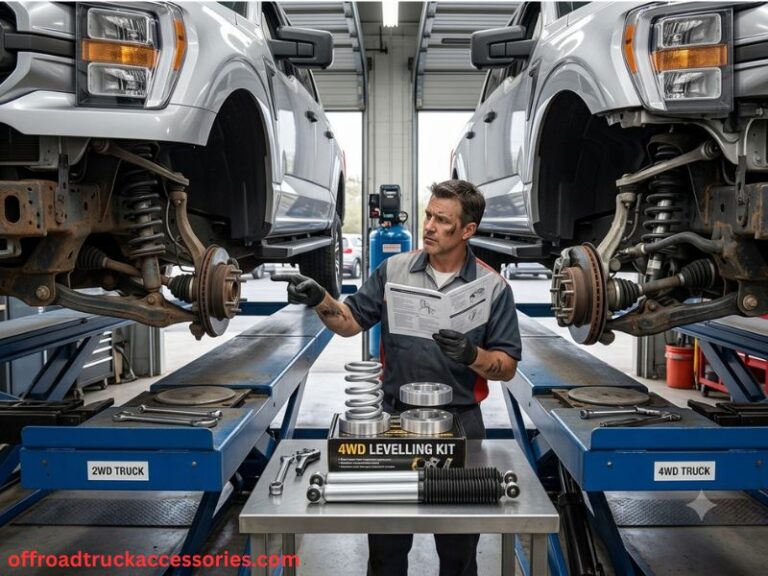
Confirm the exact truck model, model year, drivetrain, suspension package, and leveling height. Four-wheel-drive and two-wheel-drive versions may use different suspension components.
Do not assume that a shock marketed for a 2-inch lift is automatically correct for every 2-inch leveling kit.
The shock must provide enough extension for suspension droop while retaining enough compression travel to avoid bottoming out. Brake lines, ABS wires, CV axle angles, ball joints, and control arms must also remain within safe limits.
Professional installation is recommended when the correct measurements or suspension limits are uncertain.
Final Thoughts
So, do i need longer shocks with a leveling kit? Not necessarily. Many mild 1-inch to 2-inch strut-spacer leveling kits are designed to work with factory shocks or struts, especially on trucks used mainly for normal street driving.
Longer shocks become more important when the leveling kit raises the suspension beyond the original shock’s operating range, reduces droop travel, causes topping out, includes separate coil spacers, or is intended for frequent off-road use.
Follow the kit manufacturer’s requirements rather than choosing based only on advertised height. Inspect the existing shocks, confirm compressed and extended travel, and select vehicle-specific components. The correct shock length will help protect ride quality, suspension movement, tire contact, and long-term reliability after leveling your truck.