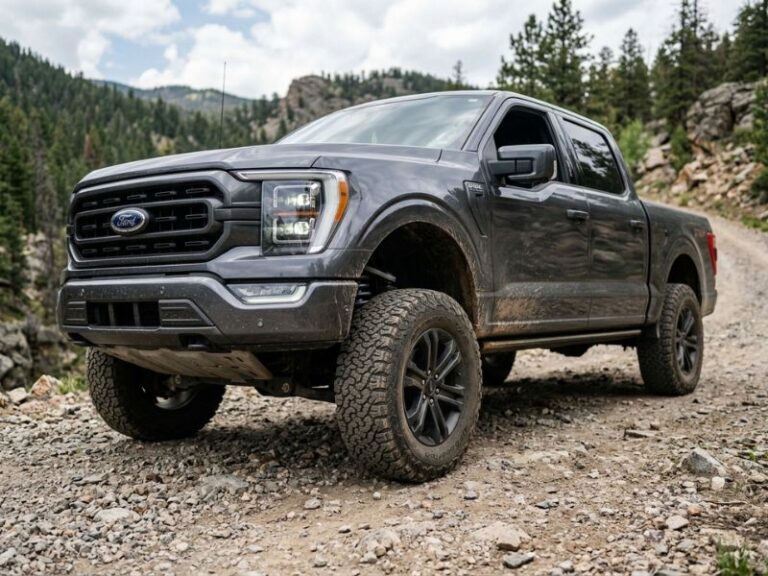
Can You Put a Leveling Kit on a Leased Truck? Complete Guide
Can you put a leveling kit on a leased truck? You may be able to install one, but you should get written permission from the leasing company first. Without approval, you could be required to remove the kit, restore the truck to factory condition, or pay lease-end charges. The complete details are explained below.
In this article, you will learn how a leveling kit may affect your lease agreement, whether dealer installation makes it acceptable, what can happen during the lease-end inspection, how to protect the factory parts, and when buying the truck may be better than modifying it during the lease.
Can You Put a Leveling Kit on a Leased Truck?

You can physically put a leveling kit on most compatible leased trucks, but that does not necessarily mean your lease agreement permits the modification.
When you lease a truck, the financing or leasing company generally remains the legal owner during the lease term. You are paying to use the vehicle under specific conditions, including mileage, maintenance, insurance, vehicle condition, and return requirements.
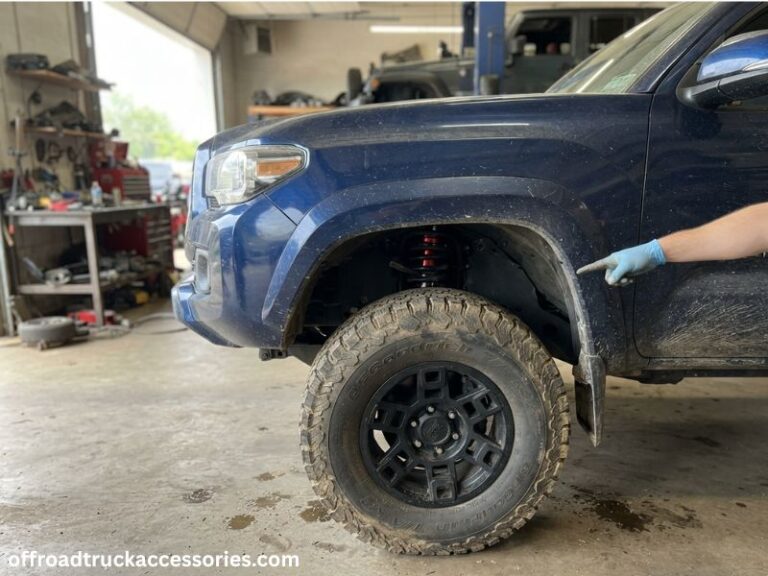
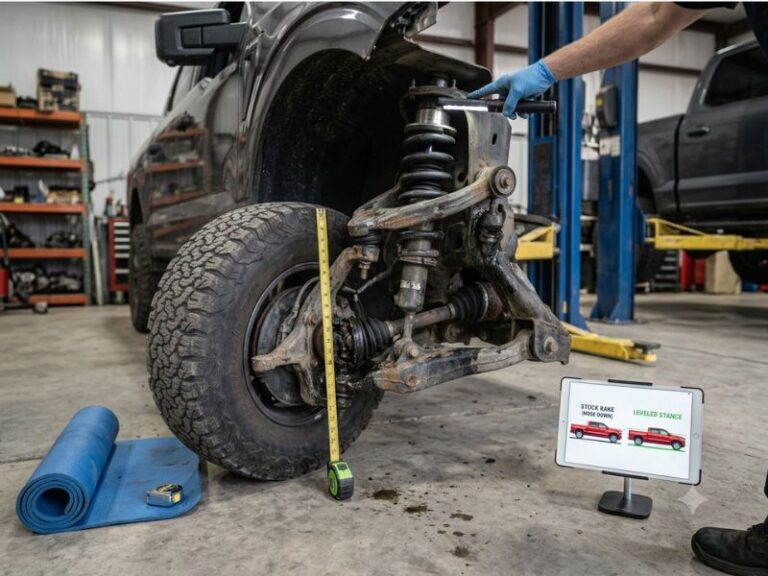
A leveling kit changes the truck’s original suspension height and geometry. Depending on the lease terms, this may be classified as an unauthorized modification or a condition that must be corrected before the vehicle is returned.
Some leasing companies may allow a professionally installed, reversible leveling kit. Others may require the truck to remain completely stock. The dealership that delivered the vehicle may also have a different opinion from the actual leasing company.
For that reason, verbal approval from a salesperson is not enough. Obtain written approval from the company named on the lease contract before installing anything.
Why Modifying a Leased Truck Is Different
Modifying a financed truck and modifying a leased truck are not the same.
When you finance a vehicle, you are normally working toward ownership. The lender has a financial interest in the truck, but you generally expect to keep it after the loan is paid.
With a lease, the vehicle is normally expected to be returned at the end of a fixed term. Its expected future value, known as the residual value, was calculated when the lease began.
The leasing company expects the truck to return in a condition that allows it to be inspected, sold, certified, or leased again. A suspension modification can complicate that process because the company may not know who installed it, whether the geometry is correct, or how it affected other components.
Even when the leveling kit improves the truck’s appearance, the leasing company may not view it as added value. It may instead see additional inspection, restoration, and resale risk.
Read the Lease Agreement Before Installation
Your lease agreement is the most important document to review before changing the suspension.
Look for sections discussing vehicle alterations, aftermarket equipment, excess wear, unauthorized modifications, maintenance obligations, and lease-end condition.
The contract may say that modifications require advance written approval. It may also say that you must remove aftermarket parts and return the truck to its original condition before surrendering it.
Some agreements allow removable accessories but prohibit permanent mechanical or structural alterations. Others may place responsibility on you for any reduction in value caused by a modification.
Do not assume the rules are the same for every manufacturer or leasing company. Two people leasing similar trucks from different financial institutions may have different requirements.
Contact the leasing company directly using the account information on your statement. Provide the exact leveling-kit brand, part number, advertised height, installation method, and installer details.
Ask whether the modification is permitted, whether it must be removed before return, and whether there are any documentation requirements.
Does Dealer Installation Make It Acceptable?
Dealer installation can provide better documentation, but it does not automatically mean the leveling kit is allowed under the lease.
A dealership service department may be willing to install a leveling kit, especially when it sells suspension accessories or customized trucks. However, the dealer may not be the company that owns the leased vehicle.
The leasing company could be a separate financial institution with its own return standards. The service department’s willingness to perform the work does not change your contractual obligations.
Before approving dealer installation, ask the service adviser to confirm whether the leasing company has authorized the modification. Request copies of any written approval.
Dealer installation can still offer advantages. The invoice will show which parts were used, who performed the work, and whether a professional alignment was completed. That documentation may help if a future mechanical or lease-end issue arises.
However, even a dealer-installed kit may need to be removed if the lease requires the vehicle to be returned in factory condition.
Will a Leveling Kit Cause Lease-End Charges?
A leveling kit can result in lease-end charges if it remains installed without approval, damages related parts, or prevents the truck from meeting its return-condition requirements.
During a lease-end inspection, the evaluator may examine the suspension, wheels, tires, body, interior, glass, mechanical condition, and installed equipment.
A visible suspension spacer, replacement strut, altered control arm, oversized tire, aggressive wheel offset, or missing factory component may be documented.
Possible charges could include the estimated cost of removing the aftermarket parts, reinstalling original components, correcting alignment, replacing damaged parts, or restoring factory-size tires and wheels.
You may also be responsible for related wear. For example, an incorrectly aligned leveling kit could cause abnormal tire wear. A severe suspension angle could contribute to premature wear of ball joints, CV axles, shocks, or wheel bearings.
The exact charge depends on the lease agreement, inspection findings, and cost of returning the truck to an acceptable condition.
Can You Return the Truck With the Kit Installed?
You may be able to return the truck with the leveling kit installed if the leasing company has approved it or decides to accept the modification.
However, you should never assume acceptance without confirmation.
A dealership may like the modified appearance and believe the truck will be easy to resell. Another dealer may refuse to make any promise because the final inspection and billing are controlled by the leasing company.
Even when a dealer wants the vehicle for its used inventory, the transaction may need to be structured as a purchase or trade rather than a standard lease return.
Get any agreement in writing before the lease matures. The document should identify the vehicle, modification, dealership, and whether you will be responsible for restoration or excess-wear charges.
Without written confirmation, returning the truck with the kit installed carries financial risk.
Should You Remove the Leveling Kit Before Returning the Truck?
Removing the leveling kit and restoring the truck to factory condition is often the safest option when the modification was not formally approved.
Reinstallation should include the original struts, springs, spacers, shocks, control arms, hardware, wheels, tires, and any other components removed during the modification.
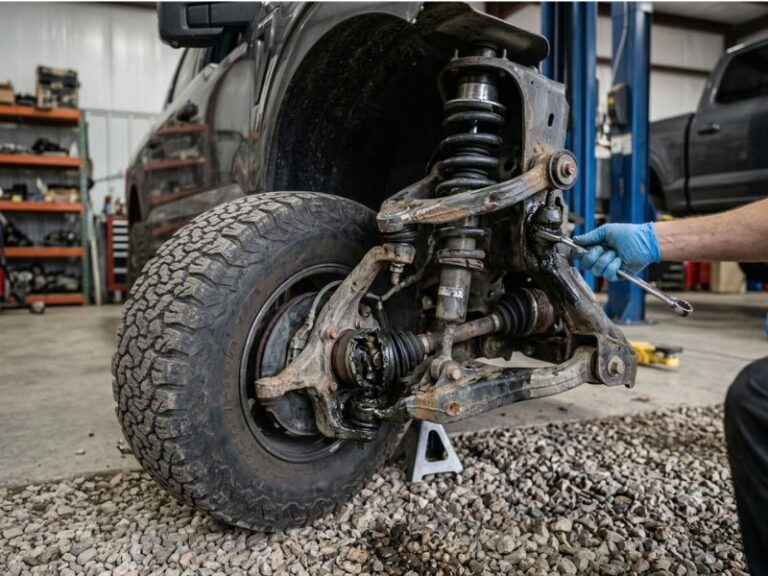
The truck should also receive a professional wheel alignment after returning to stock height. Suspension fasteners must be tightened correctly, and brake hoses, ABS wiring, CV boots, and steering components should be inspected.
Removing the kit shortly before lease return does not automatically eliminate all concerns. The inspection may still identify abnormal tire wear, damaged mounting points, worn suspension components, or missing original hardware.
Plan restoration early enough to repair any resulting issues before the lease-end inspection.
Keep Every Factory Part
If you install a leveling kit on a leased truck, keep every original component in a safe, dry, and clearly labeled location.
Do not sell the factory struts, shocks, springs, wheels, tires, control arms, bolts, brackets, or other removed parts. Replacing missing factory equipment later can cost significantly more than the amount received from selling it.
Store small hardware in sealed bags and label each bag according to its location. Take photos of the original suspension before removal and keep the factory parts organized by side.
You should also retain the leveling-kit receipt, installation invoice, alignment report, removal invoice, and any correspondence with the leasing company.
Good documentation will not override the lease contract, but it can make restoration easier and help demonstrate that qualified professionals performed the work.
Does a Leveling Kit Affect the Vehicle Warranty?
Lease permission and factory warranty coverage are separate issues.
A leasing company may prohibit a modification even when it does not automatically cancel the entire manufacturer warranty. Similarly, the leasing company may allow a modification while the vehicle manufacturer excludes damage caused by it.
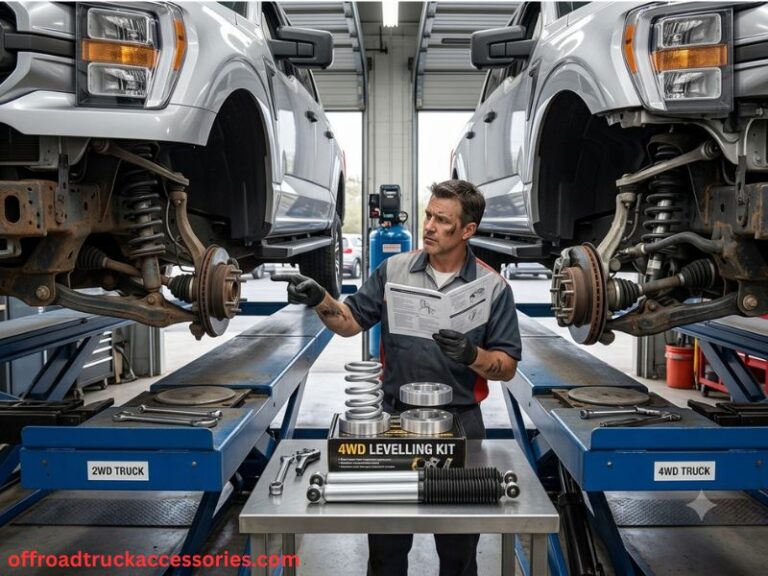
A leveling kit changes the position of the control arms, ball joints, shocks, steering linkage, and, on four-wheel-drive trucks, CV axles.
If a related component fails, the manufacturer or dealer may investigate whether the kit, installation, or additional wheel-and-tire modifications caused the problem.
An unrelated factory defect may still be eligible for warranty coverage. However, damage resulting from poor installation, incorrect alignment, excessive suspension height, or unsupported parts may not be covered.
Dealer installation can provide useful records, but it does not guarantee coverage for every future suspension repair.
Larger Tires and Wheels Create Additional Risk
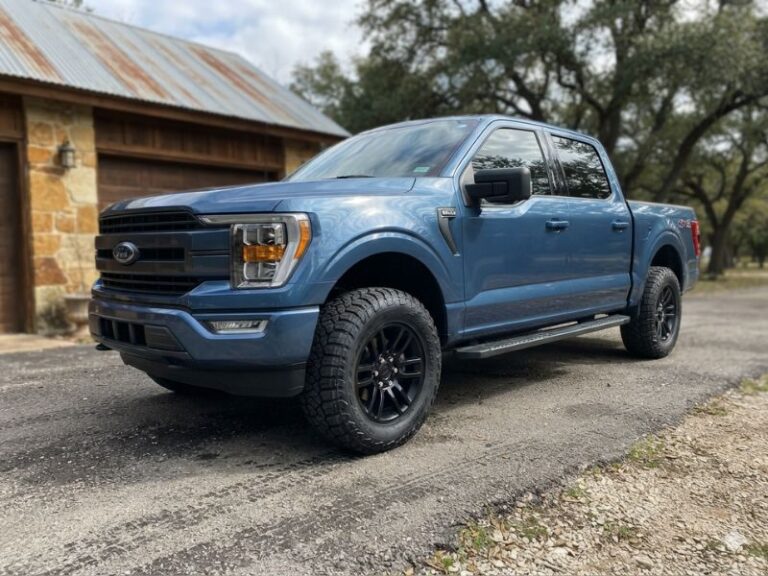
Many truck owners install a leveling kit primarily to fit larger tires. On a leased vehicle, this creates another layer of potential return issues.
The leasing company may expect the original wheel and tire specifications at lease end. Oversized tires may also change speedometer accuracy, effective gearing, braking performance, fuel economy, and drivetrain load.
Aggressive wheel offset can increase stress on wheel bearings, ball joints, tie rods, and steering components. It may also cause tires to rub the fender liners, mud flaps, bumper brackets, or control arms.
If you change the wheels or tires, keep the original set. Store them properly so they remain usable when the truck is returned.
Monitor tread depth and age. Factory tires stored for several years may still need inspection before they are reinstalled.
Reversible vs Permanent Modifications
A simple bolt-on leveling kit is usually easier to reverse than a modification requiring cutting, welding, drilling, or permanent changes to factory components.
Reversibility does not guarantee lease approval, but it can reduce restoration difficulty.
Avoid cutting factory brackets, trimming major body components, modifying the frame, or permanently changing suspension mounting points on a leased truck.
Be cautious with kits that require replacing factory crossmembers, differential mounts, steering knuckles, or welded brackets. Returning these systems to stock can involve extensive labor and expensive replacement parts.
A mild, model-specific kit installed without permanent alterations generally creates less lease-end risk than a large suspension lift.
Even with a reversible kit, written permission remains the safest approach.
What Happens If You Plan to Buy the Truck?
If you expect to purchase the truck at lease end, returning it to factory condition may become less important because you will keep the vehicle rather than surrender it.
However, plans can change. Your financial situation, the truck’s condition, market value, buyout price, or personal needs may be different when the lease ends.
Do not modify the truck solely because you assume you will buy it later. Review the purchase option and confirm how the buyout process works under your lease.
You may also decide to buy the truck before making major modifications. Once the buyout is complete and ownership transfers to you, lease-return restrictions no longer apply, although warranty and financing conditions may still matter.
Compare the buyout price with the vehicle’s market value before making that decision.
Could a Dealer Buy or Trade the Modified Truck?
A dealer may be willing to purchase or accept the modified truck as a trade, particularly when the leveling kit is professionally installed and the vehicle is desirable.
However, a dealer purchase is different from simply returning the truck to the leasing company.
The dealer must normally determine the lease payoff or buyout amount and structure a transaction that satisfies the existing lease. The availability of this option can depend on the leasing company’s policies.
Do not assume the dealership will pay extra for the leveling kit. Aftermarket modifications often return only a small portion of their original cost and may reduce the number of potential buyers.
Get a written trade or purchase offer before relying on this strategy.
How to Reduce the Financial Risk
The lowest-risk approach is to leave a leased truck stock until you decide whether you will purchase it.
When you still want a leveling kit, begin by requesting written authorization from the leasing company. Choose a mild, vehicle-specific kit that does not require permanent modification.
Use a reputable installer, complete the required alignment, and retain all factory parts. Avoid extreme wheel offset and oversized tires that place unnecessary stress on the suspension.
Schedule a pre-return inspection well before the lease ends. This can give you time to remove the kit, replace worn tires, repair suspension issues, and correct the alignment before the final return.
Do not wait until the last week of the lease to begin restoration. Parts delays and unexpected mechanical problems can make the process more expensive.
Is Leveling a Leased Truck Worth It?
Whether the modification is worthwhile depends on how long remains on the lease, how strongly you value the appearance change, and how much financial risk you are willing to accept.
The total expense may include the leveling kit, professional installation, alignment, larger tires, removal labor, reinstallation of factory parts, and another alignment before return.
You may spend a significant amount for a modification that you can use only temporarily.
If the lease has a short time remaining, waiting until you lease or purchase another truck may be more practical.
If you are confident that you will buy the vehicle, purchasing it before making major changes can simplify the ownership and return questions.
Final Thoughts
So, can you put a leveling kit on a leased truck? You may be able to, but you should obtain written approval from the leasing company before changing the suspension.
Dealer installation alone does not guarantee lease approval, and an unauthorized kit may lead to removal costs, restoration expenses, excess-wear charges, or disputes at lease end.
Read the lease agreement, keep every original part, choose a reversible vehicle-specific kit, and complete professional alignments after installation and removal. When permission is unclear, leaving the suspension stock or purchasing the truck before modifying it is the safer financial decision.