Can You Put a Leveling Kit on a Trail Boss? Complete Owner Guide
Can you put a leveling kit on a Trail Boss? Yes, you can install a compatible leveling kit on some Trail Boss models, but you should not use a standard Silverado leveling kit without confirming fitment. The Silverado 1500 Trail Boss already has a 2-inch factory lift, so it requires a kit designed specifically for its raised factory suspension.
The complete details are explained below. In this article, you will learn why a Trail Boss is different from a standard Silverado, how much additional front lift may be practical, which leveling-kit designs may work, what suspension components may need attention, how larger tires affect the setup, and what to check before installation.
Can You Put a Leveling Kit on a Trail Boss Safely?

You can put a leveling kit on a Trail Boss when the kit is specifically designed and approved for that exact model, year, drivetrain, and factory suspension package.
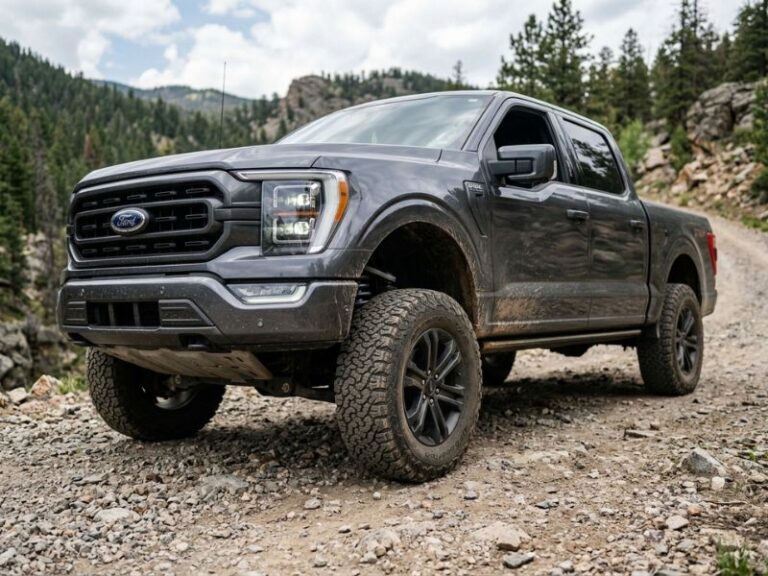
A standard Chevrolet Silverado 1500 may sit lower than a Custom Trail Boss or LT Trail Boss. The Trail Boss leaves the factory with additional suspension height, off-road-focused components, skid plates, all-terrain or mud-terrain tires, and a Z71 suspension package.
Because it is already lifted, adding a leveling kit changes the suspension from an elevated starting point. A kit designed for a standard Silverado may raise the Trail Boss too much, create poor suspension angles, or fail to fit its factory components correctly.
The safest approach is to purchase a product that clearly lists your exact Trail Boss configuration as compatible. Do not assume a kit fits simply because the product title mentions the Silverado 1500.
Why the Trail Boss Is Different From a Standard Silverado
The Silverado 1500 Trail Boss is not simply a regular Silverado with different wheels and badges. It includes a factory suspension lift and off-road equipment designed to work together as a complete package.
The additional factory height changes the resting position of the control arms, steering components, shocks, struts, and CV axles compared with a non-Trail Boss Silverado.
When an aftermarket manufacturer develops a leveling kit for a standard truck, it tests the product around that truck’s original suspension position. Installing the same parts on a factory-lifted model can result in a different final height and more aggressive component angles.
This is why many standard Silverado leveling kits specifically exclude the Custom Trail Boss, LT Trail Boss, ZR2, and other factory-lifted configurations.
A Trail Boss-specific kit should account for its existing height rather than treating the truck as if it were still at standard factory ride height.
Does a Trail Boss Already Have a Leveling Kit?
A Silverado Trail Boss has a factory-installed suspension lift, but it may not sit completely level.
The truck can still have some factory rake, meaning the rear sits higher than the front. This rake helps the truck maintain a more appropriate stance when cargo or trailer tongue weight compresses the rear suspension.
The front-to-rear difference varies between trucks because of engine choice, cab configuration, bed length, fuel level, accessories, and permanent cargo.
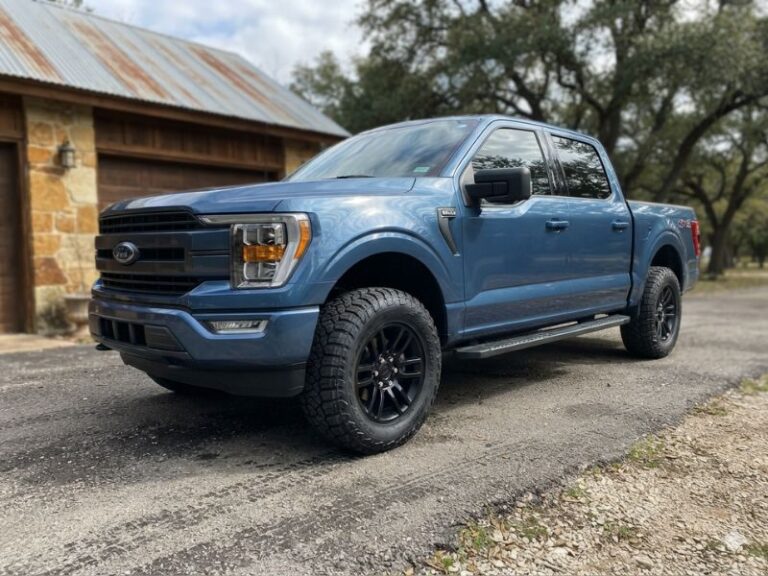
A Trail Boss may therefore look close to level from one angle but still measure one or two inches lower at the front fenders.
Its factory 2-inch lift should not be confused with an aftermarket front-only leveling kit. The factory system raises the truck while preserving a degree of rake, whereas a leveling kit usually adds extra front height to reduce that difference.
How Much Additional Lift Can You Add?
Many Trail Boss owners consider an additional 1-inch to 2-inch front lift. Whether that amount is appropriate depends on the product and the truck’s measured stance.
A small Trail Boss-specific leveling kit may provide enough height to reduce the remaining rake without pushing the front suspension excessively high.
An aggressive 2.5-inch or 3-inch front leveling kit is more likely to create problems because the truck already starts two inches above a standard Silverado. The combined height can place the suspension closer to the limits of the factory control arms, ball joints, CV axles, tie rods, and struts.
Advertised heights should not simply be added together. A 2-inch factory lift plus a 2-inch leveling kit does not necessarily mean every front component is safely positioned for a total four-inch increase.
Suspension leverage, spacer design, strut position, and factory measurements affect the final result.
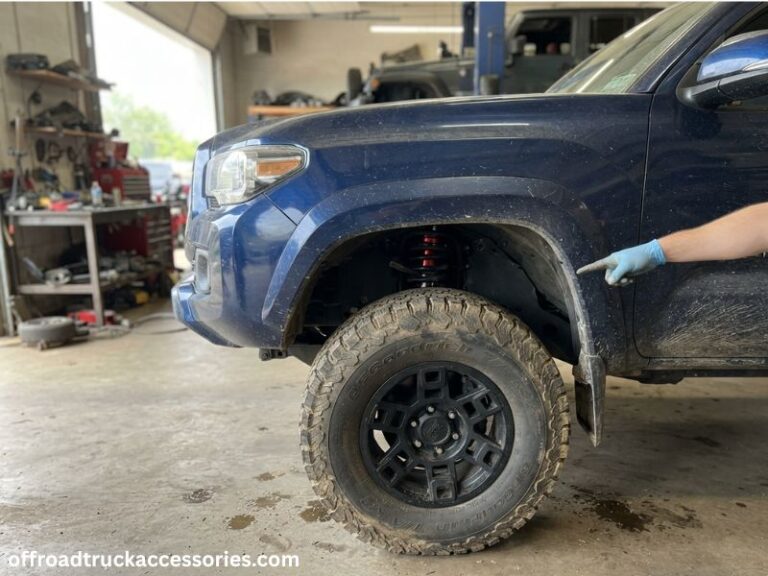
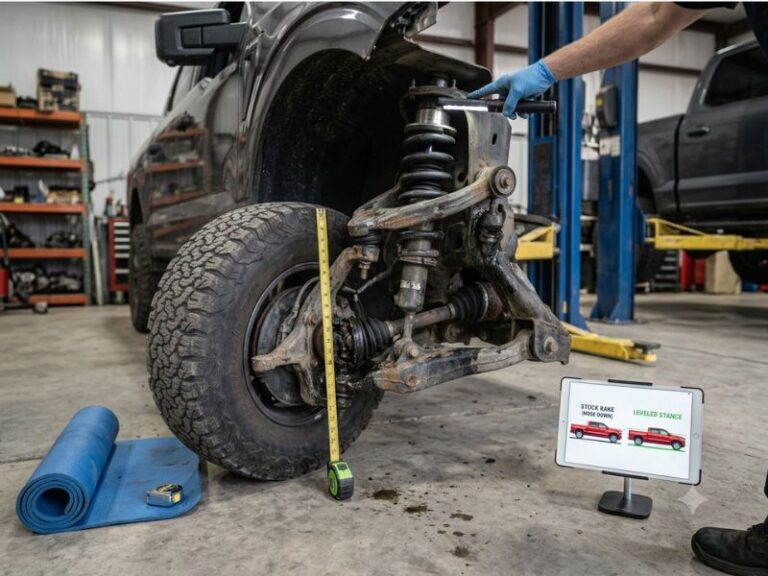
Before selecting a kit, measure from the center of each wheel hub to the lower edge of the corresponding fender. This provides a more reliable indication of rake than measuring from the ground, where tire pressure and tread depth can affect the result.
Can You Use a Standard Silverado Leveling Kit?
You should not use a standard Silverado leveling kit unless the manufacturer explicitly includes the Trail Boss in its fitment information.
Some leveling kits are made only for trucks at standard suspension height. Installing one on a factory-lifted Trail Boss may create more front lift than intended.
Possible results include excessive upper control-arm angles, limited suspension droop, CV axle stress, difficult alignment, tire rubbing, and premature component wear.
Physical installation does not confirm safe compatibility. A spacer may bolt into position while still creating incorrect suspension geometry.
Check the complete product description and installation instructions. Look for specific references to the Custom Trail Boss or LT Trail Boss, not only the Silverado 1500.
The model year also matters. Suspension components and product fitment can change between generations or production updates.
What Type of Leveling Kit Works on a Trail Boss?
Several types of leveling systems may be available for a Trail Boss, depending on the model year.
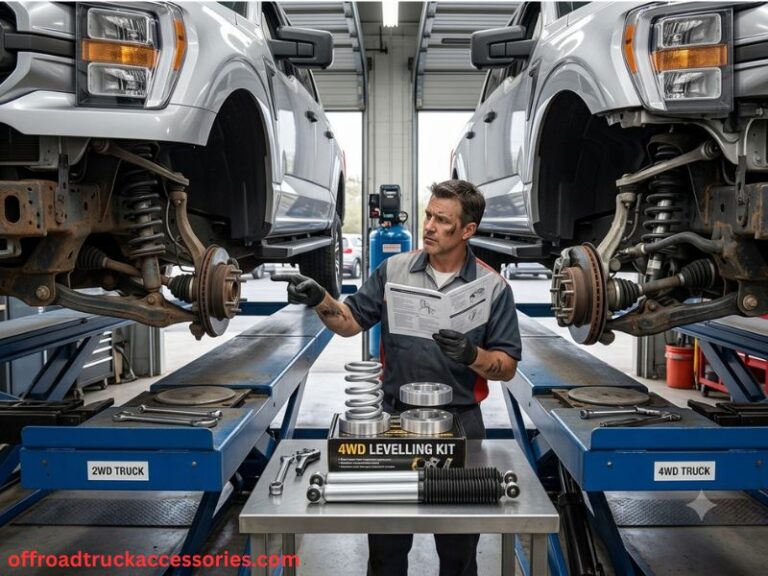
A small top-mounted strut spacer is one of the simplest options. It raises the front by repositioning the strut assembly. Although affordable, it must be designed around the factory-lifted suspension.
Adjustable replacement struts can offer a more integrated solution. They may provide several height settings while replacing the factory dampers. This can be useful when the original struts have accumulated mileage or when the owner wants improved damping.
Complete coilover systems provide adjustable height and suspension tuning. They are more expensive but can offer better control for frequent off-road driving.
Some packages include new upper control arms, shocks, or geometry-correction parts. These more complete systems may be appropriate when the desired height exceeds what the stock suspension can comfortably support.
The best option is not necessarily the kit that creates the most height. A moderate system that preserves suspension travel and alignment range usually provides better everyday reliability.
Will You Need Aftermarket Upper Control Arms?
You may need aftermarket upper control arms when the additional leveling height creates poor ball-joint angles or makes proper alignment difficult.
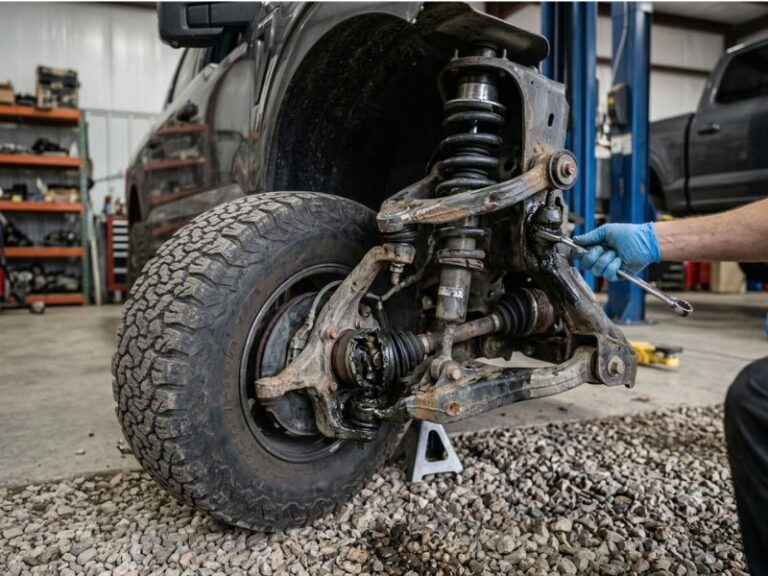
Raising the front causes the upper control arms to sit at a steeper downward angle. The upper ball joint may then operate closer to the edge of its normal movement range.
Because the Trail Boss is already factory-lifted, adding more height can increase this concern. Some Trail Boss-specific kits include corrected upper control arms for this reason.
Aftermarket arms may reposition the ball joint, provide more caster adjustment, improve spring clearance, and restore usable suspension droop.
They are not automatically required for every small leveling kit. A mild Trail Boss-specific system may work with the factory arms when the manufacturer confirms compatibility and the truck aligns correctly.
Control arms become more important when you want approximately 2 inches or more of additional front height, use the truck aggressively off-road, or plan to install heavy tires with aggressive wheel offset.
How a Leveling Kit Affects CV Axle Angles
Four-wheel-drive Silverado 1500 models use CV axles to transfer power from the front differential to the wheels.
As the front suspension is raised, the CV axles operate at a steeper angle. The Trail Boss already has suspension components configured around its factory lift, so additional height must remain within the acceptable movement range of the axles and joints.
Excessive CV angles can place extra stress on the joints and protective boots. Potential symptoms include torn boots, grease leakage, vibration, clicking during turns, or premature CV joint wear.
The angle becomes most severe when the suspension reaches full downward extension. A setup that appears acceptable while parked may still overextend the CV joints when a wheel drops into a rut.
A differential-drop component may be part of certain lift systems, but it should not be added randomly. It must remain compatible with the differential mounts, crossmembers, skid plates, driveshaft, and other factory components.
Will a Leveling Kit Reduce Suspension Travel?
A leveling kit can reduce available droop travel, depending on how it raises the front.
Droop is the distance a wheel can move downward when it enters a hole or the truck passes over uneven terrain. This movement helps keep the tire in contact with the ground.
A spacer or highly adjusted strut can place the suspension closer to full extension at normal ride height. When the wheel needs to move downward, the strut may reach its limit sooner.
This can create a clunk or sharp impact known as topping out. It can also reduce traction and make the ride feel harsher over dips.
The issue is especially important on a Trail Boss because buyers often intend to use the truck off-road. Raising it in a way that reduces useful suspension movement can improve its parked appearance while making it less capable on uneven terrain.
A properly engineered suspension system should balance height with adequate compression and extension travel.
Do You Need Longer Shocks or Struts?
The need for different shocks or struts depends on the leveling-kit design.
Some spacer systems are designed to retain the factory Trail Boss struts. Others require replacement units designed for the new ride height.
A shock or strut must have enough extended length to allow useful droop while retaining sufficient compressed length to avoid bottoming out before the bump stop engages.
A longer unit is not automatically better. If it allows more suspension extension than the ball joints, CV axles, brake hoses, or control arms can safely support, it can create additional problems.
When the original dampers are worn or leaking, replacing them during installation may be practical. Choose units designed for the exact vehicle and final leveling range rather than universal shocks selected only by length.
Will the Trail Boss Need an Alignment?
Yes, the truck should receive a professional wheel alignment after installing a leveling kit.
Raising the front changes camber, caster, and toe. These measurements affect tire contact, straight-line stability, steering return, and tread life.
Incorrect camber may cause the tires to lean inward or outward. Poor caster can make the truck wander or return slowly to center after turning. Incorrect toe can wear expensive off-road tires quickly.
The technician should confirm that all measurements can be brought into an appropriate range without forcing the factory adjustment points to their limits.
Ask for a printed before-and-after alignment report. If the technician cannot achieve suitable caster or camber, the truck may need corrected upper control arms or a lower leveling height.
An alignment cannot fix mechanical binding, insufficient suspension travel, or incorrect kit fitment. Those problems must be corrected before final alignment.
What Tire Size Can Fit After Leveling?
A Trail Boss already comes with more tire clearance than many standard Silverado trims. Adding a compatible leveling kit may create room for a taller or wider tire, but no single tire size is guaranteed to fit every build.
Fitment depends on the true tire diameter, tire width, wheel width, wheel offset, backspacing, fender shape, mud flaps, and suspension travel.
A tire may clear while driving straight but contact the inner liner, control arm, bumper area, or mud flap during full steering lock.
Wheel offset is especially important. A negative-offset wheel pushes the tire outward and may improve clearance from some suspension components, but it can create contact near the fender and increase leverage on wheel bearings, ball joints, and steering parts.
Larger tires also increase rotational weight. This may affect acceleration, braking, fuel economy, transmission behavior, and component wear.
Choose the wheel and tire package together with the suspension system rather than treating them as separate modifications.
Does Leveling Improve Ground Clearance?
A front leveling kit can increase clearance beneath the front bumper, lower valance, skid plates, and certain suspension areas. It may also improve the approach angle, allowing the truck to approach a steeper obstacle before the front bodywork contacts it.
However, it does not raise every low point by the advertised amount.
The rear axle and differential remain at the same height unless larger tires are installed. Actual axle clearance is determined mainly by tire radius rather than suspension lift.
A Trail Boss already has improved ground clearance compared with a standard Silverado. A small leveling kit may provide an additional front clearance benefit, but the change should be weighed against reduced droop and steeper component angles.
More visible height does not always equal better off-road performance.
Will a Leveling Kit Affect Towing and Hauling?
A leveling kit does not increase the Trail Boss’s payload capacity, towing capacity, axle ratings, or gross vehicle weight rating.
Raising the front reduces the factory rake that helps the truck remain level when weight compresses the rear suspension.
When the truck is perfectly level while empty, a heavy payload or trailer may make the rear sit noticeably lower than the front. This can affect headlight aim, steering feel, braking balance, and overall stability.
Owners who tow frequently may prefer to retain a small amount of rake instead of making the truck completely level.
Rear airbags or helper springs can help manage loaded ride height, but they do not increase the manufacturer’s weight ratings.
Consider actual truck use before choosing the leveling height. A perfectly level appearance may not be the most practical setup for a working or towing vehicle.
Can Leveling Affect the Warranty?
Installing a leveling kit does not necessarily cancel the entire Chevrolet warranty. However, damage caused by an aftermarket component, incorrect installation, or altered suspension geometry may not be covered.
A dealer may inspect the leveling kit if the truck develops problems involving ball joints, control arms, shocks, CV axles, wheel bearings, steering parts, tires, or alignment.
An unrelated factory defect may still remain eligible for coverage, but every claim is evaluated according to its cause and the applicable warranty terms.
Use a reputable, vehicle-specific kit and keep the purchase receipt, installation invoice, alignment report, and maintenance records.
Before modifying a newer truck, ask the Chevrolet dealer whether it installs or supports the exact kit. Dealer installation does not guarantee complete warranty protection, but clear documentation can reduce future uncertainty.
Trail Boss Leveling Kit vs Complete Suspension Lift
A leveling kit mainly raises the front to reduce rake. It is normally the simpler option when the owner wants a more even stance and slightly more tire clearance.
A complete suspension lift raises both the front and rear and may include replacement shocks, crossmembers, knuckles, differential brackets, springs, rear blocks, and other supporting components.
When the goal is significantly more height, a complete Trail Boss-compatible lift system is usually safer than stacking multiple spacers.
Do not combine a standard lift and leveling kit unless the manufacturer specifically approves that configuration. Stacking unrelated components can over-lift the front and disturb the geometry engineered into the complete lift.
Choose the final desired height first, then purchase a system designed to achieve it as one coordinated package.
How to Avoid Trail Boss Leveling Problems
Begin by measuring the actual rake and identifying the exact model year, trim, engine, cab, bed, and drivetrain.
Choose a kit that clearly states Trail Boss compatibility. Read the installation instructions before buying and confirm whether control arms, replacement struts, or other supporting components are required.
Inspect the existing suspension before installation. Worn ball joints, bushings, tie rods, wheel bearings, or struts should be repaired first.
Use a qualified installer familiar with factory-lifted Chevrolet trucks. After installation, check brake hoses, ABS wiring, CV boots, tire clearance, control-arm position, and suspension travel.
Complete the alignment immediately and inspect the tires and suspension again after the components settle.
Avoid selecting more height than the truck needs. A moderate, well-engineered setup is usually more reliable than the tallest available spacer.
Final Thoughts
So, can you put a leveling kit on a Trail Boss? Yes, but the kit must be designed specifically for the Trail Boss and its existing factory suspension lift. A standard Silverado leveling kit may not fit correctly or may raise the front beyond safe suspension limits.
A mild Trail Boss-compatible system can reduce the remaining rake, improve front tire clearance, and create a more level stance. However, additional height may affect control-arm angles, CV axles, suspension travel, alignment, towing stance, and warranty coverage.
Measure the truck before choosing a kit, follow the manufacturer’s fitment requirements, and avoid stacking unsupported suspension components. The best result comes from using the smallest properly engineered height increase that achieves your desired appearance and function.