Can Bad Struts Cause Shaking When Braking? Important Exceptions
Bad struts can contribute to shaking during braking, but warped rotors, uneven tire wear, and loose suspension parts are more common causes.
Brake-time shaking usually comes from a problem that changes how the tire meets the road or how the brake rotor turns against the pads. Worn struts can reduce suspension control, especially over bumps, but struts are not automatically the source of every vibration.
The location and timing of the shaking provide useful clues. A vibration in the steering wheel often points toward the front brakes, wheels, or front suspension, while a pulsing brake pedal more strongly suggests rotor thickness variation or another brake-system issue.
A careful inspection should check the brakes, tires, wheel bearings, strut assemblies, and steering connections together. The sections below explain how struts affect braking, how to separate similar symptoms, and when driving the vehicle should stop.
- ✓Worn struts can make braking feel unstable by allowing excessive suspension movement, but they are not the most common cause of brake shake.
- ✓Steering-wheel vibration often points to a front-wheel, brake, or suspension concern; brake-pedal pulsation more often involves the rotors.
- ✓Inspect leaking struts, broken mounts, loose hardware, damaged tires, and brake components before replacing parts.
- ✓Strong shaking, pulling, clunking, or reduced braking control requires prompt inspection and may make continued driving unsafe.
How Struts Affect Braking Stability
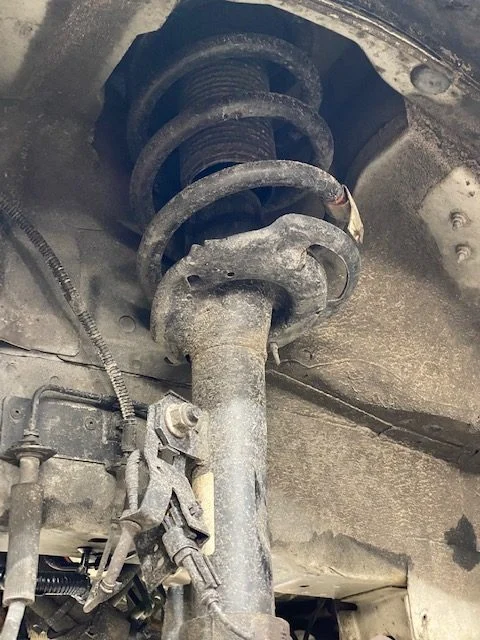
A strut combines a shock absorber with structural suspension components that help position the wheel. The shock absorber controls spring movement, while the spring supports the vehicle and the mount allows the strut to move as the steering operates.
During braking, the vehicle’s weight shifts toward the front axle. The front struts control how quickly the nose dips and help keep the tires pressed against the pavement instead of allowing repeated bouncing.
A worn strut usually does not create a brake rotor that is physically out of shape. Instead, poor damping can make an existing brake, tire, or alignment problem feel worse because the wheel loses consistent contact with the road.
Signs of a Worn Strut Assembly
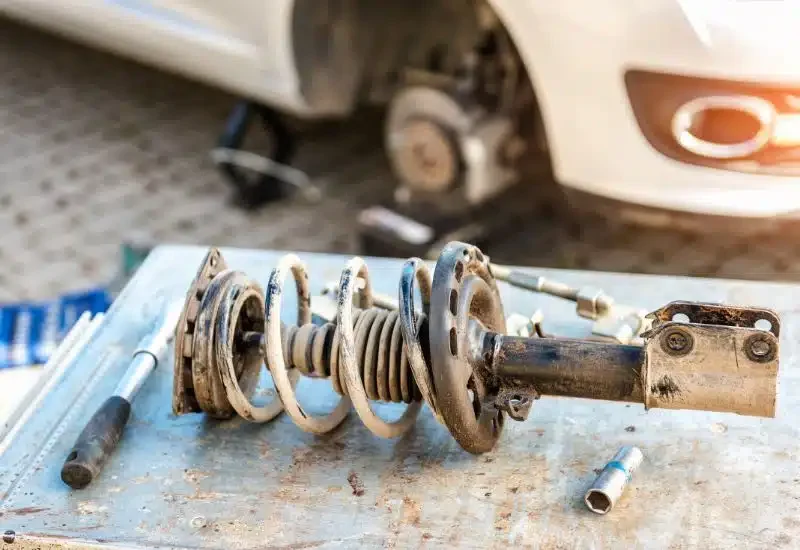
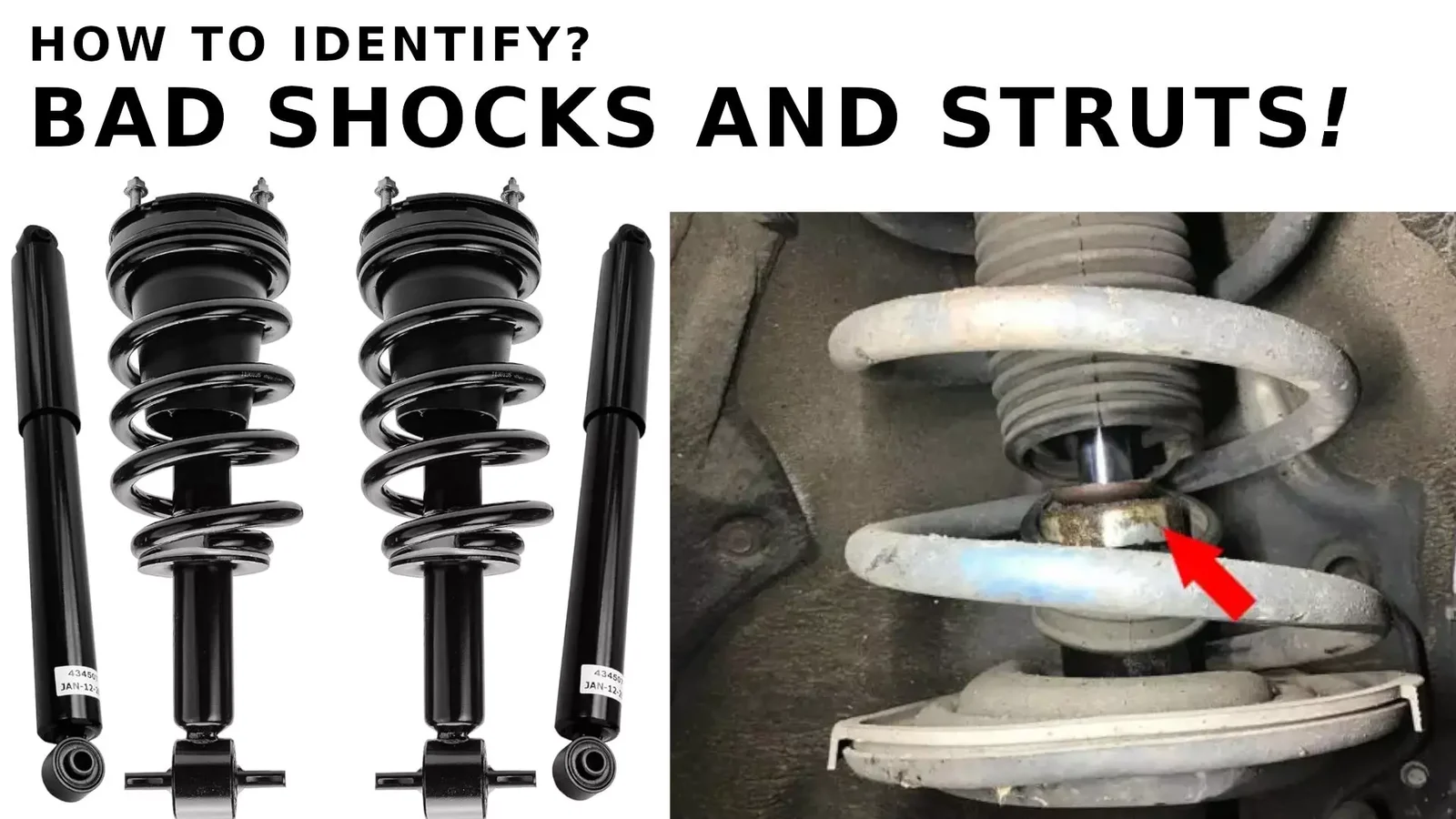
Strut wear can appear as excessive bouncing after a bump, a floating or loose ride, nose dive during stops, uneven tire wear, or fluid leaking from the shock body. A damaged upper mount may also cause clunking, binding, or rough steering when the wheel turns.
Visible oil around the strut does not prove that the entire assembly has failed, but a wet, damaged shock absorber deserves inspection. Some struts use a gas charge and may show little obvious leakage even when damping performance has declined.
- Repeated bouncing: The vehicle continues moving after a bump instead of settling quickly.
- Front-end dive: The nose drops sharply under braking, especially with weak front struts and soft springs.
- Uneven tire wear: Cupped or scalloped tread can develop when the tire repeatedly loses and regains contact with the road.
- Clunks or knocking: Noise may come from a strut mount, spring seat, stabilizer link, or another nearby suspension part.
Why Struts Can Make Brake Shake Feel Stronger
When a front strut cannot control wheel movement, the tire may unload slightly during a hard stop or over uneven pavement. That changing contact can produce a pulsing or trembling sensation even if the brake rotor is only moderately uneven.
Strut problems also affect alignment under load. Excessive movement can alter toe or camber briefly, causing the vehicle to wander, pull, or feel nervous while the brakes are applied.
Can Bad Struts Cause Shaking When Braking?
Yes, bad struts can cause or worsen shaking when braking, particularly when the shaking appears on rough pavement and comes with bouncing, nose dive, or uneven tire wear. The struts are more likely to be part of the problem when other suspension symptoms appear at the same time.
However, braking vibration more often comes from brake rotors, brake pads, tires, wheels, or loose steering and suspension components. Replacing struts without checking those parts can leave the original shaking unchanged.
The symptom pattern matters more than the word “shaking” alone. A smooth-road vibration that begins at a certain speed may suggest a wheel or tire issue, while a pulsing pedal during every stop points more directly toward the brake system.
Brake Rotor and Pad Clues
Brake rotors can develop thickness variation, surface deposits, corrosion, or heat-related damage. As the thicker and thinner areas pass between the pads, the caliper moves in and out, which can be felt as pedal pulsation or vehicle vibration.
Rotor “warping” is often used as a general term, but the underlying issue may involve uneven friction material transfer or changes in rotor thickness. Excessive heat, improper bedding, corrosion, or a sticking caliper can contribute.
- Brake-pedal pulsation: Often indicates rotor or hub runout, thickness variation, or a related brake issue.
- Steering-wheel shake: More noticeable with front brake vibration, front tire problems, wheel imbalance, or loose front-end parts.
- Vehicle-body vibration: Can occur with rear brake problems, tire issues, or suspension movement.
- Grinding or scraping: May indicate severely worn pads, damaged rotors, debris, or a failing brake component.
Tire, Wheel, and Hub Causes
A tire with a separated belt, a bent wheel, or an out-of-balance assembly can shake during braking and normal driving. Braking may make the vibration more noticeable because the suspension and tire are carrying a changing load.
Uneven tire wear caused by worn struts or poor alignment can also create a repeating rumble or tremor. A loose wheel, damaged wheel studs, or a failing wheel bearing creates a serious safety concern and requires prompt attention.
- Note whether the shaking occurs only during braking or also while coasting at the same speed.
- Notice whether the steering wheel, brake pedal, or seat carries most of the vibration.
- Look for tire bulges, uneven tread, fluid leaks, and loose or damaged suspension components.
How to Separate Strut Problems From Brake Vibration
Diagnosis should begin with the conditions that trigger the symptom. A controlled observation can narrow the possibilities, but it cannot replace a hands-on inspection of safety-related components.
Pay attention to speed, road surface, pedal feel, steering effort, noises, and whether the vehicle pulls left or right. A problem that appears only on bumpy roads has a different pattern from a vibration that starts during every stop on smooth pavement.
Because several worn parts can interact, a technician should inspect the complete corner rather than judging the strut in isolation. The same worn tire, loose bushing, or damaged wheel can change how a strut symptom feels.
Symptom Comparison
| Observed symptom | Possible sources | Useful inspection focus |
|---|---|---|
| Pedal pulses during repeated stops | Rotor thickness variation, hub runout, brake issue | Rotor condition, hub surface, caliper operation |
| Steering wheel shakes mainly during braking | Front brake, wheel, tire, or front suspension problem | Front rotors, tires, wheel balance, tie rods, ball joints |
| Vehicle bounces after bumps and dives while stopping | Weak struts, worn springs, damaged mounts | Strut leakage, rebound control, mounts, spring seats |
| Shake occurs while driving and braking | Tire, wheel, wheel bearing, or alignment concern | Tread condition, wheel runout, bearing play, alignment |
| Clunk during braking or turning | Loose bushing, mount, ball joint, link, or brake hardware | Suspension joints and fasteners, caliper and pad hardware |
| Vehicle pulls during braking | Sticking caliper, tire pressure difference, alignment, suspension wear | Brake temperatures, tire pressures, caliper movement, alignment |
Checks That Help Narrow the Cause
Start with basic observations. Confirm that all tires have the manufacturer’s recommended cold pressure, inspect the tread for bulges or severe uneven wear, and check whether the wheel appears damaged.
A visual strut inspection can reveal leakage, a broken spring, a torn mount, or physical damage. Do not rely on the old “bounce test” as proof that a strut is good; modern suspension designs and spring rates can make that test inconclusive.
- Record the trigger: Note the speed, road surface, braking force, and whether the vibration appears during normal driving.
- Identify the location: Decide whether the steering wheel, pedal, seat, or entire body carries the strongest movement.
- Inspect visible components: Look at tire tread, wheel damage, strut leakage, broken springs, and obvious loose hardware.
- Request a full safety inspection: Ask for brake, tire, wheel bearing, steering, suspension, and alignment checks rather than a strut-only diagnosis.
When Brake Shaking Makes Driving Unsafe
Minor vibration does not always mean immediate brake failure, but any change in braking control deserves attention. Brakes and suspension work together to keep the tires planted, so symptoms should not be dismissed because the vehicle still stops.
Stop driving and arrange an inspection if the vehicle pulls sharply, the pedal feels soft, the steering wheel moves violently, a wheel becomes unusually hot, or grinding and metal-on-metal sounds occur. A burning smell, smoke, severe clunk, or visible tire damage also calls for immediate caution.
Use extra care after a wheel has been removed or after suspension or brake work. Loose lug nuts, incorrectly installed brake hardware, or improperly secured suspension parts can create dangerous vibration.
Problems That Need Prompt Repair
- Loose steering or suspension joints: Excessive play in a tie-rod end, ball joint, control-arm bushing, or strut mount can affect steering control.
- Damaged tires: A bulge, exposed cord, separated tread, or severely uneven wear can lead to tire failure.
- Brake overheating: A sticking caliper may cause pulling, burning odors, premature pad wear, or a hot wheel.
- Broken springs or mounts: A damaged spring can change ride height and allow metal parts to contact the tire or body.
- Wheel or lug problems: A bent wheel or loose lug nuts can worsen rapidly and should not be driven on casually.
Repair Decisions for Struts and Brakes
The correct repair depends on the failed part, not only on the symptom. If the rotors show excessive runout or thickness variation, brake service may solve the vibration while leaving worn struts for a separate repair.
When one strut is clearly worn, many vehicles benefit from replacing the struts on the same axle as a pair. Matching damping from side to side helps preserve balanced handling, but the vehicle-specific design and manufacturer guidance should determine the repair plan.
New struts do not correct a damaged tire, bent wheel, sticking caliper, or loose control-arm joint. After suspension work, an alignment may be needed if the repair changes steering or wheel-position angles.
Common Repair Mistakes
- Replacing parts by guesswork: A strut replacement cannot repair rotor thickness variation or a tire with internal damage.
- Ignoring the cause of uneven wear: New tires can wear out again if alignment or suspension play remains unresolved.
- Servicing only one front strut: A single new strut may create uneven damping compared with a worn counterpart.
- Skipping hardware inspection: Caliper brackets, pad clips, mounts, bushings, and fasteners can all contribute to noise or movement.
- Testing at unsafe speeds: A vibration does not need a high-speed road test to be diagnosed safely by a qualified repair shop.
FAQs About can bad struts cause shaking when braking
Can worn front struts make the steering wheel shake during
Yes, worn front struts can worsen steering-wheel shake by allowing excess wheel movement, but front brake rotors, tires, wheels, and steering joints are also common causes.
A strut diagnosis becomes more likely when the shake occurs with nose dive, bouncing, clunking, or cupped tire wear.
How can brake rotors be distinguished from bad struts?
Rotor problems often cause brake-pedal pulsation or a repeatable vibration during stops on smooth pavement. Strut problems more often add bouncing, excessive body movement, nose dive, or poor control over bumps.
Both problems can exist together, so a complete inspection is more reliable than using a single symptom.
Should struts be replaced before brake rotors?
Neither part should automatically be replaced first. The repair should address the component that inspection identifies as worn or damaged.
If braking control is poor or the rotors are damaged, the brake concern takes priority for safety. Worn struts may then require separate service to restore suspension control.
Can bad rear struts cause shaking when braking?
Yes, worn rear struts can allow rear-end bouncing or instability during braking, although steering-wheel shake more often points toward a front-end issue.
Rear brake vibration, rear tire damage, and wheel problems can produce similar body movement and should be checked at the same time.
Is it safe to drive with shaking during braking?
It depends on the severity and cause, but continued driving is not advisable when the shaking is strong, worsening, or paired with pulling, grinding, a soft pedal, heat, or tire damage.
Reduce driving and arrange an inspection promptly when the symptom is new or affects stopping control.
Conclusion
Can bad struts cause shaking when braking? Yes, worn struts can contribute to the sensation by allowing excessive suspension movement and reducing tire control, but brake rotors, tires, wheels, bearings, and loose front-end parts are often more direct causes. The steering wheel, brake pedal, road surface, and related noises provide useful clues, but they do not replace a complete inspection.
Have the brakes, tires, wheels, suspension, and steering checked together before approving a repair. Avoid driving the vehicle if shaking is severe or braking control has changed.
Schedule a full brake and suspension inspection, and report exactly when the shaking occurs and whether it reaches the steering wheel or brake pedal.