Can a Bad Track Bar Cause Rear Chassis Waddle? Steering Risks
Yes, a worn or loose track bar can cause rear-end side movement that feels like a chassis waddle, especially during turns, braking, or over uneven pavement.
A track bar, also called a panhard bar, keeps a solid rear axle centered under the vehicle while the suspension moves up and down. When the bar, bushings, or mounting hardware develops excessive play, the axle can shift sideways instead of following a controlled path.
That movement may feel like the rear of the vehicle is stepping sideways, wandering, or steering itself. Other suspension and tire problems can create similar symptoms, so inspection should include the track bar, control arms, shocks, wheel bearings, tires, and frame mounts before replacing parts.
- ✓A loose track bar can allow lateral rear-axle movement and create a waddle or rear steer sensation.
- ✓Worn bushings, damaged mounts, loose bolts, and a bent bar are common causes of track-bar-related movement.
- ✓Check for movement while the suspension is loaded, and do not rely on a visual inspection alone.
- ✓Stop driving if the rear axle shifts noticeably, the vehicle becomes difficult to control, or a mount is cracked.
How a Track Bar Can Create Rear Chassis Waddle
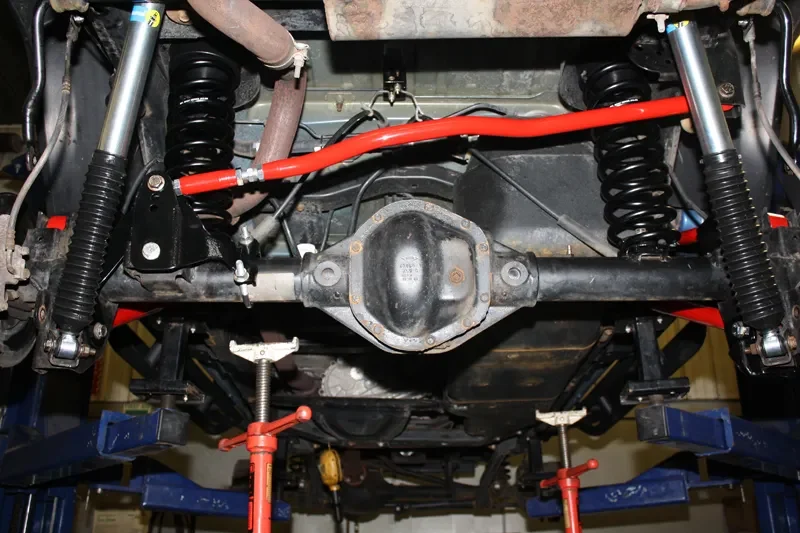
The track bar connects the solid rear axle housing to the vehicle frame. Its job is to control side-to-side axle movement while the suspension springs and shocks handle vertical movement.
Most track bars use a bushing or ball-joint-style connection at each end. The bar follows an arc as the axle moves, but the suspension geometry is designed to keep that lateral movement limited and predictable.
When a track-bar connection becomes loose, the axle can move sideways several times during a single drive. The body may shift over the axle, then settle back when the driver changes throttle, brakes, turns, or crosses a bump.
Why the Waddle Feels Like Rear Steering
A solid axle carries both rear wheels, so sideways axle movement changes the relationship between the tires and the vehicle body. The rear tires may point straight ahead, but the axle can shift beneath the chassis and make the vehicle feel as if the rear is steering.
The sensation is often strongest when the vehicle transitions from one direction to another. A lane change, a crowned road, a driveway entrance, or a rough patch can expose the problem because the suspension is loaded unevenly.
A worn track bar does not always produce a loud noise. Some vehicles show a clear clunk, while others mainly develop wandering, a delayed response, or a sideways bump that feels like a loose rear end.
Can a Bad Track Bar Cause Rear Chassis Waddle?
Yes, a bad track bar can cause rear chassis waddle when its bushings, joints, bolts, or mounting points allow excessive lateral movement. The symptom is more likely on vehicles with a solid rear axle, including many trucks, SUVs, and some older four-wheel-drive platforms.
The track bar may not be the only cause. A damaged control arm bushing, loose wheel, failed shock, bent suspension component, incorrect alignment, or tire problem can create a similar rear-end sensation.
The strongest clue is movement at the track-bar connection while the axle is loaded. If the axle shifts relative to the frame, or the bar moves independently inside a bushing, the connection needs repair rather than simple alignment adjustment.
Track-Bar Problems That Produce Side Movement
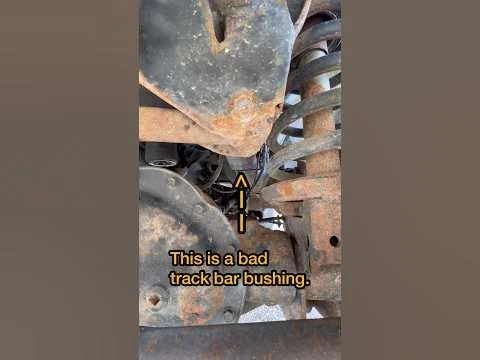
- Worn rubber bushings: Cracks, separation, compression, or excessive softness can let the bar move at its mounting point.
- Loose mounting bolts: A bolt that has lost clamping force can allow the bracket and bar eye to shift under load.
- Damaged ball joints or rod ends: Adjustable or aftermarket track bars may use joints that develop looseness, corrosion, or torn protective boots.
- Bent track bar: Impact damage or incorrect installation can change the bar’s geometry and reduce axle control.
- Cracked frame or axle bracket: A damaged mount can flex even if the track bar itself is in good condition.
Symptoms That Support a Track-Bar Diagnosis
A track-bar fault becomes more likely when the waddle occurs with a clunk from the rear suspension, visible axle shift, uneven rear tire wear, or a changed steering-center position. On some vehicles, the steering wheel may sit off-center after the axle moves laterally, even though the front alignment has not changed.
Lifted vehicles deserve extra attention because suspension height changes alter the track bar’s operating angle. A poorly matched lift, incorrect bracket, or insufficiently tightened hardware can increase side movement and accelerate bushing wear.
How to Inspect the Track Bar and Rear Suspension
A useful inspection checks both the track bar and the structure that supports it. The vehicle should be on a stable, level surface, with the parking brake applied and the wheels secured as appropriate for the inspection.
Do not place any part of the body under a vehicle supported only by a jack. If the inspection requires access beneath the chassis, use correctly rated jack stands at approved support points and follow the vehicle manufacturer’s service procedure.
A helper can make the problem easier to see. Small suspension movements that are invisible while the vehicle is parked may become obvious when the axle is loaded and someone gently moves the vehicle or turns the steering wheel, where the design allows that test.
Practical Track-Bar Inspection Steps
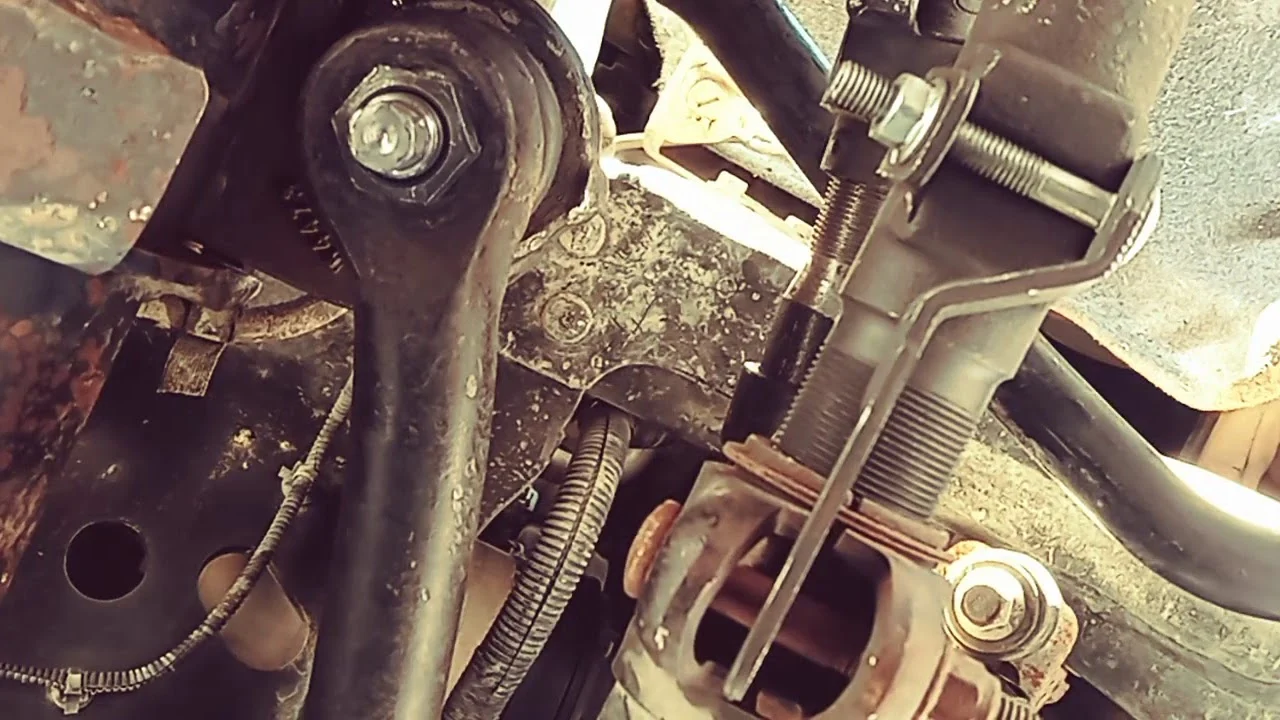
- Check the bar and brackets visually. Look for bends, fresh metal marks, cracked welds, distorted holes, rust scale, and contact marks near the frame or axle mount.
- Inspect the bushings or joints. Look for torn rubber, separated sleeves, missing washers, damaged boots, or grease loss from a serviceable joint.
- Watch the connections during movement. Have a helper apply controlled movement while observing each end. The bar should not shift loosely inside the bushing or joint.
- Check fasteners. Look for loose hardware, stretched bolts, damaged threads, or evidence that a bolt has been moving in its hole.
- Compare axle position. Measure from the tire sidewall or wheel rim to a consistent body reference on both sides. Differences can indicate axle offset, but the measurement is only a clue, not a final diagnosis.
- Inspect related components. Examine control arms, trailing arms, sway-bar links, shocks, coil springs, leaf-spring mounts, wheel bearings, and tires.
- Movement at the joint: A bushing can look acceptable while its inner sleeve moves excessively.
- Mount integrity: A cracked bracket can mimic a failed track bar and may require structural repair.
- Fastener position: Paint or rust witness marks around a bolt can show that the hardware has shifted.
Other Problems That Mimic a Rear Chassis Waddle
Rear suspension symptoms overlap, so replacing the track bar without confirming the fault can leave the vehicle unstable. The location of noise, the timing of the movement, and what changes under braking or acceleration can help separate possible causes.
A waddle that appears mainly during braking may involve a loose wheel, worn wheel bearing, failed suspension bushing, brake issue, or axle movement. A vehicle that wanders over bumps may have several worn components rather than a single failed part.
Tire condition matters as well. A separated tire belt, mismatched tires, low pressure, or severe uneven wear can make the rear of a vehicle feel loose even when the suspension is sound.
| Possible cause | Clues that may point to it | Inspection focus |
|---|---|---|
| Track bar or track-bar bushing | Side-to-side axle shift, rear steer feeling, clunk over uneven surfaces | Bar ends, bushings, joints, brackets, and fasteners |
| Control-arm or trailing-arm bushing | Movement during braking or acceleration, changing pinion or axle position | Cracked rubber, separated sleeves, and arm movement |
| Wheel bearing or loose wheel | Humming, looseness at the wheel, movement that changes with speed | Wheel fasteners, bearing play, and hub condition |
| Tire defect or pressure problem | Pulling, vibration, thumping, irregular wear, or speed-related wobble | Tire pressure, tread, sidewalls, and belt condition |
| Shock absorber or spring problem | Repeated bouncing, poor control after bumps, uneven ride height | Leaks, broken springs, and rebound control |
| Frame or axle bracket damage | Persistent offset, cracks, distorted mounting holes, or recent impact | Welds, brackets, surrounding metal, and alignment measurements |
When a Waddling Rear End Is Unsafe to Drive
A small amount of suspension compliance is normal, but noticeable axle movement is not something to ignore. Rear lateral movement can reduce tire stability during an emergency lane change, hard braking, towing, or wet-road driving.
Driving should stop if the vehicle suddenly develops severe wandering, the rear axle visibly shifts, a wheel feels loose, a tire has a bulge or belt separation, or a track-bar bracket is cracked. A tow is safer than testing the vehicle at highway speed.
If the symptom is mild and the vehicle remains controllable, a short, slow trip to a repair facility may be possible, but the decision depends on the inspection results and the severity of the movement. Avoid towing, heavy loads, rough roads, and high speeds until the cause is confirmed.
Why Alignment Alone May Not Solve the Problem
An alignment can measure axle position and help identify an offset, but alignment settings cannot repair a loose bushing, worn joint, bent bar, or cracked bracket. Adjusting the axle position without fixing the source of movement may only hide the symptom temporarily.
After a track-bar repair, the vehicle may need an alignment check, especially if the axle position changed or the bar is adjustable. The repair should also include proper hardware inspection and tightening according to the vehicle or component manufacturer’s procedure.
Repair Choices for Track-Bar Waddle
The correct repair depends on which part has failed. A worn bushing may require a bushing replacement or complete track-bar replacement, while a damaged bracket may need a structural repair before a new bar is installed.
Replacing only the most visible part can fail if the mounting hole has become enlarged or the opposite end is also worn. The bar, bushings, joints, brackets, and fasteners should be evaluated as a system.
For a stock vehicle, a quality replacement that matches the original application is usually the simplest path. Lifted or modified vehicles need a track bar designed for the changed suspension geometry, along with compatible brackets and correct clearance.
Common Repair Mistakes
- Using impact tools without a final torque check: Power tools can over-tighten or damage hardware, while under-tightened fasteners may loosen again.
- Tightening rubber-bushed parts at full suspension droop: Many bonded bushings should be tightened at the manufacturer-specified ride-height position to prevent preload and premature failure.
- Replacing the bar but ignoring the bracket: A weak or cracked mount can damage the replacement part and allow the same symptom to return.
- Choosing an adjustable bar without checking geometry: Adjustment should center the axle for the actual ride height, not simply compensate for another suspension problem.
- Skipping a post-repair inspection: Confirm clearance, fastener security, axle position, tire wear, and road behavior after the repair.
How to Confirm the Repair Worked
After repair, the rear axle should remain controlled during gentle braking, acceleration, turns, and low-speed bumps. The vehicle should not produce a new clunk, drift sideways, or require constant steering correction.
Check for abnormal tire contact, suspension binding, and interference between the track bar, differential housing, exhaust, wheels, and other nearby parts. Modified vehicles may need additional clearance checks through the full suspension range.
A short test drive should begin at low speed in a safe area. If the waddle remains, stop treating the track bar as the only suspect and have the entire rear suspension and tires inspected again.
FAQs About can a bad track bar cause rear chassis waddle
Can a worn track bar make the rear
Yes. Excessive track-bar movement can let the solid rear axle shift sideways under the chassis, creating a rear-steer sensation during turns, braking, or bumps.
The same feeling can come from control-arm bushings, tires, wheel bearings, or damaged axle brackets, so the entire rear suspension should be checked.
Can a bad track bar cause a waddle without making
Yes. A worn bushing or joint may allow enough axle movement to cause wandering without producing a noticeable clunk.
Visual inspection and a controlled movement test are more useful than waiting for noise to develop.
Is it safe to drive with a loose rear track
It may not be safe, particularly if the rear axle moves visibly or the vehicle is difficult to control. Avoid highway speeds, towing, and heavy loads until the cause is repaired.
Severe movement, a cracked mount, loose wheel, or damaged tire calls for towing rather than continued driving.
Will an alignment fix rear movement from a bad track
No. Alignment can identify axle offset or correct settings, but it cannot repair a loose track-bar bushing, worn joint, bent bar, or damaged bracket.
The failed component must be repaired first, followed by an alignment check when the vehicle’s geometry requires it.
Conclusion
Can a bad track bar cause rear chassis waddle? Yes, a worn track bar or damaged mounting point can let a solid rear axle move sideways and make the vehicle feel unstable or as if the rear is steering. The symptom can overlap with tire, wheel-bearing, shock, control-arm, and bracket problems, so diagnosis should cover the whole rear suspension.
Inspect the track-bar ends, bushings, fasteners, axle and frame brackets, and related suspension parts before driving at speed. Repair the confirmed fault, verify clearances and hardware, and check alignment when needed.
Before the next highway trip, have the rear axle and track-bar connections checked for visible movement, loose hardware, worn bushings, and cracked mounts.