Yes, some shock absorbers should extend on their own when compressed by hand, but others may extend slowly or show little movement. The result depends on the design, gas pressure, temperature, and test method.
For drivers and repair technicians in the United States, checking shock absorbers is a common part of suspension maintenance. A shock absorber removed from a vehicle may push its rod outward after you compress it. This behavior is often linked to gas pressure inside the unit, but it does not provide a complete test of the shock absorber’s condition.
A gas-charged shock may extend by itself because pressurized gas helps push the piston rod outward. A low-pressure or conventional hydraulic design may behave differently. Even among gas-charged units, extension speed and force can vary, so there is no single movement pattern that proves every shock absorber is good.
Before testing a shock, identify its type and check the vehicle or part manufacturer’s instructions. A hand test can reveal obvious binding, uneven movement, or a lack of expected return, but it cannot measure damping performance under road conditions. If the shock is leaking, damaged, or difficult to move, further inspection may be needed.
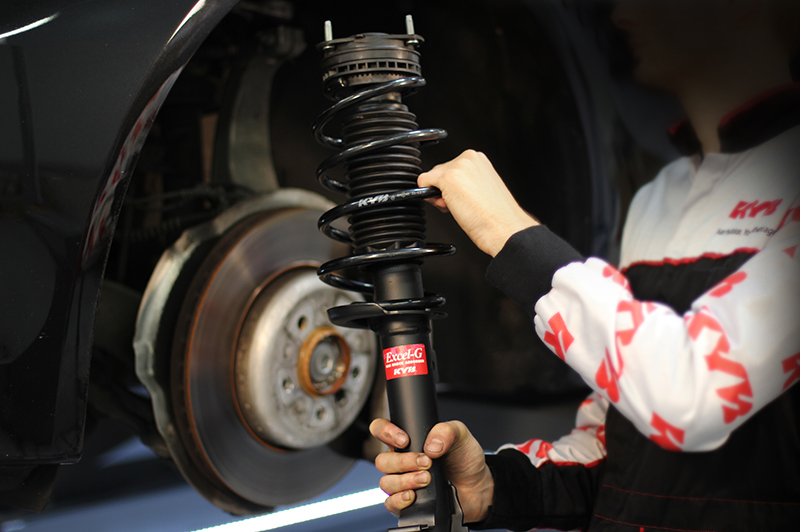
A shock absorber may extend on its own because pressure inside the unit pushes the piston rod outward. This is most noticeable with many gas-charged designs. When you push the rod into the body, you compress the internal assembly and displace fluid, while the gas charge can provide an outward force that helps return the rod.
The main job of a shock absorber is to control spring movement. It does this by forcing hydraulic fluid through small passages and valves as the suspension moves. The resistance created by this flow turns some movement energy into heat, helping limit bouncing and keeping the tires in better contact with the road.
Self-extension and damping are related to the shock’s design, but they are not the same thing. Extension describes how the rod returns after being pushed inward. Damping describes how strongly the unit resists movement. A shock can extend smoothly and still have weak damping, internal wear, or a problem that appears only under greater load.
Source: imgcdnblog.carmudi.com.ph
Gas pressure
In many gas-charged designs, internal gas pressure helps push the rod outward. The force and return speed vary by model.
Hydraulic resistance
Oil flowing through internal valves resists movement. This resistance helps control the suspension rather than simply returning the rod.
Rod and seal design
The rod, piston, seals, and internal pressure system affect how a shock moves when tested by hand.
Does Every Shock Absorber Have to Extend Fully?
No. There is no universal rule that every shock absorber must extend fully or quickly after you compress it. Some gas-charged shocks extend with noticeable force, while other units return slowly or show limited outward movement. The correct behavior depends on the part design and the manufacturer’s specifications.
A shock may also move differently when cold than when warm because fluid viscosity changes with temperature. The way the unit is held, the speed of compression, and how far the rod is pushed inward can affect the result. Compare the behavior with the manufacturer’s procedure rather than relying on a general expectation.
Full extension
A rod that returns toward full extension may be normal for a particular gas-charged shock, but this alone does not prove it is healthy.
Slow extension
A slow return can reflect the unit’s design, temperature, or internal condition. Check the model-specific instructions before judging it.
No visible extension
Some shocks have little self-extension. If the manufacturer specifies that the rod should extend, a lack of movement may warrant further testing.
How Gas-Charged and Hydraulic Shocks Behave Differently
The type of shock absorber is one of the main factors that determines whether it extends on its own. Gas-charged shocks use pressurized gas as part of their internal design, while conventional hydraulic shocks rely mainly on hydraulic fluid and their mechanical components. These broad categories include different designs, so the product specification matters more than the label alone.
Many gas-charged shocks use nitrogen gas to help reduce foaming in the oil during demanding operation. The gas pressure may also create an outward force on the piston rod. This force does not mean the shock can lift a vehicle or replace its suspension spring; it is an internal operating feature.
A conventional hydraulic shock may not push its rod outward with the same force. It can still provide effective damping when correctly designed and in good condition. Therefore, judging a hydraulic shock by the behavior expected from a gas-charged unit can lead to a false diagnosis.
Source: deinfa.com
Twin-tube gas-charged shocks
These use an inner working cylinder and an outer reserve chamber. Many provide some self-extension, but the amount varies by application.
Monotube gas-charged shocks
These generally use a single working cylinder and a floating separator between the oil and pressurized gas. Their rod may extend with noticeable force, depending on the design.
Conventional hydraulic shocks
These may show little or no self-extension. Their behavior should be checked against the manufacturer’s specifications.
Struts
A strut is a structural suspension component that also provides damping. A strut insert or complete strut may behave differently from a conventional shock, so follow the exact part instructions.
Why Nitrogen Pressure Does Not Prove a Shock Is Good
Internal gas pressure can help a rod extend, but it does not confirm that the valves control movement correctly. Worn valves, damaged seals, or internal wear may reduce damping even if the rod still moves outward. A simple extension check cannot measure how well the shock handles repeated suspension movement.
Gas pressure is also not a direct measure of ride comfort. A shock’s valving, piston design, fluid characteristics, and intended application all affect how it responds to bumps and body motion. The correct replacement must match the vehicle and the intended use.
Extension is a clue
Use rod movement as one observation, not as a complete pass-or-fail test.
Damping needs separate assessment
Look for leaks, binding, uneven movement, and vehicle symptoms, and use suitable professional testing when the result is uncertain.
How to Test Whether a Shock Absorber Extends on Its Own
You can observe self-extension with a removed shock absorber if the manufacturer permits manual testing. The test should be treated as a basic mechanical check, not a final diagnosis. Before you start, confirm that the component is a conventional hand-testable unit and that no special handling instructions apply.
Some shocks contain pressurized gas and can extend with considerable force. Keep your face and hands clear of the rod’s path, do not clamp or grip the polished rod with pliers, and do not try to open the sealed body. If the unit is damaged, leaking heavily, or has an unfamiliar design, stop and ask a qualified technician to inspect it.
Source: mail.freeasestudyguides.com
Prepare the work area
Use a stable bench with enough room for the shock to move. Wear eye protection and keep the rod pointed away from your face and other people.
Check the part information
Confirm the part number and consult the manufacturer’s instructions for compression, extension, orientation, and any required priming procedure.
Inspect the exterior
Look for fluid leakage, a bent or scored rod, dents, deep corrosion, loose mounts, and damaged bushings before moving the rod.
Move the rod only as instructed
If manual movement is allowed, compress and release the rod in the specified direction and at the recommended pace. Do not force a unit that binds or resists unexpectedly.
Observe the return
Note whether the rod extends, how smoothly it moves, and whether resistance feels consistent. Compare the result with the instructions for that exact shock.
Decide whether more testing is needed
If movement differs from the specified behavior or the unit shows other damage, arrange further inspection rather than assuming that extension alone settles the question.
What a Normal Result May Look Like
For a gas-charged shock designed to self-extend, a normal hand test may show the rod moving outward after compression. The return should be consistent with the unit’s instructions, and the movement should not show unexplained sticking or abrupt mechanical interference. Some models may return slowly, so speed alone is not a universal standard.
A conventional hydraulic shock may not extend under its own force. That result may be normal if the design does not specify self-extension. The most useful comparison is with the manufacturer’s procedure or a verified equivalent part, not with an unrelated shock removed from another vehicle.
Smooth movement
A smooth, repeatable response is reassuring when it matches the part’s documented behavior, but it does not prove full damping performance.
Consistent resistance
Resistance should be consistent with the manufacturer’s instructions. A hand test is subjective and cannot replace a specified force or performance test.
What to Do If the Rod Does Not Extend
First, confirm the shock type and exact part number. A lack of outward movement may be normal for one design but abnormal for another. If the manufacturer requires self-extension, repeat only the permitted test under the stated conditions and check whether temperature or a required preparation procedure affects the result.
If the rod still fails to behave as specified, binds, moves unevenly, or has visible damage, do not install the part until the issue is resolved. A supplier or suspension technician can confirm whether the unit is defective, incorrectly handled, or unsuitable for the application.
Do not force the rod
Forcing a stuck rod may cause damage or create a safety risk. Stop if movement is abnormal.
Do not condemn the shock on extension alone
Confirm the expected behavior from the exact manufacturer’s instructions before deciding whether the unit has failed.
Does a Shock Absorber Need to Be Primed Before Testing?
Some replacement shocks require a preparation procedure before installation, while others do not. The process may be called priming, bleeding, or cycling, depending on the manufacturer’s instructions. It generally involves moving the rod through a prescribed part of its travel to help establish the intended internal fluid condition and remove unwanted air where the design and procedure require it.
Priming instructions are not universal. Some sealed units are designed to be installed without a special procedure, and some manufacturers specify a particular orientation or number of cycles. Follow the exact instructions supplied with the part rather than applying a generic method to every shock absorber.
If a shock has been stored horizontally, has an unusual feel, or seems slow to respond, do not assume that it is defective or that cycling it will fix the issue. Check the manufacturer’s guidance first. A required preparation step may affect the observed movement, but it does not repair worn seals, damaged valves, or a bent rod.
Source: i.ytimg.com
Use the specified procedure
Follow the part maker’s directions for position, stroke, and cycling. Avoid inventing a cycle count or forcing the rod.
Recheck after preparation
Observe the rod only as directed and compare the response with the stated requirements.
Stop if resistance is abnormal
A rod that sticks, scrapes, or will not move as specified needs further evaluation.
Can Incorrect Handling Change the Test Result?
Yes. The test method, unit orientation, temperature, and whether the specified preparation has been completed can affect the behavior you observe. A quick push on an unfamiliar shock may therefore give a misleading result.
Record the part number and the conditions of the test if you need help from a supplier or technician. Clear information makes it easier to distinguish a normal design characteristic from a possible defect.
Avoid mixed comparisons
Do not compare different shock types as if they should extend at the same speed or force.
Use a repeatable method
Apply the manufacturer’s procedure consistently so that the observations are meaningful.
Signs That a Shock Absorber May Be Worn or Damaged
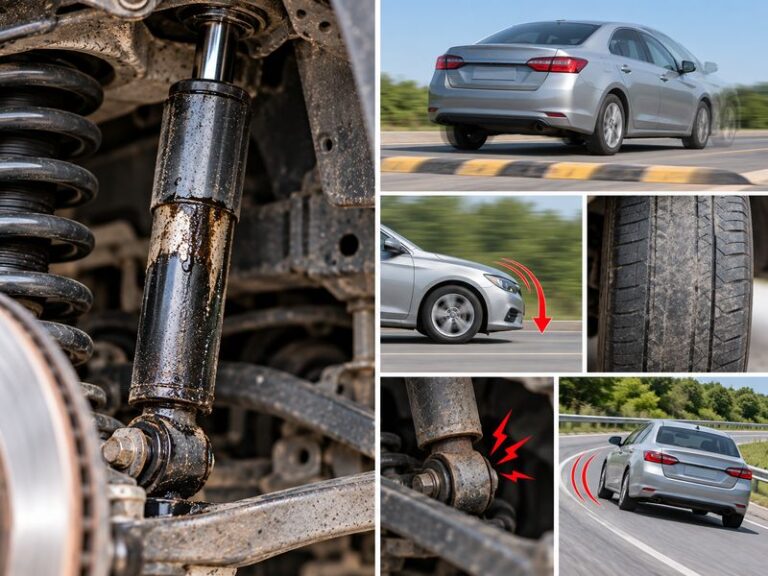
A shock absorber may be faulty even when its rod extends on its own. The best diagnosis combines a physical inspection, the vehicle’s symptoms, and a suitable test. No single symptom or hand movement should be treated as proof without considering the vehicle, suspension layout, and other possible causes.
A light film of fluid can be difficult to interpret without the manufacturer’s guidance, while active leakage or oil running down the body may indicate a problem. Dirt, road grime, and residue from other components can also confuse a visual inspection. Clean and inspect the area as appropriate, and seek professional assessment if the source of the fluid is uncertain.
A vehicle that bounces excessively, pitches during braking, feels unstable, or shows uneven tire wear may have a suspension problem. Worn tires, damaged springs, loose suspension joints, alignment faults, and other components can produce similar symptoms. Inspect the system as a whole instead of replacing a shock based on one sign.
Source: matrixautorepair.com
Fluid leakage
Visible active leakage from the shock body or rod seal warrants inspection. Confirm the source rather than mistaking grease or fluid from another component for shock oil.
Bent or damaged rod
A bent, deeply scored, or corroded rod can damage seals and interfere with smooth movement.
Binding or uneven travel
Sticking, scraping, or inconsistent movement may indicate damage or a mechanical problem that needs investigation.
Excessive bouncing
Repeated body movement after a bump can suggest poor damping, but springs, tires, and other suspension parts also affect vehicle behavior.
Poor road control
Unusual sway, nose dive, or reduced stability can point to worn damping or other suspension faults. Arrange an inspection if handling changes noticeably.
Uneven tire wear
Cupping or irregular wear may be associated with suspension problems, but tire pressure, balance, alignment, and other faults must also be checked.
Symptoms That Need Prompt Attention
Do not continue normal driving if a suspension component is loose, broken, severely leaking, or visibly damaged in a way that may affect vehicle control. A failed mount or damaged strut can create risks beyond ride comfort. Arrange a safe inspection or towing if the vehicle cannot be driven with confidence.
If the vehicle simply rides more harshly than usual, book an inspection soon and describe the conditions under which the change occurs. Do not rely on a bounce test alone, because modern suspension layouts and vehicle control systems can make that test inconclusive.
Stop and inspect
Treat sudden instability, a broken mount, severe fluid loss, or unusual suspension noise as a reason for prompt professional evaluation.
Check related parts
Ask the technician to inspect springs, mounts, bushings, tires, and suspension joints as well as the shock absorber.
Can You Test a Shock Absorber While It Is Still on the Car?
Yes, some useful checks can be made with the shock installed, but the results are different from a removed-part test. An installed shock is connected to the suspension, and the spring, vehicle weight, mounts, and suspension geometry all influence how the system moves. You cannot judge the shock’s self-extension reliably by watching the body rise after lifting the vehicle.
Start with a visual inspection from a safe position. Look for obvious fluid leakage, damage, loose mounts, or broken components without placing any part of your body under a vehicle supported only by a jack. If access requires lifting the vehicle, use the manufacturer’s lifting points and correctly rated stands on a stable surface, or have a professional do the work.
A controlled road test may help identify excessive bouncing, poor body control, or unusual noise, but it should be performed only when the vehicle is safe to drive. If steering or handling is seriously affected, do not drive it to reproduce the symptom. A workshop can use appropriate inspection methods and equipment to assess the suspension.
Source: pmmonline.co.uk
Visual inspection
Look for leaks, damaged mounts, bent components, corrosion, and signs of contact with nearby parts.
Vehicle behavior
Note repeated bouncing, unusual sway, harsh impacts, or changes in handling, while recognizing that several faults can cause similar symptoms.
Professional evaluation
Use a suspension shop when the source of a symptom is unclear or when safe access requires specialized lifting or testing equipment.
Why the Bounce Test Has Limits
Pushing down on a parked vehicle and watching it rise can sometimes reveal grossly weak damping, but it is not a reliable universal test. Vehicle mass, spring rate, suspension design, tire characteristics, and electronic suspension systems affect the response. A vehicle that passes a bounce test may still have a worn shock.
Do not repeatedly jump on body panels or apply force to areas that can be damaged. If the vehicle has a clear handling problem or visible suspension damage, a proper inspection is more useful than repeating a simple bounce test.
Use it only as an initial clue
A bounce test can identify some obvious concerns but cannot establish the shock’s full damping performance.
Confirm the diagnosis
Combine observed symptoms with a component inspection and appropriate testing before choosing a repair.
Should a New Shock Absorber Extend on Its Own?
A new shock absorber may extend on its own if its design uses enough internal gas pressure to produce that movement. Many new gas-charged replacement shocks show visible self-extension after compression. However, a new hydraulic unit or a model with a different internal design may not act the same way.
Do not reject a new part only because it extends more slowly than another shock or does not push outward with much force. Verify the part number, fitment, orientation, and preparation procedure. A correct replacement should meet the manufacturer’s stated requirements for its specific design.
If a new shock is leaking, has a bent rod, binds during the specified test, or fails to meet a documented functional check, contact the seller or manufacturer before installation. Keep packaging and part details available, and do not modify the unit to make it behave like a different model.
Source: www.autolegend.sg
Confirm compatibility
Match the part to the vehicle’s year, make, model, trim, suspension package, and any relevant load or performance requirements.
Follow installation instructions
Use the specified mounting orientation, hardware, torque values, and preparation procedure.
Investigate a failed check
Document the behavior and seek a supplier or manufacturer’s assessment rather than assuming the part is defective from one observation.
Does a Shock Need Time to Settle After Installation?
A shock absorber does not generally need a break-in period simply to become capable of extending. The internal response should be consistent with the design and installation instructions from the start. However, vehicle height and ride feel can change after suspension work because bushings, mounts, springs, and other parts may settle into their working positions.
If the vehicle sits at an unexpected height or the suspension makes noise after installation, check the mounting procedure and related parts. Do not assume that a serious noise, leak, or handling change will disappear with time. Have the installation checked if the condition persists or creates a safety concern.
No universal break-in rule
Follow the part manufacturer’s instructions rather than assuming every shock requires a fixed settling period.
Recheck installation
Confirm correct hardware, mount seating, and specified torque where applicable if the ride or suspension behavior seems wrong.
Common Mistakes When Checking Shock Absorber Extension
The most common mistake is treating one movement pattern as a universal standard. Shock absorbers vary by design, and an outward-moving rod is not the only sign of a serviceable unit. The safest approach is to combine model-specific instructions with visual checks and the vehicle’s symptoms.
Another mistake is assuming that a shock must push outward with enough force to support the vehicle. The suspension spring carries the vehicle’s static load in many conventional layouts, while the shock mainly controls motion. A shock’s internal gas pressure can influence extension without making it a substitute for a spring.
It is also easy to confuse a fault in another suspension part with a shock problem. Loose mounts, damaged bushings, worn springs, bad tires, and alignment faults can affect ride and handling. A careful diagnosis checks the full system before parts are replaced.
Source: i.ytimg.com
Mistake: comparing unrelated shocks
Different designs can have different extension speeds and forces. Compare only with relevant specifications or an equivalent part.
Mistake: forcing a stuck rod
Excessive force can damage the unit or create a hazard. Stop when movement is abnormal.
Mistake: assuming extension proves good damping
A rod can extend while internal damping performance is poor. Assess other signs and use proper testing when needed.
Mistake: ignoring a leak
Visible active leakage needs evaluation even when the rod still moves normally.
Mistake: opening a sealed shock
A sealed shock may contain pressurized gas and fluid. Do not drill, cut, heat, or disassemble it.
When Should You Replace the Shock?
Replacement is appropriate when the shock fails the manufacturer’s inspection criteria, has confirmed damage or unacceptable leakage, or no longer provides adequate damping. The exact decision depends on the part design, vehicle requirements, and evidence from the inspection. A shock that does not self-extend should not be replaced solely for that reason unless its specifications make that behavior a failure.
When replacing a shock, check whether the vehicle or manufacturer recommends replacing shocks in pairs on the same axle. Matching components can help preserve balanced damping, but the correct service recommendation depends on the application and condition of the existing parts. Follow the vehicle service information and part instructions.
Replace when confirmed faulty
Use documented inspection findings and the relevant service criteria rather than a single subjective hand test.
Check axle pairing guidance
Consult the vehicle and part manufacturers before deciding whether one shock or both shocks on an axle should be replaced.
Frequently Asked Questions
Q
Should a gas-charged shock absorber extend by itself?
Many gas-charged shock absorbers extend after being compressed because internal gas pressure helps push the rod outward. The amount and speed of extension vary by design, so check the manufacturer’s instructions for the exact part.
Q
Is a shock absorber bad if it does not extend on its own?
Not always. Some conventional hydraulic shocks have little or no self-extension. If the part is designed to extend and does not meet the manufacturer’s test criteria, it may need further inspection or replacement.
Q
How fast should a shock absorber extend?
There is no universal extension speed for all shock absorbers. Internal gas pressure, valve design, fluid temperature, and the test method affect the response. Use the specification for the exact model rather than a general speed estimate.
Q
Can a shock absorber be bad if it extends smoothly?
Yes. Smooth extension does not prove that a shock can damp suspension movement correctly. Internal valve wear or other faults may reduce damping even when the rod returns normally. Check for leaks and damage, assess vehicle symptoms, and arrange further testing if needed.
Q
Should I compress a shock absorber before installing it?
Only follow a compression or priming procedure when the manufacturer specifies one. Some shocks require cycling before installation, while others do not. Use the stated method and do not force the rod or assume that every design needs the same preparation.
Q
Can I drive with a shock absorber that will not extend?
The lack of self-extension alone does not establish that a shock is unsafe because some designs behave that way normally. If the shock has confirmed damage, severe leakage, a broken mount, or symptoms that affect vehicle control, avoid normal driving and arrange a professional inspection.
✦ Wrapping Up
Conclusion
A shock absorber can extend on its own, especially when it uses a gas-charged design, but this behavior is not required of every model. The amount of outward movement depends on the shock’s construction and the conditions of the test. A rod that returns smoothly is useful information, not proof that the shock is fully functional.
For a reliable diagnosis, identify the exact part, follow its manufacturer’s test and preparation instructions, and inspect for leaks, damage, binding, and signs of poor damping. Consider vehicle handling symptoms and other suspension components before choosing a repair. If the results do not match the documented specifications, have the unit checked by a qualified suspension technician.
💡 Key Takeaway
Before replacing a shock absorber, verify whether its design should self-extend, perform only the approved hand test, and confirm any suspected failure through the manufacturer’s criteria or a qualified inspection.
Eric
Hi, I’m Eric Bennett, the person behind OffRoadTruckAccessories.com.
I created this blog to share my interest in trucks, off-road driving, automotive accessories, and DIY modifications. I enjoy learning how different truck accessories work, testing their usefulness, and understanding whether they are truly worth buying.
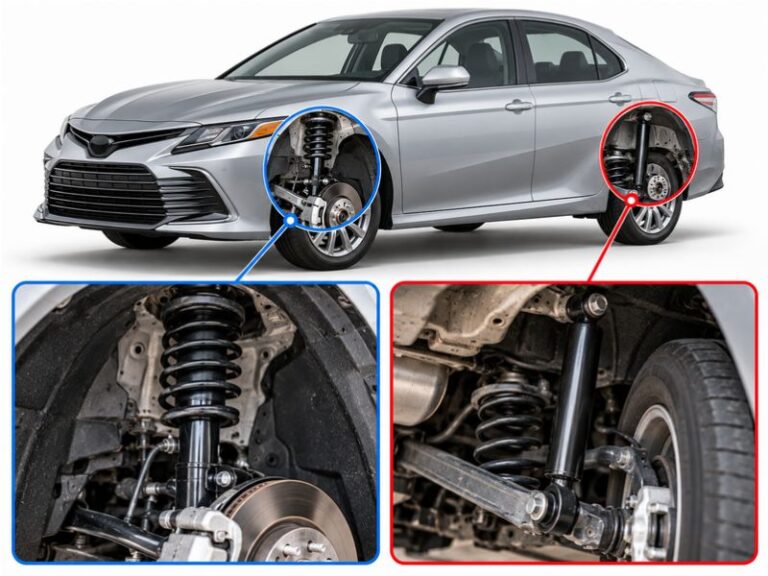
Shock absorbers are located near the wheels as part of the suspension system, usually between the vehicle’s body, frame, or subframe and a suspension component such as a control arm, axle, or wheel assembly. However, the exact answer to where are shock absorbers located on a car depends on the suspension design. Some vehicles have…
You should change shock absorbers when they are worn, leaking, damaged, or no longer controlling suspension movement properly. There is no single replacement interval that applies to every vehicle because shock absorber life depends on road conditions, vehicle weight, driving habits, suspension design, and component quality. If you are wondering when to change shock absorbers,…