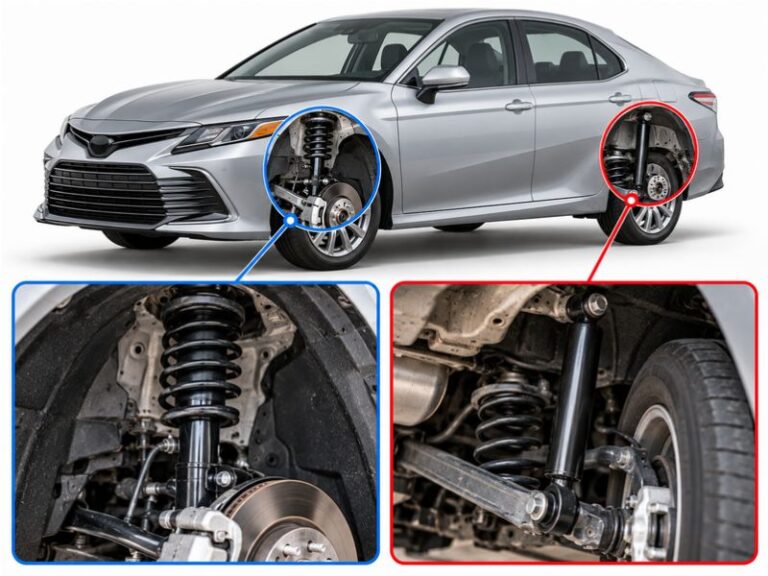
A twin tube shock absorber is a suspension part with two nested tubes. It uses hydraulic fluid and internal valves to control wheel movement, reduce bouncing, and help keep a vehicle stable on the road.
For drivers in the United States, twin tube shock absorbers are a common suspension design found in many passenger cars, SUVs, light trucks, and replacement suspension systems. They help control body movement as a vehicle travels over potholes, uneven pavement, speed bumps, and rough roads. Their job is not to hold up the vehicle’s weight by themselves. Springs support the vehicle, while shocks control how quickly the springs move.
The twin tube design uses an inner working cylinder and an outer reserve tube. A piston moves inside the inner cylinder as the suspension travels up and down. Hydraulic fluid passes through small valve openings, which resist movement and turn some motion energy into heat. This process helps prevent repeated bouncing after a bump.
Twin tube shocks are popular because their design can balance ride comfort, cost, and practical durability. However, not every twin tube shock has the same performance. Valve tuning, fluid, gas pressure, construction quality, vehicle weight, and intended use all affect how a shock performs. Understanding these factors helps drivers choose the correct replacement instead of relying on the design name alone.
A twin tube shock absorber is a hydraulic suspension damper built with two tubes arranged one inside the other. The inner tube contains the moving piston and provides the main working chamber. The outer tube forms a reserve chamber for hydraulic fluid and accommodates fluid displaced during suspension movement.
When a vehicle’s wheel moves over a bump, the shock absorber’s piston travels through the inner tube. Valves inside the piston and at the base of the assembly regulate the flow of fluid. The resistance created by this flow slows the movement of the suspension and helps the vehicle settle after the bump.
The word twin refers to the two-tube construction, not to the number of shocks fitted to a vehicle. A car may have four shock absorbers, depending on its suspension design, and each one may use a twin tube construction. Some vehicles use struts instead of separate shock absorbers at certain wheels.
Twin tube is a design category rather than a promise of a particular ride quality. Two shocks with the same basic layout can behave very differently because their valves, dimensions, internal pressure, and intended applications may differ.
Source: mech4study.com
Inner working tube
Houses the piston and most of the fluid involved in damping the suspension movement.
Outer reserve tube
Stores reserve hydraulic fluid and provides space for fluid displaced during piston movement.
Piston and valves
Regulate fluid flow and create resistance that controls suspension motion.
Mounting points
Connect the shock to the vehicle’s suspension and body or frame.
What Is the Main Purpose of a Twin Tube Shock?
The main purpose is to control suspension movement rather than stop all movement. Springs compress when a wheel hits a bump and then release stored energy. Without enough damping, the spring may keep moving up and down, causing repeated body motion and changes in tire contact.
The shock absorber resists this movement in both compression and rebound. Compression occurs when the shock shortens, while rebound occurs when it extends. The balance between these two directions affects comfort, handling, and how the tires follow uneven pavement.
Control bouncing
Damping reduces repeated movement after the suspension passes over a road irregularity.
Support vehicle control
Properly matched shocks help manage body motion during braking, cornering, and changes in road height.
Help maintain tire contact
Controlled wheel movement helps the tire follow the road, although tire condition and the rest of the suspension also matter.
How Does a Twin Tube Shock Absorber Work?
A twin tube shock works by forcing hydraulic fluid through controlled openings as the suspension moves. The openings are part of a valve system that creates resistance. This resistance slows the piston and converts part of the suspension’s motion energy into heat, which the shock must release during use.
The process happens continuously as the vehicle travels. The shock does not need to wait for a large bump to operate. Small road imperfections, body movement during braking, and suspension movement in corners can all make the piston move.
The exact fluid path depends on the shock’s internal design. In a common twin tube layout, the piston separates the working cylinder into two chambers, while a base valve manages fluid movement between the inner cylinder and reserve chamber. During compression, fluid displaced by the piston rod must move through the valve system. During rebound, the piston and base valve control flow in a different pattern.
Source: krkshockabsorber.com
Compression
The shock shortens as the wheel and suspension move upward relative to the vehicle body. Fluid passes through the relevant valves, creating resistance.
Rebound
The shock extends as the suspension returns toward its resting position. Valve resistance controls how quickly this movement occurs.
Heat generation
Hydraulic resistance converts some movement energy into heat. The shock must manage this heat during repeated operation.
Fluid reserve
The outer tube provides space for displaced fluid and helps accommodate changes in the volume occupied by the piston rod.
Why Do Valves Matter?
Valves determine how much resistance the shock creates at different piston speeds. A soft setting may allow easier movement over small bumps, while stronger damping can better control certain body motions. Good tuning balances these needs instead of making every movement as firm as possible.
Many shock valves use flexible discs or other pressure-sensitive parts to change the available flow area as pressure rises. This allows damping force to vary with operating conditions. The actual behavior depends on the specific design, so the phrase twin tube alone cannot tell a driver whether a shock will feel soft, firm, or sporty.
Compression tuning
Influences how the shock resists shortening over bumps and during body movement.
Rebound tuning
Influences how quickly the suspension returns after compression.
Valve design
Determines how damping force changes with piston speed, pressure, and fluid flow.
What Happens When a Shock Gets Hot?
Repeated suspension movement heats the hydraulic fluid and shock body. If operating temperatures become high enough, the fluid’s behavior and the shock’s damping response can change. Gas release or air mixing in the fluid can also affect damping in some designs.
The outer tube provides a reserve space, but it does not eliminate heat or guarantee that the shock will resist fading under every condition. Driving style, load, road surface, shock size, fluid, and internal construction all influence temperature and performance.
Everyday driving
Typical commuting often creates less sustained heat than repeated high-speed travel over rough roads.
Heavy use
Repeated hard impacts, towing where permitted, or demanding off-road travel may place greater thermal demands on a shock.
Performance limits
A twin tube shock’s ability to manage heat depends on its specific construction, not only on its tube arrangement.
What Are the Main Parts of a Twin Tube Shock Absorber?
The main parts work together to contain hydraulic fluid, guide piston movement, regulate damping, and attach the unit to the vehicle. Knowing their roles makes it easier to understand product diagrams and recognize possible signs of damage.
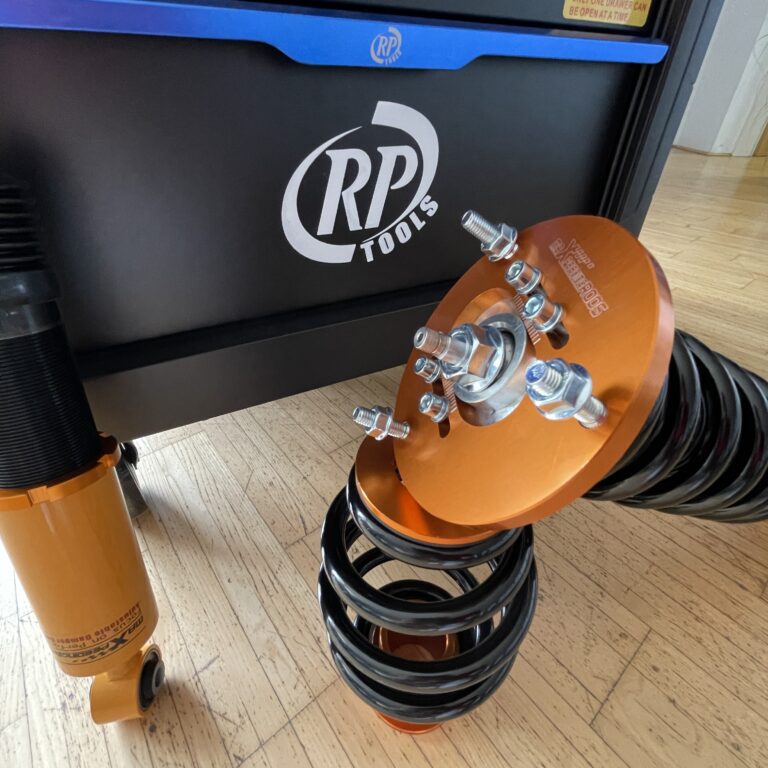
Not every twin tube shock uses identical hardware. Gas-charged models, basic hydraulic models, adjustable units, and vehicle-specific designs may use different seals, valves, rod guides, and mounting arrangements.
Source: automotive.technolab.org
Pressure tube
The inner cylinder in which the piston moves and damping takes place.
Reserve tube
The outer cylinder that contains reserve fluid and accommodates displaced fluid.
Piston rod
The metal rod that connects the piston to one mounting end and moves as the suspension travels.
Piston
The moving component that separates the working chambers and carries damping valves.
Base valve
A valve assembly near the base of many twin tube shocks that controls fluid transfer between chambers.
Seals and rod guide
Help retain fluid, guide the rod, and limit contamination from entering the unit.
Mounts and bushings
Connect the shock to the vehicle while helping manage vibration and movement at the attachment points.
Does Every Twin Tube Shock Contain Gas?
No. Twin tube shocks may use different approaches to managing pressure inside the unit. Some are commonly described as hydraulic or non-gas-charged designs, while others use pressurized gas, often nitrogen, to help reduce foaming and maintain consistent damping.
A gas-charged twin tube shock still uses hydraulic fluid to create damping. The gas does not replace the fluid’s role. Internal pressure, gas separation, and valve construction vary by product, so the manufacturer’s specification is the best source for the exact design.
Hydraulic design
Uses hydraulic fluid and valves to control movement, with internal arrangements that vary by model.
Gas-charged design
Uses gas pressure as part of its internal system to help manage the fluid and reduce unwanted aeration in suitable designs.
What Are the Advantages of Twin Tube Shock Absorbers?
Twin tube shocks can be a practical choice for ordinary road use because their design can deliver useful damping in a relatively compact and cost-conscious package. Many vehicles use this type of shock or a related twin tube strut design, although the exact original equipment varies by model and suspension layout.
The main benefit is not that twin tube shocks are automatically better than other designs. Their value comes from how a particular unit is engineered and matched to a vehicle. A well-matched standard shock may be more suitable for a daily driver than a firmer performance unit intended for a different purpose.
Source: onallcylinders.com
Comfort-focused tuning
Twin tube construction can support damping settings designed to balance bump absorption and body control.
Broad application range
The design is used in many passenger-vehicle and light-duty suspension applications.
Practical replacement options
Vehicle owners may find twin tube replacements across several price and performance levels, depending on the application.
Flexible internal tuning
Valve design can be tailored to a vehicle’s weight, spring rates, suspension travel, and intended road use.
Familiar service design
Many conventional twin tube units use established mounting and replacement procedures, although some installations require specialized tools or additional work.
Are Twin Tube Shocks Good for Daily Driving?
They can be. For commuting, school runs, highway trips, and ordinary paved roads, a twin tube shock with the correct vehicle-specific tuning may provide the balance of comfort and control the suspension was designed to deliver.
Road quality matters. Drivers who regularly encounter potholes, broken pavement, or gravel may value a shock tuned to handle frequent suspension movement without becoming unnecessarily harsh. Still, a shock’s actual travel, damping characteristics, construction, and compatibility matter more than its label alone.
Choose the correct fitment
Match the shock to the exact vehicle, suspension configuration, and intended use.
Consider ride goals
A comfort-oriented replacement may be more suitable for daily use than a firm performance-oriented design.
Check the complete suspension
Worn springs, tires, mounts, and bushings can affect ride quality even when the shocks are new.
What Are the Disadvantages of Twin Tube Shock Absorbers?
Twin tube shocks have limitations that can matter under demanding conditions. Their nested construction and reserve chamber influence how the shock handles fluid, pressure, and heat. Some designs may be more susceptible to performance changes from fluid aeration or sustained heat than a suitable monotube design, but this is not a universal rule for every product.
The twin tube label also does not guarantee long service life. Seals can wear, fluid can leak, mounting parts can deteriorate, and internal valves can lose effectiveness. Road conditions, installation, corrosion, loading, and product quality all affect service life.
Source: images.carid.com
Heat-related damping changes
Repeated demanding use may cause damping behavior to change as the unit heats up, depending on its design.
Potential fluid aeration
Some designs can experience fluid foaming or air mixing under particular operating conditions, which may reduce damping consistency.
Limited universal performance claims
The design alone cannot establish maximum damping force, durability, comfort, or suitability for a particular vehicle.
Fitment remains critical
A twin tube shock with the wrong length, mounts, or damping specification may perform poorly even if it fits physically.
Are Twin Tube Shocks Suitable for Aggressive Driving?
They may be suitable for some performance applications when the shock is engineered for the vehicle and the intended level of use. However, repeated high-speed cornering, track sessions, and rough-road driving can create demands that differ from ordinary commuting.
For sustained hard use, compare documented specifications for heat management, damping adjustment, construction, and intended application. A monotube design may offer useful advantages in some of these conditions, but a well-engineered twin tube product can still be appropriate in others. Neither design should be selected from marketing language alone.
Track driving
Check whether the manufacturer rates the exact shock for track use and the expected heat load.
Off-road use
Consider suspension travel, impact demands, vehicle weight, and heat management.
Daily road use
Prioritize correct fitment, controlled body movement, ride comfort, and reliable performance under normal conditions.
Twin Tube vs. Monotube Shock Absorbers
The main difference between twin tube and monotube shocks is the internal layout. A twin tube has a working cylinder inside a reserve tube. A monotube shock uses one main pressure tube and commonly separates the hydraulic fluid from pressurized gas with a floating piston.
The floating piston in a typical monotube design allows the gas and oil to remain separated while accommodating changes in fluid volume. This construction can support effective heat transfer and consistent damping under demanding conditions. The result still depends on the specific shock’s design, materials, valve tuning, and intended application.
A twin tube design may suit a vehicle owner who wants a conventional, comfort-oriented replacement for regular driving. A monotube may be attractive when its design and specifications better fit performance or demanding operating conditions. Price, availability, ride goals, and manufacturer approval should guide the decision.
Source: academy.bilsteinus.com
Internal layout
Twin tube shocks use a working tube and a reserve tube. Monotube shocks use one main cylinder and commonly have a floating separator piston.
Heat management
Monotube construction can provide a direct heat path through the main body, but actual thermal performance depends on the whole design.
Packaging
The dimensions and mounting arrangement of either design must match the vehicle’s available space and suspension requirements.
Ride quality
Neither design is automatically softer or firmer. Valve tuning and compatibility are major factors.
Cost
Pricing varies by brand, vehicle, features, and application. The tube design alone does not establish which shock costs less.
Comparison Table: Which Design Fits Your Needs?
Use this table as a starting point rather than a universal ranking. Product specifications and vehicle compatibility should decide the final choice.
Everyday commuting
A correctly matched twin tube or monotube shock may work well. Prioritize the vehicle maker’s specifications and the desired ride.
Frequent rough-road use
Compare suspension travel, impact control, thermal performance, and durability information for the exact application.
Performance driving
Look for documented damping behavior, adjustment options if needed, and a stated use case that matches the driving conditions.
Budget replacement
Compare complete fitment, warranty terms, construction, and suitability rather than choosing solely by purchase price.
Can You Replace a Twin Tube Shock With a Monotube Shock?
Sometimes, but only when the replacement is approved or engineered for the vehicle and suspension setup. Matching the mounting points alone is not enough. Shock length, stroke, damping, pressure, clearance, spring arrangement, and the suspension’s intended operating range can affect safe operation.
Use a vehicle-specific application guide or confirm compatibility with the manufacturer. Do not assume that a monotube shock is a direct substitute for every twin tube unit.
Confirm part compatibility
Check the exact year, make, model, trim, drivetrain, and suspension package.
Check operating dimensions
Confirm compressed length, extended length, stroke, mounting design, and available clearance.
Follow installation requirements
Use the specified hardware, torque values, and any required alignment or calibration procedures.
How to Tell Whether a Twin Tube Shock Absorber Is Worn
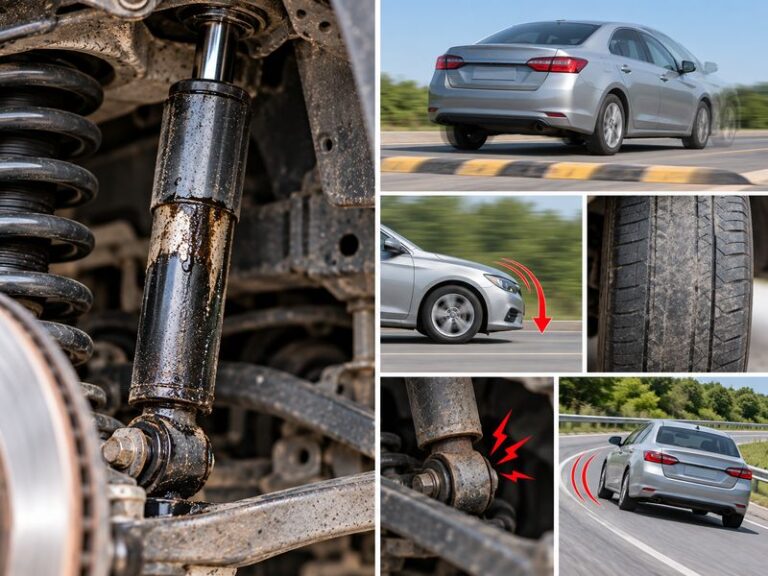
A worn twin tube shock may allow excess body movement, reduce the suspension’s ability to settle after bumps, or show signs of fluid leakage. These symptoms can affect comfort and vehicle control, but none proves by itself that the shock has failed.
Begin with a visual check and note how the vehicle behaves. If it has become difficult to control, shows severe suspension damage, or has a loose wheel or suspension component, avoid driving it until a qualified technician has inspected it. Do not rely on a simple bounce test as the only way to judge shock condition.
Source: carinsurance.arrivealive.co.za
Repeated bouncing
The body continues to move after a bump rather than settling promptly. Worn shocks are one possible cause.
Fluid leakage
Wetness or oil running down the shock may indicate a seal problem. A light film can require further inspection to distinguish normal residue from a meaningful leak.
Unusual tire wear
Cupping or scalloped wear can be associated with poor damping, but tire balance, alignment, and other suspension faults can also cause it.
Excessive body movement
Unusual dive under braking, roll in corners, or rear squat may indicate a damping problem or another suspension issue.
Knocking or rattling
Noise may come from a shock mount, worn bushing, loose hardware, or another nearby component rather than the shock’s internal parts.
A Safe Inspection Sequence
Park on a level surface, apply the parking brake, and let the vehicle cool if it has just been driven. Look for visible damage, severe corrosion, fluid leakage, broken mounts, and damaged bushings without placing any part of your body under an unsupported vehicle.
Compare the left and right sides for obvious differences, but remember that visual similarity does not prove equal damping. If the shocks are difficult to access, the vehicle needs to be raised, or the suspension is under spring tension, use a qualified repair shop rather than attempting an unsafe inspection.
Step 1: Check visible condition
Look for leaks, dents, corrosion, loose mounts, and damaged bushings.
Step 2: Note driving symptoms
Record when bouncing, instability, or noise occurs and whether it appears at the front or rear.
Step 3: Inspect related parts
Have tires, springs, control arms, mounts, bushings, and alignment checked when symptoms overlap.
Step 4: Confirm the diagnosis
Use a suitable professional inspection or suspension test when visual checks do not identify the cause.
Can You Keep Driving With a Bad Twin Tube Shock?
The answer depends on the severity of the fault. Mild symptoms still deserve prompt inspection because worn damping can affect tire contact and control. A shock that is badly damaged, detached, leaking heavily, or accompanied by serious handling changes may make the vehicle unsafe to drive.
If the vehicle sways severely, becomes unstable, makes a loud impact noise, or shows damage to a mounting point, stop in a safe place and arrange professional assistance. A shock problem can occur alongside other suspension faults, so replacing the shock without inspecting related components may leave the main safety issue unresolved.
Arrange prompt service
Have a technician inspect persistent bouncing, significant leakage, or a noticeable decline in handling.
Do not drive with severe damage
Use roadside assistance or towing if the suspension is loose, detached, or unsafe.
How to Choose the Right Twin Tube Shock Absorber
Choose a twin tube shock that matches the vehicle and the conditions in which it will be used. The best starting point is the vehicle manufacturer’s specification or a reliable application catalog that identifies the correct part for the exact vehicle configuration.
Do not select a shock based only on its length, price, appearance, or description as heavy-duty. Two shocks that look similar may have different valve settings, mounting hardware, and operating dimensions. An incorrect shock can limit suspension travel, alter handling, or interfere with nearby components.
Source: static.summitracing.com
Vehicle compatibility
Verify model year, make, model, engine or drivetrain where relevant, trim, and any factory suspension package.
Driving conditions
Consider ordinary pavement, frequent rough roads, carrying loads within vehicle limits, and any manufacturer-approved towing use.
Ride preference
Decide whether comfort, tighter body control, or a factory-like ride is the main goal, then choose a product designed for that purpose.
Construction and specification
Review documented materials, valve design where available, warranty conditions, and the stated application.
Installation needs
Check whether the job requires special tools, new fasteners, replacement mounts, spring compressors, or an alignment.
Should Twin Tube Shocks Be Replaced in Pairs?
Replacing shocks in axle pairs is generally recommended because similar damping on both sides helps maintain balanced handling. If one shock has failed, the shock on the other side may have experienced similar mileage and road exposure.
There can be exceptions, such as a recently replaced unit that remains within specification or a repair situation governed by the vehicle manufacturer’s instructions. Check the vehicle-specific service guidance before deciding to replace only one side.
Compare both sides
Inspect the opposite shock and its mounting hardware before finalizing the repair.
Use matched parts
Where possible, install the same compatible part specification on both sides of an axle.
Follow service guidance
Some vehicles have specific procedures or suspension configurations that affect replacement choices.
Do Twin Tube Shock Absorbers Need Maintenance?
Most conventional sealed twin tube shocks are not designed for routine internal servicing by the vehicle owner. Their seals, fluid, and valve assemblies are contained within the unit, so a failed shock is normally replaced rather than opened and refilled.
Regular vehicle inspections can still help detect damage early. Check for leaks, corrosion, worn bushings, and damaged mounts during scheduled maintenance or whenever the vehicle develops new suspension symptoms. Follow the vehicle and shock manufacturer’s service instructions.
Inspect for leakage
Look for persistent wetness or fluid running down the shock body.
Protect the mounting points
Address damaged bushings, loose hardware, and corrosion before they create further problems.
Avoid opening sealed units
Do not drill, cut, heat, or dismantle a pressurized or sealed shock absorber.
Common Twin Tube Shock Absorber Myths
Several common claims about twin tube shocks oversimplify how suspension damping works. The design is useful to understand, but it cannot predict every aspect of ride quality, service life, or performance without details about the individual product and vehicle.
Source: image.slidesharecdn.com
Myth: Twin tube shocks are always softer
Reality: Ride comfort depends on valve tuning, spring rates, suspension geometry, tire characteristics, and the specific shock. A twin tube unit can be tuned firm or soft.
Myth: Monotube shocks are always better
Reality: Monotube construction can offer useful advantages in some demanding applications, but the right design depends on the vehicle and use. A suitable twin tube shock may be the better match for ordinary road driving.
Myth: All twin tube shocks contain gas
Reality: Some use gas charging and others use different internal arrangements. The manufacturer’s technical specification identifies the construction.
Myth: A leaking shock is always completely empty
Reality: Visible leakage indicates a condition that needs assessment, but the remaining fluid level and damping capability cannot be determined from appearance alone.
Myth: A shock absorber supports the vehicle’s weight
Reality: Springs and other suspension components support the vehicle’s static load. Shocks primarily control movement, though their mounts and design contribute to the suspension assembly.
Myth: Every shock can be installed in the same way
Reality: Installation procedures vary. Some jobs require safe suspension unloading, special tools, new hardware, or professional service.
Why Vehicle-Specific Information Matters
Suspension systems are designed as a group of related parts. Springs, dampers, tires, bushings, mounts, and alignment settings all affect how the vehicle responds to a bump or steering input. Changing one part can alter the behavior of the complete system.
A useful replacement decision therefore starts with the correct application and the symptoms that need to be fixed. If the vehicle sits too low, for example, worn springs or a load problem may be responsible rather than the shock absorber alone.
Diagnose before buying
Confirm that the shock is the source of the problem rather than replacing parts based on symptoms alone.
Check suspension condition
Inspect springs, mounts, bushings, tires, and related parts when diagnosing ride or handling changes.
Frequently Asked Questions
Q
What is a twin tube shock absorber used for?
A twin tube shock absorber controls suspension movement in cars, SUVs, light trucks, and other vehicles designed to use this type of damper. It uses hydraulic fluid and valves to reduce bouncing and help manage body movement during braking, cornering, and travel over uneven roads.
Q
Are twin tube shock absorbers better than monotube shocks?
Neither design is universally better. Twin tube shocks can be well suited to ordinary road use and comfort-focused suspension tuning. Monotube shocks may offer advantages in heat transfer and damping consistency for some demanding applications. The best option depends on the exact product, vehicle specifications, and driving conditions.
Q
Do twin tube shock absorbers contain oil?
Yes. Twin tube shock absorbers use hydraulic fluid, commonly referred to as shock oil, to create damping resistance. The fluid passes through internal valves as the piston moves. Some models also use pressurized gas to help manage fluid behavior.
Q
How long do twin tube shock absorbers last?
There is no single service life that applies to every twin tube shock. Lifespan depends on road conditions, mileage, vehicle load, corrosion, driving style, installation, and product construction. Inspect the shocks when handling changes, persistent bouncing, leakage, or unusual suspension noise develops, and follow the vehicle manufacturer’s maintenance guidance.
Q
Can a twin tube shock absorber leak?
Yes. Worn seals, damage, corrosion, or other internal problems can cause hydraulic fluid to escape. Persistent wetness or oil running down the body should be inspected, particularly if the vehicle also bounces excessively or feels unstable. A technician can determine whether the shock needs replacement and check related suspension components.
Q
Can I replace a twin tube shock absorber myself?
Some shock replacement jobs are suitable for experienced home mechanics with the correct tools and service information. Others involve heavy suspension parts, compressed springs, difficult access, or safety-critical fasteners. Never work beneath a vehicle supported only by a jack, and never loosen a coil spring without the correct spring-compression equipment and procedure. If the job requires unloading a strut spring or you are unsure of the procedure, use a qualified technician.
Q
Do twin tube shocks improve ride comfort?
A correctly matched twin tube shock can improve comfort and control when it replaces a worn or unsuitable unit. However, the result depends on valve tuning, the vehicle’s springs, tires, suspension condition, and road surface. A firmer replacement may improve body control while transmitting more road feel, so choose a shock designed for the ride characteristics you want.
✦ Wrapping Up
Conclusion
A twin tube shock absorber is a hydraulic damper that uses two nested tubes to control suspension movement. Its piston and valves regulate fluid flow, helping the vehicle settle after bumps and maintain better control during ordinary driving. This established design can offer a practical balance of comfort, fitment options, and cost when correctly matched to a vehicle.
Twin tube shocks are not automatically better or worse than monotube shocks. Their performance depends on the internal valve design, fluid and gas arrangement, construction, and intended use. For daily driving, the correct vehicle-specific replacement is usually more important than choosing a design based on a general claim about comfort or durability.
If you are replacing a worn shock, confirm the exact fitment, inspect both sides of the axle, and check nearby suspension components. Persistent bouncing, significant leakage, or a change in handling calls for an inspection rather than guesswork. Safe installation and proper specifications help the suspension work as intended.
💡 Key Takeaway
Before buying a twin tube shock absorber, verify your vehicle’s exact application and suspension configuration, compare the manufacturer’s specifications, and inspect related suspension parts. Choose a compatible unit designed for your driving needs, and have a qualified technician handle any repair that requires specialized tools or unsafe spring handling.
Eric
Hi, I’m Eric Bennett, the person behind OffRoadTruckAccessories.com.
I created this blog to share my interest in trucks, off-road driving, automotive accessories, and DIY modifications. I enjoy learning how different truck accessories work, testing their usefulness, and understanding whether they are truly worth buying.
Shock absorbers are located near the wheels as part of the suspension system, usually between the vehicle’s body, frame, or subframe and a suspension component such as a control arm, axle, or wheel assembly. However, the exact answer to where are shock absorbers located on a car depends on the suspension design. Some vehicles have…
You should change shock absorbers when they are worn, leaking, damaged, or no longer controlling suspension movement properly. There is no single replacement interval that applies to every vehicle because shock absorber life depends on road conditions, vehicle weight, driving habits, suspension design, and component quality. If you are wondering when to change shock absorbers,…