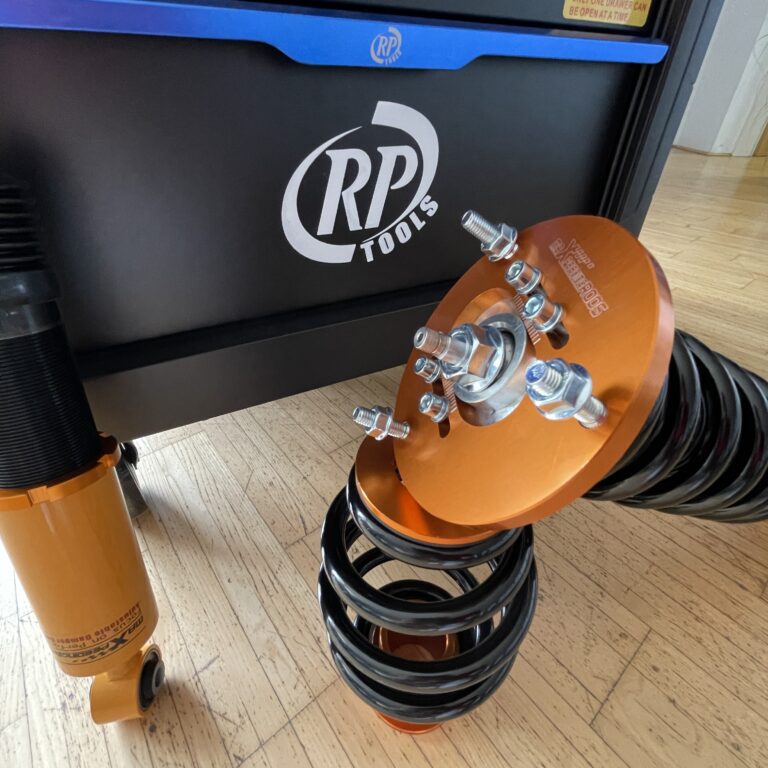
Shock absorbers usually leak because their internal seals wear out, the piston rod becomes damaged, or dirt, corrosion, heat, and road impacts harm the sealing surface. A persistent oil leak can reduce damping and make a vehicle less stable.
For drivers across the United States, a leaking shock absorber can develop after years of commuting, frequent highway travel, rough rural roads, or repeated trips over potholes. Road salt in northern states can also speed up corrosion, while dirt and grit can damage exposed suspension parts. The cause depends on the shock’s condition, age, design, and driving environment.
Not every oily shock absorber needs replacement. A light film of oil may be normal seepage, while fresh oil that runs down the housing can indicate a failed seal. Knowing the difference helps you avoid replacing a sound part or continuing to drive with a damaged suspension component.
This guide explains the common causes of shock absorber leaks, how to inspect the problem safely, what other faults can look similar, and when replacement is the right next step. It also explains why a leak can affect handling even when the vehicle still feels comfortable on a short drive.
Shock absorbers leak when fluid escapes from a sealed housing that should retain it during normal operation. The fluid moves through internal passages and valves to control suspension movement. When a seal or sealing surface can no longer contain that fluid, oil may appear around the piston rod or outer body.
The main causes include age-related seal wear, a scratched or corroded piston rod, contamination, repeated impacts, excessive heat, and damage from incorrect installation. These faults do not all develop at the same rate. A shock can last for years under moderate use, while severe road conditions or an existing defect can shorten its service life.
The most useful first step is to determine whether the fluid is actually coming from the shock absorber. Oil from an engine, transmission, steering system, or another suspension component can travel along nearby surfaces and create a misleading stain.
Source: testingautos.com
Internal seal wear
The rod seal can harden, wear, or lose its ability to keep hydraulic fluid inside the shock.
Damaged piston rod
Scratches, pitting, bends, or corrosion can damage the seal as the rod moves through it.
Corrosion and contamination
Rust, grit, and road debris can harm the rod surface or interfere with the seal.
Impact and installation damage
Severe impacts or incorrect fitting can damage the housing, rod, seals, or mounting points.
1. Worn or Damaged Shock Absorber Seals
A worn rod seal is one of the most common explanations for a leaking hydraulic shock absorber. The piston rod moves in and out as the suspension responds to bumps, so the seal must keep fluid inside while allowing smooth movement. Repeated motion, age, heat, and ordinary wear can gradually reduce its sealing ability.
Seal material can also deteriorate after long exposure to operating heat and fluid. Once the sealing edge becomes damaged or loses proper contact with the rod, oil can escape. The leak may begin as a slight film and become more obvious as the seal deteriorates.
A failed seal is not usually repaired by adding fluid from outside. Most passenger-car shock absorbers are sealed assemblies intended for replacement or specialized rebuilding. Whether rebuilding is practical depends on the unit’s design and the availability of suitable parts.
Typical sign
Oil gathers around the point where the piston rod enters the shock body.
Likely next step
Inspect the unit for active leakage and follow the manufacturer’s replacement or rebuilding guidance.
2. Scratched, Bent, or Corroded Piston Rod
The piston rod passes through the seal every time the suspension moves. Its working surface must remain smooth and correctly aligned. A scratch, rust pit, or bend can cut the seal or prevent it from maintaining an even seal around the rod.
Road grit can become trapped near the rod seal, especially when protective parts are damaged or missing. Corrosion may be more likely on vehicles exposed to winter road salt, coastal air, standing water, or long periods without use.
A visibly bent rod is a more serious concern than a dirty surface. A bent rod may bind during suspension movement and place extra stress on internal parts. Do not try to straighten a damaged shock rod and return it to service; have the assembly assessed for replacement.
Check for
Visible rust pits, deep scratches, a bent rod, or damage to the dust boot or protective cover.
Why it matters
A damaged rod can rapidly harm a new seal, so replacing only a seal may not solve the problem.
3. Dirt, Grit, and Road Debris
Dirt and road debris can shorten the life of a shock absorber seal. Small particles may collect near the rod and protective boot. If the boot is torn, missing, or poorly fitted, debris has a clearer path to the moving sealing area.
The risk can increase on gravel roads, construction routes, muddy trails, and roads with loose stone. Dirt alone does not prove that a shock is failing, but contamination combined with a damaged protective cover can contribute to wear.
During inspection, look for torn boots, loose shields, packed mud, and impact marks. Remove loose exterior dirt only when the vehicle is safely supported and the cleaning method will not damage the parts. Do not force tools into the rod seal or spray harsh chemicals into it.
Common clue
A damaged dust boot or a buildup of grit near the piston rod.
Prevention
Replace damaged protective components when the design allows, and inspect suspension parts after severe off-road use.
Other Mechanical Causes of Shock Absorber Leaks
Not all leaks result from gradual seal wear. External damage, corrosion, incorrect installation, and abnormal operating conditions can also cause fluid loss. Finding the underlying fault matters because a replacement shock may leak again if the same damage remains.
Source: testingautos.com
Potholes and road impacts
A severe impact can bend a rod, damage a housing, or harm suspension mounts. The impact may also damage nearby components that are mistaken for the shock.
Rust and corrosion
Corrosion can weaken exposed metal and damage the smooth surface needed for effective sealing.
Excessive operating heat
Repeated heavy suspension activity can heat shock fluid and internal components. Heat can accelerate deterioration, but ordinary warm operation alone does not prove the shock is defective.
Incorrect installation
Improper handling, incorrect parts, damaged threads, or installation errors can create mechanical stress or damage components.
Defective or unsuitable replacement parts
A manufacturing defect or an incorrect unit may cause premature problems. Verify fitment and warranty terms rather than assuming every early leak has the same cause.
Can Potholes Cause Shock Absorbers to Leak?
Yes. A hard impact from a deep pothole can damage a shock absorber, especially if the suspension reaches the end of its travel or another component is struck. The force may damage the rod, housing, mount, or nearby suspension parts.
A leak noticed after hitting a pothole does not prove that the impact caused it. An old seal may already have been failing, and the timing may be coincidental. A mechanic should inspect the shock and nearby components for fresh damage, bent parts, loose mounts, and tire or wheel problems.
If the vehicle pulls to one side, develops a strong clunk, shows visible suspension damage, or becomes hard to control after an impact, avoid further driving until the cause is assessed. A damaged wheel, tire, spring, or steering part can be more urgent than the leak itself.
After a major impact
Check for new oil trails, damaged tires, bent wheels, unusual ride height, and fresh noises.
Do not assume
A shock leak is not the only possible result of a pothole strike; inspect the complete affected corner.
Can Rust Make a Shock Absorber Leak?
Rust can contribute to leakage if it damages the piston rod’s sealing surface or weakens a component. Road salt and moisture can speed up corrosion, particularly where dirt and salt collect around exposed suspension parts.
Surface rust on a non-sealing part of the shock body does not automatically mean the unit is leaking. The key questions are whether corrosion has damaged a working surface, whether fluid is escaping, and whether the component remains structurally sound.
Do not scrape or sand a piston rod in an attempt to repair a leak. Abrasive work can change the surface finish and make sealing worse. A corroded or pitted rod generally calls for professional assessment and often replacement of the shock assembly.
Inspect the rod area
Look for pitting and damage without touching moving parts or dismantling the unit.
Assess structural rust
Have heavily corroded mounts and surrounding suspension components checked before driving.
Can Overloading Cause a Shock Absorber to Leak?
Repeatedly carrying loads above the vehicle’s rated limits can increase suspension stress and operating heat. This may contribute to premature wear, especially when combined with rough roads or a worn suspension. However, overloading is not proof of the cause of a particular leak.
Shock absorbers control movement; the springs and related suspension design carry and support the vehicle’s load. A sagging rear end may point to worn springs, damaged air suspension, or another support problem rather than a shock leak alone.
Follow the vehicle’s stated payload and axle weight limits. If the vehicle is frequently used for towing or carrying heavy cargo, confirm that the suspension components and replacement shocks are suitable for the approved application.
Look for related signs
Check for sagging, repeated bottoming, excessive bouncing, and damage to springs or mounts.
Use rated parts
Choose replacement components that match the vehicle, suspension configuration, and intended approved load.
How to Tell Whether a Shock Absorber Is Really Leaking
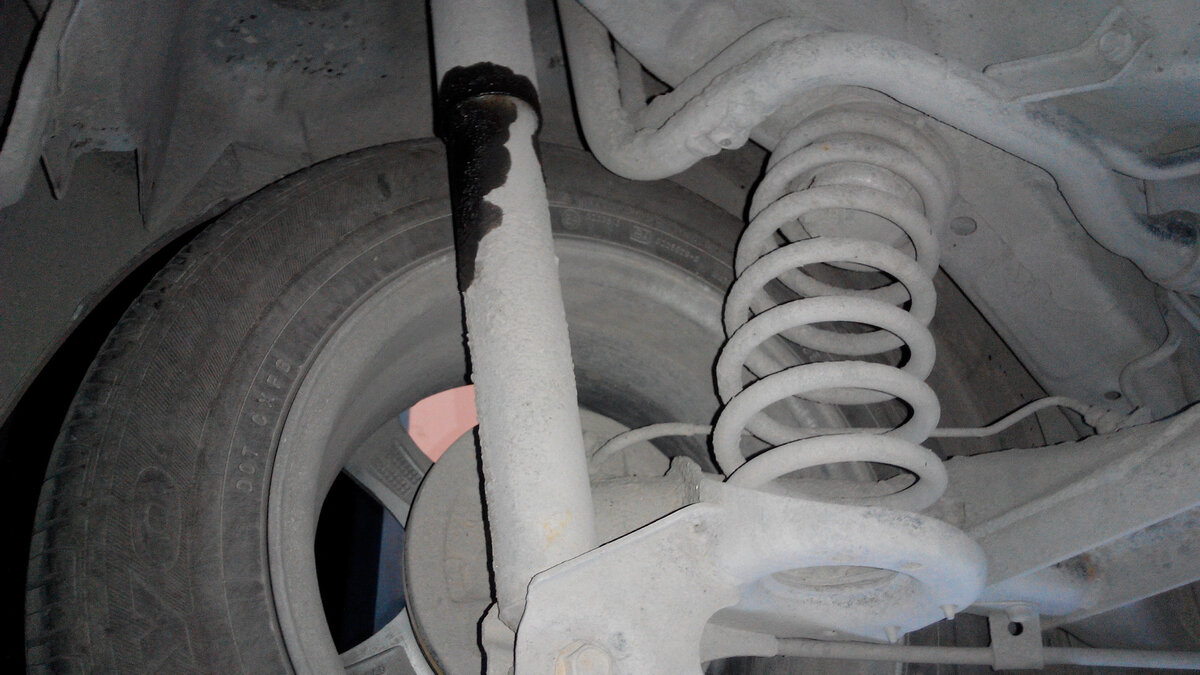
The most useful evidence is a visible trail of fluid that can be traced to the shock absorber. A thin oily film near the rod seal may be seepage, while fresh wetness, vertical runs, or drops on the lower body suggest more substantial leakage. The unit’s design and manufacturer guidance should be considered when deciding whether the amount is acceptable.
Look at the entire area before deciding that the shock is responsible. Fluid can run down from above, collect on a suspension arm, or spread under airflow. A photograph of the area before cleaning can help a technician compare the condition during a later inspection.
Source: agcoauto.com
Light film or misting
A small amount of oily residue may be normal on some designs. Clean the exterior if safe and permitted, then check whether fresh fluid returns.
Wet streaks
A clear trail running down the shock body is more concerning, especially if it reappears after cleaning.
Dripping fluid
Visible drops or repeated pooling near the shock warrant prompt professional inspection.
Poor damping
Excessive bouncing, unstable handling, or repeated loss of tire contact can indicate a worn shock, whether or not a leak is visible.
Step 1: Park and Secure the Vehicle
Park on firm, level ground, select Park or a suitable gear, apply the parking brake, and switch off the engine. Allow hot components to cool before inspection. If the vehicle needs to be lifted, use the lifting points and support method specified by the manufacturer.
Never crawl beneath a vehicle held only by a hydraulic jack. Use correctly rated jack stands on suitable ground, and do not remove wheels or suspension parts unless you have the required tools and knowledge. A suspension spring can store dangerous energy even when the vehicle is raised.
Basic equipment
A flashlight, disposable gloves, a clean cloth, and a phone camera may be enough for a visual check from a safe position.
Stop if access is unsafe
Leave underbody or spring-related inspection to a qualified technician if the vehicle cannot be supported safely.
Step 2: Find the Highest Point of the Wet Area
Look for the highest visible point where the fluid begins. If the shock body is wet near the rod seal and the fluid trail continues downward, the shock may be the source. If the wet area begins above the shock, investigate the component above it instead.
Do not identify the fluid by color alone. Hydraulic oil, engine oil, transmission fluid, and road grime can look similar after collecting dirt. The location of the first wet point and the path the fluid follows are often more useful than appearance.
Trace the trail
Follow the fluid upward visually and check nearby components for a higher source.
Record the condition
Take a clear photo of the rod seal, shock body, and surrounding area before wiping away residue.
Step 3: Distinguish Seepage from Active Leakage
If the manufacturer’s instructions allow it and access is safe, clean the exterior with an appropriate method. Do not flood the seal with solvent or direct a pressure washer at it. After the vehicle has been used under normal conditions, check whether fresh fluid has returned.
A persistent film can still require attention if it exceeds the unit maker’s accepted condition. A trail that quickly returns, visible drips, or substantial wetness deserves prompt assessment. There is no single universal amount of oil that defines a failed shock for every design.
If the leak is hard to classify, ask a repair shop to compare the condition with the relevant service guidance. Avoid relying on a single photograph or a bounce test as the only proof of shock condition.
Likely seepage
A slight residue remains without a growing wet trail or drops, and the manufacturer permits that condition.
Likely active leakage
Fresh oil forms visible runs, repeatedly wets the body, or drips from the assembly.
Step 4: Check for Other Symptoms
Look for excessive body movement, repeated bouncing after bumps, uneven tire wear, a clunk over rough pavement, or reduced stability during braking and turns. These signs can support a suspension diagnosis but are not unique to shock absorbers.
Loose mounts, worn bushings, broken springs, damaged tires, and steering faults can produce similar symptoms. A professional inspection should include the nearby parts instead of treating every noise or handling change as proof of a leaking shock.
Bouncing or floating
May indicate weak damping, but tires, springs, and other suspension parts should also be checked.
Clunks or rattles
May result from loose mounts, bushings, links, or other hardware rather than fluid loss itself.
What Happens When a Shock Absorber Leaks?
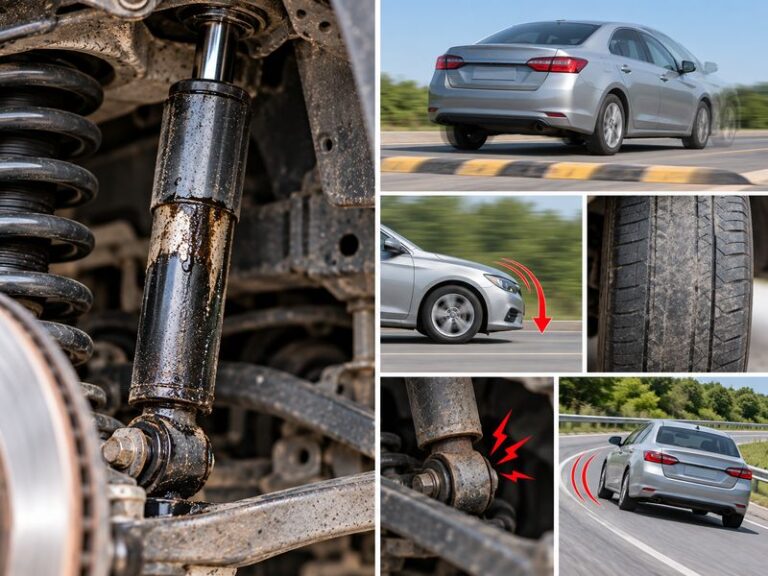
A substantial leak can reduce the shock absorber’s ability to control suspension movement. Most conventional hydraulic shocks use fluid resistance to slow spring movement. If enough fluid escapes or the internal parts are damaged, the shock may no longer provide the intended damping.
The effects depend on the amount of fluid lost, the unit’s internal design, and the condition of the rest of the suspension. A small residue does not automatically mean the shock has lost useful function, while a badly leaking shock may be ineffective even if the vehicle can still be driven.
Poor damping can allow a tire to move excessively after bumps. That can affect tire contact with the road, steering response, braking stability, and comfort. It can also place more stress on tires and other suspension components.
Source: live.staticflickr.com
Reduced ride control
The vehicle may bounce or continue moving after crossing bumps instead of settling promptly.
Less stable handling
Excessive body movement can make turns, lane changes, and emergency maneuvers harder to control.
Possible tire wear
Weak damping can contribute to irregular tire wear, although alignment, inflation, and worn suspension parts are other possible causes.
More stress on related parts
Poorly controlled movement can increase the load on mounts, bushings, springs, and other suspension components.
Does a Leaking Shock Absorber Affect Braking?
It can. Shock absorbers help keep the tires in controlled contact with the road as the vehicle slows and the body shifts. A badly worn shock may allow more wheel movement over uneven pavement, which can reduce stability and make braking behavior less predictable.
The effect is not the same for every vehicle or road surface. Tire condition, brake condition, suspension geometry, speed, and pavement quality all matter. A leak by itself does not establish a specific increase in stopping distance, so numerical claims should not be made without testing under defined conditions.
If the vehicle feels unstable during braking or the shock is actively leaking, arrange an inspection promptly. Do not try to prove the fault by performing a high-speed stop or an aggressive road test.
Warning signs
Unusual pitching, bouncing over uneven roads, or a noticeable loss of stability during normal braking.
Safe response
Have the shocks, tires, brakes, and related suspension parts inspected rather than assuming one component explains every symptom.
Can a Leaking Shock Absorber Damage Tires?
A shock absorber that no longer controls wheel movement can contribute to irregular tire wear. The tread may develop uneven patches or a scalloped pattern as the tire repeatedly moves against the road. Such patterns are clues, not a diagnosis.
Incorrect wheel alignment, poor tire pressure, unbalanced wheels, worn bushings, and damaged suspension parts can also cause unusual wear. If a tire has exposed cords, a bulge, severe damage, or rapid pressure loss, do not continue driving on it merely because the shock is the suspected cause.
Check tire pressure against the vehicle placard and have abnormal tread wear assessed alongside the suspension. Replacing a shock will not correct a separate alignment or tire problem.
Inspect the tread
Look for scalloping, uneven wear, or localized damage across the tire.
Check related causes
Confirm tire pressure, alignment, wheel condition, and suspension joint condition before concluding that the shock is responsible.
How to Prevent Shock Absorbers from Leaking
You cannot prevent every seal failure, but good maintenance can reduce avoidable damage. Regular visual checks can reveal a torn dust boot, corrosion, loose hardware, or fluid residue before a problem becomes more serious.
Prevention starts with correct vehicle use and timely repairs. A damaged protective boot, loose mount, or unsuitable replacement part should not be ignored. Maintenance cannot guarantee a leak-free shock, especially when age, manufacturing variation, and road impacts are involved.
Source: i.ytimg.com
Inspect the suspension regularly
Look for wet streaks, damaged boots, corrosion, bent parts, and loose or visibly damaged mounts.
Respond to road damage
After a severe pothole strike, check the affected tire, wheel, suspension, and steering system.
Keep protective parts intact
Replace damaged boots or shields when required and available for the suspension design.
Use the correct parts
Verify the replacement unit’s vehicle fitment and follow the manufacturer’s installation procedure.
Avoid exceeding load limits
Follow the vehicle’s payload, axle, and towing limits to avoid unnecessary suspension stress.
Does Driving on Rough Roads Make Shocks Leak Faster?
Frequent travel over rough roads can increase suspension movement and expose shocks to more severe impacts. Gravel, deep potholes, broken pavement, and repeated bottoming can raise the risk of mechanical damage, especially when the suspension is already worn.
Rough roads do not automatically cause a leak. A well-maintained shock designed for the application may handle normal road conditions, while a unit with a worn seal or damaged rod may fail under less demanding use. Driving speed, vehicle load, tire condition, and suspension travel also affect impact severity.
Reduce speed when approaching potholes and avoid sudden swerves that could create another hazard. If an impact is severe enough to cause new noise, a handling change, or visible damage, arrange an inspection rather than waiting for an oil leak to appear.
Practical prevention
Slow down for hazards when safe, keep tires correctly inflated, and repair worn suspension components.
After repeated rough use
Inspect the boots, mounts, shock bodies, and tires for new damage or leakage.
Can New Shock Absorbers Leak?
Yes. A new shock can leak because of a manufacturing defect, damage during shipping or installation, an incorrect part, or an underlying problem that damages the replacement. An early leak should be investigated rather than dismissed as normal break-in.
A small amount of surface oil may be present on some products, but a fresh trail that runs down the body or repeated dripping is not something to assume is harmless. Compare the condition with the manufacturer’s instructions and document it before cleaning the unit.
Keep the purchase receipt, part number, installation details, and clear photos. If the unit is under warranty, contact the seller or manufacturer before dismantling it, because unauthorized repairs may affect coverage.
Verify the part
Check that the unit matches the exact vehicle and suspension configuration.
Check installation
Have the mounts, fasteners, rod, and surrounding parts inspected using the manufacturer’s procedure.
Should You Replace a Leaking Shock Absorber?
Replacement is usually the right choice when a shock has an active hydraulic leak, a damaged rod, a cracked or deformed housing, or clear evidence that it no longer controls suspension movement. A repair shop can determine whether the unit is serviceable or designed to be replaced as a complete assembly.
A light film alone does not always justify immediate replacement. The decision should account for the manufacturer’s criteria, the amount and location of fluid, the shock’s performance, and the condition of nearby parts. When the evidence is unclear, a professional inspection is more reliable than judging the shock by appearance alone.
Many vehicle manufacturers and suspension suppliers recommend replacing conventional shocks in axle pairs so that damping characteristics remain more consistent from side to side. The exact recommendation depends on the vehicle and product. Follow the vehicle and shock manufacturer’s guidance, especially when one side has failed and the other is older.
Source: msg.equipment
Replacement is generally warranted
The shock has a substantial active leak, damaged rod, structural damage, or confirmed poor damping.
Further inspection may be enough
There is only slight residue, no clear fluid trail, and the manufacturer’s guidance permits monitoring.
Inspect related components
Check mounts, bushings, springs, protective boots, tires, and alignment-related parts as appropriate.
Can You Drive with a Leaking Shock Absorber?
The answer depends on the severity of the leak and the vehicle’s behavior. A slight film without handling symptoms may call for a prompt inspection rather than an immediate roadside stop. A shock that is dripping heavily, visibly damaged, or paired with unstable handling requires more urgent attention.
Do not continue driving if the vehicle is difficult to control, a wheel or suspension part appears loose or broken, a tire is damaged, or the body is contacting the tire. Arrange professional assistance or towing when the vehicle may not be safe to operate.
If a mechanic confirms that the vehicle can be driven a short distance for repair, drive cautiously and avoid high speeds, heavy loads, and rough roads. This is not a substitute for fixing the fault.
Do not drive
The vehicle has severe instability, broken suspension parts, tire interference, or another condition that makes control unsafe.
Arrange prompt service
An active leak or clear damping problem is present, even if the vehicle still moves normally.
Can You Repair a Leaking Shock Absorber Instead of Replacing It?
Some specialist shock absorbers are designed to be rebuilt, but many original-equipment passenger-car units are sealed and are not intended for routine seal replacement. Repair options depend on the exact design, the availability of internal parts, and the condition of the rod and housing.
Adding oil externally will not restore the correct fluid level or repair a failed seal. Drilling a housing, opening a pressurized unit, or attempting an improvised seal repair can cause injury and damage. Gas-charged shocks may contain pressurized gas, and some suspension assemblies include springs under substantial stored force.
Ask a qualified shop whether the specific unit is rebuildable and whether rebuilding is supported by the manufacturer. Compare the repair method, parts availability, warranty, and condition of the remaining suspension before deciding.
Rebuilding may be possible
The unit is designed for service, the correct parts are available, and the housing and rod remain suitable.
Replacement is usually preferable
The unit is sealed, the rod is damaged, the housing is compromised, or reliable internal parts are unavailable.
Common Mistakes When Diagnosing Shock Absorber Leaks
A correct diagnosis prevents unnecessary parts replacement and reduces the chance of overlooking a dangerous fault. Several common mistakes can make a leak seem less serious or lead to replacement of a component that is not the source.
Source: shockabsorberpro.com
Treating every oily film as a failed shock
Some designs permit slight seepage. Look for active fluid runs and consult the manufacturer’s inspection criteria.
Assuming every wet shock is leaking internally
Fluid may have come from a component above the shock or from another nearby system.
Using the bounce test as proof
A bounce test may reveal excessive movement, but suspension design, spring condition, and other faults limit its diagnostic value.
Replacing only the visible damaged part
A bent rod, worn mount, broken spring, or damaged boot may be part of a larger problem that needs assessment.
Ignoring tire and handling symptoms
Uneven wear or unstable handling can indicate more than a shock leak and may involve tires, alignment, steering, or brakes.
Attempting unsafe DIY repairs
Opening pressurized shocks or dismantling a loaded strut without the proper equipment can cause serious injury.
Why the Bounce Test Is Not Enough
Pressing down on a vehicle body and watching how it rebounds can sometimes reveal obvious loss of damping. However, modern suspension layouts, stiff springs, suspension geometry, and electronic damping systems can make the result difficult to interpret.
A shock may also be weak without producing a dramatic bounce during a stationary test. Conversely, movement caused by the spring or vehicle design may be mistaken for a failed shock. A visual inspection and appropriate professional testing provide a stronger basis for the decision.
Use the bounce test, if appropriate for the vehicle, only as a preliminary observation. Do not jump on body panels, crawl beneath an unsupported vehicle, or treat a single test as proof that a shock is safe.
What it can show
Obvious uncontrolled body movement may support the suspicion of poor damping.
What it cannot establish
It cannot reliably identify the exact leak source or measure shock performance across every vehicle design.
Frequently Asked Questions
Q
What is the most common cause of a leaking shock absorber?
Wear or damage to the piston rod seal is a common cause. The seal must retain hydraulic fluid while the rod moves through it, and age, heat, contamination, and rod damage can reduce its ability to seal. The actual cause should be confirmed by inspecting the unit and nearby components.
Q
Is a shock absorber leaking if it looks oily?
Not always. A thin film or light mist may be acceptable on some shock designs, while fresh oil that forms a clear trail, repeatedly wets the housing, or drips is more concerning. Use the manufacturer’s guidance and check whether the fluid is actually coming from the shock.
Q
Can a shock absorber suddenly start leaking?
Yes. A damaged seal, a hard road impact, a bent rod, or corrosion-related damage can cause a leak to appear quickly. However, a leak noticed after an impact may have been developing beforehand, so inspect the shock and surrounding suspension rather than assuming the timing proves the cause.
Q
Do leaking shock absorbers need to be replaced in pairs?
Replacing shocks in axle pairs is often recommended because similar damping on both sides helps maintain balanced handling. The best approach depends on the vehicle, the age and condition of the opposite shock, and manufacturer guidance. Check the applicable service instructions before replacing only one side.
Q
Can a leaking shock absorber cause uneven tire wear?
Yes, a shock that has lost damping can contribute to irregular tire wear by allowing excessive wheel movement. However, poor alignment, incorrect tire pressure, worn bushings, and wheel problems can cause similar patterns. Have the tires and full suspension inspected to identify all contributing faults.
Q
How long can you drive with a leaking shock absorber?
There is no reliable universal distance or time limit. A slight film with normal handling is different from heavy leakage, a damaged rod, or severe instability. Arrange inspection promptly, and do not drive if the vehicle is hard to control or the suspension or tire appears unsafe.
Q
Can cold weather cause shock absorbers to leak?
Cold weather can change fluid behavior and place different demands on seals and suspension components, but a cold day alone does not establish the cause of a leak. Existing seal wear, corrosion, rod damage, and age are important factors. Inspect any fresh wetness and follow the manufacturer’s service guidance.
✦ Wrapping Up
Conclusion
Shock absorbers usually leak because their seals wear out or their piston rods and related parts become damaged. Dirt, corrosion, severe road impacts, excessive operating stress, and installation problems can also contribute. The most useful clue is a fresh fluid trail that can be traced to the shock rather than a small oily film with no other signs of failure.
A persistent leak deserves attention because fluid loss can reduce damping and affect ride control, tire contact, and handling stability. Before replacing parts, identify the true fluid source, assess the amount of leakage, and check for related damage. Follow the vehicle and component manufacturer’s instructions, and leave pressurized shock disassembly or loaded spring work to trained professionals.
💡 Key Takeaway
Inspect the shock absorber for fresh fluid runs, damaged boots, rod corrosion, and related suspension symptoms. If oil returns after safe cleaning or the vehicle shows poor handling, arrange a professional suspension inspection and replace or rebuild the unit as appropriate for its design.
Eric
Hi, I’m Eric Bennett, the person behind OffRoadTruckAccessories.com.
I created this blog to share my interest in trucks, off-road driving, automotive accessories, and DIY modifications. I enjoy learning how different truck accessories work, testing their usefulness, and understanding whether they are truly worth buying.
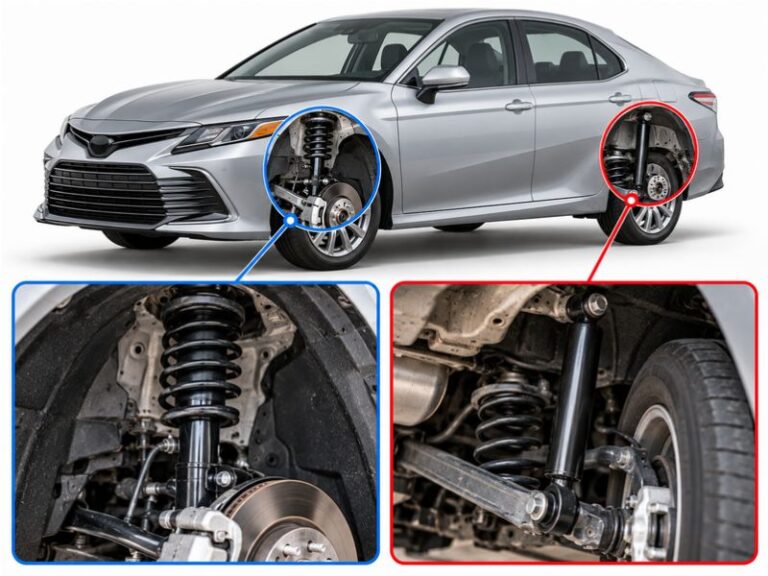
Shock absorbers are located near the wheels as part of the suspension system, usually between the vehicle’s body, frame, or subframe and a suspension component such as a control arm, axle, or wheel assembly. However, the exact answer to where are shock absorbers located on a car depends on the suspension design. Some vehicles have…
You should change shock absorbers when they are worn, leaking, damaged, or no longer controlling suspension movement properly. There is no single replacement interval that applies to every vehicle because shock absorber life depends on road conditions, vehicle weight, driving habits, suspension design, and component quality. If you are wondering when to change shock absorbers,…