Yes, new shock absorbers can make noise, but repeated knocking, clunking, squeaking, or rattling after installation should not be ignored. The sound may come from loose hardware, worn mounts, incorrect installation, or another suspension part rather than the new shock itself.
Across the United States, drivers may notice new suspension noises after a repair at a dealership, independent repair shop, or home garage. A car that used to cross a speed bump quietly may suddenly make a clunk or squeak after new shocks are fitted. This can be worrying, especially when the parts are new and the repair was meant to improve the ride.
The first step is to identify when the noise occurs and where it seems to come from. A sound over bumps may point to a mount, bushing, or loose fastener. A squeak during suspension movement may involve a rubber part or another joint. The timing of the sound is useful evidence, but it does not prove which part has failed.
A newly installed shock absorber should not automatically be blamed for every noise from the suspension. Some designs have specific operating sounds, and the first movement of a replacement part may feel different from the old unit. However, there is no universal break-in period during which persistent clunking or metal-on-metal contact should be treated as normal.
This guide explains which sounds deserve attention, how to narrow down their possible causes, what to check after installation, and when a professional inspection is the safest next step. It does not assume that every new shock has a defect or that every noise requires another replacement.
New shock absorbers can make noise when a mounting point moves, a fastener is loose, a rubber part binds, or another suspension component has excessive play. A defective shock is also possible, but it is only one explanation. The correct diagnosis depends on the type of sound, when it occurs, and how the unit was installed.
A shock absorber controls the movement of a vehicle’s suspension by resisting motion as hydraulic fluid passes through internal valves. This damping action helps limit repeated bouncing after the wheels cross a bump. The shock works with springs, mounts, bushings, and other suspension parts, so noise from the surrounding assembly can seem to come from the shock.
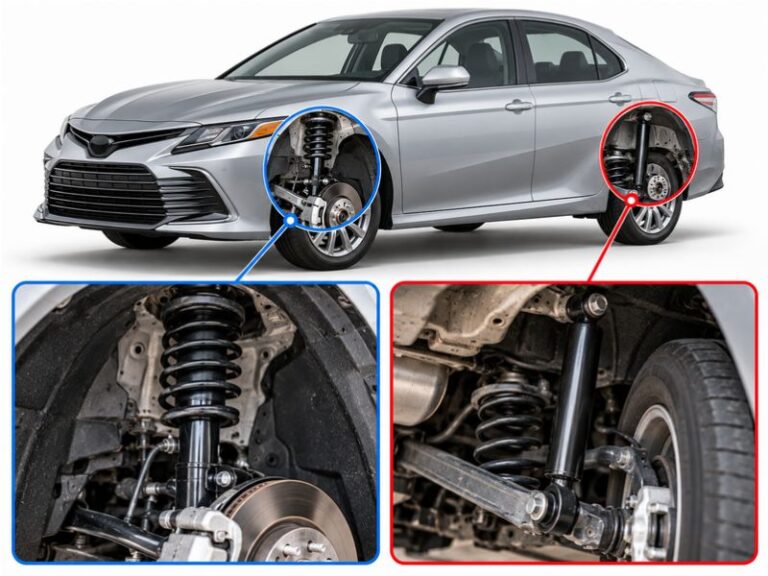
Many passenger vehicles use struts at the front and separate shocks at the rear, although layouts vary. A strut can support the vehicle’s structure and may contain the coil spring, while a conventional shock absorber generally controls motion without serving as the main spring support. This difference affects which parts need inspection and how safely the assembly can be handled.
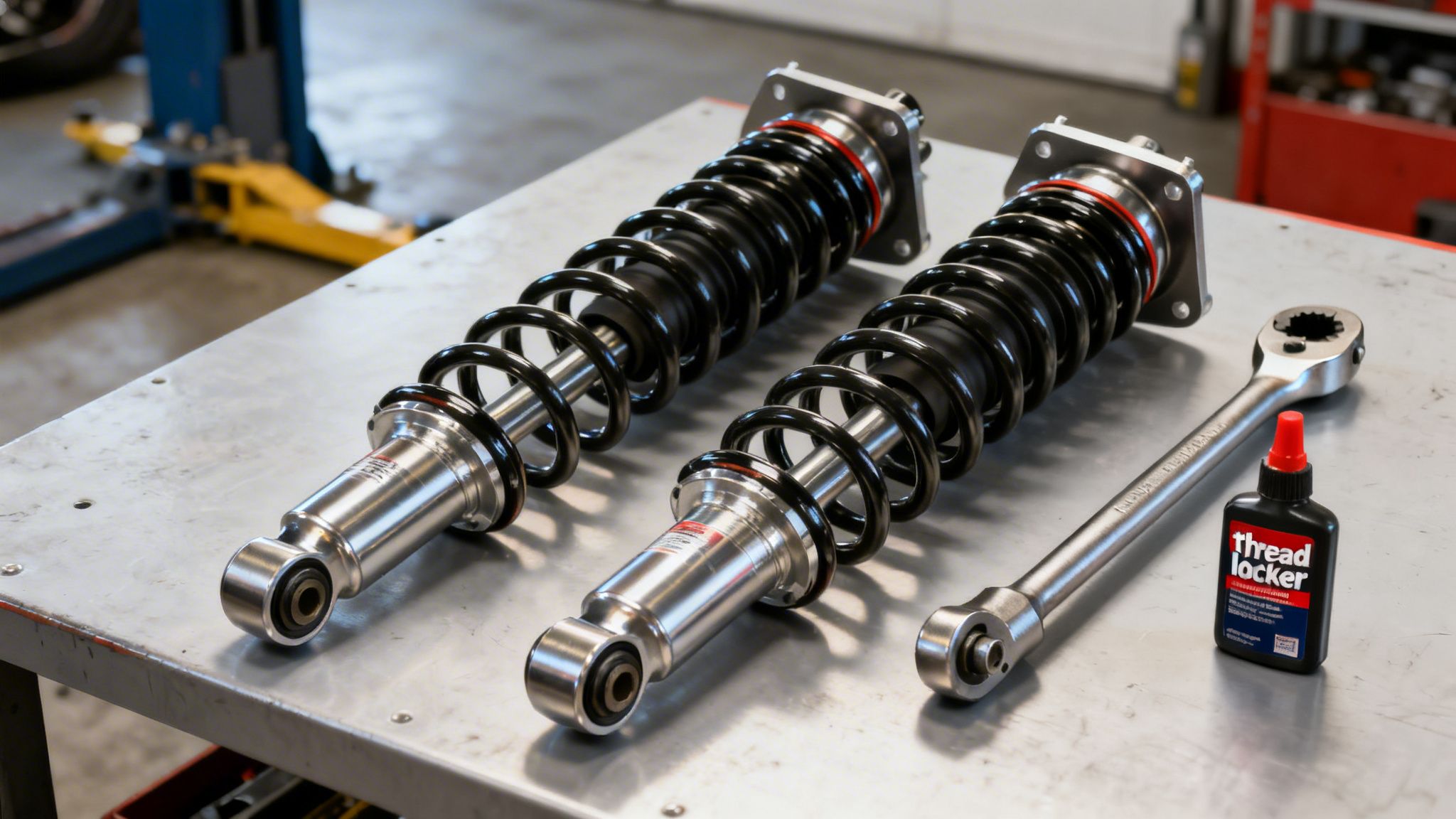
Source: media.cdn.a-premium.com
Installation problem
A loose bolt, incorrect fastener, missing washer, misplaced bushing, or improperly seated mount can allow movement and create a knock or rattle.
Mount or bushing problem
A worn rubber mount, damaged isolator, or binding bushing can squeak, creak, or clunk even when the replacement shock is new.
Part compatibility problem
A shock with the wrong dimensions, mounting style, or application may not fit or move as intended. Confirm fitment using the vehicle’s exact year, make, model, trim, and suspension configuration.
Defective or damaged component
A damaged shaft, faulty internal part, leaking seal, or shipping damage can cause poor operation or noise. The part should be inspected under the supplier’s warranty process.
Unrelated suspension noise
A sway bar link, ball joint, spring seat, control arm bushing, brake component, or other nearby part may be responsible.
Can New Shocks Make Noise During Break-In?
Some drivers notice a change in suspension sound or feel after replacement. A new part may respond differently from an old, worn unit, and a design may produce a small amount of operating noise under certain conditions. That does not establish that every new shock needs a break-in period or that a persistent knock is harmless.
Follow the instructions supplied for the exact shock absorber. If the manufacturer documents a normal operating sound or a specific initial procedure, use that guidance. If the sound is sharp, metallic, worsening, or accompanied by poor handling, arrange an inspection instead of waiting for it to disappear.
Potentially harmless change
A modest change in road noise or suspension feel without any handling problem may reflect the new unit’s damping characteristics.
Noise that needs investigation
Repeated clunks, loud knocks, loose rattles, and metal-on-metal sounds are not symptoms to dismiss as routine break-in.
Can a New Shock Absorber Be Defective?
Yes. New parts can arrive damaged, have a manufacturing fault, or be harmed during handling or installation. Newness alone does not prove that a component works correctly, but noise alone does not prove that the component is defective either.
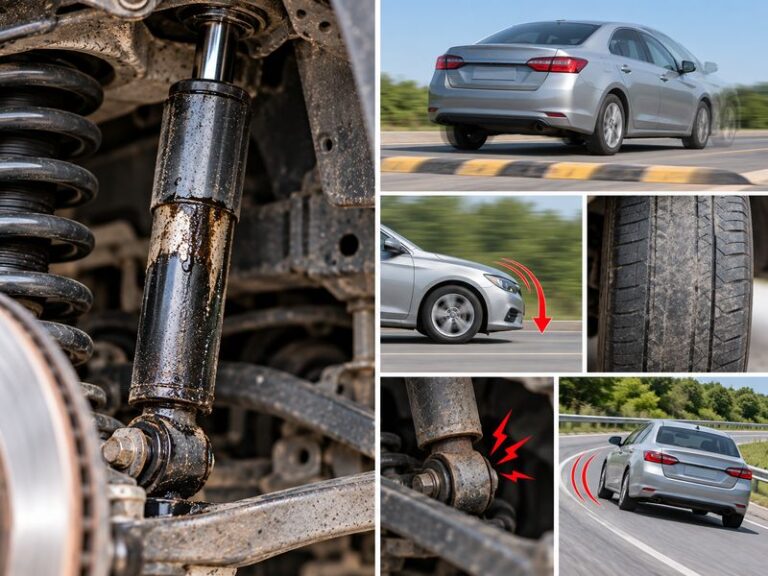
Look for supporting signs such as visible oil leakage beyond the manufacturer’s acceptable condition, a bent shaft, damaged mounting threads, unusual looseness, or poor damping. Record the noise and have the installer check the part before removing or disassembling it, especially if a warranty claim may be needed.
Check the part number
Confirm that the replacement matches the vehicle and the suspension design.
Keep repair records
Save the receipt, packaging, part number, and installation details in case the supplier requests evidence.
What Different Noises From New Shocks Can Mean
The sound pattern can help narrow the list of possible causes. It cannot identify a failed component with certainty, because several suspension parts can make similar noises. Note the road surface, vehicle speed, direction of movement, and whether the noise occurs on compression, rebound, braking, or turning.
The table below links common sounds to possible causes and sensible next checks. These are diagnostic clues, not a substitute for inspecting the vehicle.
Source: i.pinimg.com
Knocking or clunking
A loose mounting bolt, worn mount, incorrect installation, sway bar link, or another joint with excess movement may produce a distinct impact over bumps.
Squeaking
Rubber bushings, spring isolators, mounts, or nearby suspension joints may squeak as the suspension moves. The shock itself is not automatically the source.
Rattling
Loose hardware, a poorly seated spring, a loose dust cover, brake hardware, or another unsecured part can vibrate on rough roads.
Hissing or fluid movement
Some shocks can make a faint sound as fluid passes through internal valves. Compare it with the manufacturer’s guidance and investigate loud, irregular, or newly developed sounds.
Popping or creaking while turning
A strut mount bearing, spring seat, ball joint, or another steering or suspension joint may be involved. The steering system should be inspected if the sound is repeated.
Metallic banging
A loose component, broken spring, incorrect assembly, or contact between metal parts may be responsible. Stop driving if the sound is severe or the vehicle feels unstable.
Why Do New Shocks Knock Over Bumps?
A knock over bumps often means that something is moving or striking another part. If the sound began immediately after shock replacement, the mounting hardware and nearby parts deserve early attention. The timing makes an installation-related cause worth checking, but it does not establish the cause by itself.
On some designs, the shock uses an upper mount and a lower attachment. Other designs place the shock inside a strut assembly with additional mounting and steering parts. The technician should inspect the correct attachment points and compare the assembly with the vehicle’s service information.
Inspect mounting points
Check for visible movement, missing hardware, damaged threads, or a mount that is not seated correctly.
Check nearby links and joints
Inspect sway bar links, control arm bushings, ball joints, and other components that can knock under load.
Verify the repair procedure
Confirm that fasteners were tightened using the correct procedure and that any required ride-height loading step was followed.
Why Do New Shocks Squeak on Rough Roads?
Squeaking can occur when rubber or other contact surfaces move against each other. A new shock may be installed alongside older mounts or bushings that were not replaced. Those older parts can continue to make noise even when the damper is functioning properly.
Do not spray general-purpose oil or grease onto every rubber part in an attempt to silence the sound. Some products can damage certain rubber compounds, attract dirt, or change the behavior of a joint. Use a lubricant only when the component manufacturer specifies one and identifies where it belongs.
Locate the sound
Note whether the noise occurs at the front or rear and whether it happens during compression, rebound, or steering.
Inspect rubber parts
Look for torn bushings, displaced isolators, and signs of binding without placing hands near moving suspension parts.
How to Diagnose Noise After Shock Absorber Replacement
Start with the safest and simplest checks. You do not need to remove the shock immediately to gather useful information. Record when the noise occurs, review the repair details, and inspect visible parts only when the vehicle is parked safely.
If the noise started directly after a repair, contact the shop that performed the work. The installer can review the parts used, the torque procedure, and the condition of the mounts. Returning to the same shop may also help preserve a clear repair and warranty record.
Source: i.ytimg.com
Step 1: Record the symptoms
Note whether the sound is a knock, squeak, rattle, pop, or hiss. Record whether it occurs over small bumps, large bumps, during turns, or when braking.
Step 2: Check the timing
Establish whether the sound began immediately after installation, appeared after several drives, or existed before the repair. This helps distinguish a new problem from an unresolved one.
Step 3: Review the parts installed
Confirm the shock part number and whether mounts, bushings, dust boots, bump stops, or related hardware were reused or replaced.
Step 4: Perform a visual check
With the vehicle parked on level ground and the engine off, look for obvious oil leakage, a displaced dust boot, a broken spring, loose-looking components, or damaged parts that can be seen without lifting the vehicle.
Step 5: Arrange a suspension inspection
Have a qualified technician check mounting points, fasteners, bushings, joints, spring seating, and the condition of the replacement unit.
Step 6: Verify the repair
After any correction, have the vehicle checked under controlled conditions. Confirm that the noise is gone and that steering, braking, and ride behavior are normal.
What You Need Before Checking the Suspension
For a basic visual inspection, use a flashlight and the vehicle’s repair records. You can also write down the conditions that trigger the noise. A phone recording made from a safe location may help the repair shop understand the sound, but recordings can change how loud or close a noise seems.
A hands-on inspection beneath a vehicle requires suitable lifting equipment, correctly rated jack stands, wheel chocks, and knowledge of the vehicle’s approved lifting points. A hydraulic jack alone is not a safe support. Never work under a car that is supported only by a jack.
Use the correct service data
Obtain the specified torque values, fastener replacement rules, and assembly instructions for the exact vehicle.
Do not dismantle a loaded spring assembly
A coil spring can store substantial energy. Strut removal or spring compression should be handled with the proper equipment and training.
Avoid unsafe road tests
Do not drive over potholes, speed bumps, or rough roads at speed to reproduce a noise. Stop testing if control or stability feels abnormal.
How to Tell Whether the Noise Is Actually From the Shock
Sound travels through metal and body structures, so a noise heard near a wheel may originate somewhere else. A technician may use a visual inspection, controlled suspension movement, or appropriate diagnostic tools to isolate the source. The exact method depends on the vehicle and the symptom.
A shock that leaks fluid, has damaged mounting points, or fails to control body movement deserves further testing. Yet a dry exterior does not prove that a shock works properly, and a small amount of surface film may need to be assessed against the manufacturer’s criteria. Diagnosis should use the component’s design and service guidance rather than a single visual clue.
Compare left and right sides
Differences between the two sides can be useful clues, but they do not replace measurements or inspection.
Check other parts first when indicated
If the sound changes with steering, braking, or body roll, investigate the related joints and hardware rather than focusing only on the shock.
Common Installation Mistakes That Cause Noise
An installation mistake can make a new shock noisy even when the part itself is in good condition. Suspension systems have specific fastener, alignment, and assembly requirements. The correct procedure varies by vehicle, so general instructions should not replace the service manual.
The most useful approach is to review the repair from the mounting points outward. A technician should confirm that the part fits, the hardware is correct, the rubber parts sit in the intended positions, and the assembly moves without unwanted contact.
Source: expresslubeplano.com
Incorrect fastener torque
A fastener that is too loose may allow movement, while excessive torque can damage threads, distort parts, or affect a bushing. Use the specified value and procedure.
Wrong installation position
A shock, bracket, spring, or mount installed in the wrong position can bind or contact nearby parts.
Reused damaged hardware
Some vehicles require certain nuts or bolts to be replaced after removal. Reusing a fastener that the service procedure identifies as single-use can compromise the repair.
Missing or misplaced parts
A missing washer, spacer, isolator, sleeve, or other required component may cause metal contact, excessive movement, or noise.
Incorrect bushing tightening position
On designs that use bonded-rubber bushings, tightening at the wrong suspension position can preload the rubber and contribute to binding or premature wear.
Wrong replacement part
A unit that is too long, too short, or intended for a different suspension package may fit poorly or limit suspension travel.
Should Shock Absorber Bolts Be Retightened After Installation?
Do not assume that every shock bolt needs routine retightening after a short drive. Follow the vehicle and component manufacturer’s instructions. If the repair procedure calls for a specific recheck, use the stated timing and method.
If a new knock appears after installation, have the fasteners and mounting points inspected promptly. Do not simply tighten every bolt as hard as possible. Excess torque can damage the assembly, and some fasteners require replacement rather than further tightening.
Use a torque wrench
Apply the specified torque where the service procedure requires it, using the correct tool and sequence.
Follow load requirements
Some suspension bushings must be tightened at a specified ride-height position. Confirm whether this applies to the vehicle before adjustment.
Can Old Shock Mounts Make New Shocks Noisy?
Yes. A shock absorber can be new while its mount, bearing, rubber isolator, or related hardware remains worn. These parts absorb loads and allow intended movement, so age, cracks, looseness, or binding can produce noise.
Replacing mounts at the same time as shocks is not mandatory for every vehicle. It depends on the mount’s condition, the vehicle’s design, the labor involved, and the manufacturer’s recommendations. A technician should explain the evidence for replacing additional parts rather than recommending them solely because the shocks are new.
A torn, loose, or binding mount may need replacement if inspection confirms that it is causing the noise.
Avoid unnecessary parts replacement
If the mount and surrounding parts are in good condition, find the actual cause before ordering more components.
Could Another Suspension Part Be Making the Noise?
Yes. Several components near a shock absorber can produce similar sounds. This is especially relevant when the noise remains after replacement or when the repair included only the dampers but left older suspension hardware in place.
The most useful clue is the condition that triggers the sound. Noise over bumps may involve links or bushings, noise during steering may involve a mount bearing or steering joint, and noise during braking may involve brake hardware or a suspension component shifting under load. These patterns guide inspection but do not confirm a diagnosis.
Source: i.ytimg.com
Sway bar links and bushings
Loose links or worn sway bar bushings can knock or rattle when one wheel moves over a bump or the body rolls.
Control arm bushings
Worn or damaged bushings can allow unwanted movement and produce clunks during bumps, braking, or acceleration.
Ball joints and steering joints
Excessive play can cause knocking, popping, or changes in steering feel. These components need prompt attention when looseness is suspected.
Coil springs and spring seats
A broken spring, displaced spring end, or damaged isolator can make noise as the suspension compresses and rebounds.
Brake hardware
Loose pads, clips, shields, or other brake components can rattle near the wheel and be mistaken for suspension noise.
Wheel and tire components
Loose wheel fasteners, damaged tires, or a wheel bearing problem may create noise or vibration that should not be attributed to the new shock without checking.
What If the Noise Started Before the Shocks Were Replaced?
If the noise existed before the repair, the old shocks may not have been the only cause. Replacing a worn damper can improve body control while leaving a damaged link, mount, or bushing unchanged. The original noise may therefore remain.
Compare the symptoms before and after the repair. If the sound changed but did not disappear, explain that difference to the technician. A second inspection should review the original diagnosis and determine whether the new noise is related to the installation or an unrelated part.
Review the original findings
Ask which component was confirmed to be faulty and whether other worn parts were noted during the first inspection.
Request a targeted diagnosis
Describe the exact driving condition that produces the sound and ask the shop to identify the source before replacing more parts.
Is It Safe to Drive With Noisy New Shock Absorbers?
Whether it is safe to drive depends on the sound and the vehicle’s behavior. A faint operating sound without any other symptom may not indicate an immediate failure, but unexplained noise after suspension work should be checked. A severe knock, loose component, or change in handling can signal a safety problem.
Shock absorbers help keep tires in contact with the road as the suspension moves. Poor damping or loose suspension hardware can affect stability, braking behavior, and tire contact. The risk depends on the fault, vehicle design, road surface, speed, and driving conditions.
Source: media.a-premium.com
Stop driving and arrange recovery
Do this if you suspect a loose wheel, broken spring, detached mount, severe metal-on-metal contact, major fluid loss with poor control, or a serious steering or handling problem.
Arrange prompt professional inspection
A repeated knock, loud rattle, worsening squeak, visible damage, or noise that began immediately after installation deserves prompt review.
Avoid rough roads and heavy loads
Until a minor unexplained noise has been assessed, avoid unnecessary driving that could worsen a fault. Do not use this as a substitute for inspection when safety is uncertain.
Warning Signs That Need Immediate Attention
A noise accompanied by a change in control is more concerning than a sound alone. If the vehicle suddenly pulls, feels unstable, shows abnormal wheel movement, or develops severe vibration, stop in a safe place. Do not continue driving simply to see whether the sound improves.
Do not reach under the car or touch suspension parts while someone moves the vehicle. A suspension assembly can move suddenly, and a spring or raised vehicle can cause serious injury if handled without the correct equipment.
Unstable handling
Excessive bouncing, swaying, unpredictable steering, or a sudden change in vehicle control requires a safety assessment.
Visible structural damage
A broken spring, detached component, bent mount, or damaged mounting point needs repair before normal driving resumes.
Loose wheel or severe vibration
Stop driving and have the wheel, tire, and nearby suspension inspected. Do not assume the shock absorber is the cause.
How to Fix Noise From New Shock Absorbers
The right fix depends on the confirmed cause. Tightening hardware, replacing a mount, correcting the installation, or changing a defective shock can each solve a different problem. Replacing the shock again without diagnosing the noise may waste money and leave the underlying fault in place.
For a recent professional installation, contact the installer before attempting your own repair. Explain when the sound began and provide a recording if possible. Ask the shop to inspect the mounting points, verify part compatibility, and check related components.
Source: shockabsorberpro.com
Correct loose or incorrectly installed hardware
The technician should use the correct fasteners, assembly order, torque specifications, and any required tightening position.
Replace worn mounts or bushings
If inspection confirms that a damaged mount or bushing is producing the noise, replace the affected part using the proper procedure.
Correct part fitment
Install the correct application-specific shock and any required mounting hardware. Confirm that the unit does not contact nearby components through its working travel.
Address a defective shock
If the part is faulty, follow the supplier’s or manufacturer’s warranty process. Retain the old part and supporting records when requested.
Repair unrelated suspension faults
Fix worn links, joints, spring seats, or brake hardware if testing confirms that these components cause the sound.
Should You Replace Both Shock Absorbers If One Makes Noise?
Not every noisy shock requires automatic replacement of both units, but replacing shocks in pairs on the same axle is often recommended when one has failed or worn significantly. Matching damping performance can help maintain balanced handling. The appropriate choice depends on the vehicle manufacturer’s guidance, the condition of the other shock, and the type of suspension.
If a mount or loose fastener is responsible, replacing both dampers may not solve the problem. Identify the faulty part first. If one shock is confirmed defective, ask whether the other unit has similar wear and whether paired replacement is recommended for the vehicle.
When paired replacement may be appropriate
Both shocks on an axle are old, worn, leaking, or have substantially different performance, and the manufacturer or service guidance supports replacement as a pair.
When another repair is needed
The noise comes from a mount, bushing, link, or installation error rather than a defective damper.
How to Confirm the Noise Has Been Fixed
After the repair, the shop should verify that the affected hardware and parts are correctly installed and that no obvious interference remains. A controlled road test can then check the original noise condition when it is safe to do so. Any test should follow the vehicle’s repair procedure and avoid hazardous roads or speeds.
A successful repair means the reported sound is gone or has been explained as a normal, documented operating characteristic. The vehicle should also handle normally, with no new vibration, pulling, excessive bouncing, or visible damage. If the noise persists, the diagnosis should continue rather than repeating the same repair without new evidence.
Repeat the original observation
Check the same type of road or movement that first produced the noise, but only after the vehicle has been cleared for a safe test.
Keep the repair record
Document the corrected part, installation work, and any remaining symptom so future diagnosis starts with accurate information.
Common Mistakes to Avoid When Diagnosing New Shock Noise
The most common diagnostic mistake is to assume that a new part cannot be faulty or that every sound after installation must come from the new part. Both assumptions can delay the correct repair. A better diagnosis uses the timing of the noise, the vehicle’s symptoms, and a systematic inspection.
Avoid quick fixes that hide a sound without addressing its cause. Suspension parts carry loads and move through a defined range, so an apparently simple adjustment can affect safety or damage other components.
Source: i.ytimg.com
Assuming every noise is normal
Do not dismiss a repeated knock or metallic bang as break-in noise without checking the manufacturer’s instructions and the installation.
Replacing parts based only on sound
Several components can create the same noise. Confirm the source before buying another shock, mount, or suspension link.
Overtightening bolts
More force is not always safer. Excessive torque can damage fasteners, threads, mounts, or bushings.
Using the wrong lubricant
Do not apply oil or grease to suspension rubber, seals, or joints unless the specified material and location are approved by the manufacturer.
Ignoring fitment details
Different trims, engine options, ride heights, and suspension packages may use different parts. Verify the exact application.
Working under an unsupported vehicle
Never rely on a jack alone, and never dismantle a spring-loaded strut without suitable tools and training.
What If the Noise Does Not Go Away After Tightening?
If the noise remains after a correct hardware check, do not keep tightening bolts or replace parts at random. The sound may come from a worn mount, a binding bushing, an incompatible component, a defective damper, or a separate suspension or brake fault.
Return to the diagnostic process and check the full assembly. If the installer cannot identify the cause, consider a second inspection by a qualified suspension technician. Explain which checks have already been completed and provide the original repair details.
Review the shock, mounts, bushings, spring seats, fasteners, and nearby moving components.
Ask for evidence
Request an explanation of the confirmed fault and the reason the proposed repair should resolve the noise.
Frequently Asked Questions
Q
Is it normal for new shock absorbers to squeak?
A faint sound may be normal for some designs, but persistent squeaking should not automatically be accepted as a break-in characteristic. Rubber mounts, bushings, spring isolators, and nearby joints may be responsible. Check the manufacturer’s guidance and have the source identified if the noise continues.
Q
How long should new shock absorbers take to stop making noise?
There is no universal period after which new shocks should become silent. Some manufacturers document specific operating characteristics, but repeated knocking, clunking, or metallic contact should not be left to settle on its own. Have unexplained noise checked promptly, especially if it started immediately after installation.
Q
Can new shock absorbers make a clunking noise over speed bumps?
Yes. A clunk can result from loose mounting hardware, a worn mount, a misplaced bushing, an incorrect part, or another suspension component with excessive movement. Avoid repeatedly driving over bumps to test the sound. Have the assembly inspected, particularly if the noise is loud or the vehicle feels unstable.
Q
Can new shocks be noisy because the old mounts were reused?
Yes. An old mount or bushing can continue to squeak, creak, or knock after the shock has been replaced. Reusing a mount is not always wrong, but damaged, loose, or binding parts may need replacement. The decision should be based on the vehicle’s design and the condition found during inspection.
Q
Should I return to the shop if new shocks make noise?
Yes, if the noise began after a professional installation, contact the shop and describe when it occurs. Ask for a check of the part fitment, mounting hardware, torque procedure, and surrounding suspension components. If the car has severe noise, unstable handling, or visible damage, do not drive it to the shop; arrange recovery instead.
Q
Can a bad shock absorber make noise even when it is new?
Yes. A new shock may have a manufacturing defect, shipping damage, or installation damage. However, noise alone does not prove the damper is faulty. A proper inspection should check its condition, fitment, mounting points, and nearby components before a warranty replacement is requested.
✦ Wrapping Up
Conclusion
New shock absorbers can make noise, but persistent knocking, clunking, squeaking, or rattling deserves a clear explanation. Loose hardware, worn mounts, incorrect installation, damaged parts, and unrelated suspension components can all produce similar sounds. The fact that the noise appeared after replacement is an important clue, not proof that the new shock is defective.
Start by recording when the sound occurs and reviewing the repair details. Check only what is safely visible, then have the mounting points, hardware, fitment, and nearby suspension parts inspected. Use the vehicle-specific service procedure for any repair, and avoid guessing at torque values or dismantling spring-loaded assemblies without the right equipment.
A quiet suspension is useful, but safety and correct operation matter more than sound alone. If the noise comes with poor handling, severe vibration, a broken spring, a loose wheel, or another serious symptom, stop driving and arrange professional help. Once the cause has been confirmed and repaired, verify that the original noise is gone and that the vehicle behaves normally.
💡 Key Takeaway
If your new shock absorbers make noise, note exactly when the sound occurs and contact the installer for an inspection. Do not assume it is normal break-in noise, and do not replace more parts until the cause has been identified.
Eric
Hi, I’m Eric Bennett, the person behind OffRoadTruckAccessories.com.
I created this blog to share my interest in trucks, off-road driving, automotive accessories, and DIY modifications. I enjoy learning how different truck accessories work, testing their usefulness, and understanding whether they are truly worth buying.
Shock absorbers are located near the wheels as part of the suspension system, usually between the vehicle’s body, frame, or subframe and a suspension component such as a control arm, axle, or wheel assembly. However, the exact answer to where are shock absorbers located on a car depends on the suspension design. Some vehicles have…
You should change shock absorbers when they are worn, leaking, damaged, or no longer controlling suspension movement properly. There is no single replacement interval that applies to every vehicle because shock absorber life depends on road conditions, vehicle weight, driving habits, suspension design, and component quality. If you are wondering when to change shock absorbers,…