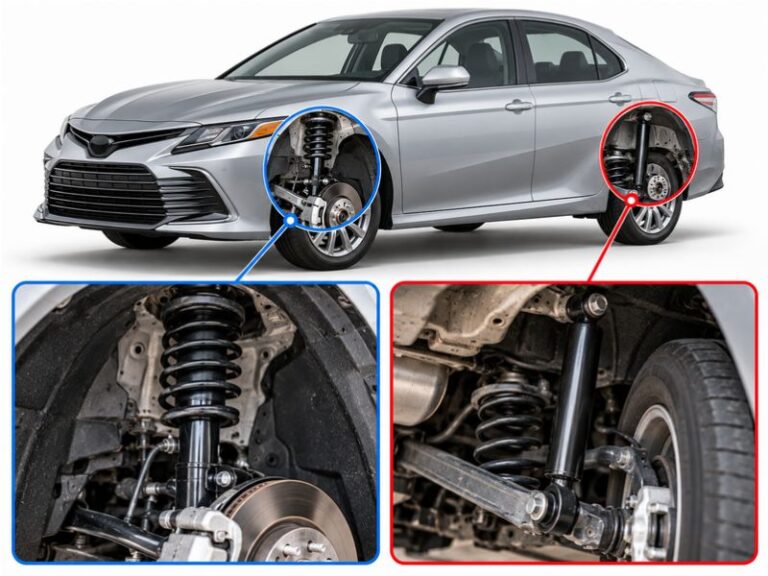
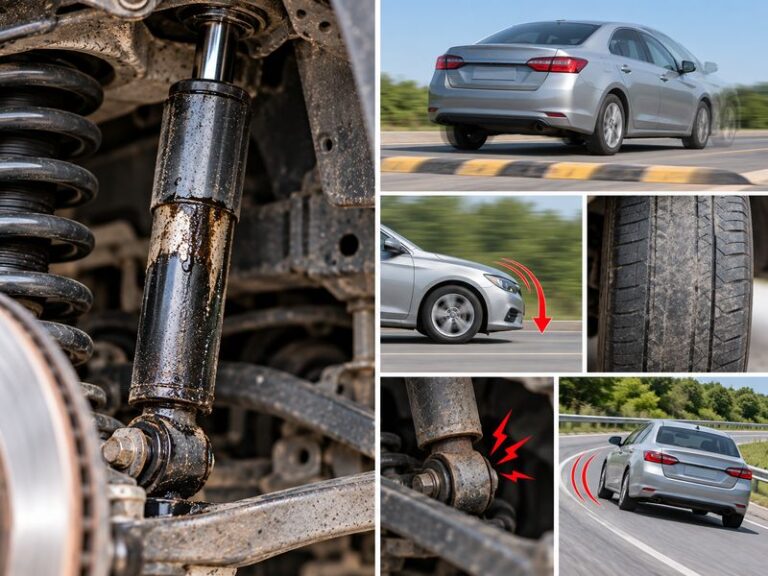
Yes, a shock absorber can make a knocking noise when its internal parts wear out, its mounting hardware becomes loose, or its rubber bushings fail. However, other suspension and steering parts can cause similar sounds.
On American roads, a knocking sound from a car or truck may become clear when driving over potholes, crossing railroad tracks, entering a driveway, or traveling on rough pavement. The noise may come from the front or rear suspension, and its timing can help narrow down the cause. A worn shock absorber is one possible source, but the sound alone cannot confirm that the shock is faulty.
Shock absorbers help control spring movement and keep tires in contact with the road. When a shock wears out, develops internal damage, or moves against a loose mount, it may produce a knock or clunk. A worn strut mount, loose sway bar link, damaged ball joint, or other suspension fault can create much the same symptom. Correct diagnosis matters because some suspension faults can affect steering, braking, and vehicle control.
This guide explains why shock absorbers knock, how to distinguish likely causes, which checks are safe to perform at home, and when to seek professional help. It also covers new shocks that knock after installation, common repair mistakes, and signs that a vehicle should not be driven until it has been inspected.
A shock absorber can knock when a worn or damaged part allows unwanted movement inside the unit or at its mounting points. The sound often occurs as the suspension moves up or down over a bump. Depending on the design and the location of the fault, the noise may be a light tap, a dull thud, or a sharp metallic clunk.
Most conventional shock absorbers contain a piston that moves through hydraulic fluid inside a cylinder. Valves regulate the fluid flow to resist rapid spring movement. As internal components wear or become damaged, the shock may lose its ability to control motion or develop unusual noises. Some designs use gas pressure as well as hydraulic fluid, but the exact construction varies by vehicle.
The shock absorber is connected to the vehicle through mounting points that may include rubber bushings, bolts, brackets, or upper mounts. If a bushing splits or mounting hardware loosens, the assembly can shift and strike nearby parts. That movement may sound like an internal shock failure even when the shock itself remains functional.
A key distinction is that a shock absorber and a suspension strut are not identical in every vehicle. A strut often serves as a structural part of the suspension and may incorporate a coil spring and steering-related mounting points. A fault in a strut mount or bearing can therefore create a noise that sounds as if it comes from the damper.
Source: storage.googleapis.com
Internal wear or damage
Damaged valves, a worn piston assembly, or other internal faults may produce abnormal movement or noise. Inspection or testing is needed to confirm the cause.
Loose mounting hardware
A loose fastener, damaged bracket, or incorrect installation can allow the shock to move and knock against its mount.
Failed rubber bushings
Cracked, compressed, or separated rubber can allow metal parts to move more than intended and create a dull clunk.
Other nearby suspension faults
A sway bar link, ball joint, control arm bushing, or strut mount can produce similar sounds and should not be overlooked.
Why the Noise Often Happens Over Bumps
When a tire crosses a bump, the suspension compresses and then extends. A worn shock, loose mount, or damaged joint may move abruptly during either phase. The resulting impact can be heard inside the cabin or near a wheel.
A noise that occurs over both small bumps and larger road irregularities may point toward a loose joint or mount, although the pattern is not conclusive. A single heavy knock over a deep pothole may indicate that the suspension has reached its travel limit or that a component has shifted. Avoid repeating the impact to test the sound.
Knock during compression
The suspension may be striking a worn mount, loose bracket, damaged joint, or travel stop as the wheel moves upward.
Knock during rebound
The sound may occur as the wheel moves back down, particularly when a worn mount or internal component allows excess movement.
Common Causes of a Knocking Noise Near a Shock Absorber
The most useful diagnosis considers the whole suspension assembly rather than replacing the first part that appears close to the noise. Several components work together around each wheel, and movement in one part can transmit sound through the body or frame. This can make the source difficult to identify from the driver’s seat.
The following table compares common causes, typical clues, and the next diagnostic step. These clues help prioritize an inspection, but none of them confirms a failed part on its own.
Source: vehiclefreak.com
Worn shock absorber
Possible clues include repeated knocking over bumps, poor damping, excessive body movement, or fluid leaking from the shock. A dry exterior does not rule out internal wear.
Loose or damaged shock mount
A knock may occur as the suspension changes direction. Inspect the mounting points and bushings for visible damage or unwanted movement.
Worn strut mount or bearing
A front suspension knock may change during steering or when the suspension moves. The mount or bearing may need inspection even if the damper is sound.
Sway bar link or bushing
A light, repeated rattle or clunk over uneven pavement can come from a worn stabilizer link or bushing.
Ball joint or control arm bushing
A worn joint or bushing can allow unwanted wheel movement and may cause clunks, steering changes, or uneven tire wear. Some failures create serious safety risks.
Loose wheel or brake component
A loose wheel fastener or a damaged or loose brake part can create noise near a wheel. These possibilities must be checked promptly because they can affect safe operation.
Can a Shock Absorber Knock Without Leaking?
Yes. A shock absorber may develop internal wear, weakened damping, or a mechanical fault without showing an obvious fluid leak. A visual inspection is useful, but it cannot establish that the shock is working correctly.
The reverse is also true: a small amount of residue around a shock does not always mean the unit has failed. Dirt can cling to a light film of fluid, and the appearance should be assessed against the manufacturer’s service guidance. A clearly wet body with fresh fluid running down it deserves closer inspection.
Look for supporting signs
Check for persistent wetness, damaged bushings, loose brackets, uneven tire wear, and unusual body movement.
Do not rely on one test
A bounce test, a visual check, or the sound alone may miss a fault. Use the vehicle manufacturer’s diagnostic guidance or a qualified suspension inspection.
How to Diagnose a Knocking Shock Absorber Safely
Start with the least risky checks and stop if the vehicle shows signs of a serious suspension, steering, wheel, or brake fault. You do not need to remove a shock absorber to gather useful initial information. A careful description of when the noise occurs can help a repair shop narrow down the fault.
Before inspecting the vehicle, park on firm, level ground, switch off the engine, apply the parking brake, and keep people clear of moving parts. Do not crawl under a vehicle supported only by a jack. Suspension springs can store substantial energy, so do not loosen spring-loaded mounts or dismantle a strut without the correct tools and training.
Source: YouTube > Scotty Kilmer
Step 1: Identify when the knock occurs
Note whether the noise happens over bumps, while turning, during braking, while accelerating, or even when the vehicle is stationary. Do not perform a road test if handling or wheel security appears unsafe.
Step 2: Identify the apparent location
Record whether the sound seems to come from the front or rear and from the left or right. Cabin acoustics can mislead you, so treat the location as a clue rather than proof.
Step 3: Inspect visible parts
From a safe position, look for fluid leakage, cracked rubber, bent brackets, broken springs, damaged dust boots, or hardware that appears displaced. Do not reach into a loaded suspension.
Step 4: Check for related symptoms
Notice whether the vehicle bounces more than usual, feels unstable, dips excessively, or shows unusual tire wear. These signs can support a suspension diagnosis but may have other causes.
Step 5: Arrange a mechanical inspection
Ask the technician to inspect the shock and its mounts, along with the sway bar links, control arms, ball joints, steering joints, wheel fasteners, and nearby brake parts as appropriate.
Use the Sound Pattern as a Diagnostic Clue
A single clunk as the suspension changes direction may suggest a loose mount, bushing, or joint. A repeated rattle over a series of small bumps can make stabilizer links and other loose suspension parts worth checking. A knock that occurs while steering at low speed may direct attention toward a strut mount, steering joint, or ball joint.
A noise that changes during braking may involve brake hardware, control arm movement, or another part responding to the change in load. Do not assume the shock is responsible simply because the noise comes from the same corner of the car.
Write down the conditions instead of repeatedly driving over the same bump. A technician can use those details to reproduce the symptom safely, inspect the relevant components, and determine whether the sound comes from the damper or another part.
Over bumps only
Prioritize inspection of dampers, mounts, stabilizer links, bushings, and joints.
During steering
Include the strut mount, steering linkage, ball joints, and related suspension parts in the inspection.
During braking
Have the brakes and components that can shift under braking loads checked as well as the suspension.
At rest or when moving the body
A technician may inspect mounts and joints for movement, but avoid pushing on unstable parts or lifting the vehicle without proper equipment.
Does the Bounce Test Confirm a Bad Shock?
No. Pressing down on a vehicle body and watching it rebound can reveal obvious loss of damping in some vehicles, but it is not a reliable standalone diagnosis. Suspension design, spring rate, friction, and electronic damping systems can affect the result.
A vehicle may pass a bounce test yet still have a worn shock, a leaking seal, or a loose mount that knocks on the road. Use the test only as a limited observation when the vehicle manufacturer’s instructions allow it, and do not substitute it for a full inspection.
What a poor result may mean
Repeated body oscillation may indicate weak damping, but other suspension faults and vehicle design can affect movement.
What a good result cannot prove
Normal-looking rebound does not rule out internal damage, loose hardware, or a noise caused by another component.
How to Tell Whether the Noise Comes From the Front or Rear
The apparent location of a knock helps guide the inspection, but sound can travel through the vehicle’s frame and body. A front suspension noise may seem to come from the dashboard, while a rear shock knock may be heard inside the trunk or cargo area. Use the location as a starting point rather than a final diagnosis.
Front suspension assemblies often include steering-related parts and, on many vehicles, struts that help locate the wheel. Rear suspension layouts vary widely and may use separate springs and shocks, a strut assembly, or another design. The correct diagnostic path depends on the vehicle’s actual suspension layout.
Source: storage.googleapis.com
Front-end knocking
Check the front damper mounts, strut mounts, sway bar links, control arm bushings, ball joints, steering linkage, and wheel or brake components.
Rear-end knocking
Check the rear shocks and mounts, spring seats, stabilizer links where fitted, suspension bushings, and nearby exhaust or cargo components.
Noise from one corner
Compare visible conditions on both sides, but remember that a similar-looking part can still have a different internal condition.
Noise after carrying a load
Check for excessive suspension compression, damaged mounts, broken springs, or contact between components. Follow the vehicle’s load limits.
Why a Rear Shock Can Sound Like a Trunk Rattle
A rear shock mount may transmit vibration into the body, making a suspension knock sound like a loose item in the cargo area. Loose tools, a spare tire, cargo covers, and trim can also rattle over bumps.
With the vehicle parked safely, remove loose cargo and check the owner’s manual for the correct way to secure the spare tire and tools. If the noise remains, have the rear suspension and mounts inspected rather than assuming the trunk is responsible.
Rule out loose cargo
Secure movable items and trim without reaching into the suspension or driving with unsecured equipment.
Inspect the rear damper assembly
Ask a technician to check the upper and lower mounts, bushings, fasteners, and surrounding components for movement or damage.
What If New Shock Absorbers Make a Knocking Noise?
A new shock absorber should be installed according to the vehicle and part manufacturer’s instructions. If it knocks soon after replacement, do not assume that the part needs to break in or settle. The noise may come from installation errors, incorrect fitment, a defective part, or a worn component that was not replaced.
A recent repair changes the order of likely checks. The technician should first verify the part number and application, mounting hardware, installation method, and torque specifications. The inspection should also consider surrounding parts that may have been disturbed during the repair.
Source: www.youtube.com > The Yorkshire Bike Mechanic
Incorrect or loose mounting hardware
A fastener may be loose, missing, incorrectly fitted, or tightened in a way that does not match the manufacturer’s procedure.
Incorrect part or fitment
A shock intended for a different trim, suspension package, or vehicle application may not fit or function correctly.
Reused or damaged mounts
A new damper cannot correct a worn mount or bushing that remains in service.
Spring or seat problem
On strut assemblies, an incorrectly seated spring or damaged spring seat can cause noise and may create a serious hazard.
Unrelated fault
A sway bar link, ball joint, control arm bushing, brake part, or other component may have been the original source of the sound.
Should You Keep Driving After a New Shock Starts Knocking?
Do not ignore a new knock after suspension work. Contact the repair shop that performed the installation and describe when the noise occurs. A prompt reinspection can help identify a loose fastener, incorrect fitment, or a separate fault before more damage occurs.
If the noise is loud, the wheel appears displaced, steering changes, the vehicle pulls sharply, or handling feels unstable, stop in a safe place and arrange professional assistance. Do not continue a road test to see whether the sound disappears.
Keep the repair records
Save the invoice, part numbers, and details of when the noise began. This helps the shop focus on the recent work.
Avoid tightening by guesswork
Mounting fasteners may require specific torque values, sequences, or loading conditions. Use the correct service procedure rather than a generic value.
How to Fix a Knocking Shock Absorber
The right fix depends on the part that has failed. Replacing a shock absorber will not solve a knock caused by a ball joint, sway bar link, loose brake component, or damaged mount. A proper diagnosis reduces unnecessary parts replacement and helps prevent the original fault from being overlooked.
A technician should inspect the suspension, identify the source of the noise, and compare the condition with the vehicle manufacturer’s service guidance. The repair may involve a damper, mounting hardware, a bushing, or another suspension component. Parts that affect wheel location or steering need particular care because incorrect repairs can create a safety hazard.
Source: vasionmart.com
Replace a failed shock absorber
If the damper is confirmed faulty, fit a correct replacement using the required mounting hardware and service procedure.
Repair damaged mounts or bushings
Replace worn or broken mounting parts when the inspection confirms that they are causing unwanted movement.
Repair other faulty suspension parts
Replace defective links, joints, bushings, or brackets based on the diagnosis rather than replacing the shock by default.
Correct installation problems
Verify part compatibility, component seating, fastener condition, and specified tightening procedures.
Should Shock Absorbers Be Replaced in Pairs?
Replacing shocks in pairs across the same axle is often recommended because matching damping performance helps the vehicle respond more evenly. If one shock has failed, the other shock on that axle may also have significant wear, especially when both have similar service history.
However, the correct repair depends on the vehicle manufacturer’s guidance, the suspension design, the condition of the other shock, and the type of replacement part. Do not assume that every vehicle requires all four shocks to be replaced at once. Ask the technician to assess the other unit and explain the reason for the proposed repair.
Consider the matching shock
Assess its age, leakage, damping condition, and compatibility with the proposed replacement.
Follow vehicle-specific guidance
Use the service information for the exact vehicle rather than applying one rule to every car or truck.
How to Confirm the Repair Worked
After the repair, the mounting hardware should be correctly installed, all disturbed components should be checked, and the vehicle should show no signs of unsafe wheel or suspension movement. The technician should follow any required alignment or calibration procedure for the work performed.
If a controlled road test is appropriate, the technician can check whether the original noise remains under the conditions that previously caused it. A quiet test drive is useful evidence, but it does not replace a physical inspection of critical suspension and steering parts.
Success signs
The original knock is gone, the suspension is secure, and the vehicle handles normally without new warning signs.
If the knock remains
Return for further diagnosis. The original cause may have been misidentified, or more than one component may be worn.
When Is a Knocking Suspension Noise Dangerous?
A mild, occasional knock does not automatically mean the vehicle is about to fail, but the cause should be identified. A worn damper can reduce control over wheel and body movement, while a failed ball joint, loose wheel, or damaged steering part may create a more immediate risk. The sound’s volume alone cannot determine the level of danger.
If a wheel or suspension component has visibly shifted, steering becomes unpredictable, the vehicle suddenly pulls to one side, or a tire rubs against nearby parts, stop driving as soon as you can do so safely. A loud metal-on-metal impact, a broken spring, or a suspected loose wheel also warrants urgent attention. Arrange towing if the vehicle cannot be driven safely.
If the only symptom is a light knock and the vehicle otherwise appears stable, arrange an inspection soon and avoid high speeds, rough roads, heavy loads, and towing until the cause is known. This is a precaution, not a guarantee that continued driving is safe. If braking or steering behavior changes, do not continue the trip.
Source: a-premium.com
Stop and seek urgent help
Do so for loose steering, a visibly displaced wheel, severe pulling, a broken spring, tire contact with suspension parts, or a suspected loose wheel.
Arrange a prompt inspection
Do so for recurring knocks, visible shock damage, persistent fluid leakage, poor damping, or new noise after suspension work.
Do not dismantle a loaded strut
Coil springs store substantial energy. Use a qualified technician and suitable equipment for spring or strut disassembly.
Can Bad Shock Absorbers Affect Braking?
Yes. Worn dampers may allow greater wheel and body movement and can make it harder for tires to maintain consistent contact with an uneven road. This can affect vehicle stability during braking, cornering, and evasive maneuvers.
The size of the effect depends on the vehicle, road surface, tires, suspension condition, and the nature of the fault. A knocking shock does not establish a specific increase in stopping distance, so avoid assuming a fixed numerical effect without vehicle-specific evidence. If braking performance feels different, arrange an inspection of both the suspension and braking system.
Watch for changes in control
Excessive body motion, unstable cornering, or unusual tire contact may signal a problem that needs inspection.
Inspect related systems
A braking complaint should not be attributed to the shocks alone; tires, brakes, steering, and other suspension parts may contribute.
Common Mistakes When Diagnosing Suspension Knocks
The most common mistake is replacing the shock absorber based on sound alone. Knocks can travel through metal body structures, so the loudest point inside the cabin may not be closest to the failed part. A diagnosis should account for the sound pattern, visible damage, component movement, and vehicle-specific design.
Another mistake is treating every fluid mark as proof of failure or assuming a dry shock must be good. Neither conclusion is reliable by itself. A technician may need to assess damping performance, mounting condition, and other components to reach a sound diagnosis.
Replacing parts without checking the assembly
Inspect mounts, bushings, links, joints, fasteners, and nearby components before deciding which parts need replacement.
Using a bounce test as the only test
A simple body push can miss internal damper problems and loose hardware.
Ignoring noise after repairs
A new knock after installation needs prompt reinspection rather than an assumption that the parts will settle.
Working under an unsupported vehicle
Never rely on a jack alone to support a vehicle while inspecting or repairing its underside.
Overlooking wheel and brake safety
A knock near a wheel may come from a component whose failure could affect vehicle control. Do not focus on the shock alone.
What Information Should You Give the Repair Shop?
A clear description helps the technician reproduce the symptom without unnecessary driving. Note the approximate speed, road surface, apparent location, and whether the knock occurs during bumps, turns, acceleration, or braking.
Mention recent tire, brake, steering, or suspension work and whether the noise began immediately afterward. Share any visible fluid leakage, uneven tire wear, or handling changes. These details help the shop prioritize its inspection, but they do not replace a hands-on diagnosis.
Vehicle details
Provide the year, make, model, trim, and any relevant suspension modifications.
Noise conditions
Describe when the sound happens and whether it is a single knock, repeated clunk, or continuous rattle.
Recent work
List repairs or part replacements that occurred before the noise started.
Frequently Asked Questions
Q
Can a bad shock absorber make a loud knocking sound?
Yes. A damaged shock, worn mount, failed bushing, or loose mounting fastener can create a loud knock or clunk over bumps. However, a ball joint, sway bar link, control arm bushing, or another nearby part may cause the same sound. Have the assembly inspected before replacing parts.
Q
Can I drive with a knocking shock absorber?
It depends on the cause and the vehicle’s condition. A recurring knock should be inspected promptly, and you should avoid high speeds and rough roads until the problem is identified. If steering changes, the vehicle becomes unstable, a wheel shifts, a spring breaks, or a wheel or brake fault is suspected, stop driving safely and arrange professional assistance.
Q
Why does my shock absorber knock only over small bumps?
Small bumps can reveal looseness in a mount, rubber bushing, stabilizer link, or other suspension joint. A worn damper may also make noise during frequent short suspension movements. The pattern narrows the possibilities but does not identify one part with certainty.
Q
Why are my new shock absorbers knocking?
Possible causes include loose or incorrectly fitted hardware, the wrong part, a damaged mount, an incorrectly seated spring on a strut assembly, or another worn suspension component. Contact the installer and arrange a reinspection. Do not assume the noise is a normal break-in sound.
Q
Will replacing shock absorbers stop the knocking noise?
It will stop the noise if the failed shock absorber is the actual source and the replacement is installed correctly. It will not fix a knock caused by a worn ball joint, sway bar link, control arm bushing, brake component, or another part. Confirm the source before approving the repair.
Q
Do shock absorbers always need to be replaced in pairs?
Replacing dampers in pairs on the same axle is commonly recommended to help maintain balanced damping. The other shock’s condition, the vehicle manufacturer’s instructions, and the suspension design affect the decision. Ask the technician to explain whether the matching shock also needs replacement.
✦ Wrapping Up
Conclusion
A shock absorber can make a knocking noise when internal parts wear, mounting hardware loosens, or a rubber bushing fails. The sound often becomes noticeable over bumps, but similar noises can come from strut mounts, stabilizer links, ball joints, control arm bushings, wheel hardware, and brake components.
The safest approach is to record when the noise occurs, check only what is safely visible, and arrange a suspension inspection. A leak or repeated knock deserves attention, while unstable steering, a displaced wheel, a broken spring, or a suspected wheel or brake fault may require stopping the vehicle and arranging a tow. Correct diagnosis is more useful than replacing parts based on sound alone.
💡 Key Takeaway
If your car knocks over bumps, note the conditions and apparent location, then arrange a qualified inspection of the shock absorber, its mounts, and nearby suspension and steering parts. Do not drive if handling or wheel security appears unsafe.
Eric
Hi, I’m Eric Bennett, the person behind OffRoadTruckAccessories.com.
I created this blog to share my interest in trucks, off-road driving, automotive accessories, and DIY modifications. I enjoy learning how different truck accessories work, testing their usefulness, and understanding whether they are truly worth buying.
Shock absorbers are located near the wheels as part of the suspension system, usually between the vehicle’s body, frame, or subframe and a suspension component such as a control arm, axle, or wheel assembly. However, the exact answer to where are shock absorbers located on a car depends on the suspension design. Some vehicles have…
You should change shock absorbers when they are worn, leaking, damaged, or no longer controlling suspension movement properly. There is no single replacement interval that applies to every vehicle because shock absorber life depends on road conditions, vehicle weight, driving habits, suspension design, and component quality. If you are wondering when to change shock absorbers,…