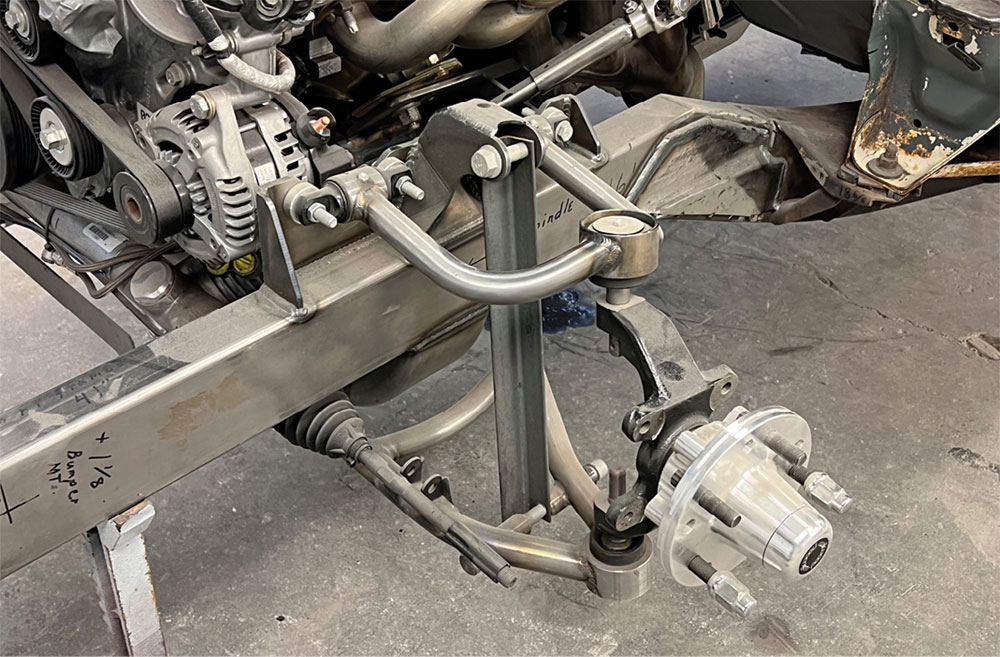
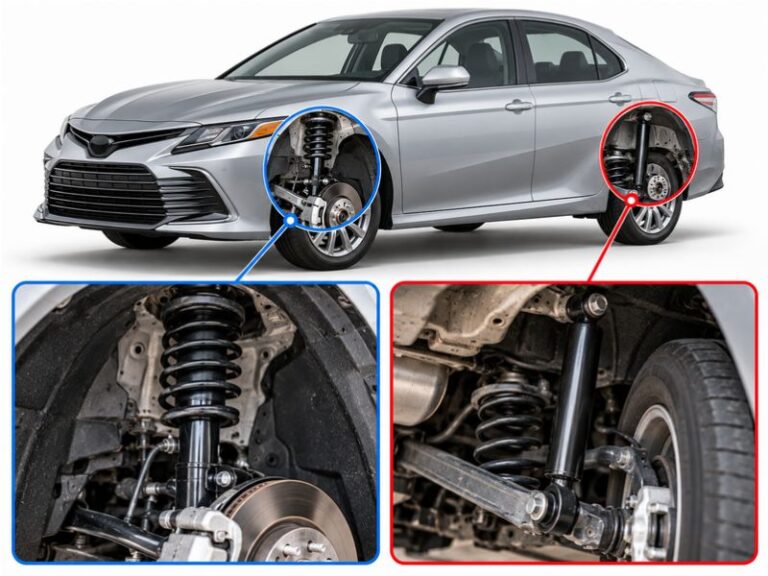
Conventional shock absorbers usually do not determine a vehicle’s static ride height. Springs support the vehicle’s weight, while shock absorbers control spring movement. However, struts, coilover assemblies, air suspension systems, and specialized load-supporting shocks can affect ride height in certain designs.
If your car, truck, or SUV sits lower than usual in your driveway, worn shock absorbers may not be the main cause. Across the United States, vehicles face many road conditions, from rough rural roads and winter-damaged pavement to highway driving and heavy stop-and-go traffic. These conditions can expose suspension wear, but a low vehicle does not automatically need new shocks.
The key is to understand the difference between supporting vehicle weight and controlling suspension movement. Coil springs, leaf springs, torsion bars, and air springs provide the main support that sets ride height in many vehicles. Shock absorbers slow the movement of those springs so the tires stay in better contact with the road.
There are important exceptions. A coilover combines a spring and damper in one assembly, and an adjustable spring perch can change ride height. Some struts are structural parts of the suspension, while air suspension and certain load-leveling systems can actively change vehicle height. Identifying the system on your vehicle is the first step toward finding the right repair.
Ride height is the distance between a vehicle’s body or chassis reference point and the ground, measured according to a defined procedure. It affects ground clearance, suspension travel, alignment, and the vehicle’s overall stance. The correct measurement point varies by make and model.
A shock absorber is a damping device. It resists suspension movement as the piston moves through hydraulic fluid or another damping medium. This resistance helps control how quickly the suspension compresses and extends after a bump, braking event, or change in road surface.
A spring performs a different job. It compresses under vehicle weight and pushes back against that load. The balance between the spring’s force and the supported weight determines the suspension’s settled position, subject to the suspension design and geometry.
Think of a spring as the part that holds the vehicle up and a shock absorber as the part that controls how the vehicle moves. This distinction explains why a car can have bad shocks and still sit at its normal height.
Source: freeasestudyguides.com
Springs support the vehicle
Coil springs, leaf springs, torsion bars, and air springs provide the force needed to carry vehicle weight and establish the suspension’s normal position.
Shock absorbers control motion
Dampers reduce repeated bouncing and help the suspension respond in a controlled way after bumps, turns, and braking.
Ride height depends on the full system
Spring condition, vehicle load, suspension geometry, mounting points, and any height-adjustment system all affect the final measurement.
What Is Static Ride Height?
Static ride height is the vehicle’s settled height while stationary under a specified load and on a level surface. Measurements can vary with passengers, cargo, fuel, tire pressure, and whether the suspension has settled after being lifted or moved.
A meaningful comparison uses the same reference points and similar loading conditions. Measuring from the center of the wheel to the fender edge can help track changes because it reduces the effect of tire diameter, but it is not a substitute for the manufacturer’s specified measurement when diagnosing a suspension problem.
Use consistent conditions
Park on level ground, keep the vehicle load consistent, and follow the service manual’s instructions for settling the suspension.
Measure both sides
Compare left and right measurements at the same axle and check the front and rear separately.
Can Bad Shock Absorbers Make a Car Sit Lower?
Bad conventional shock absorbers usually do not make a car sit lower by themselves. A damper that has lost its ability to control movement can allow excessive bouncing, but the spring normally continues to support the vehicle when it is parked.
A low ride height may appear at the same time as worn shocks because both parts experience years of use and road impacts. That overlap can make it seem as though the shocks caused the sag. The actual cause may be a weakened spring, a broken spring coil, a damaged spring seat, or another suspension fault.
Some shock assemblies are different. A coilover uses a spring around or near the damper, and the spring perch or threaded body may be adjustable. If the spring is damaged, the perch is incorrectly set, or the assembly has a design that supports vehicle weight, the unit can affect the measured height.
A conventional gas-charged shock may exert some extension force. That force can influence suspension position slightly in some designs, but it does not make an ordinary damper a replacement for a correctly rated load-bearing spring. Do not assume that replacing a shock will restore a sagging vehicle to its original height.
Source: www.youtube.com, ecologicaltime
Worn damping without sag
The vehicle sits at a normal height but bounces more than usual, feels unsettled, or shows signs of poor damping.
Low ride height with weak damping
The vehicle may have two separate faults, such as a sagging spring and a leaking shock absorber.
Height changes after shock replacement
Check whether the new part is a coilover, a load-supporting shock, an adjustable unit, or a different design from the original equipment.
Can a Leaking Shock Absorber Lower Ride Height?
A leaking conventional shock absorber can lose damping fluid and become less effective. This usually affects motion control rather than the vehicle’s parked height. Oil residue around the damper body may indicate a problem, although a light film is not always proof of failure; the component manufacturer’s inspection guidance matters.
If the vehicle is visibly low at the same corner as the leaking shock, inspect the spring, spring seat, mounting hardware, and surrounding suspension components. Replacing a failed damper may be necessary, but the height concern requires its own diagnosis.
Look for related symptoms
Check for repeated bouncing, fluid leakage, unusual tire wear, loose mounts, and visible spring damage.
Which Suspension Parts Actually Determine Ride Height?
The parts that support vehicle weight are usually the first place to look when ride height is incorrect. The exact setup depends on the vehicle. A family sedan may use coil springs and struts, a pickup may use coil springs or torsion bars in front and leaf springs or coils in the rear, and an SUV may use conventional springs or adjustable air suspension.
Suspension parts also work together. A damaged control arm, worn spring seat, incorrect replacement spring, or shifted mounting point can change the position of the body or wheel. The vehicle’s specified measurements and inspection procedure help separate a spring problem from a geometry or mounting problem.
Source: fity.club
Coil springs
These compress under load and help determine the height of many passenger cars, crossovers, and trucks.
Leaf springs
Common on many trucks, leaf springs support the axle and vehicle load. Sag, broken leaves, or worn mounting hardware can change rear ride height.
Torsion bars
These use twisting resistance to support the suspension. Certain designs allow ride-height adjustment, but incorrect adjustment can affect suspension travel and alignment.
Air springs
These use compressed air to support the vehicle. Leaks, compressor faults, height sensors, or control-system problems can cause the body to sit too low.
Struts and coilovers
These assemblies may combine damping, structural support, and a spring. Their role in ride height depends on the specific design and adjustment settings.
Do Struts Affect Ride Height More Than Shocks?
A strut can play a more direct structural role than a conventional shock absorber. On many MacPherson strut suspensions, the strut forms part of the wheel-locating structure, while a separate coil spring carries much of the vehicle’s static load.
A failed strut can cause poor handling, noise, or instability, but it does not follow that every worn strut will lower the vehicle. If the spring has sagged or broken, the strut mount has failed, or the wrong assembly has been installed, ride height may change. The service information for the exact vehicle is the best guide.
Identify the assembly
Confirm whether the vehicle uses a separate shock and spring, a strut with a separate spring, or an integrated coilover.
Check the spring and mounts
Look for a broken coil, damaged isolator, worn mount, or incorrect installation before blaming the damper alone.
How to Tell Whether Shocks or Springs Are Causing the Problem
Start with the symptom, not the part you suspect. A car that sits too low points toward a height or load-support issue, while a car that bounces repeatedly after a bump points more directly toward weak damping. The symptoms can overlap, so a proper inspection should check both systems.
Before checking anything, park on level ground, apply the parking brake, and remove unusual cargo. Let the suspension settle according to the vehicle’s service procedure. Do not crawl under a vehicle supported only by a jack, and do not touch hot exhaust parts or suspension components that may be under stored tension.
Source: hitchesguide.com
Step 1: Measure the ride height
Use the factory reference points if available. Record the measurements at all four corners and compare them with the correct specifications.
Step 2: Inspect the springs
Look for broken coils, heavy corrosion, displaced spring ends, damaged seats, or obvious differences between left and right sides.
Step 3: Inspect the shocks or struts
Check for significant fluid leakage, damaged bodies, loose mounting bolts, torn bushings, and bent or damaged components.
Step 4: Check the tires and load
Confirm that tire sizes and pressures are appropriate and that heavy cargo or uneven loading is not affecting the comparison.
Step 5: Review the suspension design
Check the service manual for self-leveling shocks, air suspension, adjustable coilovers, or other systems that can change vehicle height.
Step 6: Get a professional inspection if needed
If the height difference is large, a spring is broken, or the cause remains unclear, have a qualified technician inspect the suspension before further driving.
Symptoms That Point Toward Worn Shock Absorbers
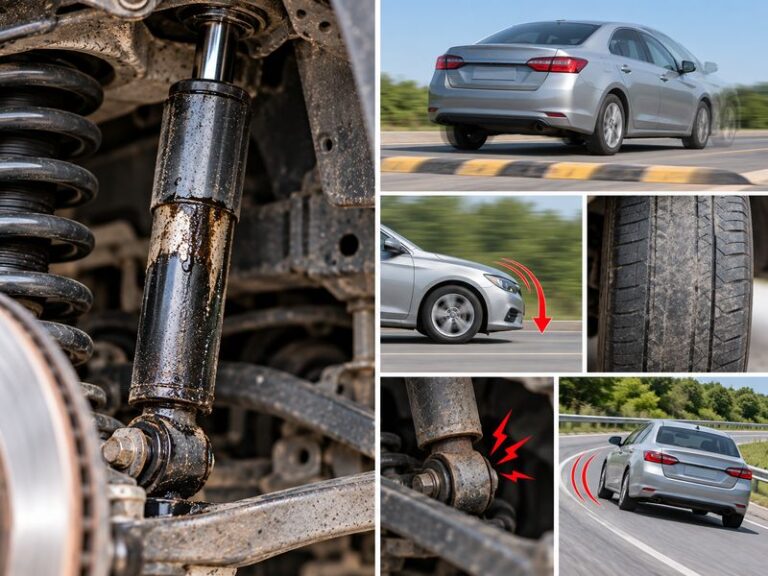
A vehicle with weak dampers may bounce more than usual after bumps, pitch excessively during braking, lean or feel unsettled in turns, or show irregular tire wear. A shock can also leak fluid or develop a loose or damaged mount.
None of these signs alone proves that the damper is the only faulty part. Tire condition, bushings, ball joints, springs, alignment, and other components can produce similar symptoms. A controlled road test and physical inspection should be carried out by a qualified person when the handling concern is significant.
Repeated bouncing
The body continues moving after a bump instead of settling in a controlled manner.
Fluid leakage or damage
Visible leakage, a dented damper body, or damaged mounts warrant further inspection.
Unstable handling
Excessive movement over uneven roads or poor tire contact can indicate a damping or broader suspension problem.
Symptoms That Point Toward Worn Springs
Sagging springs often cause a persistent low stance, reduced clearance, or an uneven gap between the tire and fender. A broken coil can sometimes be spotted visually, although part of the break may be hidden inside the spring seat.
A vehicle that sits low on one corner needs prompt attention because the problem may affect suspension travel, tire clearance, alignment, and handling. Avoid trying to correct the height by changing shock length unless the manufacturer specifically identifies that adjustment as part of the suspension setup.
One corner sits low
Inspect the spring, spring seat, mounts, and related suspension parts at that corner.
Both sides of an axle sit low
Consider age-related spring sag, excess load, incorrect spring specifications, or a shared height-control fault.
Can New Shock Absorbers Raise or Lower a Vehicle?
Installing the correct conventional replacement shocks should not cause a major change in static ride height. If a vehicle sits noticeably higher or lower after the repair, check the part number, mounting arrangement, spring condition, installation, and any adjustable features before assuming the change is normal.
A small difference in the vehicle’s position after service may come from how the suspension settled, differences in loading, or measurement conditions. A large or persistent difference deserves investigation. Incorrect parts can restrict suspension travel or fail to fit the intended application.
Replacement dampers may also feel firmer or more controlled without changing ride height. That difference is expected when the new parts restore damping that had deteriorated. A firmer feel is not proof that the vehicle has been lifted.
Source: rrs-rostock.de
Correct conventional shock
It restores damping while the original springs continue to establish normal ride height.
Adjustable coilover
Changing the spring perch or another approved height adjustment can raise or lower the vehicle, within the product’s design limits.
Load-supporting or self-leveling shock
Some designs use internal pressure, pumping action, or a leveling mechanism to help support loads. Their effect depends on the specific system.
Incorrect replacement part
A part with the wrong dimensions or application may cause fitment or travel problems and should be corrected.
Why Does My Car Sit Higher After Replacing the Shocks?
If the replacement unit is a conventional damper, a substantial height increase is not generally expected. First confirm that the old and new parts have the same intended application and that the spring, mount, and isolator are seated correctly.
If the vehicle has self-leveling or load-supporting shocks, the replacement may restore a designed leveling function. In a coilover system, the spring perch may have been changed during installation. Check the repair record and the manufacturer’s instructions to determine what changed.
Compare part numbers
Verify the exact vehicle, axle position, trim, suspension package, and replacement part.
Recheck measurements
Measure on the same level surface with the same load and reference points used before the repair.
How Coilovers and Air Suspension Change Ride Height
Coilovers and air suspension systems are important exceptions to the rule that shocks do not determine ride height. Their designs include features that can change or regulate the suspension’s position, so diagnosis requires more than checking whether the damper leaks.
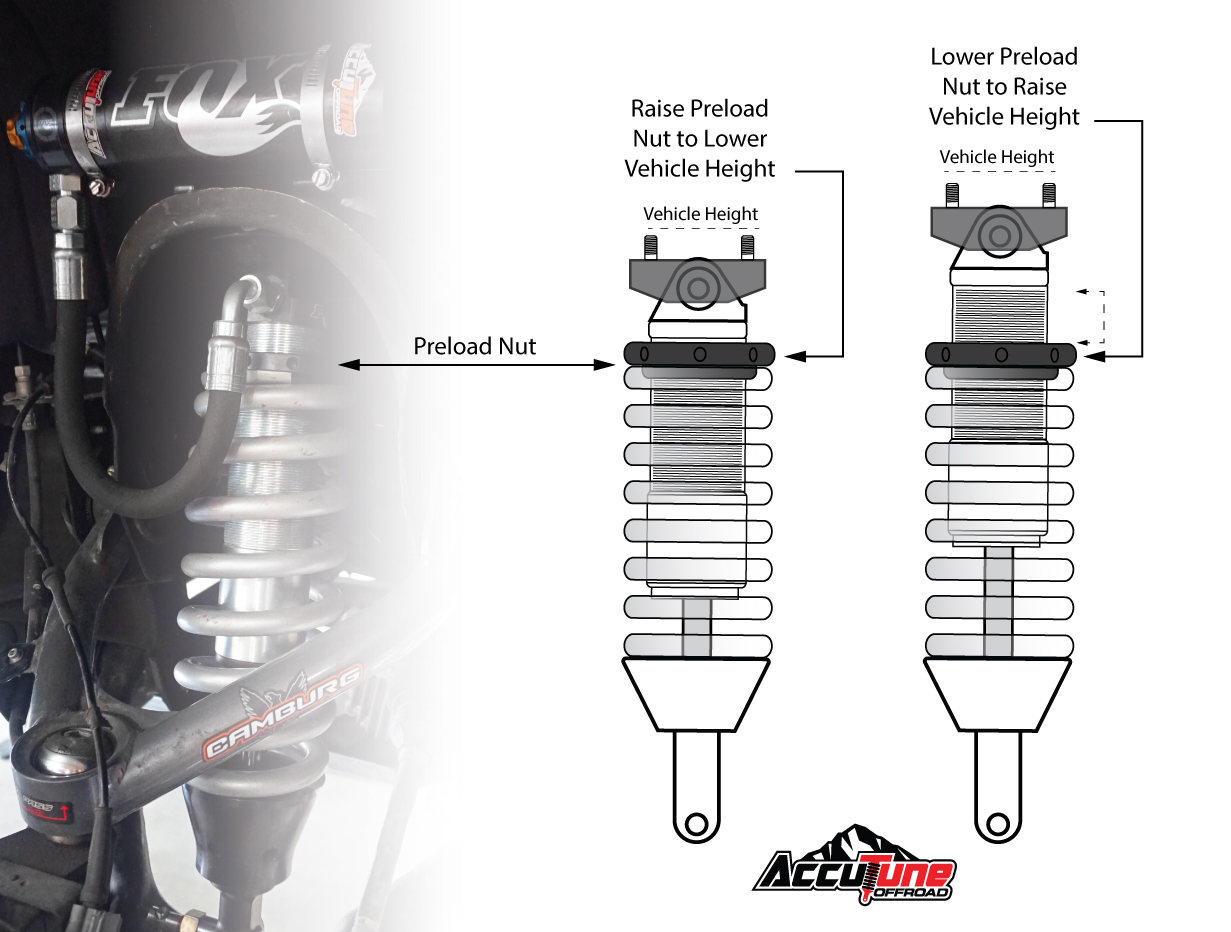
A coilover generally combines a coil spring and a damper in one assembly. Many aftermarket coilovers use an adjustable spring perch or threaded body to set ride height. Depending on the design, spring preload and ride-height adjustment may be separate or related settings, so follow the manufacturer’s instructions instead of assuming that every threaded collar serves the same purpose.
Air suspension supports the vehicle with air springs and may use height sensors, an air compressor, valves, and electronic controls. A leak or system fault can cause one or more corners to sit low. Some systems also lower or raise the vehicle automatically based on speed, selected mode, or load.
Source: YouTube, JRiShocks
Coilover ride-height adjustment
Use only the specified adjustment method and range. Incorrect settings can reduce suspension travel, alter alignment, or cause components to contact one another.
Air spring leaks
A corner that drops after parking or a compressor that runs unusually often may indicate a leak or control-system fault.
Height sensors and controls
A damaged sensor, wiring fault, valve problem, or calibration issue can prevent an electronic leveling system from holding its intended height.
Load-leveling shocks
Certain designs can help maintain the vehicle’s intended stance under a specified load. They must be used within their stated limits.
Do Adjustable Shocks Lift a Car?
An adjustable shock absorber does not automatically provide a lift. Some adjustable dampers change rebound or compression resistance only, which changes how the suspension moves rather than its static height.
A height-adjustable coilover or a purpose-built suspension assembly can raise or lower the vehicle within its approved range. Before making changes, verify compatibility, available suspension travel, tire clearance, and alignment requirements.
Damping adjustment
Changes resistance to suspension movement and normally does not set static ride height.
Height adjustment
Changes the suspension’s installed geometry or spring position as specified by the assembly manufacturer.
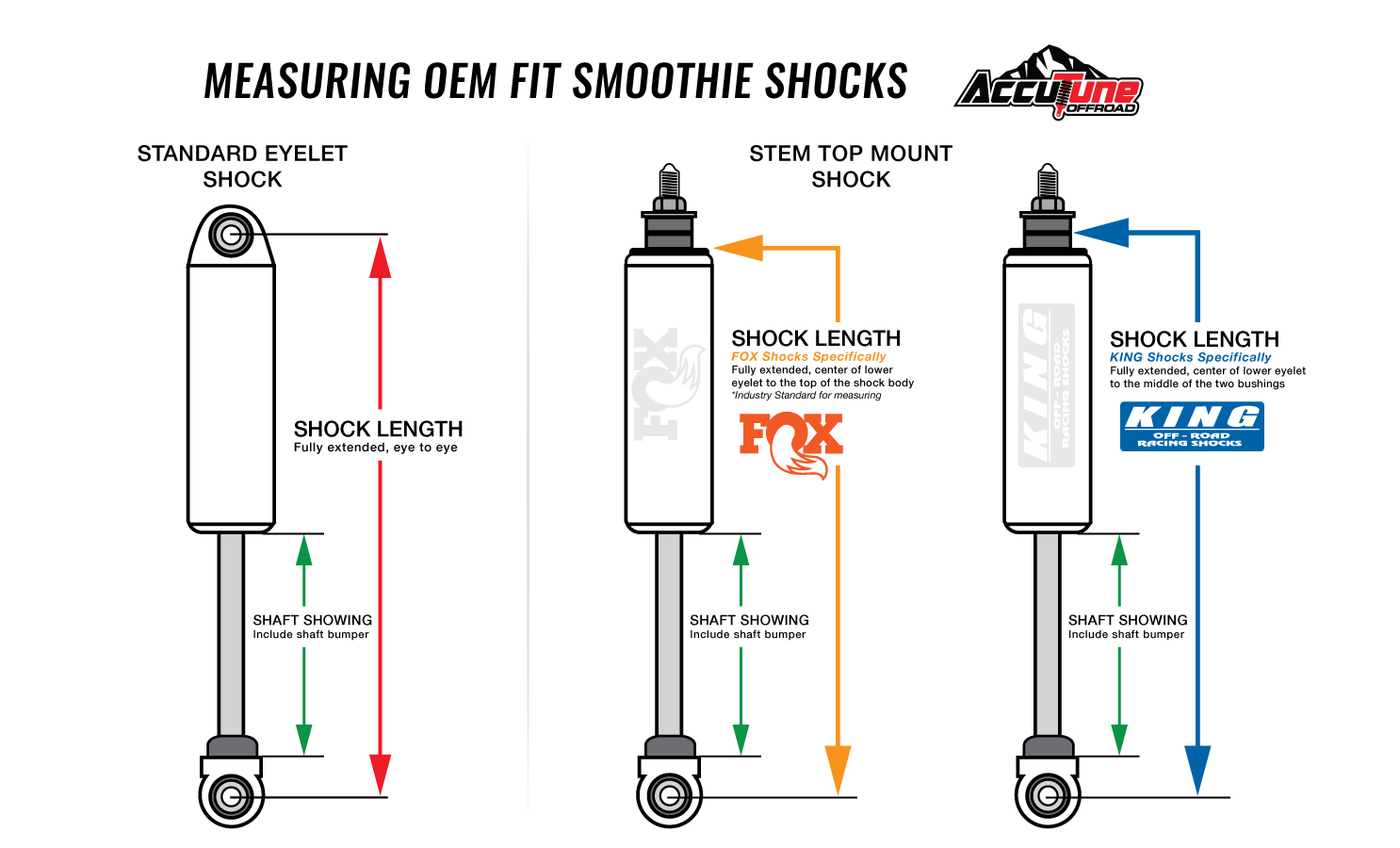
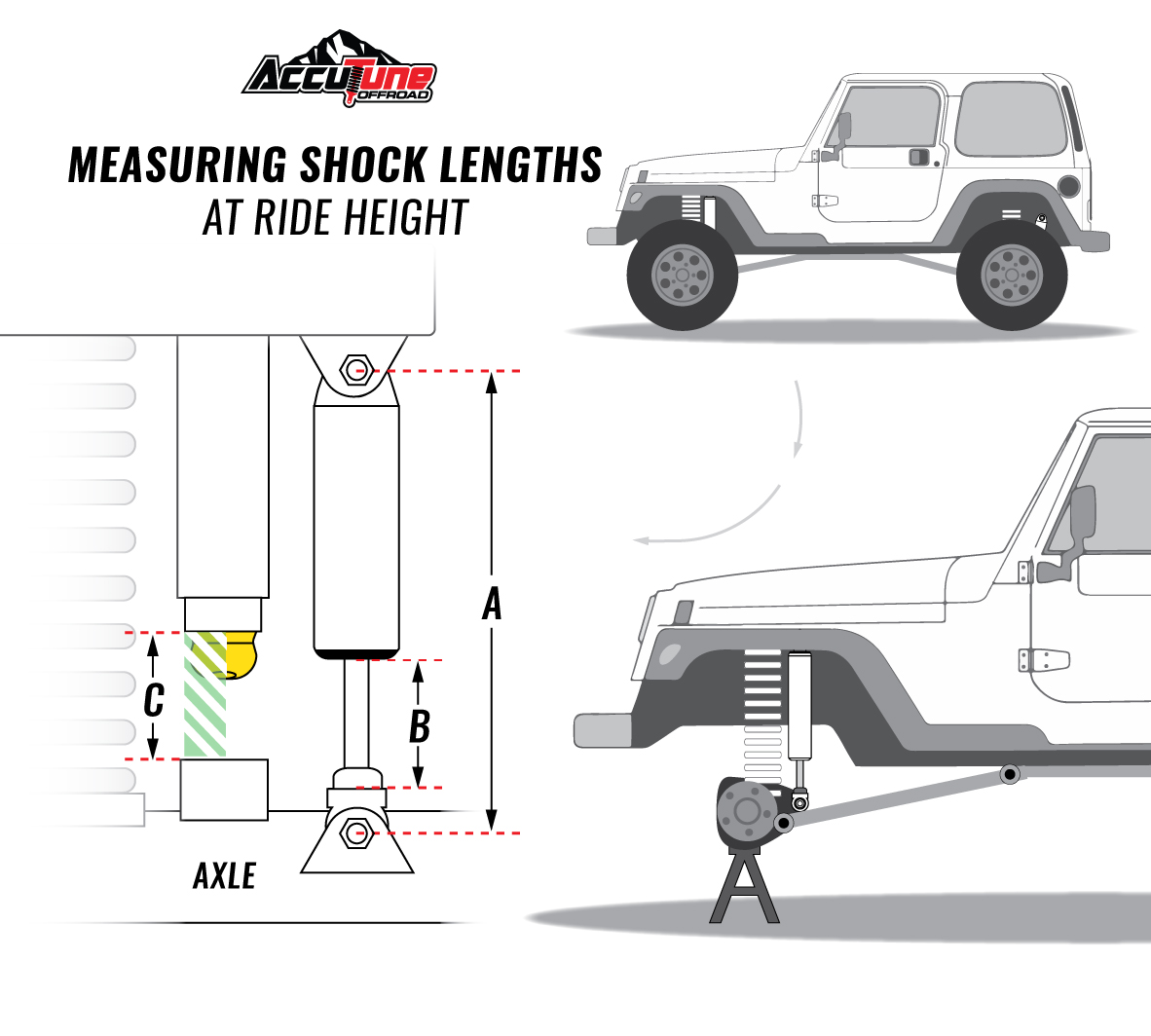
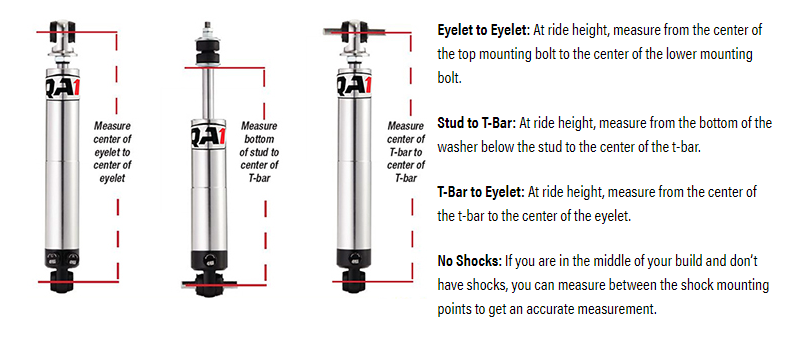
How to Measure Ride Height Correctly
Accurate measurements help show whether a vehicle is actually too low and which corner needs attention. A visual judgment alone can be misleading because fender shapes, tire sizes, wheel offsets, and uneven ground can make two vehicles look different even when their suspension heights are within specification.
The manufacturer’s service information should take priority because some vehicles specify measurements from chassis reference points, wheel centers, or dedicated suspension locations. If you are tracking a change over time, use the same points and conditions each time.
Source: detroitspeed.com
Prepare the vehicle
Park on a firm, level surface, use the specified tire pressures, remove unusual cargo, and follow the service manual’s loading requirements.
Let the suspension settle
Follow the maker’s procedure, which may include rolling the vehicle or moving it gently before taking measurements.
Measure the specified points
Use the correct factory reference points and a suitable tape measure or measuring tool.
Record each corner
Write down the front-left, front-right, rear-left, and rear-right values so you can compare side-to-side and front-to-rear differences.
Compare with specifications
Use the vehicle’s own specifications rather than a universal ride-height figure, since designs and reference points differ.
Example of a Ride-Height Comparison
Consider a hypothetical car whose front-left measurement is 6.0 inches from a defined reference point to the ground, while the front-right measurement is 6.8 inches under the same conditions. The 0.8-inch difference is a reason to inspect the suspension, but it does not prove that the shock absorber is faulty.
The technician should verify the measurement procedure and then inspect the springs, spring seats, mounts, and suspension geometry. The actual acceptable range must come from the manufacturer’s specifications. This example is illustrative and is not a recommended tolerance for every vehicle.
Do not diagnose by appearance alone
Fender gaps can differ because of body design or tire size even when the suspension is functioning as intended.
Do not use a universal target
Factory ride height varies by model, trim, suspension package, load, and measurement method.
What Happens If You Ignore Incorrect Ride Height?
Driving with incorrect ride height can reduce ground clearance and suspension travel. Depending on the cause and severity, the vehicle may bottom out, contact the tires against nearby parts, or handle differently from normal. A broken spring or failed height-control system can also leave the vehicle in an unsafe condition.
Ride height can affect wheel alignment because changing the suspension’s position may change camber, toe, or other geometry. The exact relationship depends on the suspension design. After replacing springs, changing coilover height, or repairing certain suspension components, an alignment check may be necessary.
Uneven height may also be a sign of excess load or a damaged part rather than normal wear. Do not try to solve the problem by fitting longer shocks, adding improvised spacers, or changing adjustment settings without confirming that the proposed change is suitable for the vehicle.
Source: contesting.com
Reduced ground clearance
The underbody, exhaust, or suspension may strike road surfaces or obstacles more easily.
Reduced suspension travel
The suspension may bottom out more often, especially with passengers, cargo, or rough roads.
Alignment and tire concerns
Changed suspension geometry can contribute to uneven tire wear or altered handling.
Possible component damage
A broken spring, failed mount, or defective air suspension component may worsen if the vehicle continues to be used.
When Should You Stop Driving?
Stop in a safe location and arrange professional assistance if a spring is visibly broken, a tire rubs against the body, the vehicle has severe lean, a suspension part is loose or detached, or steering and handling become difficult to control. A vehicle that has dropped suddenly may have a serious mechanical fault.
Do not put any part of your body beneath a vehicle that is supported only by a jack. Coil springs can store substantial energy, and pressurized air suspension systems can move unexpectedly. Repairs involving spring removal, structural suspension parts, or pressurized components require the correct tools and procedures.
Arrange prompt inspection
Use a qualified repair shop when the vehicle sits significantly lower, has a broken spring, or shows sudden suspension changes.
Follow the correct repair procedure
Use vehicle-specific service information and approved lifting, spring-compression, and pressure-release methods.
Should You Replace Shocks and Springs Together?
Shocks and springs do not always need replacement at the same time. If a conventional shock has failed but the springs remain within specification and show no damage, replacing the faulty dampers may be sufficient. If a spring is broken, sagging, or otherwise outside its service limits, replacing the spring is the direct repair for the ride-height problem.
The decision depends on the vehicle’s condition, mileage, suspension design, and the manufacturer’s service guidance. If both components are worn, repairing only one may leave the vehicle with poor ride quality or unresolved symptoms. A technician should inspect the complete assembly rather than replace parts based on height alone.
When replacing shocks, check the mounts, bushings, fasteners, and protective boots. Some vehicles use struts that require additional disassembly, and spring removal may involve stored energy. Follow the proper service procedure and replace related parts when inspection or manufacturer guidance supports doing so.
Source: digital.modernrodding.com
Replace failed shocks
Address verified damping faults, leaks that indicate failure, damaged bodies, or defective mounts.
Replace damaged or sagging springs
Correct the component responsible for carrying the vehicle’s weight and establishing its intended position.
Consider matched axle components
Replacing dampers or springs in pairs across the same axle is often advisable to maintain consistent performance, subject to the manufacturer’s instructions and the nature of the failure.
Check alignment when appropriate
An alignment check is especially relevant after work that changes ride height or suspension geometry.
Will New Shocks Fix a Sagging Rear End?
New conventional shocks generally will not fix a sagging rear end when weak leaf springs or coil springs are the cause. The rear suspension may need replacement springs, approved spring repairs, or diagnosis of a self-leveling system, depending on the design.
If the vehicle uses load-leveling shocks, air springs, or an integrated suspension system, the correct repair may be different. Check the manufacturer’s load limits and system specifications before carrying heavy cargo or towing.
Check the load first
Remove excess cargo and compare ride height under the prescribed measurement conditions.
Identify the rear suspension type
Confirm whether the vehicle uses leaf springs, coil springs, air suspension, or a load-leveling system before ordering parts.
Common Ride-Height Diagnosis Mistakes
The most common mistake is replacing the part that looks worn without confirming what supports the vehicle’s weight. A leaking shock may need replacement, but if the vehicle is sitting low because a spring has lost its designed height, replacing the damper alone will not address the main issue.
Another mistake is comparing measurements taken under different conditions. A vehicle carrying tools or luggage can sit lower than it does when empty, while a vehicle parked on a slope can produce misleading readings. Tire diameter and body shape can also change how the stance looks.
Finally, not every suspension problem calls for a lift kit or a stiffer spring. Changes to ride height can affect handling, alignment, suspension travel, and component clearance. Diagnose the fault and use parts that match the vehicle’s intended setup.
Assuming every low vehicle needs new shocks
Check the springs, mounts, load, and suspension type before deciding which parts have failed.
Using the bounce test as the only test
A bounce test can offer a rough clue but cannot reliably assess every modern suspension system or confirm the cause of low ride height.
Ignoring part compatibility
Verify the exact application, suspension package, dimensions, and adjustment range before installing replacement parts.
Changing spring preload without guidance
Incorrect adjustments may change ride quality or travel and may not produce the intended ride-height change on every coilover design.
Continuing to drive with a broken spring
A broken spring can damage nearby parts or interfere with the tire. Arrange a prompt inspection instead of treating it as a cosmetic issue.
What Information Should You Give a Mechanic?
Describe when the problem started, whether it appeared suddenly or gradually, and whether it followed a repair, a heavy load, a pothole impact, or a change in suspension settings. Share any measured ride-height differences and explain whether the vehicle bounces, makes noise, or pulls to one side.
Mention any warning lights, especially on vehicles with electronically controlled or air suspension. This information can help the technician choose the right inspection procedure and avoid replacing unrelated parts.
Vehicle details
Provide the year, make, model, trim, drivetrain, and any aftermarket suspension modifications.
Observed symptoms
Report low corners, bouncing, fluid leaks, warning lights, tire contact, or changes after loading.
Recent work
List recent shock, strut, spring, wheel, tire, or suspension repairs and any height adjustments.
Research-Based Content Gap Map
The article’s main purpose is to answer whether shock absorbers affect ride height and help readers distinguish a damper fault from a spring or height-control problem. The following next-question map is based on the practical needs implied by that task, rather than verified search-volume data.
No live competitor-page inspection, search-position check, Search Console export, or verified People Also Ask review is claimed here. Therefore, the question classifications below are inferred next needs, and competitor coverage is marked not checked rather than described as a verified omission.
Question: Will new shocks raise my car?
Reader stage: after repair. Basis: inferred next need. Competitor coverage: not checked. Benefit: explains the difference between conventional dampers and height-adjustable or leveling assemblies. Priority: high. Placement: replacement section.
Question: Why is one side of my car lower?
Reader stage: troubleshooting. Basis: inferred next need. Competitor coverage: not checked. Benefit: directs attention to spring damage, mounting faults, loading, and measurement accuracy. Priority: high. Placement: diagnostic section.
Question: How should I measure ride height?
Reader stage: before repair. Basis: inferred next need. Competitor coverage: not checked. Benefit: prevents false diagnoses caused by uneven ground or inconsistent measurement points. Priority: high. Placement: measurement section.
Question: Can I drive with a broken spring or low suspension?
Reader stage: safety decision. Basis: inferred next need. Competitor coverage: not checked. Benefit: clarifies when to stop driving and arrange professional assistance. Priority: high. Placement: safety section.
Question: Do adjustable shocks change ride height?
Reader stage: modification or repair planning. Basis: inferred next need. Competitor coverage: not checked. Benefit: separates damping adjustment from actual height adjustment. Priority: medium. Placement: coilover section.
Frequently Asked Questions
Q
Do shock absorbers affect ride height?
Conventional shock absorbers generally do not determine static ride height. Springs support the vehicle’s weight, while shocks control spring movement. However, coilovers, load-supporting shocks, struts with related assembly faults, and air suspension systems can affect height depending on their design.
Q
Can bad shocks make a car sit lower?
Bad conventional shocks usually do not make a car sit lower by themselves. A sagging or broken spring, damaged mount, excess load, or suspension-system fault is a more direct cause of low ride height. A vehicle can have worn shocks and sagging springs at the same time.
Q
Will replacing shocks improve ride height?
Replacing conventional shocks normally restores damping rather than ride height. If the vehicle remains low after the repair, inspect the springs, mounts, loading, and suspension geometry. A load-leveling or adjustable assembly may behave differently, so check the vehicle-specific design.
Q
Do shocks or springs affect ground clearance?
Springs and height-control systems have a direct role in setting body position and ground clearance. Conventional shocks mainly control suspension movement. A damaged damper can contribute to poor control or bottoming, but a persistent low stance usually calls for a check of springs, load, suspension geometry, and height-control components.
Q
Can adjustable shock absorbers raise a vehicle?
Some suspension assemblies can raise or lower a vehicle, but damping adjustability alone does not usually change static height. A coilover with an approved ride-height adjustment or a compatible leveling system may change height within its specified range. Check the exact product instructions before making adjustments.
Q
Why does my vehicle sit lower on one side?
Possible causes include a damaged or sagging spring, a broken spring coil, a worn spring seat, damaged mounting hardware, uneven loading, or a fault in an air suspension system. Measure the vehicle on level ground under consistent conditions and compare the results with the manufacturer’s specifications. Arrange an inspection if the difference is significant or appeared suddenly.
Q
Should shocks be replaced in pairs?
Replacing shocks in pairs on the same axle is often recommended so both sides provide similar damping. Follow the vehicle manufacturer’s guidance and inspect related suspension parts at the same time. Pair replacement does not mean that both springs must always be replaced, although matched spring replacement may be appropriate when a spring is damaged or sagging.
✦ Wrapping Up
Conclusion
So, do shock absorbers affect ride height? In most conventional suspension systems, not directly. Springs carry the vehicle’s weight and establish its normal settled position, while shocks control how the suspension responds to bumps, turns, and braking.
A car that sits too low needs a broader inspection. Check the springs, mounts, vehicle load, and ride-height measurements before replacing parts. If the vehicle uses coilovers, air suspension, or load-leveling shocks, follow the specific service information because those systems can change or regulate height.
Correct diagnosis helps avoid unnecessary repairs and protects handling, tire clearance, and suspension travel. If a spring is broken, the vehicle has dropped suddenly, or the suspension makes steering or control difficult, stop driving and arrange a qualified inspection.
💡 Key Takeaway
Measure ride height on level ground under the correct loading conditions, compare it with the vehicle manufacturer’s specifications, and inspect the springs and suspension mounts before assuming that the shock absorbers are responsible.
Eric
Hi, I’m Eric Bennett, the person behind OffRoadTruckAccessories.com.
I created this blog to share my interest in trucks, off-road driving, automotive accessories, and DIY modifications. I enjoy learning how different truck accessories work, testing their usefulness, and understanding whether they are truly worth buying.
Shock absorbers are located near the wheels as part of the suspension system, usually between the vehicle’s body, frame, or subframe and a suspension component such as a control arm, axle, or wheel assembly. However, the exact answer to where are shock absorbers located on a car depends on the suspension design. Some vehicles have…
You should change shock absorbers when they are worn, leaking, damaged, or no longer controlling suspension movement properly. There is no single replacement interval that applies to every vehicle because shock absorber life depends on road conditions, vehicle weight, driving habits, suspension design, and component quality. If you are wondering when to change shock absorbers,…