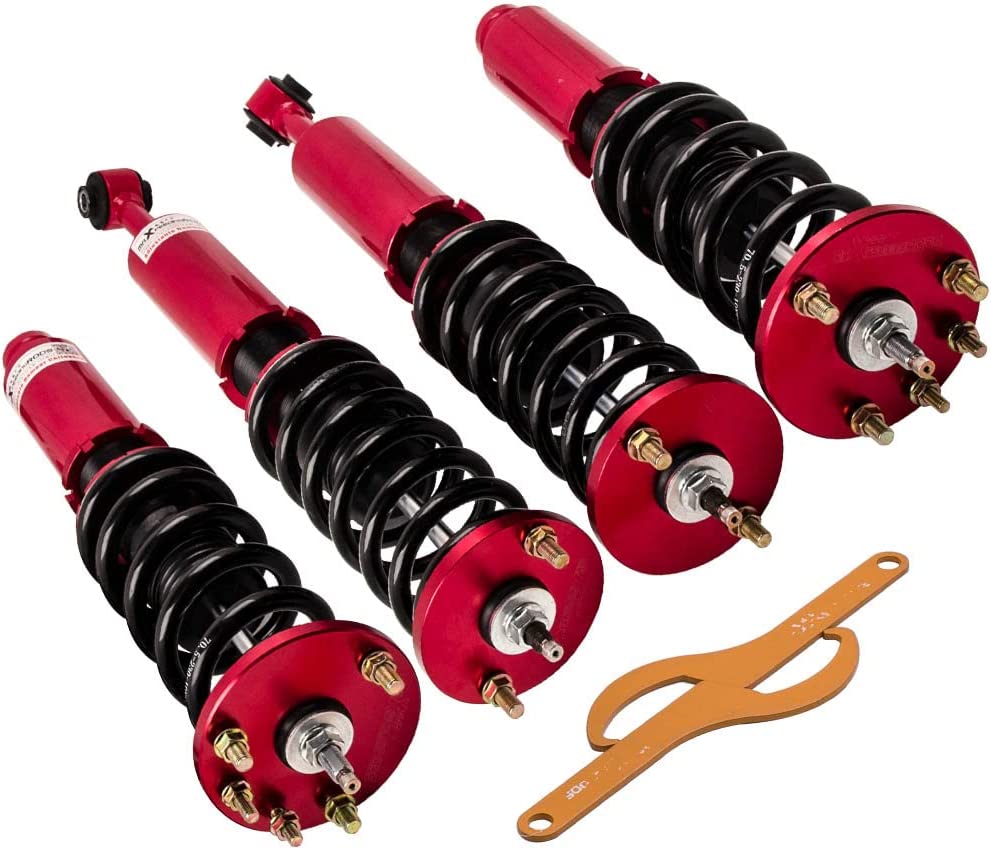
Yes, coilovers can be good for daily driving when you choose a street-focused kit, keep enough ground clearance, and set up the suspension correctly. However, they are not always more comfortable or practical than factory suspension.
Across the United States, daily drivers face many road conditions, from smooth California highways to potholes in older city streets and steep parking ramps in suburban areas. Your suspension must handle these changes while keeping the car stable, comfortable, and easy to control. Coilovers can help, but the right setup matters more than how low the car sits.
Coilovers combine a coil spring and a shock absorber into one assembly. Many aftermarket kits let you change ride height, while some also let you adjust damping, which controls how quickly the suspension moves. These features can improve handling and give you more control over the way your car feels on the road.
The trade-off is that some coilovers use stiff springs, firm damping, or mounts that pass more road noise into the cabin. Lowering the car too much can also reduce suspension travel and make potholes, speed bumps, and steep driveways harder to manage. A street-focused setup can avoid many of these problems, but no adjustment can make every performance kit comfortable on every road.
This guide explains the benefits, drawbacks, costs, and setup choices that matter for everyday use. It also compares coilovers with factory suspension and lowering springs so you can decide whether an upgrade makes sense for your car and your commute.
Coilovers are suspension units that place a coil spring around a shock absorber. The spring supports the vehicle and absorbs road impacts, while the shock absorber controls spring movement. Together, these parts help keep the tires in contact with the road and limit unwanted body movement.
Many aftermarket coilovers have threaded bodies or adjustable spring seats that allow changes to ride height. Depending on the design, you may also be able to change damping, spring preload, or other settings. Not every kit offers the same adjustments, so check the manufacturer’s specifications before buying.
Factory suspension is already designed to balance comfort, handling, load capacity, durability, and cost. An aftermarket coilover kit changes that balance. The result can be better suited to your needs, but it can also create new compromises if the kit does not match your car or road conditions.
Source: ranwhenparked.net
Coil spring
Supports the car’s weight and compresses over bumps. Its spring rate affects how much force is needed to compress it.
Shock absorber
Controls how quickly the spring compresses and rebounds, helping prevent excessive bouncing and body movement.
Ride-height adjustment
Changes the distance between the chassis and the road when the suspension design allows it.
Damping adjustment
Changes resistance to suspension movement on kits designed with adjustable dampers.
Are All Coilovers Adjustable?
No. Some coilovers offer ride-height adjustment only, while others add damping controls or separate compression and rebound settings. Some specialized kits also allow changes to spring rates through compatible replacement springs.
More adjustment does not always mean a better daily ride. A well-matched kit with fixed damping may feel better than a poorly designed kit with many controls. Choose features that solve a real need rather than paying for settings you will rarely use.
For commuting
Prioritize street comfort, reliable damping, adequate suspension travel, and easy maintenance.
For mixed street and track use
Consider a kit with useful damping adjustment and specifications suited to both types of driving.
Are Coilovers Comfortable Enough for Everyday Driving?
Coilovers can provide a comfortable daily ride, but comfort depends on the complete suspension setup rather than the coilover label. Spring rates, damping, tire sidewalls, mount design, ride height, and road quality all affect what you feel inside the car.
A street-focused kit with suitable springs and well-matched dampers can control body movement without making every road joint feel harsh. Some drivers may prefer this more controlled feel to worn factory suspension that allows the car to bounce or float. However, a performance kit with stiff springs can feel rough on broken pavement.
The best test is how the car behaves on your normal route. A suspension setup that feels comfortable on a smooth highway may be tiring on a road full of potholes, patched pavement, and sharp bumps. Think about your actual commute instead of judging a kit by its appearance or track reputation.
Source: offroadersworld.com
Spring rate
A higher spring rate generally requires more force to compress the spring. Very stiff springs can transmit sharper impacts, depending on the rest of the setup.
Damping
Too much damping can make the suspension feel harsh, while too little can allow repeated bouncing. The correct setting depends on the spring and damper design.
Mounts and bushings
Rubber mounts often isolate more noise and vibration than rigid spherical mounts. The exact result depends on the components used.
Tires
Low-profile tires often provide less cushioning than tires with taller sidewalls, so wheel and tire choices can change ride comfort.
Do Coilovers Always Make a Car Stiffer?
No. Coilovers do not all use the same spring rates or damping settings. Some are built for road comfort, while others are designed for track use, where body control and repeatable performance may matter more than softness over rough pavement.
If comfort is your priority, look for a kit whose manufacturer documents its intended use and spring specifications. Ask whether the supplied springs and dampers suit your vehicle’s weight and normal road conditions. Avoid assuming that the softest damper setting will turn a stiff track setup into a comfortable commuter suspension.
Signs of a suitable setup
The car settles after bumps, remains stable through normal turns, and does not repeatedly hit its bump stops on ordinary roads.
Signs of a poor setup
The ride feels excessively sharp, the car keeps bouncing, or the suspension frequently bottoms out.
Benefits of Coilovers for Daily Driving
The main benefits of coilovers are adjustability, more controlled body movement in suitable setups, and the ability to choose a ride height that fits your goals. These advantages can make a daily driver feel more composed, especially when the factory dampers are worn or the original setup does not meet your handling preferences.
The gains depend on the vehicle, the kit, and the installation. Replacing worn factory parts with new, properly matched suspension components can itself improve control. That improvement should not be credited to adjustability alone.
Coilovers are most useful when their features solve a specific problem. If you want a lower stance, a more direct response in corners, or the ability to tune your suspension for different conditions, they may be worth considering. If you only need a smooth commute, the extra features may offer little practical value.
Source: www.capitalone.com
Adjustable ride height
Many kits let you set the car higher or lower within a specified range, helping balance appearance, clearance, and suspension function.
More controlled cornering
A suitable spring and damper combination can reduce unwanted body roll and improve the car’s response to steering inputs.
Tuning flexibility
Damping controls on adjustable kits can help you tailor the feel for ordinary road use or other permitted driving conditions.
Matched components
A complete kit can provide springs and dampers designed to work together, rather than combining parts with uncertain compatibility.
Appearance
A modest ride-height change can alter the car’s stance without requiring an extreme drop.
Can Coilovers Improve Handling on Public Roads?
They can improve handling when the kit is designed for the car and correctly set up. Better control of body movement may help the vehicle feel more settled during turns, lane changes, and other normal driving tasks.
However, stiffer suspension does not automatically create more tire grip. A setup that cannot follow uneven pavement well may reduce tire contact and make the car less predictable. The goal for street use is controlled movement and consistent contact with the road, not maximum stiffness.
Choose a balanced setup
Favor predictable handling and compliance over settings intended mainly for aggressive driving.
Keep safety systems in mind
Suspension changes can affect vehicle behavior. Do not assume that electronic stability control or other factory systems can compensate for an unsuitable setup.
Disadvantages of Coilovers for Daily Use
Coilovers can make daily driving less comfortable, increase maintenance needs, and add costs that are easy to overlook. These drawbacks are more likely when the kit is designed for competition, the car sits too low, or the parts are poorly matched to the vehicle.
Lower ride height can also reduce the clearance needed for potholes, parking ramps, speed bumps, and steep driveways. On some vehicles, it may change suspension geometry or place extra demands on other components. The exact effects depend on the car and how far it is lowered.
Before buying, consider the full ownership experience. A car that looks better in a parking lot may be less practical if you regularly carry passengers, travel on rough roads, or need to drive through areas with deep snow or standing water.
Source: www.pinterest.com
Reduced comfort
Stiff springs, excessive damping, and limited suspension travel can make rough roads tiring.
Less ground clearance
A lower car is more likely to scrape its underbody or front bumper on steep entrances and raised road features.
Additional cost
The total expense may include parts, labor, alignment, adjustments, and later maintenance.
Possible noise
Some mounts and suspension designs transmit more road noise or can develop squeaks and clunks if worn or installed incorrectly.
More setup decisions
Adjustable systems need correct settings. Poor adjustment can reduce comfort and handling quality.
Why Extremely Low Coilovers Can Be a Problem
Lowering a car too far can leave less room for the suspension to compress over bumps. When the suspension reaches its bump stops often, impacts may feel abrupt and the tires may have less ability to follow uneven pavement.
An extreme drop can also affect alignment, tire clearance, and the angles of suspension or driveline components. Depending on the design, it may be impossible to achieve a useful combination of low ride height and adequate suspension travel.
For a daily driver, choose a height that works on your regular roads. The lowest available setting is not automatically the best setting, and an adjustable kit should always remain within the manufacturer’s approved range.
Watch for scraping
Repeated contact with driveways, ramps, or road surfaces is a sign that the ride height may be unsuitable.
Watch for bottoming out
Frequent hard impacts over normal bumps require inspection and correction rather than simply accepting a harsh ride.
Can Coilovers Cause Uneven Tire Wear?
Yes, they can contribute to uneven tire wear if installation or ride-height changes leave the wheel alignment outside suitable specifications. Changes in camber and toe can affect how the tires meet the road, and excessive lowering may limit the available adjustment range.
Coilovers do not automatically cause tire wear. Correct alignment, suitable ride height, proper tire pressure, and routine inspections all help. A professional alignment is especially important after installation or a significant height adjustment.
Check alignment
Have a qualified shop measure and set the alignment to appropriate specifications for your vehicle and intended use.
Inspect the tires
Uneven wear, unusual feathering, or a change in steering behavior warrants a closer inspection.
Coilovers vs. Stock Suspension vs. Lowering Springs
Coilovers are not the only way to change how a daily driver rides or handles. Keeping the factory suspension, replacing worn parts with stock-style components, or fitting compatible lowering springs may provide a better balance of cost, comfort, and practicality.
The right choice depends on what you want to change. If your current suspension is worn, restoring its original performance may be more useful than installing a performance kit. If you want a modest drop without frequent adjustments, lowering springs matched to suitable dampers may meet your needs.
The comparison below summarizes typical differences. Actual ride quality and cost vary by vehicle and component quality, so treat these as general tendencies rather than guarantees.
Source: vehiclefreak.com
Factory-style suspension
Usually the best starting point for drivers who prioritize the original comfort, clearance, and everyday behavior of their vehicle.
Lowering springs
Can provide a modest drop with fewer adjustment options. They must be paired with compatible dampers and remain within the intended operating range.
Street-focused coilovers
Offer ride-height control and sometimes damping adjustment, but generally require more careful selection and setup.
Which Suspension Option Fits Your Needs?
If comfort and low ownership costs matter most, factory-style replacement parts are often the sensible choice. They can restore ride control without adding unnecessary adjustment points or changing the vehicle’s intended ride height.
If you want a small drop and are happy with a fixed setup, lowering springs may be enough. Confirm that the springs are compatible with your dampers and that the resulting ride height preserves adequate travel.
If you want adjustable ride height or the ability to tune damping, coilovers offer more flexibility. Their extra cost and setup demands make the most sense when you will use those features.
Choose factory-style parts
Best for preserving a familiar ride, restoring worn suspension, and keeping the car practical.
Choose lowering springs
Worth considering for a modest, fixed ride-height change with a compatible suspension package.
Choose coilovers
Consider them when adjustable height or damping provides a clear benefit for your driving needs.
How to Choose Coilovers for Daily Driving
Start by choosing a kit made for your exact vehicle and intended use. Fitment, vehicle weight, suspension layout, and manufacturer instructions matter more than a generic claim that a kit is comfortable or sporty.
Next, compare the spring rates, damping design, ride-height range, mount type, corrosion protection, warranty, and service options. A kit with clear specifications and support is easier to maintain than one with uncertain fitment or no useful setup information.
Finally, consider the roads you use every day. If your commute includes rough pavement, potholes, and steep ramps, preserving suspension travel and ground clearance should carry more weight than achieving an extremely low stance.
Source: wuling.id
Vehicle compatibility
Confirm the exact model, year, trim, drivetrain, and any relevant suspension differences before ordering.
Street-oriented spring rates
Choose rates intended for your vehicle and normal road use. Do not rely on a universal spring-rate number without checking the manufacturer’s application data.
Useful damping controls
Adjustable damping can help when you understand the settings and can return to a documented baseline.
Suitable mounts
Consider comfort-oriented mounts when reducing cabin noise and vibration is a priority.
Corrosion protection
Durable finishes and serviceable adjustment threads matter when the car faces rain, road debris, or winter road salt.
Warranty and support
Check coverage, exclusions, replacement-part availability, and maintenance requirements before making a purchase.
Should You Buy Adjustable or Fixed-Damping Coilovers?
Adjustable damping is useful if you expect to tune the ride for different road conditions or driving needs. However, adjustment ranges differ, and a knob that changes damping does not necessarily change spring stiffness or correct an unsuitable ride height.
Fixed-damping coilovers may suit drivers who want a straightforward setup and do not plan to tune the suspension. A properly matched fixed system can work well for daily use, so extra controls should not be the only reason to choose one kit over another.
Choose adjustable damping
When the kit provides a useful street-oriented range and you are prepared to follow its setup instructions.
Choose fixed damping
When a well-documented, vehicle-specific setup already matches your comfort and handling goals.
How to Set Up Coilovers for a Comfortable Daily Ride
A comfortable result starts with correct installation and a sensible baseline. Coilovers are part of a vehicle’s suspension system, so their setup affects ride height, alignment, handling, and tire contact. Follow the exact instructions supplied for the kit and vehicle rather than applying a generic adjustment method.
If you are unfamiliar with suspension work, use a qualified automotive shop. Incorrect assembly, spring preload, fastener torque, or adjustment can create handling problems and safety risks. A professional can also check related parts before fitting the new system.
After installation, evaluate the car on familiar roads at normal legal speeds. Make changes only when the manufacturer permits them, and change one setting at a time so you can identify what actually improves the ride.
Source: offroadersworld.com
Step 1: Inspect the vehicle
Check the existing springs, dampers, mounts, bushings, tires, and other relevant parts. Worn components can affect the result of an upgrade.
Step 2: Set a sensible ride height
Use a height within the kit’s approved range that preserves adequate clearance and suspension travel.
Step 3: Follow the setup instructions
Use the manufacturer’s spring preload and damping procedures. Do not assume every coilover adjusts in the same way.
Step 4: Check alignment
Arrange a professional wheel alignment after installation or a meaningful change in ride height.
Step 5: Evaluate the ride
Pay attention to bouncing, harsh impacts, rubbing, noise, and changes in steering behavior on ordinary roads.
Step 6: Recheck the installation
Follow the specified inspection and fastener-check schedule. Correct any abnormal noise or movement before continuing normal use.
How Should You Adjust Damping for Street Use?
Start with the manufacturer’s recommended baseline for street driving. If the kit has numbered damping settings, follow the manual’s instructions for counting clicks or turns and note the original position before making changes.
Test the car on a familiar route, then make small permitted changes and compare the results. A setup that feels firm but controlled on smooth pavement may be too harsh on rough roads, while excessive softness can allow unwanted bouncing.
Do not force an adjuster past its stop or assume that turning every adjuster in the same direction produces the same result across brands. Some systems use different controls, and some require specialist tools or procedures.
If the ride feels harsh
Check damping settings, ride height, tire pressure, available travel, and the condition of the suspension before assuming the springs are the only cause.
If the car keeps bouncing
Have the damping, spring compatibility, and installation checked. Repeated bouncing should not be treated as a normal feature of performance suspension.
If you hear clunks
Arrange an inspection of mounts, fasteners, springs, and nearby components. Stop driving if the noise comes with unstable handling or a suspected loose suspension part.
Coilover Maintenance, Costs, and Long-Term Ownership
Coilovers add ongoing maintenance considerations, particularly when the car is driven in wet, dirty, or salty conditions. Exposed threads and adjustment collars may collect road grime or corrode, making future height changes difficult. Regular inspections can help catch wear before it affects ride quality or handling.
There is no single service life that applies to every coilover kit. Durability depends on the design, materials, road conditions, mileage, installation, and maintenance. Follow the manufacturer’s inspection and servicing schedule, and replace damaged or worn parts when required.
The total cost also goes beyond the kit itself. Installation, alignment, possible supporting parts, and later repairs can change the value of the upgrade. Compare the full ownership cost with the price of restoring your factory suspension before deciding.
Source: www.pinterest.com
Purchase price
Compare complete, vehicle-specific kits with clear specifications instead of judging value by the advertised price alone.
Installation labor
Include professional fitting when you do not have the training and equipment to complete suspension work correctly.
Wheel alignment
Budget for alignment after installation and when later ride-height changes require it.
Cleaning and inspection
Keep adjustment areas maintained according to the manufacturer’s instructions, especially in harsh weather.
Repairs and replacement
Check whether dampers, seals, mounts, and other parts can be serviced or must be replaced as a unit.
Are Coilovers Worth the Extra Cost?
Coilovers are worth considering when adjustable height, useful damping control, or a specific handling goal matters enough to justify the cost. They may also make sense for a driver who wants a carefully selected street and occasional track setup.
They are less compelling when the factory suspension already meets your needs. If worn shocks are the main problem, replacing them with suitable factory-style parts may restore comfort and control for less money and with fewer setup demands.
Before buying, compare the full installed cost and the likely maintenance needs. A less expensive kit that lacks support or suitable replacement parts may not offer better long-term value.
Worth considering
You need adjustable ride height, want a specific street-handling balance, and can maintain the system correctly.
Probably unnecessary
You mainly want a smooth commute, need maximum ground clearance, or do not expect to use the adjustment features.
A Practical Decision Guide for Daily Drivers
The best suspension choice depends on the roads you drive, your comfort needs, and what you expect the upgrade to change. A driver on smooth highways may accept a firmer ride more easily than someone who crosses broken city streets every day.
Think about passengers, luggage, driveway angles, winter conditions, and the need to avoid scraping. These factors can matter more in daily use than the maximum adjustment range advertised for a kit.
Use the following guide to narrow your choice. It is a practical starting point, not a guarantee of how a particular vehicle will ride.
You want the smoothest practical commute
Keep or restore a suitable factory-style suspension unless a verified comfort-focused coilover kit clearly meets your needs.
You want a modest drop and better control
Compare street-focused coilovers with compatible lowering springs and dampers.
You want height adjustment for changing needs
Look for a compatible coilover kit with an appropriate adjustment range and clear setup guidance.
Your roads have many potholes
Prioritize suspension travel, tire protection, and clearance over an extreme drop or track-focused spring rates.
You plan frequent track days
Consider a setup designed for the intended track use, but understand that its road comfort may be different from that of a street-focused kit.
What to Check Before Making the Final Choice
Review the manufacturer’s fitment list, spring specifications, damping features, permitted ride-height range, maintenance instructions, and warranty. Ask a qualified installer whether the proposed height and alignment settings are suitable for your vehicle.
Check applicable local vehicle modification rules and inspection requirements before changing the suspension. In the United States, requirements can vary by state and by the type of modification, so do not assume a setup is legal everywhere.
If you cannot confirm compatibility, clearance, or the intended spring and damper settings, delay the purchase until those questions are answered. Choosing a suitable suspension system first is safer and often less expensive than correcting a poor setup later.
Verify compatibility
Match the exact vehicle and confirm that all required parts are included or specified.
Plan the complete installation
Include fitting, alignment, post-installation checks, and any supporting parts in your budget.
Set realistic expectations
Aim for a balanced daily ride rather than assuming every handling or appearance goal can be achieved without compromise.
Frequently Asked Questions
Q
Are coilovers bad for daily driving?
No. Coilovers can work well for daily driving when they are designed for street use and installed correctly. However, track-focused springs, excessive damping, poor alignment, or an extremely low ride height can make the car uncomfortable and less practical.
Q
Do coilovers make a car ride rough?
They can, but not every coilover setup produces a rough ride. Spring rate, damping, suspension travel, mounts, tires, and road conditions all affect comfort. A suitable street-focused kit may provide a controlled ride, while an aggressive setup can feel harsh over potholes and sharp bumps.
Q
Can you daily drive coilovers in winter?
Yes, if the kit is suitable for the climate and the car retains enough ground clearance for local conditions. Road salt and moisture can corrode exposed adjustment threads, while snow and ice can make a very low car difficult to use. Follow the manufacturer’s cleaning and maintenance instructions.
Q
Do coilovers need an alignment after installation?
Yes. Installing coilovers or changing ride height can affect wheel alignment. Have a qualified shop check and adjust the alignment to appropriate specifications. Incorrect alignment can cause uneven tire wear, poor steering behavior, and reduced handling performance.
Q
Are coilovers better than lowering springs for daily driving?
Neither option is always better. Coilovers offer more adjustment on many kits, while lowering springs can provide a simpler, fixed drop when paired with compatible dampers. Choose based on comfort, desired ride height, installation cost, maintenance, and whether you will use the extra adjustment features.
Q
Can coilovers improve handling without making the ride too stiff?
Yes, a properly matched street setup can improve body control while retaining useful suspension compliance. The result depends on the vehicle, spring and damper design, tires, alignment, and road surface. A very stiff setup is not required for good everyday handling.
Q
How long do coilovers last on a daily driver?
There is no universal lifespan for coilovers. Quality, mileage, road conditions, corrosion, maintenance, and use all affect durability. Inspect the suspension as recommended by the manufacturer and have leaks, damage, unusual noises, or changes in handling checked promptly.
✦ Wrapping Up
Conclusion
Coilovers can be good for daily driving when they suit your car, your roads, and your comfort needs. They offer useful ride-height control and, on some kits, damping adjustment that can help balance body control with everyday comfort. The benefits depend on sound design, correct installation, and careful setup.
The main drawbacks are possible ride harshness, reduced ground clearance, additional maintenance, and higher total costs. These issues become more likely when a car is lowered too far or fitted with suspension intended for a different purpose.
If you want adjustable suspension and a more controlled feel, a street-focused coilover kit may be a sensible upgrade. If you mainly want a smooth, reliable commute, restoring the factory suspension or choosing compatible lowering springs may be the better use of your money.
💡 Key Takeaway
Before buying coilovers, confirm vehicle compatibility, review the spring and damping specifications, preserve adequate suspension travel and ground clearance, and budget for professional installation and alignment. Choose the setup that works on your normal roads, not simply the one that lowers your car the most.
Eric
Hi, I’m Eric Bennett, the person behind OffRoadTruckAccessories.com.
I created this blog to share my interest in trucks, off-road driving, automotive accessories, and DIY modifications. I enjoy learning how different truck accessories work, testing their usefulness, and understanding whether they are truly worth buying.
Will G37 coilovers fit G35? Learn which model years may share fitment, what changes with coupe, sedan, and AWD setups, and how to verify compatibility.