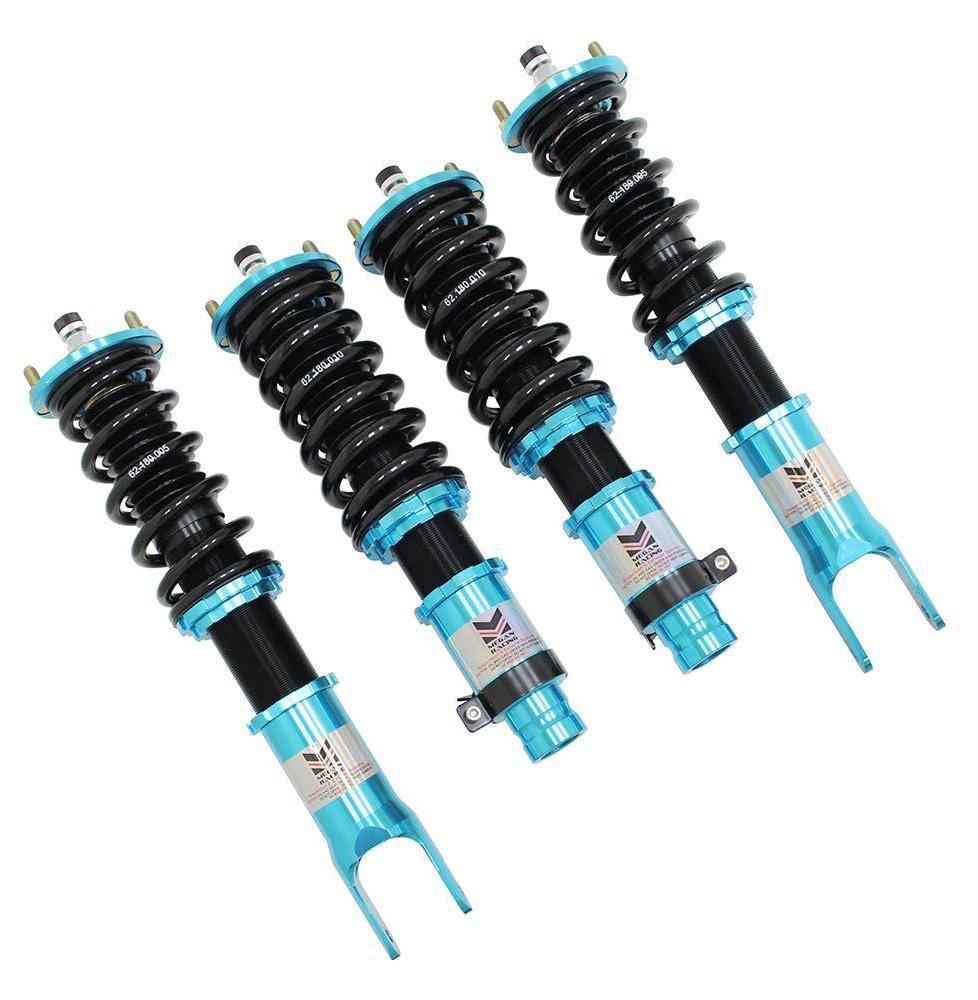
Yes, some Honda Civic EG coilovers can fit an EK Civic, but compatibility depends on the exact coilover kit, suspension design, and vehicle configuration. Confirm the manufacturer’s listed chassis fitment before installing them.
If you own a Honda Civic in the United States and want to reuse suspension parts from another generation, the EG-to-EK coilover question comes down to more than whether the parts look alike. The EG generally refers to the 1992–1995 Civic generation, while the EK commonly refers to the 1996–2000 Civic generation. Both are popular platforms for street builds, track cars, and budget suspension upgrades, but their shared brand and similar size do not guarantee that every coilover assembly will interchange.
Some aftermarket coilover kits are listed for both EG and EK applications. That is a useful sign that the manufacturer designed the kit for those chassis, but it does not establish that every EG-only kit fits every EK model. Before buying or installing used coilovers, check the exact kit number, front and rear mounting points, spring and damper dimensions, and any model-specific restrictions. If the manufacturer does not confirm compatibility, treat the fitment as unverified rather than assuming that a small modification will solve the problem.
EG coilovers may fit an EK Civic when the specific kit is designed or approved for both chassis. Some aftermarket listings explicitly group EG and EK applications together, which shows that shared-fitment kits exist. However, an EG-only listing does not provide enough evidence to confirm compatibility with an EK.
The safest starting point is the manufacturer’s application list. Find the part number on the coilover box, invoice, adjustment body, or original product listing. Check that number against the manufacturer’s fitment information for the exact Civic body style and model year. If the seller only says that the parts fit a Honda Civic, ask for a more precise application.
Do not treat an easy installation on one car as proof that the same kit fits every EG or EK. Previous owners may have changed top mounts, control arms, forks, or other suspension parts. A modified car can have a different setup from a stock car, so verify the parts actually installed.
Source: i.ebayimg.com
Potentially compatible
A kit whose manufacturer explicitly lists the relevant EG and EK chassis, subject to any stated trim, body-style, or suspension restrictions.
Not yet confirmed
A used EG-only kit with no readable part number or reliable documentation for EK applications.
Do not install without resolving the mismatch
A kit with different mounting hardware, incompatible dimensions, or unclear structural fitment.
What EG and EK Mean
In common Honda enthusiast terminology, EG usually identifies the 1992–1995 Civic generation, while EK commonly identifies the 1996–2000 generation. The exact chassis code can vary with body style and market, so a generation label alone may not be enough to identify a suspension application.
For a US-market car, record the model year, body style, trim, and any suspension modifications. A coupe, sedan, or hatchback may have different application details depending on the particular kit. Use the vehicle identification number and manufacturer documentation when the chassis designation is uncertain.
EG
Generally associated with 1992–1995 Honda Civics.
EK
Commonly associated with 1996–2000 Honda Civics.
Why Shared Fitment Listings Matter
A product listing that explicitly names EG and EK applications is more useful than a generic claim that a coilover fits older Civics. It indicates that the seller identifies those chassis as intended applications, although the exact part number and stated exclusions still need checking.
For example, the supplied Speed Science listing describes EPMAN adjustable sleeve coilovers for EF, EG, EK, DA, and DC applications. This illustrates why the complete application list matters. It does not mean that every coilover from every brand with a similar appearance has the same fitment.
EG vs. EK Coilovers: What Determines Compatibility?
The key question is whether the coilover assembly matches the suspension mounting points and operating dimensions of the EK. A coilover is not just a spring with a threaded body. Its damper, lower mount, top mount, brackets, and adjustment range must work with the rest of the suspension.
Check the front and rear separately. A kit may have suitable mounting points at one end but an incompatible component at the other. The manufacturer’s complete kit application is more reliable than comparing one front strut or one rear spring assembly in isolation.
Even when the mounts align, differences in damper stroke, spring dimensions, and bracket position can affect how the suspension works. These details matter because the suspension must move through its normal range without binding, hitting a stop too early, or pulling on brake hoses and wiring.
Source: speedscience.co.nz
Mounting points
Confirm the lower mounts, upper mounts, bolt-hole layout, and any fork or bracket connections match the EK suspension.
Damper length and stroke
Verify that the damper has a suitable operating range for the intended ride height and suspension travel.
Spring dimensions
Check spring diameter, free length, seat design, and clearance from nearby suspension and body parts.
Brackets and hardware
Confirm brake-hose brackets, sensor-wire retainers where fitted, fasteners, and supplied mounting hardware are correct.
Top mounts
Check the top-mount design, bearing or bushing arrangement, and compatibility with the vehicle’s upper mounting points.
Front Suspension Fitment
The front coilovers must connect securely to the EK’s front suspension and allow the steering and suspension to move through their intended range. Compare the lower mounting arrangement, bolt spacing, bracket position, and upper mounting hardware with the specifications for the exact kit.
Do not assume that a front coilover fits because its lower holes appear close to the correct spacing. A mount that requires force or does not sit flush may place stress on the fasteners or suspension components. Confirm the manufacturer’s specified hardware and torque procedure before final assembly.
Inspect the lower mount
Look for matching bolt-hole positions, correct seating surfaces, and any specified fork or bracket arrangement.
Check hose clearance
Ensure brake hoses and any applicable sensor wiring are properly retained and cannot rub against the spring or tire.
Rear Suspension Fitment
Rear fitment deserves its own check because the rear spring and damper arrangement, mounting points, and adjustment components must all suit the car. A coilover kit that appears compatible at the front is not automatically compatible at the rear.
Check the rear damper mounts, spring seats, upper mounts, and any separate spring-and-damper components included in the kit. Confirm that the springs remain correctly seated when the suspension unloads and that no component contacts the body or other parts during suspension travel.
Check the full rear assembly
Verify all rear components against the kit instructions rather than judging fitment from the damper alone.
Confirm spring retention
Use the intended seats and retainers, and follow the manufacturer’s instructions for minimum safe adjustment and travel.
How to Verify EG Coilover Fitment Before Buying
The best way to avoid a wasted purchase is to verify the exact part number before paying. This is especially important with used coilovers because the original box, instructions, or identifying labels may be missing. Photos alone rarely prove that a kit has the correct internal components and mounting hardware.
Ask the seller for clear photographs of the complete front and rear assemblies, all brackets, the adjustment collars, the top mounts, and any identification label. Compare those details with the manufacturer’s documentation. If the seller cannot identify the kit, treat the fitment as uncertain until a suspension specialist can verify it.
For a new kit, use the manufacturer’s application selector or written fitment confirmation. For a used kit, confirm both the model application and the condition of the parts. Correct fitment does not make a damaged, corroded, bent, or leaking coilover safe to reuse.
Source: speedscience.co.nz
Step 1: Identify the car
Record the model year, body style, trim, chassis code if known, and any suspension changes.
Step 2: Identify the coilovers
Find the manufacturer, part number, and any application label. Do not rely on appearance or a generic seller title.
Step 3: Check official fitment
Confirm that the exact kit is approved for the relevant EK application and check all stated restrictions.
Step 4: Compare all four corners
Verify front and rear mounts, dimensions, top mounts, brackets, and supplied hardware.
Step 5: Inspect condition
Look for leaks, bent shafts, damaged threads, seized collars, cracked mounts, severe rust, and missing parts.
Step 6: Resolve uncertainty
Ask the manufacturer or a qualified suspension shop to confirm compatibility before installation.
Questions to Ask the Seller
A few precise questions can reveal whether the seller has enough information to support the fitment claim. Ask which Civic model years and body styles the kit was designed for, whether the part number is visible, and whether any mounts or brackets have been changed.
If the seller says the kit fits EG and EK because it was installed on a different Honda, request documentation. A previous installation is useful context, but it does not establish that the same kit fits your car in its present configuration.
Application
Which exact chassis, model years, and body styles are listed by the manufacturer?
Included parts
Are all front and rear components, top mounts, brackets, and specified fasteners included?
Condition
Have the dampers leaked, been rebuilt, or had their mounts or threaded bodies modified?
Can EG Coilovers Be Modified to Fit an EK?
Modification should not be the first solution to a coilover fitment mismatch. If the manufacturer does not approve the kit for the EK, first determine which component differs and whether an approved conversion part exists. A small visual difference does not tell you whether a mounting change is safe.
Some suspension products are designed to use vehicle-specific brackets, mounts, or hardware. A manufacturer-approved component may resolve a documented fitment difference. However, drilling mounting holes, grinding structural mounts, welding a damper body, or forcing bolts into misaligned holes can weaken parts or create an unsafe load path.
Spring and damper combinations also need to work together. Changing a mount does not correct an unsuitable damper stroke, spring rate, or spring seat. The finished assembly must remain secure and operate correctly through compression, rebound, steering movement, and normal road use.
Source: images.squarespace-cdn.com
Reasonable next step
Ask the manufacturer whether an approved mount or conversion component exists for the exact kit and chassis.
Avoid improvised fixes
Do not use loose washers, homemade spacers, altered bolt holes, or forced hardware to conceal a mismatch.
Seek professional inspection
If fitment depends on changing a structural mounting point or altering the damper assembly, have a qualified suspension specialist assess the design.
Why a Coilover That Bolts Up Can Still Be Wrong
A coilover may attach to the car yet still have an unsuitable working length or spring arrangement. At an excessively low ride height, the damper may run out of compression travel, the tire may contact the fender, or another component may hit the body. These problems can affect handling and damage parts.
A safe installation requires more than matching bolt holes. Confirm the permitted adjustment range, spring retention, bump-stop arrangement, and clearance at both normal ride height and through the expected suspension travel. Follow the kit’s instructions rather than assuming that the lowest possible setting is acceptable.
Insufficient travel
A damper that frequently bottoms out can transmit harsh impacts and may suffer damage.
Tire or body contact
Incorrect ride height or clearance can cause rubbing during turns, bumps, or suspension compression.
Loose spring or mount
An improperly retained spring or a mismatched mount can create a serious mechanical hazard.
What to Check During and After Installation
Once compatibility is confirmed, installation must follow the kit’s instructions and the vehicle’s service information. Coilover work involves loaded springs, raised vehicles, suspension fasteners, and parts that affect steering and braking. Use proper lifting equipment and rated jack stands on a firm, level surface, and never work beneath a car supported only by a jack.
If a coilover spring must be compressed, use the correct equipment and procedure. A compressed spring stores energy and can cause severe injury if released suddenly. If the job requires unfamiliar spring handling, specialized tools, or uncertain torque specifications, have a qualified technician perform that part of the work.
After installation, inspect the assembly before driving. The fasteners must be secure, the brake hoses and wiring must be correctly routed, and the springs must sit properly in their seats. Set the ride height within the manufacturer’s permitted range and obtain a wheel alignment before normal road use.
Source: speedscience.co.nz
Check fasteners
Use the specified fasteners and torque values from the vehicle service information and coilover instructions. Do not guess torque values.
Check moving clearance
Verify that tires, springs, dampers, brake hoses, and nearby components do not interfere through the expected steering and suspension range.
Check the spring seats
Ensure every spring is seated and retained according to the kit design, including when the suspension is unloaded.
Set the ride height
Use the manufacturer’s approved adjustment method and preserve adequate suspension travel.
Align the wheels
Have the alignment checked after installation and ride-height changes. Adjustability does not guarantee that alignment will fall within the required range.
Signs the Installation Needs Attention
Clunks, sharp knocks, scraping, unusual steering behavior, repeated tire rubbing, or visible fluid leaks after installation should not be dismissed as normal coilover noise. These symptoms can indicate loose hardware, interference, damaged parts, incorrect preload, or an unsuitable setup.
Stop driving if a spring is loose, a mount is moving, steering behavior changes sharply, a tire contacts a suspension part, or a fastener appears compromised. Have the car inspected before returning it to the road. A short test drive cannot establish that an unverified suspension combination is safe.
Clunking or knocking
Inspect mounts, fasteners, bushings, and clearance. Do not assume that all noise is caused by stiff springs.
Poor steering or uneven tire wear
Check alignment, tire clearance, suspension geometry, and the condition of related parts.
Fluid around the damper
Inspect for a leak and follow the manufacturer’s repair or replacement guidance.
Should You Buy EG Coilovers for an EK Civic?
Buy EG coilovers for an EK only when the exact kit has confirmed EK fitment and its condition suits your intended use. A documented shared-fitment kit can be a practical option, but an unverified used kit may cost more in replacement hardware, labor, and troubleshooting than a correctly specified set.
Your intended driving matters as well. A car used on public roads needs a setup that maintains suitable travel, predictable handling, and tire clearance on uneven pavement. A track-focused or drag-focused kit may use spring rates, adjustment ranges, or design choices that do not suit everyday driving, even if its mounting points match.
Compare the complete cost rather than the advertised price alone. Include any approved mounting hardware, installation labor, alignment, and possible repairs to worn components. If a kit has seized adjustment collars, leaking dampers, damaged threads, or missing hardware, price it as a repair project rather than a ready-to-install upgrade.
Source: shop.redline360.com
For a daily-driven Civic
Prioritize verified fitment, usable suspension travel, ride quality, corrosion resistance, and a suitable alignment range.
For track use
Confirm that the kit is intended for the use, has the required adjustment range, and remains compatible with the car’s other suspension parts.
For a budget build
Consider the full cost of inspection, missing hardware, installation, and alignment before choosing a used kit.
A Simple Fitment Decision Table
Use this table to decide what to do when you find an EG coilover kit for sale. It is a practical screening guide, not a substitute for the manufacturer’s application information.
Manufacturer lists EG and EK
Proceed to verify the exact part number, model restrictions, included hardware, and condition.
Manufacturer lists EG only
Do not assume EK compatibility. Request written confirmation or choose a kit listed for the EK.
Part number is missing
Treat the application as unverified until the kit can be positively identified.
Mounts appear different
Stop the installation and confirm whether an approved component resolves the difference.
Parts are damaged or incomplete
Do not install until the condition and availability of correct replacement parts are established.
Common EG-to-EK Coilover Fitment Mistakes
The most common mistake is treating the generation name as the only compatibility requirement. A kit title may cover several chassis, but the fine print can exclude certain trims, body styles, or suspension configurations. Confirm the exact part number instead of relying on a broad advertisement.
Another mistake is judging fitment by appearance. Similar damper bodies, springs, and mounting brackets can conceal differences in dimensions or design. A photograph cannot confirm the internal condition of a damper or prove that the assembly has the correct stroke and spring specifications.
Finally, do not use ride height as proof of compatibility. A car that sits low may still have poor suspension travel, tire interference, or incorrect alignment. Set up the suspension according to its instructions and check how the car behaves throughout its working range.
Source: jdmyard.com
Mistake: assuming every EG kit fits EK
Correction: verify the exact manufacturer application and kit number.
Mistake: assuming front fitment proves rear fitment
Correction: check every front and rear component as part of the complete kit.
Mistake: forcing mismatched mounts
Correction: stop and obtain an approved part or a confirmed compatible kit.
Mistake: lowering the car as far as possible
Correction: preserve safe suspension travel and verify tire, body, and component clearance.
Mistake: skipping alignment
Correction: arrange a professional wheel alignment after installation and ride-height changes.
What Evidence Is Enough to Confirm Fitment?
The strongest practical evidence is manufacturer documentation for the exact part number, including its listed chassis applications and any restrictions. Written confirmation from the manufacturer is useful when an older or discontinued kit is not covered by a current catalog.
A seller’s claim or a community member’s successful installation may help identify a kit, but it is weaker evidence than the manufacturer’s specification. If reliable fitment information is unavailable, the correct conclusion is that compatibility has not been established.
Strong evidence
A manufacturer application list or written confirmation that names the exact kit and relevant EK chassis.
Supporting evidence
Clear part-number photographs, complete component details, and documented information from a reliable installer.
Insufficient evidence by itself
A similar appearance, a broad marketplace title, or an unsupported statement that all Civic coilovers interchange.
Frequently Asked Questions
Q
Are EG and EK coilovers the same?
Not always. Some aftermarket kits are designed for both EG and EK Civics, while others have narrower applications. Check the exact part number and the manufacturer’s fitment list before assuming the assemblies are interchangeable.
Q
Will 1992–1995 Civic coilovers fit a 1996–2000 Civic?
They may fit if the specific coilover kit is approved for the later chassis. The model-year ranges alone do not establish compatibility. Verify the front and rear mounting arrangements, hardware, dimensions, and any manufacturer restrictions.
Q
Can I use EG front coilovers with EK rear coilovers?
Mixing different kits is not recommended unless the manufacturers or a qualified suspension specialist confirm that the complete setup is compatible. Spring rates, damper behavior, travel, mounting geometry, and adjustment ranges must work together. Matching the mounts alone is not enough.
Q
Do EG and EK Civics use the same suspension mounts?
Some aftermarket products list both chassis, but you should not assume that every mounting detail is identical across all models and kits. Check the actual front and rear mount designs, top mounts, brackets, and required hardware against the relevant specifications.
Q
Can I install used EG coilovers on my EK without modification?
Yes, if the exact kit is confirmed for your EK and all parts are complete and in good condition. Do not install the kit if the mounts differ, the part number cannot be verified, or the dampers, threads, springs, or brackets show damage. Never force components into place to make an unverified kit fit.
Q
Will EG coilovers lower an EK Civic?
A compatible coilover kit can change ride height within its designed adjustment range. The amount of lowering depends on the kit, its adjustment settings, the vehicle’s weight, and the suspension setup. Preserve adequate suspension travel and check tire clearance rather than choosing a setting based only on appearance.
Q
Do I need an alignment after installing coilovers?
Yes. Replacing suspension components and changing ride height can change wheel alignment. Have the alignment measured and adjusted to appropriate specifications before normal driving, and inspect tire clearance and steering behavior as part of the final checks.
✦ Wrapping Up
Conclusion
EG coilovers can fit an EK Honda Civic when the exact kit is designed or approved for both chassis. Shared-fitment listings exist, but they do not prove that every EG-only assembly is compatible with every EK model. The part number, manufacturer specifications, mounting details, and condition of the components determine whether a particular set is suitable.
Before buying, identify your Civic’s model year and body style, confirm the kit’s application, and inspect all four suspension assemblies. During installation, use the correct hardware and torque specifications, maintain safe suspension travel, and check brake-hose routing and tire clearance. Finish with a wheel alignment and resolve any unusual noise, leaks, or handling changes before driving normally.
💡 Key Takeaway
Find the exact part number on the EG coilovers and confirm that the manufacturer lists your EK Civic as compatible. If that cannot be verified, choose a kit with documented EK fitment instead of risking an unsafe or costly suspension mismatch.
Eric
Hi, I’m Eric Bennett, the person behind OffRoadTruckAccessories.com.
I created this blog to share my interest in trucks, off-road driving, automotive accessories, and DIY modifications. I enjoy learning how different truck accessories work, testing their usefulness, and understanding whether they are truly worth buying.
Will G37 coilovers fit G35? Learn which model years may share fitment, what changes with coupe, sedan, and AWD setups, and how to verify compatibility.