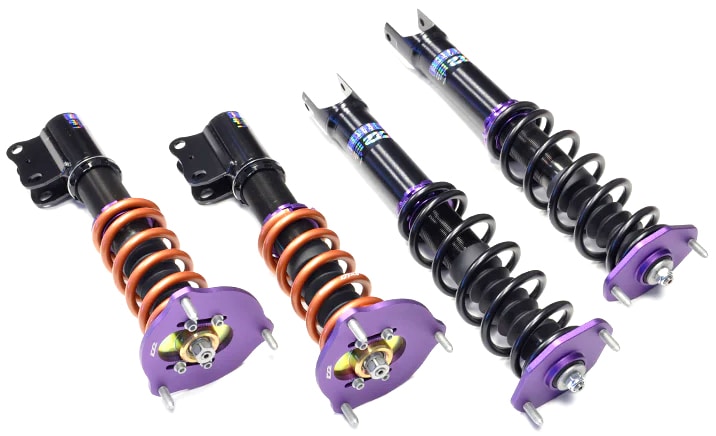
Yes, coilovers can be good for drag racing when they are designed for drag use and matched to the car. They let you tune ride height and suspension response, but the wrong setup can reduce traction and slow your launch.
At drag strips across the United States, from local eighth-mile tracks to quarter-mile events, a strong launch can make a major difference in a car’s elapsed time. Engine power matters, but the suspension must also help the tires use that power. If the tires lose grip at launch, more horsepower alone may not solve the problem.
Coilovers combine a spring and shock absorber into one assembly. Many models also offer ride-height adjustment, while some let you change damping, or how quickly the suspension moves. These features can help a driver tune the car for the track, but they do not guarantee better traction or faster times.
The best choice depends on the car’s weight, drive layout, tire type, power level, and intended use. A dedicated drag coilover kit may suit a track car, while a street-oriented kit may be a poor match for repeated hard launches. Spring rates, suspension travel, shock settings, and safe installation all matter.
Coilovers use a coil spring around or near a shock absorber. The spring supports the car and compresses as the suspension moves. The shock controls that movement so the body and wheels do not keep bouncing after a change in load.
During a drag launch, the tires must develop enough grip to move the car forward without excessive wheelspin. The suspension affects how the car’s load changes from front to rear and how well the tires follow the track surface. The right response depends on the car’s layout and setup.
Many coilover kits allow ride-height adjustment. Some also provide adjustable damping, and some include separate controls for compression and rebound. These features give a tuner more control, but the available adjustments vary by kit. A basic coilover should not be assumed to offer every tuning feature.
Source: low-offset.com
Spring
Supports the car and affects how much the suspension compresses under load. Its rate should match the vehicle and intended use.
Shock absorber
Controls spring movement. Its damping settings affect how quickly the suspension compresses and returns.
Ride-height adjuster
Changes the car’s static height on kits designed for this adjustment. Lowering the car does not automatically improve launch traction.
Top mount
Connects the assembly to the vehicle body or chassis. Mount design affects fitment and may affect noise, vibration, and alignment adjustment.
Why Suspension Travel Matters
Suspension travel is the distance the wheel can move upward or downward from its current position. During a launch, the suspension needs enough usable travel to respond to changing loads without hitting its limits.
If the suspension bottoms out, the tire can lose contact or experience a sudden change in load. If a shock reaches full extension, it can also limit movement. Either condition can make the launch less consistent, so a tuner must check travel at the actual ride height.
Too little travel
Can cause harsh impacts, limit weight transfer, or make the car react poorly to bumps.
Useful travel
Lets the suspension respond to launch forces while keeping the tires in contact with the track.
The Main Benefits of Coilovers for Drag Racing
The main benefit of a suitable drag coilover kit is control. It can give the tuner more ways to manage suspension movement than a worn factory setup or a fixed-height spring and shock combination. Whether those adjustments improve the car depends on the original suspension and the quality of the final tune.
A dedicated drag kit may also provide a spring and damping range suited to repeated launches. Some kits offer separate compression and rebound adjustment, which can help a tuner address different phases of suspension movement. These controls are useful only when the kit is correctly selected and the adjustments are understood.
Coilovers can also help when a car needs a specific ride height for tire clearance or chassis fitment. That benefit should not be confused with traction. A car can sit lower and still launch poorly if its geometry, travel, or shock settings are wrong.
Source: ksportusa.com
Adjustable ride height
Can help set the vehicle’s stance and maintain suitable clearance when the kit supports the required adjustment.
Damping control
Allows changes to suspension response on kits with adjustable shocks, giving a tuner more ways to address launch behavior.
Purpose-built spring options
Drag-specific kits may use spring rates and shock valving intended for straight-line acceleration rather than general road handling.
Repeatable setup changes
Recorded adjustments can help a team compare launches and identify which changes produce consistent results.
Can Coilovers Improve Launch Traction?
Yes, a properly matched coilover setup can help the tires maintain useful contact with the track during a launch. However, traction also depends on tire compound, tire pressure, track preparation, suspension geometry, differential behavior, and how power reaches the wheels.
A shock adjustment that helps one car may hurt another. A heavy rear-wheel-drive car, a light front-wheel-drive hatchback, and an all-wheel-drive sedan do not load their tires in the same way. The best setup comes from measured changes rather than a universal damping setting.
Good sign
The car launches consistently, tracks straight, and shows less unwanted wheelspin without harsh or unstable suspension movement.
Warning sign
The car spins more, bounces, veers, or reacts sharply after an adjustment. Stop testing if the car becomes unstable and inspect the setup.
The Drawbacks of Using Coilovers for Drag Racing
Coilovers are not automatically faster than factory suspension. A street kit may have spring rates, damping, or available travel that do not suit a drag launch. A stiff setup designed to reduce body roll in a corner can be a poor match for a car that needs controlled suspension movement in a straight line.
Cost is another factor. The purchase price may not include installation, alignment, replacement mounts, or other parts needed to correct worn suspension components. Some cars also need changes to related components before an aftermarket kit can work as intended.
Maintenance and adjustment add work. Locking collars, fasteners, bushings, mounts, and shock bodies need inspection according to the manufacturer’s instructions. Adjustable parts can also create confusion if the driver changes several settings at once and fails to record the results.
A low ride height can create further limits. It may reduce suspension travel, increase the chance of contact with the chassis, and cause tire rubbing under load. The car must have enough clearance for its tires, steering movement, suspension travel, and track conditions.
Source: ksportusa.com
Wrong spring rate
A spring that is too stiff or too soft for the vehicle can make it harder to control launch behavior.
Poor damping range
A shock that cannot control the spring properly may allow excessive bounce or resist needed movement.
Reduced suspension travel
An unsuitable ride height or short-travel design can cause the suspension to reach its limits during a launch.
Added cost and upkeep
Installation, alignment, inspections, and replacement parts may add to the cost of ownership.
Are Stiff Coilovers Better for Drag Racing?
No. Stiffer springs do not always improve a drag launch. The correct spring rate depends on vehicle weight, suspension geometry, shock control, tire grip, and the way the car transfers load under acceleration.
Excessive stiffness can limit the suspension’s ability to respond to track irregularities and changing loads. A spring that is too soft can also cause problems if the car bottoms out or moves in an uncontrolled way. The goal is controlled movement, not maximum stiffness.
Avoid guessing
Use the coilover maker’s application guidance and consult a drag racing suspension tuner when the vehicle has major power or chassis changes.
Check the full system
Spring rate, shock valving, available travel, mounts, and suspension geometry must work together.
Are Coilovers Good for Front-Wheel-Drive Drag Racing?
Coilovers can work well on a front-wheel-drive drag car, but the setup needs to account for the front tires doing both jobs: steering and putting engine power down. During acceleration, load tends to shift toward the rear of the car, which can reduce the load on the driven front tires and make wheelspin more likely.
Front suspension geometry, engine torque, differential type, tire grip, and the rear suspension all influence the launch. A front-wheel-drive car may need a different balance of spring and shock behavior from a rear-wheel-drive car. A kit made for general street use may not offer the right adjustment range.
Ride height should be chosen with care. Lowering the front can change suspension geometry and available travel, and a change in alignment can affect how the tires meet the track. A setup that looks level in the garage may behave differently under acceleration.
Source: ksportusa.com
Front suspension
Needs suitable geometry and damping to manage load changes while keeping the driven tires in contact with the track.
Rear suspension
Affects how the body responds during launch and must be considered as part of the complete vehicle setup.
Differential and tires
An appropriate limited-slip differential and suitable drag tires may help more than changing coilovers alone.
What About Honda Civic and Acura Integra Drag Builds?
Older Honda Civic and Acura Integra platforms are common examples of compact front-wheel-drive cars that may receive drag-specific suspension parts. Application-specific fitment matters because model year, chassis generation, engine conversion, and suspension modifications can affect compatibility.
Before buying a kit, verify the exact vehicle application, front and rear spring options, damping adjustment, and available travel. A product described as a drag coilover is not proof that it suits every Civic or Integra, and a photo alone cannot establish its fitment or performance.
Verify fitment
Check the manufacturer’s application chart for the exact model, year, chassis, and any required supporting parts.
Check drivetrain changes
Engine swaps, added power, and differential changes can alter the suspension requirements.
Are Coilovers Good for Rear-Wheel-Drive Drag Racing?
Coilovers can be useful on rear-wheel-drive drag cars because these vehicles send engine torque to the rear wheels. Under acceleration, load generally shifts toward the rear axle, which can help the driven tires gain grip. The suspension must manage that load change without excessive bouncing or unwanted body movement.
A rear-wheel-drive car does not always need the softest possible rear suspension. Spring rate, shock damping, suspension geometry, anti-squat characteristics, and tire behavior work together. A change that improves one car’s launch may make another car less stable.
The front suspension also matters. Its response affects the vehicle’s pitch and how the chassis moves at launch. Adjusting only the rear coilovers without checking the front can produce an unbalanced result.
Source: slrspeed.com
Rear shock control
Helps manage rear suspension movement during the initial launch and the return to a settled position.
Front suspension response
Affects body pitch and the way load changes across the car as acceleration begins.
Chassis consistency
Sound mounts, bushings, alignment, and suspension links help the car react in a predictable way.
What About All-Wheel-Drive Cars?
All-wheel-drive cars can benefit from a well-matched coilover setup, but their launch behavior depends on torque distribution, differentials, tires, and control systems. Power reaches both axles, so the tuner must consider the response of the whole vehicle rather than focusing on one end.
Use suspension parts designed for the exact vehicle and intended racing use. Major changes to ride height or geometry may affect axle angles, steering behavior, and electronic systems. A qualified shop should inspect these factors when the build has substantial modifications.
Tune as a complete system
Consider both axles, drivetrain behavior, tire grip, and available suspension travel.
Drag Coilovers vs. Street Coilovers vs. Stock Suspension
The best suspension choice depends on whether the car is built for drag racing, daily driving, or both. A dedicated drag coilover kit may offer a more suitable spring and damping range for launches, while a street kit often aims for a balance of comfort, handling, and ride height.
Factory suspension can still work well in some drag applications when it is in good condition and properly matched to the tires and vehicle. Replacing it is not always the first step toward a quicker car. Worn shocks, damaged bushings, poor tires, and wheelspin should be addressed before buying expensive parts.
The table below compares common options by purpose. Exact performance depends on the vehicle and the particular kit, so these categories should guide research rather than replace application-specific advice.
Source: storage.googleapis.com
Dedicated drag coilovers
Best suited to builds that need suspension adjustments for straight-line launches and have a kit designed for the vehicle.
Street coilovers
May suit a dual-purpose car if the spring rates, damping, travel, and manufacturer guidance support drag use.
Factory suspension
Can be a reasonable starting point if components are healthy and the car’s launch behavior does not require a different setup.
Which Suspension Option Fits Your Goals?
Choose a dedicated drag kit when the car spends much of its time at the strip and the kit offers the adjustments needed for its drivetrain and power level. Choose a street-oriented kit only when its documented features suit both road use and your intended track use.
Keep the factory setup if it is healthy and meets your current goals. If traction remains poor, diagnose tire grip, differential behavior, wheel hop, suspension wear, and alignment before assuming coilovers will solve the problem.
Mostly track use
Prioritize documented drag applications, suitable damping, usable travel, and support from a tuner.
Street and occasional strip use
Balance launch performance with ride quality, ground clearance, handling, and road legality.
Budget build
Inspect and repair the current suspension before spending money on adjustments that may not address the actual problem.
How to Choose Coilovers for Drag Racing
Start with the car’s exact specifications and intended use, not the lowest price or the most aggressive-looking kit. The manufacturer should list compatible models and explain the adjustment features, spring options, and limits of the product.
Next, check the suspension’s usable travel at the planned ride height. Confirm that the springs and shocks can work together without binding, bottoming out, or reaching full extension during normal movement. A qualified installer can check these points more reliably than a static visual inspection alone.
Finally, consider the rest of the car. Tires, wheels, bushings, suspension links, brakes, and alignment all affect how the car behaves. Coilovers cannot compensate for worn components or an unsuitable tire setup.
Source: importdragsolutions.com
Vehicle compatibility
Confirm make, model, year, chassis, drivetrain, and any engine or suspension conversions.
Damping adjustment
Find out whether the kit adjusts rebound, compression, or both. Do not assume a single knob controls each separately.
Spring specifications
Check the supplied spring rates and whether the manufacturer offers suitable alternatives for the car’s weight and purpose.
Suspension travel
Verify usable compression and extension at the intended ride height and under expected loads.
Support and replacement parts
Check for installation instructions, service guidance, replacement shocks, springs, mounts, and warranty terms.
Road and track requirements
Confirm that the setup meets applicable vehicle rules, track regulations, and any local road-use requirements.
Are Expensive Coilovers Always Better?
No. Price alone does not show whether a kit will make a car faster. A lower-cost kit designed for the correct application may suit a basic build better than an expensive road-racing kit with an unsuitable adjustment range.
Compare the specifications, fitment, service support, spring choices, and documented intended use. If the manufacturer does not provide enough information to judge those points, ask for clarification before buying.
Pay for useful features
Prioritize the controls and spring options your car actually needs.
Avoid unsupported claims
Treat promises of faster elapsed times as unproven unless they are backed by relevant, comparable test data.
How to Set Up and Test Coilovers for Drag Racing
A good setup process begins with a mechanical inspection and a baseline record. Do not start by turning every adjuster or changing spring rates. First, confirm that the suspension is installed correctly and that the car is safe to operate.
Use a sanctioned drag strip for launch testing, follow the track’s rules, and make changes in small, recorded steps. A public road is not a suitable place to test hard launches or suspension behavior at racing speeds.
If the car has a high power level, a modified chassis, or signs of instability, have a qualified drag racing suspension tuner inspect it. Suspension tuning affects handling and control, so uncertain settings should not be treated as safe merely because the car can move.
Source: dragcartel.com
Inspect the installation
Check mounting points, fasteners, spring seating, shock condition, tire clearance, and any required torque specifications using the manufacturer’s instructions.
Maintain sufficient clearance and usable travel. Do not lower the car beyond the kit’s safe operating range.
Get an alignment
Have a shop check the alignment after ride-height changes and confirm that the settings suit the vehicle and intended use.
Record the baseline
Write down ride height, damping settings, tire details, track conditions, 60-foot time, and elapsed time where available.
Change one variable at a time
Make controlled changes within the manufacturer’s adjustment range so the effect of each change can be assessed.
Stop if behavior worsens
Do not continue hard launches if the car bounces, pulls sharply, rubs a tire, bottoms out, or shows signs of mechanical damage.
How Can You Tell Whether the Setup Is Working?
Look for repeatable launches, stable straight-line behavior, and consistent measurements. The 60-foot time records how long the car takes to travel the first 60 feet of the track and can help show how effectively it launches.
Elapsed time measures the total time needed to complete the measured distance. It can be affected by many factors, including power, shifting, traction, weather, and track conditions. Compare runs made under similar conditions before attributing a change to the coilovers.
A better result is not just one unusually quick pass. Consistency across several safe runs is more useful when judging a suspension change. Record the results and reverse an adjustment if it causes worse behavior or poorer repeatability.
Improved consistency
Similar launch behavior and repeatable times can suggest that the suspension is working more predictably.
More wheelspin or bounce
May point to a mismatch in tire grip, damping, spring rate, geometry, or track conditions and needs diagnosis.
Unexpected pull or contact
Requires stopping the test and checking alignment, clearances, mounts, and suspension components before further runs.
Common Coilover Mistakes That Hurt Drag Racing Performance
Many suspension problems come from poor setup choices rather than a lack of expensive parts. A car may have quality coilovers but still launch badly because the springs, shocks, tires, and geometry do not work well together.
The most useful approach is to identify the symptom and inspect the likely causes in a safe order. Do not treat a single symptom as proof that a particular adjustment is wrong, since different mechanical problems can produce similar behavior.
Source: gp1racing.com
Choosing the stiffest springs
Stiff springs may limit useful movement or reduce grip on an uneven surface. Select spring rates for the actual vehicle and application.
Lowering the car too far
Excessive lowering can reduce travel, change geometry, and create tire or chassis contact.
Changing several settings at once
Makes it hard to tell which change helped or hurt. Keep a written setup record.
Ignoring the tires
A suspension change cannot make an unsuitable or damaged tire perform like a proper drag tire.
Skipping alignment
Ride-height changes can affect alignment and straight-line stability. Get the vehicle checked after installation.
Copying another car’s settings
Another vehicle may have different weight, geometry, power, tire grip, and shock specifications. Use its setup only as context, not as a direct prescription.
What If the Car Still Spins Its Tires?
If wheelspin continues after the coilovers are installed, check the complete traction system rather than making repeated random adjustments. Tire condition, tire pressure, track preparation, differential behavior, suspension geometry, and power delivery can all affect the result.
Have the suspension inspected for inadequate travel, incorrect spring fitment, worn bushings, loose mounts, or poor shock control. A qualified tuner can help determine whether the coilovers are limiting traction or whether the main problem lies elsewhere.
Check the basics first
Inspect tires, wheels, suspension components, and alignment before attempting further tuning.
Review recorded results
Compare launch behavior and timing data from similar track conditions rather than relying on memory.
Frequently Asked Questions
Q
Are coilovers better than lowering springs for drag racing?
Coilovers can offer more control over ride height and, on adjustable models, damping. However, they are not always faster than lowering springs paired with suitable shocks. The better option depends on the car’s suspension design, available travel, power level, tires, and intended use.
Q
Should drag racing coilovers be soft or stiff?
Neither extreme is best for every car. The spring rate must support the vehicle and allow controlled suspension movement, while the shock must control that spring. A qualified tuner should consider the drivetrain, weight distribution, suspension geometry, tire grip, and kit specifications before recommending changes.
Q
Can I use street coilovers at a drag strip?
Some street coilovers can be suitable for occasional drag racing, but others lack the spring rates, damping range, or travel needed for repeated launches. Check the manufacturer’s guidance for the exact kit and vehicle. Inspect the suspension and confirm that the setup meets track rules before racing.
Q
Do coilovers reduce wheel hop during launches?
They may help if shock control or spring behavior contributes to wheel hop, but they do not guarantee a fix. Wheel hop can also result from worn bushings, suspension geometry, drivetrain mounts, tire grip, and differential behavior. Diagnose the cause before replacing parts.
Q
Do coilovers make a car faster in the quarter-mile?
They can help if the existing suspension limits traction or launch consistency and the new setup corrects that problem. They may make little difference if traction is already adequate or another factor limits performance. Compare repeatable elapsed times and 60-foot times under similar conditions to judge the result.
Q
Can I daily-drive a car with drag racing coilovers?
That depends on the kit’s design, spring rates, damping, ground clearance, and manufacturer guidance. A dedicated drag setup may ride poorly or offer compromises for normal road use. If the car is driven on public roads, choose parts suitable for that use and confirm compliance with local requirements.
Q
Do I need an alignment after installing coilovers?
Yes, an alignment check is generally needed after changing suspension components or ride height. The work can alter camber, toe, and other geometry that affects tire wear and straight-line behavior. Have a qualified shop check the vehicle against suitable specifications before driving it hard.
✦ Wrapping Up
Conclusion
Coilovers can be a good choice for drag racing when they are designed for the vehicle and tuned for straight-line acceleration. Their main value is the ability to manage ride height and, on suitable models, suspension response. They do not guarantee better traction, shorter elapsed times, or a quicker launch.
The best decision starts with the car’s drivetrain, weight, tires, suspension geometry, and current launch behavior. A drag-specific kit may suit a dedicated race car, while a suitable street kit or healthy factory suspension may be enough for a dual-purpose vehicle. Fitment, travel, spring rates, damping, and installation quality should guide the choice.
💡 Key Takeaway
Before buying coilovers, inspect the current suspension, define your drag racing goals, and verify the proposed kit’s fitment and specifications. After installation, get an alignment, check all clearances, and evaluate results at a sanctioned track using recorded 60-foot times, elapsed times, and consistent launch behavior.
Eric
Hi, I’m Eric Bennett, the person behind OffRoadTruckAccessories.com.
I created this blog to share my interest in trucks, off-road driving, automotive accessories, and DIY modifications. I enjoy learning how different truck accessories work, testing their usefulness, and understanding whether they are truly worth buying.
Will G37 coilovers fit G35? Learn which model years may share fitment, what changes with coupe, sedan, and AWD setups, and how to verify compatibility.