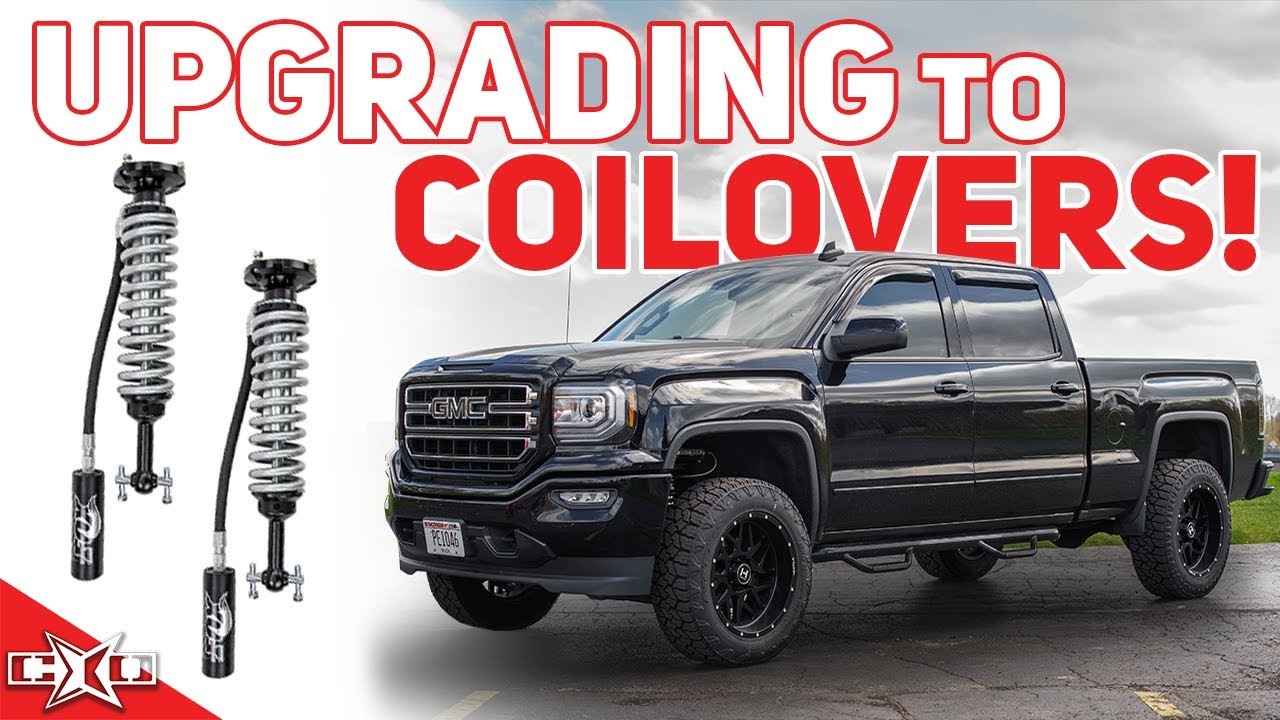
Yes, coilovers can lift a truck if they are designed for height adjustment and approved for that vehicle. They can raise the front end, level the truck, or form part of a complete suspension lift. The amount of lift depends on the coilover design, truck model, and approved adjustment range.
Truck owners across the United States often raise their trucks to gain ground clearance, fit larger tires, or reduce the factory nose-down stance. Adjustable coilovers can help meet these goals, but not every coilover is made to lift a truck. Some are designed to lower vehicles, while others keep the factory ride height.
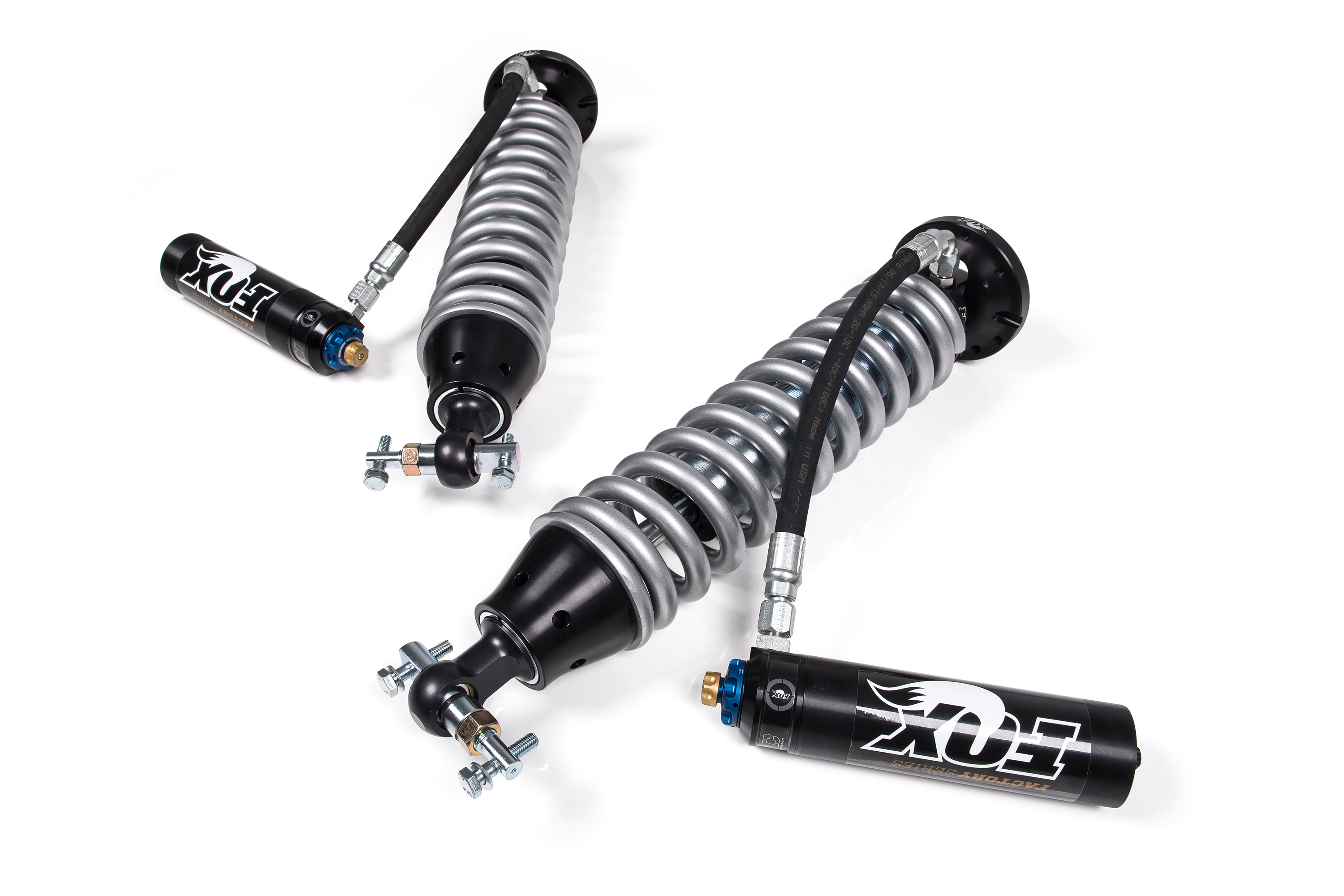
A coilover combines a coil spring and a shock absorber in one assembly. Many truck coilovers also have an adjustable spring seat or threaded body that lets you change the ride height within a set range. This adjustment can raise the body, but it does not automatically add suspension travel or correct every change in suspension geometry.
Before choosing a lift, check the truck’s exact year, make, model, drivetrain, and front suspension design. A kit that fits one version of a pickup may not fit another. The manufacturer’s fitment guide and installation instructions should determine which parts and settings are suitable.
Coilovers lift a truck by supporting the vehicle at a higher ride height. The coil spring carries the vehicle’s weight, while the shock absorber controls spring movement. In an adjustable design, a threaded spring seat or body can change the spring’s installed position and the height at which the truck rests.
The exact mechanism depends on the coilover design. Some systems use a movable spring perch to change spring preload. Others use a threaded body or a dedicated ride-height adjustment. These systems are not interchangeable, so the adjustment method in the product instructions matters.
When the adjustment raises the truck’s body, the suspension arms, joints, and steering links may sit at new angles. The truck can look taller even when its total available suspension travel stays the same or becomes more limited. That is why ride height alone does not tell you how well a suspension will work.
Source: RealTruck
Spring
Supports the truck’s weight and helps set its static ride height.
Shock absorber
Controls how quickly the spring compresses and extends as the truck moves.
Adjustment mechanism
Changes the spring seat, coilover length, or another specified setting to achieve a permitted ride height.
Mounts and suspension arms
Transfer forces through the suspension and must remain within their intended operating limits.
Do All Coilovers Raise a Truck?
No. Coilovers come in different designs, and their adjustment ranges serve different purposes. A lowering coilover may be intended to reduce ride height, while an adjustable truck coilover may offer a modest lift or support a larger lift as part of a complete kit.
A shock absorber with a fixed-length body and a standard replacement spring may preserve the factory ride height. A ride-height-adjustable shock may raise the truck only when used with the specified spring and suspension setup. Read the product description and fitment instructions rather than relying on the word coilover alone.
Fixed-height assembly
Usually maintains the intended ride height when paired with the correct spring and vehicle.
Height-adjustable coilover
Can change ride height within its approved range.
Complete coilover lift system
May include additional parts needed to achieve a greater lift while addressing fitment and suspension geometry.
How Much Lift Can Truck Coilovers Provide?
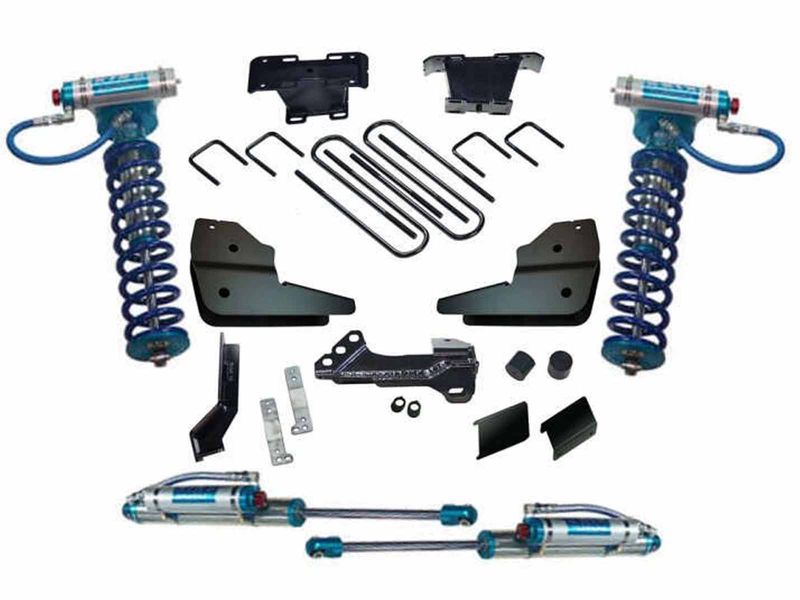
The lift height depends on the exact coilover and truck. Some adjustable shock systems are intended for a small front lift or leveling adjustment. Other vehicle-specific coilover systems are built into complete suspension kits that can raise the truck several inches.
There is no single lift figure that applies to all trucks. A manufacturer’s advertised lift may refer to the front axle, the total suspension system, or a particular factory configuration. Optional equipment, existing modifications, spring condition, and vehicle weight can also affect the final height.
For example, a front-adjustable coilover may be designed to level a pickup with a mild nose-down stance. A separate complete suspension system may use longer or specially designed components to achieve a larger lift. The stated height is useful only when the kit’s vehicle fitment and measurement method match your truck.
Source: realtruck.com
Small front lift
May reduce the factory front-to-rear height difference while retaining most of the original suspension layout.
Moderate suspension lift
May need compatible control arms or other components to preserve alignment and safe suspension movement.
Large suspension lift
Often requires a complete, vehicle-specific system rather than a simple adjustment to a standard coilover.
Why Advertised Lift Height Can Differ From the Final Result
The advertised lift is a guide, not a promise that every truck will gain exactly the same amount. A steel bumper, winch, accessories, or other added front-end weight can compress the spring more than the standard setup does.
Existing suspension wear and previous modifications can also change the result. For a useful comparison, measure the truck before installation and again after the suspension settles, using the same reference points on level ground.
Do not compensate for a smaller-than-expected lift by turning the adjusters beyond the maker’s limits. The correct response is to verify the part number, spring specification, installed settings, and vehicle configuration.
Check the baseline
Record the original ride height on level ground using consistent measurement points.
Check added weight
Confirm that the spring and coilover are suitable for the truck’s actual equipment and front-end load.
Check the approved range
Use the manufacturer’s stated adjustment limits for the exact kit and vehicle.
Coilover Lift vs. Leveling Kit vs. Full Suspension Lift
A coilover adjustment, a leveling kit, and a full suspension lift can all change how tall a truck looks, but they do not do the same job. The right choice depends on whether you want to reduce the front-to-rear height difference, increase overall clearance, or replace more of the suspension system.
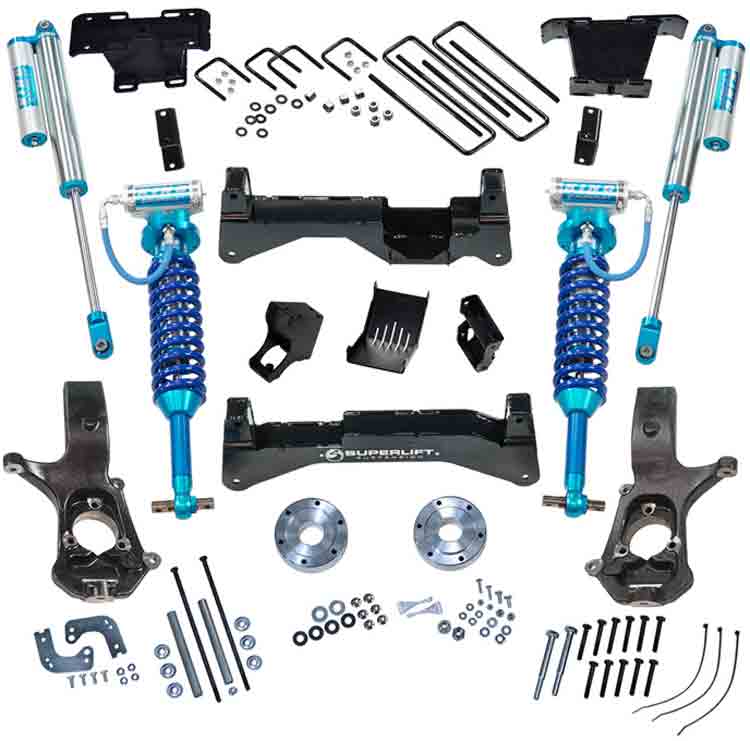
A leveling kit usually raises the front of a truck to reduce its factory rake. A coilover lift may achieve a similar result when the vehicle has a compatible adjustable front suspension. A full suspension lift uses a broader set of parts to raise the vehicle and may address geometry and travel limits that a height adjustment alone cannot correct.
The term lift kit describes a broad category, not one fixed design. Check which parts the system includes and which axle or suspension positions it changes before comparing advertised lift heights.
Source: totalzparts.com
Adjustable coilovers
Useful when the truck has compatible coilover suspension and the desired height falls within the approved adjustment range.
Leveling kit
Useful when the main goal is to reduce the difference between the front and rear ride heights.
Complete suspension lift
Useful when a larger height change requires more extensive suspension components and geometry changes.
Which Option Is Better for Daily Driving?
For a truck used mainly on paved roads, a modest, vehicle-approved height change may be enough. It can improve the stance without requiring the same level of modification as a large lift, although alignment and clearance still need to be checked.
A full suspension lift may make sense when the intended use calls for more clearance and the kit is designed around that truck. Larger changes can affect ride quality, handling, entry height, and access to parking structures.
Neither option is automatically more comfortable or more durable. Spring rates, damping, tire choice, installation quality, and vehicle weight all affect how the truck feels on the road.
For a level stance
Compare a compatible adjustable coilover with a vehicle-specific leveling solution.
For added clearance
Review the complete suspension design, tire clearance, and intended terrain rather than choosing by height alone.
Can Coilovers Lift the Front and Rear of a Truck?
Coilovers can raise the front, rear, or both ends of a truck only when the suspension design supports that change. Many pickups use a front coilover or coil spring and shock assembly but a different rear setup, such as leaf springs with separate shocks.
On an independent front suspension truck, adjustable coilovers often change the front ride height. That can reduce the nose-down stance, but it does not mean the rear of the truck has risen. If the goal is to raise the whole vehicle, the rear suspension must also be considered.
Rear suspension design varies by model. A truck with rear coil springs may use a suitable adjustable assembly, while a truck with leaf springs may need a different type of lift component. Always select parts that match the rear suspension instead of assuming a front coilover kit will lift the entire vehicle.
Source: bds-suspension.com
Front coilover setup
May raise the front end and change the truck’s front-to-rear stance.
Rear coilover setup
Can adjust rear height when the vehicle uses a compatible coilover arrangement.
Leaf-spring rear suspension
Usually needs a solution designed for leaf springs rather than a coilover adjustment.
How to Tell Whether Your Truck Has the Right Suspension
Start with the owner’s manual, factory specifications, or a vehicle-specific parts catalog. Confirm the model year, trim, drivetrain, and suspension package because a single truck name can cover several different configurations.
If you are unsure what is installed, ask a qualified suspension shop to inspect the vehicle. Previous owners may have changed springs, shocks, control arms, or other components, so the factory specification may not fully describe the current setup.
Confirm the vehicle
Match the complete year, make, model, trim, and drivetrain to the kit’s fitment list.
Inspect current parts
Identify any existing lift, replacement springs, or suspension conversions before ordering parts.
How Coilover Adjustment Affects Suspension Travel
Raising a truck with adjustable coilovers does not necessarily give it more suspension travel. Suspension travel is the distance the wheel can move upward and downward while the components remain within their intended operating limits.
Preload is the initial compression placed on a spring when it is installed. Changing preload can alter the ride height of some coilover systems, but it does not make the shock absorber longer or create additional stroke. If the adjustment moves the suspension closer to its extension limit, the truck may have less downward travel available.
This distinction matters on rough roads and trails. A truck that sits higher in the driveway may still have limited wheel movement over dips or bumps. If the suspension reaches its travel limit, it can feel harsh, lose tire contact, or place extra stress on parts.
Source: autoprimeshop.com
What Happens When Preload Is Set Too High?
Excessive preload can push the truck beyond the intended ride-height range. Depending on the design, this may reduce available extension travel, alter alignment, or increase stress on suspension joints. It can also change how the spring and shock work together.
A high spring perch setting is not a substitute for a longer shock, a suitable spring, or a complete lift system. If the desired height cannot be reached within the manufacturer’s limits, use a suspension system designed for that height rather than forcing the existing parts to achieve it.
Follow the adjustment limits
Use the specified spring-seat position or body adjustment for the exact product.
Check travel
Have a qualified installer verify compression and extension clearance after the ride height changes.
Watch for binding
Suspension joints, steering links, and brake hoses must move freely through the permitted range.
Does a Higher Truck Always Have More Ground Clearance?
Not always. Raising the body can increase clearance at some body or frame points, but the lowest part of the vehicle may remain unchanged if it is the differential or another component tied to axle height. Tire diameter also affects clearance under the axles.
A suspension lift changes how the body sits relative to the wheels. Larger tires can raise the axle and differential relative to the ground, but tire fitment must be checked for rubbing and clearance throughout steering and suspension movement.
Body and frame clearance
May increase when the suspension raises the body relative to the axles.
Differential clearance
Depends largely on tire radius and axle design, not body lift height alone.
What to Check Before Choosing Truck Coilovers
The best starting point is the truck’s exact suspension configuration and the height you actually need. A coilover that fits the mounting points may still be unsuitable if its spring rate, adjustment range, or damping is wrong for the vehicle’s weight and intended use.
Write down your main goal before comparing kits. If you want a more level stance, you may not need a large lift. If you want to use larger tires on rough terrain, you need to check wheel clearance, suspension travel, and the limits of the steering and driveline as well.
Review the manufacturer’s full parts list. Some systems require compatible control arms, brackets, springs, or other components. The included parts matter more than the product name or the maximum height shown in a listing.
Source: www.youtube.com > Custom Offsets
Vehicle fitment
Confirm year, model, trim, drivetrain, and factory suspension package.
Adjustment range
Check the approved minimum and maximum ride heights and any related travel requirements.
Spring rate and load
Make sure the spring is suitable for the truck’s weight and installed accessories.
Required supporting parts
Check whether control arms, rear components, brackets, or other parts are needed.
Tire and wheel clearance
Verify clearance at full steering lock and through the permitted suspension movement.
Warranty and instructions
Read the current installation guide and warranty terms before changing the factory setup.
A Simple Way to Compare Lift Options
Use the table below to compare the type of change you want with the suspension solution that may suit it. These are general categories, not a promise of fitment for every pickup.
Goal: Reduce front rake
Consider an approved front-adjustable coilover or leveling system.
Goal: Raise the entire truck
Compare a complete, vehicle-specific suspension lift that addresses both front and rear height.
Goal: Add off-road capability
Look for a system designed around the required suspension travel, spring rate, damping, and terrain.
Goal: Improve ride quality
Compare spring and damper tuning for the truck’s actual use rather than selecting by lift height alone.
Installation, Alignment, and Safety Checks
Installing or adjusting truck coilovers changes a load-bearing suspension system, so the work needs the correct tools, vehicle-specific instructions, and safe support equipment. Coil springs store substantial energy. Incorrect handling of a loaded spring can cause serious injury, which is why spring removal and adjustment should be left to a qualified installer unless the manufacturer provides a safe, suitable procedure for trained users.
After installation, the truck should be settled on level ground and measured again. The installer should confirm that both sides sit as intended, the adjusters and locking hardware are secure, and the suspension moves without interference. The exact checks depend on the coilover design and vehicle.
An alignment check is needed whenever a ride-height change affects the steering and suspension geometry. The alignment should be checked against specifications appropriate to the modified setup. If the required caster, camber, or toe cannot be achieved, the truck may need compatible supporting parts or a different approved ride height.
Source: atomicfabandperformance.com
Checks After the Lift
A safe result is more than a truck that looks level. The suspension, steering, tires, and brake lines must all work correctly at the new height. A professional inspection can identify clearance problems that are difficult to spot when the truck is parked.
Ride height
Measure both sides using the same reference points after the suspension settles.
Wheel alignment
Check alignment and confirm the results meet the applicable specifications.
Steering and suspension movement
Check for binding, rubbing, and interference throughout the permitted range.
Brake hoses and wiring
Confirm that lines and wiring remain secure and are not stretched or pinched.
Fasteners and adjusters
Verify all hardware and locking devices according to the manufacturer’s instructions.
Warning Signs That Need Attention
Stop using the truck and arrange an inspection if the steering binds, a tire contacts the body or suspension, a spring or shock appears loose, or a brake hose becomes stretched. Unusual clunks, severe bouncing, or a sudden change in steering behavior also need prompt attention.
Do not assume that a follow-up adjustment will solve every problem. These symptoms can indicate incorrect fitment, excessive ride height, loose hardware, damaged parts, or a suspension component operating outside its design limits.
Steering pulls or feels unstable
Have the alignment, suspension geometry, and installation checked before normal driving continues.
Tires rub
Check wheel offset, tire size, and clearance through steering and suspension movement.
Harsh impacts or repeated topping out
Have the shock length, travel, spring setting, and ride height inspected.
Loose parts or damaged lines
Do not drive until the affected components have been assessed and corrected.
Common Mistakes When Lifting a Truck With Coilovers
A common mistake is assuming that every adjustable coilover can provide any height the owner wants. The adjuster has a defined range, and using it beyond that range can compromise travel, alignment, and component life.
Another mistake is choosing a kit based only on a photograph or an advertised lift number. Two trucks with similar body styles may have different suspension parts, drivetrain layouts, or factory options. Fitment must be confirmed for the exact vehicle.
Some owners also expect a lift to improve every aspect of performance. A taller truck has a higher center of gravity, and a suspension change can alter handling, braking behavior, and ride comfort. A lift should be selected for a clear purpose, not treated as an automatic performance upgrade.
Source: RealTruck
Over-adjusting the spring perch
Stay within the approved range instead of forcing the truck to sit higher than the design allows.
Ignoring rear suspension height
Remember that a front-only adjustment does not raise the rear of the truck.
Skipping alignment
Check the steering geometry after the ride height changes.
Choosing tires without checking fitment
Verify wheel offset, tire dimensions, and clearance at steering lock and through suspension travel.
Expecting more travel from more preload
Preload adjustment alone does not create additional shock stroke.
Overlooking local rules
Check applicable state and local vehicle requirements, including inspection and lighting rules where relevant.
Does Lifting a Truck Affect Handling?
Yes, it can. Raising the truck’s center of gravity may increase body movement and make the vehicle more susceptible to rollover in some situations. The actual effect depends on the amount of lift, track width, tires, suspension design, load, and driving conditions.
Changes to control arm angles and steering geometry can also affect tire wear and road feel. A well-matched system and correct alignment help, but they do not remove every trade-off associated with a higher ride height.
Drive for the modified setup
Allow for changes in body movement and avoid assuming the truck will handle exactly as it did at factory height.
Keep the load within limits
A suspension lift does not automatically increase the truck’s payload or towing rating.
Frequently Asked Questions
Q
Can coilovers lift a truck by 2 inches?
Yes, some truck coilovers can provide a 2-inch lift, but the exact amount depends on the vehicle and the product. Check whether the manufacturer approves that setting for your truck and whether supporting parts are required. Do not assume a 2-inch adjustment is suitable for every coilover.
Q
Can coilovers lift a truck without a lift kit?
Some adjustable coilovers can raise the truck without a separate, complete lift kit when the desired height falls within their approved range. A larger lift may require additional suspension parts. The coilover’s instructions should state whether it is intended for leveling, a small lift, or use within a larger suspension system.
Q
Do coilovers make a truck ride rougher?
They can, but a rough ride is not an automatic result of using coilovers. Spring rate, shock damping, tire pressure, tire construction, and the amount of available suspension travel all affect comfort. A setup that is too stiff or adjusted beyond its intended range may feel harsh.
Q
Do lifted coilovers require an alignment?
A ride-height change can affect caster, camber, and toe, so an alignment check is generally needed after installation or adjustment. The shop should check the vehicle’s applicable alignment specifications and confirm that the settings can be reached. If they cannot, the suspension setup may need further correction.
Q
Can coilovers lift a truck enough for bigger tires?
Possibly, but lift height alone does not determine tire fitment. Tire diameter and width, wheel offset, steering angle, and suspension movement all affect clearance. Confirm the recommended tire and wheel range for the exact truck and suspension system before making changes.
Q
Do coilovers increase towing or payload capacity?
No. Raising ride height with coilovers does not automatically increase the manufacturer’s payload, axle, or towing ratings. Those limits depend on the vehicle’s rated structure and components. Stay within the truck’s published ratings even if the modified suspension feels firmer or sits higher.
Q
Can I adjust truck coilovers at home?
The answer depends on the design and the procedure specified by the manufacturer. Some adjustments require special tools, and coil springs can store dangerous amounts of energy. A qualified suspension technician should handle work that requires spring compression, removal, or adjustments beyond a simple approved procedure.
✦ Wrapping Up
Conclusion
Coilovers can lift a truck when they are designed for height adjustment and matched to the vehicle. They may help level the front end, set a suitable ride height, or form part of a complete suspension lift. The final result depends on the adjustment range, vehicle weight, suspension layout, and supporting parts.
The safest choice starts with the truck’s exact specifications and a clear goal. Check the approved ride height, suspension travel, tire clearance, and alignment requirements before choosing a setup. A higher stance should never come at the cost of binding joints, poor steering, or reduced control.
💡 Key Takeaway
Confirm your truck’s year, make, model, drivetrain, and suspension type, then compare the manufacturer’s approved coilover lift range with your target height. Have the installation, suspension travel, tire clearance, and alignment checked by a qualified technician.
Eric
Hi, I’m Eric Bennett, the person behind OffRoadTruckAccessories.com.
I created this blog to share my interest in trucks, off-road driving, automotive accessories, and DIY modifications. I enjoy learning how different truck accessories work, testing their usefulness, and understanding whether they are truly worth buying.
Will G37 coilovers fit G35? Learn which model years may share fitment, what changes with coupe, sedan, and AWD setups, and how to verify compatibility.