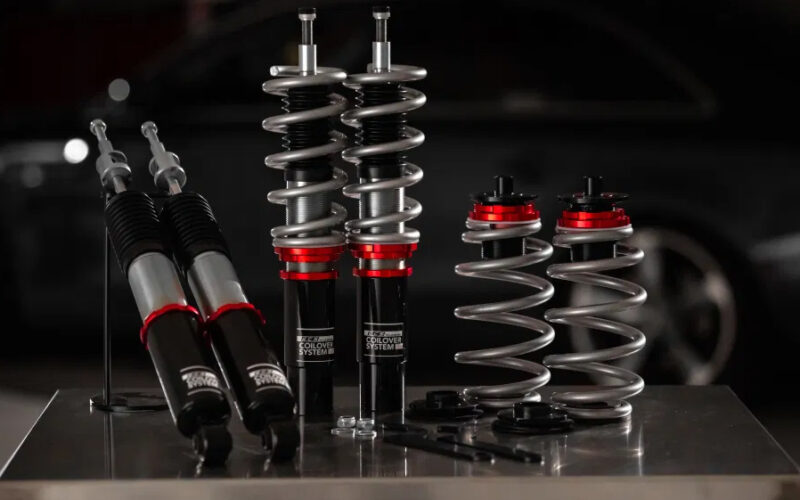
Yes, coilovers can raise your car if they have enough usable height adjustment and are designed to support the desired ride height. However, not every coilover kit can lift every vehicle, and raising the suspension too far can affect handling, alignment, and ride quality.
In the United States, drivers often lower cars for a sporty look, but some need more ground clearance for steep driveways, rough roads, speed bumps, or daily use. Coilovers offer a way to adjust suspension height on many cars. The amount of lift depends on the suspension design, the kit’s adjustment range, and the vehicle.
A coilover combines a coil spring and a shock absorber in one assembly. Many kits include threaded sections that allow ride height changes. Some let you raise a car above its factory height, while others are intended mainly for lowering. Before turning an adjustment collar, check the manufacturer’s instructions and the limits for your exact kit.
The key is to separate a possible adjustment from a safe and approved setup. A car that sits higher is not always better supported, and a spring that has too little preload or a shock that operates outside its intended range can cause problems. The right setup provides useful clearance while keeping the suspension within its design limits.
Coilovers raise a car by changing the position at which the spring and damper support the vehicle. On many adjustable designs, a threaded body or lower mounting section lets you change the distance between suspension mounting points. This can change the ride height without replacing the full suspension assembly.
The exact method varies by design. Some coilovers use a threaded lower mount to set the assembly length, while others use spring seats or a combination of adjustments. These methods do not work in the same way, so follow the instructions for the specific kit rather than copying a procedure from another car.
A height adjustment changes how high the body sits relative to the wheels. It does not automatically increase tire clearance in every area, nor does it guarantee extra suspension travel. The tire, wheel offset, fender shape, control arms, and other parts still affect where the car may rub or make contact.
Source: cdn.shopify.com
Threaded lower mount
On many designs, the lower mount adjusts the assembly length and changes the vehicle’s ride height while helping preserve the intended spring preload.
Spring seat adjustment
Moving a spring seat changes the spring’s installed position. Depending on the design, this may alter preload and ride height, so it must not be treated as interchangeable with a lower-mount adjustment.
Limited adjustment range
A coilover may reach its highest permitted setting before the car reaches the desired height. Never force an adjustment past the manufacturer’s stated limits.
Ride Height and Spring Preload Are Different
Ride height is the distance between the car’s body and a chosen ground or wheel reference. Spring preload is the initial compression placed on a spring when the suspension is assembled. These are related on some coilovers, but they are not the same measurement.
Adding preload does not always provide a useful or safe way to lift a car. On a properly designed threaded-body system, height is often set at the lower mount while spring preload stays within the specified range. Use the kit’s instructions to identify which collar performs each job.
Why it matters
Incorrect preload can affect droop, spring retention, and suspension behavior. Height changes should follow the kit’s intended adjustment method.
How Much Can Coilovers Raise Your Car?
The amount of lift depends on the coilover kit, the vehicle, and the height at which the suspension is currently set. There is no single lift figure that applies to every coilover system. Some kits provide a useful range around factory height, while lowering-focused kits may not reach the original ride height at all.
The product’s stated adjustment range is the starting point, not a promise that every vehicle will gain the same amount of ground clearance. Vehicle weight, spring rates, suspension design, and the original setup can change the final result. A car that has been heavily lowered may also need more than a simple collar adjustment to return to its original height.
Check whether the manufacturer lists a range relative to factory height, a range of threaded adjustment, or a recommended installation height. These figures describe different things. A threaded section’s length is not the same as the amount of lift at the body, and the front and rear may have different ranges.
Source: suspensionsetups.com
Factory-height replacement kits
These may restore or maintain a near-stock stance if the kit was designed for that purpose. Verify the permitted height range for the exact application.
Lowering-focused kits
These may provide limited upward adjustment but still keep the car below factory height. Do not assume a fully raised setting equals stock height.
Suspension lift applications
Some systems are engineered for more ground clearance. They may require application-specific parts and checks that ordinary lowering coilovers do not provide.
Example: Measuring a Height Change
Consider a hypothetical car with a measured fender-to-hub distance of 14.0 inches before adjustment and 14.6 inches afterward. The measured change is 0.6 inch at that reference point. This example illustrates the calculation only; it is not a prediction for any coilover kit.
For a useful comparison, measure all four corners on the same level surface, with the car in the same loading condition and the tires set to the correct pressure. Roll the car a short distance after adjustment so the suspension can settle, then repeat the measurements. Record both sides because the front and rear may respond differently.
Simple calculation
New measurement minus old measurement equals the change at the chosen reference point. Keep the measurement method consistent for a valid comparison.
Can You Raise Lowering Coilovers Back to Stock Height?
Sometimes, but not always. A coilover that lowered a car may have enough adjustment to bring it closer to factory height. Whether it can reach the original height depends on the kit’s design and the vehicle’s suspension geometry.
A maximum-height setting may still leave the car lower than stock. Some kits are built around a shorter damper or a restricted operating range, so raising the spring seat alone cannot make them suitable for factory height. The manufacturer may also specify a maximum body length or a minimum thread engagement that limits the adjustment.
If the car needs to return to its original stance, compare the kit’s approved height range with the vehicle’s factory ride-height specifications. If the adjustment range is insufficient, the proper fix may be a different suspension kit or a return to compatible factory components rather than an extreme setting.
Source: low-offset.com
Check the part number
Confirm the exact coilover model and vehicle application. Similar-looking kits can have different spring rates, damper lengths, and adjustment limits.
Inspect the full range
Use the manufacturer’s stated limits to determine whether the kit can safely reach the intended height. Do not rely on the remaining visible threads alone.
Compare factory specifications
Measure using the reference points and conditions specified by the vehicle maker when available. Fender gaps alone may not confirm factory suspension height.
When a Different Suspension Setup Is Needed
If the coilovers cannot reach the required height within their approved range, another suspension solution may be necessary. Depending on the car, that could mean a factory-style replacement, a kit designed for a higher ride height, or a complete system intended for the desired use.
Avoid using unapproved spacers, excessive preload, or extended adjustments to make an unsuitable kit fit. A setup that appears level while parked may still have poor travel or unsafe behavior on the road.
Best next step
Ask the suspension manufacturer or a qualified installer to confirm compatibility before buying replacement parts or changing the setup.
How to Adjust Coilovers to Raise Ride Height
The safe way to raise a car with coilovers is to identify the correct adjustment, measure the current setup, and stay within the manufacturer’s limits. The procedure differs by kit, so the steps below are a planning and verification guide rather than a universal set of wrench instructions.
Before starting, obtain the installation manual, the correct adjustment tools, the vehicle’s lifting instructions, and suitable jack stands or a professional lift. Work on firm, level ground, secure the vehicle against movement, and never work under a car supported only by a jack. If the suspension design or collar function is unclear, use a qualified technician.
Source: i.ytimg.com
Step 1: Confirm the coilover design
Read the manual and identify whether the kit uses a threaded lower mount, a spring seat, or another method for setting ride height.
Step 2: Measure the current height
Record the height at all four corners and note the tire pressure, vehicle load, and measurement points. Use a consistent method throughout the process.
Step 3: Check adjustment limits
Confirm the permitted height range, thread engagement, spring preload, and damper travel requirements before making changes.
Step 4: Make only approved adjustments
Follow the exact manual for the kit. Do not loosen load-bearing parts or adjust a compressed spring without the required tools and training.
Step 5: Settle and remeasure
After the adjustment and reassembly are complete, lower the car safely, roll it to settle the suspension, and measure each corner again.
Step 6: Verify alignment and clearance
Check wheel alignment, tire clearance, brake hoses, wiring, and suspension movement. Arrange a professional alignment when required by the vehicle or kit instructions.
How to Know the Adjustment Worked
A successful adjustment produces the intended measured height without placing the suspension outside its approved range. The car should sit consistently, with no loose spring, binding parts, unusual noises, or contact between the tires and surrounding components.
A visual check while parked is not enough. The suspension must also move through its usable range without pulling on brake hoses or wiring, striking the body, or causing a tire to rub. If any part appears strained or the car handles differently, stop driving and have the setup inspected.
Signs of a sound setup
Ride height is within specification, all required fasteners are secured to the stated torque, the springs are properly seated, and no component binds or contacts the body.
Signs to investigate
Uneven ride height, clunks, rubbing, a loose spring, damaged threads, leaking dampers, or a sudden change in steering response require further inspection.
What Happens to Handling When You Raise Coilovers?
Raising coilovers can change how a car steers, corners, brakes, and responds to bumps. The effect depends on how much the height changes and how the suspension geometry responds. A small adjustment within the intended range may work well, while an excessive change can move the suspension away from its designed operating position.
Ride height affects control-arm angles, roll center, camber, toe, and the relationship between the chassis and wheels. The size and direction of these changes depend on the vehicle. This is why a height adjustment should be followed by the alignment checks specified by the vehicle maker and coilover manufacturer.
A higher setting may help prevent the underside from scraping on a driveway, but it does not automatically improve ride comfort. Spring rate and damping still control much of the ride feel, while reduced bump travel or incorrect geometry can make the car feel harsh or less stable.
Source: i.ytimg.com
Alignment
Ride-height changes can affect camber and toe. Incorrect alignment may cause tire wear or unstable steering, so verify the settings after adjustment.
Suspension travel
The damper needs adequate compression and extension travel. A height setting that leaves too little usable travel can lead to harsh impacts or loss of control over rough surfaces.
Center of gravity
Raising the body can raise the vehicle’s center of gravity, depending on the setup. This may affect body roll and transient handling.
Ride comfort
Comfort depends on spring rate, damping, tire sidewall, road surface, and available travel. Ride height alone cannot predict the result.
Do You Need an Alignment After Raising Coilovers?
An alignment check is strongly recommended after a meaningful ride-height change and is required when the vehicle or coilover instructions say so. Even when the steering wheel appears straight, toe and camber may have changed enough to affect tire wear and handling.
Ask the alignment shop to use the correct specifications for the vehicle and intended setup. Some modified cars need a specialist who understands adjustable suspension, but the target should still account for safe road use, tire clearance, and the limits of the available adjustment.
Do not skip inspection
If alignment cannot be brought within an appropriate range, have a technician check for unsuitable ride height, worn parts, incorrect installation, or the need for compatible components.
Coilovers vs. Other Ways to Raise a Car
Coilovers are one way to change ride height, but they are not always the best option. The right choice depends on whether the goal is to restore factory height, gain a modest amount of clearance, or lift a vehicle beyond its original range.
A factory-style replacement suspension can be a sensible choice when the current parts are worn or a modified car needs to return to stock height. A suspension system designed for lift may suit a vehicle that needs more clearance, while tire changes alone may offer only a limited change and can create fitment or speedometer concerns.
Compare complete systems rather than choosing by the advertised lift or lowering range alone. Compatibility, suspension travel, alignment, load ratings, ride quality, installation requirements, and long-term maintenance all affect the result.
Source: assets.progressiveparts.com
Adjustable coilovers
Useful when the kit’s approved range covers the desired height and the driver also wants adjustable suspension settings. Not every model supports a lift above stock.
Factory-style suspension
Often appropriate for restoring original ride height and everyday behavior, provided the parts match the vehicle and its factory specifications.
Lift-oriented suspension
Designed for vehicles and applications that need additional clearance. Fitment and geometry still need to match the vehicle.
Different tires
A larger tire can increase clearance under the axle or chassis in some areas, but may rub, change gearing, and affect speedometer readings. Confirm the permitted tire size first.
Which Option Makes Sense for Daily Driving?
For a daily driver that scrapes on steep entrances, first determine where the contact occurs. If the problem is a low front lip, a modest and approved height change may help. If the exhaust, suspension, or underbody contacts the road, the solution may require a different setup or repair rather than simply raising the front.
For a car that needs its original stance, compatible factory-style parts may be more suitable than forcing lowering coilovers to their highest setting. For frequent travel on rough roads, choose a system designed for that use and confirm that it preserves suitable suspension travel.
Match the solution to the problem
Identify the lowest component and the clearance needed before buying parts. This avoids paying for a suspension change that does not solve the actual issue.
Common Mistakes When Raising Coilovers
The most common mistake is treating every threaded collar as a ride-height adjuster. On some kits, one collar locks the adjustment while another changes spring position or preload. Turning the wrong part can create an unsafe setup or make later adjustments harder.
Another mistake is raising the car beyond the permitted range because the highest setting still looks too low. A manufacturer’s maximum setting is a design limit, not an invitation to extend the suspension further. If the car needs more height, choose parts designed for that range.
Drivers can also overlook alignment, tire clearance, and the effect of extra height on brake hoses and wiring. A car may look correct while parked but develop rubbing or binding when the wheels turn or the suspension compresses. These checks matter before normal road use.
Source: i.ytimg.com
Using preload as a substitute for height adjustment
This can change spring behavior without producing the intended lift. Follow the manufacturer’s method for setting ride height and preload.
Ignoring damper travel
A setup with too little compression or extension travel may ride poorly and lose suspension control over uneven roads.
Measuring on uneven ground
An uneven surface can make the car appear higher on one side. Use a level surface and consistent reference points.
Skipping alignment
A height change can alter wheel angles. Check alignment rather than relying on steering-wheel position or appearance.
Assuming all coilovers can lift
Lowering-focused kits may not support factory height or a lift above stock. Confirm the exact application and approved range.
When to Stop and Get Professional Help
Stop the adjustment if the collar will not turn as described in the manual, the threads are damaged, a spring is not seated correctly, or a component appears bent or strained. Do not use force to overcome a stuck or loaded suspension part.
Have the car inspected before driving if a spring is loose, a damper is leaking, a tire rubs against a suspension component, a brake hose is stretched, or the vehicle suddenly pulls or feels unstable. A qualified shop can verify assembly, travel, torque, and alignment.
Safety first
Use proper vehicle support and spring-handling tools. If safe access or the correct adjustment procedure is uncertain, let a trained technician perform the work.
Frequently Asked Questions
Q
Can coilovers raise a car above factory height?
Yes, if the coilovers are designed for that range and the manufacturer permits the adjustment. Many lowering kits cannot raise a car above factory height, even at their highest setting. Check the exact model specifications before making changes.
Q
Can I raise coilovers without removing them from the car?
Some coilovers can be adjusted while installed, but access and the correct procedure depend on the vehicle and kit. The car must be supported safely, and the suspension must be unloaded or positioned as the manufacturer directs. Never work beneath a vehicle supported only by a jack.
Q
Will raising coilovers make my car ride softer?
Not necessarily. Ride comfort depends on spring rate, damper settings, tire construction, road conditions, and available suspension travel. Raising the car may improve clearance, but it does not automatically soften the springs or damping.
Q
Do coilovers lose performance when raised?
They can perform poorly if raised beyond their intended range or adjusted in a way that reduces usable travel or changes geometry too much. A setting within the approved range may work as intended, but alignment and clearance checks are still important.
Q
Do I need an alignment after adjusting coilover height?
A professional alignment check is recommended after a meaningful ride-height change and should follow the vehicle and kit instructions. Raising or lowering the suspension can affect camber and toe, which influence tire wear and handling.
✦ Wrapping Up
Conclusion
Coilovers can raise your car, but only when their design and adjustment range allow it. The key is to check the exact kit, use the correct height adjustment, and keep spring preload and damper travel within the manufacturer’s limits. A higher setting should solve a real clearance need without creating new suspension problems.
Before changing the setup, measure the current ride height, check the installation manual, and confirm the permitted range. Afterward, remeasure all four corners, inspect tire and component clearance, and arrange an alignment check. If the car cannot reach the desired height within the approved range, use a suspension system designed for that height rather than forcing the existing kit.
💡 Key Takeaway
Check your coilover model and its approved ride-height range first. If the kit supports the desired lift, follow its adjustment procedure and verify suspension travel, clearance, and alignment before regular driving.
Eric
Hi, I’m Eric Bennett, the person behind OffRoadTruckAccessories.com.
I created this blog to share my interest in trucks, off-road driving, automotive accessories, and DIY modifications. I enjoy learning how different truck accessories work, testing their usefulness, and understanding whether they are truly worth buying.
Will G37 coilovers fit G35? Learn which model years may share fitment, what changes with coupe, sedan, and AWD setups, and how to verify compatibility.