If you don’t replace worn shock absorbers, your car may bounce more, handle poorly, wear tires unevenly, and become harder to control during sudden stops or turns. Severe wear can increase safety risks, especially on wet or rough roads.
For drivers across the United States, worn shock absorbers can be a serious concern on highways, city streets, rural roads, and uneven pavement. These parts help control how the suspension moves after the tires hit bumps. When they lose their ability to damp movement, the car may feel loose, bounce after bumps, or sway more than it should.
Ignoring worn shocks does not always cause an immediate breakdown. The problem can develop slowly, making it easy to adjust to the changing ride without noticing how much control has been lost. However, poor suspension control can affect tire contact with the road, steering response, braking behavior, and comfort.
The cost of waiting can also grow. Bad shocks may contribute to uneven tire wear and extra stress on other suspension parts. The exact effects depend on the vehicle, the condition of the shocks, road conditions, speed, tire condition, and driving habits. Replacing worn parts at the right time can help restore proper suspension control and reduce avoidable wear.
This guide explains the main consequences of driving with worn shock absorbers, the warning signs to watch for, how to judge the urgency, and when a professional inspection is the safest next step.
What Happens If You Don’t Replace Shock Absorbers?
If you continue driving with worn shock absorbers, the suspension may become less stable and the vehicle may respond less predictably to road changes. The effects can range from an uncomfortable ride to serious control problems. Not every worn shock causes every symptom, and the severity depends on how much damping ability remains.
Shock absorbers control the movement of the springs and suspension. When a tire passes over a bump, the spring compresses and then releases energy. The shock absorber slows the resulting movement so the vehicle does not keep bouncing. Without enough damping, the spring can move the body and wheel up and down repeatedly.
The key concern is not simply comfort. The suspension must help the tires maintain useful contact with the road while the driver steers, brakes, and accelerates. When a worn shock cannot control movement well, the tire may experience changing loads or briefly lose firm contact with an uneven surface.
Source: i.ytimg.com
Poorer handling
The vehicle may sway, lean, or feel less settled when turning, changing lanes, or traveling over uneven pavement.
More bouncing
The body may continue moving after a bump instead of settling quickly.
Possible braking concerns
Uncontrolled suspension movement can affect tire contact and stability during braking. The actual stopping distance depends on several factors.
Faster or uneven tire wear
Poor wheel control may contribute to irregular tread wear, adding to the need for tire inspection.
More suspension wear
Continued operation with worn shocks can contribute to additional stress on suspension components, depending on the design and road conditions.
Does Every Worn Shock Cause All These Problems?
No. A shock absorber can lose some damping ability before obvious symptoms appear. Another may leak heavily, make noise, or provide very little control. A vehicle with one weak shock may also behave differently from one with worn shocks at both ends.
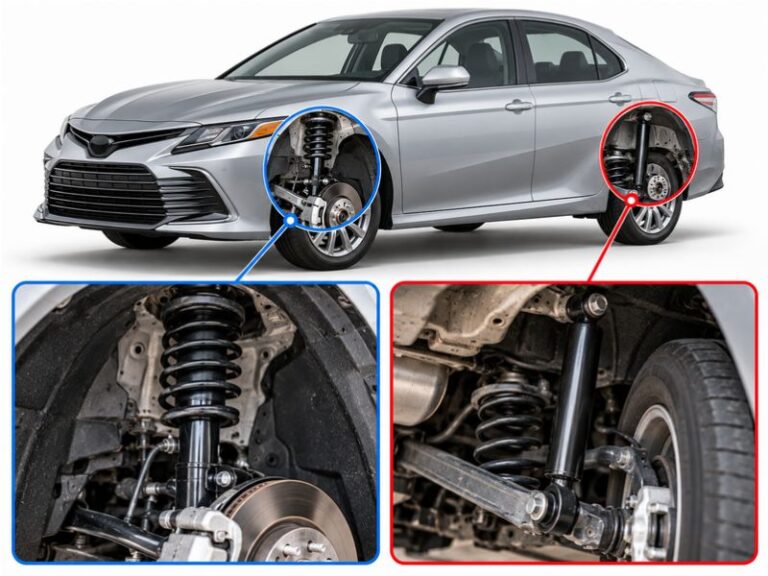
Vehicle design matters. Some cars use separate shock absorbers and coil springs, while others use strut assemblies that combine structural and damping functions. The location and type of the failed component affect the symptoms and repair needs.
Mild wear
The ride may feel less controlled, but the change can be subtle.
Advanced wear
Repeated bouncing, poor stability, fluid leakage, or visible damage may be more noticeable.
Mechanical failure
A broken mount, damaged strut, or other failed suspension part may create a more urgent safety problem than ordinary loss of damping.
1. Your Car May Become Harder to Control
One of the main risks of worn shock absorbers is reduced control over body and wheel movement. A car that once felt stable may begin to sway after bumps, lean more during turns, or feel unsettled when changing lanes. These changes can be more noticeable on uneven roads and at higher speeds.
Shock absorbers do not prevent all body roll or eliminate every movement. Their job is to control suspension oscillation and help the wheels respond to road surfaces. When damping is weak, the vehicle may take longer to settle after a bump or a change in direction.
This can matter during an emergency maneuver. A driver may need to steer around debris, avoid a stopped vehicle, or correct the car’s path on a wet highway. A suspension that allows excessive movement may make the vehicle less predictable during that maneuver.
Source: i.ytimg.com
Lane changes
The vehicle may feel less settled as weight shifts from one side to the other.
Curves and turns
Body movement may increase, and the car may feel less planted.
Uneven roads
The tires may struggle to follow quick changes in the road surface as effectively.
Why High Speeds Can Make the Problem More Noticeable
At highway speeds, the vehicle encounters road changes quickly. Worn shocks may not control the suspension as well during a series of bumps or dips. The car can feel unsettled, especially if tires are also worn or incorrectly inflated.
Do not use a high-speed road test to confirm a suspected shock problem. If the vehicle already feels unstable, reduce speed carefully, avoid sudden steering inputs, and arrange an inspection. A qualified technician can assess the suspension under controlled conditions.
Do not test emergency maneuvers on public roads
A deliberate swerve or hard stop to test bad shocks can put you and others at risk.
2. Braking Performance May Be Affected
Worn shock absorbers can affect how consistently the tires stay in contact with the road during braking. When the suspension moves excessively, the tire load may change as the wheel passes over bumps. This can reduce the consistency of available grip, particularly on rough or slippery surfaces.
It is not accurate to say that every worn shock will always increase stopping distance by a fixed amount. Braking depends on tire condition, road grip, brake condition, vehicle speed, load, and the operation of systems such as anti-lock braking. Shock condition is one part of the overall system.
The front suspension may also move more than intended during braking. Excessive front-end movement can make the vehicle feel less composed, while poor damping at the rear can affect stability. These symptoms deserve attention, especially if the vehicle already has trouble stopping smoothly or maintaining a straight path.
Source: i.ytimg.com
What to Do If the Car Feels Unstable When Braking
If the car pulls to one side, shakes strongly, or feels unstable when you brake, do not assume the shocks are the only cause. Uneven brake force, tire problems, worn bushings, alignment faults, and other defects can produce similar symptoms.
Arrange a prompt inspection of the brakes, tires, steering, and suspension. If braking ability is seriously reduced, the pedal behaves abnormally, or the vehicle cannot maintain a safe path, stop driving when safe and arrange towing.
Check more than the shocks
A complete inspection can identify a brake fault or tire problem that needs separate repair.
Avoid hard braking tests
Do not test stopping distance on public roads or deliberately create a skid.
3. Tires Can Wear Unevenly
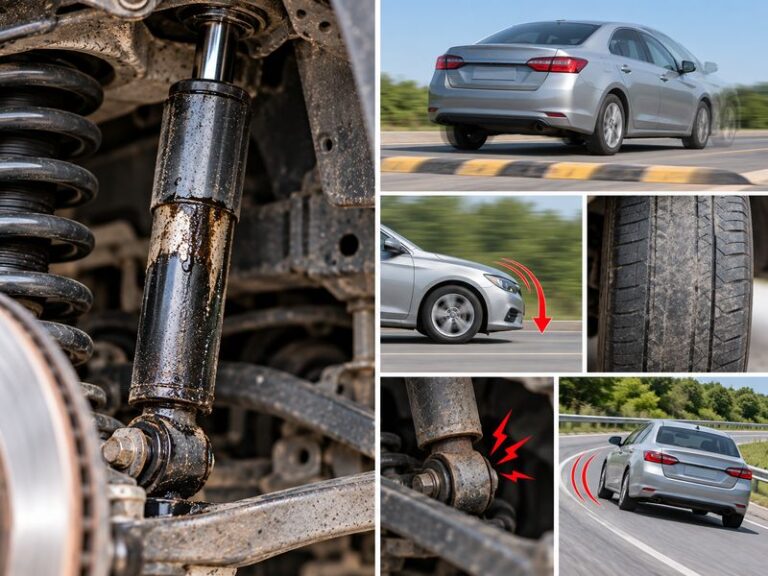
Driving with worn shock absorbers may contribute to irregular tire wear because the suspension may not keep the wheels under consistent control over uneven pavement. The tread can develop a scalloped or cupped pattern, where small sections appear more worn than nearby areas.
This pattern is a clue, not proof that a shock absorber has failed. Incorrect tire pressure, wheel imbalance, worn suspension joints, poor alignment, and tire construction can also contribute to uneven wear. A mechanic should inspect the tire and suspension together rather than replacing shocks based on tread appearance alone.
Tire damage can become expensive when it forces early replacement. If a tire has deep irregular wear, exposed cords, bulges, or other serious damage, do not continue using it as if it were normal. Ask a tire professional whether it is safe to drive or needs immediate replacement.
Source: i.ytimg.com
How to Inspect Tires for Possible Suspension Problems
Park on a level surface, switch off the engine, and inspect the tread and sidewalls from a safe position. Look for uneven wear across the tread, repeated dips in the tread surface, cuts, bulges, and objects lodged in the tire. Compare the wear across all four tires, since a single tire may point to a different problem from a pair.
Check tire pressure against the vehicle manufacturer’s recommended cold pressure, usually shown on the driver’s door-jamb label or in the owner’s manual. Do not use the maximum pressure molded into the tire sidewall as the normal target unless the vehicle maker specifically directs it.
Cupped tread
May indicate poor wheel control, but other suspension and wheel issues must be ruled out.
Wear on one edge
Can be linked to alignment or suspension geometry problems.
Wear across the whole tread
May relate to pressure, load, driving conditions, or tire age and condition.
4. The Ride Can Become Rough and Uncomfortable
Worn shocks can make a vehicle feel bouncy, loose, or poorly controlled. Instead of settling quickly after a pothole or road joint, the body may continue moving. Passengers may feel repeated motion, and cargo may shift more than it would with a properly controlled suspension.
A rough ride does not always mean the shocks are worn. Tire pressure, spring condition, suspension bushings, damaged mounts, and wheel or tire problems can create similar sensations. Some vehicles also have a naturally firm ride because of their suspension design and tire setup.
The most useful clue is a change from the car’s normal behavior. If the ride becomes noticeably less controlled, especially when several symptoms appear together, schedule a suspension inspection. Do not rely on comfort alone to judge safety because a worn shock may lose performance without producing an extreme ride change.
Source: static.wixstatic.com
Why New Shocks May Not Fix Every Ride Problem
Replacing worn shocks can restore damping when the shocks are the cause, but it cannot repair a broken spring, damaged wheel, poor alignment, or worn control-arm bushing. A technician should identify the cause before parts are ordered.
If the ride remains harsh after replacement, ask whether the correct parts were fitted and whether the tire pressures, mounts, springs, and other suspension components were checked. The vehicle’s original ride quality also depends on tire size and design, vehicle load, and suspension tuning.
Use the correct replacement parts
Fitment should match the vehicle’s year, make, model, trim, suspension package, and any relevant load or towing requirements.
Inspect related components
Mounts, bushings, springs, and struts may need separate attention.
5. Other Suspension Parts May Experience More Stress
A worn shock may allow repeated suspension movement that the system was designed to control. Depending on the vehicle and the condition of the other parts, this can contribute to extra movement and stress at mounts, bushings, and related suspension components.
This does not mean that every neglected shock will damage every nearby part. Suspension components have different jobs and failure patterns. A clunk, for example, could come from a loose mount, a worn joint, a broken spring, or another part rather than the shock itself.
The practical risk is that ignoring one known problem can make it harder to identify other faults later. A full inspection can help separate the original failure from related damage and prevent unnecessary parts replacement.
Source: gdstauto.com
Can Bad Shock Absorbers Damage Springs?
A worn shock does not automatically cause a coil spring to break. Springs support vehicle weight and flex as the wheels move, while shocks control the rate of suspension movement. Corrosion, fatigue, overloading, impact damage, and age can all affect spring condition.
If the car sits lower at one corner, has a broken spring, or makes a sharp metallic noise over bumps, have the suspension checked promptly. A broken spring can affect tire clearance and vehicle control and should not be treated as a minor comfort problem.
Look for related damage
Ask the technician to check spring condition, mounts, bushings, and fasteners while inspecting the shocks.
The inspection should establish which components have failed and which remain serviceable.
6. Wet Roads and Rough Surfaces May Become More Risky
Poor suspension control can matter more when the road offers less grip. Rain, standing water, loose gravel, damaged pavement, and uneven road joints all make tire contact and vehicle stability important. Worn shocks may make it harder for the suspension to manage repeated wheel movement over those surfaces.
Shock absorbers do not prevent hydroplaning, and new shocks cannot make an unsafe speed safe. Hydroplaning risk depends on speed, water depth, tire tread, tire pressure, and road conditions. Good tires and sensible speed remain essential, even when the suspension is in good condition.
Drivers in the United States may encounter very different road conditions, from wet urban streets to gravel rural roads and pothole-damaged pavement. Repeated impacts and heavy vehicle loads can make suspension inspections especially useful, but the correct maintenance schedule depends on the vehicle maker’s guidance and the actual condition of the parts.
Source: i.ytimg.com
What to Do Before Driving in Poor Weather
If the vehicle has known suspension problems, do not assume that careful driving fully removes the risk. Have severe or clearly unsafe defects repaired before using the vehicle in challenging conditions. If a mechanic has identified a serious loss of control, follow the recommendation not to drive it.
For normal travel, maintain the correct tire pressure, use tires suitable for the conditions, keep speeds appropriate, and allow extra following distance. These steps support safe driving but do not replace necessary suspension repairs.
Reduce speed
Travel at a speed that fits visibility, water, road damage, and traffic.
Avoid sudden inputs
Abrupt steering and braking can make a vehicle with poor stability harder to control.
7. Fuel Economy and Ride Height Are Not Simple Indicators
Worn shock absorbers are not a direct or reliable way to explain a sudden drop in fuel economy. Poor handling may lead a driver to change speed or driving style, and other vehicle faults can affect fuel use, but there is no universal fuel penalty that can be assigned to worn shocks alone.
Likewise, ordinary shock absorber wear does not usually make the vehicle sit much lower. Coil springs or other load-supporting components generally determine static ride height. A low corner or sagging body may point to a broken or weak spring, a damaged suspension component, or a load-related issue.
These distinctions matter because replacing shocks will not necessarily fix fuel consumption or ride height if another fault is responsible. When symptoms do not fit a typical damping problem, ask for a broader inspection rather than assuming all suspension issues have one cause.
Source: img.youtube.com
Which Symptoms Point to Another Problem?
A vehicle that sits low on one side needs a spring and suspension inspection. A sudden fuel economy change may require checks of tire pressure, brakes, engine performance, and other systems. A steering wheel that sits off-center or a car that pulls to one side may need alignment or tire and brake diagnosis.
Shocks should be evaluated as part of the suspension system, not as an explanation for every change in how a car feels or performs.
Low ride height
Inspect springs, suspension damage, and vehicle loading.
Unexpected fuel use
Check tire pressure and investigate other likely causes.
Steering pull
Check tires, brakes, alignment, and suspension condition.
Signs You Should Not Ignore
Several symptoms can suggest worn shock absorbers, but no single sign confirms failure in every vehicle. The strongest reason to arrange an inspection is a clear change in handling combined with visible leakage, unusual tire wear, or repeated bouncing.
Some dampness around a shock may not mean it has failed. A heavy fluid leak, damaged body, broken mount, or persistent loss of control is more concerning. A qualified technician can distinguish normal residue from a leak that affects function.
Repeated bouncing
The car continues moving after a bump instead of settling promptly.
Excessive sway
The body feels less controlled when turning or changing lanes.
Fluid leakage
A clear leak down the shock body may indicate a failed seal, especially when accompanied by poor damping.
Cupped or scalloped tire wear
This may be linked to poor wheel control but also requires checks for other causes.
Clunks or rattles
These can come from shock mounts or other suspension components and need diagnosis.
Unusual instability
The car feels loose, wanders over bumps, or becomes difficult to settle.
Can You Check Shock Absorbers at Home?
You can perform a basic visual inspection without lifting the vehicle. Park on level ground, switch off the engine, and look for obvious damage, heavy leakage, or broken parts from a safe position. Check the tires for uneven wear and note whether the vehicle has recently begun to bounce or sway.
A traditional push-down bounce test can sometimes reveal excessive movement, but its results depend on the suspension design and vehicle condition. Modern suspensions may not respond in a way that makes this test reliable. A car that passes the test may still have worn shocks.
Never crawl under a vehicle supported only by a jack. Suspension parts can also store energy, and strut assemblies may contain highly compressed springs. Leave lifting, disassembly, and spring-related work to someone with the correct equipment and training.
Record the symptoms
Note when bouncing, noise, sway, or tire wear occurs and whether the problem affects one corner or the whole vehicle.
Avoid unsafe road tests
Do not drive fast over bumps or make sudden turns to reproduce a symptom.
Arrange a professional inspection
A technician can inspect damping, mounts, tires, springs, and related suspension parts.
How Long Can You Drive With Bad Shock Absorbers?
There is no safe, universal mileage or number of days for driving with bad shock absorbers. A mildly worn shock may produce subtle symptoms, while a badly leaking, broken, or detached unit may make the vehicle unsafe to use. The condition of the tires, springs, mounts, and other suspension parts also affects the decision.
If the car has clear instability, severe bouncing, a broken mount, a damaged strut, or a tire that may contact the body, do not continue driving it. Stop in a safe place and arrange professional assistance or towing when necessary. A short trip is not automatically safe just because the repair shop is nearby.
If symptoms are mild and the vehicle remains stable, contact a qualified repair shop promptly for advice and an inspection. Do not treat that as permission to keep driving indefinitely. A technician who knows the actual condition can judge whether the vehicle can be driven to the shop or should be transported.
When Is Towing the Safer Option?
Towing is the safer choice when a suspension component is broken or detached, the tire may rub against the body, steering control is seriously affected, or the vehicle cannot maintain a stable path. Strong clunks after an impact, a visibly damaged strut, or sudden ride-height changes also deserve urgent attention.
If the problem is accompanied by brake failure, a damaged tire, or another serious fault, treat that issue as an additional reason not to drive. Do not rely on low speed alone to make a vehicle with a serious suspension defect safe.
Stop driving
Use a safe location away from moving traffic whenever possible.
Explain the symptoms
Tell the repair shop about any impact, noise, fluid leak, handling change, or visible damage.
Ask about transport
Describe the defect and ask whether towing is needed rather than assuming a drive to the shop is safe.
When Should You Replace Shock Absorbers?
Replace shock absorbers when inspection shows that they are worn beyond the manufacturer’s acceptable condition, damaged, leaking enough to affect function, or no longer controlling suspension movement properly. Do not rely on one mileage figure for every vehicle because shock life varies with design, use, load, road quality, and environment.
Some vehicles have separate shocks at the rear and strut assemblies at the front. Others use different layouts. The owner’s manual and the manufacturer’s service information are the best starting points for maintenance intervals and part requirements, while an inspection helps determine the actual condition.
When one shock has failed, technicians often recommend replacing both shocks on the same axle if the other one has similar age or wear. Matching damping across the axle can help maintain balanced handling. However, the correct repair depends on the vehicle design, the failure, the parts involved, and manufacturer guidance.
Should You Replace Shocks in Pairs?
Replacing shocks in axle pairs is common practice because one new shock and one heavily worn shock may respond differently. This can create an imbalance in suspension control. The recommendation is especially relevant when both parts have similar age and operating history.
Pair replacement is not a substitute for diagnosis. If one shock was damaged by a collision or another isolated event, a technician should inspect the other side and follow the applicable service guidance. Some suspension repairs also require replacement of mounts or other parts, depending on their condition.
Check the full axle
Inspect the opposite shock, mounts, springs, tires, and related parts before deciding the scope of the repair.
Confirm correct fitment
Use parts specified for the vehicle’s exact configuration.
Follow installation instructions
Correct fasteners, torque values, and any required alignment or calibration procedures matter.
What Happens If You Delay Replacement to Save Money?
Delaying a necessary shock replacement may seem cheaper in the short term, but it can create additional costs if tire wear or related suspension damage develops. The outcome is not guaranteed, and replacing shocks alone will not prevent every future repair. The sensible approach is to confirm the fault and address safety-related defects before they become more serious.
A repair estimate should separate the cost of the shocks from labor, mounts, related hardware, alignment if required, and any other failed components. Not every vehicle needs every item replaced. Ask the shop to explain which parts are worn or damaged and why the proposed work is needed.
If your budget is limited, tell the shop before authorizing work. Ask which defects make the vehicle unsafe, which repairs can be planned soon, and whether the car should be driven before repairs. Safety decisions should be based on the actual condition, not simply on the lowest estimate.
How to Avoid Unnecessary Suspension Repairs
Request a written diagnosis and ask the technician to show you visible leakage, damaged mounts, uneven tire wear, or other evidence when practical. A clear explanation helps distinguish a confirmed defect from a preventive recommendation.
Compare estimates that cover the same work and parts quality. A lower price may exclude mounts, hardware, or labor that another estimate includes. A higher price is not automatically better, so compare the diagnosis and scope rather than the total alone.
Request the reason for replacement
Ask which symptoms or inspection findings indicate that the shocks are no longer serviceable.
Check the warranty terms
Confirm the coverage for the replacement parts and installation.
Prioritize safety faults
Do not postpone repairs that affect control, tire clearance, steering, or braking.
Common Mistakes When Dealing With Worn Shocks
The most common mistake is waiting until the ride becomes extremely uncomfortable. Shock wear can be gradual, and the vehicle may feel familiar even as its suspension control declines. Regular inspection and attention to new symptoms are more useful than waiting for a dramatic failure.
Another mistake is blaming every noise, tire-wear pattern, or handling problem on the shocks. Similar symptoms can come from other suspension, steering, brake, wheel, or tire faults. Replacing parts without confirming the cause can waste money and leave the original problem unresolved.
Relying only on a bounce test
A basic test may miss worn shocks, so it should not replace a proper inspection.
Ignoring visible damage
A broken mount, severe leak, or damaged strut needs prompt attention even if the car still moves.
Replacing only the obvious part
The other shock and related suspension parts should also be checked.
Assuming new shocks fix alignment
Some suspension work requires an alignment check, but shocks do not automatically correct an existing alignment fault.
Using incorrect replacement parts
A part that physically fits may still be wrong for the vehicle’s suspension setup or load requirements.
Practical Decision Guide: Can You Keep Driving?
Use the symptoms below to decide how urgently to seek help. This guide is a screening aid, not a remote diagnosis. A mechanic must inspect the vehicle to determine whether the shocks or another component have failed and whether the car is safe to drive.
Repeated bouncing or a gradually rougher ride
Arrange an inspection soon. Avoid aggressive driving until the cause is known.
Visible shock fluid leakage with poor handling
Arrange a prompt suspension inspection and ask whether the vehicle should be driven to the shop.
Cupped tire wear or unusual tire noise
Have the tires, wheel balance, alignment, and suspension checked together.
Severe instability, a broken mount, or a tire rubbing the body
Stop driving when safe and arrange towing or professional assistance.
Sudden steering or braking problems
Treat the problem as urgent. Do not assume worn shocks are the only cause.
What a Successful Repair Should Achieve
After replacement, the vehicle should behave in line with its design and the condition of its other components. Repeated bouncing caused by the old shocks should be reduced, and the vehicle should feel more controlled over ordinary road changes. The exact ride may still depend on tire type, spring condition, and suspension tuning.
The repair shop should check for installation issues, confirm that fasteners were tightened to the specified values, and inspect any related parts identified during diagnosis. If an alignment check or other procedure is required by the vehicle manufacturer or the work performed, it should be completed as directed.
If the original symptoms remain, return to the repair shop and explain what has changed. Persistent bouncing, pulling, tire noise, or instability may point to another fault, incorrect parts, or an installation issue that needs further investigation.
Recheck handling
Notice whether the original symptom has improved during normal, safe driving.
Watch tire condition
Continue checking tire pressure and tread wear; existing tire damage will not disappear after shock replacement.
Keep repair records
Save the invoice, part information, and any inspection findings for future maintenance.
Reader Question Gap Map
The following map identifies useful follow-up needs inferred from the main question. These are editorial judgments about what a reader may need next, not verified search-volume data or claims about live search demand. No competitor-page inspection or search-question dataset is claimed here.
The highest-priority needs concern immediate safety, diagnosis, and replacement timing because these affect whether a reader should continue driving. Questions about ride height, fuel use, and repair cost are secondary because they help prevent misdiagnosis and unnecessary spending.
Can I drive with bad shocks?
Reader stage: immediate decision. Basis: inferred next need. Competitor coverage: not checked. Benefit: explains when to stop driving and when to arrange inspection or towing. Evidence basis: suspension function and safety-oriented diagnosis. Priority: high. Placement: driving urgency section.
Can bad shocks cause uneven tire wear?
Reader stage: symptom diagnosis. Basis: inferred next need. Competitor coverage: not checked. Benefit: explains the link while distinguishing alignment, pressure, and wheel problems. Evidence basis: suspension and tire diagnosis principles. Priority: high. Placement: tire wear section.
Do bad shocks affect braking distance?
Reader stage: risk assessment. Basis: inferred next need. Competitor coverage: not checked. Benefit: explains the effect on tire contact without promising a fixed stopping-distance change. Evidence basis: suspension damping and vehicle braking principles. Priority: high. Placement: braking section.
Will worn shocks lower the car?
Reader stage: symptom interpretation. Basis: inferred next need. Competitor coverage: not checked. Benefit: separates damping failure from spring or ride-height faults. Evidence basis: component function. Priority: medium. Placement: ride-height section.
Should shocks be replaced in pairs?
Reader stage: repair planning. Basis: inferred next need. Competitor coverage: not checked. Benefit: explains balanced damping and the need to inspect the opposite side. Evidence basis: suspension service principles and vehicle-specific guidance. Priority: medium. Placement: replacement section.
Frequently Asked Questions
Q
What is the biggest risk of not replacing bad shock absorbers?
The biggest concern is reduced vehicle control. Worn shocks may allow excessive suspension movement, which can affect tire contact, steering response, and stability during braking or sudden maneuvers. The level of risk depends on the severity of the wear and the condition of the rest of the vehicle.
Q
Can bad shock absorbers cause an accident?
They can contribute to a loss of control, especially when the vehicle encounters bumps, turns, or slippery surfaces. However, an accident cannot be attributed to worn shocks without examining the circumstances. If the car feels unstable or has a damaged suspension component, stop driving when safe and arrange an inspection.
Q
Can I drive for months with worn shock absorbers?
There is no reliable number of months that is safe for every vehicle. Mild wear and severe failure are different conditions, and symptoms can worsen with road impacts and use. Have the shocks inspected promptly, and do not drive a vehicle with serious instability, broken components, or unsafe tire clearance.
Q
Do worn shock absorbers cause tire cupping?
They can contribute to cupped or scalloped tire wear by allowing poor wheel control. However, wheel imbalance, alignment problems, incorrect tire pressure, and worn suspension parts can cause similar patterns. A proper inspection should check the tires and related components before identifying the cause.
Q
Do shock absorbers affect ride height?
Ordinary shock absorber wear usually does not cause major changes in static ride height because springs and other load-supporting components carry the vehicle’s weight. A low corner or sagging body may indicate a weak or broken spring, damage, or an abnormal load. Some suspension designs combine a shock or strut with other functions, so the exact system matters.
Q
Should I replace both shock absorbers at the same time?
Replacing both shocks on the same axle is often recommended when they have similar age and wear. This can help keep damping balanced from side to side. A technician should inspect both sides and follow the vehicle manufacturer’s repair guidance before deciding what to replace.
Q
Will new shock absorbers improve braking?
If worn shocks are contributing to poor suspension control, replacement may help the tires maintain more consistent contact with uneven roads during braking. It will not repair worn brake pads, damaged rotors, faulty calipers, bad tires, or alignment problems. A braking complaint should be diagnosed as a whole-system issue.
Q
How can I tell if shock absorbers need replacement?
Common warning signs include repeated bouncing, excessive sway, visible fluid leakage, unusual tire wear, and reduced stability. These signs can have other causes, so a visual check alone may not confirm failure. A qualified technician can assess the shocks, mounts, springs, tires, and other suspension components.
✦ Wrapping Up
Conclusion
If you don’t replace worn shock absorbers, your car may become less stable, bounce more over bumps, wear tires unevenly, and respond less predictably during braking or turns. These problems can develop slowly, but severe wear or damaged suspension parts can make driving unsafe.
Not every handling problem comes from the shocks, and there is no universal mileage limit that determines when every shock must be replaced. Check the manufacturer’s maintenance guidance, watch for changes in ride and handling, and arrange a professional inspection when symptoms appear. A full diagnosis can prevent unnecessary parts replacement and reveal other faults that need attention.
💡 Key Takeaway
Inspect your tires and look for obvious shock damage without crawling under an unsupported vehicle. If the car bounces repeatedly, leaks heavily, sways excessively, or feels unstable, arrange a suspension inspection promptly. Stop driving and arrange towing if a component is broken or the vehicle cannot be controlled safely.
Eric
Hi, I’m Eric Bennett, the person behind OffRoadTruckAccessories.com.
I created this blog to share my interest in trucks, off-road driving, automotive accessories, and DIY modifications. I enjoy learning how different truck accessories work, testing their usefulness, and understanding whether they are truly worth buying.
Shock absorbers are located near the wheels as part of the suspension system, usually between the vehicle’s body, frame, or subframe and a suspension component such as a control arm, axle, or wheel assembly. However, the exact answer to where are shock absorbers located on a car depends on the suspension design. Some vehicles have…
You should change shock absorbers when they are worn, leaking, damaged, or no longer controlling suspension movement properly. There is no single replacement interval that applies to every vehicle because shock absorber life depends on road conditions, vehicle weight, driving habits, suspension design, and component quality. If you are wondering when to change shock absorbers,…