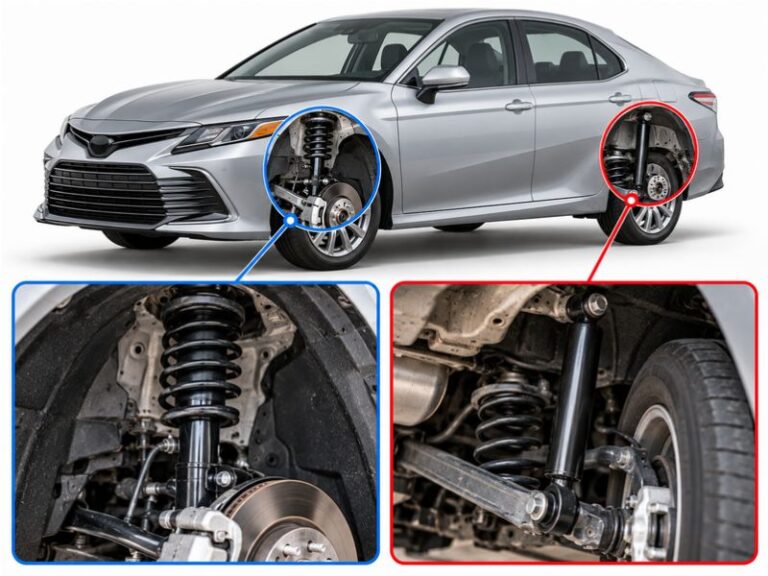
Yes, in most cases, you should change shock absorbers in pairs on the same axle. Replacing both front shocks or both rear shocks helps maintain balanced damping, stable handling, and predictable braking. Replacing only one may be reasonable when the other shock is nearly new and in confirmed good condition, but the vehicle manufacturer’s guidance should come first.
For drivers across the United States, worn shock absorbers can make daily trips on highways, city streets, and rough rural roads less comfortable and harder to control. Potholes, uneven pavement, heavy loads, and repeated bumps can all put stress on suspension parts. When one shock starts leaking or stops controlling wheel movement well, the other shock on the same axle may also have wear that is not easy to see.
Shock absorbers help control how quickly the suspension moves after a bump. They also help the tires maintain contact with the road as the vehicle travels over uneven surfaces. When the shocks on the left and right sides respond differently, the vehicle may feel less settled during turns, braking, or sudden lane changes.
Replacing shocks in pairs is a practical way to keep the two sides of an axle working more evenly. However, it is not an absolute rule for every vehicle or repair. The age of the existing parts, the reason for failure, the suspension design, and the manufacturer’s service instructions all affect the decision.
Changing shock absorbers in pairs helps keep the left and right sides of the same axle working in a similar way. A new shock may control suspension movement differently from an old, worn unit. If only one side is replaced, that difference can affect how the vehicle responds to bumps, corners, and changes in road surface.
Shock absorbers lose performance over time. This wear can happen gradually, so a driver may not notice the change until the vehicle begins to bounce more, feel less stable, or respond poorly on rough roads. A shock that looks intact may still have reduced damping performance.
Replacing both sides at once also reduces the chance of paying for another repair soon after the first one. If the second shock is close to the end of its useful life, replacing it during the same visit may save repeated labor and reduce the risk of uneven suspension behavior.
Source: wikihow.com
Balanced damping
Matching new shocks on the same axle are more likely to provide similar control of wheel and body movement.
More predictable handling
Similar damping characteristics help the vehicle respond more consistently when cornering, braking, or crossing uneven pavement.
Fewer repeat repairs
Replacing an aging pair together can avoid a second appointment and additional labor if the other shock soon fails.
Better maintenance planning
Replacing the pair allows both sides to start a new service interval under similar conditions.
How Shock Absorbers Work
A shock absorber resists the rapid movement of the suspension. Most modern automotive shocks use hydraulic fluid, often with gas pressure, to help control movement as a piston moves inside a cylinder. The resistance converts some of the suspension’s movement energy into heat.
Springs support the vehicle’s weight and compress when a wheel crosses a bump. Shocks help control the spring’s repeated movement so the body does not keep bouncing. This distinction matters because a shock absorber does not usually carry the vehicle’s weight in the same way a coil spring does.
Some vehicles use separate shocks and springs, while others use struts that combine damping with a structural suspension role. The correct replacement method depends on the design. A strut replacement may involve additional alignment or spring-handling requirements.
Springs
Support vehicle weight and compress or extend as the wheels move.
Shock absorbers
Control suspension movement and help limit repeated bouncing.
Struts
Combine damping with a structural role in many suspension designs.
What Happens When One Shock Is New and the Other Is Worn?
A new shock may respond differently from an older unit because its internal parts, fluid, seals, and damping characteristics are in better condition. The difference may be more noticeable when the vehicle crosses a bump with one wheel, enters a turn, or travels over uneven pavement.
The exact effect depends on the vehicle, the severity of wear, and the characteristics of the replacement part. It is not correct to assume that every single-shock replacement will make a vehicle unsafe. However, matching the condition of both shocks on an axle is a sound maintenance goal.
Possible uneven response
The two sides may control wheel movement differently, particularly when one shock is substantially more worn.
Reduced comfort
The vehicle may feel less settled when driving over bumps or broken pavement.
Uncertain performance
A visible leak or a difference in ride height alone does not establish the full condition of the suspension; further inspection may be needed.
Should You Replace Both Front Shock Absorbers?
Yes, replacing both front shock absorbers together is generally recommended when one front shock is worn or damaged and both have similar service histories. The front suspension plays a major role in steering response and helps manage weight transfer during braking and cornering.
During braking, vehicle weight shifts toward the front axle. The suspension must control that movement while the tires maintain contact with the road. Worn or mismatched front damping can make the vehicle feel less stable, although braking performance also depends on tires, brakes, springs, bushings, and other parts.
Before replacing the front shocks, confirm whether the vehicle uses conventional shock absorbers or complete strut assemblies. Some front struts require careful removal and spring compression. The repair may also require an alignment check, particularly if suspension components that affect wheel geometry are removed.
If the front shocks have been in service for the same period and one has failed, the other should be inspected and is commonly replaced at the same time.
Check steering and alignment
Look for uneven tire wear, steering changes, loose mounts, and alignment concerns before completing the repair.
Confirm the correct assembly
Check the vehicle’s year, make, model, trim, and suspension configuration before ordering replacement parts.
When Can You Replace Only One Front Shock?
A single front shock replacement may be reasonable if the matching shock was installed recently, has very little service time, and is confirmed to be in good condition. For example, a nearly new shock damaged by a road hazard may not need to be replaced merely because the other side was damaged.
Before choosing this option, verify that both parts have compatible specifications and that the manufacturer does not require paired replacement. A mechanic should also inspect the mounts, springs, bushings, and surrounding components to identify why the original part failed.
Recent replacement
The existing shock is nearly new and has a documented service history.
Isolated damage
A specific impact or other event damaged one shock without causing similar wear on the other.
Confirmed compatibility
The replacement is approved for the vehicle and works with the shock that remains installed.
Should You Replace Both Rear Shock Absorbers?
Replacing both rear shock absorbers is also generally recommended when one rear shock has worn out. Rear shocks help control the movement of the rear suspension, which is important when driving over bumps, carrying passengers, or loading cargo into an SUV, pickup truck, or sedan.
The rear suspension may feel different from the front because its design and load demands can vary. A pickup truck that often carries heavy cargo, for example, may place greater demands on its rear suspension than a lightly loaded passenger car. This does not mean every truck needs heavy-duty shocks; the replacement must match the vehicle’s intended use and approved specifications.
A worn rear shock can allow repeated bouncing after a bump. Depending on the suspension design and driving conditions, this may affect tire contact and the vehicle’s stability. Replacing both rear shocks helps reduce the difference between the left and right sides.
Source: cdn.club.autodoc.de
Inspect load-related wear
For vehicles that tow or carry cargo, check whether the shocks are approved for the vehicle’s normal load and use.
Check for leaks and damage
Look for fluid leakage, bent parts, damaged mounts, and signs of contact with road debris.
Assess the full rear suspension
Inspect springs, bushings, mounting points, and tires rather than assuming the shocks explain every handling problem.
Do Rear Shocks Always Wear at the Same Rate?
No. Rear shocks may wear at different rates because of road impacts, uneven loading, corrosion, installation differences, or a defect in one component. Their service histories may also differ if a previous owner replaced only one side.
Different wear rates are a reason to inspect both sides, not a reason to skip a paired replacement automatically. If one shock is much newer and passes inspection, a single replacement may be justified under the manufacturer’s guidance. If both are old, replacing the pair is usually the more consistent choice.
Road and load conditions
Repeated impacts, heavy cargo, and rough roads can affect component wear.
Corrosion
Salt and moisture can damage metal parts and mounting hardware, especially in regions with winter road treatment.
Do You Need to Replace All Four Shock Absorbers at Once?
No, you do not usually need to replace all four shock absorbers at the same time. The common recommendation is to replace the two shocks on the affected axle, then assess the other axle separately. If the front shocks are worn but the rear shocks remain in good condition, a front-pair replacement may be enough.
Replacing all four can make sense when all are worn, the vehicle has high mileage with an unknown maintenance history, or an inspection finds poor damping at both axles. It may also be practical when a vehicle has been driven for a long time on rough roads and the full suspension needs attention.
However, mileage alone is not enough to decide. Two vehicles with the same mileage can have very different suspension conditions because of road quality, climate, load, maintenance, and driving style. Use the manufacturer’s service guidance and a proper inspection to determine what needs replacement.
Source: cdn.club.autodoc.de
When Is Replacing Only One Shock Absorber Acceptable?
Replacing only one shock can be acceptable in limited situations, especially when the other shock on the axle is nearly new and has no signs of damage or performance loss. A single replacement may also be considered after isolated accidental damage, provided the vehicle manufacturer permits it and the replacement is compatible.
The key question is not simply whether the other shock looks fine. Internal wear can be hard to identify during a quick visual inspection. A mechanic may need to assess leakage, mounting condition, damping behavior, and any available vehicle-specific test results before recommending a single replacement.
If the vehicle has an electronic or adaptive suspension system, confirm the required service procedure before changing parts. Some systems require compatible components, diagnostic steps, calibration, or other procedures that do not apply to a basic passive shock absorber.
Source: i.pinimg.com
A Practical Decision Table
Use the following table as a general guide. It does not replace the vehicle manufacturer’s service instructions or a physical inspection.
One shock failed; both are old
Replace both shocks on that axle in most cases because the remaining shock may have similar wear.
One shock failed shortly after both were replaced
Investigate the cause and check warranty coverage. A single replacement may be reasonable if the other shock remains nearly new and the manufacturer permits it.
One shock is damaged by an impact
Inspect the other shock, wheel, tire, mount, and nearby suspension parts. Replace the pair if the other side is worn or the damage has affected both sides.
Both front shocks are worn, rear shocks are sound
Replace the front pair and leave the rear pair in service if inspection confirms that they remain fit for use.
All four shocks show poor performance
Replacing all four may be appropriate, subject to diagnosis and the correct parts for each axle.
Vehicle uses adaptive damping
Follow the specified replacement, diagnostic, and calibration procedures for that suspension system.
Signs That Your Shock Absorbers May Need Replacement
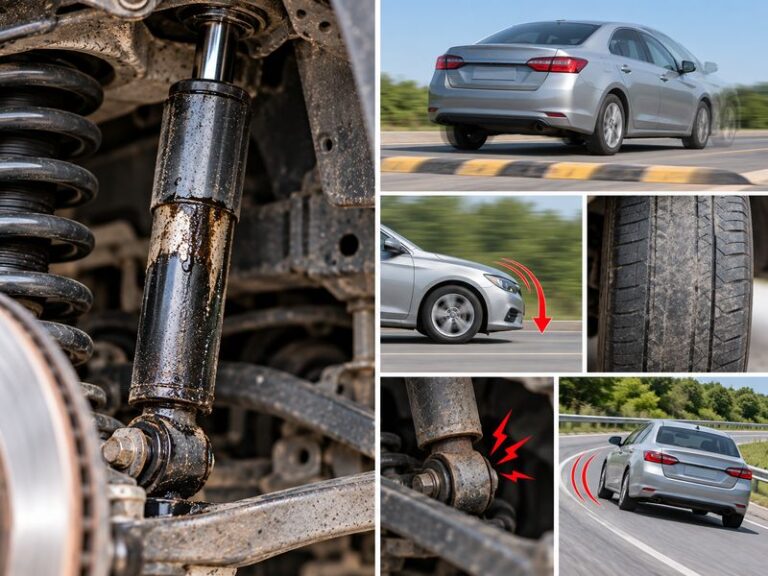
Common signs of worn shock absorbers include repeated bouncing, fluid leakage, poor body control, unusual tire wear, and a vehicle that feels less stable over bumps. These signs justify an inspection, but none proves on its own that the shocks are the only cause. Other suspension, tire, steering, or brake problems can create similar symptoms.
A vehicle may also develop worn shocks without an obvious change in comfort. Drivers often adapt to gradual changes, so a comparison with the vehicle’s normal behavior can be useful. A qualified technician can inspect the suspension and determine whether the shocks still perform as intended.
Source: i.ytimg.com
Repeated bouncing
The body continues to move after crossing a bump instead of settling promptly.
Visible fluid leakage
Wetness or substantial oil leakage on the shock body can indicate a failed seal. A light film or residue should be assessed in context because not every trace means the shock has failed.
Unstable handling
The vehicle may feel less controlled during turns, lane changes, or travel over uneven pavement.
Uneven tire wear
Worn damping can contribute to tire wear, but alignment, tire pressure, wheel balance, and worn bushings should also be checked.
Clunks or rattles
Damaged shock mounts or loose hardware can cause noise, although other suspension components can produce similar sounds.
Nose dive or body roll
Excessive movement during braking or cornering may point to suspension wear, but springs, tires, and other parts can also affect body motion.
How to Check Both Shock Absorbers Before Replacing Them
Inspect both shocks on the affected axle before buying parts. A side-by-side check helps reveal differences in leakage, corrosion, mounting condition, and visible damage. A proper assessment should also consider how the vehicle behaves on the road and whether other suspension parts are worn.
Do not rely on a bounce test alone. Pushing down on a vehicle body may reveal severe problems on some vehicles, but suspension designs differ, and the test cannot reliably measure the full performance of a shock. Follow the service manual or arrange a professional inspection if the condition is unclear.
Source: cdn.club.autodoc.de
Step 1: Park Safely and Identify the Correct Parts
Park on firm, level ground, apply the parking brake, and follow the owner’s manual before inspecting the suspension. Identify whether the vehicle has separate shock absorbers or struts and confirm the location of the parts to be inspected. Never work beneath a vehicle supported only by a jack.
Check the manual
Find the correct lifting points and any vehicle-specific inspection precautions.
Gather the right equipment
Use appropriate lighting and personal protective equipment; use properly rated jack stands if lifting is required.
Step 2: Look for Leaks, Damage, and Loose Mounts
Inspect the shock body, shaft area where visible, mounting points, and surrounding components. Look for substantial fluid leakage, dents, bent parts, broken brackets, corrosion, or signs that the shock has contacted another component. Compare the left and right sides, keeping in mind that appearance alone cannot confirm internal performance.
Check both sides
A clean shock can still be worn, while minor surface residue may not prove failure.
Inspect related parts
Look for worn bushings, damaged mounts, broken springs, and loose hardware.
Step 3: Review Ride and Handling Symptoms
Consider whether the vehicle bounces repeatedly, feels unstable over bumps, or has developed a clear change in ride control. Do not conduct high-speed maneuvers or aggressive braking tests to diagnose suspension problems. If the vehicle feels unsafe, have it inspected before further driving.
Note when the symptom occurs
Record whether the problem appears over bumps, when carrying cargo, or during normal turns and braking.
Consider other causes
Tires, alignment, springs, steering parts, and brakes can contribute to similar symptoms.
Step 4: Decide Whether to Replace One or Both
If one shock is clearly worn and the other has a similar service history, replacing both on that axle is generally the best approach. If the other shock was recently replaced, confirm its condition and compatibility before deciding whether a single replacement is appropriate. When evidence is uncertain, ask a qualified technician to inspect the pair.
Replace the pair
Choose this in most cases where both shocks have similar age or accumulated wear.
Consider one replacement
Use this option only when the other shock is demonstrably in good condition and the manufacturer allows it.
How Much Does It Cost to Replace Shock Absorbers in Pairs?
The cost of replacing shock absorbers in pairs depends on the vehicle, the type of suspension, the parts selected, and the labor required. A basic rear-shock replacement may cost less than replacing front struts that require more extensive disassembly. Electronic damping systems and specialty vehicles may add parts and labor costs.
For drivers in the United States, a repair estimate should separate parts, labor, shop fees, and any recommended alignment or related repairs. There is no single reliable price for every car, so obtain a quote based on the exact vehicle and suspension configuration. Ask whether the estimate covers both sides of the same axle.
Replacing a pair costs more upfront than replacing one shock. However, if the second shock is also worn, doing both together may avoid paying for a second labor visit later. The savings depend on the vehicle and repair procedure, so compare the full estimate rather than only the price of one part.
Source: pmmonline.co.uk
Parts
Prices vary by vehicle fitment, design, quality, and whether the component is a shock absorber or a complete strut assembly.
Labor
Access, corrosion, suspension layout, and the time needed to remove and install components affect labor charges.
Alignment
An alignment check may be needed after certain suspension repairs, especially when components affecting wheel geometry have been removed.
Related components
Worn mounts, damaged bushings, broken springs, and corroded fasteners may add to the repair total.
Is Replacing Shocks in Pairs Worth the Extra Cost?
Replacing both shocks on an axle is often worth the added parts cost when both units have similar age and wear. It supports more consistent damping and can reduce the chance of a second repair shortly afterward. The value is greatest when inspection shows that the remaining shock is also near the end of its service life.
A single replacement may be more economical when the other shock is nearly new and remains in sound condition. The right decision balances current cost, the condition of the existing parts, the labor needed to access them, and the manufacturer’s instructions.
Compare the complete repair
Ask for separate estimates for replacing one shock and replacing the pair, including labor and any required alignment work.
Ask about the warranty
Check whether the replacement parts have warranty conditions related to paired installation or specific service procedures.
Common Mistakes to Avoid When Replacing Shock Absorbers
The most common mistake is replacing a failed shock without checking the other side of the same axle. This can leave the vehicle with a large difference in component age and performance. A proper inspection helps determine whether the remaining shock should stay in service or be replaced.
Another mistake is choosing a replacement based only on price or appearance. Shock absorbers must match the vehicle’s design, load requirements, and suspension system. A part that physically fits may not have the correct specifications for the vehicle.
Source: wikihow.com
Ignoring the opposite shock
Inspect the matching shock and consider its age, wear, and service history before making a final decision.
Replacing shocks without checking mounts
Worn mounts and bushings can cause noise or poor control even after new shocks are installed.
Mixing incompatible parts
Confirm that both shocks on the axle meet the manufacturer’s specifications and are suitable for the vehicle’s suspension.
Overlooking alignment requirements
Follow the service manual to determine whether wheel alignment or related checks are needed.
Using unsafe lifting methods
Never crawl under a vehicle supported only by a jack, and never remove a loaded coil spring without the correct tools and training.
Assuming new shocks fix every symptom
Persistent noise, uneven tire wear, or unstable handling may indicate other suspension, steering, tire, or brake problems.
When Should You Seek Professional Help?
Seek professional help if the vehicle has severe handling problems, a broken spring, a damaged suspension mount, or a shock that has separated from its mounting point. These conditions may affect vehicle control and should not be treated as routine maintenance. Avoid driving a vehicle that cannot be controlled reliably.
Professional service is also advisable when replacing struts with loaded coil springs, working on electronic suspension, or dealing with badly corroded fasteners. Coil springs can store substantial energy, and incorrect removal can cause serious injury. A trained technician with the correct tools can inspect the system and complete the repair safely.
Severe symptoms
Arrange an inspection if the vehicle wanders, feels unstable, or makes loud suspension noises.
Complex suspension design
Use a qualified shop for adaptive systems, strut assemblies, and repairs requiring special tools or calibration.
How to Choose the Right Replacement Shock Absorbers
Choose shock absorbers that match the vehicle’s exact specifications and intended use. Check the year, make, model, trim, drivetrain, and suspension package because vehicles sold under the same model name may use different components. A vehicle identification number can help a parts supplier verify fitment.
Do not assume that a more expensive or firmer shock is automatically better. The right part should provide the damping characteristics intended for the vehicle and its normal load. Changes made for towing, off-road driving, or modified ride height should be based on compatible components and the vehicle manufacturer’s requirements.
When replacing a pair, use matching parts designed for the same axle. The left and right parts may have different part numbers on some vehicles, so do not assume they are always identical. Follow the installation instructions and specified tightening procedures.
Source: i.ebayimg.com
Standard replacement shocks
Suitable when the goal is to restore the vehicle’s intended factory-style ride and handling, provided the parts match the application.
Heavy-duty shocks
May suit certain approved work or load applications, but should not be selected without checking vehicle compatibility and intended use.
Performance shocks
May change ride firmness and handling response. Confirm that the design is suitable for the vehicle and its other suspension components.
Electronic or adaptive shocks
Require parts and service procedures compatible with the vehicle’s electronic damping system.
Should You Replace Shock Mounts at the Same Time?
Replace shock mounts when they are worn, cracked, loose, corroded, or otherwise damaged. Some vehicles use mounts or related hardware that should be renewed as part of a specified service procedure. Other vehicles may allow serviceable components to remain in use if inspection confirms they are sound.
Replacing a mount simply because the shock is being changed is not always necessary. Ask the technician to explain the condition of the existing parts and whether the manufacturer recommends new hardware for the repair. This helps avoid both unnecessary spending and the risk of reusing a damaged component.
Inspect before reuse
Check mounts, rubber bushings, fasteners, and other related parts for damage or excessive wear.
Follow specified procedures
Use the correct replacement hardware and tightening values where the service manual requires them.
Frequently Asked Questions
Q
Can I replace just one shock absorber?
Yes, in some cases. Replacing one shock may be reasonable if the other shock on the same axle was installed recently, remains in good condition, and is compatible with the replacement. If both shocks have similar age or wear, replacing them as a pair is generally recommended. Always check the vehicle manufacturer’s service guidance.
Q
Should front and rear shock absorbers be replaced together?
Not necessarily. The usual recommendation is to replace shocks in pairs on the same axle, rather than automatically replacing all four. Replace the front pair or rear pair according to their condition, and inspect the other axle separately. If all four are worn, replacing all four may be appropriate.
Q
How do I know if my other shock absorber is still good?
Look for significant leakage, physical damage, corrosion, and worn mounting points, then consider the vehicle’s handling and ride symptoms. A visual inspection alone cannot confirm internal damping performance, and a simple bounce test is not conclusive. If the shock’s condition is uncertain, ask a qualified technician to assess it.
Q
Do new shock absorbers improve braking?
Worn shocks can affect suspension control and tire contact, which may influence braking stability on uneven roads. Replacing faulty shocks can help restore proper suspension behavior, but it does not guarantee a shorter stopping distance. Tires, brakes, road conditions, vehicle speed, and other suspension components also affect braking.
Q
Do shock absorbers have to be the same brand on both sides?
The main requirement is that both shocks meet the vehicle manufacturer’s specifications and have compatible damping characteristics. Using a matching pair designed for the same application is a sensible approach. If different brands are being considered, verify compatibility with the parts manufacturer or a qualified technician rather than assuming that similar dimensions guarantee equivalent performance.
Q
Can I drive with one new shock and one old shock?
A vehicle may remain driveable after a single replacement, but the difference in damping can affect how the suspension responds. Whether it is acceptable depends on the condition of the old shock, the vehicle design, and the manufacturer’s instructions. If the vehicle bounces excessively, wanders, or feels unstable, avoid unnecessary driving and arrange an inspection.
Q
Do shock absorbers need wheel alignment after replacement?
Not every shock replacement requires a wheel alignment. The need depends on the suspension design and whether the repair changes or disturbs components that affect wheel geometry. Alignment is more likely to be relevant when replacing struts or removing certain suspension links. Follow the vehicle’s service manual and check tire wear or steering changes after the repair.
✦ Wrapping Up
Conclusion
In most cases, you should change shock absorbers in pairs on the same axle. Replacing both front shocks or both rear shocks helps maintain more consistent damping and reduces the chance of leaving one side with much more wear than the other. It can also save time and labor when both units are nearing the end of their service life.
You do not have to replace all four shocks at once. If one axle remains in good condition, those shocks may stay in service. A single replacement can also make sense when the other shock is nearly new, has been properly checked, and meets the manufacturer’s requirements.
Before buying parts, inspect both shocks on the affected axle, check related suspension components, and confirm the correct replacement specifications. When the suspension is damaged, the vehicle feels unstable, or the repair involves loaded springs or electronic damping, use a qualified technician.
💡 Key Takeaway
Have both shocks on the affected axle inspected. If they have similar age or wear, replace them as a pair; replace only one when the other is demonstrably sound and the vehicle manufacturer’s instructions allow it.
Eric
Hi, I’m Eric Bennett, the person behind OffRoadTruckAccessories.com.
I created this blog to share my interest in trucks, off-road driving, automotive accessories, and DIY modifications. I enjoy learning how different truck accessories work, testing their usefulness, and understanding whether they are truly worth buying.
Shock absorbers are located near the wheels as part of the suspension system, usually between the vehicle’s body, frame, or subframe and a suspension component such as a control arm, axle, or wheel assembly. However, the exact answer to where are shock absorbers located on a car depends on the suspension design. Some vehicles have…
You should change shock absorbers when they are worn, leaking, damaged, or no longer controlling suspension movement properly. There is no single replacement interval that applies to every vehicle because shock absorber life depends on road conditions, vehicle weight, driving habits, suspension design, and component quality. If you are wondering when to change shock absorbers,…